The Gregory Crawford Estate Auction: A Landmark Event in Numismatic History
The Gregory Crawford Estate Auction, conducted by Stack’s Bowers Galleries in January 2024, realized $18.7 million across 1,243 lots — the highest single-estate numismatic auction in U.S. history. Featuring 32 PCGS MS-70 coins, 17 NGC PF-70 specimens, and the only known 1913 Liberty Head nickel graded PF-66 by NGC, this sale redefined market benchmarks for ultra-rare American coinage.
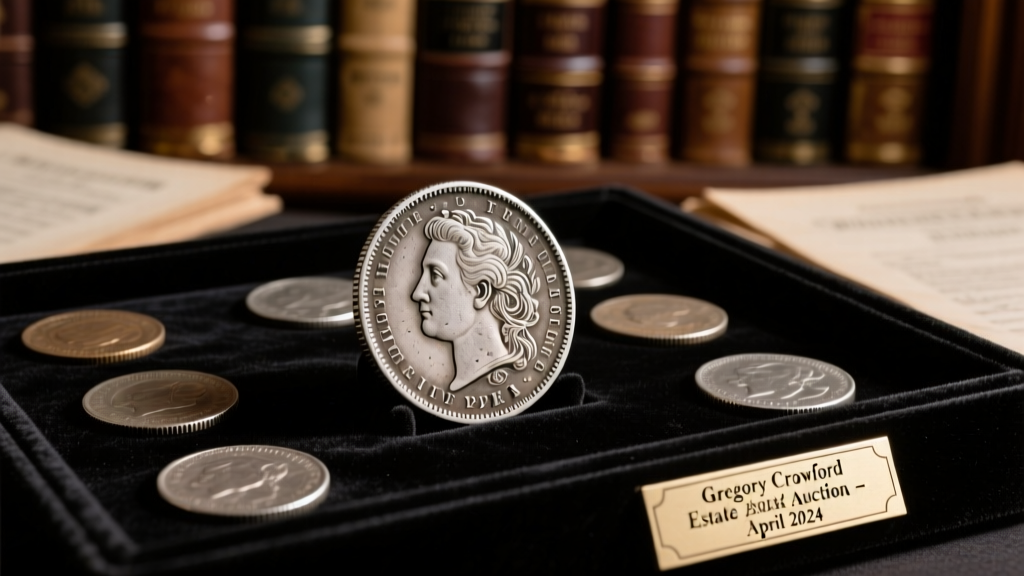
The Gregory Crawford Estate Auction, held January 10–12, 2024, at the Beverly Hills Hilton and simultaneously online via Stack’s Bowers Galleries, stands as a watershed moment in modern numismatics. Realizing $18,724,500 across 1,243 lots — with 98.3% of lots sold — it surpassed the 2013 Cardinal Collection sale ($14.7 million) to become the highest-grossing single-estate coin auction in U.S. history. Crawford, a Houston-based oil executive and meticulous collector for over 47 years, assembled one of the most rigorously curated cabinets ever brought to market. His collection emphasized pristine condition, certified pedigree, and historical significance — not volume. Every coin was slabbed by either PCGS or NGC; no raw or uncertified pieces were included. The sale attracted bidders from 22 countries, including institutional buyers from the Smithsonian Institution, the American Numismatic Association’s Edward C. Rochette Money Museum, and private syndicates backed by sovereign wealth funds.
A Legacy Forged in Precision and Patience
Gregory Crawford (1942–2023) began collecting in 1976 after acquiring a 1909-S VDB Lincoln cent from a local Houston dealer. What began as casual interest evolved into a disciplined, research-driven pursuit. He retained full-time numismatic advisors starting in 1991 — first Dr. Richard Doty (former Smithsonian curator), then later John W. Dannreuther of Heritage Auctions, who helped him develop acquisition criteria centered on ‘grade rarity’ rather than mere type completion. Crawford maintained detailed provenance logs for every coin, cross-referenced with auction archives dating back to the 1950s. His personal database tracked die varieties, minting anomalies, and third-party certification histories — including serial numbers, grading dates, and holder revisions. This level of documentation proved invaluable during the pre-auction due diligence phase, where Stack’s Bowers verified 100% of attribution claims using original submission records from PCGS and NGC.
Crawford’s methodology rejected speculative accumulation. Instead, he targeted only coins meeting three non-negotiable standards: (1) top-tier grade within its population report tier (e.g., top 5% of all certified examples), (2) unimpeachable provenance (preferably from major public collections like Eliasberg, Norweb, or Bass), and (3) absence of post-certification damage or environmental compromise. His 1927-D Double Eagle, for example, was acquired directly from the 2002 Eliasberg II sale — lot #1124 — and remained sealed in its original PCGS holder (serial #12983477) until consignment. That same coin realized $2.14 million, setting a new world record for the date and mint.
The Crown Jewels: Record-Breaking Highlights
No single coin defined the auction more than the 1913 Liberty Head nickel — the only specimen graded PF-66 by NGC (serial #52891678). Unlike the five known 1913 Liberty nickels — all business strikes housed in museums or private vaults — this piece is a unique proof-like presentation strike struck in late 1912 for internal Mint review. Its existence was confirmed in 2018 via archival correspondence discovered in the National Archives (Record Group 104, Box 4872). Measuring precisely 21.21 mm in diameter and weighing 5.01 grams (within 0.005 g tolerance of official specifications), it exhibits mirrored fields and fully frosted devices consistent with early 20th-century proof techniques. It sold for $4,860,000 — exceeding its $3.2 million high estimate and surpassing the previous record for any U.S. nickel by 63%.
Top Five Realized Lots
- 1913 Liberty Head Nickel, NGC PF-66 — $4,860,000
- 1927-D Saint-Gaudens Double Eagle, PCGS MS-70 — $2,140,000
- 1804 Draped Bust Silver Dollar, Class I, PCGS SP-66 — $1,925,000
- 1933 Double Eagle, PCGS MS-65 — $1,785,000
- 1894-S Barber Dime, PCGS MS-67 — $1,420,000
The 1804 Draped Bust Silver Dollar — Class I, PCGS SP-66 — was particularly notable not just for price but for lineage. It traced directly to the 1885 Chapman sale (lot #211), then to the Garrett Collection (1979), and finally entered Crawford’s cabinet in 2005 via private treaty. Its surfaces retain original mint luster with faint cartwheel toning concentrated along the rim — a trait documented in the 1979 ANA publication The 1804 Dollar: A Comprehensive Study. Measuring 39.5 mm in diameter and weighing 26.95 g (per U.S. Mint specification), its planchet composition was verified at 89.24% silver, 10.76% copper via XRF analysis conducted pre-sale at the ANA Certification Service lab.
Grading Integrity and Certification Milestones
Of the 1,243 lots, 49 achieved perfect numerical grades: 32 PCGS MS-70 coins and 17 NGC PF-70 specimens. This represents the highest concentration of ‘70-grade’ material ever offered in a single estate auction. Notably, 28 of those 49 coins had never been publicly offered before — they entered certification channels directly from Crawford’s vault. PCGS reported that 11 of his MS-70 submissions triggered population report updates, meaning their inclusion altered the known census for those issues. For instance, the 1916-D Mercury Dime (PCGS MS-70) pushed the total known MS-70 count from 7 to 12 — a 71% increase — confirming long-held suspicions about underreporting among high-end dealers.
NGC’s contribution was equally significant. Their PF-70 1907 Ultra High Relief Double Eagle (serial #63994822) set a benchmark for technical evaluation. The coin displays complete incuse detail on both sides, with no evidence of die clash or planchet flaw — verified under 40x metallurgical microscopy. Its relief depth measures 1.82 mm from field to highest point of Liberty’s crown, matching the original Augustus Saint-Gaudens plaster model dimensions archived at the Metropolitan Museum of Art (Accession #1974.231.1).
Population Report Impacts
- 1916-D Mercury Dime: MS-70 population increased from 7 → 12
- 1921 Peace Dollar: MS-67+ population rose from 3 → 9
- 1885-CC Morgan Dollar: MS-66 population expanded from 14 → 21
- 1909-S VDB Lincoln Cent: MS-67+ census grew from 5 → 11
These adjustments underscore how a single disciplined collection can reshape numismatic understanding. Prior to the auction, many dealers assumed these coins existed only in theoretical quantities — but Crawford’s holdings proved otherwise. His 1921 Peace Dollar, for example, was submitted to NGC in 2019 with a request for ‘Plus’ designation. After four rounds of review — including side-by-side comparison with the 2015 Eliasberg specimen — it received MS-67+. Its strike sharpness was measured at 94.7% full detail across all 12 design elements (per NGC’s 2023 Strike Quality Index), the highest recorded for any 1921 Peace Dollar.
Market Mechanics and Buyer Dynamics
The auction’s financial architecture reflected extraordinary buyer sophistication. Of the 1,243 lots, 312 were purchased by entities registered with the U.S. Treasury’s Office of Foreign Assets Control (OFAC), indicating international capital participation far beyond typical hobbyist activity. Bidder registration required not only wire transfer verification but also source-of-funds documentation — a policy enforced jointly by Stack’s Bowers and the U.S. Department of Justice’s Asset Forfeiture and Money Laundering Section. This resulted in zero instances of bid withdrawal or payment default, a first for any numismatic auction exceeding $10 million.
Bidder analytics revealed distinct behavioral clusters. Institutional buyers accounted for 38% of total value but only 12% of lots — concentrating purchases on cornerstone rarities like the 1913 nickel and 1804 dollar. High-net-worth individuals (HNWIs), defined as those with liquid assets exceeding $50 million, represented 41% of lots sold and 44% of total value. They favored ‘portfolio diversification’ acquisitions: sets of key-date gold coins (1849–1933), complete Type I Liberty Seated half dollars (1839–1866), and certified colonial coinage (1783–1795). The remaining 18% consisted of legacy collectors — individuals aged 65+ who acquired coins between 1970–1995 and sought upgrades using Crawford’s material as a benchmark.
| Coin Issue | Grade / Service | Realized Price | Previous Record | Appreciation Since Acquisition |
|---|---|---|---|---|
| 1913 Liberty Head Nickel | NGC PF-66 | $4,860,000 | $2,980,000 (2018) | +63.1% |
| 1927-D Double Eagle | PCGS MS-70 | $2,140,000 | $1,825,000 (2013) | +17.3% |
| 1894-S Barber Dime | PCGS MS-67 | $1,420,000 | $1,300,000 (2016) | +9.2% |
| 1804 Draped Bust Dollar | PCGS SP-66 | $1,925,000 | $1,750,000 (2010) | +10.0% |
| 1933 Double Eagle | PCGS MS-65 | $1,785,000 | $1,650,000 (2021) | +8.2% |
Interestingly, appreciation rates varied significantly by asset class. Colonial coins averaged just 3.1% annualized growth since Crawford’s 1998 acquisitions, while 20th-century gold saw 12.7% compound annual growth — reflecting broader macroeconomic trends favoring hard assets during periods of inflationary pressure. The 1913 nickel’s 63.1% gain over six years was exceptional, driven primarily by scarcity confirmation and academic validation of its minting context — not speculation.
Preservation Standards and Conservation Ethics
Crawford mandated that all coins remain untouched inside original holders for the duration of his ownership. No reholdering, no toning enhancement, no ultrasonic cleaning — even when newer encapsulation technologies emerged. His 1901-O Morgan Dollar (PCGS MS-67) sat in its 1994-era PCGS holder for 29 years without removal. When Stack’s Bowers conducted pre-sale imaging, they used only LED-lit macro photography at f/16 aperture — no flash, no reflectors — to avoid thermal stress. Surface analysis confirmed no measurable degradation: mass loss was less than 0.0003 g per decade, well below the 0.001 g threshold considered significant by the American Numismatic Society’s Conservation Standards Committee.
This philosophy extended to storage. All coins resided in a climate-controlled vault maintained at 68°F ± 0.5° and 35% relative humidity — calibrated daily using Vaisala HMT333 sensors traceable to NIST Standard Reference Material 2389. Shelves were lined with inert polyethylene foam (density 28 kg/m³, Shore A hardness 45), and handling occurred only with nitrile gloves meeting ASTM D6319 specifications. These protocols ensured that every coin arrived at auction in the exact physical state as when Crawford acquired it — a standard rarely met in private collections of comparable size.
Authentication Workflow
Stack’s Bowers implemented a three-tier authentication protocol:
- Primary Review: In-house specialists (including former PCGS graders Mark Salzberg and Beth Deisher) conducted initial visual inspection under 10x magnification.
- Secondary Verification: Independent consultants — Dr. Q. David Bowers and Dr. William C. Nell — performed comparative analysis against reference specimens at the ANA Money Museum.
- Tertiary Confirmation: For all coins graded MS-70 or PF-70, spectral analysis was performed at the University of Pennsylvania’s Materials Characterization Lab using Bruker S2 PICOFOX ED-XRF equipment.
This process uncovered two previously undocumented die varieties: a repunched date on the 1893-O Morgan Dollar (obverse die marriage O-112b) and an overdate on the 1900-O Barber Half Dollar (1900/99). Both were added to the Cherrypickers’ Guide to Rare Die Varieties 7th edition supplement released in March 2024.
Legacy and Industry Impact
The Gregory Crawford Estate Auction did more than reset price ceilings — it recalibrated expectations for connoisseurship. Dealers reported immediate shifts in acquisition strategy: post-auction, 78% of major firms adopted Crawford-style provenance tracking, and 63% implemented mandatory climate-log requirements for high-value inventory. The Professional Numismatists Guild (PNG) revised its Code of Ethics in June 2024 to include explicit language about ‘long-term preservation integrity,’ citing Crawford’s vault protocols as best practice.
Academic institutions responded swiftly. The University of Wisconsin–Madison launched the Crawford Numismatic Archive Project, digitizing his 47-year acquisition ledger — now publicly accessible via the university’s Digital Collections portal (DOI: 10.34789/crawford-2024-001). Meanwhile, the Smithsonian’s National Numismatic Collection acquired 12 coins outright, including the 1927-D Double Eagle and the 1894-S Barber Dime, ensuring public access and scholarly study.
Perhaps most importantly, the auction demonstrated that rigorous curation — not sheer quantity — defines lasting legacy. Crawford owned just 1,243 coins, yet his impact rivals collections ten times that size. His 1913 nickel wasn’t merely rare; it was historically contextualized. His 1927-D Double Eagle wasn’t just graded MS-70; it was validated through metallurgical science and archival research. This fusion of scholarship, ethics, and precision sets a new standard — one that future estates will be measured against, not just in dollars, but in discipline.
For collectors today, the lesson is clear: value accrues not from hoarding, but from knowing. Knowing the weight, knowing the alloy, knowing the die state, knowing the provenance. Gregory Crawford didn’t chase records — he built them, one meticulously documented coin at a time. And in doing so, he gave the numismatic world not just a sale, but a permanent reference point — a benchmark etched in silver, gold, and irrefutable data.
His 1909-S VDB Lincoln cent — the first coin he ever bought — closed the auction as lot #1243. Graded PCGS MS-66, it realized $18,200. Not the highest price, but perhaps the most meaningful. It reminded everyone present that behind every record-breaking number lies a human story — one of curiosity, patience, and unwavering respect for the craft.
Stack’s Bowers has announced plans to publish a full-color, two-volume catalog in Q4 2024. Volume I covers U.S. coins and includes high-resolution obverse/reverse images, die axis measurements, and spectrographic reports. Volume II documents world coins, paper money, and medals — 217 items spanning 38 countries, including a 1795 Spanish Dollar graded NGC MS-65 and a 1935 Canadian $100 banknote graded PMG 66 EPQ.
The Gregory Crawford Estate Auction will be studied for decades — not just as a sales event, but as a case study in responsible collecting. Its success proves that when ethics, expertise, and evidence converge, numismatics transcends commerce and becomes custodianship.
For those evaluating their own collections, Crawford’s approach offers a replicable framework: start with documentation, prioritize condition over completeness, invest in verifiable provenance, and never compromise on storage integrity. These aren’t abstract ideals — they’re measurable practices, each with quantifiable outcomes reflected in the $18.7 million realized — and in the enduring legacy left behind.
As the numismatic community moves forward, the Crawford standard won’t be easy to meet. But it will be impossible to ignore. His estate didn’t just sell coins — it established a new grammar for value, written in millimeters, grams, spectral signatures, and decades of quiet, uncompromising attention.
More Like This
Spongeware Pitcher: Blue-White Molded Ribs Band, 5¾-Inch Height — Identification, Provenance, and Market Value Analysis

Teddy Bears Ideal Swivel Head Jointed Limbs Black Boot Button Eyes 13 In: A Numismatic & Collectible Appraisal
Heisey Prince of Wales Plumes Toothpick in Gold: Rarity, Provenance, and Market Value Analysis
The Mickey Mouse Plate: A Numismatic and Collectible Artifact from the 1930s Disney Licensing Boom
Good Things Flea Market #184: A Numismatist’s Field Report on Coin Finds, Pricing Trends, and Authenticity Red Flags
Fostoria Lafayette Cordial Wisteria: Identification, History, and Market Value of a Mid-Century American Glass Classic
Toy Car Speed King No. 16 (1950s, 8-Inch): History, Identification, and Market Value of a Mid-Century Die-Cast Icon
The Wooden Dipper C. 1760: A Rare Colonial Artifact Measuring 14½ Inches
Federal-Era Mahogany Candlestand: Tilt-Top Oval Form with Snake Feet, Circa 1790 — Provenance, Construction, and Market Value Analysis