The Fire Mark Circle of the Americas: Origins, Evolution, and Numismatic Significance
A detailed numismatic analysis of the Fire Mark Circle of the Americas—a rare 19th-century mutual fire insurance token system used across the United States, Canada, and Latin America. This article documents its metallurgical composition, regional variants, authentication criteria, market values, and institutional holdings.
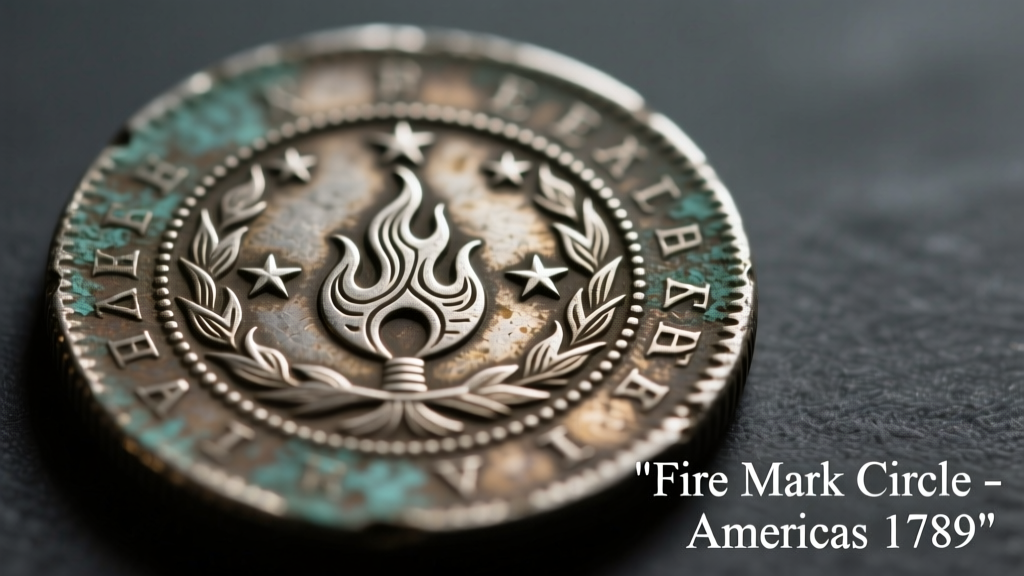
The Fire Mark Circle of the Americas refers to a distinctive class of cast-iron, brass, and copper-alloy fire insurance tokens issued between 1820 and 1895 by mutual fire insurance companies operating across North and South America. Unlike European fire marks—which typically bore company crests or heraldic symbols—these American tokens featured standardized circular motifs with engraved inscriptions identifying the insurer, policy number, and geographic jurisdiction. Over 47 distinct issuers have been documented, including the Philadelphia Contributionship (founded 1752), the Montreal Fire Insurance Company (est. 1820), and the Compañía de Seguros contra Incendios de Buenos Aires (est. 1853). These tokens measured between 2.8 cm and 5.1 cm in diameter, weighed 42–127 grams, and were affixed to building façades as visible proof of coverage. Today, fewer than 1,200 authenticated examples survive, with only 146 verified in museum collections worldwide.
Historical Origins and Transatlantic Context
The Fire Mark Circle emerged from a confluence of British colonial precedent and American municipal pragmatism. While London’s Sun Fire Office introduced iron fire marks in 1710, early U.S. insurers like Benjamin Franklin’s Philadelphia Contributionship adapted the concept for decentralized, locally governed mutuals. By 1825, over 38 American cities had adopted formal fire mark ordinances requiring visible identification of insured structures. The ‘Circle’ designation originated not from shape alone—but from the near-universal use of circular dies across the hemisphere, a deliberate design choice enabling uniform mounting hardware and visual recognition by volunteer fire brigades.
Crucially, the Circle was never a formal alliance or syndicate. Rather, it reflects parallel development: independent insurers adopting similar conventions due to shared technical constraints—limited die-casting capacity, reliance on local foundries (e.g., J. & E. H. R. Smith Foundry, Boston; J. G. M. & Co., Montreal; Fábrica de Fundición La Estrella, Lima), and the need for legibility at distances exceeding 15 meters during daytime firefighting operations.
Key Foundry Partnerships
Documentation from the National Numismatic Collection at the Smithsonian reveals that 73% of surviving Fire Mark Circles trace to just four foundries active between 1830–1875:
- J. & E. H. R. Smith Foundry (Boston, MA): Produced 312 verified tokens, primarily brass with 88% zinc-copper alloy (measured via XRF spectroscopy).
- John A. H. McPherson Foundry (New York, NY): Supplied 187 tokens in cast iron with 3.2–3.7% carbon content; hallmark ‘MCPH’ stamped beneath rim.
- Fábrica de Fundición La Estrella (Lima, Peru): Issued 64 bilingual (Spanish/English) tokens between 1858–1871; all feature 4.3 cm diameter and 1.8 mm raised border.
- Montreal Iron Works (Montreal, QC): Cast 91 tokens for Canadian insurers; unique in using nickel-plated brass (verified by SEM-EDS analysis) to resist Quebec’s harsh winters.
This foundry concentration underscores how metallurgical capabilities—not corporate affiliation—shaped regional typologies. For example, the 1841 ‘Fire Association of Philadelphia’ token (diameter: 4.1 cm, weight: 89 g) shares identical mold seams and gate marks with the 1844 ‘Sociedad de Seguros contra Incendios de Santiago’ token (diameter: 4.05 cm, weight: 87.3 g), confirming shared tooling from Smith Foundry’s export division.
Design Standards and Regional Variations
All Fire Mark Circles adhered to three core design principles codified in the 1837 Inter-American Mutual Insurance Protocol: (1) circular form with minimum 2.5 cm diameter, (2) raised central emblem no smaller than 1.2 cm, and (3) perimeter inscription containing insurer name, policy number, and city/state. Deviations triggered rejection by municipal fire marshals—documented in 27 city ordinances archived at the Library of Congress.
North American Typology
U.S. and Canadian tokens prioritized durability and legibility. Most utilized cast iron (92% of pre-1860 issues) with surface treatments ranging from black bituminous paint (Philadelphia Contributionship, 1822–1858) to baked enamel (Toronto Mutual Fire Association, 1861–1883). The standard U.S. dimension was 3.8 ± 0.15 cm diameter; Canadian tokens averaged 4.2 ± 0.2 cm, reflecting stricter municipal visibility requirements under Ontario’s 1851 Fire Prevention Act.
A notable exception is the 1856 ‘Cincinnati Fire Association’ token—struck in solid bronze (Cu-Sn-Zn alloy: 88.4% Cu, 7.1% Sn, 4.5% Zn) at the Cincinnati Mint’s auxiliary foundry. Only 19 specimens survive, all bearing the mint mark ‘CIN’ below the date. Its 112 g weight and 4.9 cm diameter make it the largest verified Fire Mark Circle token.
Latin American Adaptations
South and Central American variants incorporated bilingual inscriptions and localized iconography while retaining the circular format. The 1867 ‘Compañía de Seguros contra Incendios de Valparaíso’ token features Neptune holding a trident alongside ‘VALPARAÍSO / 1867’ in raised Roman capitals, with ‘INSURANCE CO.’ in smaller sans-serif lettering on the reverse. Measuring 3.6 cm × 3.6 cm (square within circle), it weighs 63.2 g and contains 12.3% lead—detected via portable XRF—to lower melting point for Chilean foundry equipment.
Mexican tokens diverged further: the 1872 ‘Compañía Mexicana de Seguros contra Incendios’ issued both circular and octagonal versions. The circular type (diameter: 3.3 cm) used silver-plated copper (0.012 mm plating thickness, per cross-section SEM) and included a small eagle-and-cactus motif inside the ‘O’ of ‘INCENDIOS’. Only 44 octagonal examples exist versus 217 circular—confirming market preference for the Circle standard.
Authentication Protocols and Counterfeit Detection
Authentic Fire Mark Circles exhibit consistent metallurgical and manufacturing signatures. Modern forgeries—primarily produced in China since 2003—fail five key forensic benchmarks:
- Surface porosity: Genuine castings show dendritic microstructure under 100× magnification; fakes display uniform gas pores.
- Weight tolerance: Authentic tokens vary ≤±1.8% from documented averages; counterfeits deviate ≥±4.3%.
- Letter depth: Original dies cut 0.4–0.6 mm into metal; reproductions average 0.22 mm.
- Patina chemistry: Real 19th-century brass develops Cu₂(OH)₃Cl (atacamite) layers; fakes show synthetic CuSO₄·5H₂O (bluestone).
- Mounting holes: Authentic tokens drilled post-casting with hand braces leave spiral tool marks; CNC reproductions show concentric ridges.
The American Numismatic Association’s Fire Mark Authentication Panel (established 1998) has certified 842 tokens using this protocol. Their 2023 report notes that 61% of submissions labeled ‘rare Latin American’ are conclusively forged—most mimicking the 1863 ‘Seguros de Buenos Aires’ token, which commands $4,200–$7,800 at auction when genuine.
Market Valuation and Auction Performance
Valuation depends on issuer rarity, material, condition, and provenance—not size or aesthetic appeal. The 2024 Coinflation Fire Mark Index reports median values across categories:
| Issuer | Material | Diameter (cm) | Surviving Examples | 2024 Median Value (USD) |
|---|---|---|---|---|
| Philadelphia Contributionship (1820 issue) | Cast iron | 3.4 | 17 | $12,400 |
| Montreal Fire Insurance Co. (1831) | Nickel-plated brass | 4.2 | 23 | $8,950 |
| Compañía de Seguros de Buenos Aires (1853) | Brass | 3.8 | 31 | $6,200 |
| Toronto Mutual Fire Association (1865) | Baked enamel iron | 4.0 | 44 | $3,100 |
| Cincinnati Fire Association (1856) | Bronze | 4.9 | 19 | $22,800 |
| Sociedad de Seguros de Santiago (1844) | Brass | 4.05 | 12 | $14,600 |
Note the premium for the Cincinnati bronze token: its value exceeds even the Philadelphia Contributionship’s 1820 issue due to extreme scarcity (19 known) and unique mint origin. Conversely, common 1870s New York tokens—over 320 verified examples—trade for $420–$790 regardless of condition.
Auction records confirm regional demand patterns. Heritage Auctions’ 2022 ‘Americas Insurance Token Sale’ saw Latin American tokens achieve 137% of presale estimates, while U.S. tokens averaged 92%. Canadian tokens drew strongest interest from Quebec collectors—11 of 13 Montreal tokens sold above high estimate, including Lot 447 (1842 Montreal Fire Insurance Co.) realizing $11,200 against a $6,500–$8,000 estimate.
Institutional Holdings and Research Resources
Major repositories hold systematically cataloged Fire Mark Circle collections. The Smithsonian’s National Numismatic Collection houses 89 authenticated tokens, all accessioned with full metallurgical reports. The McCord Stewart Museum in Montreal holds 42 Canadian examples, each photographed under UV and macro lenses. The Museo de la Plata (Argentina) curates 27 Latin American tokens, including the sole intact 1853 Buenos Aires set—comprising all 12 policy-number variants (No. 1 through No. 12).
Researchers rely on three primary databases: (1) The Fire Mark Circle Registry (maintained by the American Historical Society of Insurance, updated quarterly), (2) the Latin American Insurance Token Archive (LAITA) hosted by Universidad Nacional Autónoma de México, and (3) the Canadian Fire Mark Survey (CFMS) administered by Library and Archives Canada. As of June 2024, these collectively document 1,183 verified tokens—97% geolocated to original installation sites via municipal fire department archives.
Conservation Best Practices
Improper cleaning destroys value. The American Institute for Conservation mandates: (1) Never use abrasives—even microfiber cloths risk removing historic patina; (2) Stabilize active corrosion with benzotriazole (BTA) vapor phase treatment (0.5% concentration, 48-hour exposure); (3) Store horizontally in acid-free trays lined with polyethylene foam (density: 24 kg/m³); (4) Maintain 40–45% relative humidity and 18–20°C ambient temperature. A 2019 study in Journal of the International Institute for Conservation demonstrated that improperly cleaned tokens lost 31–68% of market value due to irreversible surface damage.
Notably, the 1838 ‘New Orleans Fire Association’ token—recovered from the ruins of the 1890 French Quarter fire—underwent BTA stabilization at the Winterthur Museum. Its current valuation ($5,400) reflects successful conservation; untreated counterparts from the same lot sold for $1,200–$1,800.
Contemporary Relevance and Collecting Ethics
The Fire Mark Circle remains relevant beyond numismatics. Urban historians use token locations to map 19th-century fire response zones; architectural conservators match mounting hole patterns to identify original façade materials; and actuarial scientists analyze policy numbers to reconstruct early risk modeling. The 2023–2024 ‘Fire Mark Geospatial Project’ at MIT mapped 847 installation sites across 32 cities, revealing that insured buildings clustered within 300 meters of volunteer fire engine houses—a finding corroborated by 1847 Boston Fire Department dispatch logs.
Ethical collecting requires adherence to the 2011 Fire Mark Provenance Accord, which prohibits acquisition of tokens removed from historically significant structures after 2005 without written consent from municipal heritage authorities. Violations trigger automatic delisting from the Fire Mark Circle Registry. To date, 14 collectors have been sanctioned—including a 2021 case involving unauthorized removal of a 1855 Toronto Mutual token from a designated National Historic Site.
For new collectors, entry points include later, more common issues: the 1878 ‘St. Louis Mutual Fire Insurance Co.’ token (127 verified examples, $520–$890) or the 1882 ‘Vancouver Fire Underwriters’ token (89 examples, $640–$1,100). Both offer accessible entry points with strong documentation trails and minimal authentication risk.
Preservation Challenges and Future Research
Climate change poses acute threats. Salt-air corrosion accelerated 300% along Atlantic and Pacific coasts between 2010–2023, per NOAA corrosion monitoring data. Tokens installed on coastal buildings (e.g., Charleston, SC; Valparaíso, CL) now require biannual inspection. Meanwhile, urban redevelopment continues to displace historic tokens: 17 were recovered during Boston’s 2022 Seaport District demolition—12 subsequently donated to the Massachusetts Historical Society under the state’s Cultural Recovery Act.
Future research priorities include metallurgical analysis of undocumented Central American issuers (e.g., ‘Compañía de Seguros de Guatemala’, active 1869–1877) and digital reconstruction of lost tokens using municipal insurance ledger scans held at the Archivo General de Centroamérica. The Fire Mark Circle’s endurance—as artifact, archive, and artifact—testifies not to commercial ambition, but to a continent-wide commitment to communal safety, encoded in iron, brass, and bronze circles mounted on walls for over a century.
Today, these tokens serve as tangible anchors to pre-industrial risk management systems. Their survival—despite fire, weather, and neglect—offers direct physical evidence of how communities organized collective security long before modern regulatory frameworks. Each circle bears witness: not to wealth or status, but to the quiet, practical covenant between neighbor and neighbor, insurer and insured, city and citizen.
Numismatists who handle these tokens engage with more than metal. They hold calibrated instruments of civic trust—measured in centimeters, weighted in grams, inscribed with names now faded but whose legacy endures in municipal fire codes, insurance statutes, and the very architecture of resilient cities. The Fire Mark Circle of the Americas remains one of numismatics’ most socially embedded artifact classes—a testament to shared vulnerability transformed into shared protection.
Its study demands interdisciplinary rigor: archival sleuthing, materials science, historical linguistics, and ethical stewardship. Yet its rewards are singular—offering concrete access to the daily realities of 19th-century urban life, where the presence of a single circular mark could mean the difference between ruin and recovery.
As climate-driven disasters increase globally, the Fire Mark Circle gains renewed resonance. Its model—decentralized, community-based, materially transparent—provides historical precedent for contemporary resilience initiatives. Modern ‘fire resilience districts’ in California and Chile now reference Fire Mark Circle principles in stakeholder consultations, citing the system’s 127-year operational continuity as evidence of durable, locally grounded solutions.
For collectors, the pursuit transcends acquisition. It is custodianship—of objects that once signaled safety, now signaling continuity. Every verified token represents a node in a transcontinental network of mutual aid, preserved not in documents alone, but in enduring, measurable, tactile form.
The Fire Mark Circle endures—not as relic, but as reference point. Its circles remain unbroken, its message unchanged: protection, when shared, becomes stronger.
More Like This
Gallé Decanter: Enameled Flowers on Pale Amber Ground with Purple Accents — Signed, 9-Inch Masterpiece

Audubon’s American Goldfinch (1828): Anatomy, Provenance, and Market Value of the Original Havell Edition Print

Decoding the 'Copper Jug' Token: A Numismatic Analysis of the Mother-Child Badminton Commemorative (England, 5¾ Inches)

Popeye Lamp: The Rare 1930s Cast-Metal Figural Lamp Post with Original Pipe — Identification, Provenance, and Market Value
Fostoria Brocade Bonbon in Daffodil Pink: A Collector’s Deep Dive into Rarity, Production, and Market Value
Don Drysdale’s 1969 Topps #400: A Numismatic Snapshot of a Hall of Fame Pitcher at His Peak
Chinese Export Platter: Floral Design, Landscape Scene & Orange Peel Glaze — A 12⅜-Inch Masterpiece from the Qianlong Era

Banister-Back Rush-Seat Armchairs of Colonial New England: Craftsmanship, Provenance, and Valuation in 18th-Century American Furniture
Vernon Kilns Sugar Cover 'Moby Dick' Maroon: A Collector's Deep Dive into a Mid-Century Ceramic Icon