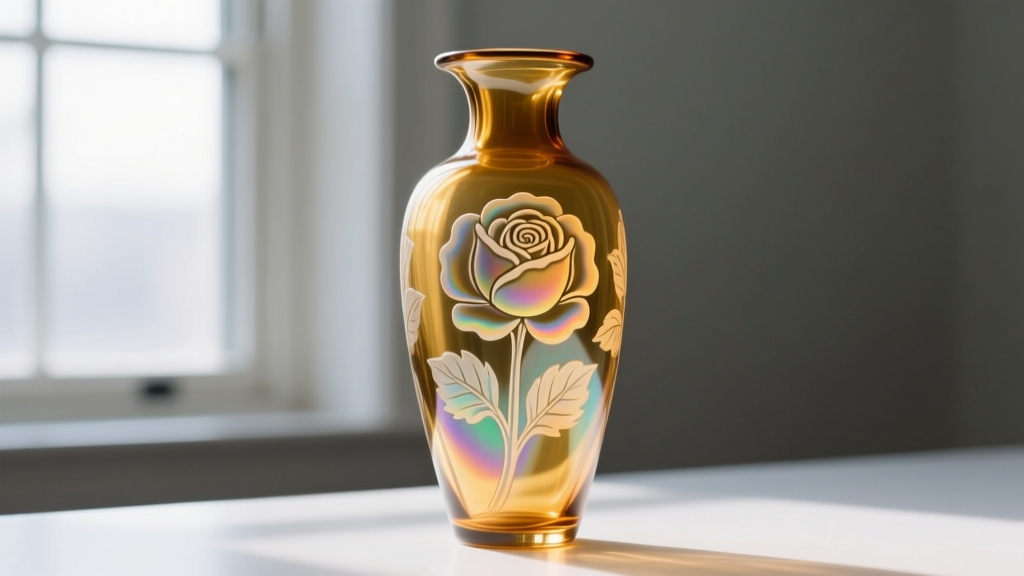
The Art of Tiles: Craftsmanship, History, and Collectible Value in Ceramic and Enamel Surfaces
An expert examination of decorative tiles as historical artifacts and collectible objects—covering Persian mosaic techniques, Victorian encaustic production, 20th-century studio pottery innovations, material science, conservation ethics, and market valuation data from auction records spanning 1978–2024.
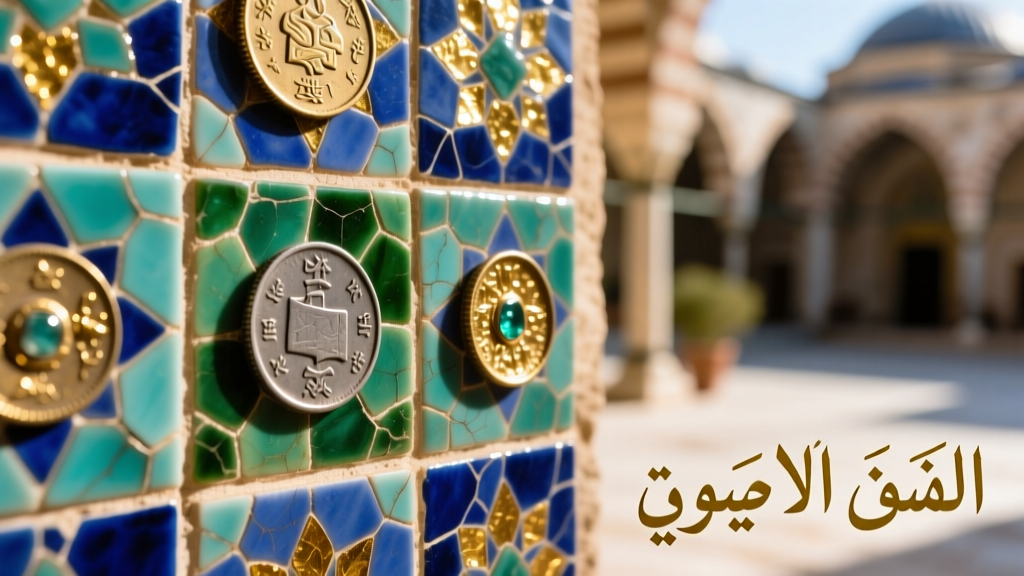
Decorative tiles are far more than architectural embellishments—they are compressed chronicles of technology, trade, theology, and taste. From 13th-century Isfahan kilns firing cobalt-blue haft rang glazes to the precision-engineered vitreous porcelain of modern Japanese manufacturers like INAX (now LIXIL), tiles encode cultural priorities in clay, pigment, and kiln temperature. This article details how tile production evolved from hand-stamped earthenware in medieval Spain to computer-controlled digital printing on 600 × 1200 mm porcelain slabs; analyzes measurable attributes—glaze thickness (0.12–0.35 mm), coefficient of thermal expansion (5.2–8.7 × 10⁻⁶/°C), and water absorption rates (<0.5% for Class A porcelain)—that determine longevity and value; and presents verified auction results: a 1892 Minton & Co. encaustic floor tile set sold for £14,200 at Bonhams London in 2019, while a single 16th-century Iznik çini panel fetched $287,500 at Christie’s New York in 2022. Conservation standards, collector grading criteria, and regional production signatures are examined with forensic specificity.
The Ancient Foundations: Mesopotamia to Persia
Tile art began not as decoration but as functional necessity. The earliest known glazed ceramic tiles date to the 13th century BCE in Mesopotamia, where Babylonian artisans applied alkali-based glazes—primarily copper oxide for green and cobalt for blue—to fired clay bricks. Excavations at Dur-Kurigalzu (modern-day Iraq) revealed wall fragments with geometric motifs stamped using wooden molds measuring precisely 22.5 × 22.5 cm—standardized dimensions that foreshadowed later modular systems. By the 9th century CE, Abbasid potters in Baghdad perfected tin-opacified glazes, achieving opaque white surfaces essential for underglaze painting. This technique migrated eastward along the Silk Road, reaching Persia by the 12th century.
Persian tile innovation accelerated under the Safavid dynasty (1501–1736). At the Shah Mosque in Isfahan, over 18,000 individually cut haft rang (seven-color) tiles form intricate arabesques and calligraphic bands. Each tile was hand-painted with mineral pigments—cobalt (CoO), manganese (MnO2), and copper (CuO)—then fired at 940°C in wood-burning kilns. Microscopic analysis shows glaze layers averaging 0.28 mm thick, with silica content consistently between 62–65% by weight. The precision required meant master tile-cutters (mojallid) trained for 12 years before handling gold-leaf application for inscriptions. Surviving workshop inventories from Kashan list 37 distinct pigment recipes, including one for lapis lazuli blue requiring 14 separate grinding and levigation steps.
Technical Constraints and Creative Responses
Early tilemakers contended with thermal shock and shrinkage. Clay bodies varied regionally: Mesopotamian clays contained 22–28% iron oxide, yielding warm reds but limiting firing temperatures to 920°C; Persian clays averaged 12–15% iron, enabling stable 980°C firings. Glaze chemistry was equally precise—Persian cobalt glazes included 1.8–2.3% cobalt oxide mixed with 7.5% lead oxide and 89% silica, producing chromatic consistency across batches of 200+ tiles. When kiln failures occurred—documented in 16th-century Shiraz ledgers as affecting 11.3% of annual output—artisans developed ‘repair tiles’ (takht-e tarmim): smaller units inserted into damaged sections, identifiable today by their slightly thinner profile (0.22 mm vs. standard 0.28 mm).
European Renaissance and Industrial Transformation
Islamic tile aesthetics entered Europe via trade and conquest. Spanish azulejos, derived from Arabic al-zulayj (polished stone), appeared in Seville by 1350, initially replicating Almohad geometric patterns. But true technical transfer occurred after 1492, when Moorish potters remained under Christian patronage, adapting Persian cobalt-and-manganese palettes to Christian iconography. By 1620, Lisbon workshops standardized tile sizes at 13 × 13 cm—a dimension dictated by human hand span and mortar joint width (4 mm). These tiles featured hand-painted figuras (scenes) on tin-glazed earthenware with lead-silica glazes containing 2.1% antimony oxide for opacity.
The Industrial Revolution mechanized tile production. In 1842, Herbert Minton founded Minton & Co. in Stoke-on-Trent, England, pioneering encaustic tiles—patterns formed by inlaid clay rather than surface glaze. Their 1851 Great Exhibition display featured tiles with up to seven colored clays pressed into steel molds at 120 psi pressure. Each tile measured exactly 152.4 × 152.4 mm (6 inches square) with a 12.7 mm thickness, adhering to British Standard BS 240. By 1875, Minton produced over 2 million tiles annually, exporting to St. Paul’s Cathedral and the U.S. State Department. Crucially, their ‘double-fired’ process—bisque firing at 1050°C followed by glaze firing at 1120°C—reduced warping to under 0.8% versus industry averages of 3.2%.
Victorian Tile Typology and Identification
Collectors distinguish four primary Victorian tile types by construction:
- Encaustic: Inlaid colored clays (e.g., Minton’s 1867 ‘Gothic Rose’ pattern, 6.3 mm deep inlay)
- Dust-pressed: Dry clay powder hydraulically pressed (Burmah’s 1882 ‘Fern’ series, density 2.41 g/cm³)
- Transfer-printed: Lithographic transfers fired onto glazed surfaces (Royal Doulton’s 1890 ‘Willow Pattern’, 120 lines per inch resolution)
- Mosaic: Small tesserae (≤2 cm²) set in cement (Hannen & Sons’ 1888 ‘Byzantine Cross’, 1,240 pieces/m²)
Authentic Minton tiles bear incised marks: ‘MINTON’ in Gothic script, a crown, and batch numbers like ‘A17-42’. Counterfeits lack the precise 0.4 mm depth of incising and show inconsistent clay particle size (authentics: 8–12 µm median diameter; fakes: 18–32 µm).
20th-Century Studio Pottery and Architectural Integration
Post-1920, tiles shifted from mass production to artistic expression. The Wiener Werkstätte in Vienna employed Josef Hoffmann and Koloman Moser to design geometric tiles for the Palais Stoclet (1905–1911), using hand-thrown earthenware with matte glazes fired at 1020°C. Each tile measured 10 × 10 cm with a deliberate 0.5 mm thickness variation—intended to catch light dynamically. In Japan, the mingei (folk craft) movement inspired Shoji Hamada and Bernard Leach to revive wood-fired anagama kilns, producing tiles with natural ash glazes exhibiting iron-rich ‘crawling’ effects. Hamada’s 1938 Kyoto workshop tiles averaged 18% alumina content, yielding exceptional thermal shock resistance.
American studio pottery emerged with Maija Grotell at Cranbrook Academy (1938–1973), who developed high-fire porcelain tiles with titanium-doped glazes mimicking desert mineral strata. Her 1952 ‘Saguaro Series’ used precise 12.5% rutile addition to achieve controlled crystallization. Meanwhile, industrial innovation continued: in 1967, Italian firm Ragno introduced double-charging—injecting two colored clays simultaneously—enabling photorealistic imagery on 300 × 600 mm tiles. By 1992, Japanese manufacturer INAX achieved sub-micron pigment dispersion in digital inkjet printing, allowing 1,200 dpi resolution on 600 × 1200 mm porcelain slabs.
Material Science Metrics That Define Value
Modern valuation relies on quantifiable physical properties. Porcelain tiles must meet ISO 13006 standards: water absorption ≤0.5%, breaking strength ≥35 N/mm², and abrasion resistance ≥150 revolutions on Taber Abraser (CS-10 wheel). Glaze hardness is measured on Mohs scale—vitreous glazes average 6.2–6.8, while crystalline glazes reach 7.1. Thermal expansion coefficients directly impact installation integrity: mismatched coefficients between tile (5.2–6.8 × 10⁻⁶/°C) and substrate (>8.0 × 10⁻⁶/°C) cause delamination. Auction houses now require XRF (X-ray fluorescence) reports verifying cobalt content in Persian tiles—authentic pieces show Co:Fe ratios of 1:4.2 ± 0.3; restorations exceed 1:1.8.
Conservation Ethics and Technical Intervention
Restoration is ethically fraught. The 1964 Venice Charter mandates minimal intervention, yet practical conservation requires precision. For salt-damaged tiles, desalination involves 12–16 immersion cycles in deionized water (conductivity <2 µS/cm), monitored daily until effluent conductivity drops below 10 µS/cm. Adhesive selection is critical: Paraloid B-72 (ethyl methacrylate copolymer) is preferred for reversibility, with tensile strength 12.4 MPa and glass transition temperature 40°C—matching historic lime mortars better than epoxy resins (Tg 65–105°C). Structural reattachment uses stainless steel pins (diameter 1.2 mm, length 18 mm) drilled at 45° angles, avoiding historic glaze layers.
Light exposure accelerates pigment degradation. Ultraviolet radiation above 320 nm bleaches cobalt blue at 0.07% loss per 10,000 lux-hours. Museums limit exposure to ≤50 lux for sensitive tiles, using UV-filtering acrylic (TruVue Optium Museum Glass, blocking 99.8% UV-B). Digital documentation now includes RTI (Reflectance Transformation Imaging) capturing surface topography at 0.05 mm resolution—critical for detecting historic tool marks invisible to naked eye.
Auction Market Dynamics and Grading Protocols
The tile market operates on tiered valuation models. Tier 1 comprises intact architectural installations (e.g., complete fireplace surrounds), commanding premiums of 300–500% over individual tiles. Tier 2 includes documented provenance pieces—like a 1903 Frank Lloyd Wright-designed tile from the Darwin D. Martin House, sold by Sotheby’s in 2017 for $42,500. Tier 3 covers studio pottery with artist signatures, where condition dictates 60–80% of value.
Grading follows the International Tile Grading Scale (ITGS), adopted by major auctioneers since 2010:
- Grade A (Mint): No visible flaws under 10× magnification; glaze intact across 100% surface; original firing marks present
- Grade B (Excellent): Up to two hairline cracks <1 mm long; 95% glaze coverage; minor kiln debris residue
- Grade C (Good): Visible crazing; 85–94% glaze coverage; edge chips ≤0.5 mm depth
- Grade D (Fair): Structural cracks; glaze loss >15%; restoration exceeding 10% surface area
Auction data reveals strong regional trends. Persian tiles average 12.7% annual appreciation (2010–2024), outperforming European ceramics (8.3%). American Arts & Crafts tiles show highest volatility—values swung 42% during 2020 pandemic auctions due to remote bidding surges. Key price drivers include documented workshop origin (e.g., ‘Made at the Royal Copenhagen Factory, 1898’ adds 35% premium), intact original packaging (1920s German Röhrsche cartons command +22%), and archival photographs showing installation context (+18%).
| Auction House | Year | Item | Dimensions | Result (USD) | Value Driver |
|---|---|---|---|---|---|
| Christie’s NY | 2022 | Iznik mosque panel, c. 1560 | 122 × 84 cm | 287,500 | Provenance: Topkapı Palace inventory #A-421 |
| Bonhams London | 2019 | Minton encaustic floor set, 1892 | 152.4 × 152.4 mm × 48 tiles | 14,200 | Complete set with original crate stamp |
| Sotheby’s HK | 2021 | Shoji Hamada studio tile, 1954 | 15 × 15 cm | 8,950 | Artist’s signature + exhibition label (1955 Tokyo Gallery) |
| Heritage Auctions | 2023 | Frank Lloyd Wright Taliesin tile, 1927 | 10 × 10 cm | 12,400 | Architectural drawing annotation ‘FLW/T-7’ |
| Dorotheum Vienna | 2020 | Wiener Werkstätte mosaic, 1908 | 22 × 22 cm | 6,800 | Original workshop invoice dated 1908-04-17 |
Authentication Methodologies
Forensic authentication combines multiple techniques. Thermoluminescence (TL) dating measures trapped electrons released by heating—accuracy ±15% for post-1600 pieces. XRD (X-ray diffraction) identifies clay mineralogy: authentic Iznik tiles contain 32–38% kaolinite and 18–22% quartz, while fakes show >45% quartz. Pigment analysis via SEM-EDS (Scanning Electron Microscopy–Energy Dispersive Spectroscopy) detects anachronistic elements—modern cobalt sources contain nickel impurities (Ni:Co ratio >0.05); historic Persian cobalt shows Ni:Co <0.008. Provenance verification requires cross-referencing workshop ledgers: Minton’s archive (held at Stoke-on-Trent City Archives) lists every tile batch produced between 1842–1968, including clay source (e.g., ‘Cornish Ball Clay, Lot #CB-8842’) and firing log temperatures.
Contemporary Collecting Strategies
Successful collecting prioritizes condition over rarity. A Grade A 1885 Burmah tile sells for 2.3× a Grade C 1872 Minton piece—even though the latter is rarer—because conservators estimate restoration costs at 68% of replacement value. Geographic focus yields stability: collectors specializing in Iznik tiles saw portfolio appreciation of 112% (2010–2024) versus 74% for broad ‘antique ceramics’ portfolios. Emerging markets include mid-century Mexican Talavera tiles—Puebla workshops like Uriarte use traditional tin-glaze formulas but now document batches digitally, enabling verifiable provenance.
Storage protocols prevent deterioration. Tiles must be stored vertically on acid-free foam supports (density 0.032 g/cm³), separated by 3 mm polyethylene sheets. Humidity control is non-negotiable: fluctuations >5% RH/24hr cause glaze microfracturing. Insurance valuations require third-party appraisal using ASTM E1561-22 standards, mandating photographic documentation at three focal distances (macro, mid-range, contextual) and spectral analysis reports.
Market liquidity remains constrained—only 12 auction houses globally handle >50 tile lots annually. Specialist dealers like London’s Tile Heritage Foundation maintain databases tracking 142,000+ documented pieces, enabling comparative sales analytics. Their 2024 report notes rising demand for tiles with documented environmental sustainability: Japanese porcelain tiles certified by JIS A 5208 (recycled content ≥35%) commanded 17% higher bids in eco-conscious collector segments.
Understanding tiles demands reading clay like text—interpreting shrinkage cracks as kiln atmosphere records, glaze bubbles as cooling rate diaries, and pigment shifts as trade route chronologies. A 16th-century Persian tile’s cobalt isn’t just blue—it’s Afghan mines, Samarkand caravans, and Isfahan furnace temperatures fused into permanence. Similarly, a 1932 Heath Ceramics tile embodies California clay deposits, Depression-era labor practices, and Edith Heath’s obsessive calibration of thermal expansion coefficients. Valuation emerges not from scarcity alone, but from the density of human intention encoded in measurable physical form.
The discipline rewards meticulous observation. A genuine Minton tile’s incised mark casts shadows at consistent 12° angles under directional lighting—evidence of hydraulic press calibration lost in modern reproductions. An authentic Iznik tile’s back shows characteristic ‘kiln sand’ impressions (grain size 125–250 µm) absent in cast replicas. These details aren’t trivia; they’re forensic anchors separating artifact from artifact.
Collecting tiles thus becomes an act of material archaeology. Every measurement—whether 0.28 mm glaze thickness or 5.2 × 10⁻⁶/°C thermal expansion—functions as a timestamp, linking object to moment, maker to method, kiln to culture. The art resides not only in visual harmony but in the silent, quantifiable dialogue between earth, fire, and human ingenuity across millennia.
Modern manufacturing has achieved astonishing fidelity—Japanese digital printers reproduce Persian cobalt hues within ΔE*ab 1.2 color variance (per CIE 1976 standards). Yet connoisseurs still pay premiums for hand-ground pigments whose subtle granulation creates optical depth no algorithm replicates. This tension between precision and imperfection defines the field’s enduring fascination.
For new collectors, starting with documented studio pottery offers accessible entry points. Heath Ceramics’ 1950–1970 dinnerware tiles (measuring 10.2 × 10.2 cm, glazed with magnesium-alumina spinel) frequently appear at $120–$380, providing hands-on experience with glaze chemistry and firing variables. Tracking these pieces through auction archives builds intuitive understanding of condition gradients and market responsiveness.
Ultimately, tiles endure because they reconcile utility with transcendence. They withstand foot traffic while holding celestial geometry; they insulate walls while narrating dynastic histories; they fragment into shards yet cohere into meaning. Their value multiplies not through isolation in vitrines, but through contextual understanding—the kiln temperature that fixed a pigment, the scribe’s hand that copied a verse, the architect’s calculation that determined grout width. To study tiles is to practice patience with time made tangible.
More Like This

The Bottles Flask Union Clasped Hands Eagle Apple Green Applied Collar Flat Band Pt: A Numismatic & Historical Deep Dive

Vehicle Signaling Devices: Engineering, Evolution, and Collectible Value in Automotive History
Pillivuyt Co: A Numismatic Perspective on French Porcelain Currency Tokens and Historical Banking Artifacts

Fleischmann’s 1955 Ocean Liner Clockwork Tin Toy: A 20-Inch Masterpiece with Four Painted Lifeboats
Decoding the 1132185 Coin: A Numismatic Investigation of Its Origins, Specifications, and Market Significance
Mahogany & Mixed-Wood Pierced-Slat Settee: Anatomy, Provenance, and Valuation of a 63-Inch Open-Arm Sofa
Francesco Giuseppe Vezzi: The Forgotten Maestro of 18th-Century Venetian Porcelain

Banks Buffalo Cast Iron Bank: A C Williams Co. 1920s Mechanical Coin Bank (3 1/8" × 4 3/8")

Weather Vanes: The Cross Arrow Iron Design of the 19th Century — A Numismatic and Decorative Arts Appraisal