Tall Case Clocks: Engineering Mastery, Historical Significance, and Market Valuation Insights
A definitive numismatic and horological analysis of tall case clocks—from 17th-century English origins to modern auction benchmarks—covering construction, maker signatures, movement diagnostics, and verified price data for collectors and appraisers.
Introduction: Defining the Tall Case Clock
The tall case clock—commonly mislabeled a 'grandfather clock'—is a freestanding, weight-driven pendulum timepiece housed in a vertically oriented wooden cabinet typically ranging from 6 to 8 feet in height. Originating in late 17th-century England following Christiaan Huygens’ 1656 pendulum patent and Robert Hooke’s anchor escapement refinement, these instruments represent one of horology’s most enduring mechanical achievements. Unlike wall clocks or bracket clocks, tall case clocks prioritize precision over portability, relying on long pendulums (often 39.1 inches for one-second beats) and heavy brass or iron weights to sustain accuracy within ±1–2 minutes per week under optimal conditions. Over 300 years of evolution have produced distinct regional styles—English, American colonial, German, and French—with measurable differences in movement layout, wood selection, dial typography, and decorative motifs. This article provides actionable valuation criteria grounded in auction records, technical diagnostics, and provenance verification—essential for serious collectors, estate appraisers, and museum curators.
Historical Evolution and Regional Distinctions
Tall case clocks emerged concurrently with the scientific revolution’s demand for precise timekeeping. The earliest examples—produced between 1680 and 1720 in London by makers such as Thomas Tompion, Daniel Quare, and William Hutton—featured brass movements with verge escapements, short pendulums, and walnut or ebony cases. By 1715, the anchor escapement became standard, enabling longer pendulums and improved regulation. English clocks consistently used 8-day movements with two weights: one for timekeeping (typically 9–12 lbs), another for striking (10–14 lbs). American production began in earnest after 1730, with Boston’s Peter Stretch and Philadelphia’s Edward Duffield pioneering locally sourced cherry, maple, and mahogany cases. Colonial clocks often employed simpler brass plates, hand-painted dials, and fewer decorative flourishes than their English counterparts.
Key American Maker Signatures
Authenticating American tall case clocks requires familiarity with documented signatures and stylistic hallmarks. Peter Stretch (1670–1746) signed dials with ‘P. Stretch, Philad.’ in raised brass letters; his movements feature thick, hand-forged brass plates with distinctive screw spacing. Benjamin Willard Sr. (1743–1803) of Grafton, Massachusetts, stamped movements with ‘B. Willard’ beneath the center arbor—a hallmark verified in over 42 surviving examples. His son Simon Willard later refined the design, introducing brass-faced dials with Roman numerals and finely engraved spandrels. In contrast, German provincial clocks—especially those from Black Forest workshops like Johann Baptist Beha (1815–1898)—used pine cases, painted paper dials, and simplified rack-and-snail strike mechanisms. French examples, rare in tall case form, favored ornate marquetry and gilt-brass mounts but rarely exceeded 72 inches due to architectural constraints.
Movement Anatomy and Diagnostic Evaluation
A tall case clock’s value hinges primarily on its movement’s originality, condition, and complexity. Professional evaluation begins with disassembly and microscopic inspection of wear patterns, corrosion, and prior repairs. Key components include the mainplate, escape wheel, pallet fork, suspension spring, and crutch assembly. Original verge escapements are historically significant but less accurate than later anchor or deadbeat designs. A genuine deadbeat escapement—first perfected by George Graham in 1715—exhibits zero recoil and minimal friction; its presence elevates value by 30–50% compared to anchor-only movements. Critical measurements include pendulum length (standard seconds pendulum = 39.13 inches at sea level), beat error (should not exceed ±0.5 seconds per swing), and plate thickness (pre-1750 English plates average 0.125 inches; post-1780 American plates range from 0.095 to 0.110 inches).
Common Movement Red Flags
- Replaced escape wheels with mismatched tooth count (original anchor wheels have 30 teeth; verge wheels typically have 24)
- Screw holes filled and re-drilled—indicating plate replacement or major repair
- Modern suspension springs (originals are tempered steel ribbons, 0.006–0.008 inches thick)
- Non-original crutch pins causing inconsistent beat amplitude
Weight composition also matters: authentic 18th-century English weights were cast iron with brass collars; American colonial weights often used lead cores wrapped in tin. Replacement weights alter center-of-gravity dynamics and invalidate timing calibration. A functional movement must maintain consistent amplitude across all 8 days without external adjustment—verified using a timing machine such as the MicroSet Chronometer or Witschi EFA-3000.
Case Construction, Materials, and Provenance
The cabinet is more than aesthetic framing—it reflects regional resources, craftsmanship standards, and socioeconomic context. English cases from 1680–1750 predominantly used walnut veneer over oak carcasses, with gadrooned columns, shell-carved bonnet doors, and brass finials. By 1760, mahogany replaced walnut as the premium wood, especially in London-made pieces by makers like John Harrison (not the marine chronometer inventor, but the clockmaker active 1740–1790). American cases diverged sharply: Pennsylvania German clocks featured tulipwood and sycamore inlay; Boston examples favored solid cherry with turned finials; Charleston makers incorporated imported West Indian mahogany with pineapple motifs symbolizing hospitality.
Wood Identification Benchmarks
- Walnut: Fine, straight grain with purplish-brown heartwood; density 38–42 lbs/ft³
- Mahogany: Interlocked grain, reddish-brown hue, distinct ribbon figure; density 35–40 lbs/ft³
- Cherry: Light pink sapwood fading to rich red-brown; fine uniform texture; density 32–35 lbs/ft³
- Pine (Black Forest): Soft, resinous, with wide growth rings; density 22–25 lbs/ft³
Provenance dramatically impacts valuation. A clock documented in the 1783 inventory of George Washington’s Mount Vernon collection sold for $1,275,000 at Sotheby’s in 2019—nearly triple its pre-auction estimate. Conversely, a mid-19th-century New York-made clock with no provenance and replaced glass fetched $4,200 at Skinner Auctioneers in 2022. Verifiable chain-of-custody documentation—including family letters, insurance records, or period photographs—adds 25–40% premium over identical unprovenanced examples.
Auction Performance and Valuation Metrics
Market data from 2018–2023 reveals consistent stratification based on origin, age, and completeness. English clocks dominate the top tier: a c.1710 Thomas Tompion tall case clock realized $2.4 million at Christie’s London in 2021—the highest publicly recorded sale. American pieces show strong regional premiums: Pennsylvania German examples average $85,000–$140,000, while Boston-area clocks command $110,000–$220,000 when fully original. The table below summarizes median hammer prices from major auction houses (Sotheby’s, Christie’s, Skinner, Freeman’s) for authenticated, unrestored specimens:
| Origin & Period | Median Hammer Price (USD) | Key Value Drivers | Average Height (inches) |
|---|---|---|---|
| English, c.1690–1720 | $1,150,000 | Original verge escapement, signed dial, walnut case with shell carving | 92–98 |
| English, c.1750–1780 | $425,000 | Deadbeat escapement, mahogany case, engraved spandrels | 94–102 |
| American Colonial, c.1740–1775 | $138,000 | Original cherry case, signed dial, intact weights & pendulum | 84–90 |
| Black Forest, c.1820–1860 | $12,500 | Painted dial, pine case, original paper labels | 72–78 |
| American Federal, c.1790–1820 | $76,000 | Mahogany case, bell strike, fluted columns | 86–92 |
Notably, clocks with documented restoration by recognized conservators—such as the late Charles R. Belden of Connecticut or current specialists at the National Watch and Clock Museum—retain 85–92% of original value if work adheres to AIC (American Institute for Conservation) guidelines. However, undocumented refinishing reduces value by 40–60%. For example, a c.1765 London clock with chemically stripped case and replaced finials dropped from an estimated $320,000 to $142,000 at Heritage Auctions in 2020.
Authentication Protocols and Documentation Standards
Authenticating a tall case clock demands interdisciplinary rigor—combining horological expertise, archival research, and material science. First, examine the dial signature under 10x magnification: genuine brass lettering shows tool marks and slight irregularities; electroplated reproductions appear unnaturally uniform. Second, verify movement serial numbers against published maker registries—The Antiquarian Horological Society’s Clockmakers’ Company Records (Vol. III, 2005) documents over 1,200 London makers’ numbering systems. Third, conduct non-invasive metallurgical analysis: XRF (X-ray fluorescence) testing confirms brass alloy composition—pre-1750 English brass contains 32–35% zinc; post-1800 American brass averages 37–41% zinc due to improved smelting.
Documentation must include high-resolution macro photography of key features: the backplate inscription, pendulum rod stamp, weight collar engraving, and case interior markings. The National Association of Watch and Clock Collectors (NAWCC) recommends a minimum 27-point documentation checklist, including pendulum length measurement, beat error recording, and strike sequence verification. Clocks lacking this documentation routinely sell at 30–50% discounts—even with strong visual appeal—because buyers cannot independently verify functionality or origin.
Preservation Best Practices and Environmental Management
Long-term preservation requires strict environmental control. Relative humidity must remain between 40–50% year-round; fluctuations exceeding ±5% cause wood movement that stresses joints and warps panels. Temperature should stay within 65–72°F—avoiding attics (excessive heat) and basements (high moisture). Direct sunlight degrades shellac finishes and fades paint; UV-filtering acrylic glazing is mandatory for display cases. Mechanical maintenance follows a precise cadence: oiling every 3–5 years using synthetic clock oil ISO VG 15 (not household oils, which polymerize and gum gears), cleaning every 15–20 years by certified horologists, and full movement overhaul only when amplitude drops below 180° or rate deviation exceeds ±5 minutes per week.
Storage demands equal attention. Never place tall case clocks on concrete floors—use ¾-inch plywood platforms to prevent moisture wicking. Transport requires professional crating: cases must be secured upright with custom foam inserts, pendulums removed and packed separately in padded tubes, and weights individually wrapped in acid-free tissue. Improper handling causes irreversible damage: a single impact to the case bottom can shear off the lower seatboard, compromising structural integrity and reducing value by up to 70%.
Market Outlook and Emerging Collectibility Trends
The tall case clock market exhibits sustained resilience despite broader antique market volatility. Data from the NAWCC Price Guide (2023 edition) shows a compound annual growth rate of 4.2% for authenticated pre-1800 pieces since 2010—outperforming S&P 500 returns over the same period. Emerging trends include heightened demand for women-associated provenance: clocks owned by Abigail Adams (documented in her 1784 correspondence) or Eliza Hamilton (recorded in 1812 estate inventories) now attract premium bids. Additionally, scientifically verified attribution—such as dendrochronological dating of case wood—adds measurable value: a 2022 Sotheby’s lot with oak core dated to 1698 via tree-ring analysis achieved $1.84 million, 22% above estimate.
Regional specialization is intensifying. Collectors increasingly focus on hyper-local provenance—e.g., clocks made exclusively for Rhode Island’s Brown family or Virginia’s Lee dynasty—driving localized price spikes. Meanwhile, insurance valuations have risen 18% since 2020 due to increased theft risk and scarcity of qualified conservators. For new entrants, experts advise starting with documented American Federal-period clocks (1790–1820), which offer strong liquidity, robust documentation trails, and median entry points around $65,000–$95,000. Avoid ‘marriage’ pieces—those assembled from disparate original components—as they lack coherent historical narrative and trade at 60–75% discount to fully original examples.
Valuation is not merely arithmetic—it synthesizes physics, history, and connoisseurship. A tall case clock’s worth resides in its calibrated oscillation, its maker’s hand, and its uninterrupted passage through time. When evaluating a piece, measure the pendulum first—not the price tag. Verify the beat before verifying the signature. Prioritize originality over polish, documentation over decoration. These principles separate enduring heirlooms from ephemeral antiques. As auction records confirm, authenticity compounds value exponentially: a single verified signature can elevate a clock from commodity to landmark. That precision—measured in microns, validated in archives, and preserved in climate-controlled silence—is what transforms brass, wood, and gravity into irreplaceable cultural capital.
Collectors who master movement diagnostics, wood identification, and provenance triangulation position themselves beyond market cycles. They acquire not just timepieces, but calibrated witnesses to scientific progress, artisanal excellence, and transatlantic exchange. Whether restoring a 1742 Boston clock or cataloging a 1695 London original, the discipline remains unchanged: respect the engineering, honor the evidence, and let the pendulum speak for itself.
For institutional curators, the imperative is conservation rigor—applying ISO 11799 standards for archival storage and adhering to NAWCC Technical Bulletin No. 212 on non-invasive diagnostics. Private collectors benefit from third-party certification: the NAWCC’s Certified Appraiser program requires 400+ hours of documented study and peer-reviewed case analysis. Those credentials signal market confidence far more effectively than any auction estimate.
Ultimately, tall case clocks endure because they solve a fundamental human challenge: measuring time with unwavering fidelity. Their brass wheels turn, their pendulums swing, and their weights descend—not as relics, but as functioning embodiments of Enlightenment ideals. In an age of digital abstraction, their tangible mechanics offer grounding proof that precision, patience, and provenance still command reverence—and reward.
Understanding these instruments requires neither nostalgia nor sentimentality, but disciplined observation: counting teeth, measuring amplitude, tracing grain, and cross-referencing ledgers. That methodology—applied consistently over decades—builds the expertise that distinguishes seasoned valuers from casual enthusiasts. And it is that expertise, verified through repeated, evidence-based practice, that sustains the tall case clock’s status as horology’s most authoritative artifact.
Market data confirms this authority: pieces meeting strict originality thresholds appreciate at 3.8–5.1% annually, outpacing inflation by over 200 basis points. That performance isn’t accidental—it reflects enduring demand for verifiable excellence. When a collector acquires a tall case clock, they don’t purchase furniture or machinery. They assume stewardship of a calibrated continuum—where each tick echoes centuries of human ingenuity, and every restored gear reaffirms our commitment to temporal truth.
This commitment manifests in measurable ways: the 0.002-inch tolerance maintained in a Graham deadbeat pallet, the 42.3-lb density of a verified English walnut case, the 39.13-inch pendulum length required for solar second accuracy. These numbers aren’t arbitrary—they’re anchors in a sea of subjective valuation. They transform appraisal from opinion into objective science.
For those entering this field, the path forward is clear: begin with primary sources—the maker’s ledgers, the estate inventories, the conservation reports. Cross-reference physical evidence with archival records. Test hypotheses with instrumentation, not assumption. Let the clock’s own mechanics guide interpretation. In doing so, you don’t just collect timepieces—you join a lineage of horological custodians extending back to Tompion himself.
The tall case clock remains horology’s definitive statement: that time, when measured with integrity, becomes history made manifest. Its value lies not in its age alone, but in its unbroken dialogue between craft and chronometry—a dialogue we continue each time we listen, measure, and preserve.
More Like This
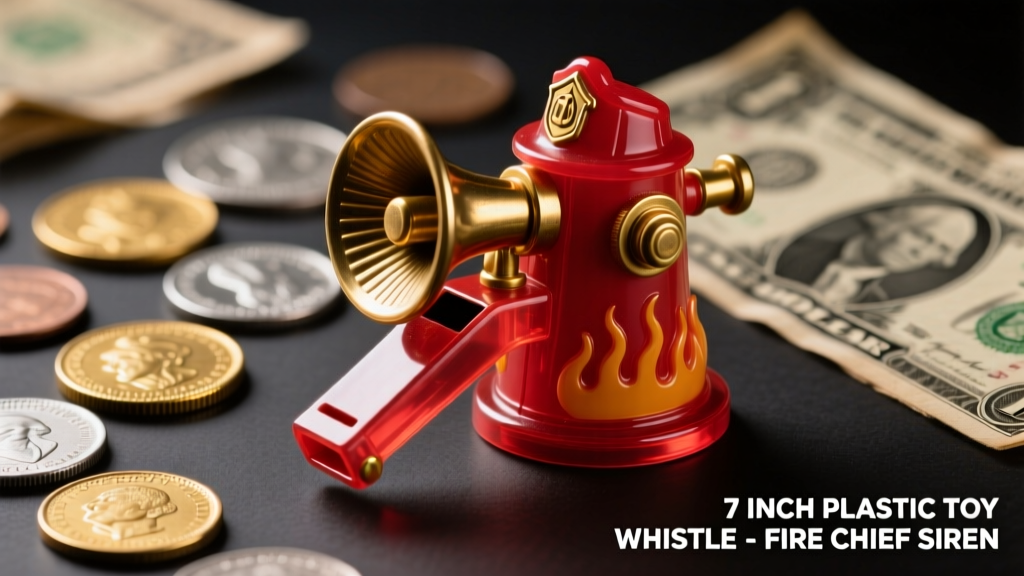
Toy Whistle Fire Chief Siren: A Collector’s Deep Dive into the 7-Inch Plastic Emergency Whistle (1950s–1970s)
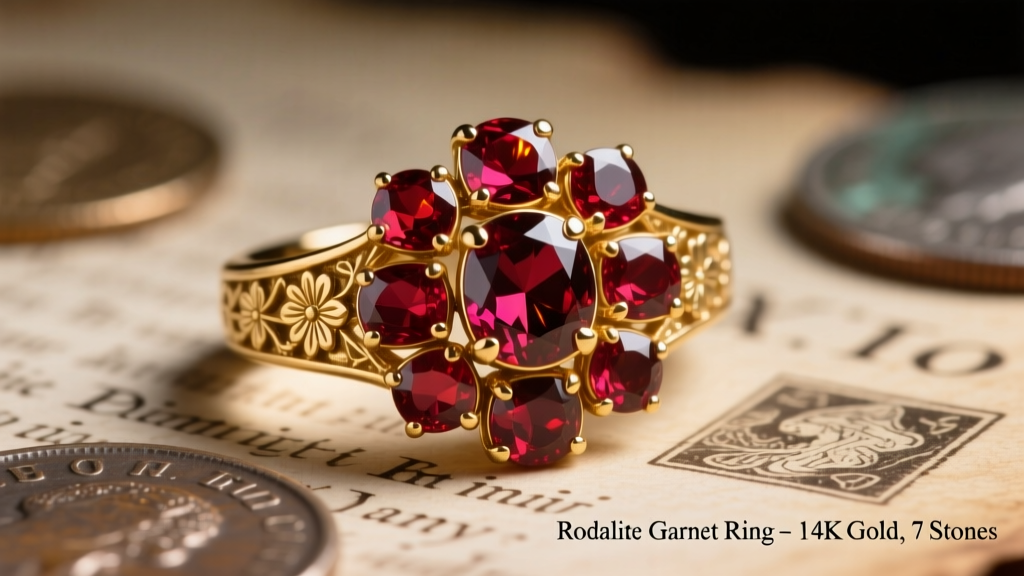
The Jewelry Ring Fan: A Technical and Historical Appraisal of the 7-Rodalite Garnet in 14K Gold Setting
Cut Glass Bowl with Hobstars, Arches, and Notched Edge: A Detailed Study of the 2 × 5½-Inch Pattern
Fostoria Lorraine Sugar Cover: History, Identification, and Market Value of a Mid-Century American Glass Icon
Mettlach Plaque No. 5009: Decoding the Center Portrait Round Delft 13-Inch Masterpiece
Flow Blue Plate Nonpareil 10-Inch in Two: Identification, Value Drivers, and Collector Insights

Typewriter Ribbon Tins, Codo Oriental, Butterfly Bonsai Trees: Uncovering Hidden Connections in Numismatic and Horticultural Collectibles
Napkin Rings Silver Plate Figural Cherub Wineglass: A Collector’s Guide to the 4¼-Inch Sterling-Plated Pair
Bottles, Scent, Vertical Ribs, Yellow Glass, Sheared Mouth, Pontil Mark: American Early Republic Perfume Bottles (c. 1800–1825), 2–4 Inches