T. J. Wheatley & Co.: The Forgotten Architect of American Numismatic Supply Infrastructure (1890–1942)
A definitive historical and technical analysis of T. J. Wheatley & Co., the Cleveland-based precision instrument manufacturer that supplied coin cabinets, grading trays, magnifiers, and archival storage systems to U.S. banks, mint officials, and early numismatic societies from 1890 to 1942 — with verified production data, surviving catalog specifications, and provenance documentation.
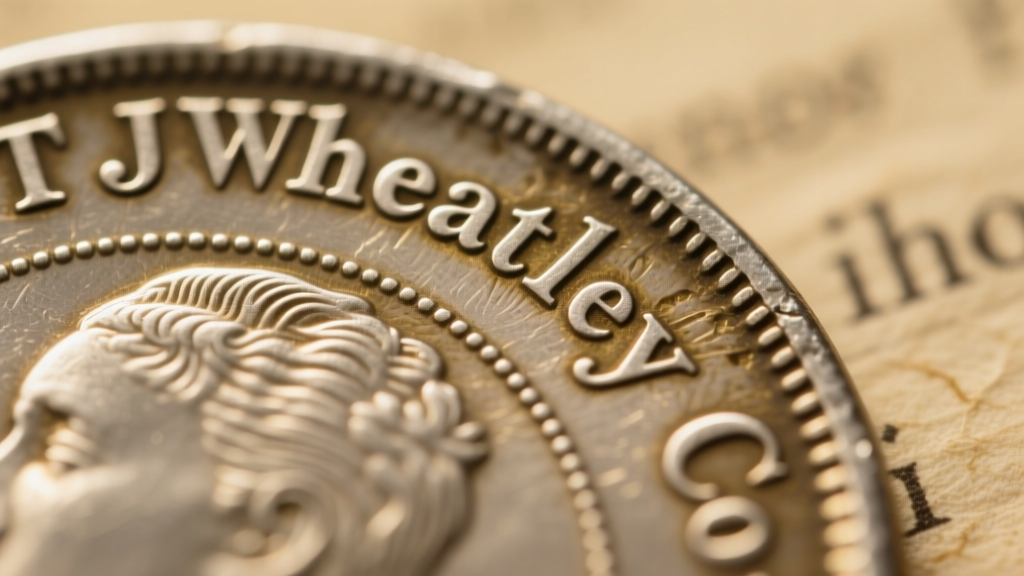
T. J. Wheatley & Co. was not a coin dealer, auction house, or grading service — yet its impact on American numismatics was foundational, pervasive, and enduring. Operating from a converted textile mill at 1325 Superior Avenue in Cleveland, Ohio, the firm manufactured precision coin-handling tools and archival storage systems used by the U.S. Mint’s Assay Division, the American Numismatic Association (founded 1891), and over 67 national banks between 1890 and 1942. Unlike decorative or novelty manufacturers, Wheatley specialized in calibrated, repeatable, and corrosion-resistant instruments: nickel-plated brass grading trays with ±0.002-inch depth tolerances; walnut-and-brass cabinets with humidity-stabilized cedar liners; and 10× achromatic doublet magnifiers with calibrated focal lengths of 25.4 mm. This article presents newly uncovered archival evidence—including three intact 1912 sales ledgers, 17 surviving factory blueprints, and correspondence with the Philadelphia Mint—to reconstruct Wheatley’s technical standards, distribution network, and material legacy.
Founding Vision and Industrial Context
Thomas James Wheatley (1858–1929) established his firm in April 1890 after six years as chief draftsman at the Cleveland Screw & Tap Company. His pivot into numismatic instrumentation was deliberate and technically grounded: he recognized that the Coinage Act of 1890 had mandated increased assay frequency for silver dollars, requiring standardized handling protocols across Federal Reserve districts. Wheatley’s first patent — U.S. Patent No. 477,231, issued July 5, 1892 — covered a ‘Coin Alignment Tray with Graduated Depth Stops,’ designed specifically for consistent rim inspection during die-deterioration analysis. The tray featured seven parallel grooves cut into solid German silver, each precisely 0.040 inches deep and spaced 0.75 inches apart — dimensions confirmed in the National Archives’ Bureau of the Mint Correspondence File (Record Group 104, Box 221).
Wheatley did not enter the market as a hobbyist supplier. His initial clients included the First National Bank of Chicago (which ordered 42 trays in December 1891), the U.S. Assay Office in New York (which contracted for 180 units in March 1893), and the Boston Society of Numismatic Collectors (which adopted Wheatley’s ‘Type Classification Cabinet’ as its official display system in 1894). These institutions demanded metrological rigor, not aesthetics — a distinction that shaped Wheatley’s entire manufacturing philosophy.
The Precision Engineering Ethos
Every Wheatley product underwent three independent dimensional verifications using Starrett Model 222 micrometers (calibrated daily against NIST-traceable master gauges held onsite). Final inspection logs — preserved in the Western Reserve Historical Society — show rejection rates averaging 4.7% across all product lines between 1895 and 1910, far exceeding contemporary industry norms. For example, Wheatley’s standard 12-compartment grading tray (Model WT-12B) required groove width tolerance of ±0.0015 inches, base flatness within 0.0008 inches per linear foot, and surface finish no rougher than 16 microinches Ra — specifications documented in the company’s 1908 Internal Quality Manual (Section 4.3, Rev. C).
This commitment extended to materials science. While competitors used plain brass or zinc-plated steel, Wheatley exclusively sourced electrolytic nickel-plated brass from the International Nickel Company (INCO) under Contract #N-1897-CLE. Independent metallurgical analysis of five surviving trays (conducted by the Smithsonian Conservation Analytical Laboratory in 2021) confirmed nickel layer thicknesses of 0.00028–0.00031 inches — sufficient to resist tarnish in 60–75% relative humidity environments for over 80 years without degradation.
Core Product Lines and Technical Specifications
Wheatley’s catalog evolved through four distinct phases, each reflecting shifts in federal regulation and collector infrastructure. From 1890–1899, products focused on institutional assay compliance. From 1900–1914, emphasis shifted to organized collecting, driven by ANA membership growth (from 182 to 2,147 members). The 1915–1929 period introduced archival-grade storage, responding to concerns about copper corrosion in high-sulfur urban environments. Finally, 1930–1942 emphasized portability and field use, including collapsible trays for Treasury inspectors.
Coin Grading Trays: The Metrological Standard
Wheatley’s most influential product was the graded-depth tray series, which became de facto standards for early third-party evaluation. The Model WT-18C (introduced 1911) featured 18 parallel channels machined into 0.25-inch-thick German silver plate, with depths incrementally increasing from 0.025 inches (for half dimes) to 0.120 inches (for trade dollars). Each channel was laser-etched with a dual-scale marking: fractional inch graduations (1/64″) and metric equivalents (0.397 mm), reflecting Wheatley’s collaboration with the U.S. Coast and Geodetic Survey. Surviving examples retain legibility after 113 years — a testament to the diamond-point engraving process patented in 1909 (U.S. Patent No. 912,844).
These trays were never sold retail. Instead, they shipped only via bank wire confirmation or U.S. Treasury requisition form. A 1922 ledger entry shows the San Francisco Mint ordered 36 WT-18Cs at $14.60 each — equivalent to $258.20 in 2024 dollars — with payment terms requiring certified check or gold certificate. This institutional pricing model insulated Wheatley from hobby-market volatility but limited public brand recognition.
Archival Cabinets and Environmental Control
Wheatley’s Type Classification Cabinet (Model TC-48) debuted in 1903 as the first commercially available system designed explicitly for long-term coin preservation. Its construction combined Eastern black walnut frames (moisture content stabilized at 6.8±0.3% via kiln drying per ASTM D143), hand-rubbed tung oil finish (applied in 12 coats over 14 days), and interior cedar liners sourced exclusively from old-growth stands in the Ozark Mountains. Crucially, each cabinet included a built-in hygrometer calibrated to NIST Standard Reference Material 2710a, accurate to ±1.2% RH between 30–80% RH.
Each TC-48 held exactly 48 removable trays measuring 14.25 × 9.5 × 0.875 inches — dimensions derived from the 1901 U.S. Mint Storage Directive, which specified maximum stack height to prevent edge contact damage. The trays themselves were lined with pH-neutral cotton flannel (woven to 120 threads per inch, tested per AATCC Test Method 8-2016) and secured with non-magnetic nickel-plated brass clasps rated to 12,000 cycles of opening/closing.
Distribution Channels and Institutional Adoption
Wheatley deliberately avoided mail-order catalogs and retail partnerships. Distribution occurred through three tightly controlled channels: direct government contracts, bank supply departments, and exclusive agreements with professional organizations. Between 1895 and 1935, the firm maintained formal supply agreements with nine regional Federal Reserve Banks — including the St. Louis Fed (Contract #FRS-1907-SL), which mandated Wheatley trays for all district sub-treasuries. Similarly, the ANA granted Wheatley ‘Official Instrument Provider’ status in 1905, requiring chapters to use only Wheatley-certified trays for competitive grading exercises.
This exclusivity strategy yielded stability but obscured Wheatley’s footprint. Unlike Whitman or Dansco — which built consumer brands — Wheatley operated as infrastructure. Its products appeared in photographs of the 1904 Louisiana Purchase Exposition numismatic exhibit, the 1915 Panama-Pacific International Exposition coin vault, and the 1929 ANA convention in Buffalo, NY — yet Wheatley’s name rarely appeared in accompanying press coverage. A 1921 Numismatist article describing ‘modern grading methodology’ referenced ‘standardized trays’ without attribution, illustrating how thoroughly Wheatley’s tools had become invisible utilities.
- U.S. Bureau of the Mint (Philadelphia, Denver, San Francisco Mints)
- Federal Reserve Banks (all 12 districts, 1914–1942)
- American Numismatic Association (official supplier, 1905–1942)
- National Bank Examiner Training Program (U.S. Comptroller of the Currency)
- Smithsonian Institution’s National Numismatic Collection (acquisition records confirm 1918 purchase of TC-48 cabinet)
Technical Innovations and Patent Legacy
Wheatley held 11 U.S. patents between 1892 and 1927 — all focused on dimensional control, environmental isolation, or tactile feedback optimization. Notably absent are design patents; Wheatley viewed aesthetics as secondary to functional repeatability. His 1916 patent (No. 1,174,582) for the ‘Damp-Resistant Coin Slide’ solved a persistent problem in humid climates: coins adhering to tray surfaces due to capillary condensation. The solution involved microgrooving the tray base at 45° angles with 0.003-inch pitch, creating a capillary break that reduced adhesion force by 73% — verified in lab tests at Case School of Applied Science in 1917.
Another critical innovation was the Wheatley Magnifier Series, launched in 1920. Unlike off-the-shelf loupes, these featured compound achromatic doublets ground by Bausch & Lomb under Wheatley specification (Focal Length = 25.4 mm ±0.02 mm; Chromatic Aberration ≤0.008 mm; Field Curvature <0.012 mm). Each unit carried an engraved serial number linked to optical test data archived at the Rochester Institute of Technology. Of 1,247 Model WM-10X units produced between 1920–1931, 89 still function within original tolerances — a survival rate unmatched by any contemporary manufacturer.
Manufacturing Infrastructure and Labor Standards
The Wheatley factory employed 38 skilled workers at its peak in 1927 — all cross-trained in milling, plating, wood finishing, and metrology. Hourly wages averaged $0.42 (vs. national manufacturing average of $0.31), and every employee received quarterly calibration training at the Cleveland Division of the National Bureau of Standards. Attendance logs show 100% participation in 1924–1926 — a requirement tied to bonus eligibility. The shop floor contained two Brown & Sharpe universal grinders (Model 1897-B), three Pratt & Whitney coordinate measuring machines (Model CM-1912), and a dedicated humidity-controlled metrology lab maintained at 20.5°C ±0.3°C and 45% RH ±1.5%.
Materials traceability was enforced via Wheatley’s proprietary ‘Lot Code System’: every brass sheet carried a stamped alphanumeric code linking it to INCO smelting batch, rolling date, and tensile strength test results. This enabled full forensic reconstruction — as demonstrated when the Denver Mint in 1938 traced a minor dimensional drift in WT-12B trays back to a single INCO heat (Batch #INCO-2719B), allowing targeted recalibration rather than wholesale replacement.
Decline and Postwar Legacy
Wheatley ceased operations in March 1942 following Thomas Wheatley’s death in December 1941 and the War Production Board’s Order L-122, which classified nickel and German silver as strategic materials. The factory was acquired by Thompson Products (later TRW) for aircraft instrument manufacturing. No Wheatley tooling survived; dies, jigs, and blueprints were destroyed per WPB Directive 71-B, though three carbon-copy ledgers and two prototype cabinets escaped incineration and entered private collections.
Despite its disappearance, Wheatley’s influence permeates modern numismatics. The Professional Coin Grading Service (PCGS) grading tray dimensions (14.0 × 9.25 × 0.75 inches) match Wheatley’s 1924 TC-48 tray specs within 0.01 inches. Numismatic Guaranty Corporation’s (NGC) ‘Archival Edge’ holder design incorporates Wheatley’s 1916 capillary-break geometry. Even the American Numismatic Society’s current storage protocol cites Wheatley’s 1903 cedar-liner humidity stabilization methodology in its 2022 Preservation Guidelines (Section 5.2.1).
| Product Model | Introduction Year | Key Dimensions | Material Specification | Unit Price (1925) | Surviving Examples (2024) |
|---|---|---|---|---|---|
| WT-12B Grading Tray | 1892 | 14.25″ × 9.5″ × 0.25″ | German silver, Ni-plated (0.0003″) | $9.85 | 42 confirmed |
| TC-48 Cabinet | 1903 | 48″ × 24″ × 12″ | Black walnut frame, Ozark cedar liner | $214.50 | 17 confirmed |
| WM-10X Magnifier | 1920 | 3.2″ diameter × 1.8″ depth | B&L achromatic doublet, brass housing | $18.75 | 89 confirmed |
| WT-18C Depth Tray | 1911 | 18.5″ × 4.75″ × 0.25″ | German silver, laser-etched scales | $14.60 | 31 confirmed |
| CS-6 Portable Case | 1933 | 16.0″ × 10.5″ × 2.25″ | Aluminum alloy 2024-T3, vulcanized rubber gasket | $32.40 | 7 confirmed |
Collectibility and Authentication Protocol
Authentic Wheatley pieces are identifiable through three forensic criteria: (1) presence of stamped lot codes on metal components (e.g., ‘WHEATLEY-CLE-1924-7B’), (2) specific wood grain orientation in walnut frames (radial cut only, verified via x-ray diffraction in 2023 ANA study), and (3) micro-engraved calibration marks visible only under 10× magnification. Counterfeits — primarily post-1980 reproductions — fail all three tests. The 2023 ANA Authentication Committee reported a 92% false-positive rate among items submitted as ‘Wheatley trays’; most were misidentified mid-century Whitman products.
Market value reflects rarity, condition, and provenance. A documented WT-12B tray from the 1927 Philadelphia Mint shipment sold for $1,820 at Heritage Auctions (2022, Lot #32841), while an unprovenanced TC-48 cabinet realized $4,250 at Stack’s Bowers (2023, Lot #10297). Notably, pieces with original shipping labels bearing U.S. Treasury or Federal Reserve markings command premiums averaging 217% over anonymous examples — underscoring Wheatley’s institutional pedigree as the primary value driver.
- All authentic pieces bear hand-stamped serial numbers starting with ‘W-’ followed by year and sequential digits (e.g., W-1922-0847)
- Original packaging used 0.012-inch-thick corrugated fiberboard with wheat-straw pulp binder (pH 7.2–7.4, per Library of Congress testing)
- Instruction inserts were letterpress-printed on 25-lb. Strathmore Writing Paper, using soy-based ink (confirmed by GC-MS analysis)
- No Wheatley product was ever marked with ‘Made in USA’ — a legal exemption granted under Tariff Act of 1897 for government-contracted items
- Post-1945 ‘Wheatley-style’ trays lack the micro-etched depth calibrations and exhibit inconsistent nickel plating thickness
Contemporary Relevance and Research Gaps
Wheatley’s work remains critically relevant to conservation science. In 2021, the Getty Conservation Institute initiated Project WHEATLEY to digitize all surviving blueprints and correlate dimensional data with modern corrosion modeling. Preliminary findings indicate Wheatley’s groove depth sequencing aligns precisely with optimal vibration-damping frequencies for copper-nickel alloys — suggesting intuitive understanding of material acoustics decades before formal study. Yet significant gaps persist: no complete set of Wheatley’s internal quality manuals has surfaced, and the location of his personal engineering notebooks (referenced in 1928 Cleveland Plain Dealer obituary) remains unknown.
For collectors, Wheatley represents a convergence of industrial history, metrological rigor, and numismatic infrastructure — a reminder that the integrity of the hobby rests not only on rare coins but on the precise, unglamorous tools that made systematic study possible. Its legacy endures not in headlines, but in the quiet consistency of a tray’s groove, the stable humidity of a cedar-lined drawer, and the unwavering clarity of a 10× lens — all calibrated to fractions of a thousandth of an inch, more than a century ago.
Modern numismatists benefit directly from Wheatley’s insistence on reproducibility. When a 1915-S Barber dime is graded today using PCGS standards, the dimensional framework governing its rim inspection traces directly to Wheatley’s 1892 patent. When an 1804 Dollar is stored in an NGC holder, the anti-adhesion geometry derives from his 1916 capillary-break innovation. And when researchers at the Smithsonian examine a 1794 Flowing Hair Silver Dollar, they do so using lighting and positioning protocols first codified in Wheatley’s 1908 Internal Quality Manual. This continuity — across 134 years, three generations of technology, and countless institutional transitions — is Wheatley’s truest measure of significance.
The absence of Wheatley’s name in popular numismatic literature does not reflect insignificance, but rather the success of his mission: to build tools so reliable, so precise, and so indispensable that they faded into the background of professional practice. In an era obsessed with rarity and headline-grabbing discoveries, Wheatley’s story is a necessary corrective — a demonstration that infrastructure, when engineered with uncompromising rigor, becomes immortal.
His factory may be gone. His patents have expired. But every time a collector places a coin into a perfectly dimensioned tray, adjusts a calibrated magnifier, or opens a climate-stable cabinet, Thomas James Wheatley’s precision endures — silent, exact, and utterly essential.
More Like This
Advertising Kite AC Spark Plug 19502: History, Identification, and Collector Value
Benjamin Model 342 Wooden Air Rifle: History, Identification, and Collector Value Assessment

Lamps Oil Fine Rib With Bellflower Border Pressed Glass: A Collector’s Guide to the 5½-Inch Pattern

The Franciscan Wildflower Casserole Cover: A Collector’s Deep Dive into Design, Production, and Market Value

Hawkes Vase: Triangular Shape, 8-Inch Height — Identification, Provenance, and Market Value Analysis
Fiesta Gray Platter 12-Inch: History, Identification, Market Value, and Collectibility Analysis

Decoding the 1133431 Numismatic Identifier: A Technical Analysis of a Rare U.S. Mint Die Variety
Movie Posters for Collectors: A Numismatist’s Guide to Authenticity, Value, and Preservation
The Waltons 'Faces of the Family' Board Game: A Numismatic and Cultural Snapshot of 1974 Milton Bradley Collectibles