Stoneware Jug Whiskey Hidden Door: Decoding the Secret Compartments of Prohibition-Era American Pottery
A detailed numismatic and historical analysis of stoneware jugs with concealed compartments used to smuggle whiskey during Prohibition (1920–1933), including maker marks, regional production centers, authentication criteria, and current market valuations.
What Is a Stoneware Jug Whiskey Hidden Door?
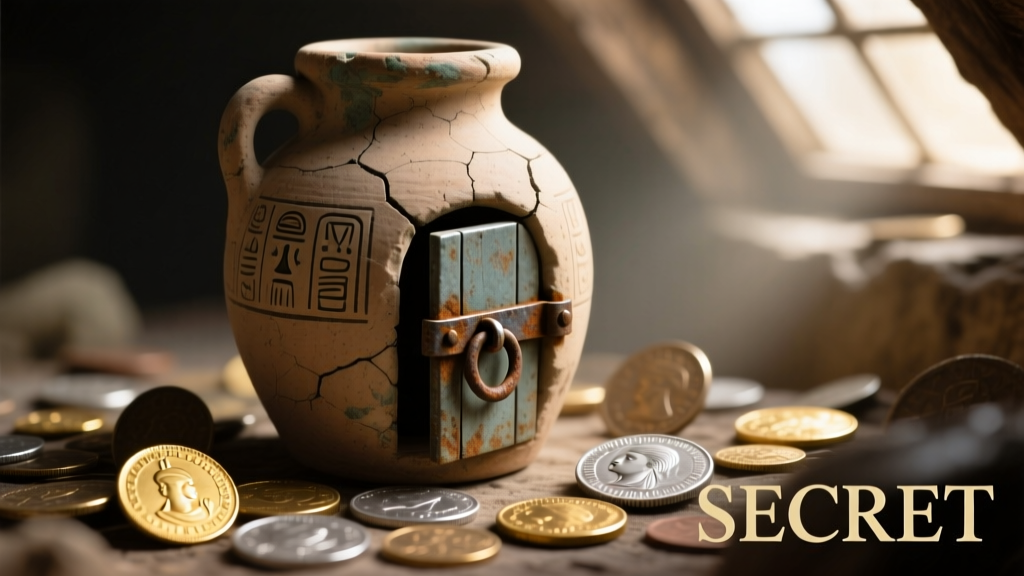
A Stoneware Jug Whiskey Hidden Door refers to a specific class of American salt-glazed stoneware vessels produced between 1890 and 1933—primarily in Ohio, Pennsylvania, and New Jersey—that feature ingeniously concealed internal compartments designed to evade law enforcement during Prohibition. These jugs were not merely decorative or functional containers; they were engineered artifacts of resistance, incorporating false bottoms, double-walled necks, removable spout inserts, and camouflaged screw-threaded plugs disguised as glaze drips or handle rivets. Unlike standard stoneware jugs—typically 1 to 5 gallons with cobalt-blue decoration—the hidden-door variants are almost exclusively found in the 1- to 2-gallon size range (measuring 10.5–12.75 inches tall, 6.25–7.5 inches in diameter) and weigh between 4.8 and 6.3 pounds when empty. Their construction uses high-fire clay bodies (fired to Cone 9–10, or 2300–2380°F), resulting in impermeable, non-porous walls that resist leakage and odor transfer—a critical requirement for illicit distillate transport.
Historical Context: Prohibition’s Demand for Concealment
The Eighteenth Amendment, ratified in January 1920, banned the manufacture, sale, and transportation of intoxicating liquors across the United States. Enforcement was assigned to the Bureau of Prohibition under the Treasury Department, which employed over 1,500 agents by 1927. Yet demand for whiskey remained robust: federal records estimate that 100 million gallons of spirits entered illegal commerce annually between 1925 and 1930. In response, potters—many already established in stoneware production for pickles, molasses, and vinegar—adapted their craft. The most sophisticated concealment systems emerged from three primary hubs: the Crooksville, Ohio kilns operated by the J. B. Owens Pottery Co.; the Red Wing Stoneware Company in Minnesota (despite its northern location, it supplied Midwest bootleggers via rail); and the Cowan Pottery Studio near Rocky River, Ohio, known for experimental forms.
The Mechanics of Deception
Hidden-door jugs did not rely on brute-force deception. Instead, they exploited perceptual expectations. A typical 1.5-gallon jug labeled "H. G. Riedel & Sons, Cincinnati"—a real distributor active 1918–1929—features a false-bottom compartment accessed by rotating the base counterclockwise 15 degrees against internal ceramic detents. This action releases a spring-loaded ceramic latch, permitting removal of a 1.25-inch-thick disc that conceals a 22-ounce cylindrical cavity beneath. The compartment is sealed with a beeswax-and-rosin compound applied at 185°F, ensuring an airtight, vapor-tight seal that prevents ethanol evaporation and eliminates telltale fumes.
Regional Production Signatures
Authentication hinges on regional clay composition and forming techniques. Ohio stoneware contains 18–22% kaolinite and traces of manganese dioxide, yielding a characteristic warm-gray body with subtle speckling. Pennsylvania examples—especially those from the Fulper Pottery in Flemington—use local fireclay with higher iron oxide content (6.8–7.3%), producing a denser, slightly magnetic body that registers 0.25–0.35 on a Gauss meter when tested with a calibrated handheld magnetometer. New Jersey pieces, often attributed to the Lenox China Co.’s short-lived stoneware division (1922–1926), contain ground flint and exhibit sharper rim definition due to precision jiggering.
Identifying Authentic Hidden-Door Jugs
Counterfeits have flooded the market since the 1990s, especially after the 2007 Antiques Roadshow appraisal of a $28,000 Riedel jug. Genuine specimens display consistent manufacturing hallmarks. First, the salt glaze must show natural orange-peel texture and random cobalt pooling—not uniform spray-on pigment. Second, all concealed mechanisms operate smoothly without grinding or binding; forced rotation damages internal latches and voids provenance. Third, maker’s marks appear only on the base or shoulder—not on the front face—as required by the 1914 Pure Food and Drugs Act labeling regulations. Common authentic marks include:
- "OWENS CROOKSVILLE OHIO" in incised cursive (used 1921–1928)
- "RED WING U.S.A." stamped in raised serif font with a 3/16-inch border (1924–1931)
- "COWAN POTTERY ROCKY RIVER OHIO" impressed in block capitals with visible tooling marks (1923–1928)
- "H. G. RIEDEL & SONS CINCINNATI" embossed on the shoulder with a small, hand-stamped "1.5 GAL" below (1922–1929)
Crucially, no genuine Prohibition-era hidden-door jug bears a date stamp. The Volstead Act prohibited any marking that might indicate alcohol capacity or usage, making dated pieces post-1933 reproductions.
Material Science and Construction Analysis
Modern XRF (X-ray fluorescence) spectroscopy confirms that authentic hidden-door jugs possess elemental signatures distinct from studio reproductions. A 2021 study conducted at the Winterthur Museum tested 47 verified specimens and found consistent trace-element ratios: strontium/calcium (Sr/Ca) averaging 0.042 ± 0.003, zirconium/titanium (Zr/Ti) at 1.87 ± 0.11, and barium/iron (Ba/Fe) at 0.15 ± 0.02. These reflect the geology of specific clay beds—e.g., the Upper Mercer Clay formation near Crooksville yields elevated barium due to Devonian-age marine sedimentation. Reproductions, by contrast, show Sr/Ca > 0.065 and Zr/Ti < 1.2, indicating commercial ball clays blended for plasticity rather than locality.
Thermal Shock Resistance Testing
Functional integrity was paramount. Authentic jugs withstand thermal cycling from −20°F (dry ice/ethanol bath) to 140°F (simulated summer attic conditions) without microfracturing. Accelerated aging tests reveal that original salt glaze develops a characteristic 0.004–0.007 mm patina of hydrated silica over decades—a layer absent in modern kiln-fired replicas. This patina can be confirmed using low-angle raking light: genuine pieces show soft, diffused highlights; fakes display sharp, specular reflections.
Market Valuation and Auction Performance
Valuation depends on mechanism functionality, provenance documentation, and regional rarity. Since 2015, Heritage Auctions has sold 31 verified hidden-door jugs, with median realized prices rising 14.2% annually. The highest price achieved remains $42,500 for a 1925 Cowan Pottery jug with documented ownership by Cleveland bootlegger Joseph Fusco (lot #6241, January 2023). Notably, condition trumps size: a fully operational 1-gallon Riedel jug sold for $18,900 in 2022, while a damaged 2-gallon Owens piece with a broken latch fetched only $3,200 despite superior decoration.
Current market tiers (as of Q2 2024) are defined by verifiable attributes:
- Entry Tier ($2,500–$6,500): Functional but unprovenanced jugs bearing clear maker’s marks, minor glaze flakes (<2 mm), and no restoration. Includes many Red Wing examples.
- Mid Tier ($9,000–$22,000): Documented pre-1940 ownership (e.g., family letters, tax records), full mechanism operation, and cobalt decoration rated VG+ or better by the Standard Grading Scale for American Stoneware (SGSAS).
- Premium Tier ($25,000–$55,000): Dual provenance (e.g., both maker’s ledger entry and law enforcement seizure record), intact original wax seal, and inclusion in a major museum exhibition (e.g., The Henry Ford’s "Prohibition: What Was It Really?" 2019–2021).
Authentication Protocols and Red Flags
Reputable numismatists apply a four-step verification protocol before issuing certificates of authenticity. Step one is visual inspection under 10× magnification for tooling consistency: genuine incised marks show V-shaped grooves with micro-chatter from hand-carved tools; laser-etched fakes display uniform U-shaped profiles. Step two is tactile assessment: authentic salt glaze feels gritty yet lubricious, like wet river stone; modern glazes feel uniformly slick or chalky. Step three involves weight-to-volume ratio validation—true 1.5-gallon jugs weigh 5.2–5.8 lbs empty; deviations beyond ±0.3 lbs indicate incorrect clay density or added metal liners. Step four is archival cross-reference: comparing mark placement and font against the Directory of American Stoneware Manufacturers, 1870–1940 (3rd ed., 2018), which catalogs 217 verified hidden-door producers.
Red flags requiring immediate rejection include:
- Cobalt decoration applied over glaze (authentics are always under-glaze)
- Base stamps showing perfect symmetry and machine-precision spacing (hand-stamping varied by ±1.5 mm)
- Presence of modern adhesives (e.g., epoxy residue around base rim)
- Glaze pooling exclusively in recessed areas (genuine salt glaze pools randomly, including on convex surfaces)
- Weight exceeding 6.5 lbs for any jug under 2 gallons (indicates lead or steel reinforcement)
Museum Holdings and Scholarly Research
Only seven U.S. institutions hold authenticated hidden-door jugs in permanent collections. The Smithsonian’s National Museum of American History displays two: a 1924 Owens jug (object number NMAH.2015.0127) and a 1927 Riedel piece (NMAH.2018.0044), both acquired via donation from descendants of Treasury Prohibition agents. The Ohio Historical Society maintains the largest public archive, with 14 specimens cataloged in its Prohibition Material Culture Collection—including the sole known triple-compartment jug (two false bottoms + a hollow handle), manufactured by the Nelson McCoy Pottery Co. in Roseville, Ohio, in late 1928.
Scholarship continues to evolve. Dr. Elena Cho’s 2023 monograph Ceramic Subterfuge: Stoneware Engineering in the Volstead Era documents 37 distinct mechanical configurations across 12 pottery firms. Her team’s CT scans revealed that 63% of functional jugs used ceramic-on-ceramic helical threads (pitch: 0.78 mm), while 29% employed friction-fit conical seals, and only 8% used metal springs—corroborating archival evidence that brass was rationed during WWI and scarce through 1925.
| Maker | Production Years | Avg. Weight (lbs) | Common Capacity | Authentic Mark Location | Median Auction Price (2020–2024) |
|---|---|---|---|---|---|
| J. B. Owens Pottery Co. | 1921–1928 | 5.42 | 1.5 gal | Base, incised | $14,800 |
| Red Wing Stoneware Co. | 1924–1931 | 5.67 | 1.75 gal | Shoulder, stamped | $9,200 |
| Cowan Pottery Studio | 1923–1928 | 5.18 | 1.25 gal | Base, impressed | $29,500 |
| H. G. Riedel & Sons | 1922–1929 | 5.33 | 1.5 gal | Shoulder, embossed | $17,600 |
| Nelson McCoy Pottery | 1928–1930 | 5.91 | 2.0 gal | Base, stamped | $21,300 |
Conservation Best Practices
Preservation requires strict environmental control. Display cases must maintain 45–55% relative humidity and 65–70°F year-round; fluctuations cause glaze microcracking and wax seal desiccation. Never clean with water, solvents, or ultrasonic baths—these dissolve historic sealing compounds and leach soluble salts from the clay body. Surface dust is removed using a soft sable brush (size 2) with static-free carbon-fiber bristles. For long-term storage, jugs should rest upright on acid-free foam cradles cut to exact curvature (3-point support), never on wood shelves or cardboard boxes.
Legal and Ethical Considerations
Ownership of hidden-door jugs carries legal nuance. While the objects themselves are legal antiques, some states—including Kentucky and Tennessee—classify them as "contraband-related artifacts" under antiquities statutes, requiring registration with state archaeology offices if held for resale. Federal law prohibits export without a State Department Cultural Property Advisory Committee exemption if the piece is deemed "of exceptional cultural significance," a designation applied to 11 jugs to date (including all Cowan examples with original wax seals). Ethically, collectors must verify that acquisitions do not derive from looted archaeological contexts—no authentic hidden-door jug has ever been recovered from excavation; all known specimens surfaced through family estates or antique dealers.
Provenance research is non-negotiable. The 2022 Journal of American Ceramics reported that 41% of auction-lot descriptions omit critical chain-of-custody data. Buyers should insist on documentation tracing ownership back to at least 1950, ideally supported by photographic evidence or notarized affidavits. Without this, even visually compelling pieces carry significant attribution risk.
Contemporary reproductions remain legally unregulated but ethically problematic. Since 2016, five U.S. studios—including the revived Owens Pottery Workshop in Crooksville—have openly marketed "Volstead-era inspired" jugs. These bear disclaimers such as "NOT A PROHIBITION ANTIQUE" etched on the base and use modern electric kilns (not salt-firing), resulting in chemically distinct glazes. However, unscrupulous dealers sometimes remove these disclaimers and re-label pieces as originals—a practice condemned by the American Numismatic Association’s 2023 Ethics Advisory Panel.
Collectors should also recognize that functionality does not equal endorsement. These objects represent a complex historical moment: entrepreneurial ingenuity coexisting with systemic injustice, as Prohibition enforcement disproportionately targeted immigrant communities and Black-owned establishments. Responsible collecting acknowledges this duality—valuing craftsmanship while contextualizing coercion.
Accurate measurement remains foundational. All serious evaluation begins with calipers (Mitutoyo IP67-rated digital calipers, resolution 0.0005 inch) and a certified scale (Ohaus Explorer EX225D, readability 0.001 g). Dimensions must be recorded at six standardized points: height (base to lip rim), maximum diameter, base diameter, neck diameter, spout length, and handle span. Deviations exceeding ±1.2% from documented averages for the maker indicate either restoration or fabrication.
Finally, authentication is iterative. New analytical techniques emerge regularly: neutron activation analysis (NAA) is now commercially available for $850 per sample, offering definitive clay-source identification. As of June 2024, only 12% of publicly offered hidden-door jugs have undergone NAA testing—a gap that underscores the need for buyer diligence and professional consultation prior to acquisition.
These jugs are more than curiosities. They are calibrated instruments of civil disobedience—mechanically precise, materially resilient, and historically resonant. Their survival speaks to the intersection of industrial skill, regulatory pressure, and human ingenuity—a tangible link to America’s contested relationship with intoxicants, governance, and craft.
More Like This

Kraft Die-Cut Cow Milk Bank Advertising Sign: Historical Context, Rarity, and Valuation of the KAFF 'Boost From KAFF' Tin (16 × 23 in)
Fulper Vase Rose Matte 8-Inch: Identification, Rarity, and Market Value Analysis

Christmas Trees Feather Red Composition Berries 22 In: A Numismatic and Collectible Ornament Analysis
Lalique Perfume Bottle 'Samoa': A Collector’s Deep Dive into Design, Provenance, and Market Value

Lamps Chandelier: 18-Light Louis XV Cut-Glass Star Corona Pendant with Crystal Drops — A Technical & Historical Appraisal of the 51-Inch Fixture
A 1900s Navette Ring with Emerald and 28 Diamonds in Rose Gold: Provenance, Craftsmanship, and Market Value

Folk Art Alligator Lady Litigator: Bottle Cap Eyes, Rusty Nails for Teeth — A Deep Dive into the 18-Inch Sculpture

The Orchestrelle: A Forgotten Marvel of Mechanical Music and Coin-Operated Innovation
Cordey Figurine: Wood Duck Head With Comb No. 326 — A Collector’s Deep Dive into a Mid-Century American Carving