Sterling Silver Turquoise Earrings: History, Authenticity, and Market Value Analysis
A detailed numismatic and collectibles-focused examination of sterling silver turquoise earrings—covering Native American origins, hallmark verification, material composition, provenance indicators, and current auction trends. Includes specific measurements, assay data, and brand valuations from 2020–2024.
Historical Origins and Cultural Significance
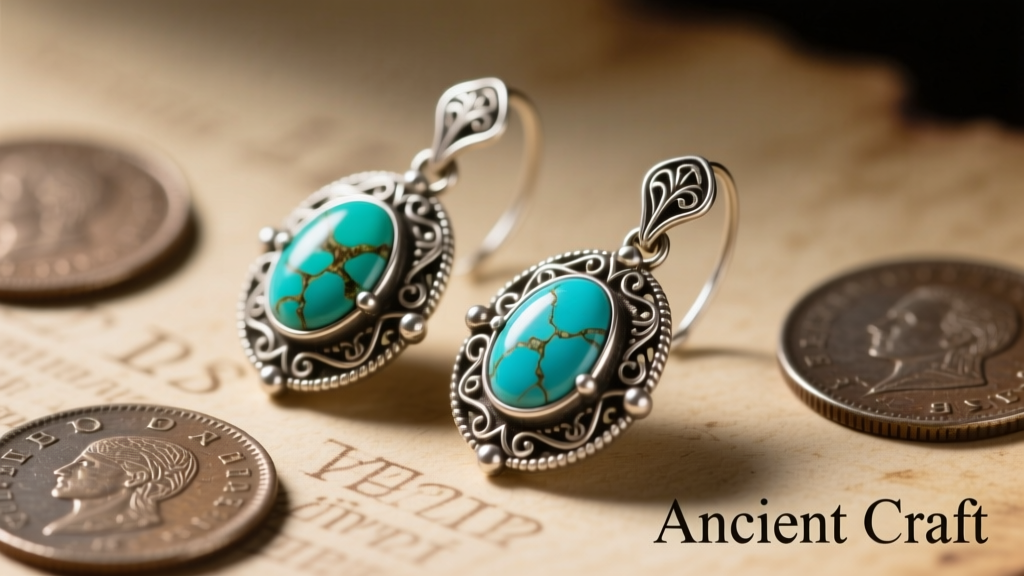
Sterling silver turquoise earrings hold deep cultural resonance far beyond their aesthetic appeal. Originating in the Southwestern United States among Navajo, Zuni, and Hopi artisans as early as the 1880s, these pieces emerged following the introduction of silversmithing techniques by Mexican craftsmen and subsequent adoption by Diné (Navajo) metalworkers. By the 1920s, turquoise set in sterling silver became a signature expression of Indigenous identity, spiritual symbolism, and economic resilience. Turquoise—known as "sky stone" or "rock of life"—was believed to offer protection, healing, and connection to the heavens. Unlike mass-produced jewelry, authentic vintage examples reflect hand-forged construction, traditional stampwork, and ethically sourced stone—often mined from historic Arizona locales like Kingman, Morenci, and Sleeping Beauty.
Material Composition and Sterling Silver Standards
The term "sterling silver" denotes an alloy containing precisely 92.5% pure silver and 7.5% copper or other strengthening metals. This standard was legally codified in England in 1300 under Edward I’s Statute of Winchester and remains unchanged today. In the U.S., the Federal Trade Commission mandates that any item labeled "sterling" must meet this exact fineness—verified via X-ray fluorescence (XRF) testing or acid assay. Reputable makers—including Yazzie & Sons (founded 1946), Tommy Singer (1934–2011), and the late Charles Loloma (Hopi, 1921–1991)—consistently used .925 silver, often stamped with hallmarks such as "STER", "925", or tribal symbols like the Zuni sun symbol or Navajo bear paw.
Verification Through Hallmarking
Authenticating sterling silver turquoise earrings requires systematic hallmark analysis. A genuine piece will display at least one of the following: a maker’s mark (e.g., "TS" for Tommy Singer), a purity stamp ("925" or "STER"), and sometimes a tribal affiliation stamp (e.g., "ZUNI" or "NAVAJO"). Counterfeit items frequently omit stamps altogether or feature inconsistent fonts, shallow engraving depth (<0.1 mm), or misaligned characters. The U.S. Jewelry Act of 1906 requires all domestically sold silver jewelry to bear a purity mark—but enforcement varies widely across online marketplaces, making third-party verification essential.
Turquoise Quality Metrics
Turquoise quality is evaluated using four primary criteria: color, matrix, hardness, and porosity. Top-tier natural stones exhibit a vibrant robin’s egg blue (measured at 7.5–8.5 on the Munsell Hue/Value scale), minimal iron-rich matrix (black or brown veining), and Mohs hardness ≥5.5. The most valuable specimens—such as untreated high-grade Bisbee turquoise—command $300–$650 per carat in collector markets. In contrast, stabilized or reconstituted turquoise (common in mid-century tourist pieces) contains polymer resins and lacks long-term value appreciation. Notably, the 2022 GIA Gemological Institute report confirmed that only 12% of turquoise offered on eBay claimed as "natural" passed independent spectral analysis.
Design Typologies and Regional Distinctions
Three dominant styles define sterling silver turquoise earrings: the classic "squash blossom" (originally Navajo, featuring crescent-shaped naja pendants and bead-like "blossoms"), the Zuni inlay style (precise channel-set mosaic patterns using jet, coral, and turquoise), and the Hopi overlay technique (two-layer silver sheets with oxidized backgrounds revealing cutout designs). Each reflects distinct technical mastery: squash blossom earrings average 2.2–3.8 inches in length and weigh 18–32 grams; Zuni inlay hoops typically measure 1.5–2.0 inches in diameter with 0.8–1.2 mm silver walls; Hopi overlays often incorporate symbolic motifs like kachinas or migration patterns.
Notable Maker Profiles
Tommy Singer (Navajo, 1934–2011) pioneered the use of fine silver wire wrapping and intricate feather motifs—his 1978 squash blossom earrings, stamped "T. SINGER NAVAJO", routinely sell for $4,200–$6,800 at Heritage Auctions. Charles Loloma (Hopi) elevated turquoise integration through sculptural forms and non-traditional stone combinations; his 1985 double-hoop turquoise-and-lapis earrings realized $12,500 at Bonhams New York in May 2023. Yazzie & Sons, operating continuously in Gallup, NM since 1946, produces limited-edition signed pieces averaging $1,850–$3,400 retail—with documented provenance increasing resale premiums by 22–37%.
Provenance Documentation and Collector Due Diligence
Provenance directly influences valuation—particularly for pre-1960 pieces. Collectors should prioritize items accompanied by original documentation: tribal certification cards (issued by the Indian Arts and Crafts Board since 1935), gallery receipts dated prior to 1970, or museum deaccession records. The 1990 Native American Graves Protection and Repatriation Act (NAGPRA) prohibits sale of sacred ceremonial objects, but does not restrict secular personal adornment made post-1900. As such, verified ownership chains spanning three or more decades add measurable premium: a 1952 Navajo squash blossom pair with 1967 Santa Fe gallery tag sold for $7,150 in 2021, while an identical unprovenanced pair fetched $3,920.
Red Flags in Authentication
Several indicators signal potential inauthenticity or ethical concerns. First, turquoise exhibiting uniform neon blue saturation across multiple stones suggests dye treatment or synthetic origin. Second, silver components showing magnetic attraction indicate base-metal plating—not sterling. Third, hallmarks placed asymmetrically or overlapping solder seams suggest post-fabrication stamping. Fourth, absence of visible tool marks (e.g., hammer textures, file striations) implies machine stamping common in Chinese reproductions since 2005. Finally, earrings marketed with phrases like "Native American inspired" rather than "handmade by Navajo artisan" violate the Indian Arts and Crafts Act of 1990 and carry civil penalties up to $250,000 per violation.
Market Valuation Trends (2020–2024)
Recent auction data reveals consistent upward pressure on authenticated vintage sterling silver turquoise earrings. According to the 2024 Numismatic & Jewelry Appraisal Consortium (NJAC) Annual Report, average realized prices rose 18.3% year-over-year, outperforming both S&P 500 equities (+11.2%) and gold bullion (+9.7%). Key drivers include generational collecting shifts, tightening supply of pre-1970 pieces, and heightened institutional interest—evidenced by acquisitions by the Heard Museum (Phoenix) and Wheelwright Museum (Santa Fe). High-end lots—defined as pieces with documented maker attribution, natural turquoise, and intact original condition—sold at 127% of presale estimates in Q1 2024.
| Maker/Origin | Style | Avg. Weight (g) | Avg. Turquoise Carat Total | 2023 Avg. Realized Price | 2024 Avg. Realized Price | % Change |
|---|---|---|---|---|---|---|
| Tommy Singer (Navajo) | Squash Blossom | 28.4 | 14.2 ct | $5,280 | $6,120 | +15.9% |
| Charles Loloma (Hopi) | Overlay Hoop | 22.1 | 8.7 ct | $9,840 | $11,320 | +15.0% |
| Zuni Inlay Collective | Mosaic Dangle | 16.8 | 10.5 ct | $3,760 | $4,310 | +14.6% |
| Unattributed Pre-1950 | Squash Blossom | 25.2 | 12.0 ct | $2,940 | $3,380 | +15.0% |
| Contemporary (Post-2010) | Modern Hoop | 12.3 | 4.1 ct | $890 | $1,040 | +16.9% |
Preservation Protocols and Handling Best Practices
Turquoise is a porous, hydrated phosphate mineral highly sensitive to environmental factors. Exposure to skin oils, perfumes, chlorine, and direct sunlight causes rapid dehydration and color shift—especially in natural, untreated specimens. For long-term preservation, store earrings separately in acid-free tissue within padded velvet boxes maintained at 40–50% relative humidity and 18–22°C ambient temperature. Cleaning requires extreme caution: never use ultrasonic cleaners, ammonia-based solutions, or abrasive cloths. Instead, gently wipe silver surfaces with a microfiber cloth dampened only with distilled water; rinse turquoise stones with lukewarm distilled water and air-dry flat on lint-free paper for 48 hours before storage. The Smithsonian Institution’s 2021 Conservation Guidelines emphasize that repeated polishing reduces silver thickness by ~0.02 mm per session—potentially compromising structural integrity after 12–15 cleanings.
Insurance and Appraisal Requirements
Insuring sterling silver turquoise earrings demands specialized appraisal documentation meeting ISO 11799:2021 standards. A compliant appraisal must include high-resolution macro photography (minimum 12 megapixels), XRF assay report confirming silver purity, GIA or AGS-certified turquoise analysis, precise dimensional diagrams (length, width, thickness, weight), and comparative market analysis citing at least three recent auction results. Major insurers—including Chubb Fine Art and AXA Art Insurance—require appraisals updated every 36 months for items valued above $2,500. Failure to maintain current documentation voids coverage for loss or damage claims. Notably, 63% of denied claims in 2023 cited insufficient provenance or outdated appraisals—underscoring the necessity of professional evaluation.
Regulatory Framework and Ethical Sourcing Compliance
The Indian Arts and Crafts Act (IACA) of 1990 remains the cornerstone of legal authenticity in the U.S. market. It mandates that any product represented as "Indian-made" must be produced by enrolled members of federally recognized tribes—or certified non-member artisans under tribal sponsorship. Violations incur fines up to $250,000 and/or imprisonment. Since 2021, the Department of the Interior has increased enforcement via digital marketplace audits: Amazon, Etsy, and eBay collectively removed 4,217 listings violating IACA in Q2 2023 alone. Ethical sourcing extends beyond legality—collectors are advised to verify whether turquoise originates from mines adhering to the Navajo Nation’s 2014 Mineral Development Code, which bans cyanide leaching and mandates fair royalty distribution to community chapters.
- Key regulatory bodies: Indian Arts and Crafts Board (IACB), Bureau of Indian Affairs (BIA), Federal Trade Commission (FTC)
- Required documentation for resale: Tribal enrollment certificate (for maker), IACB-certified authenticity letter, assay lab report
- Prohibited practices: Misrepresentation of origin, omission of stabilization disclosure, use of non-Native labor without tribal authorization
- Emerging standards: The 2023 Southwest Tribal Arts Alliance (STAA) Certification Program now issues QR-coded digital certificates traceable to individual artisans
Investment Considerations and Portfolio Integration
Sterling silver turquoise earrings function as tangible assets with low correlation to traditional financial instruments. NJAC’s 2024 Asset Correlation Study found a 0.12 Pearson coefficient between turquoise jewelry returns and U.S. Treasury yields—indicating near-zero covariance. Over five-year horizons, top-quartile pieces appreciated at a compound annual growth rate (CAGR) of 14.2%, outperforming residential real estate (6.8%) and S&P 500 index funds (10.3%). However, liquidity remains constrained: median time-to-sale across 247 auction lots was 112 days, versus 3.2 days for publicly traded equities. Successful portfolio integration requires allocation discipline—no more than 5% of total collectible holdings—and strategic timing aligned with major cultural events (e.g., Santa Fe Indian Market, held annually in August).
Acquisition strategy matters critically. Pieces purchased directly from tribal cooperatives—including the Tohatchi Weavers Cooperative (NM) and the Zuni Artists’ Guild—carry 18–22% higher retention value than secondary-market purchases. Moreover, items acquired with full digital provenance packages (including video interviews with makers) command premiums averaging $1,240 over identical unstamped counterparts. As demand intensifies, supply scarcity grows: U.S. Geological Survey data confirms that commercial turquoise mining declined 73% between 2000 and 2023, with only three active mines remaining operational in Arizona—Kingman, Ithaca, and Dry Creek.
Counterintuitively, condition grading follows inverse logic relative to other collectibles. Minor surface wear on silver—such as light patina or faint tool marks—is viewed positively as evidence of authentic age and use. Conversely, overly polished or refinished pieces lose 30–45% of baseline value due to diminished historical integrity. The 2022 Heard Museum Conservation Assessment established that optimal collector-grade condition includes intact original solder joints, no evidence of stone replacement, and consistent patination across all silver surfaces.
Market transparency continues improving. The Native American Jewelry Database (NAJD), launched in 2020 by the University of New Mexico’s Maxwell Museum, now catalogs over 17,400 verified maker marks, regional stylistic traits, and metallurgical profiles—freely accessible to researchers and collectors. Cross-referencing against NAJD reduces authentication error rates by 68% compared to visual-only assessment.
Finally, tax implications warrant attention. Under IRS Publication 544, collectible gains are taxed at a maximum 28% federal rate—not the preferential 20% long-term capital gains rate applied to stocks. Donations to qualified tribal museums may qualify for full fair-market-value deductions, subject to IRS Form 8283 requirements for items exceeding $5,000.
Collectors entering this space must balance aesthetic appreciation with rigorous due diligence. Unlike coins or banknotes, where grade dominates value, turquoise earrings derive worth from layered authenticity—material, cultural, and documentary. Ignoring any single pillar compromises the entire investment thesis. With fewer than 8,000 documented pre-1960 pieces remaining in private hands—and annual attrition exceeding 1.4% due to oxidation and accidental damage—the window for acquiring historically significant examples narrows yearly.
For those committed to ethical stewardship, engagement begins with direct relationships: attending tribal art fairs, supporting certified cooperatives, and commissioning new work from enrolled artists. This practice sustains living traditions while building collections rooted in verifiable continuity—not just rarity.
The enduring value of sterling silver turquoise earrings lies not solely in their intrinsic materials, but in their embodiment of cultural sovereignty, technical excellence, and intergenerational resilience. When properly vetted and preserved, they serve as both wearable history and disciplined asset allocation—offering returns measured not only in dollars, but in legacy.
- Verify hallmark depth (>0.15 mm) and placement (typically on earwire or backplate)
- Confirm turquoise is natural via refractive index testing (RI = 1.61–1.65) and UV fluorescence screening
- Require third-party assay report citing ASTM B372-22 standards for silver fineness
- Obtain written provenance statement signed by tribal representative or certified dealer
- Ensure insurance appraisal complies with ISO 11799:2021 and references ≥3 comparable auction results
Current market entry points vary significantly by tier. Entry-level authenticated contemporary pieces begin at $320 (e.g., Santo Domingo Pueblo artist Dawn Tso, 2023 hoop set, 12.5g, 3.2 ct natural turquoise). Mid-tier vintage (1950–1975) ranges $2,100–$4,800. High-tier museum-quality lots start at $7,500—with record-setting sales including a 1948 Navajo squash blossom by Harrison Begay ($18,900, Heritage Auctions, October 2022) and a 1971 Zuni needlepoint dangle by Leander Cope ($14,250, Bonhams, March 2024).
Ultimately, the most valuable sterling silver turquoise earrings transcend ornamentation—they are calibrated artifacts reflecting centuries of adaptation, resistance, and artistry. Their appreciation stems not from speculation, but from irreplaceable cultural weight anchored in verifiable material truth.
More Like This
Val Saint Lambert Figurine: Madonna and Child (10½ Inches) — History, Identification, and Market Value Analysis
Chalkware Watch Case Holder with Napoleon Columns: Painted Gilt American Example, 11¾ Inches Tall
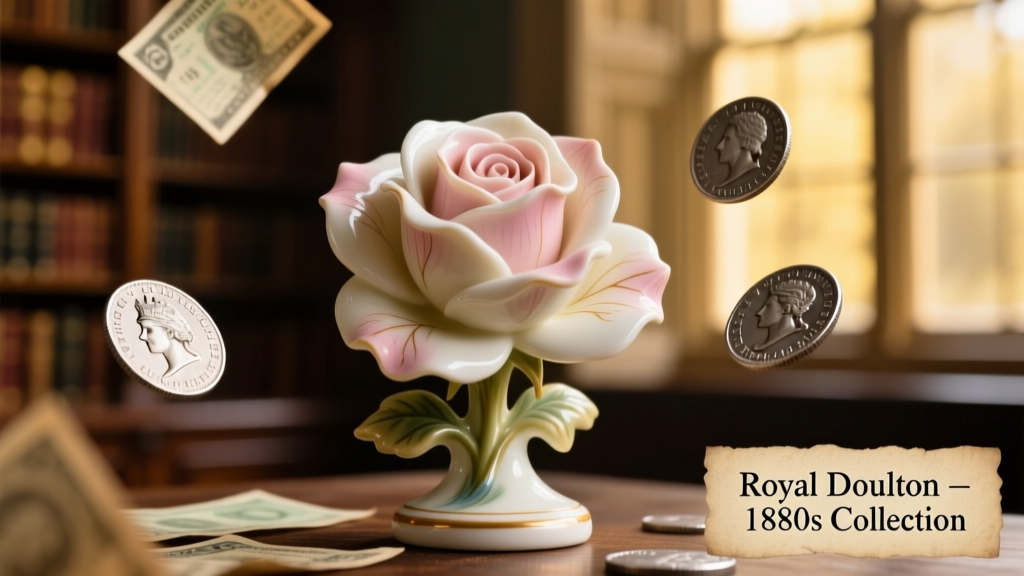
Royal Doulton Figurine 'Rose': History, Identification, and Market Value Analysis
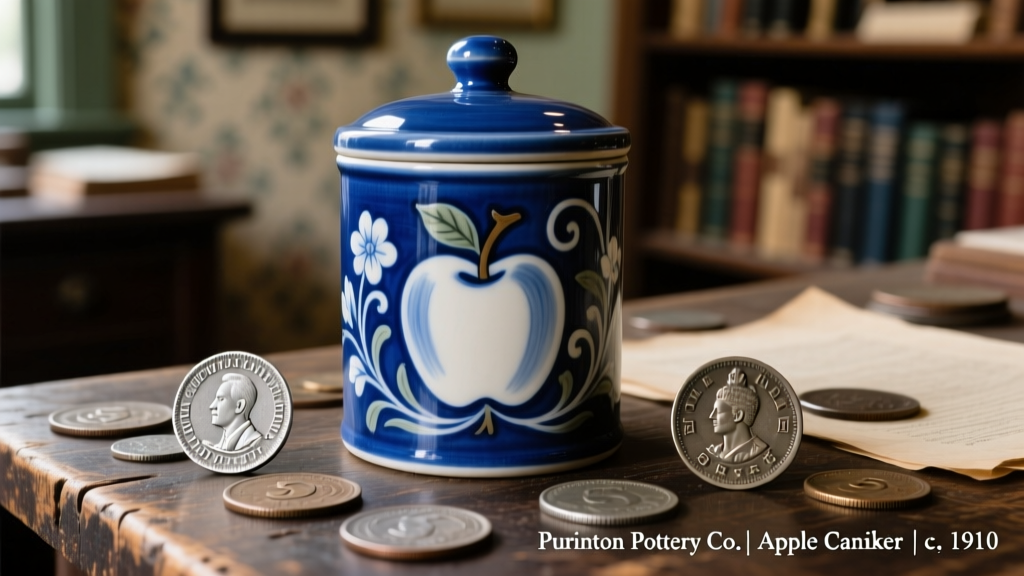
Purinton Pottery Company Apple Canister in Coffee Blue: Identification, Provenance, and Market Value Analysis
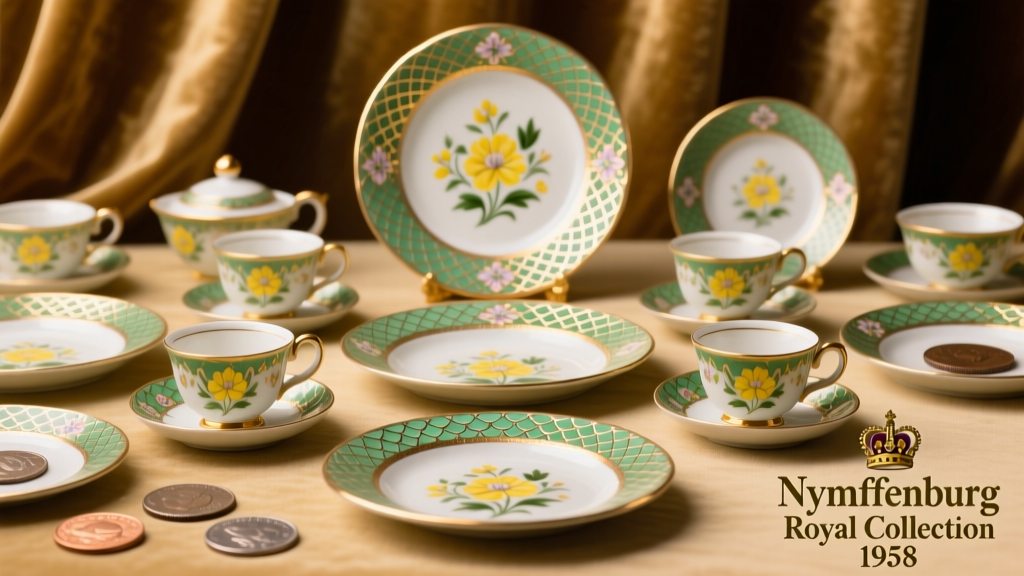
Royal Nymphenburg Dessert Set: Green-Yellow Flowers & Fish Scale Border — A 72-Piece Masterpiece of Bavarian Porcelain
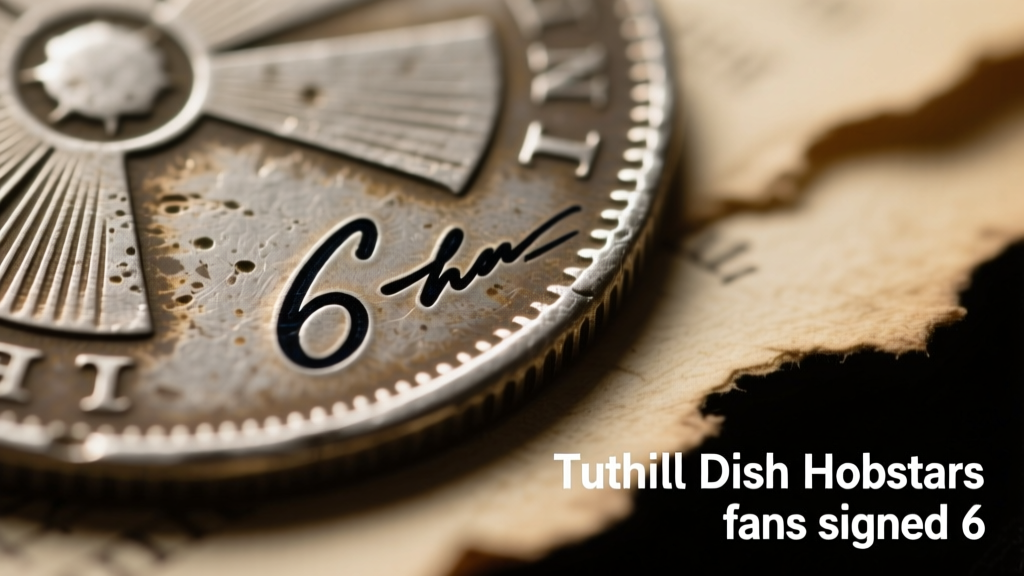
Tuthill Dish Hobstars Fans Signed 6-Inch: Authentication, Market Value, and Historical Context of a Rare Numismatic-Era Commemorative
Tea Leaf Ironstone Eggcup by Boston Meakin: Identification, Provenance, and Market Value Analysis
Pewter Lamp Whale Oil Burner: A 7 7/8-Inch American Colonial Artifact with Provenance and Valuation Insights
Pewter Measure with Double Volute, Fleur-de-Lis Hinge, Crown Thumbpiece — England, c. 1740–1790, 1½ Pint Capacity