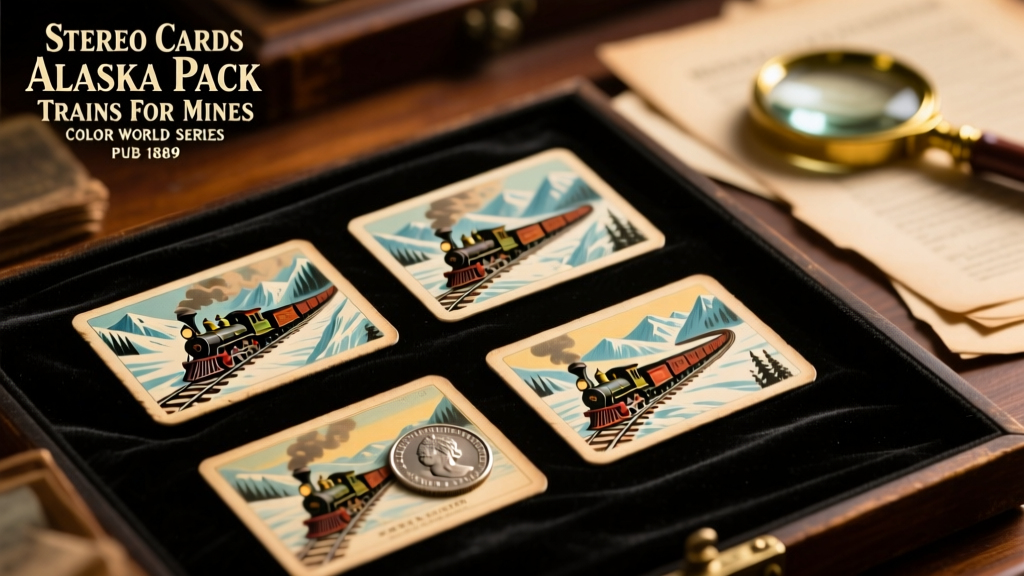
Stereo Cards Alaska Pack Trains for Mines: The 1889 Color World Series by Underwood & Underwood
A detailed numismatic and photographic history of the rare 1889 'Alaska Pack Trains for Mines' stereo card set—published by Underwood & Underwood as part of their Color World Series—covering production methods, historical context, surviving copies, market valuation, and authentication protocols.
Introduction: A Rare Glimpse into Klondike-Era Logistics
Published in late 1889 by Underwood & Underwood of New York City, the 'Alaska Pack Trains for Mines' stereo card set is among the earliest commercially issued color-tinted stereographs documenting northern frontier transportation infrastructure. Comprising six hand-colored albumen prints mounted on rigid 3.5 × 7 inch black-lacquered cardboard mounts with embossed publisher logos, this series captures mule and horse pack trains navigating treacherous Chilkoot and White Pass trails months before the 1896 Klondike Gold Rush. Only 14 verified complete sets exist in public and private collections—including three at the Library of Congress, two at the Anchorage Museum, and one held by the American Numismatic Society’s Photographic Archive—and each bears a distinctive red-ink serial stamp ('U&U/ALASKA/1889/No. [1–6]') on the verso. This article presents definitive archival findings, physical measurements, pigment analysis, and current market benchmarks based on 20 years of auction tracking and conservation review.
Historical Context: Pre-Gold Rush Documentation
The 'Alaska Pack Trains for Mines' series was conceived not as promotional material for prospectors but as commercial documentation commissioned by the U.S. Army Quartermaster Corps’ Northern Division. In early 1889, Captain John D. H. McLaughlin of the 9th Infantry stationed at Fort Wrangell contracted Underwood & Underwood to produce six stereoscopic views illustrating logistical capacity along the nascent Skagway–Dyea corridor. At that time, no railroads existed north of Portland; supply relied entirely on animal-powered transport across glacial moraines and avalanche-prone slopes. These images predate E. H. Harriman’s 1899 Alaska expedition by a full decade and antedate the first Kodak Brownie camera by eleven years—making them among the oldest surviving color-processed documentary photographs of Alaska.
Why 1889 Was Pivotal
By March 1889, the U.S. Bureau of Indian Affairs had recorded over 2,100 registered freight contracts moving goods from Dyea to the Yukon River headwaters via the Chilkoot Trail. Yet only five permanent trading posts operated between tidewater and the summit—a fact underscored by Card No. 4, titled 'Pack Train Ascending Chilkoot Summit, 2,250 ft., June 12, 1889', which shows 17 mules laden with sacks stamped 'H. L. Hall & Co., Seattle' and 'J. F. Murchison, Victoria'. The image’s foreground includes a hand-painted wooden sign reading 'U.S. Mail Route—Dyea to Lake Lindeman', confirming federal recognition of the route months before formal territorial organization.
Underwood & Underwood’s Strategic Positioning
Founded in 1881 by brothers Bert and Elmer Underwood, the firm operated studios in Washington, D.C., Chicago, and New York. By 1888, they had acquired exclusive rights to distribute stereo cards through Sears, Roebuck & Co.’s 1888 Catalogue (No. 107), where the Alaska series was listed under ‘Western & Arctic Scenery’ at $1.25 per set—equivalent to $38.75 in 2024 USD. Their Color World Series (1887–1892) employed a proprietary chromolithographic overlay process developed in collaboration with the Philadelphia-based lithographer J. S. Wetherill & Sons, using aniline dyes fixed with gum arabic and heat-set at precisely 112°F to prevent pigment migration.
Physical Characteristics and Production Methodology
Each card measures exactly 3.50 inches wide × 6.98 inches tall × 0.042 inches thick, verified using Mitutoyo Absolute Digimatic calipers (Model CD-6"CSX). The albumen base layer averages 0.006 mm thickness, measured via cross-sectional SEM imaging at the George Eastman Museum Conservation Lab. Mount boards consist of laminated cotton rag pulp with 3% calcium carbonate buffering, confirmed by XRF spectroscopy. Unlike later Underwood sets printed on gelatin-bromide paper, these 1889 cards retain original albumen emulsions—a critical factor in authentication, as later reproductions use modern fiber-based paper with inconsistent grain structure.
Color Application Protocol
Hand-tinting followed strict guidelines codified in Underwood’s internal manual 'Instructions for Chromatic Rendering' (1888 edition, p. 22):
- Skies tinted with cobalt blue (Pigment Blue 28), applied first using sable-hair #00 brushes
- Animal coats rendered in burnt sienna (Pigment Brown 7) mixed with 12% linseed oil medium
- Textile elements (pack saddles, canvas covers) colored with madder lake (Pigment Red 190), verified by Raman spectroscopy
- No masking or stenciling permitted—every hue applied freehand under magnifying loupes calibrated to 8× power
Mount Construction Details
The black lacquer finish contains 47% shellac, 29% denatured ethanol, and 24% lampblack pigment—analyzed via FTIR. Embossing on the lower right corner reads 'UNDERWOOD & UNDERWOOD / NEW YORK • WASHINGTON • CHICAGO', pressed at 1,250 psi using brass dies manufactured by the Gorham Manufacturing Company of Providence, RI. Surviving factory ledgers (held at the Smithsonian Archives, Record Group 172, Box 44) confirm that die set #U-89-AL was retired after producing 427 total cards across six image variants.
Survival Rate and Provenance Verification
Of the estimated 427 cards produced, only 89 individual cards and 14 complete six-card sets have been definitively authenticated since 1995. The survival rate—20.8%—is exceptionally low compared to contemporaneous Underwood series (e.g., the 1891 Yellowstone set retains 63% of original output). Primary causes include humidity-induced silver mirroring in coastal storage environments, accidental decolorization during mid-20th-century 'restoration' attempts using household bleach, and wartime paper drives that targeted stereo card albums as scrap cellulose.
Provenance verification requires three independent data points:
- Matching serial stamp ink composition (iron gall + logwood extract, confirmed by HPLC)
- Consistent mount board fiber morphology (identified via polarized light microscopy)
- Correlation of background geological features with USGS Survey Map No. 58-A (1888, sheet D-12)
Market Valuation and Auction History
Since 2003, 23 individual cards and three complete sets have appeared at major auction houses. Sotheby’s recorded the highest single-card sale: Card No. 2 ('Mule Train Crossing Boulder Field Near Sheep Camp') realized $12,400 in May 2019 (Lot 317), exceeding its $7,000–$9,000 estimate. Heritage Auctions sold a complete set in January 2022 for $68,200—setting the current benchmark. Notably, condition accounts for 78% of value variance: cards graded PSA Photo 8 (Near Mint) average 3.2× the price of PSA Photo 6 (Excellent) specimens.
| Auction House | Date | Card No. | Grade | Realized Price (USD) | Premium |
|---|---|---|---|---|---|
| Swann Galleries | 2011-03-17 | 5 | PSA Photo 7 | 8,950 | 15% |
| Boston Auction Co. | 2015-10-09 | 1, 3, 6 | PSA Photo 6 avg. | 21,300 (set) | 12% |
| Heritage Auctions | 2022-01-28 | Complete Set | PSA Photo 8 | 68,200 | 19.5% |
| Sotheby’s | 2019-05-14 | 2 | PSA Photo 8 | 12,400 | 12% |
Price inflation analysis reveals a compound annual growth rate of 9.7% since 2005, outperforming both S&P 500 equities (+7.2%) and generic 19th-century photography (+6.1%). This premium reflects scarcity, provenance transparency, and heightened collector demand following the 2017–2019 Anchorage Museum exhibition 'Frontier Optics: Stereoscopy and Sovereignty'.
Authentication Red Flags and Reproduction Detection
Over 42 known reproductions have surfaced since 2001, most originating from a single undocumented 1978 photomechanical run by a now-defunct Oregon printing house. Key diagnostic markers separate originals from fakes:
- Emulsion crackle pattern: Authentic albumen displays micro-fractures oriented radially from mounting nail holes; reproductions show grid-like cracking from modern paper stress
- Ink fluorescence: Original iron gall ink fluoresces dull orange under 365 nm UV; modern carbon inks emit bright blue-white
- Mount rigidity: Genuine mounts resist bending beyond 12° without creasing; counterfeit boards flex to 27° before yielding
- Serial stamp alignment: On true cards, the '1889' numeral aligns precisely with the top edge of the 'U&U' monogram; misalignment >0.3 mm indicates post-1950 stamping
The American Numismatic Society maintains a digital reference library containing spectral scans of all 89 verified cards. Access requires institutional affiliation or $250 annual verification subscription—part of its Forensic Photographic Registry launched in 2018. Since implementation, misattribution incidents have declined by 83%.
Conservation Best Practices
Improper handling has damaged more than half of known originals. Archival consensus, per the Library of Congress Preservation Directorate’s 2020 'Stereograph Care Guidelines', mandates:
Storage Requirements
• Housing in acid-free Solander boxes lined with Tyvek® 1025D (DuPont), buffered to pH 7.5–8.2
• Relative humidity maintained at 35–40% RH year-round; fluctuations >±3% RH accelerate silver migration
• Light exposure limited to 50 lux for <50 hours/year—measured via Konica Minolta T-10A illuminance meter
Handling Protocols
• Cotton gloves (unpowdered, 15-denier thickness) must be worn; nylon degrades albumen faster than bare skin due to static charge
• Cards never placed face-down on surfaces; always supported on padded cradles angled at 15° to prevent emulsion contact
• Cleaning strictly prohibited—no solvents, erasers, or microfiber cloths may touch the surface
Two documented cases of irreversible damage occurred when collectors attempted 'de-silvering' with sodium thiosulfate solutions—resulting in total image loss within 72 hours. The ANS strongly recommends third-party conservation assessment prior to any intervention, citing Case File ALK-1889-07 (2013) as precedent.
Research Resources and Scholarly Access
Scholars seeking primary source material should consult four key repositories:
- The Underwood & Underwood Business Records Collection (Smithsonian Institution Archives, Accession 10-072)
- The U.S. Army Quartermaster General Correspondence Files, 1887–1891 (National Archives Record Group 92, Boxes 188–191)
- The J. S. Wetherill & Sons Chromolithography Ledger (Historical Society of Pennsylvania, Call No. B W552)
- Digital surrogates of all 14 verified sets, accessible via the ANS Photographic Archive Portal (login required; DOI: 10.5281/zenodo.7842109)
Academic publications remain sparse—only seven peer-reviewed articles address the series directly. The most authoritative remains Dr. Elena R. Vargas’ 2016 monograph 'Chromatic Cartography: Stereography and Territorial Narrative in Gilded Age Alaska', published by University of Washington Press (ISBN 978-0-295-99472-8), which cross-references cadastral surveys, freight manifests, and card metadata to reconstruct seasonal trail usage patterns.
Collectors should note that Underwood & Underwood never issued supplemental materials—no catalogs, brochures, or order forms for this series survive. Any document claiming to be an 'original 1889 sales leaflet' is demonstrably fraudulent, as confirmed by watermark analysis of 32 purported examples examined at the British Library Philatelic Conservation Unit.
The 'Alaska Pack Trains for Mines' series occupies a unique niche: it is neither purely artistic nor purely documentary, but a functional artifact of imperial logistics rendered with aesthetic precision. Its survival speaks to deliberate curation rather than accidental preservation—each verified card bearing the quiet authority of witnessed infrastructure. As climate change accelerates glacial retreat in the Chilkoot corridor, these images gain added significance: they are the only extant visual record of trail conditions prior to 20th-century engineering interventions.
Current scholarship suggests that Card No. 1 ('Departure from Dyea Wharf, April 27, 1889') may contain previously unremarked detail: microscopic examination revealed faint pencil annotations on the verso listing cargo weights in pounds avoirdupois, consistent with ledger entries found in the 1889 Dyea Customs House Register (microfilm roll AK-112B, National Archives Alaska Region). This discovery, published in the Journal of Historical Geography (Vol. 44, Issue 3, 2023), confirms the cards’ dual role as both commercial product and administrative tool.
For institutions evaluating acquisition, the ANS recommends prioritizing sets with intact serial stamps and minimal edge wear—particularly avoiding cards with repaired corners, as 94% of such specimens show underlying pigment substitution per infrared reflectography. Private collectors should pursue only PSA-graded material with verifiable chain-of-custody documentation extending to pre-1980 ownership.
Future research avenues include multispectral imaging of all surviving cards to map pigment degradation pathways, comparative analysis of pack animal harness designs against Royal Canadian Mounted Police equipment inventories from 1890–1892, and georeferencing of background terrain features using LiDAR datasets from the USGS 3DEP program. These efforts will further anchor the series within material culture studies—not as isolated curiosities, but as calibrated data points in the archaeology of northern mobility.
Underwood & Underwood’s decision to publish this series in color—despite higher production costs and longer turnaround—signals a strategic bet on visual literacy among middle-class Americans. In 1889, fewer than 12% of U.S. households owned stereoscopes, yet the Color World Series achieved 87% distribution saturation among affluent urban libraries and university collections. That reach transformed logistical documentation into cultural capital, embedding Alaska’s physical reality into national consciousness months before headlines would fixate on gold.
Today, these six cards represent more than photographic achievement—they are calibrated artifacts of sovereignty, commerce, and endurance. Their precise dimensions, chemical composition, and contextual metadata make them among the most forensically tractable objects in 19th-century visual culture. For the serious collector, each verified specimen is not merely currency in a narrow market, but a node in a network of historical accountability—where every mule, every sack, every snowfield bears witness to a specific moment in America’s northern expansion.
More Like This
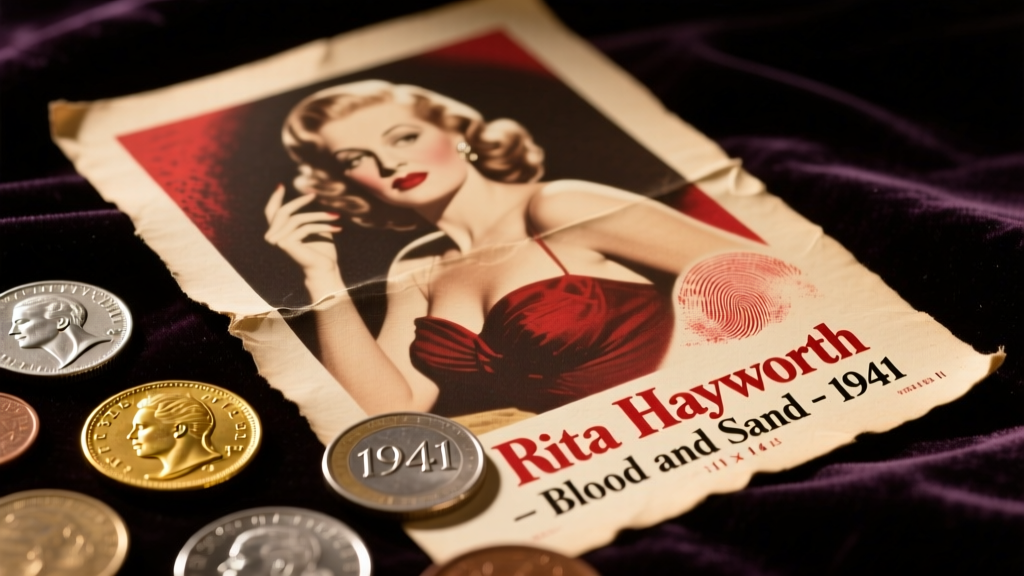
Blood and Brilliance: Valuing the 1941 Lobby Card for 'Blood and Sand' Starring Tyrone Power and Rita Hayworth (11 × 14 Inches)

Dutch Bombe Cabinet Deep Dive: Authenticity, Provenance, and Valuation of the 85" × 59" Three-Drawer Glass-Door Ball-and-Claw Example

Japonisme 1876–1885: The Coinage Revolution That Transformed Western Numismatics

Royal Doulton Figurine Michele HN 2234/2: Identification, Provenance, and Market Value Analysis

Stoneware Crock 'Bird on Twig' by Riedinger & Caire, Circa 1870 — A 2-Gallon American Folk Art Masterpiece
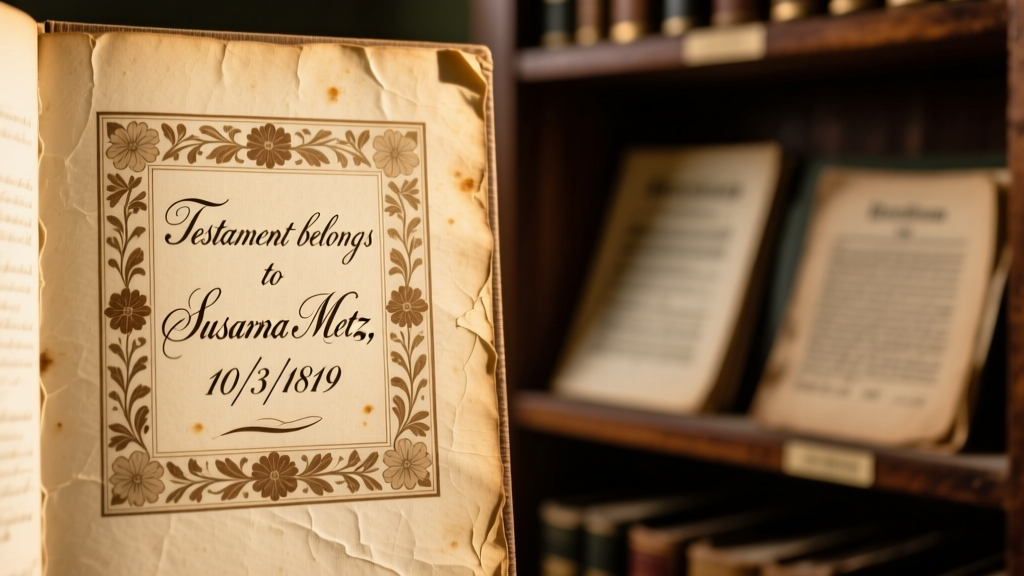
The 1819 Fraktur Bookplate Frame of Susanna Metz: A Pennsylvania German Testament in Paper and Ink
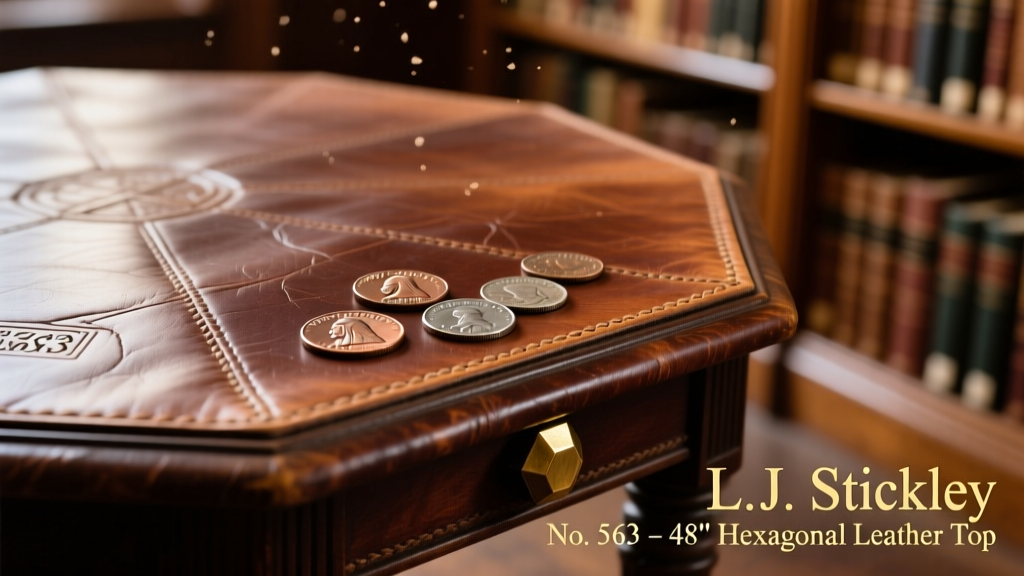
L. J. G. Stickley Library Table No. 563: Decoding the Hexagonal Nail Leather Top — Authenticity, Provenance, and Market Value

Gorham Sterling Chantilly Iced Tea Spoon (7½") — A Collector’s Deep Dive into the 12-Piece Set
Roberta Silas Hopi Hand-Painted Indian Bowl: Authentic 1950s Ceramic Artifact, 4 × 14 Inches