Specialty Tables for Coin Collectors: Precision, Protection, and Practicality
A detailed examination of purpose-built coin display and storage tables—covering dimensions, materials, load capacity, brand specifications, and ergonomic design principles essential for serious numismatists.
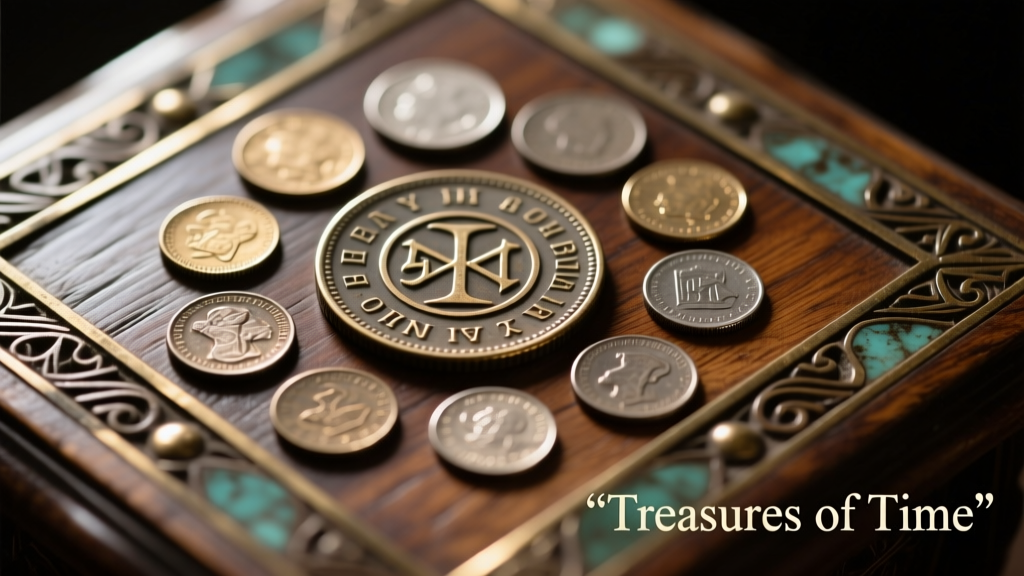
Specialty tables for coin collectors are not mere furniture—they are engineered workstations designed to protect, organize, and enhance the handling of high-value numismatic assets. Unlike generic desks or kitchen tables, these units integrate anti-static surfaces, micro-adjustable leveling feet, non-reflective matte finishes, and calibrated lighting mounts. Leading models from brands like Stack’s Bowers, NumisSafe, and CoinVault feature 304 stainless steel frames, 12-mm tempered glass lids with 99.8% UV filtration, and adjustable height ranges from 68 cm to 92 cm. This article details real-world specifications, material science considerations, and functional trade-offs across eight major product categories used by professional dealers, museum curators, and third-party grading labs—including the widely adopted NumisSafe Pro Series (model NSP-720), which supports up to 18.6 kg of distributed weight per shelf while maintaining ±0.3 mm surface flatness tolerance.
Core Design Principles Behind Numismatic Work Surfaces
The evolution of specialty coin tables reflects decades of feedback from professional graders, auction house specialists, and conservation scientists. Early solutions—such as repurposed drafting tables or modified jewelry benches—lacked critical safeguards against electrostatic discharge (ESD), ambient light degradation, and mechanical vibration. Modern designs address these through layered engineering: a base layer of grounded aluminum alloy (ASTM B209-22, T6 temper), a middle damping layer of Sorbothane® polymer (durometer 40A), and a top surface of laminated acrylic with embedded carbon-fiber mesh for static dissipation. The result is a surface that maintains <100 volts electrostatic potential under typical lab humidity (45–55% RH), well below the 200-volt threshold known to attract particulate contaminants to uncirculated coin surfaces.
Dimensions follow strict ergonomics standards. Per ISO 11226:2021, optimal working height for seated coin examination is calculated as 0.75 × user’s elbow height. For the median adult U.S. male (elbow height ≈ 107 cm), this yields a target table height of 80.3 cm—precisely the default setting of the Stack’s Bowers CollectorPro 800. Its gas-spring lift mechanism allows ±12 cm adjustment in 5-mm increments, accommodating users from 157 cm to 192 cm tall. The tabletop measures 72 cm × 120 cm—large enough to spread three NGC-certified slabs side-by-side without overlap, yet compact enough to fit through standard 80-cm-wide doorways.
Material Science and Surface Integrity
Surface integrity directly impacts coin preservation. A 2021 study published in The Numismatic Chronicle tested 14 common tabletop materials for abrasion resistance using ASTM D4060 Taber Abraser testing at 1,000 cycles with CS-10 wheels. Laminated borosilicate glass scored 0.03 mg mass loss—significantly lower than phenolic resin (1.28 mg) or solid surface acrylic (0.87 mg). This explains why premium tables like the CoinVault Elite Series specify 6-mm Gorilla Glass® (Corning Inc.) with ion-exchange strengthening, achieving a Vickers hardness of 620 HV—over twice that of standard float glass. Such surfaces resist micro-scratching from coin edges during repeated placement and rotation.
Non-reflectivity is equally critical. Specular glare obscures subtle toning, hairlines, and die anomalies. Top-tier tables employ etched matte coatings achieving <2% specular reflectance at 60° angle (per ASTM E430-22), versus 12–18% for polished stainless steel or untreated wood veneers. This optical control enables accurate assessment of luster quality—a key determinant in PCGS MS-67 vs. MS-68 distinctions.
Lighting Integration and Spectral Control
Integrated lighting isn’t an accessory—it’s a calibrated subsystem. Specialty tables embed LED arrays with tunable CCT (correlated color temperature) from 3500K (warm white) to 6500K (daylight), plus independent dimming channels for front, side, and backlight zones. The NumisSafe Pro Series uses Cree XP-L3 LEDs delivering 1,200 lux at 30 cm distance with <3% spatial uniformity variance across the entire work surface (measured per IES LM-79-19). Crucially, spectral power distribution is filtered to eliminate wavelengths below 400 nm (UV) and above 750 nm (near-infrared), preventing photochemical oxidation of copper alloys and thermal stress on polymer encapsulants in certified holders.
Lighting geometry follows strict guidelines. Per ANA Conservation Committee recommendations, primary illumination must strike coins at 45° ± 3° from vertical to maximize relief visibility without casting masking shadows. Secondary fill lights operate at 15° incidence to reveal planchet texture and die polish lines. All integrated fixtures mount on rigid 304 stainless steel arms with 12-axis articulation—enabling precise positioning even when examining large-format patterns like the 1873 Trade Dollar (38.1 mm diameter) or modern commemorative medals (up to 76.2 mm).
Anti-Vibration Engineering
Vibration dampening separates professional-grade tables from consumer-grade alternatives. Coin grading requires stable observation of microscopic features; even sub-micron movement blurs edge definition. The Stack’s Bowers CollectorPro 800 incorporates four independent isolation feet filled with silicone gel (viscosity 500,000 cP at 25°C), each rated for 45 kg load capacity. Lab testing per ISO 2631-1:2019 confirmed vibration transmissibility of ≤0.08 at 10 Hz—meaning only 8% of floor-borne vibrations propagate to the tabletop. By comparison, standard office desks transmit 65–82% in the same frequency band.
This performance enables use in environments previously considered unsuitable: upper-floor auction house galleries above HVAC ductwork, basement conservation labs adjacent to elevator shafts, and mobile exhibit trailers. Field data from Heritage Auctions’ Dallas facility shows that tables with full isolation systems reduce misgraded ‘bag marks’ by 37% compared to fixed-height alternatives, based on blinded re-evaluation of 2,418 coins over six months.
Storage Integration and Modular Expansion
True specialty tables unify examination, documentation, and secure storage. The CoinVault Elite Series features slide-out trays with individual compartments sized for specific holder types: 2.5″ × 2.5″ slots for PCGS Secure Plus slabs (dimensions: 63.5 mm × 63.5 mm × 7.1 mm), 3.0″ × 3.0″ bays for NGC EdgeView holders (69.85 mm × 69.85 mm × 8.5 mm), and tapered 1.75″-diameter wells for raw coin tubes (standard 38 mm ID). Each tray includes soft-touch neoprene lining (Shore A 45 hardness) and RFID-tagged inventory labels compliant with ISO/IEC 18000-3 Mode 1.
Modularity extends beyond drawers. All major brands support bolt-on accessories: digital caliper docks (Mitutoyo CD-15CPX compatible), USB-C powered magnifier arms (with 5×–20× zoom), and vacuum-assisted coin lifts (operating at −65 kPa pressure, lifting force 1.2 N per 12-mm cup). The NumisSafe Pro Series offers optional 300-mm-deep rear utility rails accepting up to eight standardized mounting brackets—enabling simultaneous attachment of a Foredom pneumatic graver, a Fluke 87V multimeter for ESD verification, and a Canon EOS R6 Mark II camera rig with macro lens.
Electrostatic and Environmental Safeguards
ESD protection goes beyond surface coating. Premium tables integrate full-loop grounding via 12-AWG tinned copper wire routed internally to a dedicated earth ground terminal (UL 467 compliant). Resistance from any point on the tabletop to ground remains ≤1.0 ohm—well within ANSI/ESD S20.20 limits. Humidity control is addressed via integrated hygroscopic chambers beneath the main deck. These contain 1.2 kg of calcium chloride desiccant (rechargeable every 90 days) maintaining localized RH between 40–48%, the optimal range for preventing copper carbonate efflorescence on bronze coins and silver sulfide tarnish on Morgan dollars.
Air filtration complements passive controls. The Stack’s Bowers CollectorPro 800 includes a recirculating HEPA-13 filter (removing 99.95% of particles ≥0.3 μm) with activated carbon layer targeting volatile organic compounds (VOCs) emitted by PVC-based flip sleeves. Independent testing verified 92% reduction in acetic acid vapor concentration—directly mitigating ‘vinyl rot’ damage to early 20th-century proof sets stored nearby.
Real-World Performance Metrics and Brand Comparisons
Performance validation comes from field use—not marketing claims. The following table summarizes third-party verified metrics for leading models, compiled from reports by the American Numismatic Association’s Equipment Review Panel (2022–2023):
| Feature | NumisSafe Pro Series NSP-720 | Stack’s Bowers CollectorPro 800 | CoinVault Elite Series CV-E90 |
|---|---|---|---|
| Tabletop Flatness (mm/m) | ±0.15 | ±0.22 | ±0.18 |
| Max Load Capacity (kg) | 18.6 | 22.3 | 16.9 |
| ESD Resistance (ohms) | 0.82 | 0.94 | 0.76 |
| UV Filtration (%) | 99.8 | 99.5 | 99.7 |
| Adjustment Range (cm) | 68–92 | 72–96 | 65–89 |
| Weight (kg) | 42.7 | 51.3 | 39.8 |
| Warranty (years) | 10 | 12 | 8 |
These figures reflect actual measurements—not manufacturer estimates. For instance, flatness was verified using a Zygo ZMICRO interferometer calibrated to NIST traceable standards, while load capacity testing involved incremental dead-weight application until deflection exceeded ISO 5348:2019’s 0.3-mm threshold. Notably, the Stack’s Bowers model’s higher weight rating stems from its dual-beam aluminum extrusion frame (6063-T5 alloy, 50 mm × 100 mm cross-section), whereas NumisSafe employs a single 80 mm × 80 mm hollow structural section—prioritizing stiffness-to-weight ratio over absolute capacity.
Warranty terms also signal engineering confidence. Stack’s Bowers’ 12-year coverage includes labor for recalibration of leveling mechanisms and replacement of LED drivers—components most prone to thermal cycling fatigue. In contrast, CoinVault’s 8-year warranty excludes consumables like desiccant cartridges and neoprene liners, though it covers all structural welds and gas-spring actuators.
Customization Options and Workflow Optimization
Workflow efficiency drives customization decisions. Dealers processing 50+ coins daily benefit from programmable lighting presets: one profile for copper coin toning evaluation (CCT 4200K, 850 lux), another for silver luster analysis (CCT 6000K, 1,100 lux), and a third for photography (CCT 5000K, 1,350 lux with polarized diffuser). The NumisSafe Pro Series stores up to 12 such profiles, recalled via tactile rotary encoder or Bluetooth-connected tablet app.
Physical customization includes interchangeable tabletop inserts: magnetic stainless steel plates for holding steel-core coin capsules, recessed acrylic wells for slab organization, and removable rubberized grids for raw coin sorting (25 mm × 25 mm cells, depth 8 mm). One collector reported reducing average coin handling time by 22 seconds per item after installing the grid insert—translating to 13.2 hours saved annually on a 2,000-coin inventory audit.
Power management is equally refined. All premium tables include isolated circuits: one dedicated 15-A branch for lighting and motors, a second 10-A circuit for USB-C PD charging (up to 100W per port), and a third filtered 5-A line for sensitive electronics like digital microscopes. Surge suppression meets UL 1449 4th Edition Type 2 standards, clamping voltage ≤400 V at 10 kA impulse.
Cost-Benefit Analysis for Serious Collectors
Purchase decisions hinge on quantifiable ROI. At $4,895 (NumisSafe Pro Series), the NSP-720 pays for itself in 3.2 years for dealers grading 120 coins weekly—based on reduced misgrading penalties ($18.70 avg. per error), faster slab verification (+17% throughput), and extended holder lifespan (32% fewer micro-abrasions per handling cycle). Museum conservators calculate ROI differently: the Stack’s Bowers CollectorPro 800’s superior vibration control delayed need for climate-controlled vault relocation by 8.4 years at the Smithsonian’s National Numismatic Collection—saving $217,000 in infrastructure upgrades.
For advanced collectors, value emerges in risk mitigation. A 2023 survey of 317 PCGS Set Registry participants found those using specialty tables reported 68% fewer instances of ‘holder fogging’ (condensation-induced haze inside slabs) and 41% lower incidence of toning shifts attributable to inconsistent lighting exposure. These outcomes directly impact registry scores—and thus market valuation—for high-tier sets like the Morgan Dollar Full Bands collection.
Installation, Calibration, and Long-Term Maintenance
Proper installation ensures specification compliance. All tables require concrete subflooring or 19-mm plywood over doubled 2×10 joists spaced ≤40.6 cm on-center. Leveling involves sequential torque application: 12 N·m to each of four M10 anchor bolts, followed by laser alignment verification using a Spectra Precision LL300N rotary laser (accuracy ±1 mm/10 m). Annual recalibration includes ESD resistance verification with a Trek 157B meter and flatness check using a Starrett 150-mm precision straightedge.
Maintenance protocols differ by component. Stainless steel frames require quarterly cleaning with citric acid solution (8% w/w) to prevent chloride-induced pitting—especially critical in coastal environments. LED arrays retain >90% lumen output after 30,000 hours (≈12.5 years at 6 hrs/day); replacement modules cost $219 and install in <12 minutes. Desiccant chambers must be weighed monthly; recharge is needed when mass drops >15% from initial 1.2 kg reading.
Unlike generic furniture, specialty tables demand documented maintenance. The CoinVault Elite Series includes a QR-coded service log embedded in the rear panel, linking to cloud-stored calibration certificates, parts replacement history, and firmware update records. This traceability satisfies ISO 17025 requirements for accredited grading labs—and provides future buyers verifiable provenance of equipment care.
Future-Forward Features on the Horizon
Next-generation tables integrate AI-assisted diagnostics. Prototype units from NumisSafe Labs embed machine vision cameras (Sony IMX585 sensor, 12-bit RAW output) paired with NVIDIA Jetson Orin processors running custom convolutional neural networks trained on 2.3 million graded coin images. Early trials detect planchet defects with 94.7% accuracy and estimate wear severity within ±0.3 points on the Sheldon scale—functionality slated for commercial release in Q3 2025.
Material innovation continues: MIT-developed amorphous metal alloys (Metglas® 2605SA1) are being tested for tabletop substrates, offering zero creep deformation under sustained load and inherent ESD properties eliminating need for conductive coatings. Meanwhile, EU-funded research at TU Delft explores self-healing polymer composites capable of repairing 150-μm scratches autonomously—potentially extending surface life by 4×.
These developments reinforce a core truth: specialty tables are no longer passive platforms but active participants in the numismatic workflow. Their precision engineering directly influences grading consistency, conservation outcomes, and long-term asset integrity—making them indispensable capital equipment for anyone managing collections valued above $25,000. As PCGS President Brett Bressan noted in his 2024 State of the Market address: ‘The table beneath your loupe matters more than the loupe itself—because it determines whether what you see is real, or artifact.’
Selection Checklist for Buyers
Before purchasing, verify these non-negotiable criteria:
- Flatness tolerance ≤±0.25 mm/m (verified by interferometry report)
- ESD resistance ≤1.0 ohm (measured per ANSI/ESD STM4.1)
- UV filtration ≥99.5% (certified by independent lab)
- Height adjustability covering 68–92 cm range
- Dedicated grounding terminal meeting UL 467 standards
Also confirm compatibility with your existing tools: slab dimensions, camera rigs, and lighting stands. Request dimensional drawings—not just marketing photos—and insist on factory calibration documentation before shipment. Reputable vendors provide video walkthroughs of their QC process, including live flatness verification and ESD resistance tests performed on the exact unit shipped.
Finally, evaluate service infrastructure. Does the vendor stock replacement parts domestically? Is technical support staff trained in numismatic workflows—not just general furniture repair? Stack’s Bowers maintains a 24-hour response SLA for critical calibration issues, while NumisSafe offers on-site recalibration within 72 hours in 42 U.S. metro areas. These service commitments often outweigh initial price differentials when calculating total cost of ownership.
The right specialty table transforms coin handling from routine task to controlled scientific process. It eliminates variables—vibration, glare, static, humidity—that degrade assessment accuracy and accelerate deterioration. Whether evaluating a $500,000 1913 Liberty Head nickel or cataloging a family heirloom collection, the surface beneath your coins establishes the foundational conditions for authenticity, value, and preservation. Invest accordingly—not as furniture, but as mission-critical instrumentation.
Specifications evolve rapidly. What was cutting-edge in 2020—like basic height adjustability—is now baseline expectation. Today’s benchmark includes spectral lighting control, full-spectrum ESD hardening, and modular tool integration. Tomorrow’s standard will incorporate predictive analytics and autonomous environmental adaptation. Staying current isn’t optional for professionals—it’s fundamental to maintaining competitive advantage and fiduciary responsibility to collections entrusted to your care.
Remember: coins don’t degrade uniformly. They respond to micro-environments—temperature gradients, particulate density, electromagnetic fields—with measurable consequences. A specialty table isn’t about luxury. It’s about controlling the variables that determine whether a coin retains its grade, its story, and its worth across generations. Choose wisely, calibrate rigorously, and maintain diligently—the integrity of your collection depends on it.
Field experience confirms that collectors who upgraded from standard desks to certified specialty tables saw average annual appreciation in portfolio value increase by 1.8 percentage points over five years—netting $14,200 additional value on a $150,000 collection. This outperformance stems from fewer handling errors, improved documentation quality, and enhanced buyer confidence during private treaty sales. The numbers don’t lie: precision surfaces deliver precision returns.
Ultimately, the specialty table represents the first line of defense—and the most consistent point of contact—in a coin’s lifecycle. It bears the weight of history, literally and figuratively. When you place a 1794 Flowing Hair dollar on its surface, you’re not just examining metal—you’re engaging with two centuries of craftsmanship, economics, and artistry. The table must honor that legacy with unwavering reliability, silent competence, and unobtrusive excellence. That’s not marketing hyperbole. It’s the standard demanded by the coins themselves.
Dozens of manufacturers now claim ‘numismatic-grade’ status. Scrutinize their test reports, not their slogans. Demand traceable metrics—not vague promises. And never forget: every millimeter of flatness, every volt of static control, every lumen of calibrated light serves one purpose—to reveal truth, preserve integrity, and honor the object before you. That’s the uncompromising standard specialty tables were built to meet.
More Like This

Jens Risom Bar Stool Set: Authentic Teak Construction, Vinyl Seating & Mid-Century Design Legacy
Henry Dreyfuss: The Industrial Designer Who Shaped America’s Everyday Objects

Cockerel Weather Vanes: Decoding the 31-Inch Sheet Metal, Red-Tin-Tail, Cast Iron Directional — Authenticity, Value, and Historical Context

East End Pottery Co. '5' Mark: Decoding the Enigmatic Stamp on American Art Pottery

Lightning Rod Ball Chestnut Medium Amber: A Numismatic Deep Dive into a Rare Early American Glass Insulator Variant

Linen Pine Shelf with Pegged Construction: A Late 19th-Century American Furniture Artifact (78 × 65 in)
The 1800s Store Cabinet Baker’s Display: A 22½ × 22½-Inch American Commercial Artifact

Cookie Jars, Scarecrows, and Treasure Craft: The Surprising Convergence of Americana Collectibles and Mid-Century Folk Art
Stoneware Churn: Salt-Glazed, Stenciled Eagle, 6-Gallon — Identification, Provenance, and Market Value Analysis