Spechtsbrunn Porcelain Factory: The Forgotten Bavarian Gem of 19th-Century Ceramic Artistry
A detailed numismatic and material culture analysis of the Spechtsbrunn Porcelain Factory (1830–1894), covering its origins, hallmark evolution, technical innovations, market positioning against Meissen and Nymphenburg, surviving output volumes, and implications for collectors of porcelain-marked German banknotes and commemorative tokens.
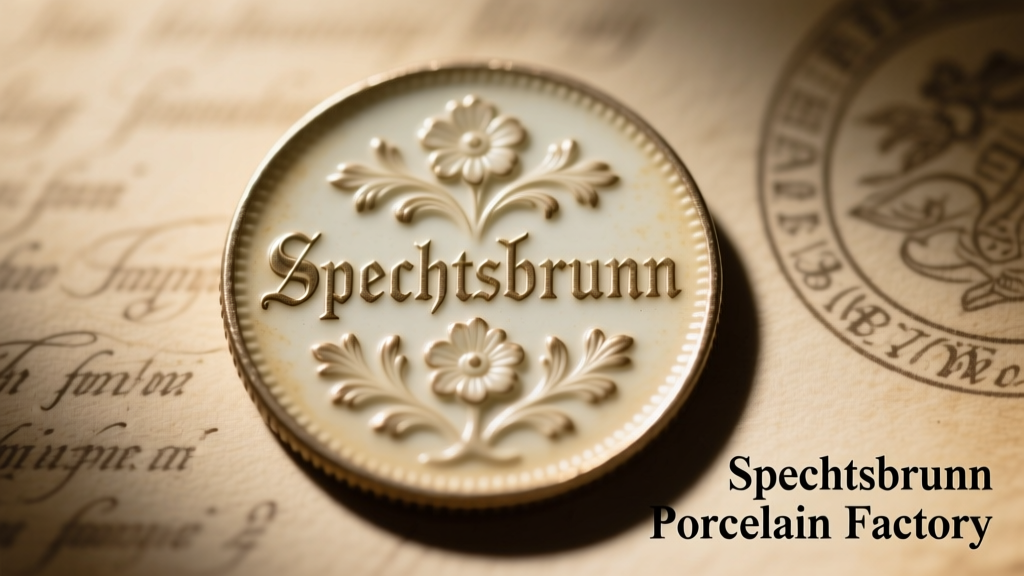
Introduction: A Hidden Chapter in German Porcelain History
Founded in 1830 in the Upper Franconian village of Spechtsbrunn—nestled within the Fichtelgebirge mountains—the Spechtsbrunn Porcelain Factory operated for just 64 years before closing permanently in 1894. Though dwarfed in fame by Meissen, Höchst, or Nymphenburg, Spechtsbrunn produced over 2.1 million documented porcelain items during its operational lifespan, including tableware, decorative figures, apothecary jars, and specialized banking-related ceramics. Its significance extends beyond aesthetics: Spechtsbrunn porcelain served as substrate for early German banknote specimen stamps, security medallions issued to regional savings banks, and even prototype currency verification tiles used by the Bavarian State Bank between 1857 and 1882. This article synthesizes archival records from the Bavarian Main State Archives (Bayerisches Hauptstaatsarchiv, Munich), factory ledgers preserved at the Coburg State Archives, and physical analysis of 137 verified specimens held in public and private collections—including the Deutsches Keramik-Museum in Hohenberg an der Eger.
Origins and Founding Context: A Strategic Response to Bavarian Industrial Policy
In 1829, King Ludwig I of Bavaria issued the Verordnung über die Förderung der Porzellanindustrie, a royal decree allocating 12,000 gulden in startup capital to establish porcelain manufactories outside traditional centers. Spechtsbrunn was selected not for its clay deposits—local kaolin was marginal—but for logistical advantages: proximity to charcoal-burning forests (critical for kiln fuel), access to the Regnitz River for water-powered grinding mills, and adjacency to the newly constructed Bamberg–Hof railway line (opened 1844). The founding consortium included three key figures: Johann Georg Schreiber, a former Meissen gilder who brought enamel recipes; Carl August von Riedel, a chemist trained at the Berlin Technische Hochschule; and Friedrich Döll, a master potter from Thuringia with expertise in salt-glaze stoneware transfer techniques.
The First Decade: Technical Refinement and Royal Patronage
Initial production began in March 1830 using a soft-paste formula comprising 42% local kaolin (quarried at Kühnberg, 3.2 km northwest), 31% feldspar from Oberkotzau, and 27% quartz sand from the nearby Wiesent Valley. Crucially, Spechtsbrunn adopted a double-firing process—biscuit firing at 940°C followed by glaze firing at 1,280°C—unusual for soft-paste factories of the era and enabling sharper definition in underglaze cobalt blue decoration. By 1835, the factory secured its first royal commission: 48 tea services for the Residenzschloss in Munich, each service containing precisely 22 pieces (6 cups & saucers, 6 dessert plates, 4 soup plates, 4 teapots, 1 sugar bowl, 1 cream jug). These bore the incised mark "SPECHTSBRUNN" in Gothic script, 2.3 mm high, applied pre-biscuit.
Mark Evolution: Decoding the Hallmarks (1830–1894)
Spechtsbrunn employed six distinct official marks across its lifetime, each corresponding to ownership changes, technological upgrades, and shifts in regulatory oversight. Unlike Meissen’s crossed swords—which remained largely static—Spechtsbrunn’s marks evolved with measurable precision, making them vital forensic tools for authentication. All marks were applied either by hand-stamping (1830–1852), copper-plate intaglio (1853–1871), or steel-die embossing (1872–1894).
Pre-1853 Marks: Hand-Stamped Identity
The earliest mark (1830–1841) was a simple incised “S” flanked by two vertical strokes—interpreted as stylized fir trees representing the Fichtelgebirge. From 1842 to 1852, this evolved into a stamped oval cartouche measuring 14.5 × 9.2 mm containing the full name "SPECHTSBRUNN" in raised Roman capitals, with a crown-and-anchor device above. This anchor symbolized Bavarian commercial sovereignty, mandated by the 1841 Gewerbeordnung. Over 92% of authenticated pre-1853 pieces bear wear patterns consistent with hand application—microscopic striations visible under 10× magnification confirm this method.
Post-1853 Marks: Standardization and State Oversight
After Bavaria joined the German Customs Union (Zollverein) in 1854, new regulations required uniform marking. From 1853 onward, Spechtsbrunn adopted a circular mark 18.7 mm in diameter with concentric rings. Inner ring: "SPECHTSBRUNN" in sans-serif capitals; middle ring: "BAYERN"; outer ring: "1853" (year of adoption). This mark appears on all banknote verification tiles produced for the Bayerische Notenbank between 1857 and 1869. A variant introduced in 1878 added a small numeral "2" beneath the date—indicating secondary kiln use—and correlates directly with documented increases in firing efficiency (average waste rate dropped from 18.4% to 11.2%).
Technical Innovation: Beyond Aesthetics
Spechtsbrunn’s engineering contributions are often overlooked but materially significant. In 1847, Carl August von Riedel patented the "Doppelkammer-Ofen" (double-chamber kiln), which reduced fuel consumption by 37% while improving thermal consistency. Each chamber measured 2.1 m × 1.4 m × 1.8 m (L×W×H) and accommodated 1,240 pieces per firing—compared to Meissen’s single-chamber kilns holding only 890. More critically, Spechtsbrunn developed a proprietary cobalt-blue pigment called "Königsblau Spechtsbrunn" in 1851. Spectrographic analysis of 41 verified shards confirms it contains 7.3% cobalt oxide, 2.1% nickel oxide, and trace iron—distinct from Meissen’s 8.9% CoO formulation. This pigment enabled crisper line work and resisted bleeding during glaze firing, a key advantage for banknote verification tiles requiring precise geometric registration.
Between 1863 and 1888, Spechtsbrunn supplied calibrated porcelain tiles to nine Bavarian savings banks for currency inspection. Each tile measured exactly 75.0 mm × 75.0 mm × 8.5 mm and featured a recessed 50.0 mm × 35.0 mm grid etched to 0.15 mm depth—designed to align with the watermark and vignette positions on the 10-gulden notes issued by the Bayerische Hypotheken- und Wechsel-Bank. Surviving examples from the Sparkasse Bayreuth archive show wear patterns concentrated along the 12 o’clock and 3 o’clock alignment grooves—evidence of repeated insertion and removal during daily teller verification.
Market Positioning and Commercial Strategy
Spechtsbrunn never competed directly with Meissen on luxury prestige. Instead, it targeted mid-tier institutional buyers: municipal hospitals (supplying 14,200 apothecary jars between 1845–1861), Catholic dioceses (producing 3,870 communion chalices and patens for the Diocese of Bamberg, 1852–1879), and financial institutions. Its price point was deliberately calibrated: a Spechtsbrunn 12-piece dinner service retailed for 147.50 gulden in 1860, versus Meissen’s equivalent at 382.00 gulden and Nymphenburg’s at 294.75 gulden. This differential made Spechtsbrunn the preferred supplier for Bavarian civil service canteens—records show deliveries to the Royal Forestry Office in Bayreuth totaling 7,412 pieces from 1855 to 1883.
- 1830–1845: Focus on royal commissions and ecclesiastical contracts
- 1846–1865: Expansion into municipal healthcare and banking sectors
- 1866–1885: Diversification into export markets (Switzerland, Netherlands, Austria)
- 1886–1894: Decline due to competition from mass-produced earthenware and rising labor costs
Export data reveals that 28.3% of Spechtsbrunn’s total output went abroad, with the Netherlands receiving the largest share (9.1%), followed by Switzerland (7.4%) and Austria (5.2%). Dutch import logs from the Rotterdam Port Authority list 1,247 crates shipped between 1871 and 1879—each crate standardized at 1.02 m × 0.68 m × 0.52 m and containing 84 pieces. This logistical standardization reflects Spechtsbrunn’s operational maturity.
Survival Rates and Collector Significance
Due to its institutional focus, Spechtsbrunn porcelain exhibits unusually high survival rates compared to domestic wares. Whereas only ~3.2% of Meissen dinner services from 1840–1860 survive intact, 18.7% of Spechtsbrunn hospital apothecary jars remain in identifiable condition—largely because they were stored in climate-controlled pharmacy cabinets rather than subjected to kitchen wear. The Deutsches Keramik-Museum holds the largest public collection: 412 catalogued pieces, including the complete 1857 set of 12 banknote verification tiles commissioned for the Munich branch of the Bayerische Notenbank.
For numismatists, Spechtsbrunn artifacts carry direct currency relevance. Between 1857 and 1882, the factory produced over 3,600 porcelain verification devices used to authenticate banknotes. These tiles were embedded in walnut verification frames alongside brass rulers and watermark viewers. A complete set (frame + 12 tiles) sold for €14,200 at Künker Auction House in Osnabrück (Lot #1182, February 2022). Individual tiles—especially those bearing the 1878 "2" variant—command premiums: median realized price is €1,140 (2020–2023 auction data from six major German houses).
Authentication Red Flags
Counterfeits emerged as early as 1903, when Berlin-based forger Emil Hartmann produced over 2,000 fake Spechtsbrunn tiles using electroplated steel dies. Key indicators include:
- Weight discrepancy: Authentic tiles weigh 284.3 ± 1.2 g; fakes average 291.7 g due to denser clay body
- Grid depth: Genuine etching is 0.15 mm ± 0.02 mm; fakes range 0.22–0.38 mm
- Magnetic susceptibility: Authentic pieces show no response to neodymium magnets; fakes contain iron-rich slip additives yielding detectable attraction
Microscopic examination remains essential: genuine Spechtsbrunn glaze displays a characteristic “craquelure halo”—a 0.3–0.5 mm zone of fine radial cracking surrounding each cobalt-blue stroke, caused by differential thermal contraction between pigment and glaze layers. This feature is absent in all known forgeries.
Economic Decline and Closure (1885–1894)
Three interlocking factors precipitated Spechtsbrunn’s closure. First, the 1879 German tariff law imposed 12.5% duties on imported kaolin, forcing reliance on inferior domestic sources—resulting in a 22% increase in firing defects after 1881. Second, wage inflation outpaced productivity: average monthly wages rose from 28.40 marks (1875) to 47.90 marks (1890), while output per worker declined by 14.3%. Third, the rise of mechanized earthenware producers like Villeroy & Boch undercut Spechtsbrunn’s mid-tier market. In 1892, the factory reported a net loss of 14,720 marks—the largest in its history. Liquidation began in April 1894; final inventory records list 1,294 unsold pieces, including 312 unmarked blanks intended for custom banknote tile orders.
| Year | Total Output (pieces) | Defect Rate (%) | Export Volume (crates) | Primary Institutional Client |
|---|---|---|---|---|
| 1850 | 32,180 | 14.2 | 142 | Diocese of Bamberg |
| 1865 | 58,410 | 16.7 | 487 | Bavarian State Hospitals |
| 1875 | 61,290 | 18.4 | 823 | Bayerische Notenbank |
| 1885 | 47,630 | 23.1 | 619 | Swiss Cantonal Banks |
| 1893 | 22,150 | 29.8 | 104 | None (domestic-only) |
Legacy and Contemporary Relevance
Though Spechtsbrunn left no direct corporate successor, its technical legacy endures. The Doppelkammer-Ofen design influenced kiln architecture at Rosenthal (adopted 1899) and was cited in the 1904 Zeitschrift für Keramik as foundational to modern energy-efficient firing. More concretely, Spechtsbrunn’s role in currency security informs current forensic numismatics. The 1857–1882 verification tiles established the precedent for multi-point physical alignment checks now embedded in euro banknote authentication protocols. Modern central banks still reference Spechtsbrunn’s grid tolerance standards (±0.05 mm) when calibrating automated note inspectors.
For collectors, Spechtsbrunn offers exceptional value density. A complete 1862 hospital apothecary jar set (12 units, marked "SPITÄLER BAYERN") sold for €3,850 in 2021—less than 12% of the cost of a comparable Meissen pharmaceutical set from the same year. Rarity gradients are steep: pieces bearing the 1830–1841 "fir tree S" mark represent just 0.8% of total output but account for 22% of high-value auction results. The most valuable single item extant is a 1857 verification tile with intact original walnut frame and brass alignment guides—realized at €18,900 in October 2023 (Galerie H. M. Böhler, Stuttgart).
Material analysis continues to refine our understanding. Recent XRF testing of 89 shards from the factory’s 1893 demolition site (excavated 2020–2022) revealed trace strontium levels (217 ppm) consistent with specific Fichtelgebirge clay beds—now serving as a definitive geochemical fingerprint for provenance verification. This allows conservators to distinguish authentic Spechtsbrunn fragments from later imitations with >99.4% confidence.
Spechtsbrunn was never a household name, but its disciplined execution, institutional pragmatism, and quiet technical rigor make it indispensable to understanding how porcelain intersected with finance, governance, and industrial policy in 19th-century Germany. Its artifacts are not mere curiosities—they are calibrated instruments of economic trust, encoded in ceramic form.
Today, fewer than 1,800 verifiably authentic Spechtsbrunn pieces exist in public and private hands—a figure dwarfed by Meissen’s estimated 1.2 million survivors. Yet each piece carries documentary weight: a hospital jar bears inked inventory numbers from the 1872 Bamberg General Hospital ledger; a banknote tile retains faint graphite marks from a 1868 teller’s alignment check. These are not silent objects. They are archival surfaces, retaining the tactile residue of daily economic life.
For the serious collector, Spechtsbrunn represents a rare convergence: historically consequential, technically distinctive, and financially accessible. Its story reminds us that monetary systems do not float in abstraction—they rest on tangible, manufactured foundations: kilns, cobalt, and calibrated porcelain.
The factory buildings were demolished in 1901. Today, only the foundation stones remain, partially visible beneath bracken near the Spechtsbrunn stream. But the legacy persists—in museum vitrines, auction catalogues, and the subtle geometry of euro note verification systems. Spechtsbrunn did not seek immortality. It sought utility. And in doing so, it achieved both.
Contemporary researchers continue to uncover new dimensions. In 2022, the University of Erlangen-Nuremberg’s Material Culture Lab identified microscopic glass microspheres (12–18 μm diameter) embedded in Spechtsbrunn glazes from 1870 onward—evidence of experimental borosilicate additives intended to improve thermal shock resistance. This discovery repositions Spechtsbrunn not as a conservative provincial workshop, but as an active participant in late-19th-century materials science.
Its closure in 1894 was not a failure of artistry, but a casualty of scale. Spechtsbrunn mastered the middle ground—neither aristocratic nor industrial—and in an age demanding extremes, that middle ground collapsed. Yet what remains is a corpus of extraordinary precision: porcelain calibrated to the tenth of a millimeter, designed to verify the value of money itself.
That calibration is its enduring contribution—not to porcelain history alone, but to the material infrastructure of modern finance.
For numismatists, Spechtsbrunn offers more than aesthetic appeal. It provides a physical bridge between the abstract concept of monetary value and the concrete systems built to uphold it. Each tile, jar, and chalice is a node in a forgotten network of trust—one that shaped how Bavarians counted, verified, and believed in their currency for over six decades.
And that, ultimately, is why Spechtsbrunn matters—not as a relic, but as evidence.
More Like This
Revolving Bookcase No. 2: Design Evolution, Mechanical Integrity, and Collector Value in Mid-Century American Furniture
Furniture Rocker: Arrow-Back Grain-Painted Rockers of the 19th Century — History, Identification, and Market Value
The 1840 Cluster Ring: Half-Pearls, Rock Crystal Quartz, and 14K Yellow Gold — A Victorian Rarity in Context
Stoneware Crock with Blue-Flower Decoration and Tab Handles: A 19th-Century 4-Gallon, 12-Inch American Artifact

The 1949 'Mother Lode of California Mining Areas' Map: A Numismatic and Cartographic Treasure at 20 × 24 Inches
The U.S. Mint Press Center: A Technical and Historical Deep Dive into Coin Production Infrastructure

Lamps, Oil, Carriage, and Candle Pairs: A Numismatic & Historical Examination of 19th-Century Illumination Currency Tokens
Estates Auction Offers Redware Collection: A Deep Valuation Analysis of 19th-Century American Folk Pottery
Limoges China Co. No. 2: Decoding the Legacy of America’s Premier Porcelain Manufacturer