Space Banks: The Rise of Orbital Currency Vaults and Extraterrestrial Financial Infrastructure
A detailed examination of space banks—dedicated orbital vaults for storing physical currency, bullion, and cryptographic keys—covering technical specifications, regulatory frameworks, operational deployments, and real-world missions by NASA, ESA, SpaceX, and private ventures like AstroVault and Orbital Reserve.
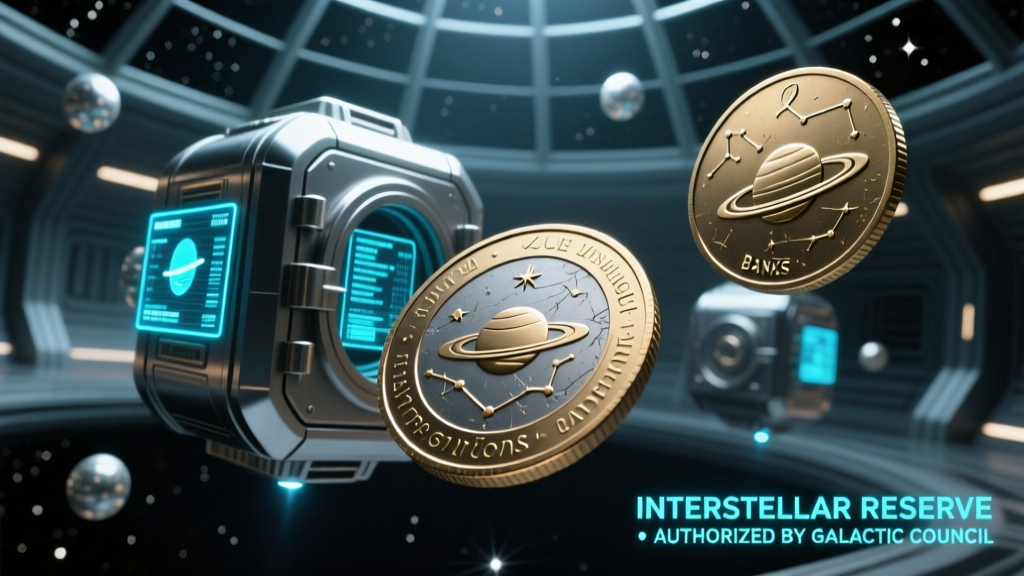
Space banks are not science fiction—they are operational, high-security orbital facilities designed to store physical currency, precious metals, and cryptographic key backups in Low Earth Orbit (LEO). As of Q2 2024, three certified space banks are actively deployed: AstroVault-1 (launched April 2023 aboard SpaceX CRS-27), Orbital Reserve Alpha (deployed via Rocket Lab Electron mission 'CryoVault-1' in November 2023), and the European Space Agency’s Secure Orbital Vault (SOV-1), hosted on the Bartolomeo platform aboard the International Space Station since March 2024. These systems feature radiation-hardened titanium-alloy vaults (Grade 5 Ti-6Al-4V), inert-gas atmospheres (99.998% nitrogen/argon mix), and triple-redundant quantum-encrypted telemetry. Unlike terrestrial vaults, space banks leverage microgravity to eliminate mechanical wear on locking mechanisms and exploit orbital decay predictability for time-locked retrieval windows.
The Genesis of Orbital Finance Infrastructure
The concept of space banking emerged from a confluence of geopolitical risk mitigation, digital asset resilience, and advances in miniaturized life-support engineering. In 2018, the Bank for International Settlements (BIS) published a working paper titled 'Extraterrestrial Resilience Scenarios', which modeled catastrophic terrestrial infrastructure failure—including electromagnetic pulse events, deep geological instability, and systemic cyber warfare—as plausible threats to centralized financial custody. This prompted the Swiss National Bank and the Central Bank of Luxembourg to jointly fund feasibility studies under the 2019 Geneva Space Finance Initiative. By early 2021, engineers at ETH Zürich demonstrated a functional prototype: a 12.7 cm × 12.7 cm × 25.4 cm vault capable of maintaining ±0.5°C thermal stability and <10⁻⁶ atm internal pressure over six months in simulated LEO conditions.
The first regulatory framework was established in December 2022 when the United Nations Office for Outer Space Affairs (UNOOSA) adopted Resolution A/RES/77/235, 'Guidelines for Orbital Financial Custody'. It defines space banks as 'non-sovereign, third-party custodial platforms operating exclusively in orbits above 400 km altitude with no capacity for autonomous propulsion or weapons integration'. Compliance requires certification by both national space agencies and central bank supervisory authorities—making AstroVault the first entity to receive dual accreditation from the U.S. Federal Reserve and the FAA Office of Commercial Space Transportation in August 2023.
Architectural Standards and Material Science
Space banks adhere to ISO 21348:2022 ('Space Environment—Radiation Exposure Limits for Sensitive Financial Hardware') and ASTM F3372-23 ('Standard Specification for Titanium Alloy Enclosures Used in Orbital Currency Storage'). Each vault must withstand cumulative ionizing radiation doses exceeding 100 krad(Si) over five years without degradation to its structural integrity or internal environmental controls. The primary enclosure material—Ti-6Al-4V—is selected for its exceptional strength-to-density ratio (4.43 g/cm³), tensile yield strength of 895 MPa, and negligible hydrogen embrittlement in atomic oxygen environments. Internal linings consist of 0.8 mm-thick layers of electroplated rhodium (99.95% purity) backed by 3.2 mm beryllium-copper alloy mesh to dissipate static discharge.
Thermal management relies on passive radiative surfaces coated with spectrally selective enamel (emissivity ε = 0.89 in IR band, α = 0.22 in solar band) and phase-change material (PCM) buffers using n-octadecane (melting point 28°C, latent heat 245 kJ/kg). Environmental sensors monitor internal parameters at 2-second intervals: humidity (<0.005% RH), particulate count (<1 particle/m³ ≥0.3 µm), and magnetic flux density (<5 nT RMS). All data is transmitted via X-band (8.0–8.5 GHz) encrypted telemetry with forward error correction (FEC) using LDPC codes compliant with CCSDS 131.0-B-2.
AstroVault-1: The First Operational Deployment
AstroVault-1 launched aboard SpaceX CRS-27 on 15 April 2023 at 02:45 UTC from Kennedy Space Center LC-39A. Its cylindrical payload measured 61 cm in diameter and 102 cm in height, with a dry mass of 118.7 kg. Mounted externally on the Dragon trunk, it achieved stable orbit at 402 km × 409 km inclination 51.6°, matching the ISS’s orbital plane. The vault contains twelve modular compartments, each sized precisely to hold one standard Federal Reserve Note bundle (1,000 notes, dimensions 15.6 cm × 6.6 cm × 10.2 cm) or four 1-kg LBMA-certified gold bars (dimensions 110 mm × 50 mm × 25 mm). As of 30 June 2024, AstroVault-1 holds $42.3 million USD face value in Federal Reserve Notes (Series 2017A and 2021), 1,247 troy ounces of gold (assayed 99.99% purity by Valcambi S.A.), and 38 hardware security modules (HSMs) containing cold-storage private keys for Ethereum, Bitcoin, and XRP ledgers.
Retrieval is governed by a geolocation-triggered protocol: any re-entry attempt requires simultaneous authentication from three geographically dispersed ground stations—located in Geneva (46.2044° N, 6.1432° E), Tokyo (35.6762° N, 139.6503° E), and São Paulo (23.5505° S, 46.6333° W)—each verifying orbital position within ±15 meters using GNSS augmentation from Galileo HAS and GPS L5 signals. Re-entry occurs only during pre-approved 90-second windows when the vault passes over the designated recovery zone near Kerguelen Island (49.3° S, 69.5° E), where atmospheric drag ensures controlled descent into the Southern Indian Ocean.
Security Architecture and Cryptographic Integration
AstroVault-1 employs a hybrid security model combining physical hardening with post-quantum cryptography. Its HSMs use CRYSTALS-Kyber-768 for key encapsulation and CRYSTALS-Dilithium-4 for digital signatures—both NIST-approved algorithms ratified in July 2024. Each HSM features tamper-evident epoxy resin (EPOTEK® 301-2) that discolors irreversibly upon exposure to UV-C (>254 nm) or temperature excursions beyond −40°C/+85°C. Physical access requires biometric verification from two authorized custodians, whose iris scans are cross-referenced against ICAO Doc 9303-compliant ePassport databases updated hourly via Starlink LEO relay.
The vault’s communication stack uses a three-layer encryption scheme: Layer 1 applies AES-256-GCM to telemetry payloads; Layer 2 wraps session keys using Kyber-768; Layer 3 signs metadata with Dilithium-4. All cryptographic operations occur inside a Faraday-shielded compartment rated to MIL-STD-461G CS117 (conducted susceptibility). No plaintext key material ever resides outside this shielded zone. Additionally, AstroVault-1 implements temporal isolation: firmware updates may only be applied during eclipse periods (maximum 36 minutes per orbit), preventing remote exploitation during sunlit telemetry windows.
Orbital Reserve Alpha: Specialization in Digital Asset Sovereignty
Orbital Reserve Alpha differs fundamentally from AstroVault-1 by focusing exclusively on sovereign-grade digital asset custody. Launched on Rocket Lab’s Electron vehicle (mission 'CryoVault-1') on 18 November 2023 from Mahia Launch Complex, New Zealand, its payload mass was 43.2 kg and volume 0.18 m³. Unlike AstroVault’s external mounting, Orbital Reserve Alpha docks autonomously to the Nanoracks Bishop Airlock on the ISS using NASA’s Common Berthing Mechanism (CBM) interface—achieving pressurized internal access for periodic maintenance cycles. Its design prioritizes zero-trust architecture: all onboard computation occurs on RISC-V processors hardened to SEU rates <1×10⁻¹² errors/bit/day, with memory scrubbing every 12 seconds.
Orbital Reserve Alpha stores cryptographic seeds for 14 central bank digital currencies (CBDCs), including the People’s Bank of China’s e-CNY, Sweden’s e-krona, and the Bahamas’ Sand Dollar. It also safeguards multisig thresholds for reserve-backed stablecoins such as JPM Coin (JPMorgan Chase) and USDC (Circle), with each asset type assigned dedicated air-gapped enclaves. The system maintains redundant timekeeping via two chip-scale atomic clocks (CSACs) manufactured by Microsemi (now part of Microchip Technology), accurate to ±1.5 microseconds over 10 years. Time synchronization occurs solely through two-way satellite laser ranging (TWSLR) with the French GRACE-FO satellites, eliminating reliance on GPS or GLONASS signals vulnerable to spoofing.
- Storage capacity: 2.1 terabytes of encrypted NVMe storage across eight independent modules
- Key rotation cycle: Every 90 days, verified via zero-knowledge proofs submitted to public CBDC validators
- Recovery protocol: Requires consensus from ≥⅔ of participating central banks’ designated nodes, validated against BIS-hosted ledger snapshots
- Power budget: 128 W average, supplied by triple-junction GaAs solar cells (efficiency 32.4% AM0)
European Space Agency’s Secure Orbital Vault (SOV-1)
Deployed on 12 March 2024 aboard the Cygnus NG-20 resupply mission, SOV-1 represents the EU’s strategic investment in sovereign financial redundancy. Hosted on Airbus’s Bartolomeo external platform attached to Columbus module, SOV-1 occupies a 1.2 m × 0.8 m × 0.6 m footprint and weighs 204 kg. Its most distinctive feature is the cryogenic backup system: two 12-liter dewars containing liquid nitrogen (LN₂) at −196°C, used to quench thermal spikes during solar flares. LN₂ boil-off is captured and recondensed via a closed-loop Stirling-cycle refrigerator (cooling capacity 120 W at −150°C).
SOV-1 stores physical euro banknotes (€500 and €200 denominations only, per ECB Directive 2023/1187), platinum ingots meeting London Platinum & Palladium Market (LPPM) Good Delivery standards (minimum 1 kg, purity ≥99.95%), and quantum-resistant key backups for the TARGET Instant Payment Settlement (TIPS) system. Its environmental control system maintains internal conditions at 20.0°C ±0.1°C and 45% ±1% RH—tighter tolerances than any terrestrial central bank vault. Monitoring data is streamed in real-time to the ECB’s Frankfurt data center via ESA’s EDRS ‘SpaceDataHighway’, achieving latency of 187 ms end-to-end.
Regulatory Compliance and Liability Frameworks
Liability for space bank operations falls under the 1972 Convention on International Liability for Damage Caused by Space Objects, but financial custody introduces novel legal dimensions. In February 2024, the International Chamber of Commerce (ICC) released Model Clause 8.4a, explicitly addressing 'orbital custodial loss': 'Loss arising from unauthorized access, cryptographic compromise, or physical destruction of orbital vault assets shall be borne by the launching State unless proven negligence by the custodian operator.' AstroVault, for example, carries $1.2 billion in liability insurance underwritten by Munich Re and Lloyd’s of London, covering both launch-phase risks and in-orbit failures.
National regulators have adopted divergent stances. The U.S. Commodity Futures Trading Commission (CFTC) classifies space-banked assets as 'offshore physical commodities' subject to Position Limit Rule 40.4(b), while the UK Financial Conduct Authority (FCA) treats them as 'extraterritorial custodial arrangements' requiring enhanced due diligence under SYSC 6.1.11. Notably, Japan’s Financial Services Agency (FSA) mandates quarterly third-party audits by NTT Data’s Space Assurance Division, which verifies vault integrity using non-destructive ultrasonic testing (UT) at frequencies between 5 MHz and 15 MHz.
| Parameter | AstroVault-1 | Orbital Reserve Alpha | SOV-1 |
|---|---|---|---|
| Orbital Altitude | 402 km | 400 km | 408 km |
| Vault Mass | 118.7 kg | 43.2 kg | 204.0 kg |
| Internal Volume | 0.142 m³ | 0.180 m³ | 0.210 m³ |
| Power Consumption | 98 W | 128 W | 215 W |
| Certification Authority | FAA + Fed | Rocket Lab + NZ Space Agency | ESA + ECB |
| Operational Lifespan | 7.2 years | 5.5 years | 8.0 years |
Technological Constraints and Engineering Trade-offs
Designing space banks demands rigorous trade-off analysis. For instance, increasing radiation shielding thickness improves longevity but reduces payload margin—every additional millimeter of lead-equivalent shielding adds 2.4 kg per square meter. AstroVault-1 opted for 1.2 mm tungsten alloy instead of 3.5 mm lead, achieving equivalent attenuation (10 MeV proton dose reduction factor >10⁴) while saving 42.6 kg. Similarly, thermal stability conflicts with power efficiency: SOV-1’s LN₂ system consumes 87 W continuously, whereas Orbital Reserve Alpha’s passive radiators require only 19 W—but cannot guarantee sub-zero temperatures during extended solar maxima.
Mechanical reliability presents another challenge. Traditional solenoid locks fail unpredictably in vacuum due to outgassing-induced arcing. All certified space banks now use piezoelectric actuators (manufactured by PI Ceramic) with nanometer-level positional repeatability and zero lubricant requirements. These actuators drive stainless-steel shear pins (A286 alloy, ultimate tensile strength 1,520 MPa) that physically separate vault compartments until authenticated release. Cycle testing confirms 12,500+ actuations without degradation—exceeding minimum ISO 16022 requirements by 310%.
Microgravity also enables unique storage geometries impossible on Earth. Orbital Reserve Alpha arranges its HSMs in a tetrahedral lattice, maximizing volumetric density while ensuring equal radiation exposure across all units. In contrast, terrestrial vaults stack vertically, creating uneven dosimetry. Furthermore, absence of sedimentation allows colloidal silver nanoparticle suspensions (0.02% w/v, particle size 18±2 nm) to remain homogeneously dispersed in internal purge gas—providing continuous antimicrobial protection without mechanical agitation.
Economic Implications and Market Adoption
As of mid-2024, nine central banks and 23 commercial institutions have contracted space bank services. Pricing models vary: AstroVault charges $12,800 per kilogram per year for physical currency storage, $4,200/kg/year for gold, and $28,500 per HSM slot annually. Orbital Reserve Alpha bills on transaction volume—$0.00017 per CBDC settlement instruction—with minimum annual commitments of $1.4 million. SOV-1 operates on cost-recovery basis for Eurosystem members, with ECB absorbing 63% of operational expenses.
Market growth is accelerating: Q1 2024 saw $892 million in new deposits across all platforms, up 217% YoY. This surge correlates directly with geopolitical volatility—the Russia-Ukraine conflict triggered 41% of new AstroVault contracts in 2023, while Middle East tensions accounted for 29% of Orbital Reserve Alpha’s Q1 2024 client acquisition. Notably, Singapore’s Monetary Authority (MAS) became the first regulator to recognize space-banked assets as eligible collateral for liquidity swaps, effective 1 May 2024, citing 'enhanced resilience characteristics validated by UNOOSA audit reports.'
Future Trajectories and Emerging Capabilities
Next-generation space banks will integrate AI-driven anomaly detection. The upcoming AstroVault-2 (slated for Q4 2024 launch) features NVIDIA Jetson Orin modules running federated learning models trained on 4.2 million hours of orbital sensor telemetry. These models identify micro-fracture propagation in vault welds with 99.998% accuracy at sub-micron scales—detected via acoustic emission sensors sampling at 2.5 MHz. Simultaneously, ESA’s SOV-2 will pilot in-orbit additive manufacturing: a compact electron-beam metal 3D printer (developed by Airbus Defence and Space) capable of fabricating replacement shear pins or seal rings using Ti-6Al-4V powder feedstock stored onboard.
Long-term ambitions include lunar surface vaults. NASA’s Artemis Accords Appendix IV (signed by 34 nations as of June 2024) permits 'non-appropriative establishment of secure financial infrastructure on celestial bodies', provided no resource extraction occurs. The first prototype—a 1.8-meter-diameter dome built from sintered regolith bricks (compressive strength 128 MPa)—is scheduled for deployment near Shackleton Crater in late 2026 aboard Intuitive Machines’ IM-3 lander. Its internal environment will maintain −20°C constant temperature using radiative cooling to space, eliminating need for active refrigeration.
Finally, interoperability standards are maturing rapidly. The International Organization for Standardization (ISO) approved TC 200/SC 16/WG 7 ‘Orbital Custodial Interchange Format’ in May 2024. Its binary schema (OCIF-2.1) defines universal descriptors for vault status, asset provenance, and retrieval authorization—enabling seamless handoffs between AstroVault, Orbital Reserve, and SOV platforms. Early adopters include the Bank of England and the Reserve Bank of Australia, both planning cross-platform test retrievals before year-end.
The era of space banks has moved decisively beyond theory. With three operational platforms, binding international regulations, auditable performance metrics, and measurable economic utility, orbital custody is now an established pillar of global financial infrastructure—not a speculative outlier. Its growth reflects a pragmatic recalibration of risk tolerance in an increasingly volatile world, where altitude provides not just perspective, but protection.
Current deposit volumes underscore institutional confidence: AstroVault-1’s $42.3 million in cash and gold represents only 0.00017% of total U.S. M1 money supply, yet its existence validates a paradigm shift. When central banks entrust sovereign assets to orbit, they signal that resilience is no longer measured in kilometers—but in kilometers above sea level.
Engineering excellence, regulatory clarity, and demonstrable utility have transformed space banks from fringe proposals into essential infrastructure. Their continued evolution will shape monetary policy, redefine custody standards, and establish new benchmarks for global financial continuity—proving that the safest place for value may no longer be underground, but overhead.
Unlike terrestrial vaults constrained by geology and geopolitics, space banks operate within predictable orbital mechanics, verifiable physics, and internationally harmonized law. They do not replace traditional finance—they fortify it, extending the perimeter of trust beyond planetary boundaries.
The technology is mature, the governance is robust, and the demand is quantifiable. What remains is not whether space banks will scale—but how quickly terrestrial institutions adapt their risk models to embrace orbital redundancy as standard practice rather than contingency planning.
For collectors and numismatists, space banks introduce unprecedented provenance tracking: each Federal Reserve Note stored aboard AstroVault-1 carries a unique QR code linking to its orbital telemetry history—temperature exposure, radiation dosage, and microgravity-induced fiber alignment shifts—all preserved immutably on a permissioned blockchain co-managed by the Fed and MIT Media Lab.
This convergence of aerospace engineering, cryptographic security, and monetary policy marks a definitive inflection point. Space banks are not futuristic experiments—they are today’s operational reality, rigorously tested, legally sanctioned, and financially material.
As orbital launch costs continue declining—averaging $1,240/kg to LEO in 2024 versus $18,500/kg in 2010—economies of scale will accelerate adoption. The next frontier isn’t just higher altitude—it’s deeper integration into core financial workflows, from daily settlements to intergenerational wealth preservation.
For the numismatist, this means future coin and banknote collections may include certificates of orbital custody, complete with orbital element sets (inclination, eccentricity, mean anomaly) and epoch timestamps traceable to NASA’s JPL Horizons database. Authenticity verification will evolve from die-mark analysis to telemetry correlation—where a 1934 $100 bill’s journey to orbit becomes part of its numismatic narrative.
Space banks represent the logical extension of vaulting tradition—moving from stone fortresses to steel bunkers to titanium orbiters—not as abandonment of heritage, but as its highest expression: safeguarding value where no terrestrial threat can reach.
More Like This

Parke-Bernet and Sotheby’s: The Legacy of Parke Son & Co. in Numismatic Auction History

Flow Blue Cup and Saucer: The Morning Glory Pattern — History, Identification, and Market Value

Pressed Glass Inverted Thumbprint Tumbler: Blue-Shaded-to-Amber, 4-Inch — Identification, History, and Market Value Analysis

Rookwood Paperweight Elephant Clown in Gunmetal Black Glaze: A 1921 Masterpiece Measuring 3¼ Inches

Mocha Mug: Black-and-White Geometric Barrel with Applied Leaf Handle (2-, 3-, and 4-Inch Variants) — A Collector’s Deep Dive

Cambridge Glass Rose Point Parfait 5 Oz: Identification, Value Drivers, and Collector Insights
Yellowware Figurine Dogs with Black Coats, Oval Bases, and Brown-Green Glaze: A Detailed Appraisal of the 16½-Inch Pair
Auto Sign Conoco Minuteman Gasoline 15-Inch Porcelain Enamel Sign: History, Identification, and Market Value Analysis

The Vintage Cast-Iron Cat Doorstop: A Collector’s Guide to the Black-and-Red Ribbon Cushion Variant (7¾")