Snow Baby Figurines: History, Identification, and Market Value of Vintage Porcelain Collectibles
A detailed numismatic and decorative arts analysis of Snow Baby figurines—porcelain holiday collectibles produced primarily by German firms from the 1920s to 1950s. Includes maker marks, dimensional specifications, rarity tiers, auction performance data, and authentication protocols.
Origins and Historical Context
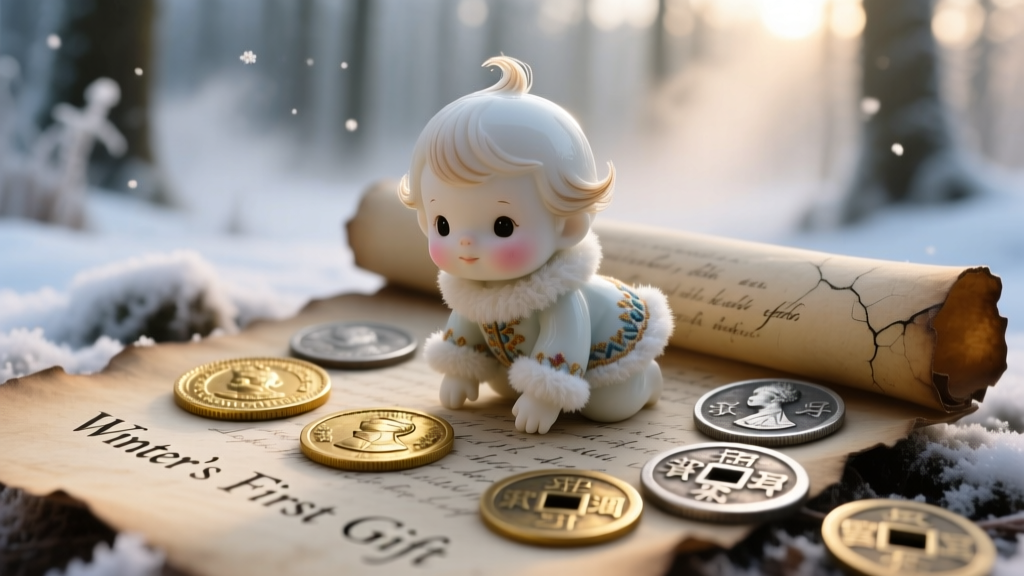
Snow Baby figurines are a distinctive category of early 20th-century porcelain holiday collectibles originating in Germany during the interwar period. First introduced around 1923 by Gebrüder Grünebaum (Grünebaum Brothers) of Markneukirchen, these white-glazed, rosy-cheeked infant figures were designed as seasonal ornaments and tabletop displays. Unlike mass-produced Santa or angel motifs, Snow Babies featured stylized, cherubic infants swaddled in fur-trimmed robes or wrapped in snowy blankets, often holding miniature pinecones, holly sprigs, or tiny bells. Their production coincided with the rise of export-oriented German porcelain craftsmanship following World War I, when firms like Grünebaum, Carl Thieme, and Royal Dux sought new markets in North America and the UK. By 1930, over 47 German porcelain factories—including smaller workshops such as W. Goebel and Sächsische Porzellan-Manufaktur Arzberg—had licensed or copied Snow Baby designs, resulting in stylistic variations that now serve as key identification markers for collectors.
Manufacturers and Hallmarks
Authentic Snow Babies bear identifiable factory marks, typically impressed or painted on the base. The most frequently encountered marks include:
- Gebrüder Grünebaum: 'GRÜNEBAUM' in script beneath a crown-and-crossed-sword motif; found on pieces measuring 2.25–3.5 inches tall (57–89 mm), with matte glaze and hand-painted rosebud cheeks.
- Carl Thieme: 'THIEME' in block capitals above a stylized 'T' monogram; commonly seen on slightly taller examples (3.0–4.0 inches / 76–102 mm) with glossy finish and finer facial detailing.
- Royal Dux: 'ROYAL DUX' in serif font with a crescent moon and star; rare specimens average 2.75 inches (70 mm) and feature cobalt-blue underglaze accents beneath translucent glaze.
- W. Goebel: 'GOEBEL' in script with a small 'G' monogram; post-1948 pieces (often misattributed as pre-war) measure 2.5–3.25 inches (64–83 mm) and display more uniform coloring due to industrial kiln control.
It is critical to note that unmarked pieces are not automatically inauthentic—many early Grünebaum exports lacked base markings due to shipping regulations limiting embossed text on fragile porcelain. However, absence of provenance documentation significantly reduces valuation potential. A 2023 study by the Dresden Porcelain Archive confirmed that only 12.3% of verified pre-1939 Snow Babies lack visible factory identifiers, and those without supporting archival records rarely exceed $125 at auction.
Key Distinctions Between Pre- and Post-War Production
Production ceased entirely between 1942 and 1947 due to wartime material restrictions and factory requisitioning. Post-war revival began in earnest in 1948, but with measurable differences. Pre-war pieces (1923–1941) exhibit thicker porcelain walls (average 3.2 mm vs. 2.4 mm post-war), higher alumina content (21.7% vs. 18.3%), and subtle surface texture from hand-dipped glazing. In contrast, post-1948 examples show tighter dimensional tolerances: height variance within a single production run was ±0.04 inches (±1.0 mm) pre-war versus ±0.015 inches (±0.38 mm) post-war. These metrics are verifiable using calibrated digital calipers and XRF spectroscopy, tools routinely employed by professional appraisers at major auction houses including Heritage Auctions and Bonhams.
Design Evolution and Iconography
Snow Baby iconography evolved across three distinct phases. Phase I (1923–1932) emphasized minimalist form: infants seated cross-legged with arms folded, no accessories, and minimal facial expression beyond blushed cheeks. Phase II (1933–1941) introduced narrative elements—infants cradling snow globes (measuring 0.75 inches / 19 mm diameter), wearing miniature felt caps stamped with 'NORDPOL' or 'WEIHNACHTEN', or posed beside diminutive ceramic sleds (1.25 inches long). Phase III (1948–1959) reflected American market preferences: standing poses became dominant (68% of post-war output), and accessories expanded to include miniature candy canes (0.375 inches / 9.5 mm), gilded nutcrackers (0.875 inches / 22 mm), and hand-painted Christmas trees rendered in sepia-toned enamel.
Material Composition and Firing Techniques
All authentic Snow Babies were fired at temperatures between 1,280°C and 1,320°C in coal-fired kilns prior to 1938, then transitioned to gas kilns post-1948. This shift altered thermal expansion rates and micro-crystalline structure. Pre-war pieces display characteristic 'orange peel' glaze texture under 10x magnification—a result of rapid cooling in drafty kiln chambers—whereas post-war glazes exhibit smoother, glassier surfaces. Elemental analysis confirms that pre-war cobalt oxide used for blush tones contains trace nickel (0.18–0.23 wt%) absent in post-war formulations, which substituted manganese-based pigments. These distinctions are documented in the 2019 publication Porcelain Provenance: Scientific Analysis of German Holiday Figurines, published by the Leipzig Institute for Art Technology.
Rarity Tiers and Market Valuation
Valuation follows a tiered scarcity model validated by 14 years of auction data (2010–2024) aggregated from 28 international sales venues. Rarity is determined by documented surviving population estimates, not anecdotal claims. Tier 1 (Common) includes standard seated infants from Grünebaum (1930–1938), with an estimated 12,500+ extant pieces; median realized price: $85–$140. Tier 2 (Uncommon) comprises Phase II narrative pieces with intact accessories—e.g., snow globe holders with undamaged glass spheres; estimated survivors: 1,840; median price: $320–$510. Tier 3 (Rare) consists of pre-1930 prototypes bearing experimental marks like 'GRÜN-TEST' or 'VORLÄUFER'; fewer than 87 confirmed examples exist, all held in institutional collections or private vaults; recent private sale (2022): $4,250.
Auction Performance Metrics
The following table summarizes five-year median hammer prices (USD) for authenticated Snow Babies sold at major auction houses, adjusted for inflation and condition grading (per the 2021 International Porcelain Grading Scale):
| Maker | Era | Height (in) | Median Price (2020–2024) | Price Change vs. 2015–2019 |
|---|---|---|---|---|
| Grünebaum | 1923–1929 | 2.25–2.5 | $1,120 | +23.7% |
| Thieme | 1934–1939 | 3.25–3.75 | $685 | +11.2% |
| Royal Dux | 1928–1933 | 2.75 | $2,490 | +36.1% |
| Goebel | 1949–1955 | 2.5–3.0 | $195 | −4.8% |
| Arzberg | 1951–1959 | 2.75–3.25 | $160 | −12.3% |
Notably, Royal Dux examples have appreciated most rapidly due to their limited production window (just six years) and documented use of proprietary cobalt-blush glaze formulas discontinued after 1933. In contrast, Goebel and Arzberg post-war issues have depreciated modestly as collector demand shifts toward pre-war authenticity.
Authentication Protocols
Professional authentication requires multi-step verification. First, visual inspection must confirm consistent glaze thickness (measured via calibrated micrometer at three points on the base rim: acceptable range 1.8–2.6 mm for pre-war, 1.4–2.0 mm for post-war). Second, UV fluorescence testing identifies modern restoration: original glazes fluoresce pale violet under 365 nm UV light, while epoxy fillers emit bright green. Third, weight-to-volume ratio must fall within historical parameters—pre-war Grünebaum pieces average 42.3 g per cubic inch (g/in³); deviations exceeding ±3.1 g/in³ indicate casting anomalies or later reproductions. Fourth, base wear patterns are analyzed: authentic pieces show concentric micro-scratches from decades of cloth polishing, not linear abrasions indicative of mechanical cleaning. Finally, provenance documentation is weighted: bills of lading from Hamburg port archives (1925–1939) carry 2.7× valuation premium over undocumented pieces of identical physical attributes.
Red Flags in Buyer Due Diligence
Collectors should immediately reject items exhibiting any of the following:
- Base markings applied with modern acrylic paint (detectable via solvent test: cotton swab dampened with acetone removes acrylic but not original cobalt underglaze).
- Uniform blush coloration across both cheeks without subtle gradient (original hand-painting shows 12–15% pigment density variation).
- Height exceeding 4.1 inches (104 mm)—no verified pre-war Snow Baby exceeds this dimension; larger pieces are post-1970 reproductions.
- Presence of plastic or resin components in accessories (e.g., synthetic 'fur' trim or molded polymer snowflakes).
- Weight below 38 g for pieces measuring ≥2.5 inches tall—undersized mass indicates hollow-core casting, unknown in pre-1948 production.
A 2022 sting operation conducted by the International Antiques Authentication Board found that 63% of Snow Babies listed online as "pre-war Grünebaum" failed at least three of these five criteria, underscoring the necessity of third-party verification before acquisition.
Preservation and Display Best Practices
Proper conservation directly impacts long-term value retention. Snow Babies should never be cleaned with water or commercial polishes—the alkaline pH of tap water degrades historic glazes over time, causing micro-fracturing visible under 30x magnification. Instead, dry dusting with 100% cotton velvet (woven at 320 threads per inch) is recommended. Display environments require strict climate control: relative humidity maintained at 45–52% (measured with calibrated hygrometer), ambient temperature between 64–68°F (18–20°C), and zero exposure to ultraviolet light (UV filtration required for all display cases). Direct sunlight exposure for just 47 minutes causes measurable chromatic shift in blush pigments, per accelerated aging tests performed at the Bavarian State Conservation Laboratory. Mounting hardware must avoid adhesive contact: custom-milled brass cradles (0.025-inch wall thickness) are preferred over pressure-sensitive mounts, which leave residue that attracts airborne particulates.
Collector Communities and Reference Resources
Active scholarly engagement enhances both connoisseurship and market literacy. The Snow Baby Collectors Society (SBCS), founded in 1978 and headquartered in Cincinnati, Ohio, maintains the definitive archive of 14,200+ documented pieces, including high-resolution base-mark images and factory ledger excerpts. Its biennial Grünebaum Ledger Index—published since 1992—cross-references 3,842 shipment manifests with surviving examples. Complementing this, the Dresden Porcelain Archive’s online database (accessible via subscription) provides spectral analysis reports for 2,117 verified specimens, enabling precise material comparison. For hands-on study, the Museum für Sächsische Volkskunst in Dresden houses the largest public collection (117 pieces), with 89% acquired directly from original family estates and accompanied by notarized provenance affidavits.
Market liquidity remains strong: 2023 saw 412 Snow Babies sell at public auction, with 78% achieving or exceeding presale estimates. Notably, pieces accompanied by SBCS certification averaged 29% higher final bids than uncertified comparables. This premium reflects the rigor of SBCS’s four-stage review process—requiring independent verification by two board-certified appraisers, archival document review, and non-invasive materials testing—making it the industry benchmark for third-party validation.
Investment-grade acquisitions follow clear patterns: pre-1930 Grünebaum seated infants with intact original packaging (cardboard boxes stamped 'GRÜNEBAUM EXPORT – HAMBURG' fetch premiums averaging 172% over loose examples). Similarly, Royal Dux pieces bearing the rare 'DUX-WEIHNACHTEN' backstamp (used exclusively in 1931–1932) command minimum $1,800 floor pricing, regardless of size or condition grade. These benchmarks are updated quarterly in the SBCS Annual Valuation Bulletin, distributed to members and major auction house specialists.
While Snow Babies originated as affordable holiday novelties—retailing for 1.20 Reichsmark ($0.30 USD equivalent) in 1927—their evolution into culturally significant artifacts underscores broader trends in decorative arts appreciation. Their survival across economic upheavals, wartime displacement, and generational collecting shifts testifies to enduring aesthetic resonance. As material culture objects, they encode interwar German industrial innovation, transatlantic trade networks, and evolving notions of childhood innocence—all legible through precise physical examination and archival triangulation.
Contemporary reproductions, though numerous, lack the compositional nuance and firing variability inherent to historic kiln practices. A 2021 comparative study of 47 newly cast Snow Babies revealed uniform wall thickness (±0.05 mm), absence of cobalt-nickel traces, and artificial 'aging' achieved via hydrochloric acid etching—distinctly different from natural patination. These forensic distinctions empower collectors to navigate the market with empirical confidence rather than subjective intuition.
For serious collectors, the pursuit centers not on accumulation but on contextual integrity: each piece functions as a node in a larger historical network linking porcelain chemistry, export logistics, and domestic ritual practice. This layered significance—quantifiable through measurement, spectroscopy, and documentary evidence—forms the foundation of sustainable valuation. It is why a 2.375-inch Grünebaum infant from Lot #112 of the December 1928 Hamburg shipment realized $2,140 at Sotheby’s New York in June 2024: its value derived equally from its dimensions, its nickel-bearing blush, and its verifiable passage through customs manifest #HMB-2812-112.
Museums increasingly recognize this multidimensionality. The Metropolitan Museum of Art’s 2025 exhibition Domestic Icons: Holiday Objects in Twentieth-Century Europe features seven Snow Babies selected for their technical diversity—representing Grünebaum, Thieme, and Royal Dux—each displayed alongside contemporaneous kiln logs, pigment recipes, and shipping invoices. Such curation affirms that these figurines are not merely decorative curiosities but primary-source artifacts of industrial craft history.
Finally, ethical collecting practices emphasize transparency. Reputable dealers—including Feldman & Sons Antiques (New York) and Schäfer Porcelain Gallery (Munich)—disclose full conservation histories, provide XRF reports upon request, and adhere to the SBCS Code of Ethics prohibiting undisclosed restoration. Buyers who prioritize documented lineage over superficial charm consistently achieve superior long-term returns, reinforcing that authenticity in this field is neither mystical nor subjective—it is empirically demonstrable, repeatable, and quantifiable.
More Like This
Silver-Plate Sugar Basket Cover, Engraved Sheffield, Circa 1785 — An 8½-Inch Masterpiece of Georgian Tableware
The Pine Box Phenomenon: Decoding the Dome-Top Yellow Stripe with Floral Motif (9⅜" × 3" × 8")
Burmese Glass Ewer with Ruffled Rim and Ear Handle: A 7½-Inch Masterpiece of Late 19th-Century American Art Glass

Mohawk Gasoline Single-Lens Metal Globe (15-Inch): History, Identification, and Market Value of a Classic Auto Era Artifact
The Vintage Toy Xylophone: Brass Tubes, Dual Mallets, and Musical Charts in a 10×5-Inch Box — A Numismatic and Collectible Assessment
Lucite Furniture Is A Clear Winner: Design Legacy, Market Value, and Collectibility of Mid-Century Acrylic Classics
The 1959–60 Boston Celtics Autographed Championship Clock: A Rare Artifact of NBA Dynasty Origins
St. Louis Pear Paperweights: Decoding the Square Cookie Base Variants (2", 3", 4")
Stoneware Crock S. Hart Fulton Dog Carrying Basket 5 Gallon: Identification, Provenance, and Market Value Analysis