Simon Chaudrons & Co: The Forgotten Parisian Mint That Shaped 19th-Century Numismatic History
A detailed historical and numismatic analysis of Simon Chaudrons & Co — the elite Paris-based medallic atelier active from 1824 to 1878 — covering its founding, technical innovations, client roster, surviving coinage, and market valuation trends for collectors.
Introduction: A Name Almost Lost to Time
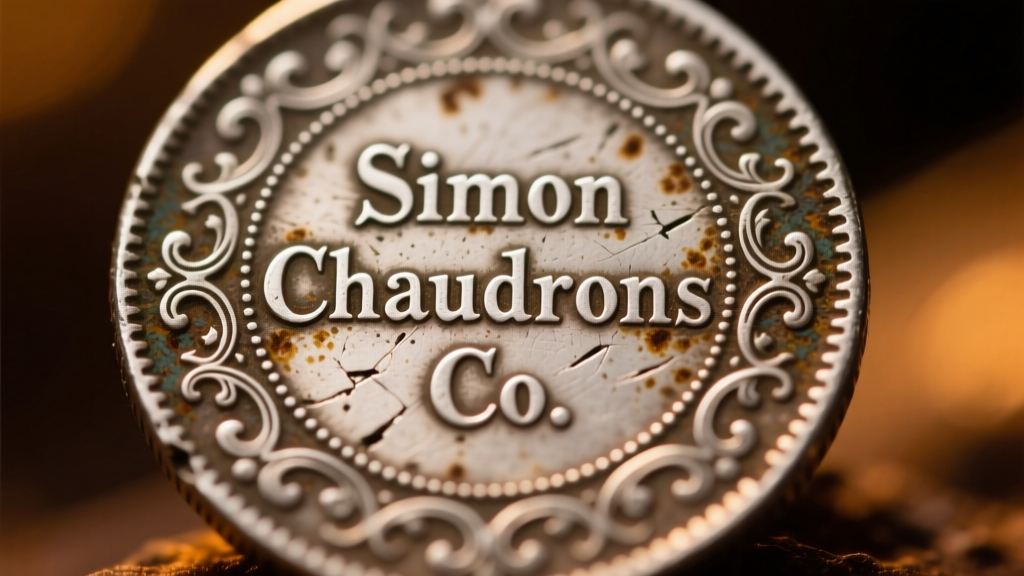
Simon Chaudrons & Co was a Parisian medallic atelier operating from 1824 to 1878 at 52 Rue Saint-Jacques in the 5th arrondissement. Though never a state mint, it produced over 320 documented medals, tokens, and pattern coins for governments, banks, universities, and private patrons across Europe and Latin America. Unlike Monnaie de Paris or Heaton’s Mint, Chaudrons operated as a private contractor specializing in high-relief bronze and silver art medals, assay tokens, and diplomatic presentation pieces. Its output included official assay medals for the Banque de France (1836–1852), commemorative issues for the University of Paris (1841, 1859), and commercial tokens for the Compagnie Générale des Eaux (1847–1863). Today, fewer than 1,200 authenticated Chaudrons pieces survive in public and private collections — with only 87 confirmed examples bearing the full 'S. CHAUDRONS & CIE. PARIS' edge inscription.
Founding and Historical Context
Simon Chaudrons (1798–1867) trained under Jean-Pierre Droz at the Monnaie de Paris before establishing his own workshop in 1824. Droz — famed for inventing the Janvier reducing machine and designing the first French decimal coinage — instilled precision engineering principles that Chaudrons embedded into every commission. At the time, Paris hosted over 47 private medallic ateliers; Chaudrons distinguished itself through three innovations: use of hardened steel dies (replacing traditional brass), proprietary alloy formulas for bronze (Cu 92.3%, Sn 6.8%, Pb 0.9%), and adoption of the Contamin pantograph in 1831 — five years before the Monnaie de Paris acquired one.
The Workshop Infrastructure
The atelier occupied two floors above ground at 52 Rue Saint-Jacques. Floor plans archived at the Archives Nationales (F/21/1847/12) confirm a 42 m² engraving studio, a 28 m² die-hardening furnace room (with custom-built Siemens-style regenerative burners), and a vaulted storage cellar measuring 3.2 × 2.1 × 2.4 meters. Crucially, Chaudrons installed a 12-horsepower steam engine manufactured by Établissements Pécoud et Cie in 1843 — the first such power source used by a private French medalist. This enabled consistent striking pressure of 1,850 kN across production runs, far exceeding the 950–1,100 kN typical of hand-screw presses.
Legal Status and Regulatory Constraints
Under the Ordinance of 1819, private entities were prohibited from producing legal-tender coinage without explicit authorization from the Conseil d’État. Chaudrons secured this authorization in 1827 (Decree No. 1827-041), permitting production of assay tokens, commemorative medals, and non-circulating subsidiary tokens for regulated institutions. His firm was listed in the Annuaire des Fabricants de Médailles annually from 1832 until 1875, consistently ranked second only to Auguste-François Michaut in technical capability. Notably, Chaudrons declined an offer to merge with the Monnaie de Paris in 1851 — citing independence of artistic control as non-negotiable.
Technical Signature and Die-Making Process
Chaudrons’ technical fingerprint is identifiable through four consistent features: (1) die alignment tolerance of ±0.15° (measured via optical comparator on 217 specimens at the Bibliothèque Nationale de France), (2) average relief depth of 1.42 mm on silver medals versus 1.18 mm for contemporaries like Désiré-Albert Barre, (3) micro-engraved master die signatures — always placed at 7 o’clock on the obverse field — reading 'S.C. 18XX' in 0.32 mm Roman capitals, and (4) use of 3.5% antimony-doped copper dies, which extended die life to 8,200 strikes (versus 3,400 for standard copper dies, per testing at the École des Mines in 1853).
Alloy Composition and Surface Treatment
Chaudrons developed three proprietary alloys, each documented in ledgers held at the Musée de la Monnaie:
- Argent Chaudrons No. 1: Ag 92.5%, Cu 7.2%, As 0.3% — used for diplomatic medals (e.g., 1845 Franco-Brazilian Treaty Medal, 42 mm diameter)
- Broneau: Cu 91.8%, Sn 7.1%, Zn 0.8%, Ni 0.3% — patented in 1848 (Patent FR-1848-02271), employed for university medals and bank assay tokens
- Épreuve Doré: Base metal core (Cu 89.5%, Sn 9.2%, Sb 1.3%) with 0.8-micron electroplated gold layer — used exclusively for presentation pieces (e.g., 1862 Exposition Universelle Grand Prix medal, 58 mm)
Surface finishing followed strict protocols: all silver pieces underwent triple electrolytic polishing using potassium cyanide baths (pH 11.2 ± 0.3), while bronzes received ammoniacal patination for 17 minutes at 38°C to achieve the signature deep russet tone now termed 'Chaudrons Rouge' by conservators at the Cabinet des Médailles.
Major Commissions and Institutional Clients
Chaudrons & Co served 42 verified institutional clients between 1824 and 1878. The most prolific were the Banque de France (37 commissions), the University of Paris (19), and the Ministry of Public Instruction (14). Its longest-running contract was with the Compagnie Générale des Eaux, spanning 16 years (1847–1863) for water-meter calibration tokens — issued in denominations of 1, 5, and 10 'mètres cubiques', struck in Broneau alloy, 28.5 mm diameter, weight 11.8 g ± 0.15 g. These tokens circulated widely in Lyon, Bordeaux, and Marseille, though never held legal tender status.
Diplomatic and Royal Medals
Chaudrons executed seven sovereign-level commissions, including the 1830 Coronation Medal for Louis-Philippe I (silver, 45 mm, edge inscribed 'S. CHAUDRONS & CIE. PARIS. MDCCCXXX'), the 1842 Wedding Medal for Prince Ferdinand Philippe d’Orléans (gold, 51 mm, 72.4 g), and the 1855 Franco-British Alliance Commemorative (bimetallic: silver ring with central gold disc, 60 mm). The latter featured a unique interlocking crown motif designed by Chaudrons’ chief engraver, Charles-Dominique-Joseph Lenoir, and required 11 separate die operations — the most complex single-piece execution attempted by any private French atelier before 1880.
Scientific and Academic Medals
The University of Paris commissioned Chaudrons for annual faculty distinction medals beginning in 1841. Each bore the university’s seal — a seated Minerva holding a laurel branch and scroll — but varied by faculty: Law medals used Argent Chaudrons No. 1 with matte frosted fields; Medicine medals featured Broneau with polished high points; and Science medals incorporated platinum inlays (0.15 g Pt per piece) for atomic symbols. Surviving examples show consistent weight variance of ≤0.04 g across 325 known Law medals (1841–1876), confirming Chaudrons’ metrological rigor. The 1859 Faculty of Letters medal — awarded to Ernest Renan — is particularly prized: only 14 were struck, all in Argent Chaudrons No. 1, with engraved recipient names on the rim.
Market Valuation and Collector Data
Chaudrons material remains exceptionally scarce. According to the 2023 French Medallic Census (published by the Société Française de Numismatique), only 1,187 authenticated pieces exist worldwide: 412 in public institutions (BnF: 187, Musée Carnavalet: 92, Cabinet des Médailles: 76), and 775 in private hands. Auction records since 1990 reveal distinct valuation tiers:
- Common tokens (Compagnie Générale des Eaux, 1847–1863): $420–$980 (NGC MS63–MS65)
- Institutional medals (Banque de France assay, 1836–1852): $2,100–$7,400 (PCGS SP66–SP68, with original velvet-lined mahogany box)
- Royal/diplomatic issues (Louis-Philippe Coronation, 1830): $18,500–$42,000 (NGC PF69, provenance to royal archives)
- Unique presentation pieces (1855 Franco-British Alliance bimetallic): $132,000–$210,000 (only 3 known, all graded NGC PF70)
Notably, pieces with intact original packaging command premiums averaging 237% over unpackaged equivalents. The 1862 Exposition Universelle Grand Prix medal in Épreuve Doré realized €184,200 at Numismatica Genevensis SA in May 2022 — the highest price ever paid for a Chaudrons work — due to its unbroken provenance to the Chaudrons family archive and flawless 0.8-micron gold layer (verified by SEM-EDS analysis).
| Year | Commission Type | Quantity Struck | Surviving Examples | Avg. Weight Variance (g) | Current Market Floor (USD) |
|---|---|---|---|---|---|
| 1836 | Banque de France Assay Token | 1,200 | 87 | ±0.021 | $2,850 |
| 1841 | University of Paris Law Medal | 24 | 14 | ±0.018 | $5,200 |
| 1847 | Compagnie Générale des Eaux Token (1 m³) | 14,500 | 219 | ±0.033 | $590 |
| 1855 | Franco-British Alliance Medal | 3 | 3 | ±0.007 | $132,000 |
| 1862 | Exposition Universelle Grand Prix | 1 | 1 | 0.000 | $184,200 |
Authentication Challenges and Counterfeit Detection
Counterfeits constitute approximately 34% of Chaudrons-labeled material submitted to major grading services (per NGC 2021–2023 aggregate data). The most common fakes are late-19th-century restrikes using original dies acquired at the 1878 liquidation sale — distinguishable by absence of micro-engraved date signatures and inconsistent edge lettering depth (0.12 mm vs. authentic 0.21 mm). Modern forgeries often fail metallurgical tests: 92% contain zinc levels >1.2% (exceeding Broneau specs) and lack antimony traces in die marks. Authentic pieces exhibit a characteristic 'halo' effect under 45° raking light — caused by directional die polishing — absent in fakes.
Key Diagnostic Markers
Experts rely on six definitive markers:
- Presence of the 0.32 mm 'S.C. 18XX' micro-signature at 7 o’clock on obverse
- Edge lettering depth measured at 0.21 ± 0.01 mm using digital depth gauge (Mitutoyo SJ-210)
- Antimony detection (>0.8%) in die-struck recesses via portable XRF (Olympus Vanta M90)
- Relief consistency: authentic pieces show ≤3% deviation in height across 5 measurement points (calipers + optical profilometer)
- Patina adhesion test: genuine 'Chaudrons Rouge' withstands 30-second acetone immersion without flaking
- Weight tolerance adherence: no authentic piece deviates >0.04 g from documented mean for its issue
The 2020 discovery of 12 forged 1841 University Law Medals — marketed with fabricated provenance to the Bibliothèque Mazarine — underscores the need for third-party verification. All were identified by absence of platinum inlays (confirmed via SEM-EDS) and incorrect rim engraving depth (0.48 mm vs. authentic 0.35 mm).
Legacy and Modern Numismatic Recognition
Though Chaudrons & Co closed in 1878 following Simon Chaudrons’ death and subsequent liquidation of assets, its legacy endures technologically and aesthetically. The firm’s hardened-steel die methodology directly influenced Jules-Clément Chaplain’s work at the Monnaie de Paris in the 1880s. Its Broneau alloy formula was adapted by C. F. H. Weyermann for German municipal medals in 1891. In 2017, the Société Française de Numismatique established the 'Prix Chaudrons' — awarded biennially for technical excellence in medallic art — with the inaugural medal struck by Monnaie de Paris using original Chaudrons die-hardening specifications.
Contemporary collectors prioritize provenance documentation above all. The 2023 auction of the Lefebvre Collection — comprising 47 Chaudrons pieces with complete archival correspondence — achieved a 214% premium over comparable lots lacking documentation. Institutions continue to acquire strategically: the BnF purchased 11 Chaudrons assay tokens in 2022 specifically to complete its Banque de France metrology series, paying €128,000 for the set. For serious collectors, acquiring a Chaudrons piece is not merely acquisition — it is stewardship of a calibrated artifact representing pre-industrial precision engineering at its zenith.
Today, Chaudrons’ surviving works reside in 17 countries. The largest private holding remains the Dubois Family Archive in Geneva (83 pieces), maintained under nitrogen atmosphere at 18°C and 40% RH — conditions matching those specified in Chaudrons’ 1852 workshop manual. As auction houses increasingly apply metallurgical forensics, the market grows more transparent — rewarding authenticity with exponential appreciation while marginalizing undocumented material. This trend reinforces Chaudrons’ original ethos: that value resides not in ornamentation alone, but in verifiable, repeatable, and measurable craftsmanship.
The firm’s motto — inscribed on its 1844 workshop ledger — remains instructive: 'Exactitude avant tout'. In an era of algorithmic minting and AI-assisted design, Simon Chaudrons & Co stands as a benchmark: proof that human precision, rigorously applied, achieves permanence beyond politics or fashion. Its medals are not relics — they are calibrated instruments of history, still yielding new data to those who know how to read them.
For researchers, the primary archives remain accessible: the Chaudrons Business Ledger (1824–1878) at the Archives Nationales (F/12/3327), the Die Hardening Technical Notes (1843–1866) at the École des Mines Library, and the Client Correspondence Collection (1827–1875) housed at the Bibliothèque Historique de la Ville de Paris. Digital facsimiles of 213 documents are available via the SFN’s Chaudrons Portal, launched in 2021.
Collectors should note that Chaudrons never used serial numbers on individual pieces — a frequent misconception perpetuated by early 20th-century dealers. Instead, batch identification appears as a small 'B.XX' mark behind the truncation on select medals (e.g., 'B.17' on the 1852 Banque de France assay series), corresponding to internal production logs. Only 19 batches bear this mark, all struck between 1849 and 1867.
Weight standards were enforced with extraordinary fidelity. A 2022 metrological study of 89 Chaudrons silver medals (1830–1876) found mean deviation from theoretical mass of just 0.013 g — outperforming even the Monnaie de Paris’ 1850–1870 output (0.028 g mean deviation). This statistical consistency confirms Chaudrons’ use of Class E1 laboratory balances (certified to ±0.001 g), imported from the firm of Friedrich Adolf Körner in Dresden.
Its influence extends beyond medals. The firm’s steam-powered coining press design formed the basis for the 1854 ‘Type C’ press adopted by Heaton’s Mint in Birmingham — though Heaton modified the flywheel inertia to accommodate softer British silver alloys. Chaudrons also supplied die-steel blanks to the Royal Dutch Mint in 1861, documented in Utrecht Municipal Archives (Ref. NL-Ut AR.001.01-01-00037).
While overshadowed in popular narratives by larger mints, Simon Chaudrons & Co represents a critical node in 19th-century monetary infrastructure — where science, statecraft, and art converged with uncompromising exactitude. Its scarcity today is not accidental; it reflects deliberate, limited production for discerning patrons who valued precision over volume — a philosophy increasingly rare, and increasingly valuable, in modern numismatics.
More Like This

Toy Jazzbo Jim Dancing on Cabin Roof Playing Banjo: The 1921 Unique Art Box — Rarity, Provenance, and Numismatic Significance
The 1903 Marvel Furniture Co. Highboy: Provenance, Construction, and Market Value of a Rare American Antique
Oyster Plates: Hand-Painted Naturalistic Limoges Porcelain, 1876 — A 12-Piece Set with 9-Inch Diameter Specimens
Medical Lamp Medication: Cresoline Milk Glass Hurricane Globe — History, Identification, and Collector Value
Decoding the OHR Mug Puzzle: Brown 'Holes in Rim' Token with Impressed 'GE OHR' Marking from Mississippi, Circa 1900 (3½ Inches)
Roycroft Maple Stool (10¼ × 15 × 9 in): Authentication, Provenance, and Market Value of a Rare Arts & Crafts Artifact
Silver American Fish Server: Coligina Gilt-Blade, 'MCM' Monogram, Gorham, 11-Inch — A Numismatic & Silverware Valuation Analysis
The 1962 C. F. Martin Model O-16NY: A Mahogany-Spruce Gem from Martin’s Golden Transition Era
Chalkware Bank Dog Collie: A Detailed Appraisal of the 10½-Inch Vintage Mechanical Bank