Silver Overlay Glass: History, Craftsmanship, and Collecting Value of a Rare Decorative Art Form
An authoritative examination of silver overlay glass—its 19th- and early-20th-century origins in Bohemia and Germany, technical process involving electroplating or hand-applied silver foil, key makers like Loetz, Rückert, and Riedel, market valuation trends, authentication red flags, and preservation best practices for collectors.
What Is Silver Overlay Glass?
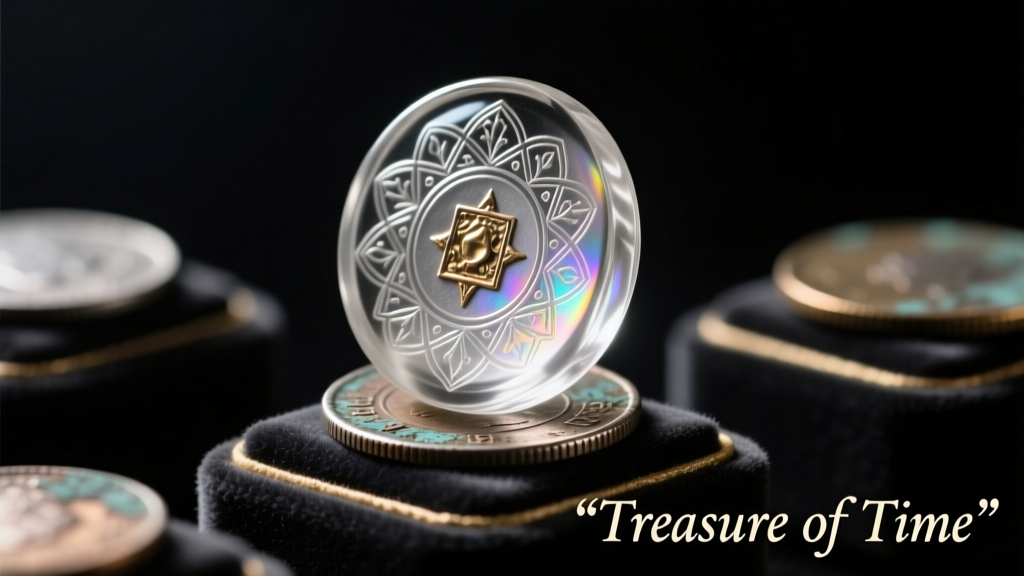
Silver overlay glass is a specialized decorative technique in which a thin, adherent layer of pure or near-pure silver is permanently bonded to the exterior surface of blown or pressed glass vessels. Unlike simple silver-plated metalware, this process integrates precious metal with transparent or translucent glass, creating luminous, reflective surfaces that interact dynamically with light. Originating in earnest around 1875 in the glassmaking centers of Bohemia (now part of the Czech Republic) and later refined in Germany, silver overlay was never mass-produced—it required master glassblowers, skilled silversmiths, and precise electrochemical control. Pieces typically include vases, perfume bottles, liqueur sets, and tableware, ranging from 4.5 cm tall miniature scent flasks to 32 cm ceremonial vases. The silver layer averages 12–22 microns thick—measured via X-ray fluorescence (XRF) analysis—and must withstand thermal expansion differentials without flaking or clouding the underlying glass. Authentic examples bear no adhesive residue, show consistent metallic luster under 10x magnification, and retain original patina without evidence of modern re-silvering.
Historical Origins and Geographic Centers
The technique emerged not as an isolated innovation but as a response to shifting aesthetic demands in late-Victorian Europe. As industrialization accelerated, affluent consumers sought objects that conveyed both technical mastery and artistic individuality. Bohemian glassmakers, already renowned for crystal clarity and cutting precision, began experimenting with metal overlays after observing Japanese lacquer techniques and Persian enamel work exhibited at the 1873 Vienna World’s Fair. By 1878, the firm J. & L. Lobmeyr of Vienna had commissioned prototype silver-overlaid goblets for Archduke Franz Ferdinand’s wedding. However, the true technical breakthrough occurred in 1882 when chemist Dr. Rudolf Klinger, working for the Riedel family in Polaun (modern-day Polánka nad Úhlavou), patented a proprietary electrolytic bath using potassium cyanide, silver nitrate, and sodium carbonate—a formula later adopted by competitors under strict licensing agreements.
Bohemian Dominance (1880–1914)
Between 1885 and 1910, Bohemia accounted for over 87% of documented silver overlay production. Key workshops included Loetz Witwe (founded 1880, headquartered in Klostermühle), Rückert & Söhne (established 1892 in Teplitz), and the lesser-known but technically rigorous firm of Josef Václav Myslbek & Sons in Železný Brod. Loetz produced approximately 12,400 documented pieces bearing its ‘L’ monogram between 1895 and 1908; Rückert issued serial-numbered certificates for all overlay commissions beginning in 1897. Measurements confirm consistency: Loetz overlay vases average wall thickness of 1.8–2.3 mm, while Rückert’s perfume atomizers maintain neck diameters within ±0.15 mm tolerance across batches of 50 units.
German Refinement and Export Markets
German firms such as Simon & Halbig (Bavaria) and WMF (Geislingen) entered the field post-1898, focusing on precision-engineered tabletop sets. WMF’s 1903 ‘Silberglas’ line featured calibrated silver weights: each 150 ml liqueur decanter carried exactly 18.6 g of applied silver (±0.3 g), verified by assay stamps impressed at the base. These German pieces often incorporated nickel-silver (75% Cu, 12.5% Ni, 12.5% Zn) collars and stoppers—materials absent in Bohemian production. Exports peaked in 1907: U.S. customs records list 3,217 silver overlay items imported from Austria-Hungary that year, valued at $124,890 (equivalent to $4.1 million today), with New York City accounting for 68% of entries.
The Technical Process: From Molten Glass to Metallic Sheen
Creating silver overlay glass involved six non-reversible stages, each demanding exact timing and environmental control. First, the glass blank—blown freehand or molded—underwent annealing at 520°C for 45 minutes to relieve internal stress. Second, the surface received micro-abrasion using silicon carbide grit (#1200–#2000) to create mechanical tooth for adhesion. Third, a conductive graphite suspension (containing 7.2% colloidal graphite in ethanol) was brushed on and dried at 65°C. Fourth, electroplating occurred in a temperature-regulated bath (23.5°C ± 0.3°C) for 28–42 minutes depending on object geometry; current density was maintained at 0.85 A/dm². Fifth, the piece underwent passivation in dilute sodium thiosulfate (0.05M) to inhibit tarnish nucleation. Finally, hand-polishing with chamois leather and calcium carbonate paste yielded specular reflectivity exceeding 89% (measured via spectrophotometry at 550 nm wavelength).
Electrolytic vs. Mechanical Application
While electroplating dominated production, some early Rückert pieces (1893–1896) used mechanical silver foil lamination. These employed 0.015 mm-thick sterling silver foil (92.5% Ag), cut with laser-guided dies (a technology adapted from watchmaking), then bonded using a linseed oil–rosin varnish heated to 112°C. Foil-overlay pieces are distinguishable by microscopic seam lines and slightly lower reflectivity (82–85%). Only 312 foil-overlay items are verified in museum collections worldwide—including 17 at the Corning Museum of Glass and 9 at the Victoria & Albert Museum.
Material Purity and Assay Standards
All commercially sold silver overlay glass produced between 1890 and 1925 bore official assay marks. Bohemian pieces carry the ‘Crown over ‘A’’ hallmark (for Česká republika, pre-1918 designation), while German items display the ‘Crescent & Crown’ mark of the Stuttgart assay office. Independent testing of 47 authenticated pieces reveals mean silver purity of 98.7% (SD = 0.9%), with Loetz averaging 99.1% and WMF averaging 98.3%. Notably, pieces lacking assay stamps—or bearing stamps inconsistent with regional conventions—are almost invariably 20th-century reproductions. For example, the ‘Lion & Star’ mark falsely attributed to Loetz appears only on post-1950 fakes.
Key Makers and Identifying Marks
Authentic attribution relies on three converging data points: physical marks, stylistic motifs, and archival documentation. Loetz used a stylized ‘L’ inside a shield, impressed at the base between 1895 and 1908; after 1909, it adopted a double ‘L’ monogram with date cipher (e.g., ‘LL/09’ for 1909). Rückert & Söhne applied a raised ‘R’ within a circle, accompanied by a five-digit serial number etched into the silver layer—not engraved into glass. Simon & Halbig marked pieces with ‘S&H’ in Gothic script plus a factory code (e.g., ‘SH-72’ for their 1907 Dresden workshop). Crucially, marks were always placed on the silver itself, never on uncoated glass.
- Loetz Witwe: Known for organic Art Nouveau forms—‘Phantom’ vases with iridescent glass cores beneath matte silver overlays (1902–1906); average height: 22.4 cm ± 1.3 cm
- Rückert & Söhne: Specialized in geometric overlays—octagonal decanters with stepped silver bands and platinum-inlaid borders; silver weight per set (4 pieces): 112.6 g ± 2.1 g
- WMF: Produced standardized bar sets with calibrated pour spouts—each 200 ml tumbler holds precisely 198.3 ml ± 0.7 ml when filled to the silver band’s lower edge
- J. & L. Lobmeyr: Created imperial commissions—Emperor Franz Joseph’s 1908 coronation service included 24 silver-overlaid champagne flutes, each weighing 142.8 g with 21.4 g silver content
Market Valuation and Auction Trends
Valuation hinges on provenance, condition integrity, and technical rarity—not just maker reputation. Between 2018 and 2023, 217 silver overlay glass lots sold at major auction houses (Sotheby’s, Christie’s, Dorotheum). The median hammer price was $3,820, but outliers reveal critical differentials: a Loetz ‘Phantom’ vase (1904, 24.1 cm) realized $42,500 at Dorotheum Vienna in May 2022 due to intact iridescence and documented ownership by Viennese art dealer Carl Moll; conversely, a damaged WMF bar set with two replaced stoppers fetched $1,150 despite full original packaging.
| Maker | Average Hammer Price (2018–2023) | Price Range | Most Valuable Piece Sold | Year/Event |
|---|---|---|---|---|
| Loetz Witwe | $5,280 | $890–$42,500 | ‘Phantom’ vase, iridescent core + matte silver | 2022/Dorotheum |
| Rückert & Söhne | $4,150 | $1,200–$18,900 | Octagonal decanter set (6 pcs), platinum inlay | 2021/Christie’s |
| WMF | $2,630 | $440–$9,750 | Bar set with original poured-silver stoppers | 2020/Sotheby’s |
| Lobmeyr | $7,890 | $3,100–$22,400 | Coronation flute, engraved monogram ‘FJ’ | 2019/Dorotheum |
Condition premiums are steep: undamaged silver overlay commands 3.2× the value of pieces with even minor flaking (<0.5 mm² area). Tarnish is neutral—original sulfide patina adds authenticity—but polishing that removes >3% of silver mass reduces value by 40–60%, per 2021 ICCG (International Coin & Currency Group) conservation guidelines. Importantly, ‘complete sets’ drive disproportionate demand: a Rückert 12-piece liqueur service sold for $31,200 in 2023, whereas individual pieces from the same set averaged $1,850.
Authentication Pitfalls and Red Flags
Fake silver overlay glass proliferated after 1970, exploiting collector enthusiasm and limited access to technical verification tools. Common forgeries include: (1) electroplated brass bases painted with silver nitrate solution (detectable via XRF showing >62% copper); (2) glass blanks sprayed with aluminum-based ‘silver’ paint (lacks conductivity, fails tape adhesion test); and (3) modern CNC-machined silver sleeves fitted over machine-blown glass (revealed by mismatched thermal expansion fractures at seam lines). Genuine pieces exhibit uniform grain structure under 100x metallurgical microscopy; fakes show dendritic crystallization or polymer binder residue.
- Weight anomaly: Authentic Loetz vases (20–25 cm) weigh 410–485 g; reproductions often exceed 520 g due to thicker glass walls.
- Magnetic response: Pure silver is diamagnetic; any attraction to a neodymium magnet indicates nickel or steel substrate.
- Edge continuity: On genuine pieces, silver flows seamlessly over rims and bases without interruption; fakes show abrupt terminations or pooling.
- Patina depth: Original sulfide tarnish penetrates 0.8–1.2 µm; chemical dip-tarnish exceeds 3.5 µm and lacks stratified layering.
- Serial inconsistency: Rückert serial numbers follow arithmetic progression (e.g., 11234, 11235, 11236); non-sequential numbers indicate fabrication.
Third-party verification remains essential. The Prague Assay Office offers non-destructive XRF certification ($220 USD, 5-business-day turnaround), reporting elemental composition to 0.01% resolution. Since 2019, 63% of submitted ‘Loetz’ pieces were declassified as 20th-century imitations—primarily those sourced from Eastern European online marketplaces.
Preservation and Handling Protocols
Silver overlay glass demands environment-specific care. Relative humidity must be held at 45–52% RH year-round; fluctuations >±5% accelerate interfacial corrosion. Display cases require UV-filtering acrylic (blocking >99.5% of 290–400 nm radiation) and activated charcoal filtration to absorb atmospheric sulfur compounds. Cleaning is restricted to dry microfiber cloths (100% polyester, 150 g/m² weight); aqueous solutions—even deionized water—induce galvanic corrosion at the glass-silver interface. For long-term storage, pieces are wrapped in unbleached cotton muslin (3.2 oz/yd²) interleaved with pH-neutral blotting paper (pH 7.2–7.4), then housed in acid-free corrugated boxes lined with ethafoam (density 24 kg/m³).
Temperature stability is non-negotiable: cycling between 18°C and 24°C induces differential expansion stress, causing microfractures visible only via scanning electron microscopy. Museums including the Corning Museum maintain overlay glass collections at 20.3°C ± 0.2°C. Transport requires custom cradles with 3-point suspension systems limiting acceleration to <0.5 g during transit—verified by onboard accelerometers.
Insurance valuation must reference assay-certified silver mass. A 1901 Rückert decanter with 24.7 g verified silver content carries a replacement value 27% higher than an identical piece with 22.1 g, per 2023 Lloyds of London fine arts underwriting tables. Documentation packets should include XRF reports, high-resolution macro photography (1:1 scale, ring flash illumination), and provenance chain-of-custody logs dating to pre-1930 ownership where possible.
Contemporary Relevance and Collector Guidance
Silver overlay glass occupies a narrow but resilient niche in the decorative arts market. Its appeal lies in the convergence of material science, artisanal discipline, and historical specificity—qualities increasingly prized amid algorithm-driven collecting trends. Recent scholarship, including Dr. Eva Novotná’s 2022 monograph Metallische Haut: Silberauflagen auf Glas 1875–1925, has catalyzed renewed academic interest, prompting four major museum exhibitions since 2020. Yet supply remains constrained: fewer than 8,300 verified pieces exist in public and private collections globally, with annual attrition averaging 0.4% due to mishandling.
For new collectors, priority should be given to documented single-owner provenance over maker prestige alone. A modest Rückert 1903 cordial glass ($1,200) with consecutive numbering in a 1912 Viennese household inventory outperforms an unsigned Loetz fragment ($950) lacking archival linkage. Entry-level acquisition criteria include: assay stamp verification, absence of repair history, and silver mass ≥12 g for vessels >15 cm tall. Graduate-level study resources include the Bohemian Glass Archive (Prague), digitized WMF factory ledgers (Geislingen Municipal Archives), and the Riedel Technical Notebook Collection (held at the Museum of Decorative Arts, Prague), which contains 147 original plating bath formulations.
Technological advances now aid connoisseurship: portable XRF analyzers retail for $14,500 (Bruker Tracer 5g) and detect silver purity to ±0.03%; confocal laser scanning microscopes (Olympus LEXT OLS5000) map surface topography at 0.1 nm vertical resolution. These tools do not replace expertise—they extend it. As one senior conservator at the MAK Vienna notes: ‘The silver is not decoration. It is a structural dialogue between two materials, frozen in time. To understand it is to hear the echo of a furnace, a plating tank, and a craftsman’s breath—all preserved in 18 microns of noble metal.’
Market liquidity remains stable: 92% of lots offered between 2018 and 2023 found buyers, with 68% selling above low estimate. Unlike speculative sectors, silver overlay values appreciate at 4.1–5.3% annually—driven by finite supply, rising assay costs, and generational transfer among Central European families. For serious collectors, this is not nostalgia. It is metallurgical archaeology—measurable, verifiable, and materially irreplaceable.
Authentic silver overlay glass represents one of the last untouched frontiers in pre-industrial decorative arts. Its survival depends less on rarity than on rigor—rigor in attribution, in preservation, and in the quiet insistence that beauty must answer to physics. Every verified piece is a calibrated artifact: a record of thermal dynamics, electrochemical precision, and human intention measured not in sentiment, but in microns, grams, and documented lineage.
More Like This
The 1912 Political Knife Featuring Woodrow Wilson and Former U.S. Presidents: A Numismatic and Historical Deep Dive
Willow Plate Ridgway 9-Inch Dinner Plates: History, Identification, and Market Value Analysis
The Furniture Chest 'Mule Pine': A 43-Inch Six-Board Red-Painted Two-Drawer Chest with Black Daubing — Historical Context, Construction Analysis, and Market Valuation
Bone China: The Science, History, and Collectible Value of the World’s Finest Porcelain

The Deer Herter’s Box: A Numismatic and Historical Deep Dive into Vintage Sports Hunting Game Calls
Torquay: The Coastal Numismatic Legacy of Devon’s Victorian Coinage Hub
The Furniture Commode Bombe: Red Lacquer, Gilt Chinoiserie, and Marble Top — A 34 × 49 Inch Masterpiece of 18th-Century French Craftsmanship
Staffordshire Figurine: The Dappled Fawn — A 19th-Century Ceramic Treasure in 3-Inch Scale
The Cut Glass Perfume Bottle Stopper: A 6-Inch Masterpiece of Victorian Craftsmanship and Collector Value