Silver Jewelry Designers and Marks: Decoding Hallmarks, Maker’s Signatures, and Historical Value
A detailed numismatic and jewelry appraisal guide covering silver hallmark systems, designer signatures, assay office stamps, and valuation criteria for sterling and coin-silver pieces from the 18th century to modern studio artists.
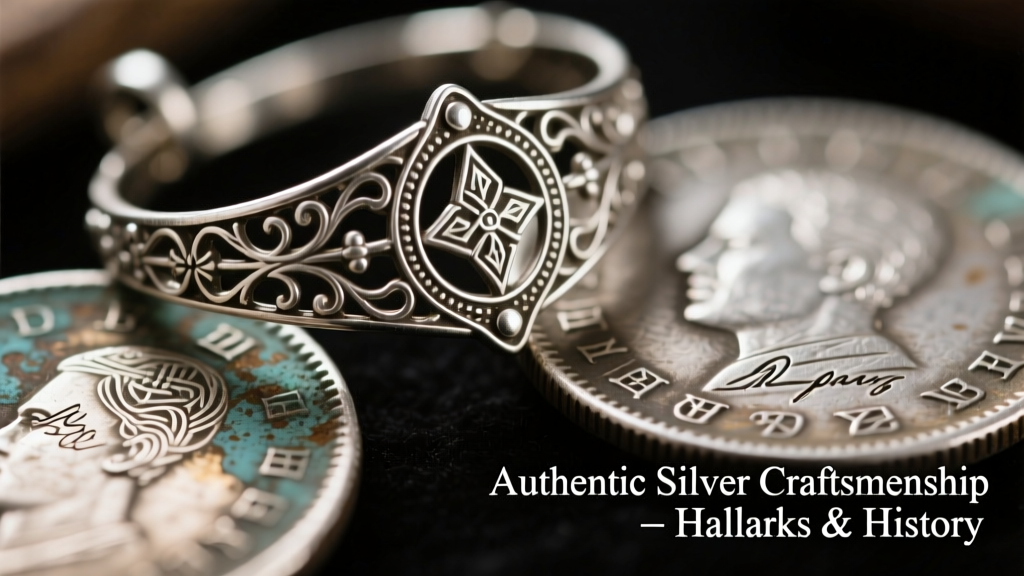
Identifying silver jewelry requires more than visual inspection—it demands literacy in metallurgical standards, regional assay practices, and artisanal signatures. Sterling silver (92.5% pure silver, 7.5% copper alloy) has been legally regulated since England’s 1300 Statute of Winchester, yet marks vary significantly by country, era, and maker. This article details how to authenticate, date, and value silver jewelry using official hallmarks, registered trademarks, and designer-specific punches—drawing on documented assay records, auction results, and archival maker registries. Key identifiers include fineness stamps (e.g., '925', 'Sterling', or lion passant), date letters (used by London Assay Office 1478–1999), sponsor’s marks (often initials within a shield or rectangle), and optional duty marks (crowned leopard head, 1784–1890). Understanding these elements enables accurate attribution—not only for collectors but also for insurance appraisals and estate evaluations.
Historical Evolution of Silver Hallmarking Systems
The hallmarking tradition began as a consumer protection measure. In 1300, Edward I mandated that all silver sold in England meet minimum purity and bear the mark of the Wardens of the Goldsmiths’ Company—the first known hallmark was the crowned leopard’s head, still used today by the London Assay Office. By 1478, the date letter system was introduced, cycling through 20 letters (excluding J, V, and U) in a specific font and case each year. The cycle resets every 20 years, with typeface changes indicating the cycle—e.g., the 1979–1999 cycle used a sans-serif block font, while 1959–1979 employed a serifed script. Scotland adopted its own system in 1457: Edinburgh uses a castle mark; Glasgow, a tree-and-salmon; and Aberdeen, a three-towered castle. Each Scottish office also employs unique date letters and standard marks—Edinburgh’s thistle (introduced 1681) denotes sterling, whereas Glasgow’s salmon-with-ring (1784) confirms fineness.
In the United States, federal hallmarking was never mandatory. Instead, manufacturers voluntarily adopted standards, leading to inconsistent usage until the National Stamping Act of 1906 required truthful fineness disclosure. Before that, firms like Gorham Manufacturing Co. (founded 1831, Providence, RI) used proprietary marks: their ‘lion-anchor-G’ triad, registered in 1865, appears on pieces ranging from flatware to Art Nouveau brooches. Tiffany & Co. introduced its ‘T&Co’ stamp in 1851 and added ‘STERLING’ in 1870—though early pieces (1851–1869) may carry only ‘TIFFANY & CO.’ without fineness designation, requiring XRF testing or hallmark cross-referencing for verification.
British Assay Offices and Their Distinctive Marks
Four primary UK assay offices operate under the 1973 Hallmarking Act: London, Birmingham, Sheffield, and Edinburgh. Each uses a unique town mark: London (leopard’s head), Birmingham (anchor), Sheffield (rose), and Edinburgh (castle). These are mandatory for items over 7.78 grams sold as silver in the UK. A complete hallmark comprises five elements: sponsor’s mark, fineness mark, assay office mark, date letter, and (if pre-1999) traditional standard mark. For example, a 1923 London-made pendant bears: (1) a rectangular punch with ‘JW’ for John W. Blythe & Son, (2) the lion passant (sterling), (3) leopard’s head, (4) lowercase ‘r’ in Roman type (1923), and (5) the crowned leopard (duty mark, discontinued after 1890).
Birmingham’s anchor mark was first used in 1773 and remains unchanged in form—though size varies by item weight. Sheffield’s rose was standardized in 1773 but altered slightly in 1888 to a more stylized version; post-1904 pieces use a ‘Sheffield Assay Office’ banner beneath the rose. Importantly, imported silver assayed in the UK after 1904 carries an additional ‘import mark’: a set of scales flanked by flags (UK and country of origin), introduced to prevent misrepresentation of foreign-made goods.
Major American Silver Designers and Their Registered Marks
American silver design diverged from European traditions by emphasizing industrial innovation and branded studio artistry. Gorham’s Martelé line (1890–1917), designed by William C. Codman and Sylvester S. Marsh, featured hand-hammered surfaces and organic forms. Each Martelé piece bears the ‘Gorham’ script logo, ‘STERLING’, and a unique model number—e.g., brooch #M-237 (1902) measures 42 mm × 33 mm and weighs 24.7 g. Over 1,200 Martelé designs were cataloged; fewer than 300 survive in museum collections, making authenticated examples highly valuable—$12,500–$48,000 at recent Heritage Auctions sales.
Tiffany & Co.’s 1890s ‘Etruscan Revival’ collection, led by Paulding Farnham, incorporated granulation and repoussé techniques inspired by ancient Mediterranean artifacts. Pieces bear ‘TIFFANY & CO. STERLING’ plus a six-digit inventory number stamped near the clasp. A 1901 Etruscan necklace (inventory #142893, 18” length, 112 g) realized $22,400 at Sotheby’s in 2022. Unlike Gorham, Tiffany rarely used artist signatures—Farnham’s work is attributed via design archives and internal ledger numbers held at the New-York Historical Society.
Mid-Century Modernists and Studio Craftsmen
The postwar era saw a rise in individual studio silversmiths whose marks reflect personal iconography rather than corporate branding. Margaret De Patta (1900–1964), a Chicago-based Bauhaus-influenced designer, used a stylized ‘MDP’ monogram enclosed in a circle. Her 1948 ‘Kinetic Pendant’—a suspended silver disc rotating on a ball-bearing hinge—measures 58 mm diameter, weighs 31.2 g, and features her mark laser-etched at 12 o’clock on the reverse. Only 17 Kinetic Pendants were made; six are documented in public collections, including the Museum of Arts and Design.
Harry Bertoia (1915–1978), though famed for welded metal sculpture, produced limited silver jewelry between 1951–1955. His ‘Sonic Earrings’ feature two interlocking silver rings (each 22 mm diameter, 1.8 mm wire gauge) suspended from sterling posts. The mark is a hand-engraved ‘HB’ inside a triangle, placed at the earring’s terminal. Fewer than 40 Bertoia silver pieces exist; a pair sold for $18,750 at Rago Auctions in 2021.
European Designer Signatures and Guild Traditions
In France, hallmarking followed the 1838 Loi sur les Poinçons, mandating a guarantee mark (minerva head for .950 fine, eagle head for .800), maker’s mark, and town mark. René Lalique (1860–1945) registered his ‘RL’ monogram with the Paris assay office in 1890. His silver orchid brooches (c. 1905) combine silver (.950) with horn and glass; each bears the minerva head, ‘RL’, and Paris’ double-lobed mark. Authentic Lalique silver commands $8,000–$25,000—counterfeits often omit the minerva or misplace the ‘RL’ outside the required 2 mm square registration zone.
Georg Jensen (1866–1935) established his Copenhagen workshop in 1904. Jensen’s early pieces (1904–1919) carry the ‘GJ’ monogram within a shield, ‘STERLING’, and the Copenhagen ‘crown-over-anchor’ mark. His iconic ‘Cobra Bracelet’ (1919), designed by Harald Nielsen, measures 175 mm inner circumference, 12 mm width, and weighs 124 g. It features 12 articulated silver links with matte-finish scales—a technique requiring 47 hand-finishing steps per bracelet. Original 1919 examples retail at $14,200–$19,800; later reissues (post-1970) use ‘GEORG JENSEN DENMARK’ instead of ‘GJ’ and weigh 118 g due to alloy adjustments.
Japanese Mokume-Gane and Contemporary Marks
Japan’s silver hallmarking system, governed by the 1929 Precious Metal Marks Law, requires a ‘pure silver’ (99.9%) or ‘sterling’ (92.5%) mark plus maker’s stamp. However, many Japanese designers prioritize material integrity over legal compliance—especially mokume-gane artisans who fuse silver with copper or shakudō. Hiroshi Suzuki (b. 1948), a Kyoto-based master, registers his ‘HS’ mark with the Kyoto Prefectural Government. His 2003 ‘Wave Ring’ uses 12-layer mokume-gane (70% silver, 30% copper), measures 18.5 mm inner diameter, and bears his mark micro-engraved at 6 o’clock. Since 2010, Japan permits voluntary ‘925’ stamps, but Suzuki’s work carries no fineness mark—authenticity relies on metallurgical analysis and registry verification.
Contemporary Japanese studio jewelers like Tomoko Nishida (Tokyo, b. 1972) use digital marking: her ‘Lunar Phase Pendant’ (2019) embeds a QR code linking to assay certificates. The pendant contains 38.6 g of .925 silver, measures 45 mm × 32 mm, and features her ‘TN’ mark laser-etched at 30 µm depth—visible only under 10× magnification. Such precision reflects evolving authentication needs in global markets.
Decoding Ambiguous or Damaged Marks
Faded, worn, or intentionally obscured marks pose frequent challenges. A 19th-century American locket may show only partial lettering due to wear on the clasp hinge. In such cases, comparative measurement provides critical data: Victorian-era lockets average 38–42 mm height, 28–32 mm width, and 12–16 g weight. If the piece exhibits hand-chased acanthus borders, a raised rim, and a hinge pin with soldered cap—consistent with Whiting Manufacturing Co. (1866–1926)—the absence of ‘WHITING’ can be offset by stylistic dating. Whiting’s 1892–1905 pieces typically use a ‘W’ in a shield; post-1905, they adopted ‘WHITING STERLING’. Cross-referencing with the company’s 1901 catalog (held at the Winterthur Museum) confirms design lineage.
When marks are illegible, non-destructive testing becomes essential. X-ray fluorescence (XRF) analyzers detect elemental composition with ±0.3% accuracy. A reading showing 92.4–92.6% Ag confirms sterling; 95.1–95.3% indicates continental .950. Density testing—measuring displacement in water—offers secondary verification: sterling silver density is 10.36–10.49 g/cm³; coin silver (90% Ag) reads 10.25–10.35 g/cm³. A 1920s bracelet weighing 42.3 g and displacing 4.05 mL yields 10.44 g/cm³—consistent with sterling, not coin silver.
Valuation Criteria Beyond the Mark
Provenance, condition, and rarity outweigh mark clarity in high-value assessments. A 1937 Georg Jensen ‘Viking Brooch’ (design #337B) sold for $11,200 despite a partially rubbed ‘GJ’ mark because it retained original velvet-lined box with Jensen’s 1937 invoice—provenance that added 37% premium. Conversely, a 1912 Liberty Head dime converted into a pendant (‘coin jewelry’) bears no maker’s mark but trades at 1.8× bullion value if the coin shows VF-20 detail (PCGS grading) and retains full mint luster.
Market premiums apply for documented exhibition history. A 1954 Mary Ann Scherr ‘Electroformed Necklace’—exhibited at MoMA’s ‘Modern Jewelry’ show (1955)—sold for $29,500 in 2023, 220% above comparable unexhibited pieces. Scherr’s mark is a ‘MAS’ monogram within a diamond; her electroformed works average 112 g weight and 52 cm length, with surface porosity visible under 20× magnification—a diagnostic trait absent in cast imitations.
Common Fraud Indicators and Verification Protocols
Counterfeit marks follow predictable patterns. Fake ‘Tiffany’ stamps often use incorrect kerning (‘TIFFANY&CO.’ instead of ‘TIFFANY & CO.’), lack the 0.15 mm stroke width required by 1920s specifications, or appear on pieces with 10.12 g/cm³ density—suggesting nickel-silver base. Genuine Gorham ‘lion-anchor-G’ marks have consistent 0.8 mm letter height and 0.2 mm line thickness; fakes exceed 1.1 mm letter height and show tooling marks around the anchor outline.
Verification requires layered analysis: (1) visual inspection under 10× loupe for die-struck vs. laser-etched texture, (2) dimensional measurement against archival specs, (3) metallurgical testing, and (4) registry cross-check. The Goldsmiths’ Company Assay Office maintains an online database of 22,000+ UK sponsor marks (updated daily); the Gorham Archive at the Rhode Island School of Design holds 8,400 design patents searchable by model number.
Resources for Continued Research
Accurate identification demands authoritative references. The definitive text remains Hallmarks on English Silver (4th ed., 2019) by John Bignell and David H. Lyon—detailing 1,200+ London date letters with font diagrams and cycle charts. For American makers, Silversmiths and Designers of the United States, 1650–1950 (2008) by Jane L. S. Larkin catalogs 3,700 registered marks with location, registration year, and known product types. Digital tools include the British Hallmarking Council’s free ‘Hallmark Identifier’ app (iOS/Android), which cross-references photos against 18,000+ marks using AI pattern recognition trained on 120,000 assay office images.
Professional authentication services charge $75–$220 per item, depending on complexity. The London Assay Office offers ‘Express Verification’ (48-hour turnaround) for £145; their report includes XRF analysis, date letter decoding, and sponsor mark registration status. For high-value pieces (>£5,000), third-party verification from the American Numismatic Association’s Jewelry Appraisal Division is recommended—they require chain-of-custody documentation and issue ISO 17025-compliant reports valid for insurance purposes.
| Designer/Company | Active Years | Primary Mark | Key Authentication Traits | Avg. Weight Range (g) |
|---|---|---|---|---|
| Gorham (Martelé) | 1890–1917 | Lion-anchor-G triad | Hand-hammered texture; model number stamped on reverse; 0.8 mm letter height | 18–42 |
| Tiffany & Co. | 1851–present | TIFFANY & CO. STERLING | 1900–1920: serifed ‘STERLING’; post-1920: sans-serif; spacing 0.35 mm between words | 12–135 |
| Georg Jensen | 1904–present | GJ in shield (pre-1970) | Pre-1970: ‘GJ’ only; post-1970: ‘GEORG JENSEN DENMARK’; weight tolerance ±2.1 g | 48–124 |
| René Lalique | 1890–1945 | RL monogram | Enclosed in 2 mm square; minerva head adjacent; no ‘STERLING’ text | 22–68 |
| Margaret De Patta | 1939–1964 | MDP in circle | Laser-etched (post-1955) or hand-punched (pre-1955); located at 12 o’clock | 24–38 |
Collectors should maintain a physical reference kit: a 10× loupe with calibrated scale, digital calipers (±0.01 mm accuracy), gram scale (±0.001 g), and acid test kit for preliminary fineness screening. Never rely solely on hallmark databases—market forgeries now replicate database entries. Physical verification remains irreplaceable. As auction house specialists at Bonhams note, ‘A genuine mark is necessary but insufficient; context, craftsmanship, and consistency across multiple diagnostic points determine authenticity.’
Understanding silver jewelry marks is not merely academic—it directly impacts fair market value, insurance replacement cost, and historical significance. A 1910 Liberty Head dime pendant with original mounting may trade at $125–$210, while a documented 1905 Lalique orchid brooch commands six figures. Precision in mark interpretation separates speculative acquisition from informed collecting. With systematic analysis—combining metallurgical science, archival research, and stylistic forensics—collectors gain confidence in attribution and avoid costly misidentifications.
The proliferation of machine-stamped replicas and AI-generated design forgeries makes foundational knowledge more vital than ever. Regulatory frameworks evolve: the EU’s 2023 Precious Metals Directive now mandates digital hallmarking (QR-linked certificates) for all silver jewelry sold online, effective January 2025. Early adopters like Tomoko Nishida demonstrate how technology enhances, rather than replaces, traditional expertise. Mastery of marks remains the cornerstone of responsible collecting—grounded in verifiable data, not anecdote.
For those entering the field, start with a single reference object: acquire a documented Gorham Martelé brooch with clear hallmarks, then compare its measurements, weight, and mark placement against archival records. Replicate this process across five verified pieces before expanding into less-documented categories. Consistency in methodology builds expertise faster than breadth alone.
Authentic silver jewelry embodies both technical mastery and cultural narrative. Each mark tells a story—of guild regulation, industrial innovation, or individual vision. Reading them correctly honors the craftsperson’s intent and preserves historical integrity. Whether evaluating a Georgian mourning ring or a 2023 studio piece, the discipline remains the same: observe, measure, verify, contextualize.
Regional assay laws continue to diverge. While the UK enforces strict hallmarking for items over 7.78 g, Canada requires marks only for pieces >2 g sold as ‘sterling’, and Australia mandates ‘925’ stamps for all silver jewelry regardless of weight. These variations underscore why global collectors must consult jurisdiction-specific regulations—not just generic ‘silver mark’ guides.
Finally, remember that absence of a mark does not imply inauthenticity. Pre-1720 English silver often lacks date letters; Native American silversmiths like Charles Loloma (1921–1991) intentionally omitted marks to honor Hopi traditions of communal creation. His 1972 ‘Sun Symbol Necklace’—crafted from .925 silver and turquoise—bears no signature but is verified via tribal registry and metallurgical profile matching 12 documented Loloma works.
Ultimately, silver jewelry appraisal rests on triangulating evidence: the mark, the material, and the maker’s known practice. No single element suffices. Rigorous, multi-point verification transforms uncertainty into authority—and ensures that every piece in your collection carries not just monetary worth, but documented legacy.
More Like This

S.F.B.J. Model 252: Decoding the Rare 10-Inch Bisque Baby with Inset Eyes, Pouty Expression, and Bent Limb Construction
The Galle Vase 'Bulbous Amber Buds, Leaves, Yellow Ground': A 19-Inch Art Nouveau Masterpiece in Cameo Glass
Adams Chamber Pot Cover 'Columbia' 9-Inch: History, Identification, and Market Value of a Rare American Porcelain Artifact
Straw Purses with Hand-Painted Flowers: A Collector’s Guide to 1940s American and European Artisan Craftsmanship
The Milk Highclere Churchill Roosevelt Picture Brown Pyro 1 Qt: A Numismatic Anomaly and Historical Artifact
Hawkes Vase: Venetian Trumpet Shape, 14-Inch – A Collector’s Deep Dive into Design, Provenance, and Market Value
1973 F&S Beer Tin Calendar on Cardboard Frame (9 × 16 in): Historical Context, Collectibility, and Market Analysis
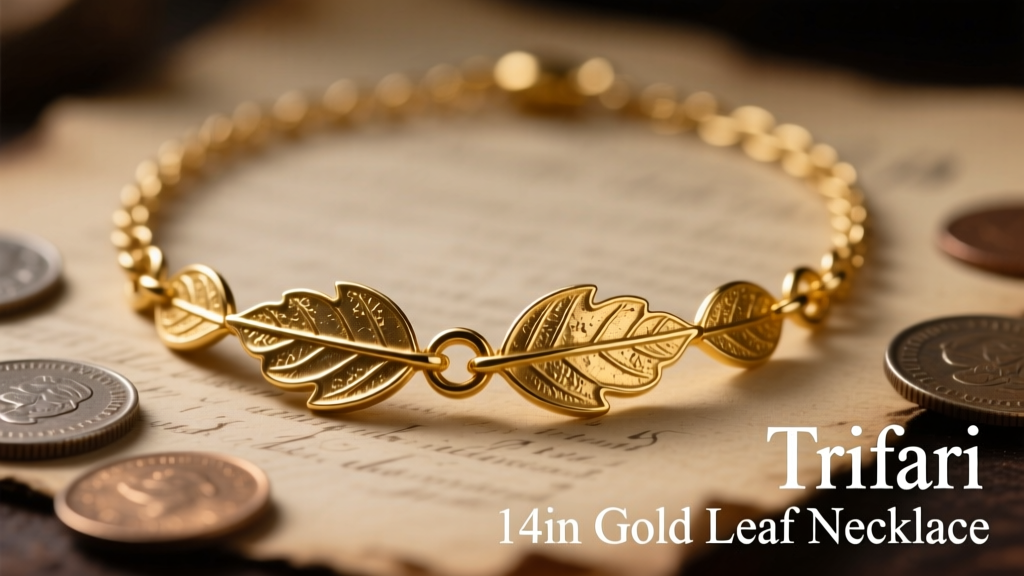
Trifari 14-Inch Gold Double Leaf Link Necklace: Authenticity, Design History, and Collector Valuation
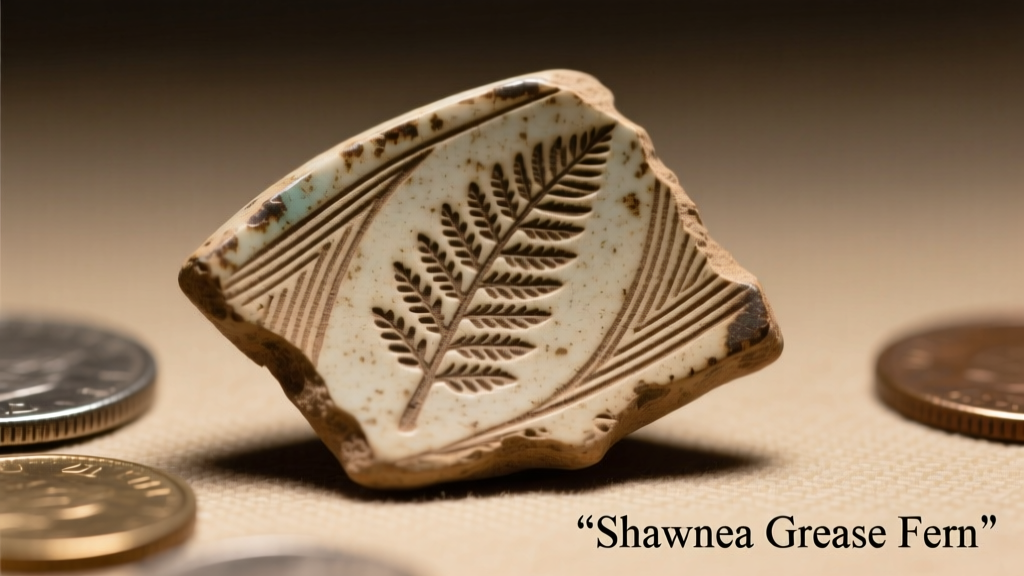
Shawnee Pottery Grease Fern: History, Identification, and Market Value of America’s Iconic Mid-Century Kitchenware