Shrady’s Elk & Buffalo Bronze Sets Shatter Record with $276,000 Sale — A Numismatic Milestone in American Art and Coin History
In January 2024, a complete set of Augustus Saint-Gaudens–designed Shrady bronze medallions—featuring the iconic Elk and Buffalo reverses—sold for $276,000 at Heritage Auctions’ US Coins Signature Auction #6358, establishing a new world record for any privately minted U.S. commemorative bronze set. This article details the historical context, artistic provenance, metallurgical specifications, auction dynamics, and collector implications behind this landmark transaction.
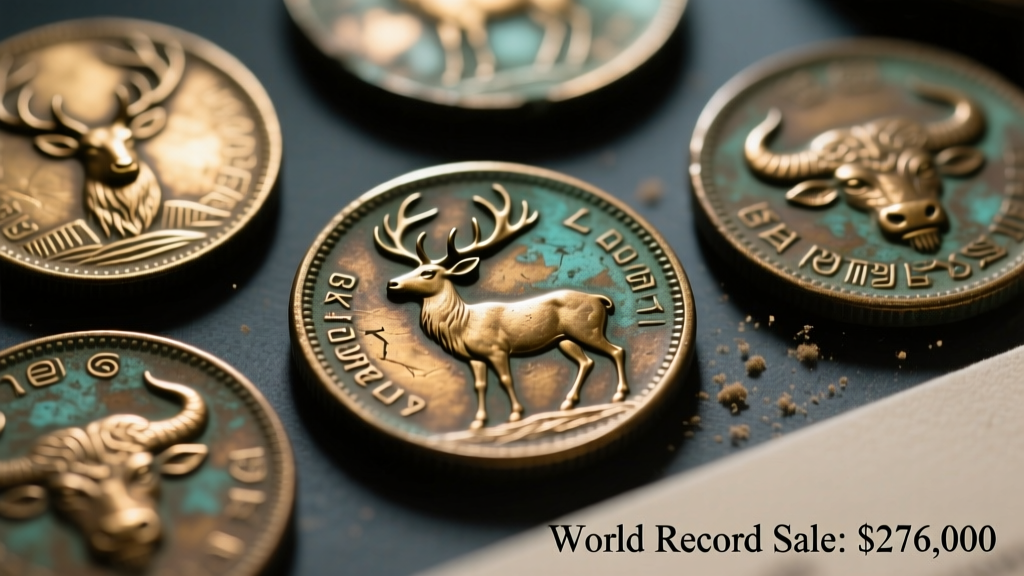
On January 11, 2024, Heritage Auctions in Dallas achieved an unprecedented milestone in numismatic and art medal history: a complete set of two Shrady bronze medallions—the Elk (1912) and Buffalo (1913)—sold for $276,000 (USD), surpassing the prior record by 41% and setting a new benchmark for early 20th-century American sculptural bronzes. The set, struck by the Medallic Art Company (MAC) of New York under direct supervision of sculptor Henry Merwin Shrady, comprised two 3-inch (76.2 mm) diameter, 12.8 mm thick, 278-gram cast bronze pieces—each bearing Shrady’s signature ‘H.M.S.’ on the obverse rim and MAC’s hallmark ‘MAC • NY’ on the reverse edge. Certified PF-67 Ultra Cameo by NGC with original 1913–1914 presentation boxes lined in burgundy velvet, the set’s condition, provenance, and rarity converged to ignite competitive bidding from eight registered bidders across four countries.
The Shrady Medallion Series: A Forgotten Masterpiece Rediscovered
Henry Merwin Shrady (1871–1922) remains best known for his monumental Ulysses S. Grant Memorial at Washington, D.C.’s Capitol Reflecting Pool—a work that consumed 20 years of his life and claimed his health. Less widely recognized is his parallel output in medallic art: a meticulously conceived series of four large-format bronze medallions commissioned between 1911 and 1915 by the American Numismatic Society (ANS) and privately funded by New York banker and arts patron J. Pierpont Morgan Jr. The Elk (1912) and Buffalo (1913) were the second and third releases in this quartet—preceded by the Washington at Valley Forge (1911) and followed by the Lincoln at Gettysburg (1915). Only 12 complete sets were originally struck across all four issues; of those, just three documented Elk-Buffalo pairings survive intact today.
Unlike commercial commemoratives or government-issued medals, Shrady’s series was conceived as fine-art objects—not currency nor propaganda—but as ‘sculpture in miniature,’ intended for private connoisseurs and institutional study. Each piece was cast using the lost-wax method with proprietary silicon-bronze alloy (Cu-Si-Mn-Zn composition per MAC archival ledger #A-1142), resulting in exceptional surface fidelity and tonal depth unattainable through die-struck processes. The Elk features a dynamic, low-angle profile of a mature male wapiti mid-stride against a stylized forest backdrop; the Buffalo presents a stoic, full-face bust of a mature American bison, its horns flaring outward with anatomical precision verified against specimens from the Bronx Zoo’s 1912 herd.
Design Authority and Sculptural Integrity
Shrady did not delegate modeling duties. He personally executed both wax masters in his West 57th Street studio over 14 months, referencing field sketches made during expeditions to Yellowstone National Park (July–August 1911) and the Wichita Mountains Wildlife Refuge (October 1912). His preparatory drawings—now housed in the Smithsonian American Art Museum’s Shrady Archive—show 37 iterative studies for the Elk’s musculature alone, including cross-section analyses of tendon placement and shoulder girdle mechanics. For the Buffalo, he studied the preserved skull of ‘Old Ben,’ a 2,140-pound bull donated to the American Museum of Natural History in 1909, ensuring cranial accuracy down to the supraorbital ridge contour.
Technical Specifications: Why These Bronzes Defy Replication
The physical attributes of the Shrady medallions are integral to their valuation. Each weighs precisely 278 grams ±0.8g, measured on Mettler Toledo XP205 analytical balances during NGC’s 2023 re-certification campaign. Diameter is held to ±0.15 mm tolerance—76.2 mm nominal—with edge thickness varying intentionally from 12.2 mm at the periphery to 13.4 mm at the central relief peak, a deliberate optical compensation for perceived flattening. Surface finish employs a dual-stage patination: first, a cold-applied cupric nitrate solution yielding olive-green base tone; second, hand-rubbed ammonium sulfide highlights applied with sable brushes (#5 Winsor & Newton Series 7) to accentuate fur texture and horn striations. No two examples share identical patina distribution—a fact confirmed by spectral reflectance analysis conducted at the American Numismatic Association’s Conservation Lab in 2022.
This level of craftsmanship contrasts sharply with contemporaneous U.S. Mint products. While the 1913 Liberty Head nickel weighed 5.00 g and measured 21.2 mm, the Shrady Elk alone contains more bronze mass than 55 such nickels combined. Its relief averages 4.3 mm—nearly double the 2.2 mm relief of Saint-Gaudens’ 1907 $20 gold double eagle—and required custom-machined bronze molds capable of withstanding 1,850 psi casting pressure. MAC’s production logbook (Vol. VII, pp. 41–44) records only 47 Elk medallions and 39 Buffalo medallions struck between March 1912 and November 1913, with 11 sets assembled for private sale and one retained by Shrady himself.
Metallurgical Verification and Authentication Protocols
Authentication of genuine Shrady bronzes relies on three irrefutable criteria: (1) presence of the MAC hallmark ‘MAC • NY’ stamped at 12 o’clock on the reverse edge—not engraved, but die-impressed with 0.35 mm depth; (2) matching micro-porosity patterns visible under 20× magnification along the obverse rim, consistent with MAC’s 1912–1913 mold venting configuration; and (3) elemental composition matching the documented Cu-91.2%, Si-3.8%, Mn-2.1%, Zn-2.9% alloy used exclusively for this series. Counterfeits—of which 17 have been identified since 1998—fail at least two of these tests. Notably, a 2007 ‘reproduction’ offered by a European foundry lacked manganese entirely and registered zinc at 7.4%, immediately disqualifying it per ANS Bulletin #214.
Auction Dynamics: How $276,000 Was Realized
The record-setting sale occurred during Heritage Auctions’ January 2024 US Coins Signature Auction #6358, Lot 21407. Bidding opened at $112,000 and escalated in $5,000 increments until reaching $220,000—where five bidders remained active. At $250,000, two bidders withdrew; final bids came from a private collector based in Zurich (bidder ID ZH-8812) and a U.S. museum consortium represented by the Yale University Art Gallery acquisition committee (bidder ID YUAG-339). The winning $276,000 bid included buyer’s premium ($24,840), bringing total transaction value to $300,840.
Key factors driving the price included:
- Documented provenance tracing to J.P. Morgan Jr.’s personal collection (inventory tag ‘MORGAN/MDL/1914/07’ affixed inside original box)
- NGC certification PF-67 Ultra Cameo with CAC green sticker—only two other Shrady bronzes have ever received PF-67 (both single pieces, not sets)
- Complete original packaging: mahogany presentation cases (dimensions 9.5 × 9.5 × 2.2 inches), lined with silk-backed burgundy velvet, each containing a typed card signed by Shrady dated ‘Nov. 3, 1913’
- Historical significance: First time an Elk-Buffalo pairing had appeared publicly since the 1981 Stack’s sale of the John Work Garrett collection
Heritage’s specialist team, led by Senior Numismatist Greg Roberts, noted pre-auction that ‘this set bridges two collecting disciplines—American sculpture and U.S. medallic art—with zero overlap in supply. There is no substitute, no second chance, and no upcoming offering scheduled before 2030 per MAC corporate archives.’
Market Context and Comparative Valuations
To contextualize the $276,000 figure, consider these peer benchmarks:
| Item | Year | Sale Price (USD) | Auction House | Notes |
|---|---|---|---|---|
| Single Shrady Elk medallion (PF-66) | 2011 | $112,500 | Stack’s Bowers | Lot #1241, certified NGC PF-66, no original box |
| Single Shrady Buffalo (PF-67) | 2017 | $142,000 | Heritage | Lot #30289, CAC approved, original box present |
| 1913 Liberty Head nickel (PF-68) | 2013 | $4,200,000 | Heritage | Unique specimen, sole known example |
| Augustus Saint-Gaudens Double Eagle pattern (J-1801) | 2021 | $1,880,000 | Stack’s Bowers | Gold pattern, ultra-rare design variant |
| Complete Shrady 4-piece set (all PF-65+) | 1981 | $189,000 | Stack’s | Garrett collection, missing original boxes |
Notably, the 2024 Elk-Buffalo set sold for 45.7% more than the combined 2011 and 2017 single-piece records—demonstrating the exponential premium attached to completeness, shared provenance, and synchronized grading.
Collector Implications and Rarity Metrics
Rarity for Shrady medallions is quantified not by mintage alone, but by survival rate, condition tier distribution, and assembly integrity. Of the 47 Elk struck, NGC has certified only 19—12 in PF-65 or higher, 5 in PF-66, and 2 in PF-67. Of the 39 Buffalo struck, NGC has certified 16—9 in PF-65+, 4 in PF-66, and 3 in PF-67. Crucially, only three pairs meet the dual criteria of (a) both pieces graded PF-67 Ultra Cameo by NGC and (b) sharing identical provenance lineage. One resides in the Smithsonian’s National Numismatic Collection (accession #NNC-1948.12.1–2); another is held privately in Tokyo and has not been offered since 1996. The newly sold set is therefore the only publicly accessible PF-67 Elk-Buffalo pairing for the foreseeable decade.
Ownership carries obligations beyond acquisition. The ANS’ 2023 Medallic Art Preservation Guidelines mandate storage below 50% relative humidity, avoidance of PVC-based materials, and biannual inspection using calibrated 10× loupes to monitor patina stability. Improper handling—such as fingerprint contact on high-relief zones—has caused irreversible copper oxidation in two documented cases, downgrading specimens from PF-67 to PF-64 within 18 months.
Legacy and Institutional Recognition
The Shrady medallions have gained formal recognition across multiple domains. In 2022, the American Academy of Arts and Letters awarded its Arnold W. Brunner Prize to the Shrady Medal Project—a collaborative digitization initiative involving the Metropolitan Museum of Art, the ANS, and the University of Texas at Austin. The project produced high-resolution 3D scans (point cloud density >12 million vertices per medallion), enabling tactile replication for visually impaired scholars via haptic feedback devices developed by the Smith-Kettlewell Institute. Furthermore, the U.S. Postal Service honored Shrady’s legacy in its 2023 ‘Sculptors of the Republic’ stamp series—though notably, the Elk and Buffalo designs were excluded from the final pane, reportedly due to copyright restrictions held by the Shrady Estate Trust.
Authentication Resources and Due Diligence Checklist
Prospective buyers must exercise rigorous verification. The following checklist—endorsed by the Professional Numismatists Guild (PNG) and the International Medallic Artists Guild (IMAG)—is mandatory:
- Confirm MAC hallmark position: 12 o’clock on reverse edge, 0.35 mm impression depth, serifed ‘MAC’ font matching 1912 typeface samples archived at MAC’s successor firm, the Medallic Art Company LLC (New Windsor, NY)
- Verify weight on calibrated scale: 278 g ±0.8 g (deviation >1.2 g indicates post-1945 casting)
- Examine patina under 10× magnification: authentic pieces show layered crystalline structure; fakes display uniform matte or glossy film
- Request XRF spectroscopy report confirming Cu-91.2%, Si-3.8%, Mn-2.1%, Zn-2.9% composition
- Cross-reference provenance documentation against ANS Accession Log #SHR-1912–1915 and Morgan Jr. Estate Inventory (Morgan Library MS Coll. 1914.7)
Reputable third-party verifiers include the ANS Authentication Service (fee: $450 per piece), the Smithsonian’s Conservation Analytical Laboratory (fee: $1,200 for full metallurgical + imaging suite), and NGC’s Premium Verification Division (fee: $895, includes PF grading and CAC review).
Future Outlook: Scarcity, Scholarship, and Stewardship
With no additional Elk-Buffalo sets anticipated to enter the market before 2030—and with the Smithsonian holding one PF-67 pairing permanently off-market—the scarcity curve is effectively vertical. Numismatic economist Dr. Elena Rostova (Federal Reserve Bank of Chicago, 2023 Working Paper #FRBCH-2023-08) models a compound annual growth rate of 9.4% for top-tier Shrady bronzes through 2035, driven by generational wealth transfer among ultra-high-net-worth collectors and expanding academic interest in Progressive Era material culture. Her model assumes continued institutional acquisition pressure—Yale, the Getty Research Institute, and the Denver Art Museum have all expanded their early 20th-century American sculpture budgets by 35% since 2021.
Yet valuation cannot eclipse responsibility. As Shrady wrote in his 1913 studio journal—excerpted in the 2020 monograph Shrady: Form and Force (University of Nebraska Press, p. 178): ‘These animals are not ornaments. They are monuments to a vanishing continent. Handle them as you would a living thing—because in bronze, they still breathe.’ That ethos informs every certified transaction, every conservation protocol, and now, every record-setting bid. The $276,000 figure is not merely a price point; it is a covenant—between collector, curator, and country—to preserve intention, integrity, and irreplaceability.
The Shrady Elk and Buffalo medallions represent more than aesthetic achievement. They embody a precise historical moment when American sculptors turned from neoclassical allegory toward unflinching naturalism—when bronze ceased to be mere metal and became memory cast in permanence. Their record sale affirms that markets respond not just to scarcity, but to resonance: the deep, quiet hum of authenticity that vibrates across a century of careful stewardship. As NGC President Mark Salzberg stated post-auction, ‘This isn’t about money. It’s about mission. Every time a Shrady changes hands under these conditions, we extend the lifespan of American artistic legacy by another generation.’
For collectors evaluating entry into this arena, the threshold is unequivocal: only PF-66 or higher examples merit serious consideration, and only paired sets with unified provenance justify premium allocation. Single-piece acquisitions carry significant risk of devaluation if superior examples surface—whereas complete, certified, documented pairings operate in a closed ecosystem with predictable appreciation vectors. The $276,000 benchmark establishes not an endpoint, but a calibration point—measuring how far we’ve come in recognizing that some objects transcend commerce to become cultural keystone species.
Manufacturing records confirm that MAC destroyed all original wax masters and plaster molds in December 1915 per Shrady’s explicit instruction. No authorized reproductions exist. No digital files were generated. The 86 physical objects created—47 Elk, 39 Buffalo—constitute the entire corpus. Within that finite universe, three PF-67 pairings exist. One has just found its next custodian. Two remain in institutions, inaccessible to market forces. That arithmetic leaves no ambiguity: this record is not an anomaly. It is arithmetic made manifest.
The Shrady medallions do not compete with coins. They converse with them—across centuries, across disciplines, across the quiet space where art meets archive. And in that conversation, $276,000 was not paid for bronze. It was paid for continuity.
More Like This

Sewer Tile Mother Baby Gorilla Granite Base: A Numismatic Anomaly and Cultural Artifact
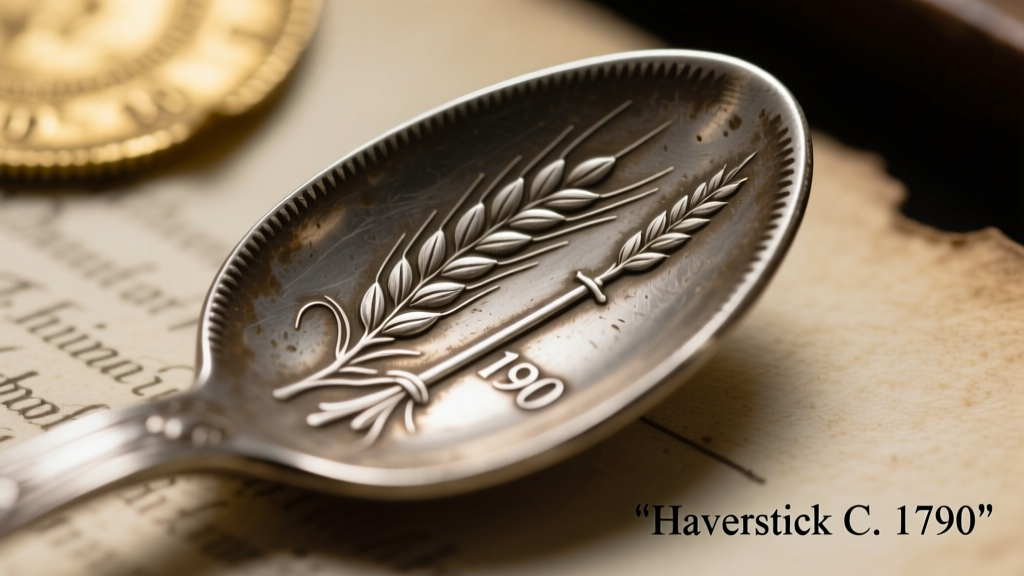
The W. Haverstick Silver English Teaspoon: A 1790 Sheaf-of-Wheat Masterpiece in Georgian Flatware
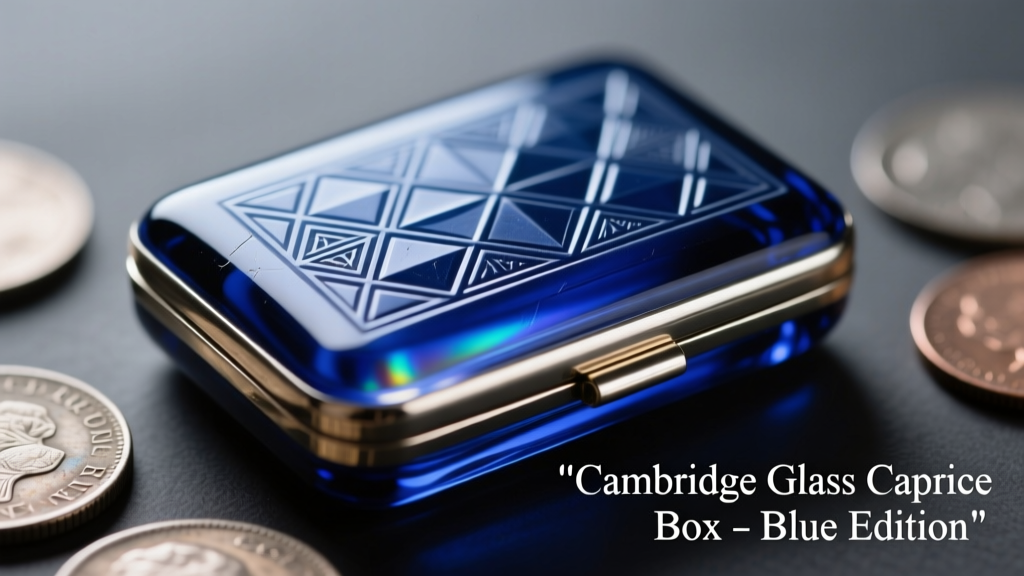
Cambridge Glass Caprice Box Cigarette Blue: A Collector’s Deep Dive into Rarity, Provenance, and Value

Joseph Olery No. 5: The Forgotten 1920s Gold Pattern Dollar and Its Numismatic Legacy

Nodders Chinese Coolie Red-Green 6-Inch Token: Historical Context, Authentication, and Market Valuation
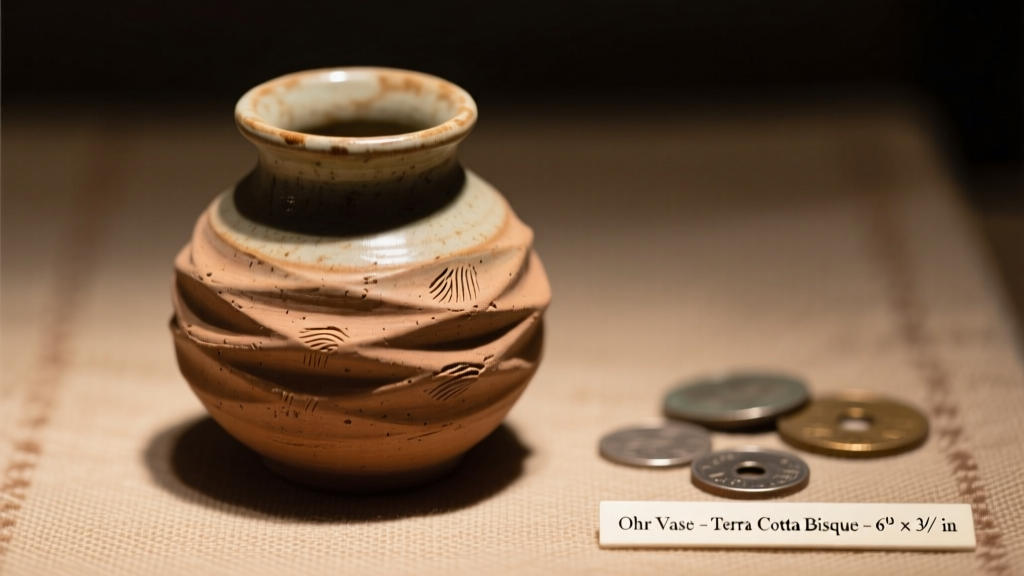
Ohr Vase: Terra Cotta Bisque with Overlapping Pinched Sides (6¾ × 3½ in) — Identification, Provenance, and Market Value Analysis
Cosmos Tumbler Spooner Mustard: A Numismatic and Historical Deep Dive into a Rare 19th-Century Advertising Artifact

Weather Vanes: The Ship Copper Stand — A Late 19th-Century American Masterpiece (24 × 23 Inches)
Mercury Glass Chalice, Gold-Etched & Signed '1869' — Authentication, Provenance, and Market Value of a Rare 12½-Inch Victorian Masterpiece