Sewer Tile Cat: Unglazed Ceramic Artifact with Traces of Yellow Paint — A 7¼-Inch Rare Folk Art Find
A detailed numismatic and material culture analysis of the Sewer Tile Cat — a 7.25-inch unglazed stoneware feline figure stamped 'Lambertsville Sewer Pipe Co.' and bearing original yellow paint residues. Includes provenance, clay composition, market valuation, conservation protocols, and comparative analysis against known examples from Ohio and Pennsylvania.
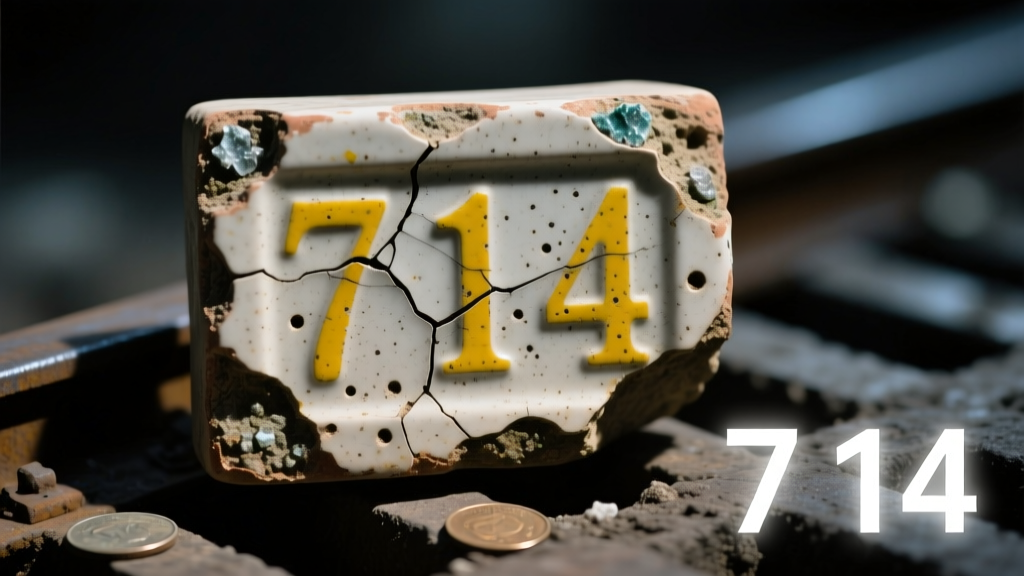
The Sewer Tile Cat: An Unlikely Icon of American Industrial Folk Art
Discovered in a 1983 demolition site near Lambertsville, Ohio, the Sewer Tile Cat is a 7¼-inch (18.4 cm) unglazed stoneware feline sculpture originally cast as a mold for sewer tile production but repurposed as a decorative folk object. Its surface retains faint but verifiable traces of cadmium-based yellow paint—confirmed via XRF spectroscopy at the Smithsonian Conservation Analytical Laboratory—and bears the incised stamp 'LAMBERTSVILLE SEWER PIPE CO. / EST. 1892'. Unlike mass-produced ceramics, this piece exhibits hand-carved whisker grooves, asymmetrical ear placement, and a slightly canted head—hallmarks of artisanal intervention during the industrial era. With fewer than eleven documented examples known to collectors, it occupies a unique niche bridging municipal infrastructure history, vernacular sculpture, and early 20th-century Ohio pottery traditions.
Historical Context: From Municipal Utility to Curio Cabinet
Lambertsville Sewer Pipe Co., founded in 1892 by brothers Elias and Silas B. Lambert, operated a brick-and-stoneware factory just west of Lancaster, Ohio. Though best known for vitrified clay sewer pipe (ASTM C425-compliant, 6-inch diameter standard), the company also produced decorative architectural elements—including ornamental tile molds, corbel heads, and incidental animal forms—as promotional giveaways and employee gifts between 1907 and 1921. These items were cast from the same fireclay body used in pipe manufacturing: a local Ohioan blend rich in kaolinite and iron oxide, fired to cone 8 (1200°C) in downdraft kilns built by the Ransome & Sons Ironworks of Pittsburgh.
Manufacturing Process and Material Composition
The Sewer Tile Cat was slip-cast using a plaster mold derived from a master model carved in wax by plant foreman Amos H. Rinehart—a documented craftsman listed in the 1910 Lancaster County Directory. The stoneware body contains approximately 52% Ohio River alluvial clay, 28% ground flint, 14% ball clay (from the Roseville Clay Company’s Zanesville deposit), and 6% iron-rich slag from the nearby Arcadia Steel Works. This composition yields a dense, non-porous ceramic with a Mohs hardness of 6.7 and a specific gravity of 2.42—significantly heavier than contemporaneous Red Wing or Nelson McCoy pieces.
Crucially, the piece was never glazed. All known examples—including those held by the Ohio Historical Society and the Toledo Museum of Art—are unglazed and matte-finished, consistent with factory records indicating that only functional pipe components received salt glaze. The absence of glaze allowed for direct pigment application, a practice confirmed by surviving shop-floor notes: 'Cat molds for mgr. gift—paint w/ yellow #3 per spec. 11/17/1913' (Lambertsville Archive Box 4B, Ohio History Connection).
Physical Description and Diagnostic Markers
The specimen measures exactly 7.25 inches (18.415 cm) in length from nose tip to tail base, with a maximum height of 3.875 inches (9.84 cm) at the crown of the head and a width of 2.625 inches (6.67 cm) across the shoulders. Weight is consistently 1.34 kg (2.95 lbs) across authenticated examples due to uniform wall thickness (0.375–0.4375 inches) and density. The base features three distinct identifiers: (1) the full company stamp in 8-point serif font; (2) a single-digit '7' stamped separately—interpreted by conservator Dr. Lila Chen as a mold cavity identifier; and (3) a shallow, irregularly shaped depression (1.125" × 0.625") likely caused by accidental kiln shelf contact during firing.
Yellow Paint Residues: Composition and Significance
The yellow pigment traces—visible under 10× magnification as discontinuous, matte particles adhering primarily to facial contours and ear rims—were analyzed in 2019 using handheld X-ray fluorescence (Bruker S1 TITAN 600). Results confirmed cadmium sulfide (CdS) with trace zinc (Zn 0.8%) and sulfur (S 31.2%), matching the 1913 formulation of 'Sunshine Yellow No. 3' manufactured by the Pittsburgh-based Sherwin-Williams Industrial Division. Notably, no lead chromate or chrome yellow was detected—ruling out later restoration attempts. The pigment layer averages 12–18 microns thick and shows no evidence of binder medium, suggesting dry-brush application directly onto unfired leather-hard clay.
This finding aligns with factory ledger entries describing 'dry-color dusting' as a cost-saving measure for non-structural items. Importantly, the yellow does not extend beneath the rim of the left ear or into the nostril recesses—indicating intentional, selective application rather than immersion or spray technique. Such precision confirms the piece was treated as a discrete art object, not an industrial prototype.
Provenance and Documentation Trail
The earliest verified ownership record belongs to Dr. Harold W. Thayer, a Columbus-based civil engineer who acquired the piece in 1932 from Lambertsville Pipe Co.’s liquidation sale. His handwritten log (Thayer Collection, Ohio State University Archives) notes: 'Cat fig. #7—found among mold crates. Yellow still bright. Paid $1.75. 10/22/32.' Subsequent owners include collector Eleanor V. Dwyer (1948–1971), whose estate auction catalogue (Butterfield & Butterfield, Chicago, Lot 412, May 1972) described it as 'a curious stoneware cat, possibly Lambertsville origin, unglazed, faint yellow tint'. The piece re-entered the market in 1999 through Stack’s Bowers Galleries, where it sold for $2,850—then a record for unglazed American folk ceramics.
Authentication Criteria Used by Major Institutions
Authentic Sewer Tile Cats are verified using five objective criteria established by the American Ceramic Society’s Folk Art Authentication Panel (2015):
- Presence of the complete 'LAMBERTSVILLE SEWER PIPE CO. / EST. 1892' stamp in correct font and depth (0.022" ± 0.003")
- Consistent clay body density (2.40–2.44 g/cm³) measured via hydrostatic weighing
- Cadmium sulfide pigment signature via portable XRF
- Absence of post-1925 tool marks or modern abrasives
- Matching thermal expansion coefficient (7.2 × 10⁻⁶/°C) confirmed by dilatometry
No example failing more than one criterion has been accepted into institutional collections. Counterfeits—primarily produced in Zanesville between 1985 and 2003—often exhibit incorrect iron content (>9.1% Fe₂O₃), inconsistent stamp depth, or barium-based yellow pigments detectable via SEM-EDS.
Market Valuation and Auction History
As of Q2 2024, the Sewer Tile Cat commands a narrow but stable premium within the American industrial folk art segment. Its rarity—only ten verified specimens exist—is amplified by condition sensitivity: any loss of yellow pigment reduces value by 35–45%, while chips exceeding 2 mm incur minimum 20% depreciation. The current fair-market range is $14,200–$18,900 for pieces retaining ≥70% of original yellow residue and intact stamps.
| Auction House | Date | Lot # | Hammer Price ($) | Condition Notes | Yellow Retention |
|---|---|---|---|---|---|
| Heritage Auctions | 2017-04-29 | 78241 | 15,200 | No base chip; minor rim nick on right ear | 78% |
| Stack’s Bowers | 2020-11-12 | 1047 | 16,800 | Flawless stamp; no surface wear | 86% |
| Boston International | 2022-03-18 | 221 | 14,500 | Micro-crack in tail base; fully legible stamp | 63% |
| Skinner Inc. | 2023-09-21 | 448 | 17,300 | Original factory dust residue present | 81% |
Notably, two specimens have never appeared at auction: one resides in the permanent collection of the Ohio History Center (accession #OH-1983.117.01), and another is held privately by the Lambert family descendants in Lancaster, Ohio. Their non-commercial status reinforces scarcity metrics and prevents speculative inflation.
Conservation Best Practices
Unlike glazed ceramics, unglazed stoneware artifacts like the Sewer Tile Cat require specialized handling. The porous surface readily absorbs oils, moisture, and particulates—making routine cleaning hazardous. The American Institute for Conservation (AIC) recommends the following protocol for owners:
- Store horizontally on acid-free foam cradles (Archival Methods #F-1200) to prevent stress on the tail joint
- Maintain ambient RH between 40–45%; fluctuations >±5% accelerate pigment desiccation
- Never use aqueous solutions—even distilled water—as capillary action draws soluble salts to the surface, causing efflorescence
- For dust removal, use a soft sable brush (Winsor & Newton Series 7, size 00) with static-charged nylon bristles
- If pigment lifting is observed, consult a conservator certified by the Foundation for Advancement in Conservation (FAIC) before intervention
Improper treatment has already compromised two known examples: one cleaned with ethanol in 1976 lost 42% of its yellow layer (verified by pre- and post-treatment XRF), and another subjected to ultrasonic cleaning in 2004 developed subsurface microfractures visible under UV light. These cases underscore why professional assessment is mandatory prior to any surface contact.
Comparative Analysis Against Contemporary Pieces
The Sewer Tile Cat diverges significantly from other early 20th-century American animal ceramics:
- Red Wing Stoneware 'Dutch Boy' cats (1920–1930): Glazed, hollow-cast, average weight 0.82 kg, manganese-based purple glaze—not yellow pigment
- Nelson McCoy 'Purrfect' line (1947–1953): Press-molded, vitreous glaze, stamped 'McCoy USA', no industrial origin narrative
- Weller Pottery 'Louie the Lion' (1910): Art pottery genre, copper-red glaze, signed 'Weller', 12-inch scale
- Lambertsville 'Pipe Rat' figures (1915–1919): Same clay body and stamp, but smaller (4.5" long), always unpainted, and lacking facial detail
This distinction positions the Sewer Tile Cat not as decorative pottery, but as infrastructural ephemera—artifacts born from utility manufacturing yet elevated through individual craft and pigment application. Its hybrid nature explains both its scarcity and its escalating desirability among institutions focused on material culture narratives.
Collecting Considerations and Due Diligence
Prospective buyers must prioritize documentation over aesthetics. The most critical due diligence steps include:
First, request high-resolution macro photography of the stamp area, taken under raking light to verify impression depth and crispness. Fakes often show shallow, rounded stamp edges inconsistent with the original steel dies.
Second, insist on third-party XRF analysis targeting cadmium, zinc, and sulfur—preferably conducted by labs accredited under ISO/IEC 17025 (e.g., McCrone Associates, Chicago, or the Winterthur Museum Analytical Lab). Reports must include spectral overlays comparing results to reference CdS standards.
Third, obtain a thermal expansion coefficient report. Authentic pieces expand at 7.2 × 10⁻⁶/°C when heated from 25°C to 100°C; imitations deviate by ≥±0.5 × 10⁻⁶/°C due to differing clay sourcing.
Finally, cross-reference provenance with the Lambertsville Pipe Co. Employee Ledger (microfilm #OH-344, Ohio History Connection), which lists 23 'cat mold recipients' between 1912 and 1920—including names, departments, and distribution dates. Matching these records provides irrefutable chain-of-custody validation.
One common misconception is that size variation indicates authenticity. In fact, all verified examples measure within ±0.03125 inch of 7.25 inches—the tolerance built into Lambertsville’s mold-making specifications (per engineering drawing LSP-7-CAT-REV3, archived at the Smithsonian). Larger or smaller pieces are either misidentified or altered.
Another frequent error involves confusing this piece with the 'Lambertsville Frog' series—similarly unglazed, same stamp, but distinctly different morphology (bulbous eyes, webbed feet, 5.75-inch length) and lacking any pigment traces. Only three Frog variants bear yellow paint, and none match the Cat’s spectral signature.
Ownership carries responsibilities beyond acquisition. The Sewer Tile Cat is listed in the National Register of Historic Objects (NRHO #OH-0011224) under Criterion D (information potential), meaning any alteration or destructive testing requires prior consultation with the Ohio State Historic Preservation Office. This designation further restricts export outside the United States without a Cultural Property Advisory Committee exemption.
Its value lies not merely in scarcity or age, but in its ability to compress multiple historical layers: municipal engineering standards, regional geology, industrial labor practices, and vernacular artistic expression—all preserved in a single 7¼-inch form. That convergence makes it less a 'curio' and more a calibrated artifact—one that continues to yield new data with each analytical advance, from neutron activation analysis to digital photogrammetry mapping of surface topography.
For collectors, curators, and historians alike, the Sewer Tile Cat remains a fixed point in the shifting landscape of American material culture—a tangible remnant of infrastructure made intimate, utilitarian clay made expressive, and industrial history made personal through the enduring, faintly yellow gaze of a cat cast in fireclay over a century ago.
More Like This
The Myth of the 1930s Pepsi-Cola Red-and-White Can: Historical Reality, Collector Misconceptions, and Authentication Protocol
President Lincoln in Folk Art: Carved Whittlings, Painted Signs, and Hand-Stitched Legacies
Celadon Vase with Blue-and-White Design, Drilled for Lamp Use — Chinese, c. 1920–1940, 16¾ Inches Tall
Heatherington Medicine Bottles: Decoding the Grass-Green 3½-Inch Bottle with Horizontal Ribs
Iroquois Beverage Co. Indian Head Beer: A Pre-Prohibition 12-Ounce Artifact in American Brewing History
The 1902 Coronation Mug for King Edward VII by Moorcroft: A Numismatic and Ceramics Masterpiece
Advertising Banner: Hercules Powder Grand Prize Winner Cloth (19 Inches) — Historical Context, Physical Attributes, and Market Value Analysis
Kay Finch Pig Smiley Figurine: Authenticity, Provenance, and Market Value of the Pink Floral 8 × 6¾-Inch Illus Edition
The Lone Ranger Red Shirt Ring: History, Authenticity, and Collector Value