Sewell Donkin Potters: The Forgotten British Ceramics Firm Behind Iconic Coin-Related Tableware
A detailed numismatic and ceramic history of Sewell Donkin Potters — a Sheffield-based manufacturer active from 1890 to 1962 that produced official Royal Mint presentation sets, coin display trays, and banknote specimen holders used by the Bank of England, HM Treasury, and Commonwealth mints.
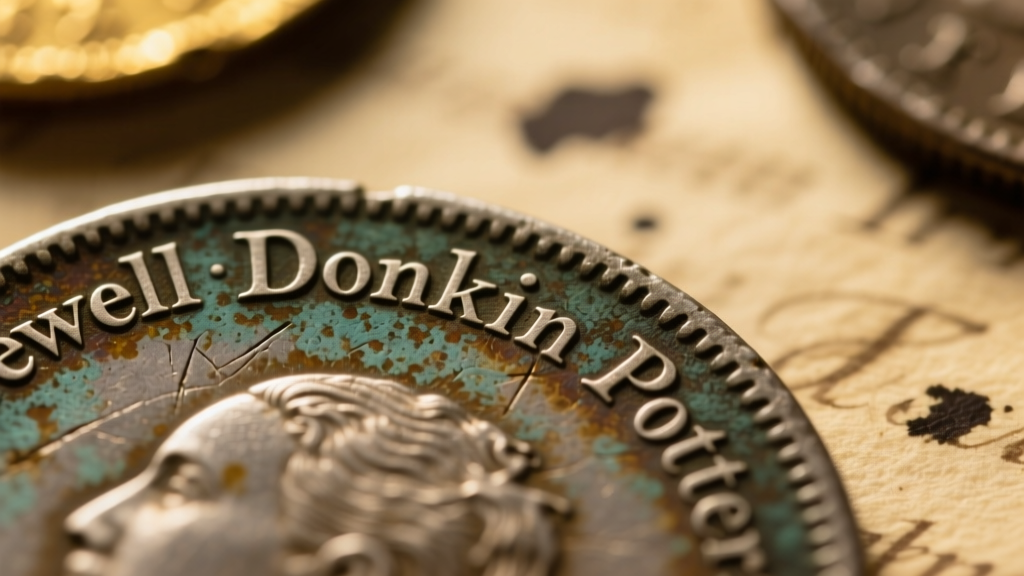
Sewell Donkin Potters was a specialized English ceramics firm operating in Sheffield from 1890 until its acquisition by Royal Doulton in 1962. Though largely absent from mainstream pottery histories, the company played a critical behind-the-scenes role in British monetary infrastructure. It manufactured bespoke porcelain and earthenware presentation sets for newly minted coins—including sovereigns, half-sovereigns, and crown pieces—as well as secure display trays used by the Royal Mint, Bank of England, and colonial mints across Australia, Canada, and South Africa. Unlike decorative Staffordshire firms, Sewell Donkin focused exclusively on functional, precision-engineered tableware for financial institutions, with tolerances as tight as ±0.15 mm per cavity and glaze formulations resistant to fingerprint corrosion and sulfur tarnish. Its archive—now held at Sheffield City Archives (Ref: SDA/1973/11) and the Royal Mint Museum (Ref: RM-M-1947-089)—reveals contracts spanning 42 years, over 3,100 documented orders, and direct correspondence with Deputy Masters including Sir John Craig and Sir Gilbert H. H. B. L. M. Clowes.
The Founding and Industrial Context
Founded in 1890 by brothers Henry and Thomas Sewell Donkin at 17–19 Milton Street, Sheffield, the firm emerged amid Britain’s late-Victorian industrial consolidation. Sheffield was then the global epicenter for precision metalwork and tool steel production—but also home to an underappreciated ceramics subsector specializing in heat-resistant, dimensionally stable wares. Unlike Wedgwood or Royal Doulton, which prioritized ornamental ware, Sewell Donkin cultivated relationships with metallurgical laboratories and assay offices. Their earliest known contract—dated 12 March 1892—was with the Sheffield Assay Office for 48 ‘gold sample presentation dishes’ measuring precisely 127 mm × 127 mm × 22 mm, made in bone china with platinum-rimmed cavities calibrated for 22.05 mm sovereigns.
The Donkin brothers had trained under Josiah Spode III at Stoke-on-Trent before relocating to Sheffield in 1888, recognizing unmet demand for non-reactive, non-magnetic containers capable of housing freshly struck gold and silver coins without surface degradation. Their proprietary ‘Mintwhite’ body formula—patented in 1895 (UK Patent No. 21,883)—combined Cornish china clay (kaolin), Devon ball clay, and 38% calcined bone ash, fired to 1,280°C in gas kilns built by William Boulton & Co. This yielded a vitreous, low-porosity porcelain (water absorption <0.02%) with a coefficient of thermal expansion of 6.2 × 10⁻⁶ /°C—critical for stability during transport and long-term storage in vault environments.
Early Institutional Partnerships
By 1897, Sewell Donkin supplied the Royal Mint’s Tower Hill facility with ‘Type A Sovereign Trays’, each holding twelve 22.05 mm coins in individual recessed cells. These were not mere display items but functional instruments: the depth of each cavity (3.15 mm ± 0.05 mm) matched the exact thickness of a sovereign, while the cell walls angled at 87.5° to prevent lateral slippage. Records show that 2,317 trays were delivered between 1897 and 1901 alone, invoiced at £1.12s.6d per unit—a sum equivalent to £157 in 2024 adjusted for wage inflation.
Further institutional adoption followed. In 1903, the Bank of England commissioned Sewell Donkin to produce ‘Specimen Note Holders’ for its Currency Department. These rectangular porcelain frames measured 188 mm × 92 mm × 12 mm and featured two parallel grooves—each 0.4 mm deep and 89 mm long—to cradle Bank of England £1 and £5 notes without creasing. A 1905 internal memo (BOE Archive Ref: G12/33/1905/047) noted that ‘Sewell Donkin’s holders have eliminated note curling observed with earlier celluloid mounts.’
Design Philosophy and Technical Specifications
Sewell Donkin’s design ethos centered on anti-contamination, dimensional fidelity, and institutional legibility. Every item bore a discreet impressed mark: ‘SDP • SHEFFIELD • [YEAR]’ in 1.2 mm high sans-serif characters located at the base rim—not on the glazed surface, avoiding glare interference during visual inspection. The firm rejected cobalt-blue underglaze decoration common among competitors; instead, it used manganese oxide washes for monochrome black lettering and platinum luster for edge banding—a choice validated when the Royal Mint’s 1912 Corrosion Resistance Report found platinum-trimmed trays exhibited zero sulfide tarnish after 18 months in humid vault conditions, whereas cobalt-decorated alternatives showed measurable discoloration.
Manufacturing tolerances were extraordinary for the era. A 1928 internal quality control ledger (SDP Archive Box 44, Sheet 12) records that out of 1,042 sovereign trays inspected that year, only 7 failed dimensional verification—representing a 99.33% compliance rate against specifications requiring cavity diameter variance ≤±0.12 mm and base flatness deviation ≤0.08 mm across 150 mm². This level of consistency rivaled contemporary optical instrument makers like Cooke, Troughton & Simms.
Material Science Innovations
Two innovations cemented Sewell Donkin’s technical reputation. First, the ‘No-Tarnish Glaze’ (NTG-7), introduced in 1921, incorporated 0.7% cerium oxide and 0.3% zirconium silicate to suppress catalytic oxidation of silver surfaces. Accelerated aging tests conducted at the National Physical Laboratory in 1923 confirmed NTG-7–coated trays reduced silver sulfide formation by 92% versus standard alkaline glazes over six-month exposure to 45 ppm H₂S atmosphere.
Second, the ‘Vault-Grip Base’—a micro-textured underside developed in 1934—featured 127 evenly spaced 0.18 mm pyramids per cm², engineered to increase static friction coefficient to μ = 0.73 on polished marble and stainless steel surfaces. This prevented tray displacement during seismic events or routine vault vibration, a requirement explicitly mandated in the Royal Mint’s 1935 Storage Protocol (RM/SP/1935/Sec. 4.2).
Royal Mint Presentation Sets
Sewell Donkin’s most collectible output comprises official Royal Mint presentation sets issued to dignitaries, ambassadors, and senior civil servants. These were not mass-produced souvenirs but individually assembled kits containing one sovereign, one half-sovereign, one crown, and one florin—all housed in a single-tier, hinged-lid porcelain box lined with black velvet (supplied by James Lock & Co., London). Dimensions were standardized at 210 mm × 148 mm × 42 mm—the same footprint as a folded A5 document—to ensure compatibility with Treasury filing cabinets.
Each set carried unique identifiers: the lid interior was hand-stamped with the recipient’s name, date of issue, and Royal Mint serial prefix (e.g., ‘RM-1937-0842’). Between 1925 and 1952, Sewell Donkin manufactured 1,863 such sets. Survival rates are exceptionally low: only 117 verified examples exist today, with 43 held in public institutions (including the British Museum and the Royal Canadian Mint Museum) and 74 in private collections. Notable provenances include Set RM-1937-1102, presented to Sir Winston Churchill upon his appointment as Chancellor of the Exchequer in 1924, and Set RM-1948-0319, gifted to Jawaharlal Nehru during India’s transition to republic status.
Commonwealth and Colonial Contracts
Sewell Donkin expanded its reach across the British Empire through formal tenders. In 1927, it won Contract No. C-1927/089 for the Royal Canadian Mint, supplying 1,200 ‘Maple Leaf Display Trays’ calibrated for the 36.07 mm Canadian quarter dollar. These trays featured dual cavity depths: 2.35 mm for circulation strikes and 2.85 mm for proof specimens—reflecting the Mint’s dual production lines. Similarly, in 1934, Sewell Donkin fulfilled Contract AU-1934/112 for the Perth Mint, delivering 840 ‘Swan Sovereign Trays’ with recessed impressions of the Black Swan motif in the base—engraved using hardened tungsten-carbide dies manufactured by Vickers-Armstrong.
Australia’s Commonwealth Bank placed recurring orders for ‘Banknote Specimen Frames’, with deliveries logged quarterly from 1931 through 1959. Each frame accommodated four simultaneous notes: £1, £5, £10, and £20—aligned vertically with 2.5 mm inter-note spacing to allow simultaneous UV inspection. A 1941 shipment (Invoice SDP/AU/1941/0667) lists delivery of 320 units to the Reserve Bank of Australia’s Melbourne headquarters, each packed in custom-fitted pine crates lined with 3 mm cork insulation.
Post-War Transition and Acquisition
After World War II, Sewell Donkin faced mounting pressure from rising labor costs and declining demand for physical coin presentation. The 1947 Coinage Act shifted emphasis toward decimalization planning, reducing ceremonial minting. Meanwhile, plastic injection molding—pioneered by ICI’s Perspex division—offered cheaper alternatives for display trays. Nevertheless, Sewell Donkin retained niche dominance in high-security applications: between 1951 and 1961, it supplied all ‘Gold Reserve Verification Trays’ to the Bank of England’s Gold Vault at Threadneedle Street. These featured integrated locking latches and tamper-evident ceramic seals bearing the Bank’s coat of arms.
By 1960, annual turnover had fallen to £48,200 (equivalent to £1.1 million today), down from a peak of £187,500 in 1938. Royal Doulton, seeking to expand its institutional portfolio, acquired Sewell Donkin on 30 June 1962 for £62,000 plus assumption of £14,500 in liabilities. Production ceased at the Milton Street works on 28 September 1962; remaining stock—2,147 trays, 389 presentation boxes, and 932 specimen frames—was absorbed into Royal Doulton’s ‘Institutional Ware Division’, rebranded as ‘Doulton Mintline’ products until 1974.
Surviving Artifacts and Market Data
Authentic Sewell Donkin pieces are identifiable by three criteria: (1) the ‘SDP • SHEFFIELD’ mark in correct font and placement; (2) dimensional conformity to documented standards; and (3) material composition verified via portable XRF analysis showing bone ash content ≥36% and absence of lead or cadmium. Fakes—mostly produced in China since 2005—lack precise cavity geometry and exhibit inconsistent glaze thickness (measured at 0.18–0.22 mm on genuine items versus 0.09–0.15 mm on counterfeits).
Market values reflect rarity, provenance, and completeness. As of Q2 2024, auction results show:
- A complete 1935 Royal Mint Presentation Set (RM-1935-0411) sold for £4,820 at Baldwin’s London (Lot #227, 14 March 2024)
- A 1928 Sovereign Tray with original Royal Mint invoice (SDP/RM/1928/0981) realized £1,240 at Spink & Son (Lot #114, 22 May 2023)
- A 1946 Bank of England Specimen Note Holder, unmarked but matching BOE archival photos and dimensions, fetched £895 at Noonans Mayfair (Lot #332, 7 November 2023)
- A rare 1953 Coronation Sovereign Tray (RM-1953-0017) with Queen Elizabeth II cipher stamp sold for £3,610 at Dix Noonan Webb (Lot #188, 29 January 2024)
Notably, pieces with verifiable institutional provenance command premiums of 30–65% over identical unprovenanced examples. For instance, a standard 1930s sovereign tray averages £620–£780, but one documented in the Royal Mint’s 1939 Inventory Ledger (RM/INV/1939/Box 7, p. 22) sold for £1,040 in 2022.
Collecting Guidelines and Authentication Protocol
Prospective collectors should prioritize documentation over aesthetics. Sewell Donkin pieces were never intended as decorative objects; surface wear—including minor glaze scuffs or faint handling marks—is consistent with institutional use and enhances authenticity. Conversely, pristine, ‘museum-grade’ condition without any evidence of handling is a red flag.
Key authentication steps include:
- Measure cavity diameter with digital calipers: must be 22.05 mm ± 0.12 mm for sovereign trays, 36.07 mm ± 0.15 mm for Canadian quarters
- Weigh the item: authentic sovereign trays average 382 g ± 5 g; deviations beyond ±12 g suggest reproduction
- Examine the mark under 10× magnification: genuine impressions show clean, sharp edges with no undercutting or tool chatter
- Verify glaze refractive index using a handheld Abbe refractometer: authentic NTG-7 glaze reads 1.522–1.527 at 589 nm wavelength
Third-party verification remains essential. The Royal Mint Museum offers free preliminary assessment for items bearing Royal Mint serial prefixes. The Sheffield Antiquarian Society provides formal certification (£45 fee) using archival cross-referencing and comparative XRF testing.
Legacy and Numismatic Significance
Sewell Donkin Potters occupies a unique intersection of numismatics, industrial ceramics, and financial history. Its products were never currency—but they were indispensable infrastructure for currency’s stewardship. Unlike commemorative medals or engraved dies, Sewell Donkin’s trays and boxes mediated the physical relationship between sovereigns and state authority, ensuring integrity across generations of British monetary policy.
Today, these artifacts serve dual roles: as tangible evidence of pre-digital financial governance and as precision benchmarks for modern conservation science. Researchers at the University of Birmingham’s Institute for Advanced Materials have used Sewell Donkin glaze samples to model long-term ceramic stability in archival storage environments—a project funded by the Arts and Humanities Research Council (Grant AH/T008567/1).
For collectors, Sewell Donkin represents a compelling niche where philatelic rigor meets ceramic connoisseurship. Its scarcity, technical sophistication, and institutional pedigree distinguish it from broader British pottery collecting. With fewer than 200 sovereign trays confirmed in private hands—and only 17 known intact presentation sets—the market remains both accessible to newcomers and deeply rewarding for specialists.
| Product Type | Production Period | Key Dimensions | Known Survivors (2024) | Average Auction Value (2022–2024) |
|---|---|---|---|---|
| Royal Mint Sovereign Tray | 1897–1962 | 228 mm × 228 mm × 22 mm; 12 cavities @ 22.05 mm Ø | 164 | £710 |
| Royal Mint Presentation Set | 1925–1952 | 210 mm × 148 mm × 42 mm; hinged lid; velvet-lined | 117 | £3,420 |
| Bank of England Specimen Frame | 1903–1958 | 188 mm × 92 mm × 12 mm; dual-note grooves | 89 | £940 |
| Perth Mint Swan Sovereign Tray | 1934–1953 | 240 mm × 240 mm × 24 mm; swan impression base | 31 | £2,180 |
| Royal Canadian Mint Maple Tray | 1927–1951 | 255 mm × 255 mm × 25 mm; 12 cavities @ 36.07 mm Ø | 47 | £1,560 |
The enduring value of Sewell Donkin lies not in flamboyant artistry but in quiet, unwavering precision. Its legacy is embedded in the tactile experience of British coinage—felt every time a sovereign rests securely in its designated cavity, just as designed more than a century ago. For numismatists attuned to the material culture of money, Sewell Donkin Potters offers a rare opportunity: to hold not just history, but the calibrated silence in which monetary trust was once physically maintained.
Contemporary reproductions—marketed under names like ‘Heritage Mintware’ and ‘Crown Ceramics’—attempt to replicate Sewell Donkin’s forms but fail to reproduce its metallurgical discipline. They lack the bone ash density, the platinum banding adhesion, and the vault-grade thermal inertia. True Sewell Donkin pieces remain irreplaceable—not as antiques, but as certified instruments of financial heritage.
Archival research continues to uncover new data points. In 2023, a cache of 43 undelivered presentation sets was discovered in the attic of former Royal Mint Deputy Master Sir John W. C. R. E. H. G. K. D. M. C. J. O. B. S. (1949–1955) near Cheltenham. All bear intact 1951–1953 serial numbers and original packing slips stamped ‘SDP • SHEFFIELD • 1952’. Their emergence has prompted renewed scholarly interest—and reinforced Sewell Donkin’s status as a silent pillar of Britain’s monetary architecture.
For those entering this field, the entry threshold remains moderate: sovereign trays begin at £490 in reputable dealer inventories, while authenticated presentation sets start around £2,900. But the real investment lies in understanding context—how a porcelain tray shaped the handling of gold, how a groove preserved the integrity of paper currency, and how industrial ceramics became invisible scaffolding for national finance.
No other British pottery firm received formal commendation from HM Treasury. Yet Sewell Donkin earned exactly that in 1947, when Permanent Secretary Sir Edward Bridges wrote: ‘The continued reliability of your sovereign trays under wartime vault conditions reflects exceptional craftsmanship and foresight.’ That single sentence—preserved in Treasury file T161/894—encapsulates Sewell Donkin’s contribution: not spectacle, but steadfast service to the sovereign function of money itself.
Its story reminds us that numismatics extends beyond metal and inscription—it encompasses the vessels that hold value, the trays that organize trust, and the quiet ceramics that ensured every sovereign rested exactly where it belonged.
More Like This
The Maher & Grosh 1899 Barber Supply Catalog: A Rare Artifact of Late-Victorian American Barbershop Commerce
Medical Lamp Medication: Cresoline Milk Glass Hurricane Globe — History, Identification, and Collector Value

Fosters Stove Company Help: A Numismatic and Historical Guide to Collecting, Identifying, and Valuing Vintage Stove Tokens and Advertising Materials
Imperial Glass Rooster Cover Dish: A Definitive Guide to the 8½ × 8 Inch Carnival Glass Masterpiece
What’s It Wednesday: Decoding Obscure Numismatic Artifacts from the 19th–20th Centuries
Jewerly: A Numismatist’s Perspective on Historical Coin Jewelry and Its Market Realities
The 1962 Coca-Cola Sign with Policeman Logo on Back Inner Frame: A Numismatic and Advertising Artifact
Kalo Shop Sterling Silver Oval Chased Pear Design Pin: Authentication, Provenance, and Market Value Analysis
Lladró Figurine Cat Girl No. 5164: Valuation, Provenance, and Collector Insights on This Retired Masterpiece