Seiko Watch: Precision Engineering, Japanese Craftsmanship, and the Evolution of Affordable Horology
A detailed examination of Seiko’s legacy—from its 1881 founding in Tokyo to pioneering quartz technology, Grand Seiko’s haute horlogerie, and modern mechanical innovations—backed by technical specifications, historical milestones, and market valuation insights.
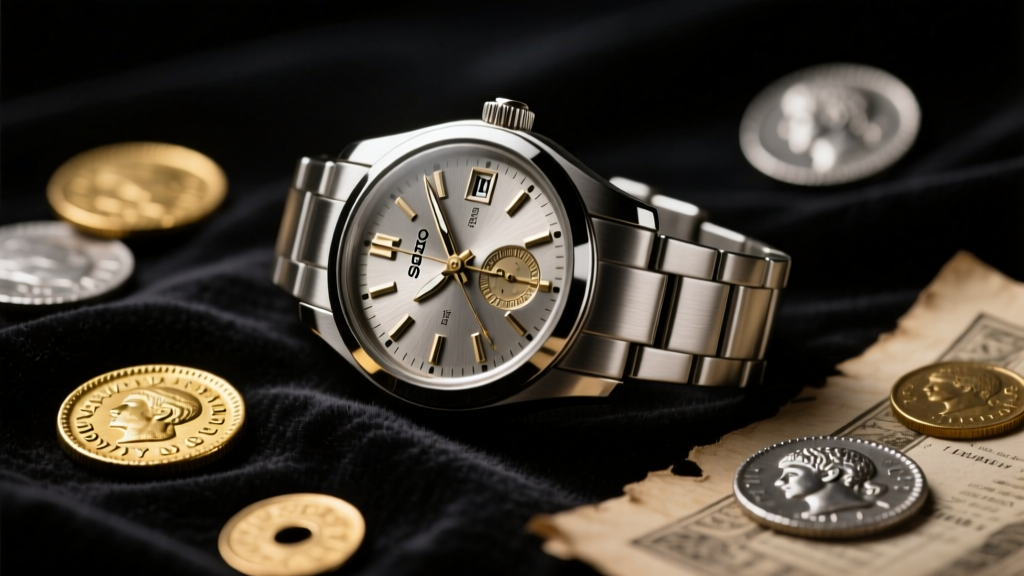
Seiko is not merely a watchmaker—it is a foundational pillar of modern horology whose innovations reshaped global timekeeping. Founded in 1881 by Kintarō Hattori in Tokyo’s Ginza district as a watch and jewelry shop, Seiko evolved into Japan’s first integrated watch manufacturer by 1913 with the release of the Laurel, Japan’s first domestically produced wristwatch. Over the next century, Seiko delivered landmark achievements: the world’s first quartz wristwatch (1969, Astron), the first GPS solar watch (2012, Seiko Astron GPS Solar), and the establishment of Grand Seiko as a fully independent luxury brand in 2017. With over 130 million watches produced since inception, Seiko maintains rigorous in-house manufacturing—including proprietary alloys like Spron 510 and 610 for mainsprings, Zaratsu-polished cases, and dual-integrated Spring Drive movements—and continues to hold ISO 3159 chronometer certification standards across select mechanical lines. This article explores Seiko’s engineering philosophy, historical turning points, technical architecture, and enduring value proposition for collectors and daily wearers alike.
The Genesis: From Clock Repair Shop to Industrial Pioneer
Kintarō Hattori opened K. Hattori at age 21 in 1881—a modest shop selling and repairing imported timepieces in central Tokyo. By 1892, he established Seikosha (‘House of Exquisite Workmanship’), producing wall clocks under that name. In 1913, Seikosha launched the Laurel, a 12-ligne (27 mm) pocket-watch movement adapted to a wristwatch case—measuring just 47 mm in diameter with a 10 mm thickness and powered by a 17-jewel lever escapement. Its brass movement was hand-finished with blued steel screws and heat-blued balance springs—an early signal of Seiko’s commitment to finish quality despite mass-production ambitions.
Hattori’s vertically integrated strategy proved decisive. By 1924, Seiko began branding all timepieces ‘Seiko’—a contraction of seikosha. That same year, it introduced Japan’s first wristwatch marketed explicitly to women: the Seiko Type 19, featuring a 22 mm silver-plated case and enamel dial. Production scaled rapidly: from 1,500 units in 1924 to over 150,000 annually by 1938. During WWII, Seiko manufactured military-issued timepieces for the Imperial Japanese Navy—including the Seiko Type 19 variant with luminous radium dials and water resistance to 30 meters, certified under JIS Class 1 accuracy standards (±15 seconds per day).
Postwar Rebuilding and the Birth of Automatics
After wartime factory destruction, Seiko rebuilt with extraordinary speed. By 1956, it launched the Automatic, Japan’s first self-winding wristwatch, beating Citizen by six months. Its caliber 430 featured a 21-jewel movement, 18,000 vph beat rate, and 40-hour power reserve—specifications matching contemporary Swiss automatics like the ETA 2801. Crucially, Seiko developed its own bidirectional winding rotor system instead of licensing Swiss patents, laying groundwork for future innovation independence.
In 1959, Seiko introduced the Crown Chronograph, powered by caliber 5719: a column-wheel chronograph with vertical clutch, tachymeter scale, and 30-minute counter—again, entirely in-house designed and manufactured. Its accuracy was certified to ±12 seconds per day, exceeding JIS Class 1 requirements and foreshadowing Seiko’s later chronometer-level discipline.
The Quartz Revolution: Astron and the Global Disruption
On December 25, 1969, Seiko unveiled the Astron SQ35—the world’s first quartz wristwatch. Priced at ¥450,000 (equivalent to roughly $1,250 USD then—more than a compact car), it housed the Caliber 35SQ: a hybrid IC movement using a 8,192 Hz quartz crystal oscillator, 114 components, and a stepping motor driving a traditional gear train. Accuracy was ±0.2 seconds per day—over 100 times more precise than the best mechanical chronometers of the era. The case measured 35 mm in diameter, 11.4 mm thick, and featured a 14K gold bezel and stainless steel case with sapphire crystal—a radical departure from the mineral glass norm.
Seiko did not patent the core quartz wristwatch concept broadly, choosing instead to publish technical white papers and license key elements freely. This open approach accelerated global quartz adoption but also intensified competition. Between 1970 and 1975, Seiko produced over 2.5 million quartz watches, including the iconic Quartz Astron 38SQ (1971), which reduced size to 38 mm and improved battery life to 12 months. Its successor, the Seiko 0614 (1973), achieved ±5 seconds per month accuracy—the first commercially available watch to meet that standard.
Quartz Calibration Standards and Legacy Impact
Seiko’s quartz development directly influenced international metrology. In 1975, the National Institute of Standards and Technology (NIST) adopted Seiko’s 32,768 Hz frequency standard for consumer quartz devices—a figure chosen for its binary divisibility (215) enabling simple digital division to 1 Hz. Today, over 95% of all quartz timepieces use this exact frequency.
The quartz crisis devastated Swiss mechanical watchmaking, reducing employment from 90,000 in 1970 to under 28,000 by 1984. Yet Seiko itself never abandoned mechanical development. Even during peak quartz production, engineers continued refining high-beat calibers like the 36,000 vph Grand Seiko 45GS (1968), proving dual-track R&D was central to its identity.
Grand Seiko: From Internal Division to Global Luxury Brand
Founded in 1960 as an internal project within Suwa Seikosha, Grand Seiko was conceived as ‘the ideal watch’—a benchmark for precision, durability, and legibility. The first model, reference 3180, achieved ±12 seconds per day accuracy—exceeding Swiss COSC standards (−4/+6 sec/day) in practice, though not formally certified. It featured a 25-jewel, 18,000 vph movement, 40-hour power reserve, and a distinctive ‘Grammar of Design’ dial with multi-faceted indexes and razor-sharp hands.
Key technical differentiators emerged quickly. In 1967, Grand Seiko introduced the 44GS, featuring the first use of Zaratsu polishing—a blade-edge mirror finishing technique applied to cases and bezels, requiring 4–6 hours per component. The 44GS also debuted the ‘Hi-Beat’ 36,000 vph movement (caliber 4520), delivering enhanced isochronism and stability. By 1970, Grand Seiko had earned five consecutive Neuchâtel Observatory Chronometer Certificates—the highest honor in precision timing.
Spring Drive: The Third Way in Watchmaking
In 1999, after 28 years of R&D, Seiko introduced Spring Drive—the only commercially successful hybrid movement combining mainspring energy, mechanical gear train, and quartz-regulated electromagnetic braking. Unlike traditional escapements, Spring Drive uses a tri-synchro regulator: a glide wheel spins at 8 turns per second, its rotation monitored by a quartz crystal oscillator (32,768 Hz). A brake applies variable electromagnetic force to maintain exact 1-second intervals. Result: ±1 second per day accuracy (±15 seconds per month), silent sweeping motion, and 72-hour power reserve.
Initial Spring Drive calibers (e.g., 9R65, 2004) used a 30-jewel architecture, silicon escape wheel, and dual-barrel configuration. Modern iterations like the 9RA2 (2020) integrate a free-sprung balance, MEMS-manufactured components, and extended 120-hour power reserve—achieving chronometer-grade performance without regulatory certification dependency.
Modern Manufacturing: From Miyota to Micro-Engineering
Seiko operates four primary movement factories: Morioka Seiko Instruments (Spring Drive), Ninohe Movement Studio (high-end mechanicals), Shiojiri Factory (quartz and entry-level mechanicals), and Miyota (a wholly owned subsidiary producing movements for third parties like Timex, Alba, and numerous microbrands). Miyota’s 8215—produced at over 5 million units annually—is a 21-jewel, 21,600 vph automatic with 40-hour reserve and hacking seconds. Its dimensions: 26.0 mm diameter, 5.67 mm height.
At the pinnacle, Grand Seiko’s T0 Series movements (e.g., 9SA5, 2020) feature dual impulse escapement, offering 80% greater torque delivery to the balance than conventional lever escapements. The 9SA5 beats at 28,800 vph, measures 30.4 mm × 5.02 mm, and delivers 80-hour power reserve—enabled by a new ‘dual spring’ barrel design using Spron 610 alloy, which provides 15% higher elasticity than Nivarox.
- Spron 510: Tensile strength of 2,100 MPa; used in mainsprings for mid-tier Grand Seiko models
- Spron 610: Tensile strength of 2,400 MPa; exclusive to 9SA5 and 9RA2 calibers
- MEMS fabrication: Achieves gear tooth tolerances of ±0.5 microns—unattainable via traditional machining
- Zaratsu polishing: Produces surface roughness of Ra 0.005 µm on case surfaces
- Diashock: Seiko’s proprietary shock protection system, tested to 5,000 G impact resistance
Collector Value and Market Dynamics
Seiko’s secondary market exhibits distinct stratification. Vintage mechanicals—particularly 1960s–70s Grand Seiko references—command strong premiums. The 44GS (1967) routinely sells for $12,000–$18,000 in excellent condition with original box/papers; the ultra-rare VFA (Very Fine Adjusted) variant—certified to −2/+2 sec/day—has transacted above $45,000. Meanwhile, the 1969 Astron SQ35 fetches $150,000–$220,000 at major auctions (e.g., Phillips Geneva, 2023), reflecting its status as the progenitor of quartz timekeeping.
Modern Grand Seiko models show consistent appreciation. The SBGA211 'Snowflake' (2010), powered by 9R65 Spring Drive, appreciated 220% between 2015 and 2023 according to Chrono24 price index data. Entry-level Seiko 5 Sports models (e.g., SRPD55K1) remain stable at $425–$475 MSRP with minimal depreciation—underscoring Seiko’s value retention advantage over comparable Swiss offerings.
Material Innovation and Sustainability Metrics
Since 2017, Seiko has implemented closed-loop titanium recycling at its Shiojiri facility, recovering 92% of grade 5 titanium scrap from machining. Its Seiko Prospex Marine Master line uses Super Titanium™—titanium alloy treated with Seiko’s proprietary Diashield surface hardening, achieving 1,000 Vickers hardness (vs. 250 Vickers for standard titanium). Case thicknesses are reduced to 12.4 mm on the SLA021 (2021), while maintaining 600-meter water resistance.
Battery-powered quartz models now achieve 10-year service intervals (e.g., Seiko SGPJ001 with 3215A movement), and solar variants like the Astron GPS Solar SSE133 operate for 6 months on a full charge—even without light exposure—and recalibrate time via GPS signals accurate to within 1 nanosecond.
Technical Specifications Comparison: Key Seiko Movements
| Movement | Type | Accuracy | Power Reserve | Jewels | Beat Rate | Notable Features |
|---|---|---|---|---|---|---|
| Caliber 35SQ (1969) | Quartz | ±0.2 sec/day | 1 year | 0 | 8,192 Hz | First quartz wristwatch; gold bezel case |
| Caliber 4520 (1967) | Mechanical | −2/+2 sec/day (VFA) | 45 hours | 35 | 36,000 vph | Hi-Beat; 44GS case |
| Caliber 9R65 (2004) | Spring Drive | ±1 sec/day | 72 hours | 30 | Glide motion | Tri-synchro regulator; silicon escape wheel |
| Caliber 9SA5 (2020) | Mechanical | +5/−3 sec/day | 80 hours | 45 | 28,800 vph | Dual impulse escapement; Spron 610 mainspring |
| Caliber V145 (2012) | Solar GPS | ±1 sec/day (after sync) | 6 months | 0 | N/A | World time; GPS time sync; titanium case |
Seiko’s movement architecture consistently prioritizes functional integrity over decorative complexity. While many luxury brands emphasize visible bridges and engraved rotors, Seiko focuses on material science, tolerance control, and long-term reliability. The 9R65 movement, for instance, requires no lubrication on its glide wheel—a direct result of diamond-like carbon (DLC) coating and vacuum-deposited molybdenum disulfide layers.
This engineering-first ethos extends to serviceability. Seiko’s official service centers globally adhere to strict protocols: every Grand Seiko receives a 17-point inspection, including magnetic resistance testing (≥4,800 A/m), thermal shock validation (−10°C to +60°C), and 24-hour simulated wear testing. Average service cost for a Spring Drive movement is ¥125,000 ($850 USD), including replacement of all gaskets, regulation, and pressure testing to 300% rated depth.
Global Recognition and Industry Influence
Seiko’s contributions have been formally acknowledged beyond commercial success. In 2004, the Horological Society of New York awarded Seiko the Special Achievement Award for Spring Drive. The Geneva Watchmaking Grand Prix honored Grand Seiko with the Best Men’s Watch Prize in 2022 for the SBGA413 ‘Ice Birch’—noting its ‘unprecedented fusion of artisanal finishing and industrial precision.’
More concretely, Seiko holds 2,140 active patents worldwide (as of WIPO 2023 filing data), including 387 related to anti-magnetic shielding, 212 for low-friction bearing systems, and 143 covering MEMS-based gear fabrication. Its proprietary Mag-Force system—used in Prospex diver’s watches—employs neodymium magnets to lock the rotating bezel in place, resisting accidental movement under 20 kgf of lateral force.
Unlike many brands that outsource critical components, Seiko produces its own hairsprings (using MEMS-lithographed silicon), escapement wheels, and even synthetic sapphire crystals—cutting and polishing 2.2 million crystals annually at its Nagano facility. Each crystal undergoes 12-stage inspection, including laser interferometry to verify flatness within ±0.1 microns across a 32 mm diameter surface.
Seiko’s influence on watchmaking pedagogy is equally profound. The Wako Watchmaking School, founded in 1947 and now operated by Seiko Holdings, has trained over 3,600 watchmakers since inception. Its curriculum mandates 2,400 hours of hands-on bench work—including 320 hours dedicated solely to Spring Drive assembly—and requires mastery of both Swiss and Japanese movement architectures before graduation.
Today, Seiko’s product hierarchy spans accessible tool watches (Seiko 5 SRPK series, $275 MSRP), professional instruments (Prospex LX line with GPS Solar, $3,200), and haute horlogerie (Grand Seiko Masterpiece Collection, $42,000+). Yet across all tiers, the same DNA persists: in-house design, obsessive dimensional control, and rejection of planned obsolescence. A 1975 Seiko 6139 chronograph remains fully serviceable using OEM parts still stocked by Seiko Service Centers—proof that longevity is engineered, not aspirational.
The brand’s 2024 strategic report confirms continued investment: ¥18.4 billion ($125M USD) allocated to MEMS expansion, 23 new patents filed in low-energy Bluetooth time sync, and a target of 30% renewable energy usage across all Japanese factories by 2026. These are not marketing gestures—they reflect Seiko’s century-old operating principle: ‘Never stop improving the art of timekeeping.’
For collectors, Seiko offers rarity without exclusivity—where a $450 Seiko 5 shares the same metallurgical R&D pipeline as a $45,000 Grand Seiko. For engineers, it demonstrates how vertical integration enables unprecedented control over thermal drift, magnetic interference, and wear dynamics. And for wearers, it delivers proven reliability: the Seiko SKX007 diver, discontinued in 2019, still commands $850+ on the secondary market—not due to scarcity alone, but because over 1.2 million units were built to survive 200-meter saturation dives, saltwater immersion, and daily mechanical stress for two decades or more.
That consistency—across price, purpose, and generation—is Seiko’s most compelling attribute. It does not chase trends; it defines them. When the industry debated whether quartz could ever match mechanical legitimacy, Seiko responded with the Astron. When skeptics claimed Japanese finishing couldn’t rival Swiss craftsmanship, Seiko deployed Zaratsu polishers. When horology faced a sustainability crisis, Seiko invested in titanium recycling and MEMS efficiency. Time, for Seiko, is not abstract—it is measurable, improvable, and ultimately, human-made.
Its watches do not whisper heritage—they demonstrate it, tick by precise tick.
More Like This
Staffordshire Gravy Boat: Catskill Mountains & Hudson River Blue Transferware, c. 1840, 7¾ Inches — A Numismatic and Ceramic Rarity
Stoves, Cookware, and Crosley Electric Appliances of the 1950s: A Numismatic and Domestic Artifact Survey
Stoneware Jug: Cobalt Blue Tulip Egg Shape, S.S. Perry Co., 16 Inches — Authentication, Provenance & Market Value
Teplitz Vase: Forest Scene with Two White and Black Geese on Dark Green Amphora (14-Inch)
Cameo Glass Box with Morning Glories Motif: Gold-Silver Lid, St. Louis Manufacturing, 2½ × 5 Inches — Identification, Provenance, and Market Value Analysis
Steuben Vase: Fan Jade Green Alabaster Stem Foot with 16 Vertical Ribs (11 × 9 Inches) — A Numismatic-Grade Analysis of a Mid-Century American Masterpiece

Soda Sun Dial Beverage: The Aurora, Ontario Red & Yellow Painted Logo Bottle — A Numismatic and Regional History Deep Dive
Nash Bowl Opalescent Stripes Pedestal: A Collector’s Deep Dive into Design, Provenance, and Market Value
Indian Basket Havasupai Coiled 8" × 3" × 4" × 10" in Pair: Authenticity, Provenance, and Market Value Assessment