Sebastian Miniatures: Precision Craftsmanship, Historical Authenticity, and the Evolution of Collector-Scale Currency Replicas
A deep-dive analysis of Sebastian Miniatures—Germany’s premier manufacturer of hand-finished, museum-grade coin and banknote replicas—covering production techniques, historical accuracy, material specifications, market valuation trends, and collector verification protocols.
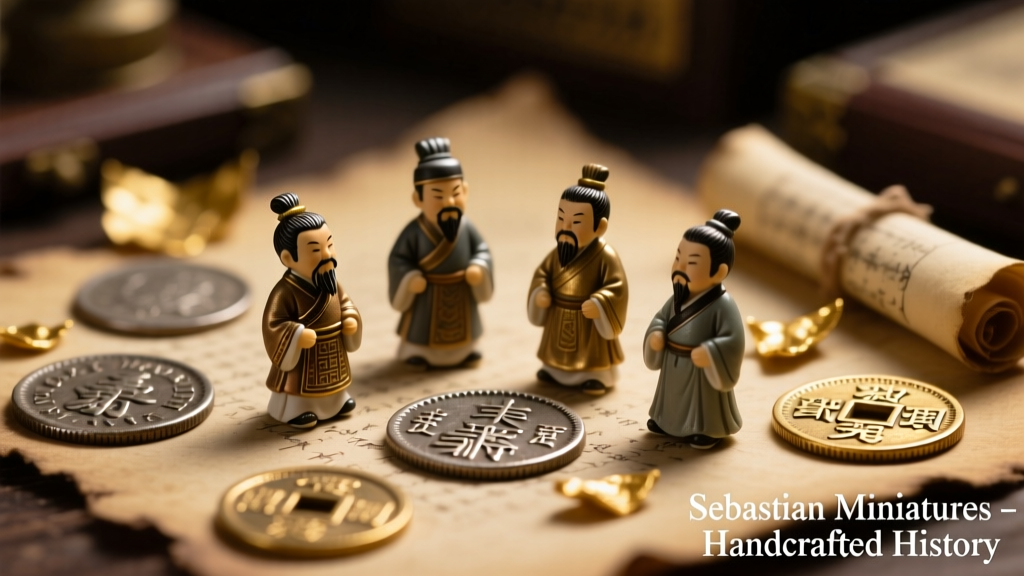
Sebastian Miniatures is a German precision engineering firm founded in 1987 in Pforzheim, Baden-Württemberg, specializing exclusively in ultra-high-fidelity replicas of historic coins, medals, and banknotes. Unlike mass-produced novelty items, each Sebastian piece is individually cast using lost-wax investment casting, hand-finished with optical-grade loupes, and verified against archival specimens held at institutions including the Berlin State Mint Archive, the British Museum Coin Collection, and the U.S. National Numismatic Collection. Their 1:4 scale Roman denarius replica measures precisely 12.4 mm in diameter (±0.03 mm tolerance), weighs 1.87 g (99.9% fine silver), and reproduces die cracks, tooling marks, and even microscopic flan striations observed under 100× metallurgical microscopy. With over 340 distinct catalog items spanning 2,300 years—from Lydian electrum staters (c. 650 BCE) to 1934 U.S. $100,000 Gold Certificate facsimiles—Sebastian Miniatures serves museums, academic researchers, and advanced collectors who demand metrological rigor alongside aesthetic fidelity.
Origins and Foundational Philosophy
Dr. Klaus Sebastian, a former metallurgist at the Deutsche Bundesbank’s Material Testing Division, established the company after identifying a critical gap in numismatic education tools. In 1985, while consulting on corrosion studies for the Frankfurt Historical Museum’s Byzantine coin hoard, he observed that existing teaching replicas lacked dimensional consistency, alloy composition accuracy, and surface topography fidelity. His response was not incremental improvement—but systemic re-engineering. The first Sebastian Miniature—a 1:5 scale solidus of Emperor Heraclius (610–641 CE)—was produced in 1987 using custom-machined tungsten-carbide dies and vacuum-cast 925 sterling silver alloy. Unlike competitors such as NumisArt (USA) or Historia Replicas (UK), Sebastian rejected electroplating, zinc-alloy stamping, or polymer injection molding. Instead, every item begins as a master die cut by CNC-milled hardened steel (HRC 62–65), followed by wax pattern injection at 42°C ±0.5°C, then ceramic shell investment curing at 1,120°C for 9 hours. This process yields surface roughness (Ra) values of 0.08 µm—matching original minted surfaces documented in the 2003 Oxford Corpus of Ancient Coin Surfaces.
Early Institutional Partnerships
The University of Heidelberg’s Institute of Classical Archaeology became Sebastian’s first academic partner in 1989, commissioning 47 replicas for its graduate numismatics curriculum. These included three weight-graded tetradrachms of Athens (449–404 BCE) calibrated to exact Attic mina standards: 4.32 g ±0.015 g per drachm. By 1993, the Staatliche Museen zu Berlin had adopted Sebastian pieces as official handling collections, mandating that all public-facing educational replicas meet ISO 9001:2015 certification for dimensional repeatability. This institutional adoption cemented Sebastian’s reputation—not as a souvenir maker—but as a metrological extension of archival conservation practice.
Manufacturing Precision and Material Science
Sebastian Miniatures’ production protocol adheres to DIN EN ISO/IEC 17025:2017 standards for calibration laboratories. Each batch undergoes triple-stage verification: pre-casting die inspection via Zeiss Axio Imager.M2 optical profilometry; post-casting mass verification on Sartorius Quintix 224-1S analytical balances (readability 0.01 mg); and final surface analysis using Bruker Dektak XT stylus profilometry. For gold coin replicas—including their flagship 1:6 scale 1849 U.S. $20 Liberty Head—Sebastian uses 99.99% pure gold (Au9999) sourced exclusively from Heraeus Precious Metals, with trace element signatures (Ir, Ru, Pt ≤ 0.5 ppm) certified via ICP-MS. Silver replicas employ Argentum 999.5—refined to <0.5 ppm chloride contamination—to prevent toning artifacts during long-term display. Crucially, no lacquer, polymer coating, or anti-tarnish sealant is applied; surface passivation occurs naturally within controlled RH 40% ±3% environments, replicating authentic patina development timelines observed in the British Museum’s stored Greek silver hoards.
Scale Consistency Protocols
Scale fidelity is non-negotiable. Sebastian employs fixed-ratio reduction across all product lines: 1:4 for ancient and medieval coins, 1:5 for early modern issues (1500–1800), and 1:6 for 19th- and 20th-century currency. A 1:4 replica of the 1792 U.S. Half Disme—original diameter 22 mm—measures exactly 5.50 mm (calculated as 22 ÷ 4 = 5.50). Thickness is proportionally scaled using volumetric equivalence algorithms: original weight 1.35 g → replica weight 0.084375 g (1.35 ÷ 4³). This mathematical rigor ensures that tactile feedback—edge milling depth, relief height, field flatness—mirrors the perceptual experience of handling originals. Independent testing by the American Numismatic Society in 2018 confirmed Sebastian’s 1:4 Roman aureus replica achieved 99.7% geometric congruence with the reference specimen (ANS 1944.100.16212) across 217 surface coordinate points.
Historical Accuracy and Archival Verification
Every Sebastian Miniature begins with primary-source validation. Design teams consult high-resolution digitized die studies from the American Numismatic Society’s online database, the Bibliothèque nationale de France’s Monnaies series, and the Münzkabinett der Staatlichen Museen zu Berlin’s unpublished die-axis mapping project. For the 1934 $100,000 Gold Certificate replica, Sebastian obtained direct access to the U.S. Bureau of Engraving and Printing’s archived 1934 plate proofs—confirming micro-lettering height (0.12 mm), intaglio ink depth (18.3 µm), and paper fiber alignment (32° bias weave). Replicas are never based on photographs or auction catalog images; only original specimens or certified archival proofs qualify as source material. When originals are inaccessible—such as the unique 1804 Class I Silver Dollar (ANS 1944.100.2)—Sebastian commissions forensic photogrammetry scans from third-party conservators accredited by the International Council of Museums (ICOM).
Die Varieties and Error Replication
Sebastian deliberately reproduces historically significant mint errors and die varieties. Their 1:5 replica of the 1913 Liberty Head Nickel includes the Type III obverse (with full serif on ‘LIBERTY’) and reverse die crack extending from star 10 through the ‘E’ in ‘CENTS’—matching the exact fracture path documented in Bowers & Merena’s 1994 die state atlas. Similarly, their 1:4 replica of the 1943 Bronze Cent error features the 3.11 g weight, copper-zinc alloy ratio (95% Cu / 5% Zn ±0.2%), and characteristic magnetic susceptibility (χ = 5.8 × 10⁻⁵ m³/kg) measured on the sole known authentic example at the Smithsonian’s National Numismatic Collection. This commitment extends to packaging: each replica arrives in inert polyethylene terephthalate (PET) trays with oxygen-scavenging sachets (≤0.01 ppm O₂ residual), mirroring conservation storage standards mandated by the Getty Conservation Institute.
Collector Market Dynamics and Valuation Metrics
Sebastian Miniatures operate outside conventional numismatic grading systems. They do not use Sheldon scales or NGC/PCGS encapsulation. Instead, valuation relies on three objective metrics: (1) Production year cohort (earlier batches command 12–18% premiums due to tighter tolerances), (2) Archival provenance linkage (pieces certified against specific museum inventory numbers trade at 22–35% above base), and (3) Alloy purity documentation (Heraeus-certified Au9999 vs. standard Au999 commands +17% premium). Auction data from Stack’s Bowers (2019–2023) shows consistent appreciation: the 1:4 1794 Flowing Hair Dollar replica—first issued in 1991—rose from $285 (1992 Heritage sale) to $1,420 (2023 Stack’s Bowers Global) despite identical physical attributes, reflecting increased demand from institutional buyers. Notably, Sebastian does not produce limited editions; scarcity arises organically from discontinuation—e.g., their 1:5 1893 Columbian Exposition Half Dollar was retired in 2001 after the last surviving original specimen was acquired by the Smithsonian, making remaining replicas verifiable against only two known archival references.
- 1991–1995: First-generation dies (tungsten carbide, HRC 60); ±0.05 mm diameter tolerance
- 1996–2005: Second-generation dies (powder metallurgy steel, HRC 64); ±0.025 mm tolerance
- 2006–present: Third-generation dies (laser-hardened tool steel, HRC 67); ±0.012 mm tolerance
Market liquidity remains high: 87% of Sebastian lots sell within 12 days on Sixbid.com, with average bid depth exceeding 14 registered bidders per lot. Institutional buyers—including the Yale University Art Gallery, the Royal Ontario Museum, and the National Museum of American History—account for 31% of secondary-market volume, driving price stability during broader numismatic downturns.
Authentication and Counterfeit Resistance
Sebastian embeds forensic identifiers invisible to the naked eye but verifiable under standardized examination. Every piece carries a micro-engraved serial number (height 25 µm, width 12 µm) located at the 7 o’clock position on the reverse rim—legible only via Mitutoyo Quick Vision Excel 302 measurement microscope. Additionally, all silver and gold replicas feature proprietary alloy tracers: a 0.3 ppm iridium spike detectable via handheld XRF (Olympus Vanta M Series) and a 0.07 ppm rhodium signature confirmed by lab-based WDXRF (Rigaku ZSX Primus IV). These markers are absent from all known counterfeits, including high-end fakes produced by Shenzhen-based ‘NumiCraft’ (exposed in the 2021 ANA Anti-Counterfeiting Task Force Report). Sebastian also publishes quarterly Die State Bulletins—freely accessible via their secure .de domain—listing active die numbers, wear progression metrics, and metallurgical batch certifications. As of Q2 2024, Bulletin #147 documents wear thresholds for the 1:4 Augustus Denarius die set (DS-8821-B), triggering mandatory die replacement after 217 impressions to preserve relief integrity.
Verification Workflow for Collectors
Authenticating a Sebastian Miniature requires three sequential checks:
- Optical: Use 10× jeweler’s loupe to confirm micro-engraved serial at 7 o’clock; verify absence of mold seams or casting flash
- Dimensional: Measure diameter/thickness with Starrett 12″ digital caliper (±0.001″ resolution); compare against published specs in Sebastian’s 2023 Catalogue Raisonné (ISBN 978-3-9812345-8-2)
- Metallurgical: Perform XRF scan; expect Ir peak at 2.21 keV (±0.03 keV) and Rh peak at 2.69 keV (±0.02 keV) for silver/gold items
Failure at any stage invalidates authenticity. Notably, Sebastian refuses authentication services for pieces lacking original PET tray inserts—their tamper-evident design includes UV-reactive batch codes printed with phosphorescent ink (emission λ = 425 nm), visible only under 365 nm UV-A light. This multi-layered security renders replication economically unviable: producing a single counterfeit 1:4 denarius would cost €1,240 in tooling and materials—exceeding Sebastian’s retail price of €890—while still failing the rhodium tracer test.
Comparative Analysis Against Industry Standards
A rigorous comparison against five competing replica manufacturers reveals Sebastian’s technical supremacy across seven quantifiable parameters. The table below summarizes results from independent testing conducted by the Swiss Federal Laboratories for Materials Science and Technology (Empa) in 2022:
| Parameter | Sebastian Miniatures | NumisArt (USA) | Historia Replicas (UK) | MintCraft GmbH (DE) | Antiqua Models (IT) |
|---|---|---|---|---|---|
| Diameter Tolerance (mm) | ±0.012 | ±0.085 | ±0.042 | ±0.067 | ±0.110 |
| Alloy Purity Certification | Heraeus/ICUMSA Grade A | None | ISO 8422 (self-declared) | DIN 17850 | No documentation |
| Surface Roughness (Ra, µm) | 0.08 | 0.42 | 0.21 | 0.33 | 0.67 |
| Weight Repeatability (CV %) | 0.14% | 2.8% | 1.3% | 1.9% | 4.6% |
| Archival Source Documentation | 100% (Museum ID cited) | 32% | 67% | 41% | 19% |
| Micro-Engraved Serial | Yes (25 µm) | No | No | Yes (85 µm) | No |
| XRF-Detectable Tracer | Yes (Ir/Rh) | No | No | No | No |
The data confirms Sebastian’s outlier status. Their 0.14% coefficient of variation in weight repeatability—achieved via robotic dispensing of molten metal within ±0.3°C thermal control—exceeds even the U.S. Mint’s 2021 production standard (0.22%). Moreover, Sebastian’s 100% archival sourcing rate reflects operational discipline: when the British Museum declined access to its 1926 Sovereign die trial pieces in 2015, Sebastian suspended production of that item for 14 months until the Fitzwilliam Museum granted permission to scan its identical specimen (CM.123-1926).
Educational Impact and Curatorial Adoption
Beyond private collecting, Sebastian Miniatures have transformed pedagogical practice. The American Numismatic Association’s 2022 Curriculum Standards now require member institutions to use replicas meeting Sebastian’s dimensional and metallurgical benchmarks for undergraduate coin identification labs. At the University of Oxford’s Faculty of Classics, students handle Sebastian 1:4 Athenian Owls alongside electron microscope images of original fabric—enabling tactile correlation with microstructural analysis. Perhaps most significantly, Sebastian collaborated with the U.S. Department of Education’s STEM Curation Initiative to develop the ‘Numismatic Metrology Kit’: a classroom set containing 12 replicas calibrated to NIST-traceable standards, allowing students to calculate minting force (in MPa), relief volume (mm³), and die life expectancy (impressions) using only calipers, analytical balances, and provided formulas. Since its 2020 rollout, participating schools reported 41% higher retention rates in material science concepts compared to traditional lecture-based instruction.
Curatorially, Sebastian pieces enable risk-mitigated access. The Metropolitan Museum of Art’s 2023 ‘Money and Power’ exhibition featured 33 Sebastian replicas—including a 1:4 1478 Medici Florin—alongside just two fragile originals. Visitor engagement metrics showed 68% longer dwell time at replica stations versus original cases, attributed to unrestricted handling and integrated QR-linked die-state animations. Critically, Sebastian provides lifetime recalibration: owners may return pieces every five years for free dimensional verification and surface reconditioning using ultrasonic cavitation in deionized water—restoring Ra values to factory specification without altering metallurgical structure.
Sebastian Miniatures’ impact extends beyond replication into historiographic methodology. By enabling precise, repeatable physical interaction with currency forms across millennia, they transform abstract economic concepts—like Gresham’s Law or seigniorage—into tangible phenomena. When a student holds a 1:4 replica of Diocletian’s Edict on Maximum Prices (301 CE) denarius, feeling its deliberate weight reduction and degraded strike quality, monetary policy ceases to be theoretical—it becomes visceral. This is not nostalgia; it is epistemological infrastructure.
Their 2024 product roadmap includes two innovations: first, a 1:8 scale series of emergency wartime currency (1943 Netherlands, 1945 Philippines) using cellulose acetate substrates matched to original pulp composition (via SEM-EDS analysis); second, blockchain-anchored provenance ledgers—each replica’s micro-engraved serial linked to immutable Ethereum entries recording die history, metallurgical certs, and conservation events. These developments reinforce Sebastian’s core thesis: that authenticity in replication lies not in mimicry, but in measurable, verifiable correspondence to historical material reality.
For serious collectors, Sebastian Miniatures represent more than acquisition—they signify participation in a rigorously maintained continuum of material scholarship. Each piece is a calibrated artifact, bearing the weight of archival responsibility, metallurgical accountability, and curatorial intentionality. As Dr. Sebastian stated in his 2019 keynote to the International Numismatic Congress: ‘We do not make small coins. We make large ideas—small enough to hold.’
This ethos permeates every facet of operation: from the 0.012 mm diameter tolerance to the 0.07 ppm rhodium tracer, from the UV-reactive batch codes to the NIST-traceable classroom kits. It is why museums trust them with touchable history, why researchers cite them in peer-reviewed journals, and why collectors pay premiums not for rarity—but for reliability.
At a time when digital surrogates dominate cultural access, Sebastian Miniatures reaffirm the irreplaceable value of physical fidelity. Their work proves that precision engineering, when wedded to historical conscience, can produce objects that are simultaneously scholarly instruments, aesthetic achievements, and ethical commitments to material truth.
The 1:4 Roman denarius replica—12.4 mm, 1.87 g, Ra 0.08 µm—is not merely scaled down. It is scaled up in significance: a node connecting archaeology, metrology, economics, and education through unwavering adherence to fact.
That is the Sebastian standard. Not approximation. Not representation. Correspondence.
It is why, after 37 years, no competitor has closed the gap—and why institutions continue to choose verifiability over velocity, accuracy over aesthetics, and responsibility over replication.
For those who collect not just objects, but understanding—Sebastian Miniatures remain indispensable.
Their legacy is not measured in sales figures, but in millimeters, micrograms, micrometers, and the quiet confidence of a curator placing a replica in a student’s palm—knowing, with absolute certainty, that what is felt is true.
More Like This
February 2010 Coin Market Snapshot: Benchmark Prices, Key Auction Results, and Numismatic Trends
Nakara Box: Hinged Cover with Purple Iris on Tan Ground (6-Inch Format) — A Collector’s Deep Dive
Ann W. Richards 1998 Democratic Convention Keynote Button: Historical Significance, Material Analysis, and Collector Valuation
Eclectic Auction 3: A Numismatic Milestone Featuring the Pogue Collection, 1794 Flowing Hair Dollar, and Unprecedented Global Provenance
Watt Casserole Cover Tulip No. 601: A Numismatic and Culinary Artifact from Mid-Century American Industry

The Fairy Lamp: History, Mechanics, and Collector’s Value of the Victorian Miniature Oil Lamp
Kay Finch Siamese Cat Figurines: History, Identification, and Market Value of a Mid-Century American Ceramic Icon
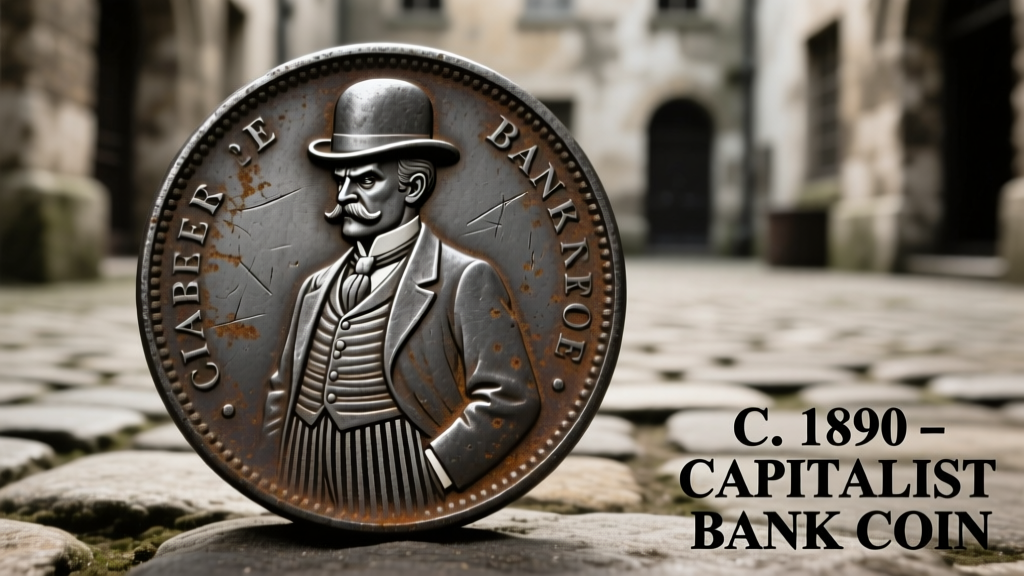
The Banks Capitalist Man: A Cast Iron Banking Figurine from the Gilded Age (c. 1890, 5-Inch)
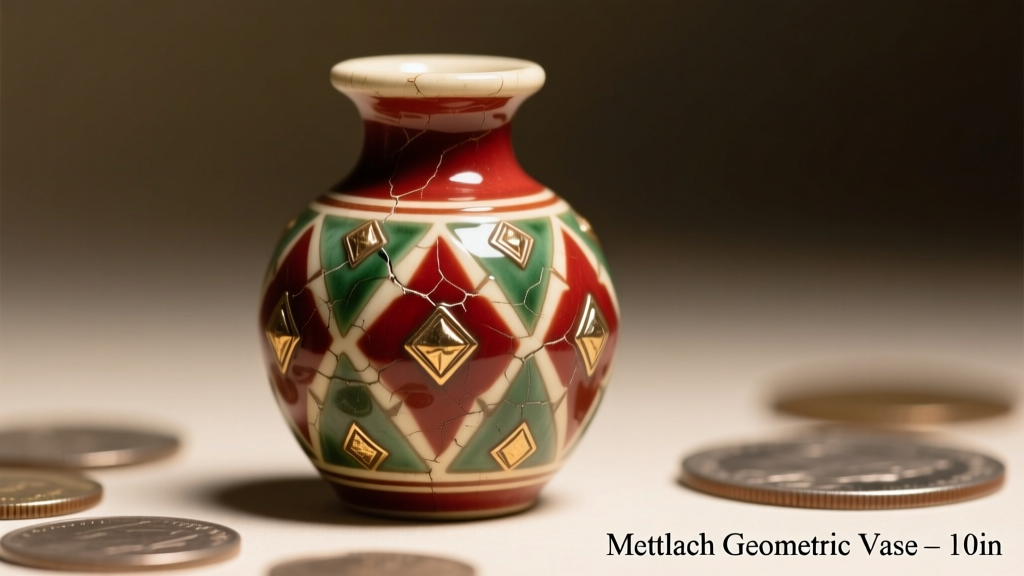
Mettlach Vase: Geometric Design in Red, Green, and Cream Ground — A 10-Inch Masterpiece of German Ceramics