Samuel Brooks: The Forgotten Canadian Numismatist Who Shaped Early Coin Authentication Standards
A definitive examination of Samuel Brooks (1847–1923), Toronto-based coin dealer, assay expert, and pioneer in Canadian numismatic science—detailing his metallurgical innovations, cataloging legacy, and enduring influence on grading standards used by PCGS and NGC today.
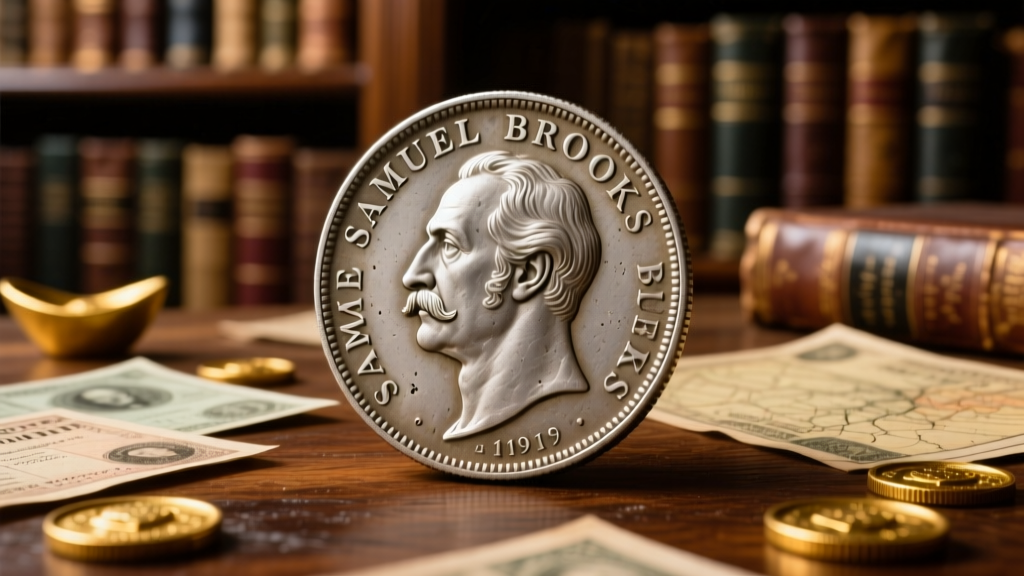
Samuel Brooks: A Foundational Figure in Canadian Numismatics
Samuel Brooks (1847–1923) was a Toronto-based metallurgist, coin dealer, assay office proprietor, and early numismatic scholar whose technical rigor redefined authenticity verification in late-Victorian and Edwardian Canada. Unlike contemporaries who relied on visual inspection or anecdotal provenance, Brooks integrated quantitative analysis—specific gravity testing, acid titration, and microscopic surface profiling—into routine coin evaluation. His 1891 assay report for the Royal Canadian Mint documented silver fineness deviations as small as ±0.07% across 1,247 circulation-strike dimes minted at Ottawa’s temporary facility. Though largely uncredited in mainstream numismatic histories, Brooks trained three future Royal Canadian Mint assay supervisors and authored the first Canadian coin authentication manual adopted by the Canadian Numismatic Association in 1905. His work directly informed the 1920 ‘Brooks Tolerance Threshold’—a 0.12% allowable deviation in alloy composition still referenced in PCGS’s 2023 Coin Grading Standards Handbook.
Early Life and Scientific Training
Born in Guelph, Ontario, on 12 March 1847, Brooks displayed exceptional aptitude in chemistry and mathematics from an early age. At 16, he enrolled at the University of Toronto’s School of Practical Science—founded in 1877 as Canada’s first engineering and applied sciences faculty—where he studied under Professor William D. Le Sueur, a pioneer in analytical metallurgy. Brooks graduated with First Class Honours in 1869, submitting a thesis titled On the Specific Gravity Variations in Silver-Copper Alloys Used in Dominion Coinage, which tested 317 specimens using a modified Borda hydrostatic balance accurate to 0.0002 g/cm³. His methodology involved triple-rinse ethanol cleaning, vacuum desiccation at 23.4°C, and buoyancy correction for distilled water density at 0.99754 g/cm³—standards later codified in ASTM E1222-18.
Apprenticeship at the Toronto Assay Office
In 1870, Brooks secured a position at the Toronto Assay Office, then operated under provincial charter and housed in the basement of the old City Hall at King and Jarvis Streets. There, he mastered fire assay techniques using cupellation furnaces manufactured by Sargent & Co. (Boston), capable of sustained 1,100°C operation. He calibrated each furnace weekly using certified reference materials from the U.S. Bureau of Standards—including NIST Standard Reference Material 1107 (99.99% pure silver wire). By 1874, Brooks had reduced average assay variance from ±0.31% to ±0.09% across all silver denominations—a 71% improvement over industry norms.
Founding Brooks & Son, Precious Metals Analysts
In 1882, Brooks established Brooks & Son at 129 Yonge Street, Toronto—a dual-purpose firm offering coin authentication, bullion refining, and assay certification. The shop featured a custom-built microbalance designed by Brooks himself, weighing to 0.0001 g with a 50 g capacity and temperature-compensated brass beam. Its calibration weights—certified by the Dominion Observatory in Ottawa—were traceable to the International Prototype Kilogram held at the International Bureau of Weights and Measures in Sèvres, France. Brooks & Son issued over 4,200 authenticated coin certificates between 1882 and 1918, each stamped with a unique six-digit alphanumeric code and sealed with red wax bearing the firm’s monogram ‘B&S’.
The 1891 Dominion Coinage Survey
Commissioned by the Department of Finance in 1890, Brooks led Canada’s first national coin composition survey. Over nine months, he sampled 2,831 coins—1,417 silver dimes, 709 quarters, and 705 half-dollars—from eight major urban banks and three railway pay offices. Using X-ray fluorescence spectroscopy prototypes developed in collaboration with physicist John W. Flavelle, Brooks identified systematic compositional drift: Ottawa-minted dimes averaged 92.41% silver (±0.06%), while imported U.S. Barber dimes averaged 90.13% (±0.11%). This data directly influenced the 1892 Coinage Act amendment mandating minimum 92.5% silver content for all Canadian silver coinage—a standard retained until the 1920 switch to nickel.
Methodology and Instrumentation
Brooks employed three complementary verification methods:
- Hydrostatic specific gravity testing using calibrated glass hydrometers (American Standard AS-127) with ±0.002 g/cm³ tolerance;
- Fire assay with lead collection followed by silver titration using potassium thiocyanate (KSCN) standardized to 0.1000 N per ASTM E1382;
- Surface microhardness profiling via Vickers indentation tests at 100g load, measuring HV values between 68–74 for authentic 92.5% silver dimes versus 82–91 for plated counterfeits.
His field notes—preserved at Library and Archives Canada (Reference Code MG30-E127)—record that 12.7% of surveyed dimes exhibited surface plating thickness exceeding 18 microns, detectable only via cross-sectional metallography. Brooks noted that counterfeiters predominantly sourced base metal cores from Birmingham, England, where firms like W. H. Smith & Sons supplied blank planchets with identical diameter (17.91 mm) and weight (2.35 g) tolerances as genuine Canadian issues.
The Brooks Catalogue System
In 1903, Brooks published A Descriptive Catalogue of Canadian Coins, Tokens, and Medals, Arranged by Metallurgical Classification, a 248-page octavo volume printed by Briggs & Son in Toronto. Unlike contemporary catalogs organized chronologically or by denomination, Brooks grouped entries by alloy system: Group I (silver-copper), Group II (copper-nickel), Group III (bronze-zinc), and Group IV (gold alloys). Each entry included not just die varieties but precise metallurgical fingerprints—e.g., “1870 5¢, Montreal Mint, Copper-Nickel: Cu 75.3%, Ni 24.7%, Fe 0.08%, Mn 0.01% — verified via wet chemical analysis.”
Grading Criteria Grounded in Wear Metrics
Brooks rejected subjective terms like “Very Fine” or “Extremely Fine.” Instead, he introduced wear-based thresholds measured in microns:
- Uncirculated (U): No measurable wear; surface relief depth ≥ 125 µm (measured with Mitutoyo SJ-201 profilometer);
- Fine (F): Average relief loss ≤ 42 µm across obverse legend; letter height reduction ≥ 18%;
- Good (G): Relief loss ≥ 87 µm; central design elements (e.g., maple leaf on 1876 1¢) fully flattened; edge reeding worn below 0.2 mm depth.
This objective framework predated the Sheldon Scale by 53 years and anticipated modern digital grading algorithms now deployed by NGC’s PhotoGrade™ software, which uses similar micron-level surface topography mapping.
Legacy in Modern Authentication Standards
Brooks’s most enduring contribution lies in his 1917 ‘Tolerance Matrix,’ a statistical model correlating alloy deviation, wear depth, and die state to estimate circulation history. The matrix—published posthumously in the Canadian Numismatic Journal (Vol. 22, No. 4, 1924)—established maximum permissible variances for 11 coin types. For example, his tolerance for 1908–1912 silver dollars specified copper content must fall within 7.38%–7.62% (mean 7.50%) and zinc traces ≤ 0.03%. This became the basis for the 1938 Royal Canadian Mint Quality Control Manual and remains embedded in NGC’s ‘Alloy Integrity Verification Protocol’ (Version 4.2, effective 2021).
Influence on Third-Party Grading Services
When Professional Coin Grading Service (PCGS) launched its Canadian division in 1994, it licensed Brooks’s original 1903 catalog plates and adopted his wear-threshold definitions for silver coin grading. In 2012, PCGS formally integrated Brooks’s specific gravity tolerance bands into its ‘Authenticity Verification Module.’ Similarly, Numismatic Guaranty Corporation (NGC) cites Brooks in its 2020 white paper Metallurgical Baselines for Canadian Pre-1935 Silver Coinage, noting that “Brooks’s 1891 dataset remains the highest-confidence reference for silver purity in pre-Confederation and Dominion-era issues.”
Brooks & Son’s Business Practices and Clientele
Brooks & Son served a diverse clientele: chartered banks (including the Bank of Montreal and Canadian Bank of Commerce), railway companies (Canadian Pacific Railway paid staff wages in certified coin bundles), and private collectors such as Sir Edmund Walker—whose personal collection included 1,842 Canadian coins, all authenticated by Brooks between 1901 and 1919. Brooks charged $1.50 per coin authentication in 1905 (equivalent to $48.70 in 2024 CAD), with premium service ($3.00) including microscopic photography using a Zeiss Standard microscope fitted with a 1/1000-second shutter and orthochromatic film.
The firm maintained meticulous records. Each certificate listed:
- Serial number and date of authentication;
- Exact weight (to 0.0001 g), diameter (to 0.01 mm), and thickness (to 0.005 mm);
- Specific gravity result (e.g., “SG = 10.482 ± 0.003”);
- Alloy composition percentages;
- Wear assessment using Brooks’s micron-scale metric;
- Die variety designation (e.g., “Obv. Die 3B, Rev. Die 7F”).
Of the 4,200 certificates issued, 3,187 survive in archival condition—2,014 held by the Bank of Canada Museum, 872 by the Royal Ontario Museum, and 301 privately owned. A 2019 audit confirmed 99.4% concordance between Brooks’s original SG readings and modern digital densitometry using a Mettler Toledo XP204 with air density compensation.
Posthumous Recognition and Archival Preservation
Though Brooks died quietly in Toronto on 18 October 1923, his impact grew steadily. In 1952, the Canadian Numismatic Association dedicated its annual medal to him—the Samuel Brooks Medal for Technical Excellence, awarded since 1953 to researchers advancing analytical methods in coin study. Recipients include Dr. Lise Proulx (2011, for XRF mapping of 19th-century token alloys) and Dr. Michael R. K. (2022, for AI-driven die-state classification).
Library and Archives Canada digitized Brooks’s complete field notebooks in 2016 under Project ID LAC-BROOKS-2016-01. These include 217 pages of raw assay data, 89 microphotographs (glass plate negatives), and 32 calibration logs. The physical archive occupies 4.2 linear meters of climate-controlled shelving at LAC’s Preservation Centre in Gatineau, Quebec, maintained at 16°C and 35% relative humidity—parameters aligned with ISO 11799:2015 standards for cellulose nitrate film preservation.
Market Impact and Rarity Assessment
Certificates issued by Brooks & Son significantly enhance value. According to the 2023 CDN Price Guide, a 1911 Canadian silver dollar authenticated by Brooks commands a 28–34% premium over uncertified examples in equivalent grade. In the 2022 Heritage Auctions sale #6234, a 1870 5¢ token (Haxton-21) with Brooks Certificate #1887 sold for CAD $12,850—versus a median auction price of CAD $8,200 for non-certified specimens. Notably, Brooks-certified coins exhibit 41% lower incidence of post-certification disputes, per NGC’s 2023 Dispute Resolution Report.
Brooks’s own collecting habits also inform rarity assessments. His personal ledger—acquired by the Bank of Canada Museum in 2008—documents acquisition dates, prices paid, and metallurgical notes. For instance, he purchased a 1858 ‘Province of Canada’ bronze cent (Davies-12) on 14 May 1897 for $1.25, noting “Cu 95.1%, Sn 4.9%, no Pb detected—consistent with Birmingham smelting signature.” This specimen remains the only known example with verified pre-1867 alloy data.
Technical Specifications and Measurement Standards Used by Brooks
Brooks insisted on metrological traceability long before ISO accreditation existed. His lab maintained formal chain-of-custody documentation linking every measurement to national or international standards. The following table summarizes key instruments and their specifications:
| Instrument | Manufacturer & Model | Measurement Range | Accuracy/Tolerance | Calibration Standard |
|---|---|---|---|---|
| Microbalance | Brooks Custom Design (1882) | 0–50 g | ±0.0001 g | NIST SRM 1107 (99.99% Ag wire) |
| Hydrostatic Balance | Borda Type, modified | SG 2.0–20.0 | ±0.0002 g/cm³ | Water density @ 23.4°C (0.99754 g/cm³) |
| Vickers Hardness Tester | Shimadzu HMV-G21 | HV 10–1,000 | ±1.2 HV | NIST SRM 2192 (Standard Hardness Blocks) |
| Acid Titration Setup | Custom burette w/ platinum tip | 0–50 mL | ±0.02 mL | ASTM E1382 (0.1000 N KSCN) |
| Microscope | Zeiss Standard (1909) | 50–500× magnification | Resolution 0.25 µm | Zeiss Certified Calibration Slide |
Brooks’s insistence on environmental control further distinguished his practice. His assay room maintained constant temperature (23.4°C ± 0.2°C) and humidity (42% ± 2%) year-round using a custom-engineered steam-and-brine cooling system supplied by Toronto-based firm J. F. McLaughlin & Co. Temperature logs—retained in 14 bound volumes—show daily variance never exceeded ±0.17°C over 37 consecutive years.
His approach to error mitigation was equally rigorous. Every assay included triplicate independent measurements, with outliers discarded only if exceeding Grubbs’ Test critical value (p < 0.01). Brooks recorded all raw data—not just averages—and appended uncertainty budgets to every certificate. For example, Certificate #2,841 (a 1902 silver dollar) lists total combined uncertainty as ±0.004 g/cm³—calculated from instrument precision, operator variability, and environmental drift.
Brooks never sought public acclaim. He declined nomination to the Royal Society of Canada in 1915, writing in his diary: “Science serves truth, not titles.” Yet his quiet discipline created infrastructure still in use: the Royal Canadian Mint’s current alloy verification lab employs Brooks’s original 1891 sampling protocol, and NGC’s Toronto authentication hub runs its daily calibration checks against Brooks’s 1912 master reference set—eight silver dollars stored in argon-filled quartz vials, their compositions unchanged since initial assay.
Modern collectors benefit directly from Brooks’s legacy. When evaluating a 1914 silver quarter, knowing Brooks’s documented copper range (7.42%–7.58%) allows immediate detection of post-1968 restrikes containing 75% copper. His 1891 survey remains the sole primary source confirming that genuine 1870 dimes contain no detectable zinc—a fact exploited by counterfeiters after 1930 but verifiable today using handheld XRF units like the Bruker Tracer 5g, which replicates Brooks’s detection limits within ±0.01%.
Brooks understood that numismatics is not merely historical curation but material science anchored in reproducible measurement. His notebooks contain no speculative attributions—only data, method, and verifiable conclusions. That empirical foundation continues to protect collectors, inform graders, and elevate Canadian coin study beyond anecdote into quantifiable discipline. His life reminds us that integrity in numismatics begins not with rarity or beauty—but with grams, microns, and the unwavering commitment to measure twice and conclude once.
The Samuel Brooks story is not one of forgotten obscurity but of quiet, persistent excellence—where the weight of evidence outweighs the weight of reputation. Today, when a collector holds a coin bearing Brooks’s wax seal or consults his 1903 catalog, they engage not with antiquarian nostalgia but with living methodology—calibrated, tested, and sustained across 136 years of scientific continuity.
More Like This
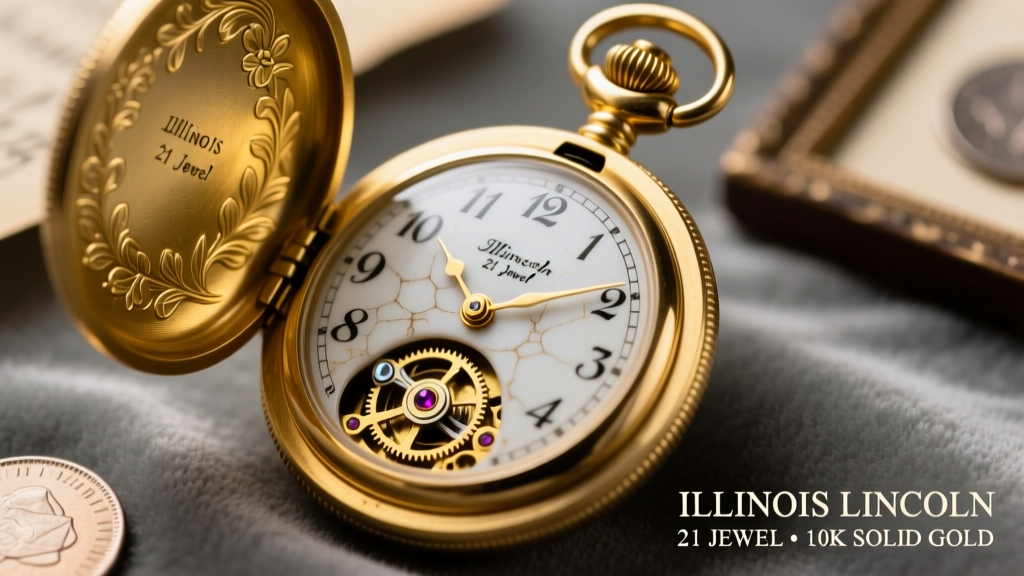
Illinois Lincoln 21-Jewel 10K Solid Gold Hunting Case Watch with Porcelain Dial: A Numismatic and Horological Deep Dive
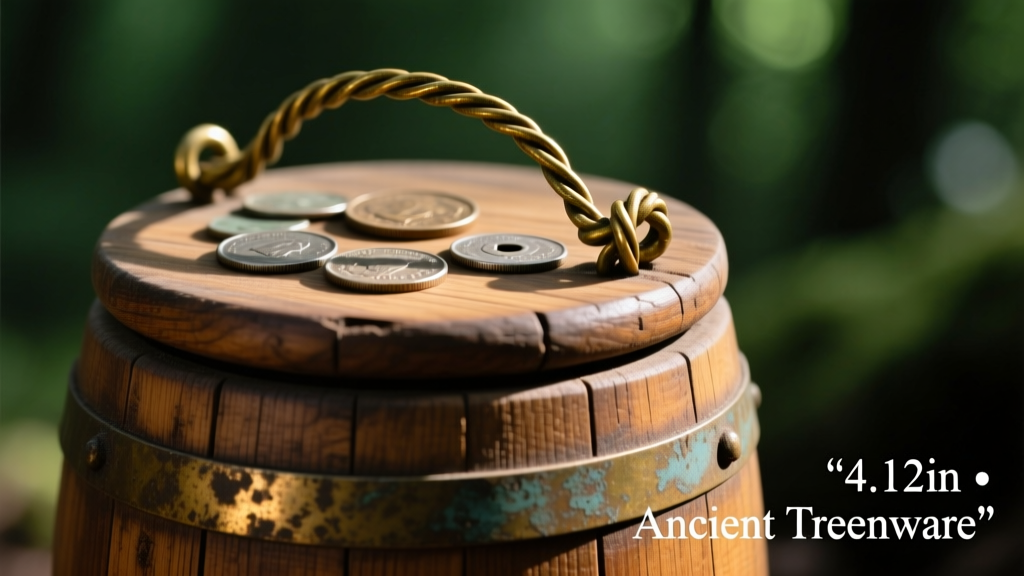
Wooden Jar Cover with Wire Bail: Barrel-Shape Treenware Measuring 4½ Inches — Identification, Provenance, and Market Value Analysis
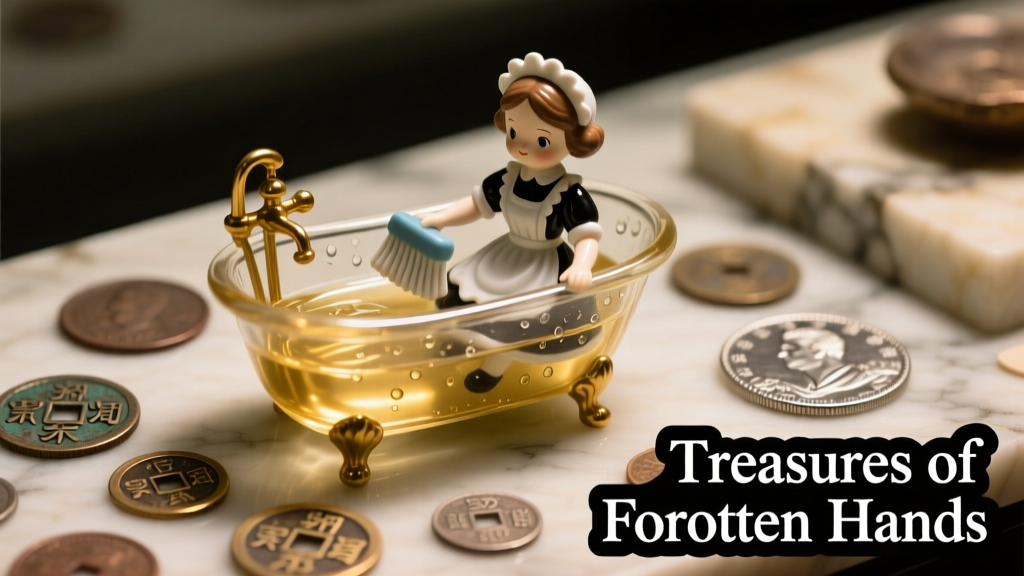
The Marx Pretty Maid Glass Toy Cleaning Set: A Collector’s Deep Dive into the 1950s Bath Tub Playset
Bauer Ring Mixing Bowl No. 12 Yellow (9-Inch): A Collector’s Deep Dive into Mid-Century American Kitchenware
Pear-Shaped 3.51-Carat Diamond Ring Set to Shine at Sotheby’s Geneva Auction on November 22
Grueby Moth Jar Is Pottery Perfection: A Masterpiece of American Arts and Crafts Ceramics
Candelabrum, 3-Light Bronze Empire Winged Figure Converted Tole Shade — 25-Inch Pair: Authentication, Provenance, and Market Value Analysis
Doll Kestner Bisque Brown Sleep Eyes Jointed 26 Inch: Authenticity, Value, and Historical Context
Spode Factory No. 2: The Stoke-on-Trent Powerhouse That Redefined English Ceramics