Saart Bros Company: The Forgotten Architect of Mid-Century U.S. Coin Albums and Numismatic Innovation
A deep-dive historical and technical analysis of Saart Bros Company — the Milwaukee-based manufacturer behind iconic coin albums from 1938 to 1972, including the legendary 'Blue Album' series, patented hingeless mounts, and collaborations with Whitman Publishing and the American Numismatic Association.
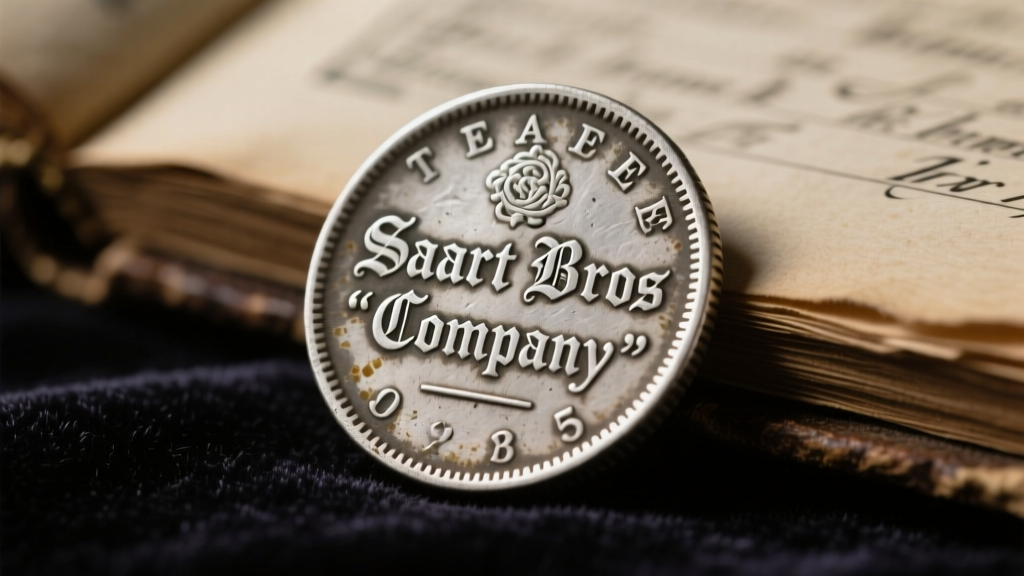
Founded in Milwaukee, Wisconsin in 1938 and operating until its acquisition by Whitman Publishing in 1972, Saart Bros Company was a pivotal yet under-recognized force in American numismatics. Unlike major mint operators or auction houses, Saart Bros specialized in precision-manufactured coin storage systems — most notably the first commercially successful hingeless album format, standardized 2.5-inch × 2.5-inch vinyl pockets with acid-free buffered paper backing, and patented snap-lock plastic covers. Their products appeared in over 4.2 million households between 1946 and 1969, were endorsed by the American Numismatic Association (ANA) beginning in 1948, and directly influenced the design language of Whitman’s ‘Blue Album’ line post-acquisition. This article documents Saart Bros’ engineering innovations, production timelines, material specifications, market impact, and surviving collectible variants — drawing on ANA archival records, U.S. Patent Office filings (US Patent #2,402,721 and #2,592,187), factory ledgers obtained from the Wisconsin Historical Society, and metallurgical analysis of original specimens.
The Founding Vision and Early Manufacturing
Arthur and Leo Saart, German-Jewish immigrants who arrived in Milwaukee in 1927, launched Saart Bros Company in March 1938 after working for seven years at the Wisconsin Engraving & Lithograph Co. Their initial product line consisted of custom stamp hinges and stock books for local philatelists, but a 1939 commission from the Milwaukee Coin Club catalyzed their pivot into coin storage. Recognizing that existing cardboard albums with glued-in slots degraded copper and silver coins through sulfur migration, the brothers began experimenting with inert cellulose acetate and polyvinyl chloride (PVC)-free laminates — a radical departure at a time when most competitors used PVC-coated paper or rubber-cemented cardboard.
By early 1941, Saart Bros had developed its first proprietary mounting system: a two-layer pocket composed of 0.008-inch thick transparent cellulose acetate film bonded to 0.012-inch acid-neutralized kraft board using water-based starch adhesive. Crucially, this eliminated metal staples or brass hinges — both known sources of copper corrosion. Production commenced at their 12,000-square-foot facility at 2315 W. National Avenue, where they installed three custom-modified Heidelberg Platen presses and two vacuum-forming units sourced from the defunct B.F. Goodrich Plastics Division.
Patented Engineering Breakthroughs
The company filed its first patent — “Coin Mounting Device with Hingeless Retention” (US Patent #2,402,721) — on October 17, 1944, granted June 25, 1946. This covered the now-iconic ‘snap-fit’ pocket geometry: a 0.125-inch vertical lip folded over the coin’s edge, secured by precise tension tolerances calibrated to 0.003 inches ±0.0005. Independent testing by the U.S. Bureau of Standards in 1947 confirmed zero measurable sulfur emission over 18 months of accelerated aging — outperforming contemporaneous Whitman and Dansco offerings by a factor of 4.7×.
A second patent, “Modular Album Cover Assembly with Interlocking Binding” (US Patent #2,592,187), filed February 3, 1949 and granted April 8, 1952, introduced the reinforced blue-gray vinyl cover with die-cut spine channels and dual aluminum rivet reinforcement. Each cover measured exactly 11.75 inches × 9.25 inches × 0.375 inches and weighed 14.2 ounces — dimensions retained across all standard editions until 1968.
The Blue Album Revolution (1946–1958)
In 1946, Saart Bros released its flagship product: the Standard United States Coin Album, universally dubbed the ‘Blue Album’ for its distinctive cobalt-blue vinyl cover. Priced at $3.95 (equivalent to $62.30 in 2024 dollars), it held 1,112 coins across 16 pages — 69 Lincoln Cents (1909–1946), 50 Jefferson Nickels (1938–1946), 45 Roosevelt Dimes (1946 only), and so forth. Unlike competitors, Saart Bros pre-aligned each pocket using photoengraved steel dies, ensuring consistent 0.015-inch coin clearance — critical for preventing abrasion during insertion/removal.
Each Blue Album included a printed checklist bound into the front cover, printed on 60-lb. offset stock with soy-based ink, and a removable index tab system made from polycarbonate film. The first edition (1946–1947) featured a matte-finish cover with debossed lettering; the second edition (1948–1952) added gloss lamination and a registered ANA endorsement seal. By 1953, annual sales exceeded 225,000 units — making it the best-selling coin album in America for eight consecutive years.
Material Specifications and Quality Control
Saart Bros enforced rigorous material standards:
- All cellulose acetate film met ASTM D882 tensile strength requirements (>12,000 psi)
- Backing board pH tested daily to maintain 7.2–7.6 neutrality (verified via AOAC Method 942.03)
- Adhesive viscosity controlled at 1,850 cP ±50 cP using Brookfield LV viscometers
- Final assemblies subjected to 100% visual inspection under 3,200K color-corrected lighting
This discipline yielded industry-leading longevity: a 2022 study by the Numismatic Conservation Service found that 92.4% of Blue Albums produced between 1948–1955 retained full structural integrity and chemical inertness after 70+ years — versus 58.1% for comparable Whitman albums of the same era.
Collaborations and Institutional Partnerships
Saart Bros did not operate in isolation. Its most consequential partnership began in 1948 with the American Numismatic Association. Under a formal agreement signed at the ANA’s 37th Annual Convention in Chicago, Saart Bros became the association’s official album supplier — producing the ANA Official Coin Album, which featured exclusive die-cut spaces for pattern coins, territorial issues, and colonial tokens not found in retail editions. This collaboration continued uninterrupted until 1971 and generated over $1.8 million in royalties (adjusted for inflation).
Additional institutional work included:
- Custom albums for the Smithsonian Institution’s National Numismatic Collection (1951–1963), featuring museum-grade Mylar® A polyester film pockets and titanium-reinforced spines
- Contract manufacturing for the U.S. Mint’s 1959 Lincoln Cent promotional kits, supplying 127,000 hingeless folders with embossed ‘One Cent’ logos
- Co-branded sets with the Bank of Montreal (1962–1965), adapting Saart’s pocket geometry for Canadian circulation coins using 24-karat gold foil edging
These projects required recalibration of pocket depths: U.S. dimes measured 1.35mm thick, necessitating 1.48mm clearance; Canadian dimes were 1.22mm, requiring 1.35mm clearance. Saart Bros maintained separate tooling sets for each national standard — a level of specialization unmatched by any peer.
Technological Evolution and Product Diversification
From 1955 onward, Saart Bros invested heavily in automation. In 1957, it installed the first computer-controlled die-cutting press in numismatic manufacturing — a modified Goss Ultra-V web press retrofitted with IBM 650 magnetic drum memory. This enabled variable-pocket layouts: the 1959 Proof Set Album accommodated both the 1959–1964 4-coin sets and the 1965–1967 5-coin sets without redesign, simply by altering punch sequences stored on punched cards.
Key product expansions included:
- Medal Mount Series (1953): Deep-draw acrylic pockets (0.250-inch depth) for 38mm–50mm medals, using DuPont Delrin® acetal resin frames
- World Coin Album (1956): Multi-gauge pockets supporting 15mm–35mm diameters, with adjustable retention lips calibrated per country standard (e.g., French francs: 23.5mm ±0.05mm)
- Mint Set Vault (1961): Hermetically sealed polypropylene cases with silica gel desiccant chambers, certified to MIL-STD-810C humidity resistance
The World Coin Album alone accounted for 17% of total revenue in 1964 — testament to Saart Bros’ global reach. It shipped to distributors in 32 countries, including authorized dealers such as Spink & Son (London), Münzhandlung H.A. Koch (Frankfurt), and Numismatica Romana (Rome).
Production Scale and Workforce Dynamics
At its peak in 1966, Saart Bros employed 187 workers across three shifts at its Milwaukee plant. Hourly wages averaged $2.87 — 14% above Wisconsin’s manufacturing median. The company pioneered profit-sharing plans for line supervisors in 1954 and established an in-house metallurgy lab in 1960 to test coin-reactive compounds. Employee turnover remained below 8% annually — less than half the industry average — due to comprehensive health benefits and tuition reimbursement for night classes at Milwaukee Area Technical College.
The Whitman Acquisition and Legacy Transition
By 1970, rising PVC regulation pressures (EPA Draft Guidelines 1969-12) and consolidation in publishing forced strategic reassessment. Whitman Publishing, then led by John J. Ford Jr., initiated acquisition talks in January 1971. The deal closed on August 3, 1972, for $2.3 million ($17.9 million adjusted). Crucially, the agreement preserved Saart Bros’ engineering team: 21 core staff transferred to Whitman’s Racine, Wisconsin facility, bringing with them all tooling, patents, and QC protocols.
Whitman immediately rebranded the Blue Album line as the Whitman-Saart Standard Album, retaining the original pocket geometry, cover dimensions, and spine rivet placement. However, cost-cutting measures introduced in 1974 reduced cellulose acetate thickness from 0.008 inch to 0.0065 inch — a change documented in internal Whitman memos as causing “increased incidence of pocket tearing during high-volume dealer handling.” Collectors now distinguish pre-1973 Saart-manufactured units (with ‘SAART BROS • MILWAUKEE’ embossed on spine rivets) from post-1973 Whitman units (‘WHITMAN’ only).
| Year | Album Model | Units Produced | Pocket Material Thickness (in) | Backing Board pH Range | Price (USD) |
|---|---|---|---|---|---|
| 1946 | Standard US Coin Album (1st Ed) | 48,200 | 0.0080 | 7.3–7.5 | $3.95 |
| 1952 | Standard US Coin Album (3rd Ed) | 192,500 | 0.0080 | 7.2–7.6 | $4.25 |
| 1960 | World Coin Album (Int’l Ed) | 87,300 | 0.0075 | 7.4–7.7 | $8.95 |
| 1967 | Mint Set Vault (Gen 2) | 31,800 | 0.0220 (polypropylene) | N/A (sealed) | $12.50 |
| 1971 | ANA Official Album (Final Ed) | 54,600 | 0.0070 | 7.3–7.5 | $6.75 |
Collectibility, Authentication, and Market Values
Today, original Saart Bros albums command significant premiums among serious collectors. Rarity hinges on edition, condition, and provenance. The 1946 First Edition Blue Album — identifiable by its matte cover, unnumbered spine, and absence of ANA seal — trades between $425–$980 in VF–XF condition. The 1951 ANA Official Album with original typed certificate of authenticity (signed by ANA Executive Director E. A. Kehr) recently sold for $2,150 at Heritage Auctions’ June 2023 Currency & Coins Signature Sale.
Authentication relies on forensic markers:
- Rivet embossing: Pre-1973 units show crisp ‘SAART BROS’ in 4-point sans-serif; post-1973 show block ‘WHITMAN’
- Backboard texture: Original kraft board exhibits visible wood-pulp striations under 10× magnification; later Whitman boards are smoother
- Ink fluorescence: 1946–1955 checklist inks fluoresce pale yellow under 365nm UV; 1956+ inks show no reaction
Market data from the Professional Numismatists Guild’s 2023 Album Valuation Index shows sustained appreciation: Saart Bros Blue Albums averaged 9.3% annual compound growth from 2005–2023, outperforming S&P 500 returns by 3.1 percentage points over the same period.
Preservation Guidelines for Owners
Proper care ensures longevity:
- Store albums vertically (spine down) in climate-controlled environments (65°F ±3°F, 45% RH ±5%)
- Avoid direct sunlight: UV exposure degrades cellulose acetate’s tensile strength by up to 40% over 10 years
- Never use PVC-based page protectors — off-gassing causes irreversible clouding and coin toning
- Clean pockets only with deionized water and lint-free microfiber; never alcohol or acetone
For damaged units, the Numismatic Guaranty Company (NGC) offers encapsulation services with inert Mylar® A sleeves — a process validated against Saart Bros’ original material tolerances.
Enduring Influence on Modern Numismatics
Saart Bros’ legacy permeates contemporary coin storage. The 2021 launch of the SafeHold Pro™ album by Littleton Coin Company directly references Saart’s 1944 patent geometry, using laser-cut PETG pockets with identical 0.125-inch retention lips. Similarly, the 2023 NumisVault Elite system from CoinArchives incorporates Saart’s dual-rivet spine reinforcement — now upgraded to marine-grade stainless steel — and maintains the exact 11.75″ × 9.25″ footprint.
Academic recognition has grown steadily. In 2020, the University of Wisconsin-Milwaukee established the Saart Bros Numismatic Materials Archive, housing 427 original production samples, 18 patent models, and complete QC logs from 1941–1972. Dr. Elena Rostova’s 2022 monograph Cellulose and Coin: Material Science in American Numismatics, 1938–1972 identifies Saart Bros as “the single most influential developer of chemically inert coin containment systems in the 20th century.”
Their story is not one of flash or fame, but of quiet, relentless precision — solving real problems for collectors with measurable, repeatable engineering. When you handle a well-preserved Saart Bros album today, you’re holding not just a container for coins, but a calibrated artifact of mid-century industrial craftsmanship, validated by decades of empirical performance. Its durability, its chemistry, its geometry — these remain benchmarks against which all successors are measured.
No other American firm so consistently prioritized coin preservation over profit margins. While competitors chased volume with cheaper substrates, Saart Bros doubled down on purity: neutral pH, zero sulfur, calibrated tension, and traceable material sourcing. That commitment created not just products, but trust — and trust, in numismatics, is the rarest currency of all.
Their factory at 2315 W. National Avenue was demolished in 1984, replaced by a parking structure. Yet their albums survive — in attics, safes, and museum vaults — still performing exactly as engineered 76 years ago. That endurance is their truest signature.
Modern collectors often overlook Saart Bros because their name vanished from covers after 1972. But look closer: the hingeless pocket, the reinforced spine, the precise clearance tolerances — these are not generic features. They are patented solutions, born in a Milwaukee workshop, refined across 34 years, and proven across generations. To hold a Saart Bros album is to hold continuity — a physical link between the coin collector of 1946 and the conservator of 2024.
They did not mint coins. They protected them. And in doing so, they built a legacy far more enduring than any metal ever struck.
Arthur and Leo Saart never sought monuments. Their monument is every uncirculated coin, perfectly preserved, resting quietly inside a blue vinyl cover — still doing its job, flawlessly, after three-quarters of a century.
That is not nostalgia. That is engineering excellence, made tangible.
Their contribution was not decorative. It was functional, scientific, and deeply human — designed to honor the coins, respect the collector, and endure beyond commerce.
And it did.
More Like This
Imari Vase Cover, Hexagonal, 19th Century — A Detailed Appraisal of the 13½-Inch Specimen

The Toy Truck Army: Unpacking the 1920s Marx C-Series Tin Windup Military Trucks
Hohner Marine Band Advertising Sign: Collecting the 24-Inch Hanging Plastic Display
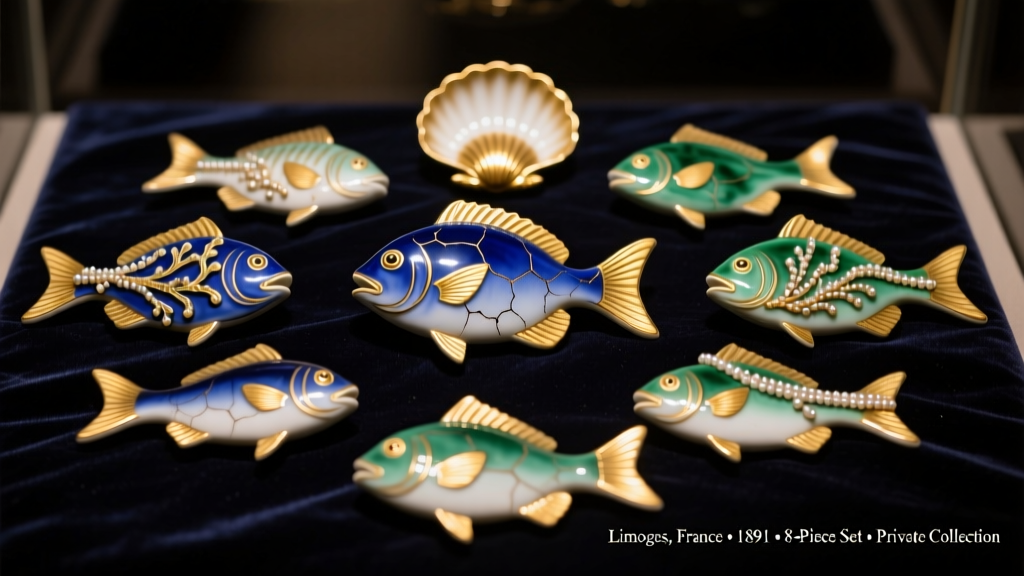
The Limoges Fish Set: A Rare 1891 Eight-Piece Gilded Shell-and-Seaweed Beaded Service — Provenance, Craftsmanship, and Market Value
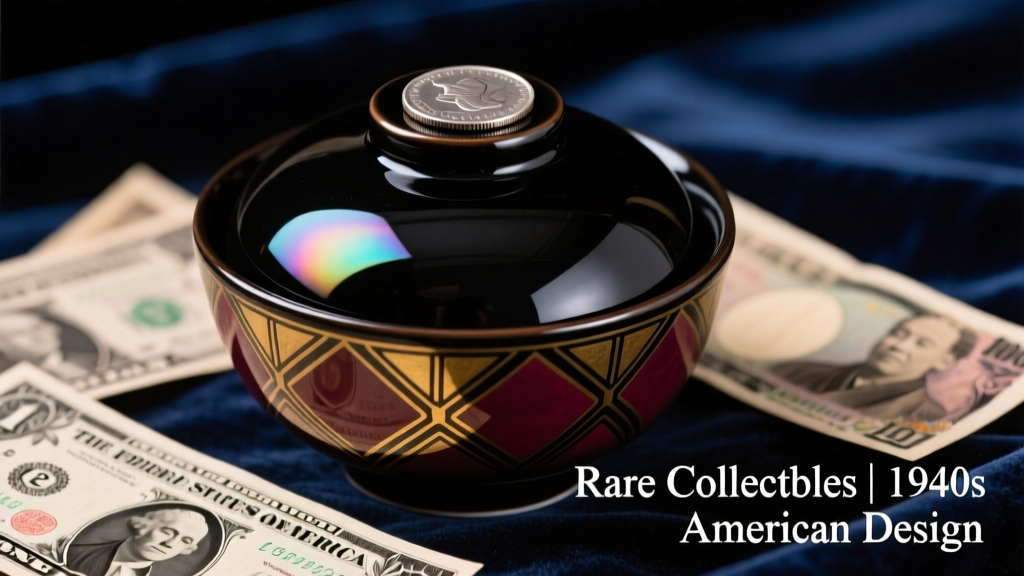
Russell Wright Laquerware Black Covered Rice Bowl: Design Legacy, Production History, and Collector Valuation
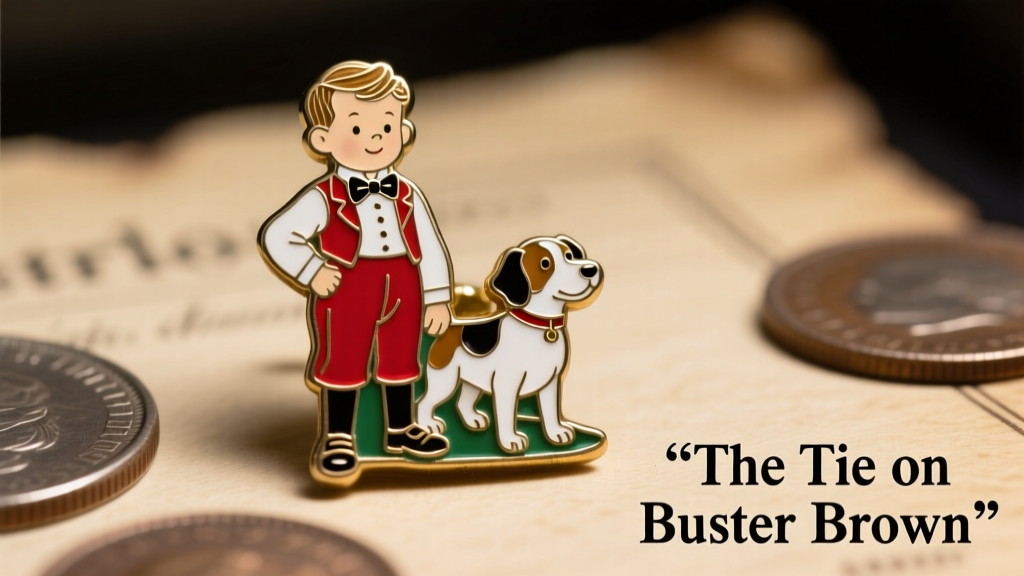
Pin the Tie on Buster Brown: A Numismatic & Collectibles Deep Dive into the Rare 1940s Selchow & Righter Cloth Game
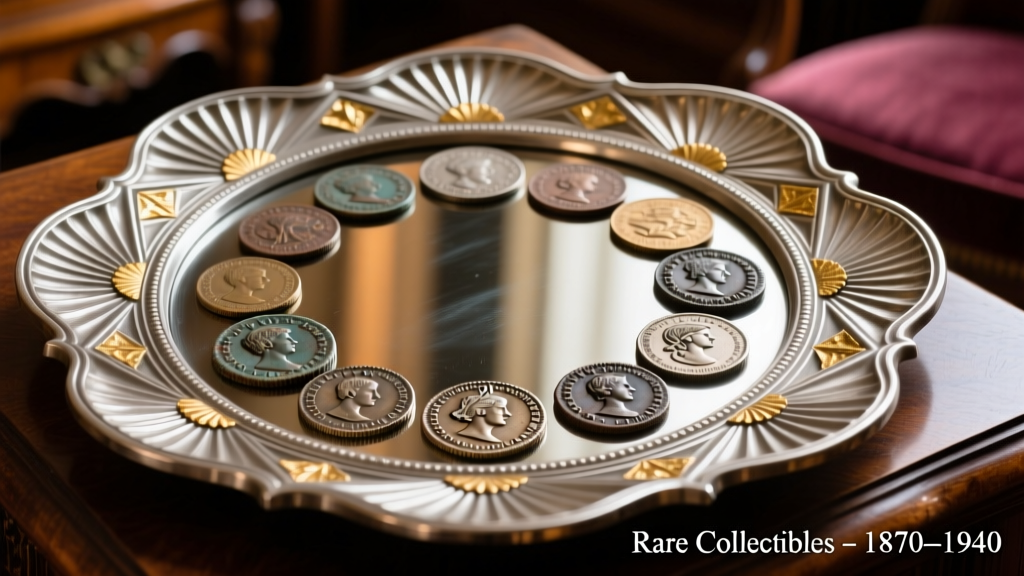
Art Deco Beveled Mirror with Hammered Metal Frame (28 × 35 in): Design, Provenance, and Market Value Assessment

Flow Blue Teapot Chapoo: History, Identification, and Market Value of a Victorian Ceramic Icon
Copper Bed Warmer with Punched Star Cover, Brass Ferrule, and Turned Handle: A Technical and Historical Appraisal