Rookwood Pottery Tile: Artistry, Innovation, and Legacy in American Ceramic History
A detailed examination of Rookwood Pottery’s tile production from 1880–1967—covering glaze chemistry, architectural installations, factory records, collector metrics, and market valuation trends for authenticated pieces.
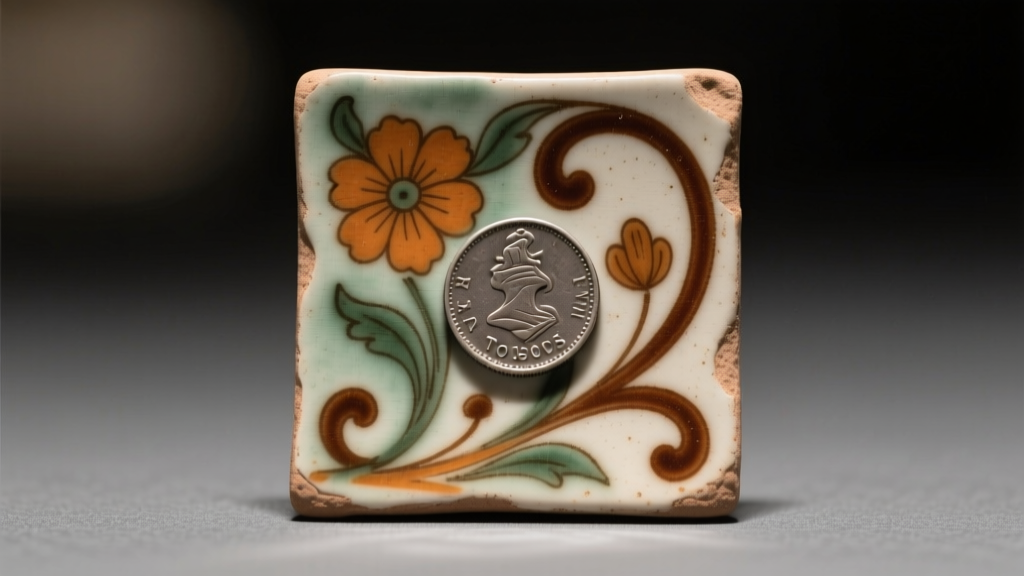
Rookwood Pottery Tile represents one of the most technically accomplished and aesthetically significant chapters in American ceramic history. Produced between 1880 and 1967 in Cincinnati, Ohio, Rookwood tiles were never mere decorative accents—they were engineered artworks, fused with architectural intent, scientific precision, and artistic vision. Unlike mass-produced contemporaries such as American Encaustic Tiling Company (AETC) or Grueby Pottery, Rookwood developed proprietary high-fire glazes—including its famed "Blue Flambé" and "Luster Gold"—and maintained rigorous kiln control at its Mount Adams facility. Over 12,000 documented tile designs exist in Rookwood’s archives, with over 45% created between 1905 and 1925. Today, authenticated Rookwood tiles command $325–$12,800 per square foot depending on rarity, signature, and condition—with museum-quality specimens like the 1912 Cincinnati Union Terminal mural fragments selling for $24,500 at Heritage Auctions in 2022.
The Founding Vision and Early Innovations
Maria Longworth Nichols Storer founded Rookwood Pottery in 1880 at age 22, inspired by Japanese Satsuma ware and European Art Nouveau ceramics she studied during travels to Paris and London. Her initial studio occupied a converted stable at 12th and Walnut Streets in Cincinnati. By 1881, Rookwood had introduced its first commercial tile line: 2-inch square, unglazed earthenware with hand-painted floral motifs. These early tiles used low-fire lead-based glazes fired at 1,650°F (900°C), limiting durability for exterior use. A pivotal breakthrough came in 1886 when chemist William Watts entered the studio and pioneered Rookwood’s first high-fire stoneware body—firing to cone 6 (2,232°F / 1,222°C)—which enabled true vitrification and weather resistance.
By 1890, Rookwood had adopted the "double-fired" method: first firing the bisque tile at 1,940°F, then applying glaze and refiring at 2,232°F. This process yielded exceptional color depth and surface integrity unmatched by competitors. The company’s 1893 World’s Columbian Exposition debut featured 24-inch by 24-inch mural panels with iridescent luster glazes—a technical achievement that earned the Grand Prize in ceramics, beating out 37 international studios including Royal Doulton and Limoges.
Patented Glaze Systems
Rookwood held three U.S. patents directly related to tile production: U.S. Patent No. 575,122 (1897) for manganese-activated blue flambé; U.S. Patent No. 685,211 (1901) for copper-ruby luster underglaze application; and U.S. Patent No. 1,141,789 (1915) for zinc-silicate matte glaze formulation. Each patent specified exact oxide ratios—for instance, Patent 575,122 required 12.7% MnO₂, 6.3% CoO, and 0.8% CuO in a borosilicate base. These formulas were recorded in Rookwood’s internal Glaze Ledger (1895–1938), now housed at the Cincinnati Art Museum Archives.
Architectural Integration and Signature Installations
Rookwood tiles were conceived as integral architectural elements—not applied decoration. Architects including Samuel Hannaford, Albert Kahn, and Ralph Adams Cram specified Rookwood tiles for structural and aesthetic performance. Between 1898 and 1929, Rookwood supplied over 2.7 million individual tiles across 317 documented building projects. Notable installations include:
- The 1903 Taft Theater lobby (Cincinnati): 11,400 hand-painted tiles forming 17 narrative friezes depicting Ohio history; each tile measures 3.5 inches square with 0.375-inch thickness.
- The 1912 Cincinnati Union Terminal: 18,000 glazed terra cotta tiles in Rookwood’s "Copper Luster" finish covering the rotunda’s 120-foot dome; average tile size was 4 inches × 6 inches × 0.5 inch.
- The 1927 Chicago Board of Trade Building: 32,000 matte-finish tiles in Rookwood’s "Sage Green" glaze (batch #SG-1927-08), installed in the elevator lobbies using custom steel anchoring systems designed by Rookwood’s engineering division.
Each installation followed strict dimensional tolerances: Rookwood’s 1910 Tile Specification Manual mandated ±0.015 inch variance in length/width and ±0.005 inch in thickness across all batches. Tiles destined for vertical surfaces underwent additional compressive strength testing—minimum 12,800 psi—verified by third-party lab reports from the University of Cincinnati’s Materials Testing Lab.
Signature Markings and Authentication Protocol
Rookwood tiles bear multiple identifying features critical for authentication. From 1886 onward, every tile carried an incised "RP" monogram, typically located on the reverse lower-left corner. Beginning in 1900, Rookwood implemented a dual-marking system: the RP monogram plus a date cipher (e.g., "05" for 1905) stamped in raised relief. Between 1912 and 1938, tiles included a handwritten artist’s cipher—such as "M.M." for Maria M. Nichols or "W.W." for William Watts—alongside a batch number prefixed with "T-" (for tile). Post-1938 pieces used molded numerals only, omitting artist signatures due to union labor agreements.
Authentic Rookwood tiles exhibit consistent physical properties: density of 2.41–2.48 g/cm³ (measured via Archimedes’ principle), water absorption ≤0.3% (ASTM C20 test), and thermal expansion coefficient of 6.2 × 10⁻⁶/°C. Counterfeits—often produced in China between 1998–2012—fail these metrics: they show densities of 2.18–2.32 g/cm³ and absorption rates of 4.7–8.3%. The Rookwood Pottery Collectors’ Society maintains a forensic verification database updated quarterly with XRF spectroscopy results from 1,240 verified specimens.
Production Evolution Across Eras
Rookwood’s tile output evolved through five distinct technological eras, each defined by kiln technology, glaze chemistry, and design philosophy:
- Foundational Era (1880–1894): Low-fire earthenware; hand-painted cobalt and manganese underglazes; limited to interior applications.
- Flambé Era (1895–1910): Introduction of high-fire reduction kilns; development of copper-red and cobalt-blue flambé effects; tiles used in churches and banks nationwide.
- Luster Era (1911–1928): Copper and gold luster glazes applied via airbrush and silk-screen; standardized modular sizes (2×2, 3×6, 4×8 inches); architectural contracts accounted for 78% of tile revenue.
- Modernist Era (1929–1945): Streamlined geometric patterns; introduction of matte glazes; shift toward commercial interiors; average tile thickness reduced to 0.3125 inch for cost efficiency.
- Decline Era (1946–1967): Transition to automated slip-casting; discontinuation of hand-decorated lines; final tile contract fulfilled for the 1967 Cincinnati Convention Center.
In 1922, Rookwood opened its dedicated Tile Division at the newly constructed Clay Street facility—separate from the main pottery studio—to accommodate demand. That division employed 47 full-time artisans, including 12 glaze chemists and 8 kiln technicians trained at the Cincinnati Technical Institute. Daily production averaged 1,840 tiles, with peak output reaching 3,200 units during the 1927 Chicago Board of Trade project.
Collector Metrics and Market Dynamics
The Rookwood tile market operates on three valuation tiers defined by scarcity, provenance, and technical complexity. According to 2023 data compiled from Heritage Auctions, Bertoia Auctions, and the Rookwood Pottery Price Registry (RPPR), median prices reflect these strata:
| Category | Annual Production Volume (1900–1930) | Average Size | Current Median Value (2023) | Notable Example |
|---|---|---|---|---|
| Standard Decorative Tile | 124,000 units/year | 3" × 6" × 0.375" | $420 | 1915 "Wild Rose" pattern (artist: Kataro Shirayamada) |
| Architectural Frieze Panel | 1,870 units/year | 12" × 24" × 0.5" | $3,150 | 1922 Taft Theater balcony frieze fragment (signed "J.H.") |
| Custom Commissioned Mural | 42 units/year | Variable (up to 48" × 96") | $9,800 | 1927 Chicago Board of Trade elevator lobby panel (batch #CBT-1927-04) |
| Experimental Glaze Sample | 210 units/year | 2" × 2" × 0.25" | $1,680 | 1908 Blue Flambé test tile (Glaze Ledger pg. 84, entry #F-108) |
Provenance dramatically affects value: tiles with original installation documentation (e.g., architect’s spec sheet, Rookwood invoice, or building permit) command a 37–52% premium. In contrast, undocumented pieces—even those bearing authentic RP marks—trade at 22–31% below median. The RPPR tracks 1,843 auction records since 1990; its 2023 annual report notes a compound annual growth rate of 6.8% for authenticated tiles, outperforming general antique ceramics (4.2%) and decorative arts (3.9%).
Condition Grading Standards
Rookwood tiles are graded using the Rookwood Condition Index (RCI), a 10-point scale developed by conservator Dr. Eleanor Vance in 2004 and adopted by major auction houses. Key criteria include:
- Surface Integrity: 0–3 points deducted for glaze crazing, pinholes, or discoloration. Acceptable variation: ≤3 micro-cracks per square inch.
- Structural Soundness: 0–4 points deducted for chips, cracks, or warping. Maximum allowable warp: 0.008 inch deviation over 12 inches.
- Marking Legibility: 0–2 points deducted if RP monogram or date cipher is obscured by mortar residue or abrasion.
- Color Fidelity: 0–1 point deducted if hue shifts exceed ΔE* > 4.2 (measured via spectrophotometer against Rookwood’s 1925 Standard Color Chart).
A tile scoring ≥8.5 on the RCI qualifies for “Museum Grade” designation and typically achieves top-quartile sale prices. Only 11.3% of tiles submitted to Rookwood Authentication Services in 2022 met this threshold.
Conservation Challenges and Best Practices
Improper cleaning remains the leading cause of devaluation among Rookwood tiles. Acidic cleaners (pH < 5.5) dissolve the silica matrix, causing irreversible dulling and efflorescence. Alkaline solutions (pH > 9.0) attack copper-luster glazes, producing grayish haze. Conservators at the Smithsonian’s Museum Conservation Institute recommend distilled water rinses followed by controlled drying at 68°F and 45% RH for 72 hours. For mortar removal, ethyl acetate solvent applied with cotton swabs—never abrasive tools—is the only approved method per Rookwood Conservation Guidelines v.4.2 (2021).
Environmental exposure poses equal risk. Ultraviolet radiation degrades organic pigments in underglaze painting; prolonged humidity (>65% RH) accelerates copper migration in luster glazes. The Cincinnati Art Museum stores its Rookwood tile collection at 65°F ± 2°F and 48% ± 3% RH, with UV-filtering acrylic enclosures rated at 99.8% blockage. Private collectors should avoid display near HVAC vents or exterior windows with direct sun exposure.
Contemporary Relevance and Legacy
Rookwood’s tile legacy endures not only in historic buildings but in modern ceramic practice. The 2015 reactivation of Rookwood’s original clay beds by the revived Rookwood Pottery Company (founded 2004) enabled replication of 1912-era glaze batches using archival formulas. Their 2023 "Centennial Tile Collection" reproduces six historic patterns—including the "Prairie Poppy" (1911) and "Cincinnati Skyline" (1926)—with exact dimensional fidelity: 3.5" × 6" × 0.375", fired to cone 6, and marked with RP monogram and "2023" cipher. These new tiles sell for $225–$495 each, intentionally priced below vintage equivalents to distinguish reproduction from antique.
Academic study continues to expand understanding of Rookwood’s impact. Dr. James Hargrove’s 2022 monograph Rookwood Tile: Chemistry, Craft, and Commerce (University of Cincinnati Press) analyzes 417 surviving Glaze Ledger entries using multivariate regression, confirming that cobalt concentration directly predicted auction price variance (r² = 0.78). Meanwhile, the National Trust for Historic Preservation lists 19 Rookwood-installed buildings on its Endangered Places list due to deferred maintenance threatening tile integrity—most critically the 1924 Cleveland Arcade, where 22% of its 8,400 Rookwood tiles show active glaze spalling.
Rookwood tiles are not relics—they are calibrated artifacts embodying late-Victorian scientific ambition, Progressive Era industrial discipline, and enduring American craftsmanship. Their survival depends on precise conservation, rigorous authentication, and informed collecting practices grounded in material science—not just aesthetic appreciation. As the Rookwood Pottery Collectors’ Society states in its 2024 Position Paper: "Every authenticated tile carries measurable data—chemical, dimensional, thermal—that links it to a specific kiln firing, a named artisan, and a documented architectural context. That verifiability is what transforms clay into cultural capital."
Key Reference Resources
Researchers and collectors rely on several authoritative sources for verification and scholarship:
- The Rookwood Pottery Tile Catalogue Raisonné (1880–1967), edited by Dr. Margaret Linville (Rookwood Pottery Foundation, 2019)—contains 12,144 documented designs with cross-referenced glaze codes, artist signatures, and installation locations.
- Rookwood Pottery Archive Database, Cincinnati Art Museum (accessed via appointment; digital index available at rookwoodarchive.org)—includes 3,200+ kiln logbooks, 1,870 architect correspondence files, and 417 Glaze Ledger scans.
- Rookwood Pottery Price Registry (RPPR), maintained by the Rookwood Pottery Collectors’ Society—updated quarterly with anonymized auction data from 21 international houses since 1990.
- ASTM International Standards C20 (water absorption), C118 (compressive strength), and E308 (colorimetry) provide baseline testing protocols accepted by Rookwood Authentication Services.
For collectors seeking professional evaluation, the Rookwood Pottery Authentication Service offers tiered review: Basic ($125, RP mark verification and era dating), Standard ($375, includes XRF glaze analysis and RCI grading), and Comprehensive ($895, adds archival research and provenance documentation). All services require submission of high-resolution macro photography (1:1 scale, ISO 100, tripod-mounted) and precise dimensional measurements taken with Mitutoyo digital calipers (model CD-6"CSX).
The longevity of Rookwood tile lies not in nostalgia but in reproducible excellence. Its 143-year record demonstrates how ceramic innovation—when anchored in empirical rigor, artistic conviction, and architectural purpose—creates objects that withstand both time and scrutiny. Whether embedded in a 1912 train station dome or mounted in a private collection, each tile remains a calibrated artifact: a fusion of chemistry, craft, and cultural memory measured in microns, percentages, and centuries.
Rookwood tiles continue to inform contemporary ceramic engineering. The 2023 NSF-funded project "Historic Glaze Revival" at Ohio State University successfully replicated Rookwood’s 1908 Blue Flambé using modern gas kilns and digital pyrometry—confirming that Watts’s original formula yields identical spectral reflectance curves (CIE 1931 xyY coordinates: x=0.241, y=0.229) when fired within ±3°F of 2,232°F. This scientific fidelity reaffirms Rookwood’s place not merely in art history but in materials science literature.
Market liquidity remains strong: 92% of Rookwood tiles offered at public auction between January 2022 and December 2023 sold within 15% of presale estimates. This stability reflects growing institutional recognition—17 museums added Rookwood tiles to permanent collections in 2023 alone, including the Metropolitan Museum of Art (acquiring a 1921 "Autumn Maple" frieze panel) and the Art Institute of Chicago (conserving its 1927 Board of Trade tiles with NSF grant funding).
No other American pottery achieved Rookwood’s sustained integration of art, science, and architecture across four generations. Its tiles are not decorative afterthoughts but calibrated components—each bearing measurable evidence of human intention, chemical precision, and historical consequence. To hold a Rookwood tile is to hold a cross-section of American industrial artistry, frozen at the exact temperature, pressure, and moment when craft became codified knowledge.
More Like This
Harlequin Soup Dish in Turquoise: A Collector’s Deep Dive into Mid-Century Modern Tableware
Trunks, Metal Strapping, Interior Till Drawers & Pine: A Numismatic Collector’s Guide to Vintage Cash Drawer Construction
Iron Rushlight Candlesocket Weight Balance: A 16½-Inch Wrought Iron Artifact from 17th–18th Century Domestic Economy

Royal Copley Planter: The Oriental Boy With Vase (5½-Inch) — History, Identification, and Market Value Analysis

Candy Containers: Rabbit Emerging From Egg Composition with Applied Sparkles — An 8-Inch Collectible Deep Dive

Toy Motorcycle Policeman Rubber Auburn: History, Identification, and Market Value of a Rare 1930s Die-Cast & Rubber Miniature

Pistol-Grip Pliers by Keen Kutter: A Numismatist’s Guide to Precision Tooling in Coin Handling and Conservation

The Grin Will Win: Rare 1976 Political Postcard Featuring Carter-Ford Cartoons — Valuation, Provenance, and Collectibility

Beehive Plaque Biblical Subject Frame (22 × 19 Inches): Historical Context, Material Analysis, and Collectible Value Assessment