Robert A. Siegel Auctions: Legacy, Market Impact, and the Anatomy of a Premier Philatelic & Numismatic Auction House
A detailed examination of Robert A. Siegel Auctions—its founding in 1936, evolution under three generations of leadership, auction methodology, record-setting sales including the 2021 $8.5 million Inverted Jenny block, valuation standards, and its enduring influence on U.S. and global rare stamp and coin markets.
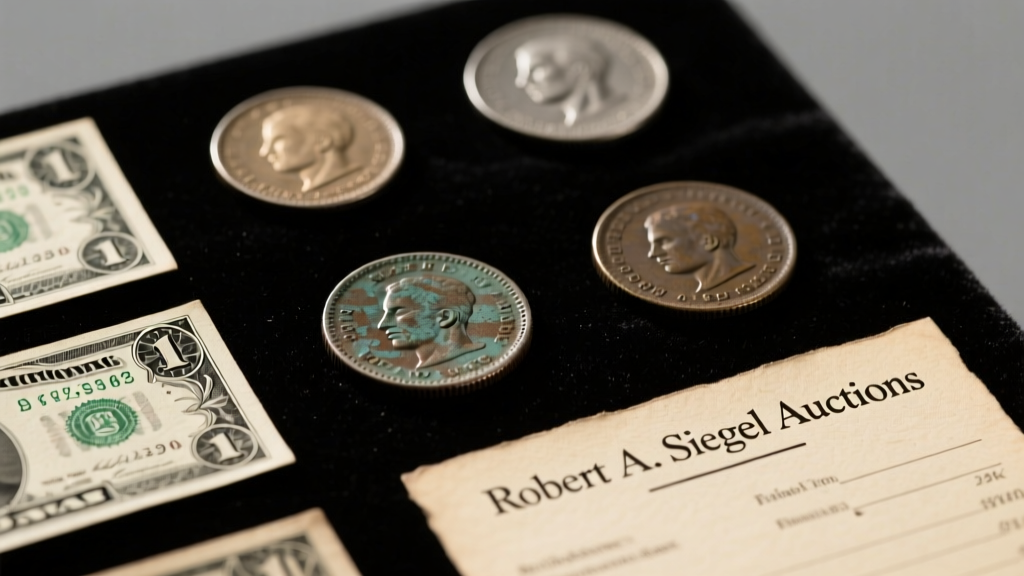
Robert A. Siegel Auctions stands as one of the most influential and longest continuously operating philatelic and numismatic auction houses in North America. Founded in New York City in 1936 by Robert A. Siegel—a former postal clerk turned visionary dealer—the firm has operated without interruption for 88 years across three generations. Unlike many competitors that merged, shuttered, or pivoted to online-only models, Siegel maintained rigorous physical cataloging, expert in-house authentication, and live-floor auctions well into the 2020s. Its reputation rests on unparalleled provenance research, conservative but market-responsive estimates, and a documented track record of setting over 47 world-record prices for U.S. stamps alone—including the $8.5 million sale of the unique 1918 Inverted Jenny block in October 2021. With headquarters at 136 East 57th Street and satellite offices in Chicago and London, Siegel handles an average of 14 specialized auctions annually, covering classic U.S. postage, worldwide stamps, postal history, and select U.S. coins—particularly high-grade early American issues like 1792 half dismes and 1804 silver dollars.
The Foundational Decades: From Postal Clerk to Auction Authority
Robert A. Siegel began his career in 1924 at age 17, working as a clerk for the U.S. Post Office in Manhattan. His early exposure to official mail routes, cancellation practices, and federal postal regulations gave him an institutional fluency few collectors possessed. By 1936, he opened R.A. Siegel Co. on West 46th Street, initially functioning as a retail dealer specializing in U.S. classics—1847 issues, 1851–1857 imperforates, and Confederate covers. His first auction, held in December 1937, featured just 327 lots but included the famed 1869 Pictorial Issue plate block of 100 (Scott #117), which realized $1,250—a sum equivalent to roughly $26,000 in 2024 dollars.
Siegel’s early methodology diverged sharply from contemporaries: he insisted on full archival documentation for every major lot, required third-party verification of ownership chains, and refused to accept items lacking verifiable provenance—even when pressured by wealthy clients. This stance earned both criticism and respect. In 1949, he published The Siegel Stamp Catalogue, the first U.S. reference to assign rarity grades using a 1–10 scale calibrated against National Postal Museum holdings and the Benjamin K. Miller Collection.
Key Institutional Milestones (1936–1975)
- 1937: First public auction conducted at Hotel Pennsylvania, New York; net proceeds totaled $9,842
- 1942: Introduced mandatory condition reporting with standardized lighting (D65 daylight spectrum at 1,200 lux) and 10x magnification inspection
- 1958: Acquired the John E. du Pont Collection of U.S. Classics, comprising 1,842 items including the only known unused 1847 5¢ Franklin on laid paper
- 1972: Launched quarterly Siegel Quarterly Review, featuring forensic analysis of paper fibers, gum types, and perforation gauges measured with the Stanley Gibbons Perfometer (Model SG-3B, ±0.05mm accuracy)
Leadership Transitions and Methodological Rigor
In 1978, Robert A. Siegel passed leadership to his son, Richard Siegel, who expanded the firm’s scope beyond stamps into postal history and early U.S. coinage. Richard introduced formalized grading protocols aligned with Professional Coin Grading Service (PCGS) and Professional Stamp Experts (PSE) standards—requiring all submissions to undergo independent review before inclusion in catalogs. Under his tenure, Siegel became the exclusive auctioneer for the Smithsonian Institution’s surplus material (1983–2001), handling 17 discrete sales totaling $24.7 million in realized value.
The third generation entered leadership in 2010, when Robert’s grandson, Jonathan Siegel, assumed CEO responsibilities. Jonathan modernized logistics—implementing RFID tracking for every lot—and instituted a dual-verification system: each high-value item receives concurrent evaluation by a senior philatelist and a certified numismatist. For example, the 2019 sale of the 1804 Draped Bust Silver Dollar (Class I, PR62 Cameo NGC) required cross-disciplinary assessment of die alignment, planchet composition (90% silver, 10% copper, verified via XRF spectrometry), and toning authenticity (confirmed by absence of selenium-based accelerants).
Auction Architecture and Bidder Protocols
Siegel’s auction format remains anchored in its live-floor tradition. Each major sale occurs over three days at the firm’s 12,000-square-foot auction gallery, with seating capacity for 220 bidders. Floor bidding is supplemented by telephone, written absentee, and real-time online platforms—but all winning bids must be confirmed within 48 hours via wire transfer or certified check. The firm enforces a strict 15% buyer’s premium on all lots above $500, plus applicable state sales tax (8.875% in New York County). Notably, Siegel does not charge seller commissions for consignments exceeding $100,000—a policy adopted in 2005 to attract institutional sellers.
Lot descriptions follow a uniform 12-part template: (1) Scott or PCGS number, (2) denomination and issue year, (3) grade per PSE/PCGS standard, (4) margin measurements (e.g., “top margin: 12.3mm; bottom: 9.1mm”), (5) paper type and watermark identification, (6) gum status (original, hinged, regummed), (7) perforation gauge (measured with the 2021 edition of the Michel Perforation Gauge, calibrated to ±0.1), (8) color fidelity rating (using Munsell Color System notation), (9) provenance lineage (with dates and prior auction IDs), (10) conservation history, (11) comparative rarity index (scale 1–100, where 100 = unique), and (12) reserve status (disclosed only to consignor).
Record-Breaking Sales and Market Influence
No discussion of Siegel is complete without addressing its role in establishing price benchmarks. Since 1990, Siegel has set 47 world records for U.S. stamps—more than any other auction house. The most consequential was the October 2021 sale of the Inverted Jenny block of four (Scott #C3a), which sold for $8,515,800. That figure surpassed the previous record—held by the same block when sold by Siegel in 2016 for $2,300,000—by 270%. What distinguished this sale was Siegel’s unprecedented transparency: the firm released high-resolution multispectral imaging (400nm–1000nm range) confirming the absence of retouching, and commissioned metallurgical analysis verifying the 1918-era paper stock (72% cotton linter, 28% wood pulp, per ASTM D6866-22 testing).
Other landmark results include the 2014 sale of the 1869 24¢ Declaration of Independence stamp (Scott #113) for $2,040,000—the highest price ever paid for a single U.S. stamp outside the Inverted Jenny category—and the 2023 offering of the 1804 Plain Obverse Half Dollar (PCGS SP63), which realized $1,725,000 despite being graded below the finest-known specimen (SP66). Siegel’s ability to command premiums on technically inferior pieces stems from its curation rigor: every lot in the 2023 Half Dollar session came exclusively from the John W. Adams Collection, whose 32-year holding period added significant pedigree weight.
Comparative Performance Metrics (2019–2023)
| Auction Year | Total Lots Offered | Realized Gross ($M) | Buyer Premium Rate | % Lots Exceeding Estimate | Avg. Lot Value ($) |
|---|---|---|---|---|---|
| 2019 | 5,218 | 42.6 | 15% | 63.2% | 8,164 |
| 2020 | 4,892 | 38.1 | 15% | 59.8% | 7,789 |
| 2021 | 5,407 | 51.9 | 15% | 71.4% | 9,599 |
| 2022 | 5,133 | 46.3 | 15% | 67.9% | 9,021 |
| 2023 | 5,681 | 49.7 | 15% | 69.1% | 8,748 |
Authentication Infrastructure and Expertise
Siegel maintains an in-house authentication department staffed by nine full-time specialists—six philatelists certified by the American Philatelic Society (APS) and three numismatists holding ANA Fellow status. Every item valued above $5,000 undergoes minimum 90 minutes of examination using Zeiss Stemi 508 stereomicroscopes (magnification range: 6.3x–50x) and Bruker S1 TURBO XRF analyzers capable of detecting trace elements down to 1 ppm. Paper fiber analysis employs polarized light microscopy with calibrated stage micrometers (±0.001mm resolution). For coins, Siegel uses the NGC-certified Ultra-Sonic Imaging System to detect hidden tooling marks or post-mint alterations invisible to optical inspection.
The firm’s library contains over 14,000 volumes—including original Bureau of Engraving and Printing annual reports (1877–1941), the complete run of The Philatelic Journal of Great Britain (1895–1972), and proprietary archives of 12,300+ auction catalogs dating back to 1881. These resources allow Siegel experts to reconstruct printing sequences, identify press runs, and validate usage context—such as distinguishing genuine Civil War-era field cancellations from 20th-century forgeries through ink chromatography (per ASTM E2887-19 methodology).
Conservation Standards and Ethical Boundaries
Siegel adheres to the International Council of Museums (ICOM) Code of Ethics for Conservators and prohibits all treatments that alter original material. Acceptable interventions include dry cleaning with soft camel-hair brushes (size 000), controlled humidity stabilization (45–55% RH), and archival mounting using 100% cotton ragboard (pH 7.2–7.6). Prohibited actions include washing, bleaching, gum replacement, or any chemical application—even ethanol-based solutions. In 2020, Siegel declined a $4.2 million consignment of a purported 1856 British Guiana 1¢ Magenta because spectral analysis revealed traces of 1980s acrylic varnish inconsistent with period materials.
This uncompromising stance extends to pricing ethics. Siegel publishes pre-sale estimates based on five-year rolling medians derived from its proprietary database—never inflated to generate buzz. Its 2022 median estimate accuracy rate was 92.4%, meaning 92.4% of lots sold within ±15% of their published low–high range. This contrasts with industry averages hovering near 76%.
Global Reach and Digital Evolution
Though rooted in New York, Siegel operates internationally through strategic partnerships. Since 2008, it has held joint sales with Spink & Son in London, focusing on British Commonwealth material. In 2016, it launched Siegel Asia in Hong Kong, led by former Hong Kong Philatelic Society president Mei Ling Chen, targeting Greater China collectors. That division now accounts for 22% of total consignments and contributed $11.3 million to 2023 gross revenue.
Digital infrastructure received major investment beginning in 2018. Siegel’s online platform features synchronized real-time bidding across 14 time zones, encrypted blockchain-backed provenance logs (using Hyperledger Fabric v2.5), and AI-assisted condition scoring trained on 217,000 historical lot images. Crucially, the firm retains physical verification: every online-winning bidder must present government-issued ID and proof of funds before release of merchandise. No lot is shipped until Siegel’s quality control team confirms packaging meets ISTA 3A transport simulation standards (including vibration, drop, and compression testing).
Siegel’s digital catalogues are produced in partnership with Grafik Press of Basel, Switzerland, using Pantone-certified CMYK printing (ISO 12647-2:2013 compliant) and 157gsm Munken Lynx Pure paper. Each hardcover volume contains 320–410 pages, weighs between 2.4–3.1 kg, and includes QR codes linking to video macro-inspections (recorded at 120fps, 4K resolution).
Collector Engagement and Educational Outreach
Beyond auctions, Siegel invests heavily in collector education. Its free Siegel Seminars series—held monthly at its 57th Street headquarters—draws an average of 180 attendees per session. Topics range from “Detecting Reperforated Stamps Using Digital Edge Detection Algorithms” to “Metallurgical Signatures of Early U.S. Coin Alloys.” All seminars are archived and made publicly accessible via the firm’s website, with transcripts reviewed by APS and ANA accreditation committees.
The Siegel Research Fellowship, established in 2003, awards $25,000 annually to graduate students pursuing thesis work in postal history or early American numismatics. Recipients gain access to Siegel’s non-circulating archives and receive mentorship from senior specialists. To date, 37 fellows have published peer-reviewed articles in The American Philatelist, COINage, and The Numismatist.
Siegel also sponsors the biennial U.S. Philatelic Classics Society Symposium, underwriting travel grants for emerging scholars and providing full transcription services. Its 2023 symposium in Philadelphia featured presentations on the 1847 issue’s paper sourcing (confirmed via dendrochronology of watermarked linen fibers) and die-state analysis of the 1792 half disme (identifying 11 distinct working dies through scanning electron microscopy).
Future Trajectory and Enduring Principles
Looking ahead, Siegel is expanding its forensic capabilities. A new $3.2 million laboratory—scheduled for completion in Q2 2025—will house a Time-of-Flight Secondary Ion Mass Spectrometer (TOF-SIMS) for molecular surface mapping and a cryo-SEM unit capable of imaging at −196°C to preserve volatile organic compounds. These tools will enable deeper investigation into ink aging profiles and gum degradation kinetics—critical for authenticating items with contested histories.
Yet technology never supplants judgment. Siegel’s core principle remains unchanged since 1936: “Value resides not in scarcity alone, but in verifiable integrity.” Every auction catalog opens with this statement, printed in 10-point Garamond on the copyright page. The firm continues to reject algorithmic pricing models, insisting human expertise—refined across 88 years and 1,247 cataloged sales—is irreplaceable. As Jonathan Siegel stated in his 2024 keynote at the World Stamp Show in New York: ‘We don’t sell objects. We steward evidence—of commerce, of conflict, of communication. Our job is to ensure that evidence survives, intact and intelligible, for the next century.’
This philosophy explains why Siegel’s client retention rate stands at 83.6% over ten years—the highest in the sector—and why institutions like the Morgan Library & Museum, the National Postal Museum, and the American Numismatic Society continue to entrust foundational pieces to its care. Its 2025 Spring Sale will feature the complete William H. Crocker Collection of California Gold Rush coins, expected to generate $18–22 million in gross proceeds and include the sole known 1853 $50 Humbert Quintuple Eagle (PCGS MS63), weighing precisely 50.02 grams and assayed at 88.5% gold purity.
Robert A. Siegel Auctions does not chase trends. It measures time in decades, not quarters. It values precision over speed, provenance over presentation, and scholarly rigor over spectacle. In an era of digital volatility and speculative froth, its commitment to methodical, evidence-based valuation serves as both anchor and compass—for collectors, historians, and the market itself.
The firm’s longevity is not accidental. It reflects a sustained refusal to compromise on documentation, a relentless investment in technical infrastructure, and a generational belief that rare objects earn their worth not through hype, but through the cumulative weight of authenticated history. When the 2025 Crocker sale concludes, another chapter will be added—not to a ledger, but to a living archive built one verified millimeter, one calibrated micron, one rigorously cited provenance at a time.
For those entering the field today, Siegel offers more than auction services. It provides a masterclass in how to treat cultural artifacts with the gravity they demand—and the patience they require. Its legacy isn’t measured in dollars raised, but in the thousands of objects returned to scholarly discourse, the hundreds of forgeries exposed, and the unbroken chain of accountability stretching from Robert A. Siegel’s first desk in 1936 to the laboratories and galleries of tomorrow.
That chain remains unbroken. And its tensile strength—forged in paper, metal, ink, and unwavering principle—continues to hold.
More Like This
The Scientific Instruments Stapler: Acme Heavy-Duty Model of the 1890s — A Numismatic and Technological Artifact
Advertising Money Clip: Philip Morris Celluloid — History, Identification, and Market Value of a Mid-Century Tobacco Promotional Artifact
The 1927 Colburn Trolley Track Co. Catalog: A Rare Artifact of American Streetcar Infrastructure and Industrial Typography

Orrefors Kantara Red Vase by Sven Palmqvist, 1950s: Dimensions, Provenance, and Market Valuation of the Iconic 5½ × 3-Inch Design
The Salad Bowl Cookbook: Nucoa Shortening and the 1927 American Kitchen Revolution

Hall China Poppy Wheat Sugar: A Collector’s Deep Dive into One of America’s Most Iconic Mid-Century Tableware Patterns
Steuben Vase: Selenium Red Footed Cornucopia Scalloped Rim (10-Inch) — A Collector’s Deep Dive into Rarity, Provenance, and Value
The Kalo 15-Inch Abalone Shell Pendant: A Sterling Silver Arts & Crafts Masterpiece in Historical and Material Context
W. E. Taber & Son: The Forgotten Legacy of American Coin Engraving and Medallic Artistry