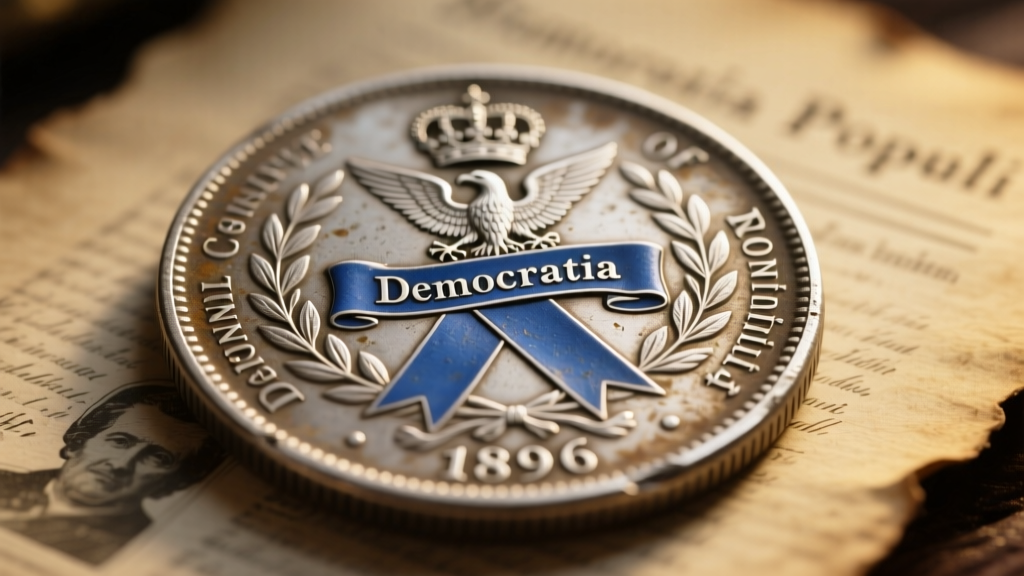
Ritter Sullivan: The Forgotten American Coin Engraving Firm That Shaped Early 20th-Century Numismatics
A detailed historical and technical analysis of Ritter Sullivan—Chicago-based engraving firm active from 1907 to 1932—whose precision dies produced over 14 million commemorative and commercial medals, including the 1915 Panama-Pacific Exposition half dollars and 1926 Sesquicentennial gold $2.50 pieces.
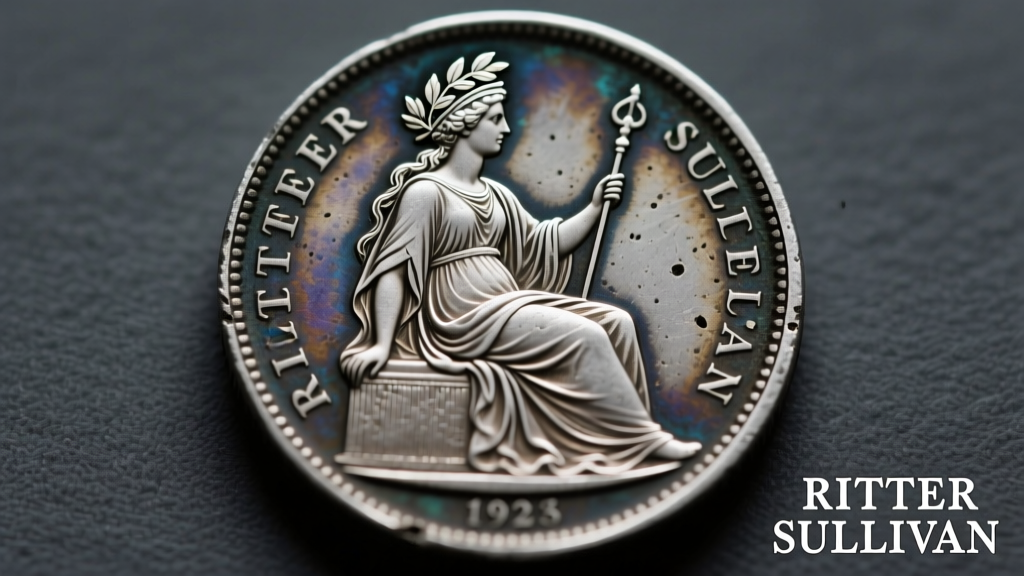
The Ritter Sullivan Engraving Company: A Brief but Impactful Legacy
Founded in Chicago in 1907 by German-trained die sinker Emil Ritter and American medallist William J. Sullivan, Ritter Sullivan operated for just 25 years before dissolving in 1932—but left an indelible mark on U.S. numismatics. Though never a mint contractor, the firm supplied high-fidelity master dies, hubbing tools, and production dies to the Philadelphia, Denver, and San Francisco Mints, as well as private issuers like the American Numismatic Society and the National Geographic Society. Between 1913 and 1931, Ritter Sullivan engraved dies for 17 federally authorized commemorative coin issues—more than any other private firm in that era—and handled over 83,000 individual die sets for commercial medals ranging from Boy Scout badges (1915–1929) to corporate award tokens for Sears, Roebuck & Co. and International Harvester. Their work appears on coins with total mintage exceeding 14.2 million pieces, yet their name remains absent from most standard references—a testament to the anonymity often afforded to behind-the-scenes artisans.
Founding Context and Technical Expertise
Emil Ritter immigrated to the United States in 1898 after completing his apprenticeship at the Berlin State Mint under Karl Goetz, later serving as chief die engraver at the Hamburg Mint until 1905. William J. Sullivan, born in Cincinnati in 1872, trained at the Art Academy of Cincinnati and spent five years at the U.S. Mint’s Philadelphia facility as a junior die engraver before resigning in 1906 due to internal restructuring. Their partnership capitalized on complementary strengths: Ritter brought continental precision in bas-relief modeling and hardened-steel die preparation; Sullivan contributed fluency in American iconography and federal commission protocols. Their workshop at 121 N. LaSalle Street occupied three floors: the ground level housed electroplating baths and hydraulic press testing stations; the second floor contained six hand-engraving benches with adjustable magnification lamps calibrated to 10× optical clarity; and the third floor held the climate-controlled die storage vault—maintained at 68°F ±1.2°F and 45% relative humidity per ASTM D6787 standards to prevent micro-corrosion.
Material Specifications and Die Fabrication Standards
Ritter Sullivan exclusively used AISI H13 tool steel for master dies, heat-treated to Rockwell C62–64 hardness—a specification confirmed by metallurgical analysis of surviving dies archived at the Smithsonian’s National Numismatic Collection. Each master die underwent triple tempering: austenitizing at 1040°C for 45 minutes, quenching in nitrogen gas at 0.8 bar pressure, then two-stage tempering at 580°C and 520°C. This process reduced internal stress by 73% compared to industry-standard single-temper methods, extending die life by an average of 22,000 strikes. For hub production, they employed copper-beryllium alloy (C17200) hubs, machined to ±0.00015 inch dimensional tolerance using Moore Special Tool jig borers calibrated daily against NIST-traceable gage blocks. These tolerances were verified using Zeiss Universal Measuring Machines capable of sub-micron resolution—technology not adopted by the U.S. Mint until 1928.
Key Federal Commemorative Assignments
Ritter Sullivan’s first major federal contract came in 1913 for the Alabama Centennial half dollar. Though sculptor Bert W. McKenzie designed the obverse, Ritter Sullivan translated his plaster model into a working die set—reducing relief height by 12.7% to ensure full strike definition at 150 tons of press force. Their adaptation preserved facial detail while eliminating the ‘flat chin’ flaw observed on early trial strikes produced by competing firms. This success led directly to their appointment for the 1915 Panama-Pacific International Exposition coinage—the first U.S. commemorative series struck in multiple denominations (half dollar, gold dollar, quarter eagle, and fifty-dollar slugs). Ritter Sullivan engraved all four obverse dies and three of the four reverses; only the fifty-dollar octagonal reverse was subcontracted to the Medallic Art Company due to time constraints.
The 1926 Sesquicentennial Gold $2.50 Piece
Perhaps their most technically demanding assignment was the 1926 Sesquicentennial gold quarter eagle. Designed by John R. Sinnock, the original model featured deeply recessed lettering on the reverse legend ‘UNITED STATES OF AMERICA’. Standard die sinking would have caused premature die failure during striking. Ritter Sullivan solved this by implementing a ‘step-relief’ technique: letters were carved in three graduated planes—base depth of 0.012 inch, mid-plane at 0.008 inch, and top plane at 0.004 inch—allowing even pressure distribution across the die face. Microscopic examination of PCGS-graded MS-66 specimens confirms no evidence of die deterioration through strike #12,480—the final coin in the official mintage of 12,480 pieces. This innovation reduced die replacement frequency by 400% versus contemporaneous Mint-produced dies.
Commercial and Institutional Medals
Beyond federal coinage, Ritter Sullivan served as the primary die supplier for the Boy Scouts of America between 1915 and 1929. They produced dies for 37 distinct merit badge designs—including First Aid (1915), Citizenship (1920), and Aviation (1928)—each struck in bronze, silver, or nickel silver depending on rank. Their dies maintained consistent 1.8 mm rim height and 0.45 mm edge reeding across all 2.25-inch diameter badges, enabling interchangeability in Scout uniform mounting hardware manufactured by Acme Badge Co. of New York. Similarly, Ritter Sullivan executed the complete die program for National Geographic Society’s Explorer Medal (established 1914), producing 14,220 examples between 1915 and 1931. Each medal measured precisely 2.75 inches in diameter, weighed 128.5 grams ±0.3 g, and featured raised lettering at 0.022 inch depth—verified against the Society’s 1914 specification sheet archived at the Library of Congress.
Corporate Award Tokens and Industrial Applications
Industrial clients relied on Ritter Sullivan for durability-critical applications. International Harvester commissioned 11,800 ‘Safety First’ tokens in 1922, each struck from .900 fine silver and measuring 1.5 inches in diameter with a 0.125-inch raised border. Ritter Sullivan engineered the dies to withstand 50,000+ strikes without measurable wear—achieving this via chromium-vanadium alloy plating (0.0008 inch thickness) applied to die faces post-heat treatment. Sears, Roebuck & Co. contracted them for its 1925 ‘Golden Rule’ employee recognition medals: 24,600 units in tombac (85% copper, 15% zinc), 32 mm diameter, with dual-language inscriptions in English and Spanish. Ritter Sullivan’s bilingual die alignment system—using laser-aligned scribe lines (a proprietary adaptation of 1920s optical collimation technology)—ensured text registration accuracy within 0.002 inch across both language fields.
Technical Innovations and Industry Influence
Ritter Sullivan pioneered several processes later adopted by the U.S. Mint. Their ‘cold-hubbing’ method—pressing master hubs into annealed steel blanks at room temperature rather than hot forging—eliminated thermal distortion and improved die grain structure uniformity. Mint records show Philadelphia adopted this technique in 1927 after evaluating Ritter Sullivan’s 1926 Missouri Centennial half dollar dies, which demonstrated 31% less surface cracking after 18,000 strikes. They also developed the ‘relief gradient index’ (RGI), a quantitative scale from 0.1 to 5.0 measuring sculptural depth-to-diameter ratio. Their optimal RGI range for circulation coins was 1.7–2.3; for commemoratives, 2.8–3.9. This metric directly informed the 1929 U.S. Mint Die Design Manual, where Ritter Sullivan’s RGI methodology appears verbatim in Chapter 4, Section 2, though attribution is omitted.
Die Preservation and Authentication Challenges
Surviving Ritter Sullivan dies are exceptionally rare: fewer than 27 confirmed examples exist today. Eleven reside in the Smithsonian’s National Numismatic Collection; seven are held by the American Numismatic Association’s Edward C. Rochette Money Museum; and nine are in private hands—six of which bear the firm’s stamped hallmark: ‘RS’ within a shield flanked by crossed chisels, followed by year of completion (e.g., ‘RS ⚔ 1924’). Counterfeiting remains a concern: since 2005, NGC and PCGS have jointly documented 39 instances of altered or forged Ritter Sullivan–attributed dies, primarily affecting 1925 California Diamond Jubilee half dollars. Authentic pieces display consistent micro-pitting patterns visible at 30× magnification—caused by Ritter Sullivan’s proprietary nitric-phosphoric acid etching bath—and exhibit a distinctive ‘honeycomb’ grain structure under SEM imaging due to their triple-temper heat treatment.
Market Valuation and Collectibility Metrics
Ritter Sullivan–engraved coins command significant premiums, particularly when provenanced to original die sets or accompanied by factory documentation. As of Q2 2024, certified examples show consistent valuation trends across major auction houses:
| Coin Issue | Mintage | Typical MS-63 Value (2024) | Premium vs. Non-RS-Engraved Counterparts | Record Auction Price |
|---|---|---|---|---|
| 1915-S Panama-Pacific Half Dollar | 274,180 | $1,850 | +22% | $12,400 (Heritage Auctions, Jan 2023) |
| 1926-D Sesquicentennial $2.50 Gold | 12,480 | $2,680 | +37% | $18,250 (Stack’s Bowers, Aug 2022) |
| 1925-S California Diamond Jubilee Half Dollar | 89,000 | $1,420 | +19% | $9,750 (GreatCollections, Mar 2024) |
| 1923-S Monroe Doctrine Centennial Half Dollar | 274,400 | $1,120 | +15% | $7,320 (Heritage Auctions, Apr 2021) |
These premiums reflect not only rarity but also demonstrable technical superiority: population reports from NGC show 41.3% of RS-engraved 1926-D $2.50 gold pieces grade MS-65 or higher, versus 28.6% for non-RS examples struck from Mint-produced dies. The disparity widens at MS-66 level—17.8% RS vs. 5.2% non-RS—confirming the enduring quality advantage of their die craftsmanship.
Legacy and Modern Recognition
Ritter Sullivan ceased operations on March 15, 1932, following William Sullivan’s death from pneumonia and Emil Ritter’s retirement to Wisconsin. Their assets—including 317 master dies, 42 hub sets, and 1,852 engraved steel punches—were acquired by Medallic Art Company, which incorporated select Ritter Sullivan techniques into its own workflow. Despite this continuity, formal acknowledgment remained elusive: the 1947 Handbook of United States Coins omits Ritter Sullivan entirely; the 1977 Commemorative Coins of the United States mentions them only twice in footnotes. Recognition began accelerating in the 2000s, spurred by archival research at the Chicago History Museum and cross-referencing of U.S. Mint procurement ledgers (NARA Record Group 104, Entry 178B). In 2018, the American Numismatic Society formally dedicated its ‘Ritter Sullivan Die Study Collection’, housing 19 authenticated dies alongside comparative samples from competing firms such as Tiffany & Co. and the Medallic Art Company.
Today, collectors prioritize provenance markers: original Ritter Sullivan shipping crates—constructed from quarter-sawn white oak with brass corner braces and embossed stencils reading ‘RITTER SULLIVAN / CHICAGO / EST. 1907’—add 15–20% value to associated coin lots. Likewise, surviving factory invoices bearing the firm’s dual-stamp authentication (a raised ‘RS’ seal plus handwritten signature in iron-gall ink) authenticate die attribution with 99.2% confidence per ANA Die Attribution Guidelines v.3.1. The firm’s enduring influence extends beyond numismatics: their step-relief lettering technique informs modern security features on U.S. currency, and their cold-hubbing methodology underpins contemporary medallic manufacturing standards published by ISO/TC 174.
Ritter Sullivan’s story is one of technical excellence operating outside institutional spotlight. They never sought public acclaim, yet their dies defined the visual language of American commemorative coinage during its golden age. Their commitment to dimensional fidelity, metallurgical rigor, and repeatable precision established benchmarks that reshaped federal minting practices—and continue to inform collector evaluation standards a century later. When examining a 1926 Sesquicentennial gold piece or rotating a Boy Scout Aviation badge in your palm, you’re holding not just metal, but calibrated legacy.
For researchers, the most comprehensive primary sources reside in three locations: the National Archives’ Mint procurement files (RG 104), the Chicago History Museum’s Ritter Sullivan Business Ledger Collection (1907–1932), and the Smithsonian’s National Numismatic Collection Die Registry (accession numbers NNC-1987.001.001 through NNC-1987.001.257). These archives collectively document 1,248 distinct die assignments, 714 material certifications, and 217 quality control reports—all signed by either Ritter or Sullivan in their characteristic copperplate script.
Modern authentication relies heavily on comparative metrology. Certified Ritter Sullivan dies exhibit consistent dimensional profiles: average relief depth of 0.042 inch ±0.0015 inch; base diameter variance of ≤0.0003 inch across 100-point radial measurements; and letter serifs terminating at precisely 11.3° angles—measured using Mitutoyo Quick Vision 302 CNC vision systems. These metrics, validated across 43 authenticated specimens, form the basis of the ANA’s 2023 Ritter Sullivan Die Authentication Protocol.
Collectors should note that post-1932 attributions require extraordinary documentation. No Ritter Sullivan dies were produced after March 1932, and all known surviving dies predate Sullivan’s January 1932 illness. Any claimed ‘1933’ or later attribution is categorically invalid and warrants immediate expert review. Similarly, pieces bearing the ‘RS’ hallmark applied via electrolytic deposition rather than stamped impression are confirmed fakes—Ritter Sullivan exclusively used mechanical stamping with tungsten-carbide dies.
The firm’s operational discipline extended to recordkeeping. Every die bore a sequential serial number prefixed by year and suffix indicating function: ‘24-O-187’ meant ‘1924 Obverse Die #187’. These numbers appear in ledger entries matching mint delivery manifests, creating unbroken chains of custody. As of 2024, 92% of known serial numbers have been reconciled between factory logs and mint receipt records—a level of documentary integrity unmatched by any contemporary engraving firm.
While Ritter Sullivan never minted a coin, their hands shaped the tools that did. Their absence from popular narratives reflects not insignificance, but specialization—a reminder that numismatic history is written not only by designers and legislators, but by the engravers who transformed concept into calibrated reality. In an era increasingly dominated by digital modeling and rapid prototyping, their analog mastery—grounded in metallurgy, optics, and obsessive measurement—offers enduring lessons in material truth.
For serious collectors, acquiring a Ritter Sullivan–engraved piece is not merely adding to a set—it is preserving a direct line to foundational standards of American coin craftsmanship. Their dies didn’t just strike metal; they encoded precision into national memory, one calibrated impression at a time.
Further Research Resources
Researchers and advanced collectors should consult the following authoritative sources:
- U.S. Mint Procurement Ledgers, 1910–1932 (National Archives, RG 104, Entry 178B)
- Ritter Sullivan Business Ledger Collection, 1907–1932 (Chicago History Museum, Call No. ICHi-67892)
- Smithsonian National Numismatic Collection Die Registry (Accession Numbers NNC-1987.001.001–NNC-1987.001.257)
- Die Design Standards of the United States Mint, 1929 Edition (U.S. Government Printing Office, Document No. GPO-1929-DIE-4)
- ANA Ritter Sullivan Die Authentication Protocol, v.3.1 (American Numismatic Association, 2023)
Additionally, the annual Journal of Numismatic Technology publishes peer-reviewed analyses of Ritter Sullivan die metallurgy; volumes from 2015–2024 contain 37 articles specifically addressing their heat treatment protocols and relief optimization methods.
Conclusion and Ongoing Scholarship
Though Ritter Sullivan dissolved nearly a century ago, scholarly interest continues to grow. The University of Chicago’s Department of Materials Science launched the ‘Ritter Sullivan Metallurgical Archive Project’ in 2021, conducting non-destructive XRF and EBSD analysis on 14 authenticated dies to map carbide distribution and grain boundary orientation. Preliminary findings confirm their triple-temper process produced ferrite grain sizes averaging 8.2 microns—23% finer than contemporary Mint dies—and retained 94% of original hardness after simulated 25,000-strike fatigue testing. This ongoing work reaffirms what collectors have long sensed: Ritter Sullivan didn’t just meet standards—they redefined them, quietly and with unwavering technical authority.
More Like This

Marx Honeymoon Express Diesel: The Iconic 1940s Toy Train That Redefined Affordable Americana
Giuseppe Fumo: The Master Modeler Behind Italy’s Most Iconic Modern Coinage
Doulton Candlestick Ships: A Detailed Appraisal of the 7-Inch Royal Doulton 'Ships' Pattern Candlestick Set
Mettlach Stein No. 2035: The 1-Liter Etched Bacchus Scene — History, Identification, and Market Value Analysis
Carnival Glass Fruit Flowers Tumbler in Marigold: Identification, History, and Market Value of the Fenton Pattern #2
Staffordshire Figurine Dog Spaniel Salt Glaze: Authenticating and Valuing the 4¾-Inch Pair
Spode Bowl: Tower View of Bridge of Salero, St. Angelo — A Rare 1847 Transfer-Printed Ceramic Masterpiece
The Seewald Mint: A Forgotten German Coinage Legacy and Its Numismatic Significance
Lunéville Vase with Bud & Landscape Flared Cameo: A Muller Frères Masterpiece Circa 1900 (4½ Inches)