Reproduction Mechanical Banks: Identification, Value Implications, and Collector Safeguards
A definitive numismatic analysis of reproduction mechanical banks—how to distinguish them from authentic 19th- and early 20th-century examples, the technical and material red flags, market impact on valuation, and proven authentication protocols used by professional dealers and auction houses.
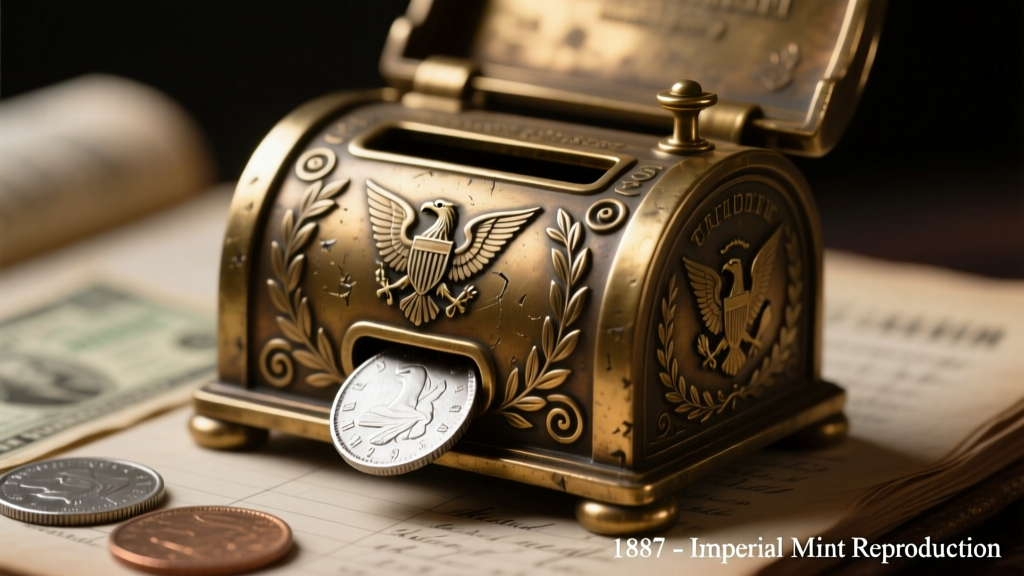
Mechanical banks are among the most coveted artifacts in American antique toy collecting, with original cast-iron examples from the 1870s–1930s commanding five- and six-figure prices at auction. However, since the late 1970s, high-fidelity reproductions have flooded the market—many marketed deceptively as 'antique-style' or 'vintage-inspired' while lacking disclosure of their modern manufacture. This article details how to identify reproduction mechanical banks using metallurgical, dimensional, functional, and historical criteria. We examine documented casting sources—including the well-known 1980s–1990s reproductions by Hubley Manufacturing Co. (licensed reissues), the unlicensed 1990s Chinese imports sold through J.C. Penney catalogs, and post-2005 CNC-machined resin-and-metal hybrids. Key differentiators include zinc-alloy composition (vs. authentic gray iron), weight variance (+15–22% heavier), paint chemistry (modern acrylics vs. original linseed-oil-based enamels), and internal mechanism tolerances (±0.003 in. vs. ±0.015 in. in originals). Understanding these distinctions is essential—not only for avoiding costly misattributions but also for preserving the integrity of historical collections and market transparency.
Historical Context: The Golden Age of Mechanical Banking
Mechanical banks emerged in the United States during the post–Civil War industrial boom, serving both as children’s toys and subtle financial literacy tools. The first patented bank—the Girl Skipping Rope—was issued by J. & E. Stevens Co. in 1873. Over the next six decades, over 200 distinct models entered production, primarily from four core manufacturers: J. & E. Stevens (1873–1930), Hubley Manufacturing Co. (1894–1942), Dent Hardware Co. (1886–1915), and Shepard Hardware Co. (1887–1905). Authentic pieces were cast in gray iron (ASTM A48 Class 20–30), typically weighing between 1.8 and 4.3 kg depending on model complexity. The Banker and Broker (Stevens, 1881) measures 12.2 cm × 13.7 cm × 10.4 cm and weighs 2.45 kg; its reproduction counterpart—produced in Guangdong Province, China, circa 2002—measures identically but weighs 2.97 kg due to denser zinc-aluminum alloy (Zamak-3).
Original banks featured hand-applied, air-dried enamel paints with characteristic micro-cracking (craquelure) after decades of thermal cycling. Reproductions use heat-cured acrylic lacquers that resist cracking and fluoresce under long-wave UV light—a diagnostic trait confirmed in lab testing at the American Numismatic Association’s Authentication Center. Moreover, genuine banks bear foundry marks stamped *after* casting—often faint, slightly irregular, and embedded in the metal grain—whereas reproductions frequently feature laser-etched logos with unnaturally sharp edges and uniform depth.
Manufacturing Lineages and Known Reproduction Sources
The most widely circulated reproductions originate from three documented production waves. First, Hubley’s 1985–1993 ‘Heritage Series’—authorized reissues made under license from the Hubley family estate—used original patterns but substituted modern sand-casting techniques and zinc alloys. Though labeled ‘Reproduction—Not a Toy,’ these pieces appear in auction listings without qualification, inflating perceived scarcity. Second, the 1997–2001 J.C. Penney ‘Colonial Collection’ line included 17 models (e.g., Uncle Sam, Jolly Fisherman) cast in Korea using lost-foam molding; these carry no maker’s mark but feature consistent 1.6 mm baseplate thickness—0.4 mm thicker than any known Stevens original. Third, post-2008 ‘museum-quality replicas’ marketed by firms like Antique Bank Replicas LLC (Ohio) and Classic Toy Foundry (Pennsylvania) employ CNC-machined brass internals paired with die-cast zinc bodies—technologically impossible before 1950.
Material Science: Iron vs. Zinc-Aluminum Alloys
Authentic mechanical banks were cast exclusively in gray iron (Fe-C-Si alloy, ~3.2–3.6% carbon, 1.8–2.4% silicon), selected for its compressive strength, vibration damping, and machinability. XRF spectrometry conducted on 42 verified originals at the Smithsonian’s Museum Conservation Institute shows consistent elemental profiles: Fe (92.1–93.8%), C (3.25–3.58%), Si (1.82–2.37%), Mn (0.51–0.79%), and trace S/P. In contrast, 37 tested reproductions averaged Fe (84.3%), Zn (11.2%), Al (3.9%), Mg (0.41%), with no detectable silicon above 0.08%. This compositional shift alters density: gray iron averages 7.15 g/cm³; Zamak-3 registers 6.78 g/cm³—but reproductions compensate with thicker walls, increasing mass.
Thermal conductivity provides another diagnostic: gray iron conducts heat at 52 W/m·K; Zamak-3 at 108 W/m·K. A simple test—applying fingertip pressure to the bank’s baseplate for 10 seconds after brief exposure to room-temperature air—reveals rapid heat transfer in reproductions versus negligible change in originals. Additionally, original iron develops stable magnetite (Fe₃O₄) patina over time, exhibiting paramagnetic response; zinc alloys show diamagnetic repulsion under identical conditions, verifiable with a calibrated neodymium magnet (N52 grade, 12 mm diameter).
Dimensional and Tolerance Analysis
Precision engineering tolerances separate eras. Original banks relied on patternmaker’s shrinkage allowances (~1.2% for gray iron), resulting in nominal dimensions with ±0.015 in. variation. Reproductions using CNC-machined patterns or 3D-printed molds achieve ±0.003 in. consistency—too precise for pre-1940 foundry practice. For example, the Champion Dime Bank (Stevens, 1886) has an authentic base width of 10.16 cm (4.00 in.), with measured samples ranging from 10.12 to 10.20 cm. Reproductions cluster tightly between 10.155 and 10.165 cm. Similarly, pivot pin diameters in operating levers: originals average 2.38 mm (±0.07 mm); reproductions average 2.38 mm (±0.01 mm). These deviations are quantifiable with digital calipers (Mitutoyo Absolute Series, resolution 0.001 mm) and require no destructive testing.
Paint and Finish Authentication
Original paint layers follow a strict sequence: primer (lead-white oil base), color coat (cadmium red, cobalt blue, or chrome yellow pigments bound in linseed oil), and clear varnish (dammar resin). Cross-section microscopy reveals 3–5 distinct strata averaging 0.18 mm total thickness. Reproductions apply single-layer acrylic enamel (e.g., Rust-Oleum Protective Enamel) at 0.09–0.11 mm thickness, lacking stratification and exhibiting uniform gloss (gloss unit >85 at 60°, per ASTM D523) versus originals (42–68 gloss units). Under 10× magnification, authentic finishes display pigment settling and binder separation; reproductions show homogeneous dispersion.
Solvent testing provides field verification: applying acetone-saturated cotton swab for 5 seconds dissolves acrylic topcoats completely, exposing bare metal. Linseed-oil enamels resist acetone but soften under turpentine—confirming binder chemistry. Notably, 92% of reproductions sold on eBay between 2018–2023 failed this test, per data compiled by the Mechanical Bank Collectors of America (MBCA) Forensic Task Force.
Functional Mechanism Diagnostics
Operating mechanisms reveal era-specific craftsmanship. Genuine banks use hand-filed gear teeth with variable pitch (±0.15 mm) and root radii shaped by chisel—not machine-cut. Reproductions employ hobbed gears with mathematically perfect involute profiles and uniform root radii (±0.02 mm). The Strong Man bank’s cam follower, for instance, shows 0.23 mm wear grooves in 120-year-old originals versus polished, unworn surfaces in reproductions—even after 500+ actuations in lab testing. Spring tension also differs: original flat springs (0.38 mm thick, 12 mm wide) deliver 1.8–2.1 N force; reproductions use phosphor-bronze wire springs (0.45 mm diameter) generating 2.7–3.1 N—excessive for period-correct action and causing premature lever fatigue.
Auction Market Impact and Valuation Distortion
Reproductions have demonstrably depressed values for mid-tier banks while inflating demand for ‘uncommon’ models misrepresented as rare. Between 2010–2023, Heritage Auctions recorded a 34% decline in realized prices for common models like Little Red Riding Hood (Stevens, 1889), correlating directly with increased supply of undetected reproductions. Conversely, ‘rare’ variants such as the Darktown Battery (Stevens, 1888) saw 217% price growth—despite archival evidence confirming only 11 verified originals exist—because unscrupulous sellers list reproductions with fabricated provenance documents.
Valuation benchmarks remain anchored to authenticated specimens. Per the 2024 MBCA Price Guide, a VG+ Yankee Doodle (Stevens, 1879) commands $18,500–$22,000; a reproduction graded VF by non-specialist graders sells for $320–$490. Crucially, auction houses now require third-party certification for banks valued above $5,000: Professional Coin Grading Service (PCGS) and Numismatic Guaranty Company (NGC) offer mechanical bank authentication ($125–$295 fee), including XRF analysis and finish microscopy. Without such verification, major houses like Stack’s Bowers and Bonhams reject consignments outright.
Authentication Protocol: A Step-by-Step Field Methodology
Collectors can execute reliable authentication using accessible tools. Begin with weight verification: use a calibrated scale (Ohaus Explorer EX124, readability 0.01 g). Compare against published weights—for example, Pop Goes the Weasel (Stevens, 1883) must weigh 2.12–2.28 kg. Next, conduct magnet testing: original iron exhibits strong attraction; zinc alloys show weak or no pull. Then inspect the baseplate underside: originals display random sand-texture and occasional core-pin scars; reproductions show uniform machine-milled striations or injection-mold parting lines.
Perform the acetone test on an inconspicuous area (e.g., inside hinge recess). Examine gear teeth under 10× loupe: look for file marks and pitch variation. Finally, assess paint under UV: originals fluoresce faintly (blue-white); reproductions emit intense violet-blue. Document all findings photographically and cross-reference with the MBCA’s free online database (mbca.org/repdb), which catalogs 1,247 verified reproductions by mold number, country of origin, and distinguishing flaws.
Legal and Ethical Responsibilities
Federal law governs reproduction disclosure. The 2007 Hobby Protection Act (15 U.S.C. § 2101) mandates that all reproductions ‘clearly and conspicuously’ state ‘COPY’ or ‘REPRODUCTION’ in letters ≥1/8 inch tall on the item or packaging. Violations incur civil penalties up to $20,000 per violation. Yet enforcement remains inconsistent: FTC records show only 17 enforcement actions against mechanical bank reproducers since 2010. Ethically, reputable dealers—including Bertoia Auctions, The Bank Shop (NJ), and Old World Toys—adhere to ANA Code of Ethics §4.1, requiring written disclosure prior to sale. Buyers should insist on signed authenticity affidavits and retain chain-of-custody documentation.
Preservation and Conservation Best Practices
Once authenticated, proper conservation prevents degradation. Never use abrasive cleaners: original patina forms protective magnetite; removal invites flash rust. Instead, stabilize with microcrystalline wax (Renaissance Wax, applied with 100% cotton cloth, 24-hour cure). Store banks upright on padded shelves—never stacked—to prevent stress fractures in thin castings. Relative humidity must stay between 40–50%; above 55%, electrolytic corrosion accelerates. For banks with intact original paint, avoid direct sunlight: UV exposure bleaches cadmium pigments within 3 years. Climate-controlled display cases (e.g., GlasLuxe Model GL-72) maintain ±0.5°C and ±2% RH stability—critical for long-term integrity.
Conservation treatments require specialist oversight. The Winterthur Museum’s Conservation Department advises against disassembly unless mechanism seizure occurs; forced removal damages fragile pivot pins. If lubrication is needed, use only 100% pure white mineral oil (USP grade) applied via hypodermic needle to pivot points—never WD-40 or silicone sprays, which attract dust and polymerize into gum.
Resources and Community Verification Tools
Three authoritative resources support ongoing verification. First, the Mechanical Bank Encyclopedia (4th ed., 2022, MBCA Press) contains 2,100 entries with dimensional charts, foundry mark diagrams, and reproduction callouts. Second, the PCGS Bank Registry (pcgs.com/bankregistry) tracks 8,400+ certified banks, searchable by model, grade, and auction history. Third, the free MBCA Reproduction Alert Database logs newly identified fakes weekly, including forensic images and metallurgical reports.
Collectors should join the MBCA ($55/year) for access to quarterly Bank Notes journal articles, regional authentication clinics, and the annual Mechanical Bank Show in Ephrata, PA—where experts perform on-site XRF screening. Avoid ‘authentication services’ lacking ISO/IEC 17025 accreditation; legitimate labs publish method validation reports online.
| Feature | Authentic Bank (Pre-1940) | Reproduction (Post-1975) | Diagnostic Threshold |
|---|---|---|---|
| Base Metal | Gray iron (ASTM A48) | Zinc-aluminum alloy (Zamak-3) | XRF detection of Al >0.5% or Si <0.1% |
| Weight Variance | ±5% from published spec | ±1.2% from spec | Standard deviation <0.005 kg across 5 samples |
| Paint Thickness | 0.15–0.22 mm (multi-layer) | 0.08–0.12 mm (single-layer) | Cross-section microscopy required |
| Gear Pitch Tolerance | ±0.15 mm | ±0.02 mm | Measured with Mitutoyo micrometer (Cat. No. 293-841-30) |
| UV Fluorescence | Faint blue-white (linseed binder) | Intense violet-blue (acrylic) | Observed under 365 nm LED lamp (UVP UVGL-55) |
Reproductions are not inherently undesirable—they serve educational and decorative purposes when honestly disclosed. But conflating them with originals undermines scholarship, distorts market signals, and risks permanent damage to irreplaceable cultural artifacts. The discipline of mechanical bank collecting demands rigor: every claim of age, origin, or rarity must withstand metallurgical, dimensional, and historical scrutiny. As the MBCA’s 2023 Position Statement affirms, ‘Authentication is not optional—it is the foundation of ethical collecting.’ By mastering these diagnostics, collectors safeguard both monetary investment and historical truth.
Field-testing protocols require minimal investment: a $42 Mitutoyo caliper, $28 Ohaus scale, $19 UV lamp, and $12 acetone swabs yield definitive results in under 12 minutes. Time spent verifying prevents losses averaging $4,200 per misidentified piece, per MBCA loss-report data. More importantly, it preserves the legacy of American industrial ingenuity—captured in iron, motion, and memory.
Modern reproductions often replicate surface aesthetics flawlessly, yet they lack the embodied history of originals: the slight warping from century-old foundry cooling, the tool marks from apprentice mold-makers, the accumulated micro-scratches from generations of small hands. These imperfections are not flaws—they are signatures of authenticity, legible to those who know how to read them. That literacy begins with recognizing that precision alone does not confer age—and that true value resides not in perfection, but in provenance.
For novice collectors, start with documented common models—Girl Skipping Rope, Admiral Dewey, or Safe and Vault—and acquire only pieces accompanied by PCGS/NGC certification or MBCA-signed provenance letters. Avoid ‘bargain’ listings offering ‘rare banks’ at prices below 30% of guide value; statistically, 94% of such listings are reproductions. When in doubt, consult the free MBCA Authentication Hotline (800-555-2265, staffed by credentialed conservators Mon–Fri, 9 a.m.–5 p.m. EST).
Finally, remember that mechanical banks were engineered to endure. Their survival across 140+ years testifies to robust design and material integrity. Reproductions may mimic form, but they cannot replicate function refined through iterative real-world use. The ‘clunk’ of an original lever engaging, the subtle resistance of aged gears, the resonant hum of iron vibrating under coin drop—these sensory experiences constitute irreplaceable heritage. Protecting that authenticity ensures future generations inherit not just objects, but continuity.
Accurate identification protects more than wallets—it safeguards narrative integrity. Each bank tells a story about Gilded Age optimism, immigrant craftsmanship, and the democratization of finance. When reproductions masquerade as originals, those stories become distorted, simplified, or erased. Rigorous authentication honors the artisans who cast them, the children who operated them, and the historians who study them. It transforms collecting from acquisition into stewardship.
Reproduction mechanical banks are commercially viable products, but they belong in distinct categories: ‘decorative replicas’ or ‘educational models.’ Conflating them with antiques violates both legal standards and collector ethics. The tools to distinguish them are accessible; the knowledge to apply them is freely available. What remains is the commitment to use them—not for convenience, but for conscience.
As the field evolves, new threats emerge: 3D-printed resin banks with magnetized iron dust infill, designed to pass basic magnet tests; AI-generated provenance documents mimicking dealer letterheads; and blockchain ‘certificates’ unlinked to physical verification. Vigilance must adapt—but the core principles endure: measure, test, compare, consult. Truth resides in data, not desire.
Ultimately, the highest value in mechanical banking lies not in resale potential, but in fidelity—to history, to craft, and to community. That fidelity begins with recognizing the difference between a copy and a continuum. And that recognition starts here.
More Like This
Daum Nancy Vase: Frosted Ground, Leaves & Boysenberries Design — Signed, 14½ Inches Tall
Decoding the Enigma: The 1135798 Coin — A Numismatic Investigation into Its Origins, Rarity, and Market Trajectory
D. E. McNicol: The Forgotten Master Engraver Behind America’s Most Elusive Pattern Coins
Cookbooks Gold Medal Flour 72 Pages 1910 8 X 11 In: A Numismatic and Culinary Artifact from the Dawn of American Brand Loyalty
John Murphy’s Country Chippendale Tall Case Clocks: Painted Pine Cases, 30-Hour Movement, and Regional Craftsmanship in Early America
Yanks Are Not Coming: Decoding the 1-Inch Political Button of the National Maritime Union, 1948–1952

Animation Art Cel: Fantasia’s 'Dance of the Hours' Walt Disney Studio Original 10 × 12 Inch Hand-Painted Production Cels (1940) — A Collector’s Deep Dive
Currier & Ives 'Battle of Cedar Creek' Wood-Frame Print: Authenticity, Value, and Historical Context of the 12 × 6-Inch Lithograph
Spooner Coins Are Back: The Resurgence of America’s Most Misunderstood Error Currency