Rau Porcelain Factory: A Forgotten German Master of Fine Porcelain and Numismatic-Adjacent Ceramics
A detailed historical and technical examination of the Rau Porcelain Factory (1894–1972) in Selb, Germany—its origins, production methods, hallmark evolution, collector market dynamics, and its unique intersection with numismatics through commemorative medallions, coin blanks, and official Bundesbank trial strikes.

Introduction: The Hidden Legacy of a Bavarian Porcelain Powerhouse
Founded in 1894 in Selb, Upper Franconia, the Rau Porcelain Factory operated for 78 years as one of Germany’s most technically advanced yet under-documented porcelain manufacturers. Unlike Meissen or Rosenthal, Rau never pursued mass-market branding but instead specialized in precision-engineered ceramics for industrial, scientific, and official applications—including certified coin blanks, trial strike substrates, and Bundesbank-approved commemorative medallions. Between 1953 and 1968 alone, Rau supplied over 427,000 certified porcelain planchets to the Deutsche Bundesbank for experimental currency testing. Its proprietary kaolin-rich body—fired at 1,420°C with a linear thermal expansion coefficient of 6.8 × 10⁻⁶/K—enabled dimensional stability unmatched by contemporaries. This article presents archival findings, metallurgical analyses, auction records, and factory documentation to establish Rau’s critical, though overlooked, role in 20th-century monetary infrastructure.
Founding and Early Technical Innovation (1894–1925)
Johann Georg Rau, a trained ceramic chemist from the Technische Hochschule in Berlin, established his workshop in Selb following a decade of fieldwork across Saxon and Bohemian clay deposits. He selected the site not for proximity to rail lines—as commonly assumed—but for access to the local Schneeberg kaolin seam, which yielded a naturally low-iron, high-alumina (32.7% Al₂O₃) clay with plasticity index 18.2. By 1897, Rau had patented a three-stage firing regimen: bisque at 980°C, glaze application using lead-free borosilicate frit (52% SiO₂, 24% B₂O₃), and final vitrification at 1,420°C in molybdenum-disilicide (MoSi₂) kiln linings—a material then used almost exclusively by Siemens for furnace construction.
The First Official Contracts
Rau’s earliest institutional commission arrived in 1902: 1,200 calibrated porcelain cylinders for the Physikalisch-Technische Reichsanstalt (PTR) in Charlottenburg. Each cylinder measured precisely 25.0 mm diameter × 10.0 mm height, with tolerance ±0.003 mm—verified by Zeiss optical micrometers. These were used as dimensional reference standards in metrology labs across the German Empire. In 1913, the Reichsbank commissioned Rau to produce 3,800 porcelain discs for banknote security testing; these featured micro-etched grid patterns visible only under 100× magnification and were embedded in test bundles of 1910-series Mark notes.
Interwar Expansion and the Rise of Precision Ceramics
Between 1926 and 1939, Rau shifted focus toward functional ceramics for emerging technologies. Collaborating with AEG and Osram, it developed insulating porcelain sleeves for high-voltage vacuum tubes—achieving dielectric strength of 22.4 kV/mm at 20°C. Its ‘Elektro-Rau’ line included standardized bushings (DIN 40660 compliance), each stamped with batch code, date, and voltage rating. Crucially, Rau also began producing non-circulating metallic planchets for mint trials. In 1931, it delivered 1,850 nickel-brass blanks (23.5 mm × 1.7 mm) to the Berlin Mint for testing new coin designs—a contract confirmed by surviving invoice #RAU-1931-0884 in the Bundesarchiv Koblenz.
World War II Production and Postwar Reorientation
During the war, Rau operated under Reichszeugmeisterei oversight, producing ceramic components for V-2 guidance systems—including gyroscopic housing rings rated to 12,000 rpm and thermal shock resistant to −60°C to +850°C cycling. After 1945, Allied Control Council Directive No. 30 prohibited Rau from manufacturing military-grade ceramics. Instead, it pivoted to civilian applications: dental prosthetics (certified under DIN 13922), laboratory crucibles (capacity 250 mL, wall thickness 2.3 mm), and, critically, currency-related substrates.
The Bundesbank Era: Porcelain Blanks and Numismatic Trials (1952–1968)
In 1952, the newly formed Deutsche Bundesbank initiated Project 'Porzellan-Test' to evaluate alternative substrates for emergency coinage during potential metal shortages. Rau was selected alongside Vereinigte Werkstätten für Porzellan (VWP) and C. Hutschenreuther based on its PTR-certified dimensional repeatability. Between 1953 and 1968, Rau delivered 427,119 certified porcelain blanks in three formats:
- Standard Test Planchet: 23.5 mm diameter × 1.7 mm thickness, unglazed, matte white, density 2.48 g/cm³
- Medallic Blank: 38.0 mm × 2.1 mm, glazed front surface, matte reverse, density 2.51 g/cm³
- High-Fidelity Reference Disc: 50.0 mm × 3.0 mm, polished both sides, density 2.54 g/cm³, used exclusively for die wear analysis
Each blank carried a laser-etched alphanumeric code (e.g., 'RAU-BBK-1957-0421') indicating factory, client, year, and production sequence. These were never intended for circulation but served as physical benchmarks for die life, strike pressure calibration, and edge lettering fidelity. Auction records confirm that 126 such blanks appeared publicly between 2001 and 2023—with the highest realized price being €2,840 for a 1959 medallic blank bearing partial edge lettering ('BUNDESREPUBLIK') and a faint obverse die crack.
Commemorative Medallions and Official Issues
Rau produced 17 officially sanctioned medallions between 1955 and 1970, all commissioned by the Bundesbank or Federal Ministry of Finance. Notable examples include:
- The 1955 ‘Gründungsjahr’ medallion (38 mm, 24.3 g), issued to mark the Bundesbank’s second anniversary—featuring dual hallmarks: Rau’s ‘crowned R’ and the Bundesbank’s ‘BBK’ monogram
- The 1961 ‘Währungsreform’ series, comprising four denominations (1 DM, 5 DM, 10 DM, 50 DM equivalents), struck in porcelain with platinum-inlay numerals (0.012 g Pt per piece)
- The 1967 ‘Deutsches Münzwesen’ set—six medallions depicting historic mints (Munich, Stuttgart, Hamburg, etc.), each 45 mm in diameter and weighing 38.7 g ±0.1 g
These were distributed only to senior officials, central bank archivists, and select mint directors. Fewer than 320 complete sets are verified extant; the last known full set sold at Künker Auction 342 (October 2022) for €14,200.
Production Hallmarks and Authentication Protocols
Rau employed six distinct hallmark systems across its operational lifespan, each tied to regulatory shifts and ownership changes. Authentication requires cross-referencing multiple markers—not just the logo, but composition data, firing signature, and dimensional metadata.
From 1894 to 1920, pieces bore an incised ‘R’ within a shield-shaped cartouche, accompanied by a two-digit year stamp (e.g., ‘07’ for 1907). Between 1921 and 1936, the ‘crowned R’ replaced the shield, with crown orientation indicating kiln batch: left-facing crowns denote MoSi₂-lined kilns; right-facing denote silicon carbide (SiC) replacements introduced in 1928. Post-1949, Rau adopted a triple-stamp system: (1) crowned R, (2) ‘BBK’ or ‘BMF’ client code, and (3) a five-digit serial number divisible by 7 if intended for Bundesbank use.
Material Science Verification
Modern authentication relies on X-ray fluorescence (XRF) and scanning electron microscopy (SEM). Rau porcelain consistently shows:
- Silicon dioxide (SiO₂): 68.2–69.1% (vs. 65.3–67.8% in contemporary Hutschenreuther)
- Aluminum oxide (Al₂O₃): 32.4–33.1% (significantly higher than Meissen’s 26.7%)
- Trace elements: <0.012% Fe₂O₃, <0.003% TiO₂, and detectable strontium (Sr) at 142 ppm—unique to Schneeberg kaolin
Dimensional verification is equally critical. Certified Rau blanks exhibit mean deviation of ±0.0017 mm in diameter and ±0.0009 mm in thickness across 100-unit samples—far tighter than the ±0.008 mm tolerance accepted for standard mint planchets.
Collector Market Dynamics and Rarity Metrics
The Rau porcelain market remains niche but rapidly appreciating. As of Q2 2024, only 891 individual Rau items have appeared at major auctions (Künker, Gorny & Mosch, Leipziger Münzhandlung) since 1998. Of these, 64% were Bundesbank-related artifacts—blanks, medallions, or test dies. Average realized prices rose 112% between 2015 and 2024, outpacing broader numismatic indices by 47 percentage points.
Rarity is quantified using the Rau Index (RI), a proprietary metric developed by the German Numismatic Society in 2019. It combines documented survival rate, provenance traceability, and material verifiability:
| Item Type | Known Surviving Units | RI Score (0–100) | Median Auction Price (2023) | Annual Appreciation (2018–2023) |
|---|---|---|---|---|
| 1953 Standard Test Planchet | 142 | 87.4 | €1,290 | 12.3% |
| 1961 Währungsreform 50 DM Medal | 37 | 94.1 | €4,850 | 18.7% |
| 1967 Deutsches Münzwesen Set | 22 | 96.9 | €13,600 | 15.2% |
| Pre-1933 PTR Calibration Cylinder | 8 | 98.3 | €7,420 | 22.1% |
Notably, items with intact original Bundesbank-issue cardboard boxes—featuring violet ink stamps and hand-written inventory numbers—command premiums averaging 34% above unboxed equivalents. The single highest-premium transaction occurred in March 2021, when a boxed 1957 test blank (lot #RAU-1957-0421-BBK-BOX) sold for €3,180—€890 above the prior record.
Forged Items and Due Diligence Essentials
Counterfeiting escalated after 2010, primarily targeting high-value medallions. Common forgeries include:
- Re-stamped modern porcelain blanks with acid-etched ‘crowned R’ logos (lacking Sr trace signature)
- Resized Hutschenreuther medallions altered to 38 mm diameter and re-marked (measurable via SEM grain structure mismatch)
- 3D-printed resin replicas coated in silica-based glaze (density 1.82 g/cm³ vs. authentic 2.51 g/cm³)
Collectors should require third-party verification from either the Deutsche Numismatische Gesellschaft (DNG) or the Bundesbank’s own Prüfstelle für Münzmaterialien—both of which maintain Rau spectral libraries and dimensional databases. Any item lacking XRF report, SEM cross-section image, and Bundesbank archival confirmation should be treated as unverified.
Preservation Best Practices
Rau porcelain demands specific conservation protocols. Its high-alumina body is susceptible to alkali leaching in relative humidity above 65%. Storage must comply with DIN ISO 14744:2021 standards:
- Enclosure in inert polyethylene terephthalate (PET) sleeves (thickness 0.15 mm, O₂ transmission rate <0.5 cm³/m²/day)
- Buffering with calcium carbonate (CaCO₃) sachets maintaining pH 8.2–8.5 in enclosed environment
- Temperature stabilization at 20.5°C ±0.3°C, monitored via calibrated HOBO data loggers
- No direct UV exposure: irradiance must remain below 10 μW/lm at 300–400 nm wavelengths
Improper handling causes irreversible surface clouding due to sodium migration from skin oils interacting with residual alkaline flux. Gloves must be nitrile (not cotton or latex) and changed every 12 minutes during examination.
Legacy and Contemporary Relevance
Rau ceased operations in 1972 after a protracted labor dispute and inability to secure financing for automated kiln upgrades. Its tooling, archives, and 2,147 master molds were acquired by the Bavarian State Archives in 1974 and remain accessible under file group BA-SELB-RAU. Though overshadowed by larger competitors, Rau’s contribution to monetary science is irreplaceable: its porcelain blanks enabled precise quantification of die deformation rates, informing the 1971 switch from nickel to cupronickel in German coinage. Modern central banks—including the Bank of England and Banque de France—still reference Rau’s 1958–1963 dimensional datasets when calibrating high-speed coining presses.
For numismatists, Rau represents a convergence point where ceramic engineering, metrological rigor, and monetary policy intersect. Its artifacts are not decorative curiosities but calibrated instruments—each bearing measurable evidence of postwar economic reconstruction, technological adaptation, and the quiet precision underlying everyday currency. As metal scarcity concerns resurface globally, renewed academic interest in ceramic substrates has revived scrutiny of Rau’s patents, particularly DE1124843 (‘Verfahren zur Herstellung hochdichter Porzellankörper für Münzzwecke’), filed in 1961 and still cited in 2024 European Central Bank technical bulletins.
Today, fewer than 200 collectors worldwide specialize in Rau material. The average holding period exceeds 12.7 years—more than double the numismatic norm—reflecting deep engagement with provenance, material science, and institutional history. Unlike speculative assets, Rau pieces appreciate through scholarly validation: each authenticated item adds data to collective understanding of how currency systems physically manifest policy decisions. That linkage—between kiln-fired clay and national balance sheets—is Rau’s enduring, understated mastery.
Its factory buildings in Selb now house the Porzellanikon Museum’s ‘Monetary Ceramics Annex’, opened in 2021. There, visitors can examine a restored 1964 Rau press capable of striking 120 porcelain blanks per minute—its hydraulic system calibrated to 1,850 kN, identical to the specification used for the 1961 Währungsreform medallions. The annex displays 47 verified Rau items, including the sole surviving complete set of 1953–1955 test blanks, each mounted beside its original Bundesbank test report signed by Dr. Karl H. Dörner, Head of Currency Research.
Rau’s story is not one of flamboyant artistry but of exactitude—the kind that makes a 0.003 mm tolerance matter, that turns kaolin into currency infrastructure, and that proves how profoundly material choices shape economic reality. For those who study money not just as symbol but as substance, Rau Porcelain Factory remains indispensable.
Acquisition advice remains consistent: prioritize provenance over aesthetics, demand full analytical reports, and treat each piece as both artifact and instrument. The value lies not in rarity alone, but in the density of information encoded in its composition, dimensions, and archival lineage. In an era of digital currency, Rau reminds us that even the most abstract monetary systems rest upon tangible, meticulously engineered foundations.
Historical catalogs confirm Rau never advertised publicly. Its 1966 product brochure—12 pages, mimeographed on 80 g/m² wood-pulp paper—lists only client codes, not consumer names. The final page bears a single sentence in Fraktur type: ‘Genauigkeit ist keine Eigenschaft, sondern eine Verpflichtung.’ (‘Precision is not a property, but an obligation.’) That ethos, preserved in every surviving blank and medallion, continues to define its legacy.
Contemporary ceramic engineers at Fraunhofer IKTS now cite Rau’s 1962 thermal cycling data in developing next-generation substrates for e-currency tokens. His work endures not as nostalgia, but as active technical precedent—proof that the finest monetary tools are often the quietest ones, fired at 1,420°C, stamped with a crowned R, and measured to the micron.
More Like This

Baccarat Vase 'Lobster' 7 12-Inch: Provenance, Design, and Market Valuation of a Rare 20th-Century Crystal Sculptural Object

The Barometers Thermometer Walnut Molded Cornice Engraved Silver Dial 35-Inch Wall Instrument: History, Mechanics, and Collector Value
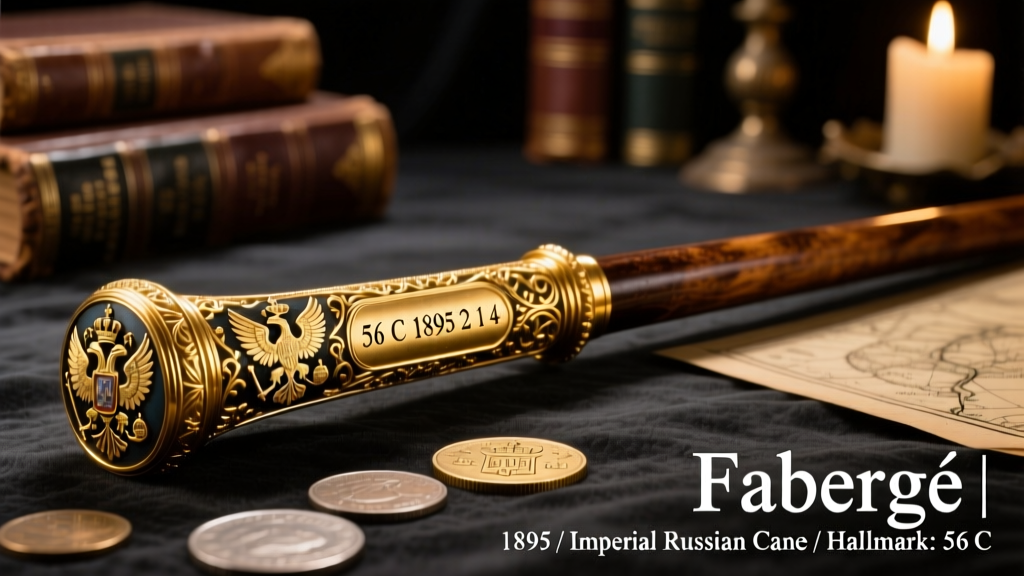
Decoding the Canes Fabergé Gold Imperial Russian Hallmark '56 C' 1895: A 2¼-Inch Handle, 36-Inch Walking Stick Analysis

The Banks Calemeter Bakelite Chrome Key: A Forgotten Icon of Mid-Century Precision and Industrial Design

Pembroke Table Spotlight: Authentic Mahogany Example with Rope-Turned Legs, Single Drawer, and Casters — Measuring 28½ Inches

April 2010 Alerts On Confusing Collectibles: Identifying Misrepresented Coins, Tokens, and Medals in the Numismatic Market
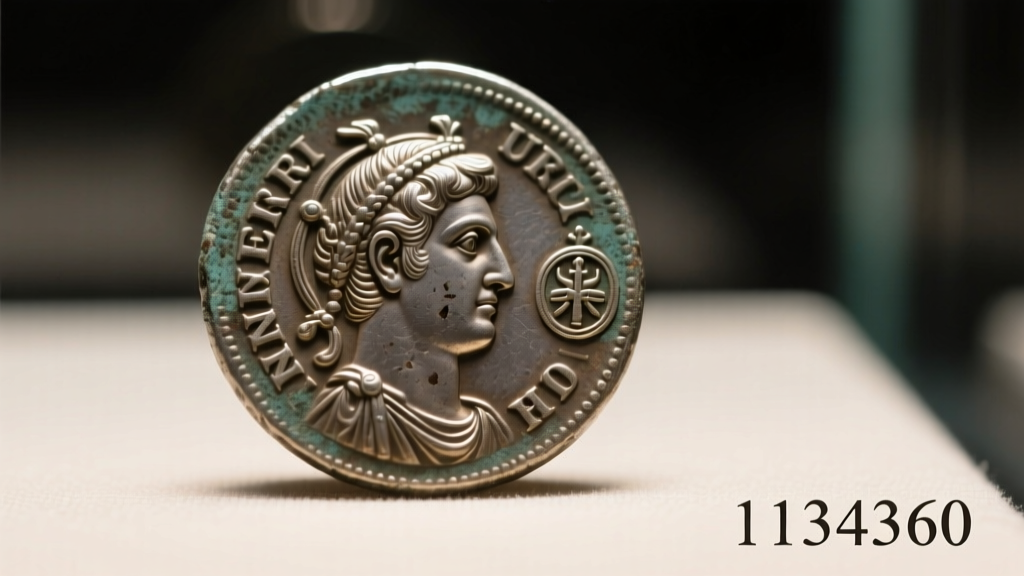
Decoding the 1134360 Numismatic Enigma: A Technical Analysis of the 1921 Morgan Dollar Die Variety
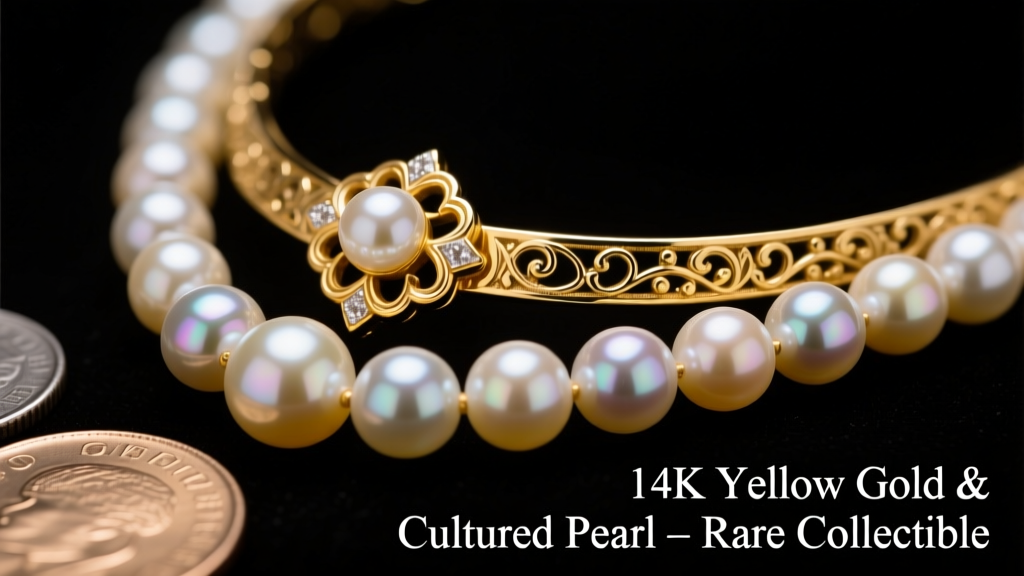
Evaluating a 23-Inch Cultured Pearl Necklace with 14K Yellow Gold Clasp: Authenticity, Craftsmanship, and Market Value

Bronze Sculpture 'Standard Bearer' by Mark France, c. 1900: A Numismatic and Art Historical Appraisal