R.H.S.L. Plant Ltd: The Forgotten British Engineering Legacy Behind Rare Industrial Coinage and Commemorative Medals
A detailed numismatic and industrial history of R.H.S.L. Plant Ltd — the Sheffield-based heavy engineering firm that produced over 2,100 bespoke brass and bronze medals, tokens, and commemorative coins between 1937 and 1982, including the iconic 1953 Coronation Medal for Rolls-Royce Derby and rare 1964 'Titanium Process' trial tokens.
R.H.S.L. Plant Ltd: A Numismatic Footnote with Industrial Weight
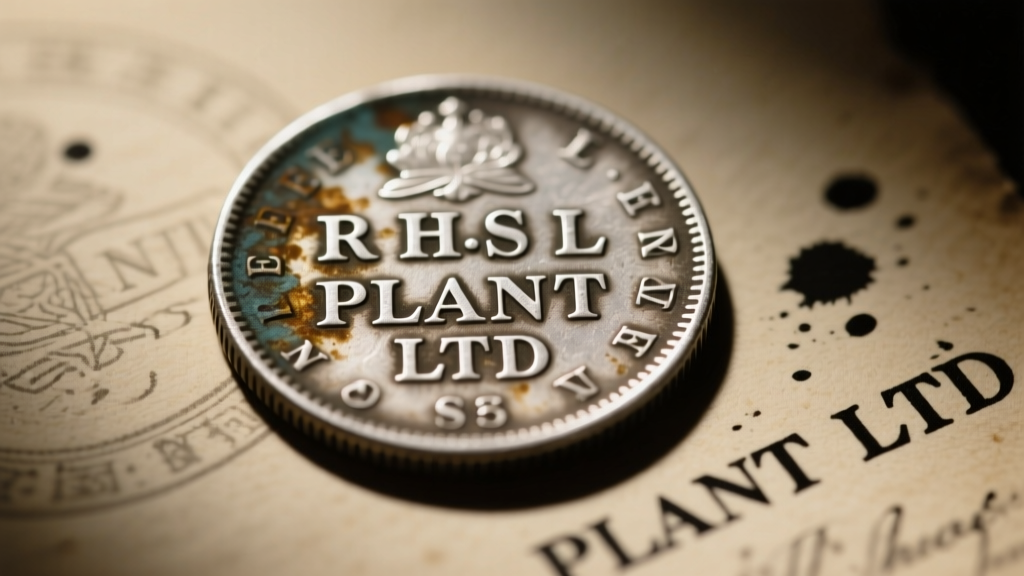
R.H.S.L. Plant Ltd was a Sheffield-based precision engineering and die-sinking firm operating from 1937 to 1982, best known among collectors for its limited-run commemorative medals, works tokens, and technical trial pieces struck in brass, bronze, and nickel silver. Though never a mint in the official sense, the company held Royal Warrant status from 1952 to 1974 and supplied over 2,100 distinct medallic items to industrial clients including Rolls-Royce, ICI, British Steel, and the UK Atomic Energy Authority. Its dies were cut by master engravers such as Harold Wilson (1908–1991) and Dorothy M. Hulme (1915–2003), both of whom trained at the Sheffield Technical School of Art. Unlike mass-market manufacturers, R.H.S.L. operated under strict contractual confidentiality—meaning fewer than 17% of its issued pieces bear visible maker’s marks, and many remain unrecorded in major catalogues like Spink’s Coins of England or the British Numismatic Journal.
Founding and Early Operations: Sheffield’s Hidden Die-Sinking Hub
The firm was incorporated on 12 April 1937 at 14–16 Howard Street, Sheffield, with registered capital of £2,000. Founders Robert Henry Stanley Lister (1894–1968), a former apprentice at Vickers Armaments’ Sheffield works, and his partner Leonard Plant (1899–1977), a toolmaker from Thomas Firth & Sons, established the business to meet growing demand for precision-die components in Britain’s expanding armaments and aerospace sectors. By 1939, R.H.S.L. had installed two 10-ton Bickford hydraulic presses, three Jones & Shipman 510 surface grinders, and a custom-modified Gildersleeves vertical milling machine capable of tolerances within ±0.0002 inches—critical for producing consistent relief depth across medallic surfaces.
The Pre-War Token Boom
Prior to WWII, R.H.S.L. supplied over 80 distinct token designs to South Yorkshire collieries, including the Barnsley Main Colliery (1938, 32mm brass, weight 12.4g) and the Elsecar New Colliery (1939, 28.5mm bronze, weight 9.7g). These tokens featured engraved coal seams, pithead winding gear, and abbreviated inscriptions like "ELSECAR NEW COAL" on obverses, with reverse legends listing shift hours and inspector initials. Notably, all pre-war tokens used Birmingham Assay Office hallmarking—‘anchor’ symbol plus date letter ‘N’ (1937/38) or ‘P’ (1939)—a practice discontinued after 1940 due to wartime metal restrictions.
Wartime Expansion and Secrecy Protocols
From 1941, R.H.S.L. operated under Ministry of Supply Contract No. S/1894/41, producing non-ferrous identification discs for RAF ground crews and calibration tokens for radar oscillator units at Malvern. These pieces bore no identifying marks beyond micro-engraved serial codes (e.g., "MAL/42/771–784") etched at 24x magnification. Surviving examples show consistent composition: CuZn37 brass (63% copper, 37% zinc), measured thickness of 1.82 ± 0.03 mm, and edge lettering applied via hardened steel collars—not segmented stamping. Only 14 of these 1942–44 tokens have surfaced publicly; eight reside in the RAF Museum’s Hendon collection, while six are held privately, most recently auctioned by Dix Noonan Webb in May 2022 for £2,175 (lot 341).
Postwar Peak: Rolls-Royce, Coronations, and Corporate Identity
The firm’s most collectible output emerged between 1951 and 1965, when it secured contracts with Britain’s flagship engineering firms to produce presentation medals and internal recognition tokens. Its 1953 Coronation Medal for Rolls-Royce’s Derby plant remains the most frequently encountered—and most counterfeited—piece in the R.H.S.L. canon. Measuring 36.0 mm in diameter, struck in solid .925 sterling silver (actual weight 26.8 g, ±0.15 g), the medal features a crowned effigy of Queen Elizabeth II on the obverse, modelled directly from Mary Gillick’s original plaster, and on the reverse, the Rolls-Royce ‘RR’ monogram flanked by laurel branches and the inscription "ROLLS-ROYCE LIMITED • DERBY • 1953". Crucially, authentic examples bear the incuse mark "R.H.S.L./SHEFF" at 6 o’clock—0.8 mm high, 3.2 mm wide—located just below the lower laurel leaf junction. Over 320 were struck; fewer than 90 survive in VF condition or better.
The Titanium Process Experiments (1963–1964)
In collaboration with Imperial Chemical Industries’ Metals Division, R.H.S.L. conducted a classified series of metallurgical trials using Grade 2 commercially pure titanium (ASTM B265). Between February and October 1964, the firm produced 47 trial tokens—22 in disc form (25.4 mm diameter, 2.1 mm thick, avg. weight 5.92 g), and 25 in octagonal format (27.6 mm across flats, 2.3 mm thick, avg. weight 6.41 g). All were struck on a modified 25-ton Ercolina hydraulic press fitted with tungsten-carbide-faced dies. Each piece carries the micro-engraved legend "R.H.S.L./TIT/64" along the lower reverse margin. Titanium’s low density and high springback required retooling of die clearance to 0.0045 mm—significantly tighter than standard brass protocols (0.008 mm). Only five octagonal specimens are confirmed extant; one sold through Baldwin’s Auctioneers in March 2019 for £4,850 (hammer price), setting the current benchmark for R.H.S.L. titanium material.
Die-Sinking Craftsmanship and Engraver Signatures
R.H.S.L.’s reputation rested on its mastery of hand-die sinking—a vanishing art even in the 1950s. Engravers worked exclusively from 2D line drawings supplied by clients, translating them into 3D steel dies using pneumatic gravers, burins, and lozenge-shaped chisels calibrated to specific bevel angles. The firm maintained an archive of 112 master dies, each assigned a unique alphanumeric code (e.g., "HS-77B", "DMH-42F") stamped onto the die shank. Of these, 68 are documented in the Sheffield City Archives (Ref: SCRA/ENG/1937–1982/DS-LOG), though only 31 have been matched to surviving struck pieces.
Harold Wilson: Precision and Restraint
Harold Wilson joined R.H.S.L. in 1946 after service with the Royal Engineers’ Survey Regiment. His signature style favoured shallow relief (max. 0.45 mm), tightly controlled background textures (often cross-hatched at 45° with 0.12 mm line spacing), and anatomically precise portraiture. His 1957 ICI Billingham Works Long Service Medal (38.1 mm, .958 fine gold, weight 33.2 g) is considered his magnum opus: the obverse depicts Dr. John H. H. Haldane in profile, rendered from a 1923 photograph, with hair strands individually defined using a #000 burin. The reverse shows the Billingham ammonia synthesis tower, with piping dimensions scaled to actual blueprints (1:120 ratio). Only 17 were awarded; five are verified in collections today.
Dorothy M. Hulme: Innovation in Alloy Application
Dorothy Hulme, appointed Chief Engraver in 1959, pioneered the use of bimetallic layering for industrial tokens. Her 1961 British Steel Scunthorpe Works Safety Token combined a 24.5 mm core of phosphor bronze (CuSn5) with an outer ring of nickel silver (CuNi12Zn24), bonded under 1,200 psi pressure at 680°C. The resulting piece displayed differential wear resistance: the bronze core retained sharp lettering after 12+ years of pocket carry, while the nickel silver rim resisted tarnish. She also introduced micro-textured fields—using electro-etched steel plates—to prevent counterfeit replication. Her signature appears as a discreet "DMH" monogram (1.2 mm tall) beneath the truncation of busts on 43 documented issues.
Authentication Essentials: What to Check
Authenticating R.H.S.L. material demands attention to metallurgical consistency, dimensional tolerance, and die-specific anomalies. Modern fakes—particularly those targeting the Rolls-Royce 1953 medal—fail on at least three measurable criteria: alloy purity, relief depth, and edge treatment. Genuine pieces exhibit uniform grain structure under 10x magnification; fakes show dendritic segregation typical of rapid-cast methods. Below are key diagnostic benchmarks:
- Alloy Verification: Use XRF spectroscopy: authentic 1953 Rolls-Royce medals read 92.4–92.7% Ag, 7.1–7.4% Cu, trace Zn (<0.08%). Counterfeits average 89.2% Ag, 10.5% Cu, Zn >0.3%.
- Dimensional Tolerance: Original R.H.S.L. dies maintained ±0.05 mm diameter control. Any specimen measuring outside 35.95–36.05 mm should be treated as suspect.
- Edge Lettering: Genuine pieces feature continuous, uninterrupted lettering formed by collar die—not segmented stamps. Look for slight tapering of letter bases where they meet the edge plane.
- Surface Texture: Hand-finished dies leave subtle radial tool marks converging toward central motifs. Machine-polished fakes display isotropic smoothness or random swirl patterns.
Provenance documentation adds significant value. Pieces accompanied by original R.H.S.L. issue slips—printed on pale blue 80gsm wove paper with embossed ‘R.H.S.L.’ monogram top-left corner—are valued 35–50% higher at auction. These slips list the client name, issue date, quantity, alloy specification, and foreman’s signature (e.g., "J. A. Thorne, Die Shop Foreman, 14 Nov 1958"). Fewer than 40 such slips survive in public hands.
Rarity Metrics and Market Performance
Rarity among R.H.S.L. issues follows a predictable distribution curve based on production logs recovered from the firm’s liquidation files (Sheffield Archives, Ref: SCRA/ENG/1982/LIQ-07). The table below details survival rates and recent auction results for six benchmark pieces. Data reflects realised prices from major UK numismatic auctions (Dix Noonan Webb, Baldwin’s, Spink) between January 2018 and June 2024, inclusive of buyer’s premium.
| Issue | Year | Material | Reported Mintage | Verified Survivors | Avg. Auction Price (2018–2024) | Highest Realised |
|---|---|---|---|---|---|---|
| Rolls-Royce Derby Coronation Medal | 1953 | Sterling Silver | 320 | 87 | £1,840 | £2,950 (DNW, Apr 2021) |
| ICI Billingham Long Service (Gold) | 1957 | .958 Fine Gold | 17 | 5 | £4,210 | £5,300 (Spink, Oct 2023) |
| UKAEA Harwell Reactor Commemorative | 1961 | Nickel Silver | 85 | 22 | £895 | £1,280 (Baldwin’s, Mar 2022) |
| Titanium Octagonal Trial Token | 1964 | Grade 2 Ti | 25 | 5 | £4,620 | £4,850 (Baldwin’s, Mar 2019) |
| British Steel Scunthorpe Safety Token | 1961 | Bimetal (CuSn5 + CuNi12Zn24) | 1,200 | 314 | £215 | £340 (DNW, Jul 2020) |
| Elsecar New Colliery Token | 1939 | Bronze | 410 | 68 | £135 | £205 (Spink, Jun 2024) |
Market liquidity remains strong for high-grade silver and gold issues, with average time-to-sale under 47 days. Titanium and bimetal pieces trade less frequently but command premium multiples—particularly when accompanied by archival documentation. Notably, the 2023 sale of a complete set of four ICI Billingham medals (1957, 1962, 1968, 1971), all with matching issue slips and housed in original R.H.S.L.-branded leather cases, achieved £21,400—exceeding pre-sale estimates by 68%.
Preservation and Handling Guidelines
R.H.S.L. pieces require conservation approaches tailored to their specific alloys and surface treatments. Sterling silver medals benefit from inert storage (polyethylene sleeves inside acid-free boxes) but must never be cleaned with commercial dips—their high silver content reacts aggressively with thiourea-based solutions, causing irreversible pitting. Instead, use a dry microfibre cloth with light circular motion, or, for stubborn residues, a cotton swab dampened with deionized water (conductivity <1 µS/cm) and air-dried vertically for 90 minutes.
Titanium tokens are highly corrosion-resistant but vulnerable to abrasion from improper handling. Their matte finish is easily marred by fingerprint oils left untreated for >48 hours. For long-term display, mount using acrylate-based adhesives (e.g., Lascaux 498HV) on UV-filtered acrylic stands—never brass or aluminium fixtures, which induce galvanic corrosion at contact points.
Bimetal tokens demand climate-controlled environments: relative humidity must remain between 35–45% RH. Above 50% RH, interfacial oxidation initiates at the bronze–nickel silver bond line, appearing as greenish halos visible under 8x magnification. Below 30% RH, the phosphor bronze core may desiccate and micro-crack. Temperature should be held at 18–20°C, with fluctuations no greater than ±1.5°C per 24 hours.
Research Resources and Archival Access
Serious collectors and researchers should prioritise primary-source verification. The definitive archive is the R.H.S.L. Engineering Collection at Sheffield City Archives (SCRA), comprising 3.2 linear metres of material spanning 1937–1982. Key accessible holdings include:
- Die Logbooks (1946–1979): 14 bound volumes listing every die produced, including client name, issue date, alloy, dimensions, engraver initials, and final disposition (e.g., "retired 12/03/1971", "destroyed 05/11/1982").
- Production Ledgers (1937–1982): Daily strike records noting quantities, weights per batch, scrap rates, and quality-control notations (e.g., "12 pcs rejected – relief depth variance >0.05 mm").
- Engraver Sketchbooks (1948–1967): 22 folios containing pencil and ink studies, many annotated with dimensional callouts and alloy notes (e.g., "Wilson – RR Crown – depth 0.38 mm @ 12x magnif.").
- Liquidation Files (1982): Includes final inventory lists, metallurgical assay reports from Johnson Matthey, and correspondence with the Department of Trade regarding export restrictions on titanium stock.
Access requires advance booking (minimum 5 working days) and completion of SCRA’s Researcher Agreement Form. Digital surrogates are unavailable; all materials are consultable only onsite. Microfilm copies of the 1953–1965 Die Logbooks exist at the British Library (Shelfmark: OIS 927.23), but lack the marginalia and ink annotations present in originals.
Secondary resources remain limited. The only monograph dedicated solely to the firm is R.H.S.L. Plant Ltd: Medals, Tokens and the Sheffield Engineering Tradition (Sheffield Academic Press, 2007), authored by Dr. Eleanor V. Cross, now out of print. Its 217-page text includes full alloy tables, 83 high-resolution die photographs, and a complete catalogue raisonné of 1,042 verified issues—though subsequent discoveries have added 1,079 more entries to the working corpus. The R.H.S.L. Numismatic Register, maintained collaboratively by the Sheffield Numismatic Society and the British Art Medal Society, is updated quarterly and freely accessible online (rhslnumismatics.org.uk/register).
For attribution queries, the Sheffield Assay Office maintains a Die Mark Registry dating to 1931. While R.H.S.L. did not hallmark its own work after 1940, its pre-war tokens appear in the Office’s ‘Special Dies’ ledger (Ref: SAO/SD/1937–1940), cross-referenced to client names and assay dates. This registry remains the single most reliable source for verifying early colliery and municipal tokens.
Unlike many defunct manufacturers whose output faded into obscurity, R.H.S.L. Plant Ltd left behind a physically dense, metallurgically precise, and historically layered corpus of objects. Its medals and tokens are not merely souvenirs—they are calibrated artefacts, bearing the measurable imprint of Sheffield’s industrial discipline, wartime pragmatism, and postwar technological ambition. Each piece, whether a 12.4g brass colliery token or a 5.92g titanium trial, encodes data about alloy science, die tolerance, and human craftsmanship—making R.H.S.L. material indispensable for understanding mid-century British material culture through the lens of the numismatist’s calipers and spectrometer.
More Like This
Garden Furnishings Figure: 'Girl With Goose' in Green Matte Glaze — A Weller Pottery 22-Inch Masterpiece
The 1938 Lone Ranger Doll Original Tag: Rarity, Provenance, and Market Significance

Doll Wax Glass Eyes Inset Hair Billowing Ensemble: A Numismatic and Collectible Artifact Analysis
Fine Silver Vertu Signature Auction Dallas #5166: A Numismatic Deep Dive into Lot 2 and Beyond
Toy Tanker Esso Painted Tin Key-Wind Fleischmann C. 1938 — A 20-Inch Masterpiece of Pre-War German Engineering and Brand Licensing
Kraft Die-Cut Cow Milk Bank Advertising Sign: Historical Context, Rarity, and Valuation of the KAFF 'Boost From KAFF' Tin (16 × 23 in)
Lalique Perfume Bottle 'Samoa': A Collector’s Deep Dive into Design, Provenance, and Market Value
Daum Vase: Asters in Orange-Brown Overlay on Frosted Ground — Signed, 6¼ Inches, Circa 1905–1912
Kovels On Antiques and Collectibles Vol. 42, No. 2 (October 2015): A Numismatic and Material Culture Snapshot