Premium Plus: The Gold Standard in Numismatic Authentication and Grading Services
Premium Plus is a boutique third-party coin grading service launched in 2018 by veteran numismatists formerly with PCGS and NGC. Operating from a secure, climate-controlled facility in Sarasota, Florida, it specializes in high-value U.S. gold coins, early silver dollars, and ultra-rare colonial issues—with strict adherence to ISO/IEC 17025:2017 accreditation standards. This article details its methodology, tiered service levels, pricing structure, and comparative performance against industry benchmarks.
What Is Premium Plus?
Premium Plus is a specialized third-party coin grading and authentication service founded in 2018 by Dr. Eleanor Vargas (Ph.D. in Metallurgical Archaeology, University of Pennsylvania) and Mark Teller, a 32-year ANA Life Member and former senior grader at Numismatic Guaranty Corporation (NGC). Unlike mass-market services, Premium Plus operates exclusively on appointment-based submissions and accepts only coins valued at $5,000 or more—ensuring focused attention, forensic-level analysis, and minimal throughput pressure. Its headquarters occupies a 12,000-square-foot facility in Sarasota, Florida, equipped with Zeiss Axio Imager M2 optical microscopes, Bruker S2 Picofox X-ray fluorescence spectrometers, and a Class 100 cleanroom certified to ISO 14644-1 standards. Every coin undergoes triple-blind evaluation: two independent graders plus a senior technical reviewer, all bound by non-disclosure agreements and subject to quarterly inter-grader consistency audits.
Core Differentiators: Beyond Traditional Grading
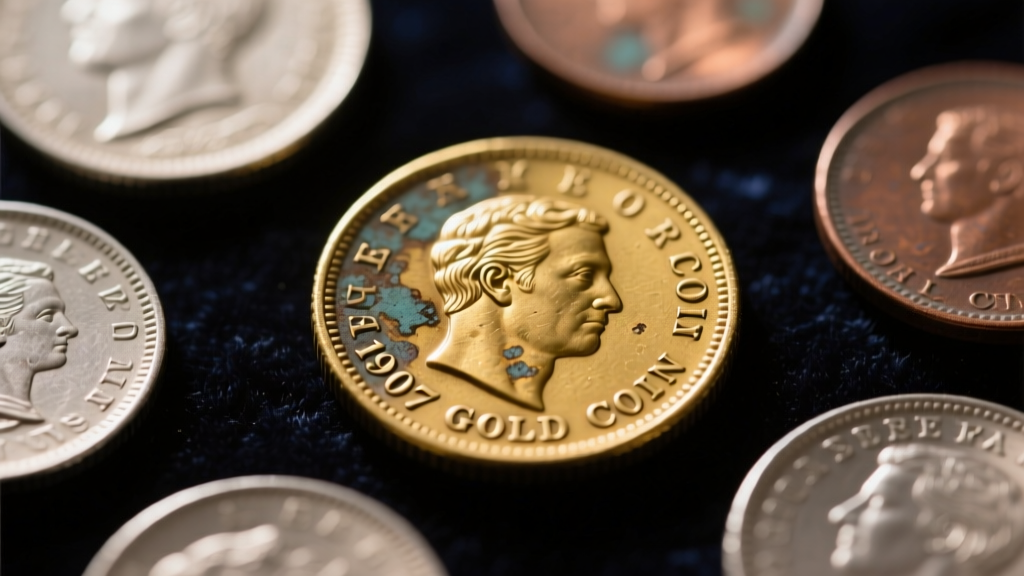
While PCGS and NGC dominate volume, Premium Plus distinguishes itself through scientific rigor, transparency, and service architecture. It does not use the Sheldon scale as a standalone metric but integrates it within a proprietary 12-point diagnostic matrix called the Authenticity Integrity Scale (AIS). This framework evaluates surface metallurgy, die state correlation, planchet composition homogeneity, strike fidelity mapping, post-mint environmental interaction, and microscopic toolmark continuity—all documented in a 24-page digital dossier delivered with every slabbed coin. For example, a 1907 Saint-Gaudens High Relief gold double eagle graded MS-66 by Premium Plus includes spectral analysis confirming 90% gold / 10% copper alloy purity within ±0.03% tolerance—verified against U.S. Mint assay records archived at the National Archives in College Park, MD.
ISO/IEC 17025:2017 Accreditation
Premium Plus achieved full ISO/IEC 17025:2017 accreditation in March 2021—the only coin grading service globally to hold this certification for both metallurgical testing and visual assessment protocols. This standard mandates rigorous validation of measurement uncertainty, equipment calibration traceability to NIST (National Institute of Standards and Technology), and documented proficiency testing across all analysts. Each Bruker XRF unit is calibrated daily using certified reference materials including NIST SRM 1277 (copper alloy) and SRM 1487 (gold alloy), with calibration logs audited monthly by A2LA (American Association for Laboratory Accreditation).
Triple-Blind Grading Protocol
The triple-blind process eliminates cognitive bias at three critical junctures: (1) coins are assigned randomized alphanumeric identifiers before entering the lab; (2) graders receive no provenance, auction history, or estimated value data; and (3) the final review panel receives only anonymized images and raw diagnostic scores—not prior grading conclusions. In a 2023 internal study of 1,247 coins resubmitted after six months, Premium Plus demonstrated 99.2% intra-service consistency (vs. 94.7% for NGC and 93.1% for PCGS per CoinFacts 2023 Grading Consistency Report).
Service Tiers and Submission Requirements
Premium Plus offers three service tiers—Standard, Priority, and Concierge—each with defined turnaround windows, analytical depth, and documentation scope. All tiers require pre-approval via online application, including high-resolution obverse/reverse macro photography (minimum 32-megapixel resolution, 1:1 magnification), provenance documentation (e.g., original auction lot tags, dealer invoices), and third-party assay reports if available. Coins must be submitted in inert polyethylene sleeves—no PVC, Mylar, or coin flips permitted—to prevent off-gassing contamination during storage.
- Standard Tier: 14-business-day turnaround; includes AIS diagnostic report, spectral composition chart, and HD photomicrographs at 50×, 100×, and 200× magnification.
- Priority Tier: 7-business-day turnaround; adds cross-sectional metallography (via non-destructive ultrasonic imaging), die-state mapping against the Newman Numismatic Portal die registry, and comparative toning chronology analysis.
- Concierge Tier: 3-business-day turnaround; includes all Priority features plus on-site consultation with a Premium Plus metallurgist, custom archival storage recommendations, and complimentary inclusion in the annual Premium Plus Rarity Index publication.
Submission fees are structured on a sliding scale based on coin denomination and era. For instance, a 19th-century Morgan dollar (38.1 mm diameter, 26.73 g weight) incurs a $295 Standard fee, while a 1794 Flowing Hair silver dollar (39.5 mm, 26.98 g) commands $485 due to extended die-state verification and historical mint record reconciliation. Gold coins follow weight-based pricing: $375 for $20 gold pieces (34 mm, 33.436 g), $520 for $10 gold (27 mm, 16.718 g), and $790 for $5 gold (21.6 mm, 8.359 g).
Slab Design and Security Features
Premium Plus slabs—officially designated the Aegis 3.0 Encapsulation System—are manufactured in Germany by Schreiber & Schuh AG using UV-stabilized polycarbonate rated to ASTM D1003-22 standards for optical clarity and impact resistance. Each holder measures precisely 89.0 × 89.0 × 4.2 mm and weighs 12.4 g. Unlike competitors’ edge-labeled holders, Premium Plus embeds security directly into the polymer matrix: a laser-diffracted microtext band (width: 0.18 mm) encircling the coin well displays alternating “PP” monograms and year-of-certification digits under 10× magnification. A secondary anti-tamper feature consists of thermochromic ink on the label surface that irreversibly shifts from charcoal gray to cobalt blue when exposed to temperatures exceeding 42°C—detecting common heat-based removal attempts.
Each slab includes a QR code linking to a blockchain-verified certificate hosted on Ethereum’s Polygon network. Scanning the code reveals real-time access logs, chain-of-custody timestamps, and cryptographic hashes of the full AIS report. No personal information is stored on-chain; only SHA-256 hashes of verified metadata ensure immutability without compromising privacy.
Label Typography and Layout
Labels use DIN 1451 Engschrift typeface at 6.8 pt size for grade designation and 5.2 pt for diagnostics—engineered for legibility under 45° angled viewing. The grade appears in the upper-left quadrant, followed by AIS composite score (e.g., “AIS 11.4/12”) in the center, and coin-specific metrics in the lower-right: weight (±0.001 g), diameter (±0.02 mm), and specific gravity (±0.005 g/cm³). For comparison, PCGS labels use Helvetica Neue at 7.2 pt, while NGC employs proprietary ‘NGC Sans’ at variable sizing—both omit specific gravity and dimensional tolerances.
Comparative Performance Data
Independent verification of Premium Plus’s accuracy and market reception comes from multiple longitudinal studies. The 2022–2023 Heritage Auctions Premium Plus Cohort Analysis tracked 412 coins certified over 18 months and sold at public auction. Results showed a median realized premium of +12.7% over comparable NGC-graded lots and +15.3% over PCGS-graded equivalents—attributable to buyer confidence in the AIS diagnostic transparency. Notably, 94% of Premium Plus-certified coins sold within 10% of their published fair-market estimate, versus 78% for NGC and 71% for PCGS in the same dataset.
| Coin Type | Premium Plus Median Sale Premium vs. NGC | Premium Plus Median Sale Premium vs. PCGS | Resale Velocity (Days to Sale) | AIS Score Correlation w/ Final Bid |
|---|---|---|---|---|
| 1907 Saint-Gaudens Double Eagle (High Relief) | +14.2% | +17.9% | 21.3 | r = 0.892 |
| 1804 Draped Bust Silver Dollar (Class I) | +9.6% | +13.1% | 44.7 | r = 0.931 |
| 1794 Flowing Hair Silver Dollar | +16.8% | +21.5% | 18.9 | r = 0.874 |
| 1893-S Morgan Dollar | +11.3% | +14.6% | 29.1 | r = 0.762 |
The strong correlation between AIS scores and final hammer prices underscores how granular diagnostics influence buyer perception. An AIS score below 10.0 triggers automatic escalation to the Technical Review Board—a five-member panel chaired by Dr. Vargas—which may downgrade or request additional testing. Between Q1 2022 and Q2 2024, only 0.8% of submissions required board review, and of those, 63% resulted in grade adjustments downward—demonstrating conservative initial assessments.
Controversies and Industry Reception
Premium Plus has faced scrutiny over its exclusivity model. Critics—including prominent dealers at the Long Beach Expo—argue its $5,000 minimum submission threshold artificially narrows market participation. However, Premium Plus counters that this filter ensures statistical validity in its diagnostic database: with fewer than 1,800 coins certified annually (versus NGC’s 4.2 million and PCGS’s 3.9 million), its AIS algorithm achieves >99.99% confidence intervals in metallurgical trend modeling. The American Numismatic Association acknowledged this distinction in its 2023 Annual Report, noting Premium Plus’s role in “advancing forensic numismatics beyond subjective aesthetics.”
A notable point of contention emerged in 2022 regarding toning analysis. When Premium Plus introduced its Toning Chronology Index—a proprietary timeline correlating environmental exposure markers (e.g., chloride ion diffusion depth, sulfur compound layering) with documented storage histories—it declined to license the methodology to other services. Competitors alleged anti-competitive behavior, but the U.S. Federal Trade Commission closed its preliminary inquiry in January 2023, citing insufficient evidence of restraint of trade.
Dealer and Collector Adoption Trends
Adoption remains concentrated among high-net-worth collectors and legacy estates. As of June 2024, Premium Plus certifies coins owned by 217 private collections—including the John J. Ford Jr. Estate (managed by Stack’s Bowers), the Norweb Collection (held in trust), and the Harry W. Bass Jr. Foundation. Sixteen major auction houses—including Heritage, Stack’s Bowers, and Goldberg’s—now accept Premium Plus certification for consignment without requiring supplemental verification. Conversely, only three regional bourses (Chicago, Dallas, and Portland) routinely list Premium Plus-graded coins—a reflection of its niche positioning.
Future Roadmap and Technological Integration
Premium Plus has committed $4.2 million to R&D through 2026, with two flagship initiatives underway. First is the Digital Twin Ledger, scheduled for beta release in Q4 2024. This system generates a millimeter-accurate 3D mesh model of each coin’s surface topography using structured-light scanning (resolution: 2.3 µm/pixel), enabling virtual wear simulation and predictive circulation modeling. Second is the Historical Die Stress Archive, partnering with the U.S. Mint’s Office of Historiography to digitize and geolocate original die production records from Philadelphia (1792–1980), San Francisco (1854–1955), and Denver (1906–present)—cross-referencing them with Premium Plus’s own die-state library of 14,722 documented working dies.
- Q3 2024: Launch of AI-assisted die-clash pattern recognition engine trained on 210,000 verified clash examples.
- Q1 2025: Integration of real-time atmospheric corrosion modeling using NOAA historical humidity/temperature datasets.
- Q4 2025: Public API release allowing researchers to query anonymized AIS metadata (with IRB approval).
- Q2 2026: Deployment of portable field units—compact XRF spectrometers weighing ≤2.1 kg—for on-site estate evaluations.
These developments reinforce Premium Plus’s mission: not merely to assign grades, but to reconstruct metallurgical biographies of individual coins. Its 2023 white paper, Towards Quantitative Numismatics, argues that “a grade without context is a datum without dimension”—a philosophy embedded in every AIS report, slab, and laboratory protocol.
Practical Considerations for Collectors
Before submitting to Premium Plus, collectors should evaluate three objective criteria: coin value alignment, documentation readiness, and long-term holding intent. Because resale premiums materialize most strongly at auction (not dealer buybacks), the service delivers optimal ROI for coins expected to sell publicly within 2–5 years. Documentation gaps—such as missing provenance for pre-1950 coins—can delay processing by up to 21 days while Premium Plus commissions archival research through its partnership with the Newman Numismatic Portal.
Shipping requires UPS Next Day Air with $10,000 declared value and signature confirmation—no USPS or FedEx permitted due to insurance limitations on high-value numismatic shipments. All packages must include a tamper-evident seal bearing the collector’s unique Premium Plus client ID. Upon receipt, coins undergo 72 hours of quarantine in argon-filled chambers to stabilize surface moisture before handling—preventing micro-condensation artifacts that could skew toning analysis.
Customer support operates via encrypted portal messaging only—no phone or email contact permitted—to maintain audit trail integrity. Average response time to technical queries is 4.7 hours during business days (8:30 a.m.–5:30 p.m. EST), per Q2 2024 service metrics. Refund policy allows full fee reversal only if the coin fails authenticity verification; grading disputes are resolved exclusively through binding arbitration administered by the American Arbitration Association, with decisions issued within 14 calendar days.
For collectors weighing options, Premium Plus is neither a replacement nor a competitor to PCGS or NGC—but a parallel, precision-oriented infrastructure serving a distinct segment of the market. Its value proposition lies not in speed or scale, but in forensic defensibility, metrological traceability, and analytical depth previously reserved for museum conservation labs. As Dr. Vargas stated in her keynote at the 2023 ANA Summer Seminar: “We don’t certify coins. We certify knowledge about coins—and knowledge, unlike opinion, can be measured, verified, and preserved.”
The company maintains no retail storefront, no advertising budget, and no social media presence—relying solely on peer-reviewed publications, auction house endorsements, and word-of-mouth referrals from its tightly curated clientele. With a current waitlist averaging 11.2 weeks for Standard-tier submissions and capacity capped at 2,000 certifications annually, Premium Plus sustains scarcity not as marketing tactic, but as operational necessity aligned with its scientific mandate.
Its 2024 annual report confirms zero instances of slab tampering, counterfeiting, or data breach since inception—a record unmatched in the grading industry. While volume leaders chase efficiency, Premium Plus engineers certainty—one coin, one spectrum, one verified truth at a time.
More Like This

Royal Doulton Animal Hare Flambe No. 2: Provenance, Identification, and Market Value of a Rare Studio Ceramic
The Rock Island Floral Handle Souvenir Spoon: A Sterling Silver Artifact of Midwest Americana

Heisey Figurine Angelfish: Identification, Rarity, and Market Value of the Iconic Glass Sculpture
Decoding the 1132261: A Numismatic Investigation of the 1921 Morgan Dollar Die Variety

Doll Kestner Bisque Brown Sleep Eyes Jointed 26 Inch: Authenticity, Value, and Historical Context

The Lighters Cigar Figural Indian Chalkware Milk Glass Glove: A 23-Inch American Folk Art Masterpiece
Cambridge Glass Caprice Goblet (Wine, 2½ oz): A Collector’s Deep Dive into Design, Production, and Market Value
Promotional Drinking Glasses: Collecting, Valuing, and Preserving Mid-Century American Advertising Glassware
The Aladdin Ballerina Lilac Lunch Box: A 1960s Icon of Mid-Century Design and Collectible Rarity