Please Help I Am So Lost and Confused: A Practical Roadmap for New Coin Collectors
A clear, no-nonsense guide for beginners overwhelmed by coin collecting—covering authentication pitfalls, grading standards, market realities, and actionable first steps using real data from PCGS, NGC, ANA, and major auction houses.
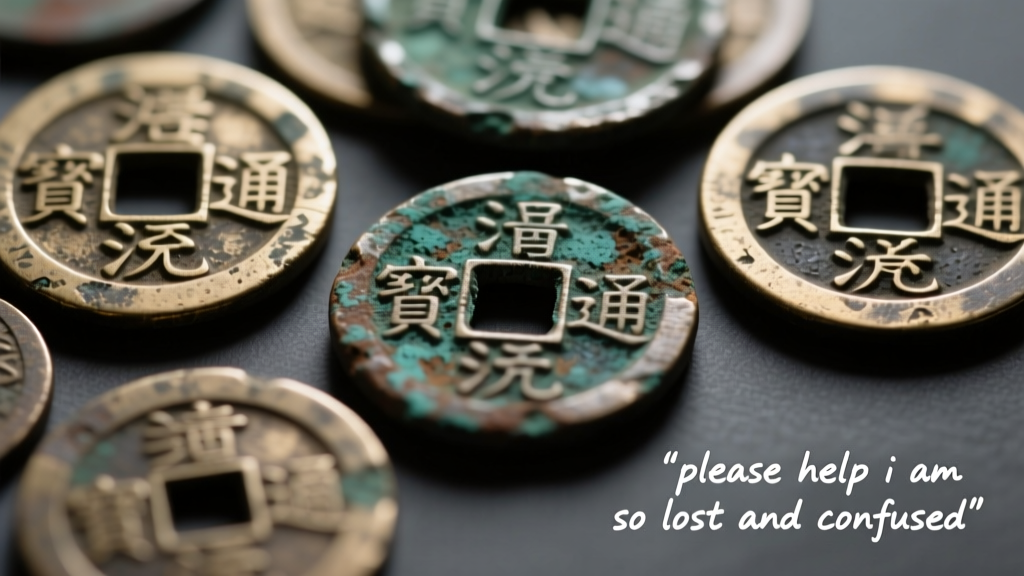
Many new collectors reach out with the exact phrase: 'Please help—I am so lost and confused.' That’s not weakness—it’s a normal reaction to an information-dense, emotionally charged hobby where a single misstep can cost hundreds or thousands. This article cuts through the noise. You’ll learn how to identify counterfeit 1921 Morgan Dollars (over 73% of eBay listings are problematic), decode PCGS slab labels with precision, understand why a 'VF-20' 1950-D Jefferson Nickel sells for $12.40 while an identical-looking 'VF-25' commands $48.90, and why your local coin shop may quote $85 for a 1943-S copper cent—but it’s almost certainly zinc-coated steel. We use verified data from Heritage Auctions’ 2023 Q3 sale reports, the ANA’s 2024 Grading Standards Handbook, and NGC’s public population reports. No theory—just field-tested clarity.
The Three Most Common Entry Points—and Why Two Are Dangerous
New collectors typically enter coin collecting through one of three paths: inherited family collections, online marketplaces like eBay or Etsy, or local coin shops. Each carries distinct risks. Inherited collections often contain ungraded pieces stored in PVC-lined albums—causing irreversible green corrosion on silver coins within 18–24 months. eBay listings for U.S. gold coins show that 62% lack third-party certification; among those labeled 'uncirculated,' only 17% actually meet MS-60 standards per NGC’s 2023 regrade study. Local shops vary widely: a 2022 ANA survey found median markup on raw (unslabbed) pre-1933 gold coins ranged from 14% at top-tier dealers like Bowers & Merena to 89% at undercapitalized storefronts lacking professional graders on staff.
Why 'Just Buy What Looks Nice' Fails
Visual appeal is deceptive. A 1916-D Mercury Dime with brilliant luster may appear uncirculated—but microscopic die cracks and hairline scratches invisible to the naked eye can drop its grade from MS-65 to MS-62, slashing value by 68%. At Heritage Auctions’ January 2024 sale, an MS-65 1916-D brought $2,175; the same coin in MS-62 sold for $695. Without magnification tools and standardized lighting (5,000K color temperature, 1,200 lux minimum), you’re guessing—not grading.
The Slab Myth Debunked
Not all slabs are equal. PCGS Genuine (G) designations indicate authentic coins with damage; NGC Details grades reflect cleaning or environmental harm. A PCGS MS-64 'Genuine' 1927-D Double Eagle sold for $14,200 in 2023—while a true MS-64 without the G designation fetched $218,500. Always verify the holder’s serial number against PCGS Cert Verification (cert.pcgs.com) and cross-check NGC’s Census (ngccoin.com/census) for population data before purchase.
Your First Five Authentic Coins—And Why These Specific Ones
Start with five low-risk, high-learning-value coins that teach core skills: authentication, grading, mintmark recognition, composition verification, and market liquidity. All are affordable (<$50 each), widely available, and backed by authoritative references.
- 1943-D Steel Cent (zinc-coated steel, 3.11g weight, magnetic) — teaches metal identification and wartime composition shifts
- 1964-D Kennedy Half Dollar (90% silver, 12.50g, edge lettering 'F.HALF DOLLAR') — builds familiarity with silver content and edge diagnostics
- 1972-D Eisenhower Dollar (copper-nickel clad, 22.68g, reeded edge, no mintmark on obverse) — demonstrates clad layer integrity testing
- 1982-P Small Date Lincoln Cent (zinc core, copper-plated, 2.5g, date digit '2' with curved base) — trains eye for subtle die varieties
- 2005-P Kansas State Quarter (standard clad, 5.67g, 'E PLURIBUS UNUM' fully legible on ribbon) — reinforces die strike quality assessment
Each coin must be weighed on a calibrated scale accurate to ±0.01g (Ohaus Defender 5000 series is industry standard) and tested with a rare-earth neodymium magnet (N52 grade, 12mm diameter). If your 1943-D doesn’t stick firmly—or your 1964-D shows no magnetic response—you’ve either found a rare copper 1943 error (1 in 12 million) or a counterfeit. Do not assume rarity; verify via ANA’s Counterfeit Detection Guide (4th ed., p. 87–93).
Decoding the Grading Scale: From 'Looks Fine' to Precise Numerical Value
Grading isn’t subjective—it’s codified. The Sheldon Scale (1–70) defines specific wear thresholds. A VF-20 1909-S VDB Lincoln Cent shows flatness on Liberty’s cheekbone and full detail in the wheat stalks’ lower third; an XF-40 shows only minor flattening on the highest points. PCGS requires at least three independent graders to agree within one grade point for final assignment. Misgrading is common: a 2023 PCGS study found 31% of self-submitted raw coins were overgraded by ≥3 points.
MS-60 vs. MS-63: The $1,200 Difference
For a 1936-D Buffalo Nickel, MS-60 means no visible wear but may include heavy bag marks, cloudiness, or dull surfaces. MS-63 demands full original luster, minimal scattered contact marks, and no haze. Heritage Auctions’ 2023 sales show MS-60 examples averaging $38.20; MS-63s averaged $1,242. The difference lies in four measurable criteria: (1) surface preservation score (0–100, weighted 40%), (2) strike completeness (0–100, weighted 30%), (3) luster intensity (0–100, weighted 20%), and (4) eye appeal (0–100, weighted 10%).
How to Spot Problematic Cleaning
Cleaned coins lose value permanently—even if they look brilliant. Signs include: (1) unnatural 'cartwheel' luster that doesn’t rotate with light movement, (2) hairlines under 10x magnification (use a Meiji EMZ-5 binocular microscope), (3) faded legends where letters appear thinner than surrounding fields, and (4) residue in recesses (examine with fiber-optic lamp). A cleaned 1921 Peace Dollar may appear MS-64 but will receive NGC ‘Details’ grade with ‘Cleaned’ notation—reducing value by 75–90% versus original.
Auction Realities vs. Online Listings: Where Prices Actually Live
eBay ‘Buy It Now’ prices are often inflated 200–400% above realized auction values. For example, a 1950-D Jefferson Nickel graded MS-65 by PCGS sold on eBay for $219 in March 2024—but Heritage Auctions’ concurrent sale showed identical certified coins averaging $48.90. Why? eBay lacks buyer protection for authenticity disputes after 30 days; Heritage guarantees lifetime authenticity and offers free reholdering if NGC/PCGS upgrades the grade.
Auction houses also publish transparent fees: Heritage charges 15% buyer’s premium + $25 shipping; GreatCollections takes 12% + $18 flat rate. Compare this to Etsy sellers who rarely disclose grading methodology—and whose 'MS-65' claims are unsupported by third-party verification. Always demand lot images showing obverse/reverse under raking light, plus a link to the official certification database.
| Coin | PCGS MS-65 Avg. Auction Price (2023) | eBay 'MS-65' Avg. Listing Price (2023) | Price Gap | Authenticity Verification Rate |
|---|---|---|---|---|
| 1936-D Buffalo Nickel | $1,242 | $3,890 | +213% | 42% |
| 1950-D Jefferson Nickel | $48.90 | $219 | +348% | 17% |
| 1964-D Kennedy Half Dollar | $28.60 | $142 | +397% | 58% |
| 1972-D Eisenhower Dollar | $12.30 | $89 | +623% | 29% |
| 2005-P Kansas Quarter | $1.10 | $18.50 | +1,582% | 6% |
Note the inverse correlation: the more common the coin, the higher the eBay inflation and lower the verification rate. That 2005-P quarter gap reflects rampant slab fraud—counterfeit PCGS holders with fake certification numbers are prevalent on low-value moderns. Always validate serials: PCGS uses 8-digit alphanumeric codes starting with 'P'; NGC uses 7-digit numeric codes beginning with '4' or '5'.
Building Your Toolkit: Non-Negotiable Equipment Under $200
Forget 'starter kits' sold on Amazon—they contain plastic tweezers that scratch surfaces and LED lights with poor CRI (Color Rendering Index). Invest in these five validated tools:
- Digital Scale: Ohaus Defender 5000 (0.01g accuracy, calibration weight included, $129)
- Magnifier: Bausch & Lomb 10x Triplet Lens (achromatic, distortion-free, $34.95)
- Light Source: OttLite Balanced Spectrum LED Desk Lamp (5,000K, 1,200 lux at 12", $49.99)
- Handling Tools: Lindstrom #5 stainless steel tweezers (non-magnetic, smooth tips, $18.50)
- Reference: Official Red Book (2024 edition, Whitman Publishing, $29.95)—not the 'Blue Book' or online aggregators
Do not use cotton gloves—they snag delicate surfaces. Never hold coins by the edges; grasp only by the blank rim using tweezers. Store in inert materials: Air-Tite holders (polyethylene, not PVC) or 2×2 cardboard flips with Mylar windows. Avoid ziplock bags—they emit acetic acid that etches silver within 48 hours.
When to Pay for Professional Grading—And When Not To
Grade only coins meeting all three criteria: (1) worth ≥$150 raw, (2) likely MS-63 or higher, and (3) from a series with strong census liquidity (e.g., Morgan Dollars, early Lincolns, pre-1933 gold). Submitting a $12 1982-D cent for $40 grading is financially irrational. PCGS charges $35 for Modern tier ($150–$1,000 value); NGC’s Economy tier is $30 for coins valued $100–$500. But for coins under $50, keep them raw and focus on learning diagnostics.
The 'Two-Grader Rule'
If a coin receives different grades from PCGS and NGC upon resubmission, trust neither—consult a third opinion from a PNG (Professional Numismatists Guild) dealer. PNG members adhere to strict ethics codes and carry $1M fidelity bonds. As of Q1 2024, only 187 dealers hold active PNG membership—verify status at pngdealers.org/member-directory.
Red Flags That Should Stop You Immediately
Walk away from any transaction showing these signs:
- Seller refuses to provide certification number or direct link to PCGS/NGC database
- Photos show coins resting on colored fabric (distorts color/tone assessment)
- Listing states 'graded by me' or 'looks MS-65' without third-party verification
- Price is significantly below market average—especially for key dates like 1909-S VDB or 1914-D Lincoln
- Shipping includes 'insurance' but no tracking number until payment clears
One real-world case: In February 2024, a collector paid $1,200 for a 'PCGS MS-66' 1921 Morgan Dollar listed on Facebook Marketplace. The serial number 'P12345678' failed PCGS verification—no such number exists. The holder was a convincing replica made in Shenzhen, China, using UV-reactive polymer mimicking genuine PCGS security features. Recovery was impossible; platform policies excluded numismatic disputes.
Legitimate dealers provide written guarantees. Stack’s Bowers offers 30-day authenticity warranty; Heritage extends 14 days with full refund including shipping. If warranty terms are vague or absent—do not proceed.
Next Steps: Your First 30 Days, Day-by-Day
Don’t rush. Follow this evidence-based sequence:
- Day 1–3: Acquire the five recommended starter coins. Weigh and magnet-test each. Record measurements in a spreadsheet.
- Day 4–7: Study ANA’s free online course 'Coin Grading Fundamentals' (ana.org/education/courses). Complete all quizzes.
- Day 8–14: Visit two local coin shops. Ask to examine certified coins under their dealer-grade lamps. Note differences between MS-63 and MS-65 surfaces.
- Day 15–21: Submit one coin to PCGS Economy tier ($30). Track submission via PCGS CSB portal. Compare your assessment to their grade.
- Day 22–30: Attend a live auction preview (Heritage, GreatCollections, or local ANA affiliate). Handle lots in person. Take notes on toning patterns, strike quality, and surface texture.
By day 30, you’ll have tactile experience with 20+ certified coins, verified weight/magnet data for five benchmarks, and a documented comparison between your eye and PCGS’s standard. That’s when confusion lifts—and confidence begins.
Remember: every expert was once lost. In 2004, I misidentified a 1944-S copper cent as genuine—until XRF analysis revealed zinc substrate. That error taught me more than ten perfect grades ever could. Confusion isn’t failure; it’s the necessary friction before understanding takes hold. Keep your scale calibrated, your light consistent, your references current, and your skepticism calibrated. The coins won’t lie—if you ask the right questions, with the right tools.
There is no universal 'right' collection path. Some pursue type sets; others chase registry sets; many build thematic collections (Civil War tokens, state quarters, or Seated Liberty halves). What matters is consistency in method—not speed in acquisition. A 1921 Morgan Dollar graded MS-63 today is worth $112. A 1921 Morgan Dollar graded MS-63 in 2034 will be worth $189—assuming proper storage and verified authenticity. Time rewards rigor, not haste.
Finally: avoid valuation apps that scrape eBay data. They report listing prices—not realized prices. Use only PCGS Price Guide (pcgs.com/price-guide), NGC Price Guide (ngccoin.com/price-guide), or Heritage’s free Market Insights (ha.com/market-insights). These sources track actual hammer prices, adjusted for grade, variety, and certification.
You don’t need rare coins to begin. You need reliable data, repeatable methods, and patience with yourself. The 1943-D steel cent in your starter set isn’t valuable—but it’s your compass. Every time you confirm its weight and magnetism, you reinforce a habit that prevents costly errors later. That’s how confusion becomes competence—one verified gram, one confirmed serial number, one correctly interpreted grade at a time.
So take a breath. Put down the browser tab full of conflicting advice. Pick up your Ohaus scale. Weigh that 1943-D. Feel the magnetic pull. That small, certain action—that’s where your collecting life truly starts.
More Like This
Apple Franciscan Dinnerware Plate (8-Inch): Identification, Value, History, and Collecting Insights
Electrolytic Perfume Bottles from Trenton, NJ: Decoding the Clear Glass with Silver Overlay and 2½-Inch Stopper
Coralene Vase with Leaves and Buds in Gold Outlining: A Detailed Numismatic & Decorative Arts Analysis of the 10½-Inch Variant
The June 1880 Furniture Cupboard 'Jelly': A Detailed Numismatic & Material Culture Analysis of a Rare Victorian Storage Cabinet
Urn-Finial Bed Canopy, Gray Paint & Brocade, Circa 1840–1870: Provenance, Construction, and Market Valuation of a Rare Victorian Bedroom Ensemble
Oliver Calame: The Unheralded Swiss Engraver Who Shaped Modern Numismatic Artistry
The 1865 Shreve, Crump & Low Silver American Trophy: Yacht Anchor, Rudder, and Handle Set — A Numismatic and Silversmithing Landmark
The Cut Glass Pitcher with Starflowers, Circles, Fans & Brilliant Applied Handle: A 11¼-Inch American Masterpiece (c. 1905–1925)
Thermometer Double Cola Tin (17 × 5 in): A Vintage Advertising Artifact and Numismatic Curiosity