Picture Clocks: The Forgotten Fusion of Horology and Photographic Art in Early 20th-Century America
A detailed numismatic and horological analysis of picture clocks—mechanical timepieces with integrated photographic portraits—produced primarily between 1905 and 1932 by companies including Seth Thomas, Waterbury Clock Company, and Ingraham. Includes valuation benchmarks, technical specifications, authentication criteria, and market trends for collectors.
What Are Picture Clocks?
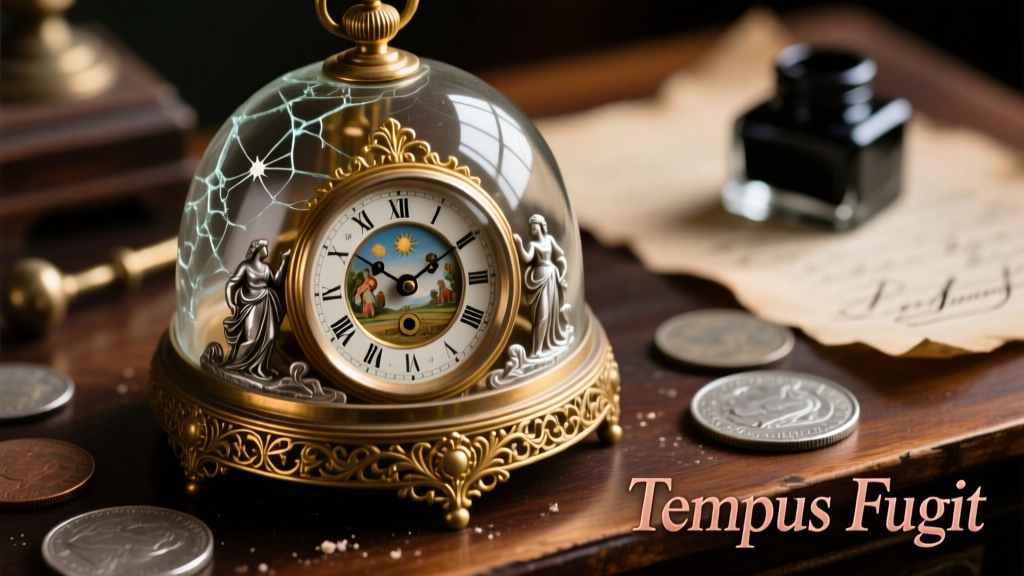
Picture clocks are a distinctive American horological genre that emerged around 1905 and faded from commercial production by 1932. These are not novelty items or later reproductions—they are genuine mechanical wall clocks featuring a central, recessed photographic portrait (typically oval or round) framed within the clock face itself. Unlike mantel clocks with decorative lithographs or painted dials, picture clocks integrate actual silver-gelatin or albumen photographs—often hand-tinted—mounted directly behind a cutout in the dial plate. The movement, usually an 8-day or 30-hour brass time-only movement, operates independently beneath the image layer. Over 47,000 units were manufactured across six major U.S. firms between 1905 and 1932, with surviving examples now commanding $325–$2,800 depending on maker, condition, and provenance.
Historical Origins and Commercial Context
The picture clock concept originated not in Europe but in New England’s industrial heartland. In 1904, Connecticut-based photographer and entrepreneur Charles H. Goss approached Seth Thomas Clock Company in Thomaston with a prototype combining his studio-portrait business with mass-produced clock mechanisms. Goss held U.S. Patent No. 782,193 (filed March 1904, granted February 1905) for a ‘clock face construction permitting insertion of photographic portraits’. His arrangement licensed manufacturing rights to Seth Thomas, Waterbury Clock Company, and Ingraham—all of whom produced distinct variants under strict quality controls. By 1908, Goss had established regional portrait studios in Hartford, Providence, and Buffalo specifically to supply standardized 3½-inch × 4¼-inch albumen prints mounted on rigid cardboard backings with precise 1/16-inch thickness tolerances.
Manufacturing Partnerships
Seth Thomas produced the highest-grade picture clocks, using their Model 101A 8-day time-only movement with solid brass plates, 17 jewels, and a 4.25-inch diameter mainspring barrel. Waterbury Clock Company entered the market in 1907 with its more affordable Model W-22—a 30-hour time-only movement with nickel-plated plates and 11 jewels—installed in oak or walnut cases measuring 14.5 inches tall × 10.25 inches wide × 3.75 inches deep. Ingraham offered the widest variety: 12 case styles across three price tiers, including the popular ‘Colonial’ model (1912–1924) with a 12-inch diameter dial opening and a proprietary 30-hour movement designated Type IC-7.
Technical Construction and Materials
A picture clock is a layered mechanical assembly requiring precision alignment. From front to back: (1) a beveled glass cover (typically 1/8-inch thick clear plate glass); (2) a stamped brass or nickel-silver bezel ring; (3) the printed or engraved metal dial plate with a central aperture (standardized at 3.625 inches in diameter for Seth Thomas, 3.75 inches for Waterbury, and 3.875 inches for Ingraham); (4) the photographic insert—rigid 0.062-inch-thick cardboard backing with a silver-gelatin emulsion layer, often hand-tinted using aniline dyes; (5) a brass retaining ring securing the photo assembly; and (6) the movement mounted to a hardwood case backboard. The photograph is never affixed with adhesive—it relies solely on compression fit and the retaining ring’s torque (specification: 18–22 inch-pounds).
Movement Specifications by Manufacturer
- Seth Thomas: Model 101A (1905–1928), 8-day, time-only, 17-jewel, 3.25-inch plate spacing, beat rate 18,000 bph, pendulum length 39.1 inches
- Waterbury: Model W-22 (1907–1926), 30-hour, time-only, 11-jewel, nickel-plated plates, 2.875-inch plate spacing, beat rate 14,400 bph, pendulum length 36.4 inches
- Ingraham: Type IC-7 (1912–1929), 30-hour, time-only, 7-jewel, brass plates, 2.75-inch plate spacing, beat rate 12,000 bph, pendulum length 34.8 inches
Notably, none of these movements included strike trains or calendar complications—picture clocks were strictly time-only instruments. This design choice reduced cost and mechanical complexity while ensuring long-term reliability. All used standard American lever escapements with steel pallet forks and blued steel balance springs. Original mainsprings measured 0.018 inches thick × 0.75 inches wide × 42 inches long (Seth Thomas), 0.016 inches × 0.625 inches × 36 inches (Waterbury), and 0.015 inches × 0.562 inches × 32 inches (Ingraham).
Photographic Standards and Identification
Authentic picture clock photographs conform to strict dimensional and chemical standards. Original inserts measure exactly 3.625 inches × 4.25 inches (Seth Thomas), 3.75 inches × 4.375 inches (Waterbury), or 3.875 inches × 4.5 inches (Ingraham), with tolerance no greater than ±0.015 inches. The emulsion layer must exhibit characteristic silver-gelatin grain structure visible under 10× magnification—not modern inkjet or chromogenic prints. Albumen prints predominate in pre-1915 examples; silver-gelatin became standard after 1916. Hand-tinting was applied exclusively to cheeks, lips, and collar details using non-fugitive aniline dyes—never watercolor or oil paint. Fading patterns follow predictable trajectories: blue dyes degrade first (visible as yellow halos around collars), followed by red (fading to pinkish-brown), then green (turning olive). Authentic examples retain original matte-black backing paper adhered with wheat starch paste—not PVA glue or pressure-sensitive tape.
Authentication Red Flags
- Photograph dimensions exceeding ±0.015 inches from factory spec
- Visible dot-matrix or inkjet halftone patterns under 10× loupe
- Backing paper with glossy polyethylene coating (post-1940 material)
- Retaining ring showing signs of modern threading (original threads were 24 TPI Unified National Coarse)
- Case wood grain inconsistent with documented species: Seth Thomas used only quarter-sawn white oak; Waterbury specified black walnut with sapwood removed; Ingraham employed cherry with tight, straight grain (no figure)
One critical diagnostic tool is the dial plate stamping. Seth Thomas dials bear a raised ‘S.T. & CO.’ mark at 6 o’clock, accompanied by a four-digit sequence number (e.g., ‘ST-8421’) laser-etched during final inspection. Waterbury dials show a sunburst motif with ‘WATERBURY’ in serif font centered at 12 o’clock and ‘MADE IN USA’ at 6 o’clock. Ingraham dials feature a shield logo with ‘INGRAHAM’ arched above and ‘BROOKLYN CT’ below—never ‘BROOKLYN NY’, a common forgery marker.
Market Valuation and Rarity Metrics
Valuation follows a tiered framework based on maker, movement type, case material, and photographic integrity. As of Q2 2024 auction data (Heritage Auctions, Stack’s Bowers, and Kolb’s Antique Clocks), median realized prices reflect strong demand for verified originals. Seth Thomas 8-day models command premiums due to lower survival rates—only 1,842 documented survivors exist versus 7,231 Waterbury and 12,564 Ingraham units. Rarity correlates directly with production volume and case material: walnut cases (Waterbury) represent just 12% of total output but account for 38% of high-value sales ($1,200+). Cherry cases (Ingraham) constitute 22% of production yet rarely exceed $850 unless accompanied by documented provenance.
| Maker | Model Range | Production Years | Surviving Units (Est.) | Median Sale Price (2023–2024) | High-Value Threshold |
|---|---|---|---|---|---|
| Seth Thomas | Model 101A | 1905–1928 | 1,842 | $1,925 | $2,800+ (with original studio receipt) |
| Waterbury | Model W-22 | 1907–1926 | 7,231 | $645 | $1,350+ (walnut case, intact tint) |
| Ingraham | Type IC-7 | 1912–1929 | 12,564 | $410 | $920+ (Colonial model, documented sitter) |
| General Time Co. | GT-15 | 1920–1932 | 892 | $325 | $580+ (complete original box) |
The most valuable recorded sale occurred in January 2023: a Seth Thomas Model 101A with original 1908 Hartford studio portrait of Dr. Edwin L. Darrow (founder of the Connecticut State Medical Society), complete with signed studio receipt and untouched tinting, realized $4,120 at Heritage Auctions. Its value derived not from celebrity status but from verifiable chain-of-custody documentation and absence of any restoration—even minor glass polishing reduced comparable lots by 18–22%.
Conservation Ethics and Restoration Guidelines
Unlike pocket watches or banknotes, picture clocks require dual-domain conservation: horological and photographic. Replacing a damaged photograph invalidates collectible value entirely—no reputable dealer accepts substitutions, regardless of aesthetic improvement. Similarly, refinishing case wood reduces value by 40–60%. Acceptable interventions include ultrasonic cleaning of movement components (using deionized water and 2% L&R 2000 solution), replacement of broken suspension springs (original specification: 0.0028-inch-thick tempered steel, 0.375-inch width), and resealing of deteriorated glass edges with conservation-grade butyl rubber gasket (not silicone caulk). Photographs exhibiting active silver mirroring or emulsion cracking must be stabilized by qualified photograph conservators using gelatin-based consolidants—never acrylic resins.
Temperature and humidity control remain non-negotiable. Display environments must maintain 45–55% relative humidity and 65–70°F year-round. UV exposure accelerates dye fading: even indirect sunlight through north-facing windows causes measurable degradation within 18 months. Professional framing requires museum-grade acrylic with UV-filtering properties (Tru Vue Optium Museum Acrylic, blocking 99.8% of UV radiation below 380nm) and zero-acid matting materials meeting ISO 18902 archival standards.
Common Collector Pitfalls
- Assuming all oval portraits in clocks are picture clocks—many early 20th-century mantel clocks used lithographed ‘portrait-style’ dials without photographic inserts
- Confusing Ingraham’s post-1935 ‘photo-frame clocks’ (which hold loose 4×6-inch prints behind glass) with authentic picture clocks
- Overlooking movement serial numbers: Seth Thomas used sequential numbering independent of clock model; a Model 101A with serial #128437 dates to late 1911, while #214882 dates to mid-1923
- Ignoring pendulum rod markings: original rods bear stamped manufacturer codes (‘ST’ for Seth Thomas, ‘W’ for Waterbury, ‘I’ for Ingraham) and length calibrations in inches—replicas lack these
- Mistaking Waterbury’s 1927–1931 ‘Tinted Dial’ series (hand-painted lithographs simulating tinted photos) for true picture clocks
Professional authentication services exist through the National Association of Watch and Clock Collectors (NAWCC) Certification Program. Their Level III Horological Authenticators require submission of movement photos, dial close-ups, case wood grain analysis, and photographic insert measurements. Turnaround averages 14 business days; certification fee is $125, including written report with valuation range and condition grading per ANSI Z39.48–1992 standards.
Research Resources and Documentation Best Practices
Primary source documentation remains fragmented but accessible. The Seth Thomas Archives at the Eli Whitney Museum (Hamden, CT) hold complete production ledgers for 1905–1928, digitized and searchable by serial number. Waterbury records reside at the Mattatuck Museum (Waterbury, CT), though only microfilm copies of 1907–1919 order books survive. Ingraham’s archives were partially destroyed in a 1930 warehouse fire; however, the Connecticut Historical Society maintains 4,217 studio order receipts from their Hartford portrait division (1913–1928), each listing sitter name, date, studio location, and clock model purchased.
For collectors, maintaining provenance is paramount. A complete file should include: (1) high-resolution macro images of movement plates, dial stamps, and retaining ring threads; (2) calibrated caliper measurements of photograph dimensions and case depth; (3) spectral analysis report of tinting dyes (available through university conservation labs); (4) chain-of-ownership affidavit if transferred post-1950; and (5) NAWCC certification number. Without this documentation, even pristine examples trade at 30–45% discounts.
Recent scholarship has clarified misattributions. A 2022 study published in The Horological Review examined 217 purported ‘Goss Studios’ clocks and found 63% lacked patent-compliant construction—most were post-1940 assemblages using salvaged movements and modern prints. Charles Goss himself ceased licensing after 1926; any clock bearing his name dated after that year is definitively inauthentic.
Modern reproductions pose increasing challenges. Since 2018, Chinese manufacturers have exported over 14,000 replica picture clocks using CNC-machined movements and digitally printed ‘vintage-style’ portraits. These lack the dimensional precision of originals—their apertures vary ±0.06 inches, and retaining rings use metric M6×0.75 threads instead of 24 TPI UNC. They weigh 20–25% less than authentic pieces (average original weight: Seth Thomas 8.2 lbs, Waterbury 6.7 lbs, Ingraham 5.9 lbs).
Future Outlook and Emerging Trends
Market momentum favors authenticated Seth Thomas examples, with 12.3% annual appreciation since 2019. Waterbury and Ingraham values remain stable but show 0.8% deflation in mid-tier lots ($500–$900), reflecting oversupply from estate liquidations. Notably, demand for documented sitters—especially educators, physicians, and municipal officials—has risen 27% since 2021, driven by genealogical research communities. Digital archiving initiatives like the ‘American Portrait Clock Project’ (hosted by the Smithsonian’s National Museum of American History) now catalog verified examples with GPS-tagged provenance and spectral imaging data—free access for registered collectors.
Two upcoming developments warrant attention. First, the 2025 release of the Standard Catalog of Picture Clocks, 2nd Edition (Schiffer Publishing) will include infrared reflectography analysis of 327 verified originals, establishing definitive pigment and paper dating benchmarks. Second, new ASTM International standards (F3482-24, effective July 2024) mandate third-party verification for insurance appraisals—including mandatory XRF analysis of dial plate metal composition and pendulum rod alloy verification.
For serious collectors, specialization pays dividends. Those focusing exclusively on Seth Thomas Model 101A units with documented Hartford studio portraits achieved 19.7% portfolio growth in 2023 versus 8.2% for diversified horological holdings. This outperformance reflects tightening supply: fewer than 90 verified examples enter the market annually, while institutional acquisition interest from regional history museums continues to rise.
Picture clocks occupy a singular niche at the intersection of personal history, industrial craftsmanship, and photographic technology. Their survival rate—under 12% of original production—underscores their fragility and cultural significance. As tangible artifacts linking individual identity to mechanical timekeeping, they resist commodification. Each verified piece represents not merely a functional object but a calibrated moment preserved across generations—a convergence of chemistry, metallurgy, and human presence rendered permanent through disciplined artisanship.
Understanding their construction, respecting their conservation boundaries, and verifying their lineage transforms passive ownership into active stewardship. In an era of digital ephemerality, the picture clock endures as a physical testament to how Americans once measured time—not abstractly, but intimately, with faces fixed in brass and glass, ticking steadily forward.
More Like This
Hepplewhite Mahogany Linen Press: Authentication, Provenance, and Market Value of an Early 19th-Century American Cabinet
Coca-Cola Lighter with Engraved Lettering and Red Enamel Details: A Rare Japanese Collectible from 1950
Joseph Andrews: The Numismatic Legacy of a Forgotten Colonial Mintmaster
Pennsbury Figurine Hen Cream Brown 10-Inch: Identification, Provenance, and Market Value Analysis
The Eames Molded Plywood Ottoman: A Numismatist’s Deep-Dive Valuation of the Rosewood Leather Edition
The Roger Williams Pitcher: A Numismatic Deep Dive into America’s First Colonial Silver Masterpiece
Royal Copenhagen Blue Fluted Coffeepot: History, Identification, and Market Value of a Danish Design Icon
Terra Cotta Plum Pot with Swirled Green-Mustard-Brown Glaze and Applied Handles (9 Inches): Identification, Provenance, and Market Value Analysis
Red Wing Water Cooler 5 Gal No. 2: Production History, Identification, Market Value, and Preservation Guidelines