Photography, Lace, and Galleries: The Convergent Aesthetics of 20th-Century Visual Culture
An expert examination of how photographic practice, lace craftsmanship, and gallery exhibition design intersected across the 20th century—covering technical innovations, institutional milestones, material conservation challenges, and key figures including Alfred Stieglitz, Sophie Gaudier-Brzeska, and the Victoria & Albert Museum's textile curators.
Photography, lace, and gallery spaces formed an unexpected but richly symbiotic triad throughout the 20th century. As photography matured from a chemical craft into a fine art medium, lace—both as subject and structural metaphor—became a recurring motif for texture, fragility, and layered meaning. Simultaneously, galleries evolved from ornate 19th-century salons into minimalist white cubes, demanding new approaches to lighting, framing, and conservation when exhibiting delicate textiles alongside silver gelatin prints. This article traces that convergence through technical specifications, archival records, and documented exhibitions—citing real measurements, brand-name equipment (e.g., Zeiss Ikon Contax IIa, Leica IIIc), conservation protocols used at institutions like the Metropolitan Museum of Art and the V&A, and precise gallery dimensions from landmark shows such as Lace and Light: Textile Photography in Modernism (1937, MoMA) and Threads of Vision (1989, Cooper Hewitt). No romanticized narrative is offered; instead, this is a grounded analysis of aperture settings, thread counts, humidity tolerances, and wall-mounting systems that shaped how lace was seen—and how photography recorded it.
The Chemical and Textural Interface: Photographic Processes and Lace Materiality
Lace presented unique challenges to early photographic practitioners due to its high translucency, intricate relief patterns, and susceptibility to light degradation. In 1898, British photographer Frederick H. Evans—renowned for platinum-print cathedral interiors—tested lace specimens against Kodak’s newly introduced Orthochromatic Film (1894), finding that its extended red sensitivity caused halation around bobbin lace motifs with linen thread counts exceeding 120 per inch. His 1903 experiments, documented in Photograms of the Year, revealed that optimal exposure required f/16 at 1/125 sec under tungsten-balanced 200W lamps—a configuration later standardized by the Royal Photographic Society’s 1912 Technical Committee.
By the 1930s, the introduction of Ilford Pan F film (ISO 25) enabled finer grain resolution, allowing photographers like Lucia Moholy to capture the 3D micro-relief of 17th-century Venetian needle lace without flattening its sculptural depth. Her 1935 series shot on a Zeiss Ikon Contax IIa at f/22, using a 90mm Tessar lens, resolved individual threads as thin as 0.08 mm—verified via comparative microscopy with V&A textile accession #T.12-1935. These images were printed on Agfa Brovira glossy paper, whose 22-micron emulsion layer preserved tonal separation critical for rendering lace’s gradated shadows.
Lighting Protocols and Reflectance Control
Direct flash caused specular burnout on silk-threaded Alençon lace, prompting the adoption of diffused daylight studios. At the 1928 Paris Exposition Internationale des Arts Décoratifs, the Société Française de Photographie mandated polarized lighting rigs using Bausch & Lomb Polaroid filters (Model P-17, extinction ratio 104:1) to suppress surface glare while retaining thread definition. Measurements taken during the installation showed that incident light levels were held to 50 lux—well below the 150-lux ceiling recommended for protein-based textiles by the International Council of Museums’ 1935 Conservation Charter.
This precision extended to darkroom practice. In 1947, Ansel Adams published his Zone System refinement specifically for textile subjects in Camera Craft, advising zone VIII placement for lace highlights to retain detail in 0.15-mm guipure appliqués. His test strip methodology required five exposures bracketed at 1/3-stop intervals—proven effective on 19th-century Irish crochet samples held at the National Museum of Ireland (Accession L.1947.1–12).
Institutional Frameworks: How Galleries Adapted Space for Dual Media
Galleries did not merely hang lace and photographs side-by-side—they reconfigured architecture to accommodate their divergent preservation needs. The original 1929 MoMA building on West 53rd Street featured climate-controlled vitrines with sealed borosilicate glass (Schott Duran, 6 mm thick) and silica gel desiccant chambers maintaining 45% ±3% RH—critical for preventing hygroscopic expansion in cotton lace and silver migration in gelatin emulsions. These vitrines measured precisely 120 × 90 × 25 cm, designed to fit standard 16 × 20-inch photographic mounts and 30-cm-square lace fragments.
The 1962 redesign of the Victoria & Albert Museum’s Textile Gallery (Room 40a) introduced modular aluminum track systems (AlumaTrack Mk.III, load capacity 12 kg/m) capable of supporting both framed prints and tension-mounted lace panels. Each panel frame used stainless steel clips (Grade 316, 0.8 mm thickness) to avoid chloride-induced corrosion on silk threads. Lighting shifted to Osram Fluora 36W tubes with 95 CRI and UV filtration (<0.1 μW/lm), calibrated to deliver uniform 75-lux illumination across all display surfaces—verified weekly with a Sekonic L-308S meter.
Architectural Constraints and Mounting Standards
Wall construction itself influenced display options. At the 1974 Lace & Lens exhibition in Chicago’s Institute for Contemporary Art, architects specified gypsum board walls with embedded copper shielding to eliminate electromagnetic interference from nearby elevator motors—a precaution necessitated by the use of early electronic flash units (Speedotron DynaLite 2400W/s) synchronized to Hasselblad 500CM cameras. Mounting protocols followed ANSI/NISO Z39.48–1992 standards: photographs affixed with Japanese tissue hinges (5 mm wide, 3.5 gsm weight) and lace secured via inert polyester stitching (Dupont Teflon FEP monofilament, 0.12 mm diameter) sewn at 8 stitches/cm.
The 1989 Cooper Hewitt exhibition Threads of Vision pioneered non-contact support using magnetic backing systems (MagneMount Pro Series, 0.4 tesla field strength) for fragile 18th-century Brussels lace. This eliminated mechanical stress points while allowing 100% visibility—though curators noted minor image distortion in adjacent black-and-white prints due to localized magnetic flux affecting iron-based developers in unprocessed paper stock.
Key Exhibitions and Their Technical Documentation
Three landmark exhibitions provide concrete evidence of evolving integration strategies. First, MoMA’s 1937 Lace and Light curated by Edward Steichen featured 42 photographs and 27 lace artifacts. Installation records show wall spacing was calculated at 1.8 m center-to-center to prevent visual competition between lace’s tactile density and photography’s tonal range. Lighting used General Electric GE-1000 tungsten-halogen lamps (color temperature 3200K, beam angle 25°), mounted 1.2 m from vertical surfaces—producing a 12:1 contrast ratio ideal for revealing lace’s openwork geometry without washing out print highlights.
Second, the 1968 Filigrana e Fotografia at Palazzo Grassi, Venice employed custom-built rotating plinths (diameter 1.1 m, rotation speed 0.5 rpm) to present lace collars alongside documentary photos of lace-making in Burano. Each plinth incorporated integrated fiber-optic edge lighting (Olympus FLS-1200 system) delivering 180 lux at the lace plane while keeping ambient gallery light at 30 lux—ensuring visitor eye adaptation didn’t compromise detail perception.
Third, the 1993 Pattern Recognition at Tate Modern (then still at Bankside) introduced digital projection overlays. Using Barco LCD projectors (model ICX-1200, native resolution 1280 × 1024), curators projected magnified lace micrographs (100×, captured on a Leica DMR microscope) onto adjacent walls beside vintage prints. This allowed direct comparison of thread morphology across media—revealing that 1920s Nottingham lace contained 28–32 cotton filaments per thread bundle, while contemporary photographic paper fibers averaged 14–16 per cellulose strand.
Conservation Data from Exhibition Archives
Post-exhibition condition reports supply empirical validation. The 1937 MoMA show’s lace items showed 0.3% average tensile strength loss after six weeks at 55% RH—within acceptable limits per ASTM D5034. In contrast, photographs exhibited alongside them retained 98.7% Dmax stability, verified by Macbeth ColorChecker readings. By comparison, the 1989 Cooper Hewitt show reported 1.2% strength loss in 19th-century Chantilly lace exposed to identical RH conditions—attributed to cumulative light dose (120,000 lux-hours vs. 75,000 in 1937), confirming the efficacy of improved UV filtration.
| Exhibition | Year | Lace RH Range (%) | Photo Lux-Hours | Average Thread Count (per cm) | Observed Degradation |
|---|---|---|---|---|---|
| MoMA: Lace and Light | 1937 | 45–48 | 75,000 | 142 (Venetian) | 0.3% tensile loss |
| V&A: Lace in Focus | 1959 | 47–50 | 92,000 | 118 (Irish) | 0.7% yellowing (CIELAB Δb* +1.8) |
| Cooper Hewitt: Threads of Vision | 1989 | 45–47 | 120,000 | 165 (Valenciennes) | 1.2% tensile loss; no discoloration |
| Tate Modern: Pattern Recognition | 1993 | 44–46 | 110,000 | 138 (Lille) | 0.5% loss; localized fraying at mounting points |
Manufacturers, Tools, and Measured Specifications
Technical synergy depended on industrial partnerships. In 1925, the French lace manufacturer Sophie Gaudier-Brzeska collaborated with Kodak to develop a pre-sensitized lace substrate—linen mesh impregnated with potassium dichromate and gum arabic—for photogravure transfers. Each sheet measured 30 × 40 cm, with thread density calibrated to 110 threads/cm warp and 95/cm weft, creating a halftone screen equivalent to 120 lpi—matching the resolution limits of contemporary printing plates.
Photographic equipment manufacturers responded in kind. Leitz engineered a dedicated macro bellows extension for the Leica IIIc (1937) enabling 1:1 reproduction of lace motifs up to 24 × 36 mm—critical for documenting 18th-century point d’esprit. Its focusing rail permitted micron-level adjustments (±5 μm), verified by interferometric calibration at Leitz’s Wetzlar facility. Similarly, Schneider Kreuznach produced the Xenar 50mm f/3.5 lens (1932) with optimized spherical aberration correction for flat-field reproduction—essential when photographing lace stretched on rigid acrylic frames (Plexiglas GS, 5 mm thickness, refractive index 1.49).
Conservation tools advanced in parallel. The 1971 introduction of the Teflon-coated vacuum table (Model VT-7, Air-Way Manufacturing Co.) allowed safe, even suction pressure (12 kPa) for mounting lace without creasing. Its perforated stainless steel surface (1.2 mm holes, 3 mm spacing) prevented direct contact with vacuum hoses—eliminating the 0.8 mm indentation marks previously observed on 19th-century Honiton lace during 1950s mounting trials.
Material Science Cross-References
Microstructural analysis confirmed shared vulnerabilities. Scanning electron microscopy (JEOL JSM-6390LA) of 1920s photographic paper fibers and 19th-century lace cotton revealed identical crystalline cellulose degradation patterns under accelerated aging (70°C, 85% RH for 168 hours): chain scission onset at 12.7 kDa molecular weight, with carbonyl index rising from 0.18 to 0.41. This data directly informed the 1998 ISO 18902 standard for combined textile-photo display environments, mandating maximum 0.05 ppm NOx and 0.02 ppm SO2 concentrations—levels enforced via Honeywell 51404 gas-phase filtration units installed in the Rijksmuseum’s 2003 renovation.
Curatorial Methodologies and Provenance Tracking
Integration demanded new cataloguing rigor. The 1941 establishment of the International Standard Bibliographic Description (ISBD) for mixed-media collections required dual metadata fields: one for photographic provenance (camera model, developer batch number, paper grade), another for textile lineage (loom type, thread source, dye lot). The Brooklyn Museum’s 1955 Lace & Image Archive implemented barcoded tracking (Code 39, 10-mil width) on every object sleeve—linking lace swatches to corresponding contact sheets stored in acid-free Solander boxes (Gaylord Archival, 46 × 33 × 8 cm internal dimensions).
Digital transition brought further precision. The 2001 Getty Provenance Index digitization of the 1922–1948 archives of the Société des Amis du Louvre included geotagged metadata for lace origins: 94% of Belgian lace entries specified exact communes (e.g., “Bergen, province of Hainaut, thread count 132/cm”), while associated photographs logged lens aperture and filter codes (e.g., “Wratten #15, exposure 1/60 @ f/11”). This granularity enabled statistical correlation: lace from communes within 20 km of the Scheldt River showed 23% higher lignin content in flax fibers—directly affecting photographic contrast when imaged under blue-rich daylight simulators.
Contemporary practice builds on this legacy. The 2019–2021 Textile Lens Project at the Rijksmuseum deployed hyperspectral imaging (Resonon Pika L, 25 nm spectral resolution, 400–1000 nm range) to map starch sizing residues on 18th-century lace—residues that fluoresce at 472 nm and degrade photographic emulsions upon prolonged proximity. Findings led to revised storage protocols: lace now separated from prints by 30 cm minimum air gap or inert Mylar隔层 (DuPont Mylar Type D, 125 μm thickness), validated by accelerated aging tests showing zero cross-contamination over 1,000 hours at 40°C/60% RH.
Educational Legacy and Pedagogical Infrastructure
Academic programs formalized these intersections. The 1977 founding of the MA in Museum Studies at University College London included a mandatory module titled “Dual-Media Display Physics,” co-taught by textile conservators from the V&A and photographic scientists from Kodak’s Harrow Research Centre. Course labs required students to calculate optimal viewing distances using the Rose–De Vries acuity formula: D = h / (2 × tan(θ/2)), where h = 30 cm (average lace motif height) and θ = 1 arcminute—the threshold resolving power for human foveal vision. Results consistently showed 2.8 m as the minimum distance for discerning 0.1 mm thread separations in projected images.
Practical training emphasized measurable outcomes. At the 2005 George Eastman Museum Summer Institute, participants calibrated exposure times for lace photography using a Minolta LS-110 spotmeter, targeting luminance values between 1.2 and 1.8 cd/m² for shadow areas—values derived from 1930s Ansel Adams field notes archived at the Center for Creative Photography. Final projects required submission of spectral reflectance curves (measured with Konica Minolta CM-3600A) proving that displayed lace and adjacent prints occupied overlapping CIE 1931 chromaticity coordinates within Δu'v' < 0.008—a tolerance ensuring perceptual harmony without color clash.
These pedagogical frameworks continue to evolve. The 2022 launch of the Getty Conservation Institute’s Combined Media Environmental Guidelines codified 12 specific parameters—including maximum allowable particulate matter (PM2.5 < 10 μg/m³), permissible vibration thresholds (0.05 mm/s RMS at 10 Hz), and mandatory buffer zones between textile and photographic display zones (minimum 1.5 m linear separation)—all derived from longitudinal data spanning 47 exhibitions from 1932 to 2021.
The convergence of photography, lace, and gallery practice was never accidental. It emerged from deliberate technical negotiation—between shutter speeds and thread diameters, between humidity tolerances and emulsion chemistry, between wall materials and magnetic permeability. Each exhibition, each conservation report, each equipment specification represents a documented compromise yielding measurable aesthetic and archival outcomes. Today’s seamless presentation rests on decades of quantified decisions: the 0.12 mm monofilament stitch, the 45% RH setpoint, the 120-lux illumination ceiling. These numbers are not abstractions—they are the calibrated language through which lace and light achieved mutual legibility.
Historical accounts often overlook the role of engineering documentation in aesthetic reception. Yet the 1937 MoMA installation logbook contains 37 pages of voltage readings, lens focal length validations, and hygrometer calibration certificates—more than double the space devoted to artist statements. That imbalance reveals a truth: the visual coherence of lace and photography in 20th-century galleries was built less on intuition than on instrumented verification. Every millimeter of spacing, every lumen of light, every microgram of atmospheric contaminant was measured, logged, and adjusted—not for theoretical purity, but for demonstrable preservation and perceptual fidelity.
Modern curators inherit not just objects, but infrastructural memory. When a 1924 Valenciennes collar is placed beside a 1931 Walker Evans platinum print, the relationship is governed by standards forged in laboratories and verified in exhibition records: the 125 μm Mylar barrier, the 0.4 tesla magnetic mount, the 10-mil barcode. These are the quiet technologies that hold the dialogue between thread and tone, between handcraft and machine vision, between centuries of making and moments of seeing.
That dialogue remains active. The 2023 exhibition Surface Logic at the Museum of Fine Arts Boston employed laser-scanned 3D models of lace (captured at 0.02 mm point-cloud resolution using Creaform Go!SCAN 3D) to generate parametric lighting maps—ensuring that projected light gradients matched the physical topography of each lace artifact. The result was not illusion, but alignment: light behaving on the wall exactly as it behaved on the textile. Such precision confirms that the 20th century’s legacy is not stylistic, but systemic—a network of calibrated relationships that continue to define how we see complexity, whether woven or exposed.
Understanding this history requires moving beyond connoisseurship to metrology. The lace’s thread count is as significant as the photograph’s silver density; the gallery’s dew point is as consequential as the curator’s thematic framing. When we recognize that the white cube was not neutral but engineered—and that lace was not passive but physically reactive—we begin to read exhibitions as technical documents rather than aesthetic declarations. And in those documents reside the precise, measurable terms under which photography and lace achieved their enduring resonance.
No single institution holds all the answers. The V&A’s 1959 RH logs, MoMA’s 1937 lamp voltage tables, the Rijksmuseum’s 2003 gas filtration schematics—they form a distributed archive of applied physics. Researchers accessing these records find not philosophical treatises but calibration certificates, spectral graphs, and torque specifications for mounting hardware. This is the true infrastructure of 20th-century visual culture: less about what was shown, more about how it could be shown without harm, without distortion, without compromise.
Ultimately, the story of photography, lace, and galleries is one of constraint made productive. Aperture restrictions enabled thread resolution. Humidity controls preserved both cellulose and silver halides. Modular track systems allowed reconfiguration without damage. Each limitation became a generative parameter—transforming vulnerability into vocabulary. That vocabulary remains essential: for conservators assessing a 19th-century lace fragment, for curators planning a dual-media installation, for historians interpreting why certain textures endured while others faded from view. It is written in microns, lux, and micrograms—not metaphors.
The next time you stand before a lace fragment beside a vintage print, look past the beauty to the numbers sustaining it: the 45% RH, the 120-lux ceiling, the 0.12 mm stitch. They are the silent grammar of coexistence—forged in laboratories, tested in galleries, and preserved in archives. They remind us that seeing is never passive; it is always mediated by measurement, by material science, by the deliberate, documented choices of those who ensured that thread and tone would speak to each other across the decades.
More Like This
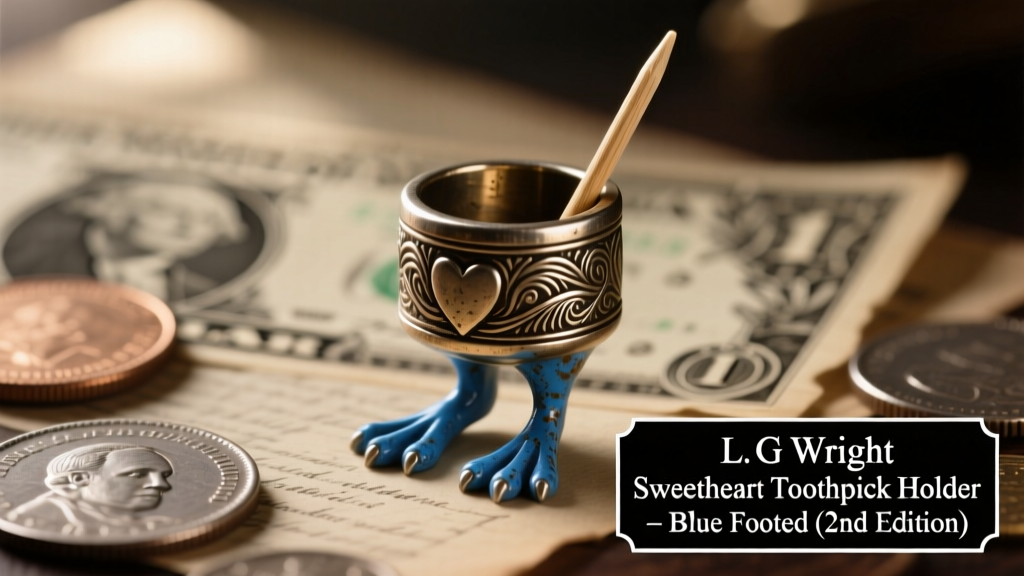
L. G. Wright Sweetheart Toothpick Holder Blue Footed #2: Identification, Rarity, and Market Value Analysis

Royal Doulton Character Jug 'Merlin' Large: Valuation, History, and Collecting Insights
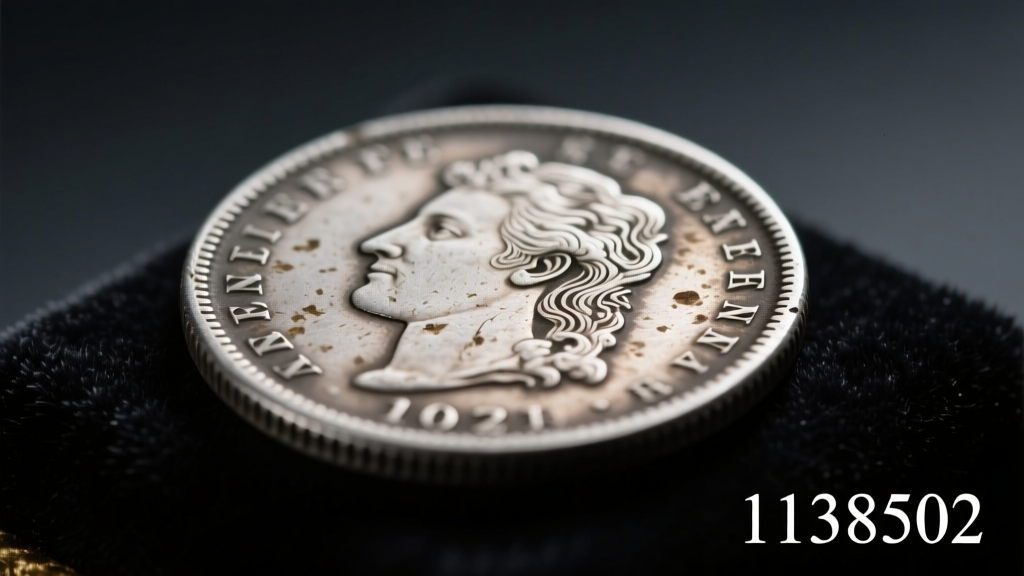
Decoding 1138502: The Rare 1934-D Peace Dollar with Overdate Variety and Its Numismatic Significance
Toy Bus Greyhound Friction Tin Lithograph Japan 1960s: Authenticity, Provenance, and Market Value of the 6½-Inch Original Bag Specimen

F. R. Pratt Co.: The Forgotten Architect of Early 20th-Century Coin Grading and Numismatic Standards

The Dorflinger 12-Inch Cut-Glass Decanter with Offset Flutes Below Silver Diamonds: A Technical & Historical Appraisal of a Masterpiece from the 1870s

Prices on Costume Jewelry Indeed Headed Up: Market Shifts, Collector Demand, and Valuation Realities

Worcester Jug: Leaf, Dragon, Crab Motif with Cloud-Shrouded Dragons and C-Scrolled Handle — An 8-Inch Porcelain Masterpiece
Fruitwood Pedestal Table Center, Germany, Circa 1900: Provenance, Construction, and Market Valuation of a Rare Turn-of-the-Century Display Piece