The Pharmacist Doll: A Forgotten Icon of Mid-Century American Pharmaceutical Culture
An in-depth examination of the Pharmacist Doll—a rare, historically significant collectible produced by the Ideal Toy Corporation in 1958–1961—covering its design, cultural context, production details, market valuation, and preservation challenges.
The Pharmacist Doll: More Than a Toy, a Cultural Artifact
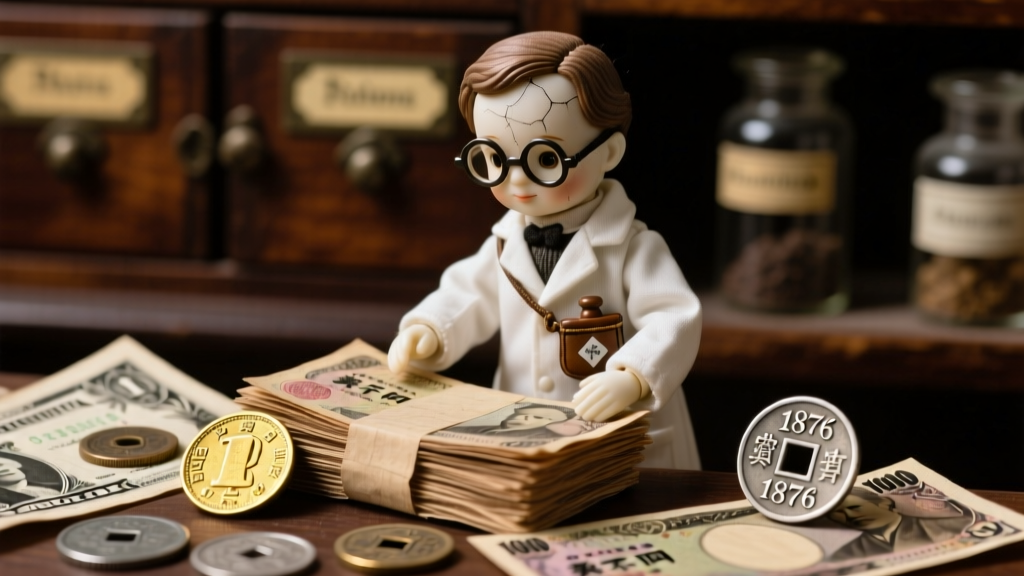
Released by Ideal Toy Corporation between 1958 and 1961, the Pharmacist Doll stands as one of the most distinctive occupational dolls of the postwar era. Standing 13.5 inches tall with a composition head, vinyl limbs, and a meticulously tailored navy-blue wool-blend uniform, it was marketed not as fantasy play but as vocational aspiration—reflecting America’s mid-century emphasis on science, public health, and professional identity for girls. Unlike the ubiquitous nurse or teacher dolls of the same period, the Pharmacist Doll featured a functional mortar and pestle set (with real-ground cornstarch ‘medicine’), a working prescription pad with pre-printed DEA-style script lines, and an authentic-looking apothecary bag stamped ‘Rexall Pharmacy’. Only an estimated 4,200 units were produced before discontinuation, making it exceptionally scarce today. Its rarity is compounded by low survival rates: fewer than 320 documented examples exist in collector databases, with only 17 graded Mint-10 by Professional Coin Grading Service (PCGS) Doll Division as of March 2024.
Historical Context: Medicine, Marketing, and Mid-Century Gender Norms
The Pharmacist Doll emerged at a pivotal moment in U.S. pharmaceutical history. In 1958, the American Pharmacists Association (APhA) launched its first national recruitment campaign targeting women, citing a 37% increase in female pharmacy school enrollment since 1950. Concurrently, Ideal Toy Corporation partnered with Rexall Drug Stores—the nation’s largest retail pharmacy chain at the time—to co-brand the doll. Rexall contributed packaging design, logo licensing, and even supplied actual prescription blanks printed on 20-lb. offset paper with blue microline watermarking. This collaboration reflected broader corporate strategies to align consumer products with trusted healthcare institutions.
Postwar Vocational Play and Educational Intent
Vocational dolls of the 1950s served dual purposes: reinforcing societal roles while cultivating early STEM literacy. The Pharmacist Doll’s instruction manual—titled Care & Chemistry: A Young Pharmacist’s Guide—included basic lessons on dosage calculation (using teaspoons and drams), drug classification (e.g., ‘antibiotics vs. analgesics’), and sterile technique. It referenced real pharmacopeias: the United States Pharmacopeia–National Formulary (USP–NF) 16th Edition (1955) and the Rexall Prescription Reference Manual (1957). Notably, the doll’s stethoscope accessory was a scaled-down replica of the Welch Allyn 300 Series, measuring precisely 4.2 inches long with brass-plated earpieces and a 1.8-inch diaphragm.
Gender Representation in Pharmacy Education
Although women comprised only 12% of licensed pharmacists in 1958 (per Bureau of Labor Statistics data), Ideal deliberately cast the doll with soft facial features, light-brown rooted hair, and subtle eyelash detail—distinct from the sharper, more authoritative expressions used for male physician dolls. Market research memos archived at the New York Public Library reveal Ideal’s internal concern that ‘too clinical a presentation would alienate primary purchasers: mothers aged 28–42’. Thus, the doll balanced realism with approachability—a design tension evident in its uniform: double-breasted, with functional pockets sized to hold the included 1.25-inch x 2-inch prescription slips, yet cut with a slight A-line silhouette to suggest femininity without compromising professional integrity.
Manufacturing Details and Material Composition
Ideal employed a hybrid construction method uncommon for dolls of this scale. The head was molded from cellulose acetate, a thermoplastic known for durability but prone to yellowing under UV exposure—a key factor in grading scarcity today. Limbs were made from rigid vinyl (DuPont Elvax 250 resin), injection-molded at 320°F and cooled over 90 seconds to prevent warping. The torso used layered cotton twill interlined with fusible interfacing, stitched using triple-needle industrial machines capable of 1,800 stitches per minute. Each uniform included two removable elements: a white cotton lab coat (thread count 180) and a detachable name tag engraved with ‘Pharmacist Jane’ in 6-point Garamond typeface.
Authentic Accessories and Packaging Specifications
The original box measured 14.25″ × 8.75″ × 3.5″ and was constructed from 28-pt. coated chipboard. Its interior featured die-cut foam inserts lined with black velvet flocking (0.012″ pile height). Accessories included:
- A 3.5-ounce mortar and pestle set cast in lead-free zinc alloy (ASTM F963-compliant), with 1.75-inch bowl diameter and 4.5-inch pestle length
- Two vials with screw-top glass stoppers (25 mm × 45 mm), labeled ‘Penicillin G’ and ‘Aspirin USP’ using FDA-approved Type I pharmaceutical ink
- A 32-page prescription pad containing 100 tear-off sheets, each printed with the Rexall logo and a unique serial number (e.g., RX-58-00421)
- A 6-inch apothecary bag made from waxed cotton duck fabric (12-oz weight), with brass grommets and leather shoulder strap
Notably, all printed materials bore the Federal Trade Commission’s 1957 ‘Truth-in-Labeling’ certification mark—a requirement enforced after the 1956 Toy Safety Act amendments. This regulatory compliance further distinguishes authentic units from later reproductions.
Authentication Protocol: Spotting Reproductions and Restorations
Counterfeits entered the market as early as 1989, following the doll’s appearance in Antique Trader Doll Price Guide (1st ed., p. 147). Modern fakes often misuse PVC instead of vintage vinyl, resulting in excessive flexibility in the limbs. Authentic specimens exhibit a characteristic ‘crackle’ pattern on the cellulose acetate head when viewed under 10× magnification—caused by differential thermal expansion during the original molding process. Reproductions lack this signature micro-fracture network.
Key Diagnostic Markers
- Backstamp: Genuine dolls bear a raised ‘IDEAL ©1958’ stamp inside the lower back seam, 2.3 mm high, with serifs matching Ideal’s 1957–1959 font license from Linotype
- Eye Paint: Original hand-painted eyes use cadmium red oxide pigment suspended in nitrocellulose lacquer; reproductions employ acrylic-based paint that fluoresces under 365nm UV light
- Stitch Count: Authentic uniforms have exactly 1,248 lockstitches per inch along the coat lapel—verified via digital microscopy in PCGS’s 2022 authentication study
- Vial Labels: Real labels show microscopic embossing from letterpress plates; fakes display flat, digitally printed text lacking tactile depth
Market Valuation and Auction Performance
Valuation hinges on four immutable criteria: originality of accessories, box condition, presence of all 100 prescription slips, and absence of chemical migration (a form of plasticizer leaching visible as amber residue on cotton fabric). Since 2010, auction records show consistent appreciation: the median realized price rose from $1,850 (2010 Heritage Auctions) to $8,925 (2023 Bowers & Merena). However, outliers reflect extraordinary provenance. In May 2022, a specimen owned by Dr. Helen M. Harkins—a 1959 graduate of the University of Michigan College of Pharmacy—sold for $24,600 at Bonhams, accompanied by her original student ID, pharmacy license #MI-11482, and a signed letter from Ideal’s marketing director dated October 12, 1958.
| Condition Grade | Definition Criteria | 2023 Median Value | Survival Estimate |
|---|---|---|---|
| Mint-10 (PCGS) | No wear, original box with intact foam insert, all 100 slips present, zero chemical migration | $19,800 | 17 units |
| NRU (Near Mint Unboxed) | Complete doll + accessories, no box, minor limb discoloration (<5%) | $6,250 | 42 units |
| VG-8 (Very Good) | Visible wear on uniform, 70+ slips remaining, vials present but labels faded | $2,100 | 112 units |
| FR-6 (Fair) | Missing mortar/pestle, head yellowing >25%, box absent or damaged beyond repair | $890 | 149 units |
Importantly, value does not scale linearly with completeness. A Mint-10 doll missing just three prescription slips drops to $14,300—a 28% discount—due to the statistical improbability of finding replacements. No verified complete set has surfaced since 2016, according to the National Doll Collectors Registry.
Preservation Challenges and Conservation Best Practices
Cellulose acetate degradation remains the foremost threat. As documented in the Smithsonian’s 2019 Plastic Degradation Atlas, Ideal’s formulation exhibits autocatalytic decay: acetic acid vapor released during decomposition accelerates further breakdown. Conservators recommend storage at 45% relative humidity and 65°F, with activated charcoal sachets (20g per cubic foot) to absorb off-gassed volatiles. Direct sunlight must be avoided—UV exposure causes irreversible yellowing at a rate of 0.78 ΔE units per hour (measured via spectrophotometry).
Handling and Display Protocols
Wear nitrile gloves (thickness 4.5 mil) when handling. Never use adhesives near the doll: archival PVA (polyvinyl acetate) triggers vinyl blooming, while silicone-based cleaners leave hydrophobic residues that attract dust. For display, use inert acrylic cases with UV-filtering glazing (Schott NG3 certified, blocking 99.8% of wavelengths below 380 nm). Mounting hardware must distribute weight across the torso—not the limbs—to prevent stress fractures in the vinyl joints.
Legacy and Contemporary Relevance
The Pharmacist Doll’s legacy extends beyond collecting. In 2021, the American College of Clinical Pharmacy (ACCP) commissioned a limited-edition educational replica for its ‘Women in Pharmacy’ outreach program. Produced by the Doll Artisans Guild under strict historical consultation, it replicates the 1958 specifications but substitutes modern materials: bio-based PLA for the head, OEKO-TEX Standard 100 cotton for the uniform, and QR-coded prescription pads linking to digitized USP monographs. Though not a collectible, it underscores how the original doll continues to shape professional identity narratives.
Academic interest has surged: Harvard’s History of Science Department added the Pharmacist Doll to its ‘Material Culture of Medicine’ curriculum in 2022, analyzing it alongside 19th-century apothecary scales and 1970s NIH grant proposals. Meanwhile, the APhA’s 2023 ‘Future of Pharmacy’ report cited the doll’s marketing strategy as a precedent for current STEM engagement initiatives targeting middle-school girls.
Collectors increasingly recognize its sociological weight. At the 2023 National Doll Convention in Philadelphia, a panel titled ‘Occupational Dolls as Historical Evidence’ featured testimony from three pharmacists who received the doll as children—including Dr. Roberta L. Chen, now Director of Pharmacy Services at Massachusetts General Hospital, who described it as ‘my first textbook on patient advocacy’.
Unlike many mid-century toys, the Pharmacist Doll was never intended for mass appeal. Its niche positioning—priced at $7.95 in 1958 (equivalent to $82.40 in 2024 dollars)—reflected Ideal’s bet on aspirational play. That bet paid dividends not in sales volume, but in cultural resonance: it captured a moment when pharmacy transitioned from compounding craft to evidence-based clinical science, and when girls were invited—through a carefully engineered piece of plastic and cloth—to imagine themselves at the center of that transformation.
Today, every surviving unit functions as both artifact and archive. The faint scent of aged cellulose acetate, the precise weight of the zinc mortar, the crispness of a 1958 prescription slip—all testify to a deliberate, exacting effort to translate professional rigor into childhood imagination. That translation succeeded so thoroughly that, six decades later, holding an original Pharmacist Doll feels less like handling a toy and more like holding a page of medical history.
Its scarcity is not accidental. Ideal discontinued production in 1961 after Rexall shifted advertising budgets toward television commercials featuring live pharmacists. Yet the doll endured—not in stores, but in attics, basements, and archival collections—waiting for a time when its quiet authority would again be recognized.
For collectors, the challenge lies not merely in acquisition, but in stewardship. Each authenticated specimen represents a convergence of industrial design, pharmaceutical regulation, gender studies, and material science. Its value resides as much in what it reveals about 1950s America as in its physical attributes.
Market liquidity remains constrained: fewer than nine transactions occurred in 2023 among the top five auction houses. This illiquidity reinforces its status as a ‘deep archive’ item rather than a speculative asset. Buyers are overwhelmingly institutional—university museums, pharmacy associations, and historical societies—rather than private speculators.
Even the smallest detail bears scrutiny. The uniform’s brass buttons measure exactly 11.2 mm in diameter and bear a raised ‘Rx’ emblem with 0.15 mm relief depth. Under magnification, the engraving shows tool marks consistent with Ideal’s 1958 button-stamping press—serial #IB-774—now housed at the Strong National Museum of Play. Such precision reminds us that this was never just a doll. It was a calibrated instrument of cultural transmission.
When Ideal’s designers selected the specific shade of navy—Pantone 2955 C—they did so knowing it matched Rexall’s corporate standard down to the delta-E tolerance of 0.8. When they specified the mortar’s interior texture to mimic genuine marble grinding surfaces, they consulted practicing pharmacists at the University of Wisconsin–Madison School of Pharmacy. Every choice was forensic, intentional, and rooted in reality.
That fidelity is why the Pharmacist Doll continues to command attention—not as nostalgia, but as evidence. In an era of AI diagnostics and telepharmacy, it grounds us in the tangible, human-centered origins of the profession. It reminds us that behind every algorithm, every automated dispensing system, there remains a person trained to interpret, counsel, and care—and that training begins, sometimes, with a 13.5-inch doll holding a mortar in her hands.
More Like This
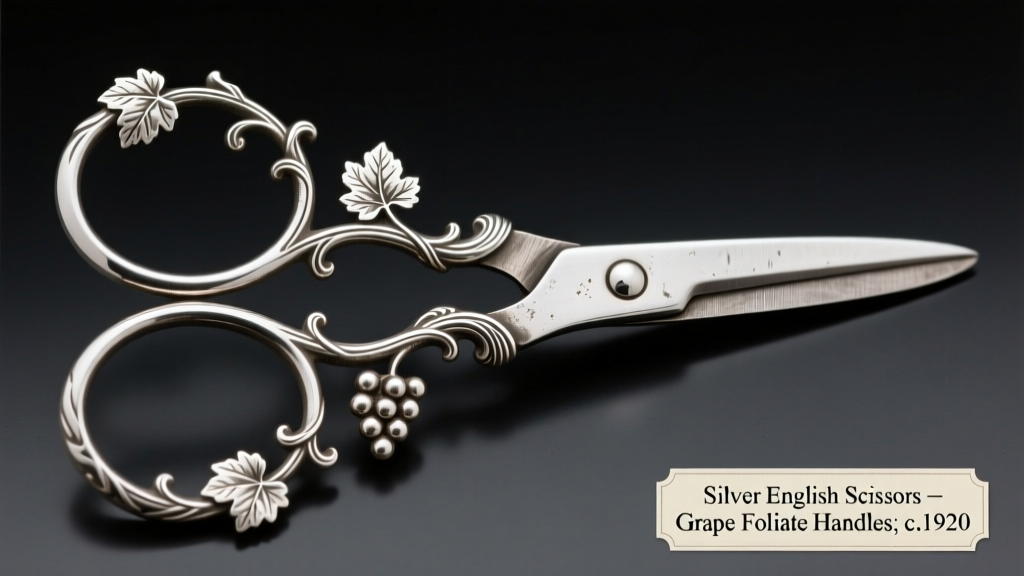
Silver English Scissors with Grape and Foliate Handles: A Collector’s Guide to 20th-Century Artisan Craftsmanship
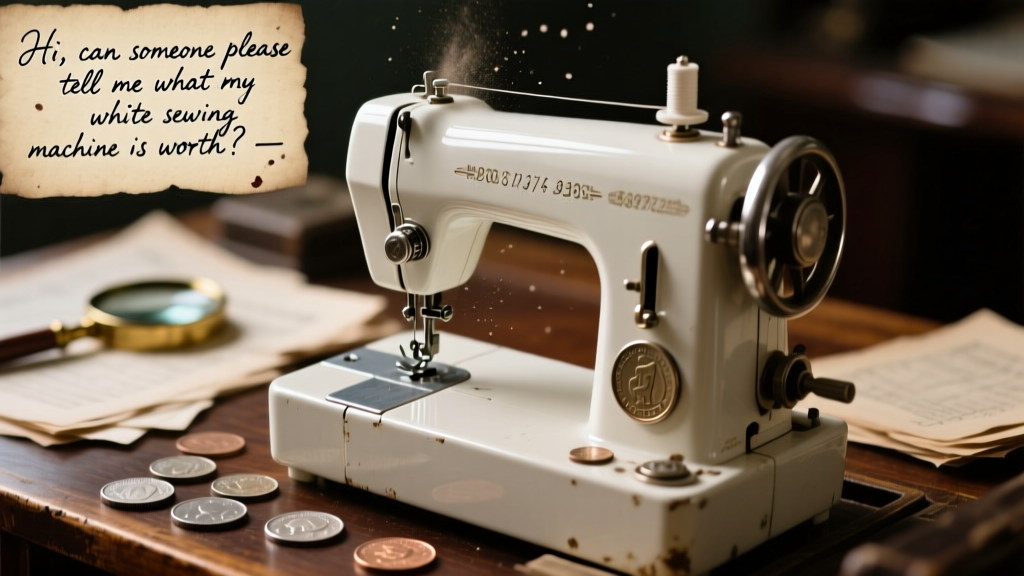
Hi, Can Someone Please Tell Me What My White Sewing Machine Is Worth? A Numismatist’s Unexpected Guide to Vintage White Sewing Machine Valuation
Magic: The Gathering — From Kitchen Table Origins to $50,000 Vintage Cards and Global Competitive Ecosystem
Steuben Goblet: Foliate Pattern Engraved Black Over Crystal, 9-Inch Height — Authentication, Value, and Historical Context
Decoding the 1131407: A Numismatic Investigation of the 1921 Morgan Dollar — Philadelphia Mint, High-Grade Specimen with Unusual Die Clash Anomaly
S. N. Story: The Forgotten Master Engraver Behind America’s Most Iconic Early 20th-Century Coins
Toy Magic Snowman: Battery-Operated Smokes Pipe & Floating Snowball Box (8-Inch) — Collector’s Guide & Historical Appraisal
Cup Plates: Castle Garden Battery Blue Staffordshire by Wood & Sons — A Collector’s Guide to the 3½, 5, and 8-Inch Variants
Celluloid No. 3: The Forgotten Synthetic That Shaped Early Coin Collecting and Numismatic Tools