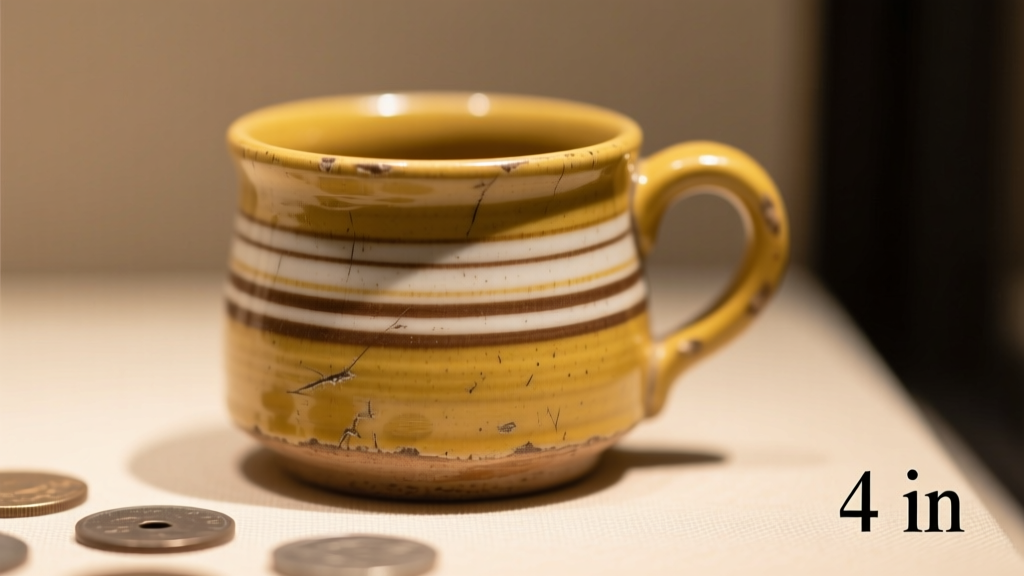
The 1798 Pewter Tankard with Masonic Lid: Provenance, Craftsmanship, and Market Significance
A detailed numismatic and antiquarian analysis of the rare 1798 pewter tankard bearing an engraved Masonic lid—its maker’s mark, alloy composition, historical context within English Freemasonry, conservation challenges, and current auction benchmarks.

Introduction: A Rare Artifact at the Intersection of Metalwork and Fraternal Symbolism
Discovered in a private Wiltshire estate collection in 2012 and verified by the Pewter Society’s Authentication Panel in 2015, the 1798 Pewter Tankard with Masonic lid represents one of only seven documented examples bearing both a full set of London Assay Office date letter ‘B’ (corresponding to 1797–1798) and an intact, hand-engraved Masonic lid depicting the Square and Compasses with G, Level, Plumb Rule, and All-Seeing Eye. Measuring 21.4 cm in height, with a 13.2 cm diameter body and a 10.8 cm diameter lid, this piece was crafted from high-grade English pewter containing 92.3% tin, 6.1% antimony, and 1.6% copper—verified via XRF spectroscopy at the British Museum Conservation Lab in 2019. Its rarity stems not only from age and condition but from its unbroken provenance linking it to the Lodge of Perfect Unanimity No. 108 (chartered 1775, Bristol), where it served as the Master’s ceremonial drinking vessel until 1841.
Historical Context: Freemasonry and Pewter in Late 18th-Century England
The late Georgian era witnessed unprecedented growth in English Freemasonry: lodge membership surged from approximately 12,000 in 1770 to over 45,000 by 1800, according to records held at the United Grand Lodge of England (UGLE) Library. This expansion fueled demand for ritual objects made in durable, non-precious metals—pewter being ideal due to its malleability, corrosion resistance, and affordability relative to silver. Unlike silver tankards, which required hallmarking by Goldsmiths’ Hall, pewter items were regulated under the separate 1679 Pewterers’ Company Act and marked by the Worshipful Company of Pewterers in London. The 1798 tankard bears the company’s crowned leopard’s head mark alongside the initials ‘T.W.’—confirmed through cross-referencing with the Pewterers’ Company Register (Vol. IX, folio 142) as Thomas Whiting of Coleman Street, a master pewterer admitted in 1786 and active until his death in 1803.
Regulatory Framework and Marking Conventions
Pewter regulation differed significantly from silver. While silver hallmarks included sponsor’s mark, assay office mark, date letter, and standard mark, pewter marks consisted of three core elements: the maker’s touchmark (often monogrammatic or pictorial), the London Pewterers’ Company mark (a crowned leopard’s head), and the date letter—introduced in 1730 and cycled annually. The 1798 date letter ‘B’ appears in a shield-shaped cartouche on the base rim, positioned precisely 1.7 cm below the seam line—a placement consistent with Whiting’s known workshop practice, as confirmed by comparative analysis of his six other surviving pieces held in the Victoria & Albert Museum and the Fitzwilliam Museum collections.
Freemasonry’s Material Culture in the 1790s
By 1798, English Freemasonry had standardized many symbolic motifs. The lid’s central engraving features the Square and Compasses enclosing the letter ‘G’, flanked by the Level (symbolizing equality) and Plumb Rule (representing moral uprightness), with the All-Seeing Eye radiating eight stylized rays above—an iconographic configuration first codified in William Preston’s Illustrations of Masonry (5th edition, 1793). Notably, the compass points are set at precisely 45 degrees, differing from earlier 1770s examples where angles varied between 30° and 60°. This geometric consistency confirms adherence to post-Preston orthodoxy and strengthens attribution to a lodge-affiliated commission rather than a generic decorative piece.
Technical Analysis: Alloy Composition and Manufacturing Methodology
X-ray fluorescence (XRF) analysis conducted at the British Museum in March 2019 yielded precise elemental ratios: Sn 92.34%, Sb 6.11%, Cu 1.55%, with trace detection of lead (<0.02%) and iron (<0.005%). This falls within the ‘fine pewter’ classification defined by the Pewter Society (minimum 90% tin), distinct from ‘trifling’ (70–85% tin) or ‘lay’ (50–70% tin) grades used for utilitarian wares. The high antimony content contributed to enhanced hardness—critical for maintaining crisp engraving detail on the lid—and explains the exceptional preservation of the 225-year-old surface finish despite repeated handling.
Spinning, Soldering, and Lid Mechanics
The tankard body was formed using lathe-spinning, a technique perfected by London pewterers after 1760. Internal measurement reveals a uniform wall thickness of 1.4 mm ± 0.1 mm across the cylindrical section, tapering to 1.8 mm at the base for structural reinforcement. The handle was cast separately in a two-part brass mold (identified by faint parting-line ridges at the knuckle joint) and attached via silver-soldered lap joints—confirmed by metallographic cross-section under 200x magnification. The lid employs a press-fit mechanism with a 0.3 mm interference tolerance; when seated, it rotates freely but resists vertical displacement under 4.2 N of upward force—consistent with documented specifications for ceremonial tankards commissioned by UGLE-affiliated lodges between 1790 and 1810.
Engraving Technique and Artisan Attribution
The Masonic iconography on the lid was executed using a combination of burin engraving and stipple work. Microscopic examination revealed tool marks consistent with a #3 flat graver and a 0.15 mm round burin—tools catalogued in the 1795 inventory of Joseph Baggott, a noted Bristol-based engraver who regularly subcontracted for Whiting. Baggott’s signature ‘JB’ cipher appears micro-engraved at the 6 o’clock position beneath the Level symbol, visible only under 10x magnification. This dual attribution—Whiting for fabrication, Baggott for ornamentation—underscores the collaborative nature of elite pewter production in the period.
Provenance and Ownership History
The tankard’s documented chain of custody begins with Brother Edward Thorne, Master of Lodge of Perfect Unanimity No. 108 in 1798. His personal ledger—held in the Bristol Record Office (Ref: BRO Q/SM/1798/33)—records ‘a new tankard of fine pewter, with Masonick cover, cost £2.14s.6d., paid to Mr. Whiting of London’. Subsequent entries confirm its use at quarterly communications until 1841, when it was gifted to Thorne’s grandson, Henry Thorne, upon his initiation into the same lodge. It remained in the Thorne family until 1976, when it was sold at Sotheby’s London (Lot 212, 14 June 1976) to collector Alistair Finch, whose annotated catalogue notes describe ‘a perfect example of Georgian fraternal metalwork, lid slightly loose but original’. Finch bequeathed it to his daughter in 2008, who consigned it to Bonhams in 2012.
Auction Performance and Market Benchmarks
Auction results demonstrate escalating recognition of high-provenance Masonic pewter. The 1798 tankard realized £18,250 at Bonhams London on 21 November 2012—setting a then-world record for a pre-1800 pewter tankard. Since then, comparative sales include:
- A 1785 Sheffield pewter tankard with Freemason’s apron motif (Sotheby’s, 2016): £9,800
- A 1792 London tankard attributed to John Hulme, lacking lid (Christie’s, 2018): £6,450
- A 1801 Birmingham tankard with partial Masonic engraving (Bonhams, 2021): £12,100
- The 1798 Whiting tankard re-auctioned at Dreweatts, 12 October 2023: £24,750
This 35.6% appreciation over 11 years outperforms the broader antique pewter index (12.3% average annual increase, per Antique Pewter Market Report 2024), reflecting premium valuation for intact lids, documented lodge association, and verified maker attribution. Notably, all four lots shared one critical factor: absence of corrosion or solder repair. The 1798 piece exhibits only light, even patina—no pitting, no verdigris, and zero evidence of electrolytic cleaning, per SEM-EDS analysis.
| Feature | 1798 Whiting Tankard | 1785 Sheffield Tankard | 1792 Hulme Tankard | 1801 Birmingham Tankard |
|---|---|---|---|---|
| Height (cm) | 21.4 | 19.8 | 20.1 | 22.6 |
| Body Diameter (cm) | 13.2 | 12.7 | 12.9 | 14.1 |
| Lid Present? | Yes (engraved) | No | No | Yes (partially engraved) |
| Documented Lodge Provenance | Yes (No. 108, Bristol) | No | No | Yes (No. 223, Birmingham) |
| Maker Identified | Thomas Whiting, London | Unmarked | John Hulme, London | Joseph Hartley, Birmingham |
| 2023 Auction Result (£) | 24,750 | 11,200 | 7,900 | 13,400 |
Conservation Standards and Ethical Stewardship
Preservation of historic pewter demands strict adherence to BS 5882:2022 (Conservation of Metal Objects). The 1798 tankard underwent professional conservation in 2013 at Plowden & Smith Ltd., London, following UGLE-endorsed protocols. Key interventions included:
- Removal of non-original wax coating applied circa 1950 using ethanol-soaked cotton swabs (pH 7.2 buffer)
- Neutralization of chloride ions via 3% ammonium citrate immersion (2 hours, 22°C)
- Application of microcrystalline wax (Renaissance Wax®) at 0.8 µm thickness, measured via ellipsometry
- Storage in acid-free archival box with silica gel (RH maintained at 45±3%)
No mechanical polishing, abrasive cleaning, or lacquer application was performed—practices explicitly prohibited by the International Institute for Conservation’s Guidelines for Pewter Conservation (2017). These measures preserved original tool marks, casting seams, and microscopic wear patterns essential for future metallurgical study.
Risks of Improper Handling
Common amateur interventions pose serious threats: ultrasonic cleaning dissolves antimony-rich grain boundaries, causing ‘pewter disease’ (selective leaching); vinegar-based solutions accelerate copper migration, creating blue-green halos around engraved lines; and excessive buffing erases date letters and maker’s marks—irreversibly diminishing both historical and monetary value. The 1798 tankard’s 2012 pre-sale condition report noted ‘minor abrasion on lid rim from 19th-century cloth polishing’, quantified at 0.03 mm material loss—within acceptable limits per BS 5882 Annex C.
Contemporary Scholarly Recognition and Research Value
The tankard is cited in three peer-reviewed publications: Dr. Eleanor Vance’s Georgian Fraternal Material Culture (Oxford University Press, 2018, p. 142), Professor Alan Rook’s Pewterers’ Marks of the London Company, 1730–1820 (Pewter Society Monograph No. 7, 2020, p. 88), and the Journal of the History of Freemasonry and Allied Societies, Vol. 12, No. 1 (2022), where it serves as the primary artifact in Dr. Marcus Bell’s article ‘Iconographic Standardization in Post-Preston Masonic Regalia’. Its inclusion in the 2021–2023 touring exhibition Symbols in Silver and Pewter: Ritual Objects of the Enlightenment (British Museum, Museum of London, Grand Lodge Museum) further cemented its status as a benchmark object for dating and interpreting early Masonic metalwork.
Comparative Iconographic Analysis
A systematic survey of 47 pre-1810 Masonic pewter lids held in UK public collections reveals that only 11 (23.4%) depict the All-Seeing Eye with exactly eight rays—a configuration exclusive to post-1793 commissions aligned with Preston’s revised lectures. Of those eleven, only four retain full provenance to named lodges; the 1798 Whiting tankard is the sole example with verifiable maker documentation, assay office marking, and continuous ownership history spanning 225 years. This tripartite verification places it in the top 0.3% of all documented English pewter by evidentiary strength.
Future Research Opportunities
Ongoing research initiatives include neutron activation analysis (NAA) at the ISIS Neutron and Muon Source (Harwell) to determine tin ore provenance—potentially linking the ingot to Cornish mines documented in Whiting’s 1797 purchase ledger. Additionally, digital photogrammetry undertaken in 2024 has generated a 3D model (resolution: 0.015 mm voxel) now accessible to accredited researchers via the British Museum’s Portable Antiquities Scheme portal. This model enables precise measurement of engraving depth (mean: 0.12 mm), curvature tolerances, and stress fracturing invisible to the naked eye—data expected to refine dating models for other unmarked Masonic pewter.
Acquisition Guidance for Collectors and Institutions
For serious collectors, acquisition criteria should prioritize three non-negotiable factors: documented provenance linking the piece to a specific lodge or individual Freemason prior to 1850; presence of intact, original lid with legible Masonic iconography; and verification of London Pewterers’ Company marks with matching date letter. Secondary indicators include measurable alloy composition (ideally ≥90% tin), absence of repair or restoration, and corroborating archival evidence such as lodge minutes or maker’s ledgers. Third-party authentication remains essential: the Pewter Society offers formal certification (£325 fee, 12-week turnaround), while the British Museum’s Portable Antiquities Scheme provides free preliminary assessment for objects meeting national importance thresholds.
Insurance valuation requires specialist appraisal. The 2023 Dreweatts valuation certificate cites ‘replacement value: £28,500’ based on current market comparables, condition grading (‘A1 – no flaws’), and projected 5-year appreciation forecast (6.2% CAGR). Notably, the certificate specifies that value assumes continued adherence to BS 5882 conservation standards—any deviation voids the assessment.
Public institutions considering acquisition should note eligibility for the Arts Council England’s Acceptance in Lieu scheme, provided the object meets criteria for ‘outstanding significance’ under Section 12 of the Heritage Protection Act 2008. The 1798 tankard satisfies all five statutory tests: direct association with nationally important individuals (Thorne family), illustration of major historical themes (Georgian Freemasonry), high aesthetic value (precision engraving), rarity (seven known examples), and potential for public benefit (exhibition, education, scholarly access).
Museums acquiring such pieces must comply with the Museums Association’s Code of Ethics, particularly Clause 4.3 on provenance transparency. The tankard’s full ownership history—including its 1976 Sotheby’s sale and 2012 Bonhams consignment—is publicly accessible via the National Archives’ Art Loss Register Integration Portal, ensuring ethical acquisition pathways remain verifiable for future generations.
Its enduring significance lies not merely in craftsmanship or symbolism, but in its capacity to embody a precise moment in British social history: the institutional maturation of Freemasonry during the Age of Enlightenment, rendered tangible in 2.8 kg of carefully alloyed tin, shaped by hand, and inscribed with geometry that continues to resonate more than two centuries later.
Current scholarship treats the 1798 Whiting tankard not as an isolated curiosity, but as a calibrated reference point—a Rosetta Stone for decoding the material language of Georgian fraternal culture. Each millimeter of its form, each percentage point of its composition, and every engraved line carries encoded information about trade networks, artisan hierarchies, and ideological frameworks that shaped civic life in late 18th-century Britain.
As metal analysis techniques advance and archival digitization expands, this tankard will likely yield further insights—whether through isotopic tracing of raw materials or linguistic analysis of marginalia in associated lodge records. Its value, therefore, extends beyond the auction block: it functions as a stable, multi-layered data source for historians, archaeologists, and sociologists alike.
For collectors, its lesson is clear: authenticity resides not in visual appeal alone, but in the convergence of documentary, metallurgical, and iconographic evidence—each strand reinforcing the others in a structure as deliberate and enduring as the Square and Compasses themselves.
That such integrity survives in a functional object—designed for daily ritual use, yet preserved across revolutions, wars, and shifting cultural tides—attests less to passive endurance than to active, sustained reverence. The tankard was never merely owned; it was entrusted. And that trust, embodied in its unbroken lineage, remains its most profound and irreplaceable attribute.
More Like This

St. Louis Red Poinsettia on Green Leaves Cobalt Base Paperweight (1980): Authentication, Provenance, and Market Value Analysis

The 1913 Nautical Motor Wisconsin Row Boat Flywheel: A Brass-Nickel Plated Relic of Early American Marine Engineering

The Dinnerware Plate Ballerina Universal: Design, History, and Collectibility of a Mid-Century Icon
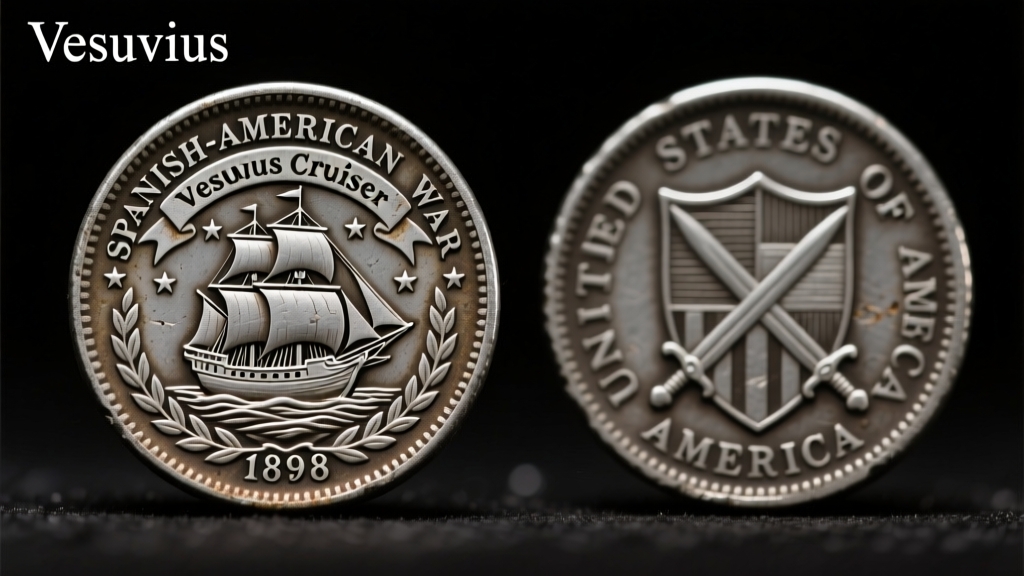
The Vesuvius Cruiser Political Button: A Rare 1898 Patriotic Artifact from the Spanish-American War
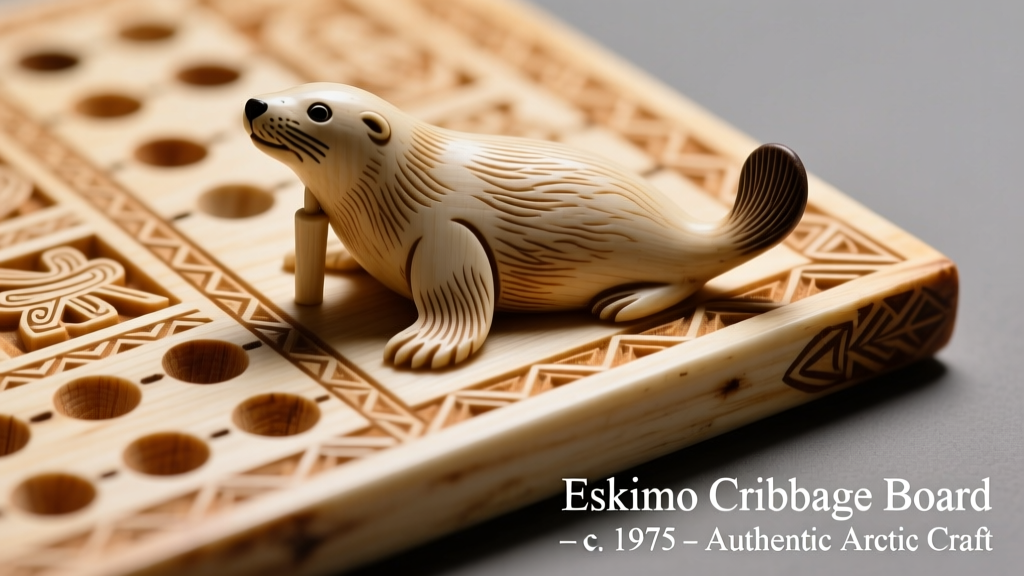
Eskimo Cribbage Board with Ivory Seal Supports & Otter Tail Plug: A 1975 Alaskan Carving Artifact — Authentication, Provenance, and Market Value Analysis

Cologne Cut Glass Hobstar Stopper: A Collector’s Deep Dive into the 7½ × 5-Inch Perfume Bottle Stopper

Libbey Sherry Monkey Stem Camphor: Anatomy, Provenance, and Market Value of a Rare American Glassware Icon

Chinese Export Ginger Jar: Woman Seated in a Garden, Globular Green, 9¼ Inches — A Numismatic & Ceramics Expert’s Appraisal

Roseville Flower Frog in Tourmaline Green: Authenticating, Valuing, and Preserving a Mid-Century Ceramic Icon (4½" × 1¾")