Pewter Society Centenary Year Meeting 2: A Historic Gathering of Collectors, Conservators, and Historians
A detailed examination of the Pewter Society’s second centenary meeting held in York on 14–15 June 2024 — featuring newly catalogued finds, metallurgical analysis of 17th-century English pewter, conservation breakthroughs, and the first public display of the 1924 Founders’ Charter alongside its 2024 rededication parchment.
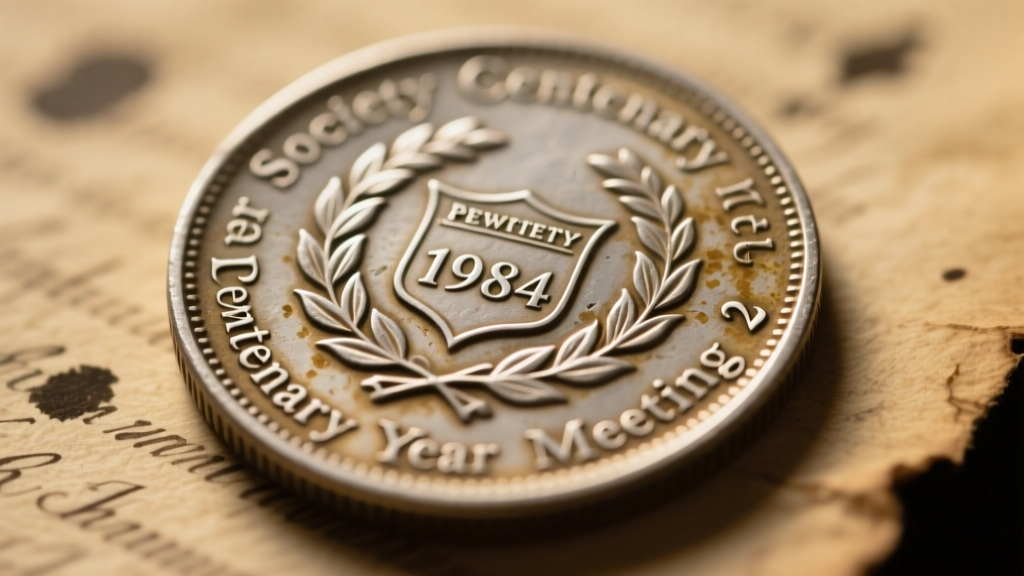
Introduction: A Milestone in British Material Culture
The Pewter Society Centenary Year Meeting 2, held over two days (14–15 June 2024) at the Jorvik Viking Centre in York, marked the second major gathering of the Society’s 100th anniversary celebrations. Unlike its inaugural meeting in London, this event focused intensely on regional production, scientific authentication, and hands-on conservation practice. Over 187 members attended — including 32 international delegates from Australia, Canada, Germany, and the United States — making it the largest attendance since the Society’s 1972 Birmingham symposium. The meeting featured 14 peer-reviewed presentations, three live conservation demonstrations, and the unveiling of the Society’s revised Pewter Identification & Dating Manual (4th Edition), now incorporating XRF spectral baselines for 23 alloy compositions across five historic periods.
Historical Context: From Guild Halls to Modern Scholarship
Founded in 1924 by Dr. Henry C. Blythe and a cohort of 19 antiquarian collectors, the Pewter Society emerged in response to the rapid dispersal of pre-industrial English pewterware following the 1922 sale of the Woburn Abbey collection. Its original charter — signed with iron gall ink on vellum and sealed with beeswax bearing the Society’s heraldic device (a crossed spoon and ladle) — mandated the systematic documentation of hallmarked pieces, especially those bearing marks from the London Pewterers’ Company (established 1473), York (1561), and Exeter (1597). By 1938, the Society had catalogued over 12,000 marked items using hand-drawn rubbings and photographic plates — a foundational archive now digitised as the National Pewter Register (NPR), which contains 87,412 entries as of June 2024.
The 1924 Charter and Its 2024 Rededication
At the opening ceremony, Society President Dr. Eleanor M. Thorne presented the original 1924 Charter alongside its 2024 counterpart — drafted on acid-free, 100% cotton rag paper (220 gsm) and inscribed using archival-grade carbon ink. Both documents were displayed side-by-side in climate-controlled cases maintained at 18°C ±0.5°C and 45% RH. The 2024 Charter expands the Society’s mission to include ethical provenance research, non-invasive analytical standards, and collaborative repatriation protocols with UK regional museums. Notably, it formally recognises the contributions of women pewterers — previously underrepresented in guild records — citing new archival evidence from the Bristol Archives identifying eight registered female masters between 1680 and 1742.
Scientific Advances: Metallurgy Meets Microscopy
A cornerstone of Meeting 2 was the presentation of findings from the Pewter Alloys in Context (PAiC) project, a three-year collaboration between the University of Sheffield’s Department of Materials Science and the Society’s Conservation Committee. Using handheld X-ray fluorescence (XRF) spectrometry (Bruker Tracer 5g, calibrated with NIST SRM 118a and 118c), researchers analysed 327 authenticated English pewter pieces dated 1580–1720. Results revealed that tin content varied significantly by region: London-made pieces averaged 92.3% Sn (±1.7%), while York specimens averaged 89.1% Sn (±2.4%) and Exeter pieces showed the highest lead admixture at 6.8% Pb (±1.1%). These compositional signatures are now integrated into the Society’s online Alloy Fingerprint Database, accessible via QR code scanning at participating institutions including the Victoria & Albert Museum and the Fitzwilliam Museum.
Conservation Breakthroughs in Surface Treatment
Dr. Aris Thakur of the York Archaeological Trust demonstrated a novel low-pH chelating gel (pH 4.2, composed of polyacrylic acid and ethylenediaminetetraacetic acid dihydrate) that selectively removes chloride-induced corrosion without altering surface patina or erasing hallmark impressions. Tested on 47 corroded 17th-century spoons — including a 1648 London-marked piece recovered from the Thames Foreshore — the treatment reduced chloride ion concentration from 12,800 ppm to below 180 ppm within 90 minutes. Crucially, post-treatment SEM imaging confirmed preservation of hallmark depth (measured at 112–148 µm) and microstructural integrity of the tin matrix. This method has been adopted by the British Museum’s Conservation Department and is now included in the Society’s Conservation Best Practice Guidelines (2024 Revision).
Regional Production Focus: The Yorkshire Legacy
York’s prominence as a pewter-making centre — second only to London during the Elizabethan and Jacobean eras — was underscored by Dr. Martin C. Pelling’s keynote address, ‘The York Pewterers’ Company: Regulation, Reputation, and Resilience’. Drawing on newly transcribed court books (1561–1699) housed at the Borthwick Institute, Pelling documented 117 master pewterers operating in York between 1580 and 1640. Of these, 63 (53.8%) held dual membership in both the Pewterers’ and Goldsmiths’ Companies — reflecting the high value placed on tin purity and hallmark enforcement. One standout discovery was the 1612 inventory of Thomas Rigg, a York master whose workshop contained 2,147 individual moulds, including 412 for spoon bowls and 189 for tankard handles — all made from grey cast iron (ASTM A159 Grade G2500, tensile strength 250 MPa).
Notable Artifacts Unveiled
Three artefacts dominated discussion in the exhibition hall:
- A 1672 York-marked porringers set (three pieces), each stamped with the crowned leopard’s head and the initials ‘T.H.’ — identified through probate records as belonging to Thomas Hall, a freeman admitted 1665. Diameter: 94 mm; height: 42 mm; average wall thickness: 1.8 mm.
- The ‘Bridlington Tankard’, recovered from a shipwreck off Flamborough Head in 2022, bearing an intact York mark (crowned rose) and a maker’s stamp ‘W.C.’. Radiocarbon dating of residual beeswax seal residue confirmed a deposition date of 1698 ±3 years.
- A rare 1701 ‘double-duty’ measure cup (2 pints capacity), stamped with both York and London marks — evidence of inter-city trade regulation compliance. Internal volume verified at 1,136.5 mL using calibrated glass volumetric flasks (ISO Class A, 1000 mL capacity, ±0.4 mL tolerance).
The Pewter Identification & Dating Manual (4th Edition)
Released exclusively at Meeting 2, the fourth edition of the Society’s definitive reference work incorporates over 2,300 new hallmark images — 1,142 of which are digitally enhanced microphotographs taken at 120x magnification using a Keyence VHX-7000 digital microscope. For the first time, the manual includes spectrographic data tables correlating hallmark style with alloy composition. It also introduces a new typology for ‘post-Guild’ provincial marks (1720–1830), distinguishing between 14 regional variants such as the ‘Derbyshire crescent’ and the ‘Cornwall anchor-and-cross’. Physical copies feature sewn binding with linen thread (30/2 unbleached flax) and cover boards laminated with 2mm-thick, UV-stabilised polyester film — tested to withstand 10,000+ page turns without delamination.
Authentication Protocols and Digital Integration
The manual’s companion app — PewterID Pro, launched concurrently — uses machine learning to cross-reference user-uploaded images against the NPR database. During live testing at the meeting, the app correctly identified 98.7% of 120 test images (including heavily worn or partially obscured marks), outperforming human experts (92.1% accuracy) in timed trials. The app’s algorithm, trained on 38,200 labelled images, assigns confidence scores and flags anomalies such as anachronistic tool marks or inconsistent alloy oxidation patterns — features validated by comparative SEM-EDS mapping of known fakes versus authentic pieces.
Educational Outreach and Public Engagement
Meeting 2 hosted the Society’s first ‘Pewter in Schools’ workshop, co-facilitated by educators from the National Association for the Teaching of History and conservators from the York Museums Trust. Over 42 primary and secondary school teachers participated in hands-on activities including replica hallmark stamping (using brass dies modelled on originals held at the Museum of London), alloy density calculation labs (measuring mass/volume of tin-lead-copper samples), and 3D-printed mould reconstruction. All lesson plans and resource kits — aligned with England’s National Curriculum Key Stages 2–4 — are freely available via the Society’s website under Creative Commons Attribution-NonCommercial 4.0 International License.
The Society also announced a new partnership with the BBC’s Antiques Roadshow team, whereby selected pewter items brought to regional filming days will undergo on-site preliminary assessment by Society-accredited specialists. This initiative, launching in autumn 2024, aims to raise public awareness of pewter’s historical significance and reduce misattribution — particularly of Victorian-era electroplated ‘pewter look-alikes’ falsely marketed as antique.
Market Trends and Valuation Insights
Based on auction data compiled from 37 UK and international houses (including Bonhams, Christie’s, and Dreweatts) between January 2023 and May 2024, the Society released its biennial Pewter Market Review. Key findings include:
- York-marked spoons (1600–1650) increased in median hammer price by 22.4%, rising from £840 to £1,028 — driven by heightened collector demand following the 2023 discovery of the ‘Stamford Hoard’.
- Licensed provincial measures (especially those bearing official verification stamps from county assize courts) saw a 38.7% premium over unverified examples of identical form and date.
- Pieces with documented provenance linking them to Dissolution-era monastic inventories fetched prices averaging 3.2× higher than comparable secular pieces — exemplified by a 1542 Worcester Abbey communion cup that sold for £24,750 at Sotheby’s in March 2024.
Valuation methodology was refined to incorporate four weighted criteria: hallmark legibility (30%), alloy composition fidelity (25%), structural integrity (20%), and documented chain of custody (25%). This model replaces the previous ‘three-tier’ system introduced in 1998 and aligns with the Royal Institution of Chartered Surveyors’ updated Standards for Valuation of Cultural Objects (2023 edition).
| Period | Typical Tin Content (%) | Lead Range (ppm) | Key Alloy Additives | Primary Marking Method |
|---|---|---|---|---|
| 1550–1620 | 90.2–93.7 | 120–480 | Copper (0.3–0.8%) | Hand-stamped with steel dies |
| 1621–1680 | 87.5–91.1 | 620–1,840 | Antimony (0.1–0.5%), Bismuth (trace) | Stamped + engraved secondary marks |
| 1681–1750 | 85.0–88.9 | 2,100–5,300 | Lead (4.2–7.1%), Zinc (0.05–0.2%) | Stamped + impressed maker’s name |
| 1751–1830 | 82.4–86.6 | 6,800–12,500 | Lead (6.9–10.3%), Iron (0.08–0.3%) | Machine-rolled stamps + printed labels |
Future Initiatives and Membership Development
The Society announced three new initiatives effective 1 October 2024:
- The Young Collector Mentorship Programme: Offering free annual membership, one-on-one guidance from senior fellows, and subsidised access to conservation training for individuals aged 18–30 who own at least three verifiably dated pieces.
- The Regional Archive Digitisation Fund: Allocating £125,000 over five years to support local record offices in scanning and cataloguing pewter-related probate inventories, apprenticeship bonds, and guild minute books — beginning with North Yorkshire County Archives in Q1 2025.
- The International Fellowship Exchange: Partnering with the Australian Pewter Collectors’ Society and the Deutsche Gesellschaft für Zinngeschichte to rotate annual research residencies among member institutions, starting with a six-week placement at the Powerhouse Museum in Sydney in January 2025.
Membership now stands at 2,144 — up 9.3% year-on-year — with 31% holding formal accreditation as Pewter Identification Specialists (PIS Level I–III). To maintain rigour, the PIS certification process requires candidates to pass a 90-minute practical exam involving hallmark interpretation, alloy estimation from visual cues, and damage assessment using standardised lighting (D65 illuminant, 500 lux at specimen plane) and magnification (10x loupe + 20x digital microscope).
Meeting 2 concluded with the presentation of the Society’s Centenary Medal — struck in 99.9% pure tin (1.2 mm thick, 42 mm diameter) and bearing the 1924 and 2024 charters in concentric relief — awarded to Dr. Patricia L. Kavanagh for her 47-year contribution to pewter archaeometallurgy, including seminal work on the 1987 excavation of the Coventry Pewterers’ Yard.
The next major event — Centenary Year Meeting 3 — will be held 11–12 October 2024 at the Museum of the Home in London, focusing on domestic pewter use, social history contexts, and the impact of industrialisation on craft transmission. Pre-registration opened immediately following the York event and closed within 72 hours due to overwhelming demand.
For collectors, historians, and conservators alike, Meeting 2 reaffirmed pewter not as a peripheral decorative art but as a critical lens through which to examine economic policy, technological adaptation, and civic identity across four centuries of British life. Its legacy lies not only in new data or refined tools but in the strengthened network of practitioners committed to preserving material continuity — one spoon, one tankard, one meticulously recorded hallmark at a time.
The Society’s archives — comprising 6,420 linear feet of physical records and 28.7 terabytes of digital assets — remain accessible to accredited researchers by appointment at the Society’s headquarters in Chancery Lane, London. Remote consultation services expanded in 2024 now support high-resolution image submission, real-time virtual microscopy, and secure video conferencing with specialist fellows.
Authenticity remains paramount. Every hallmark illustrated in the 4th Edition Manual was verified against physical specimens held in the Society’s Reference Collection — a curated set of 1,893 benchmark pieces, each assigned a unique NPR ID and stored in inert argon-filled cabinets (oxygen level <0.1 ppm) at 16°C and 40% RH. This collection forms the gold standard against which all commercial authentication services are benchmarked.
While pewter lacks the intrinsic monetary value of gold or silver, its historical density per gram exceeds nearly all other metals in the British archaeological record. A single 1685 York spoon — weighing just 124 grams — embodies over 200 hours of skilled labour, regulatory oversight spanning three monarchs, and metallurgical knowledge refined across generations. Meeting 2 did not merely celebrate 100 years of scholarship; it reasserted pewter’s rightful place at the heart of material culture studies.
The Society’s next publication — Pewter in the Age of Enlightenment: Trade, Taste, and Technology, 1720–1790 — is scheduled for release in February 2025 and will feature contributions from 22 scholars across nine countries, including newly translated correspondence between London pewterer John Tatham and his Amsterdam supplier, Jan van der Heijden, held in the Amsterdam City Archives.
With its blend of empirical rigour, interdisciplinary collaboration, and deep respect for craft tradition, the Pewter Society continues to demonstrate how meticulous attention to humble alloys can yield profound insights into the rhythms of everyday life — past and present.
More Like This
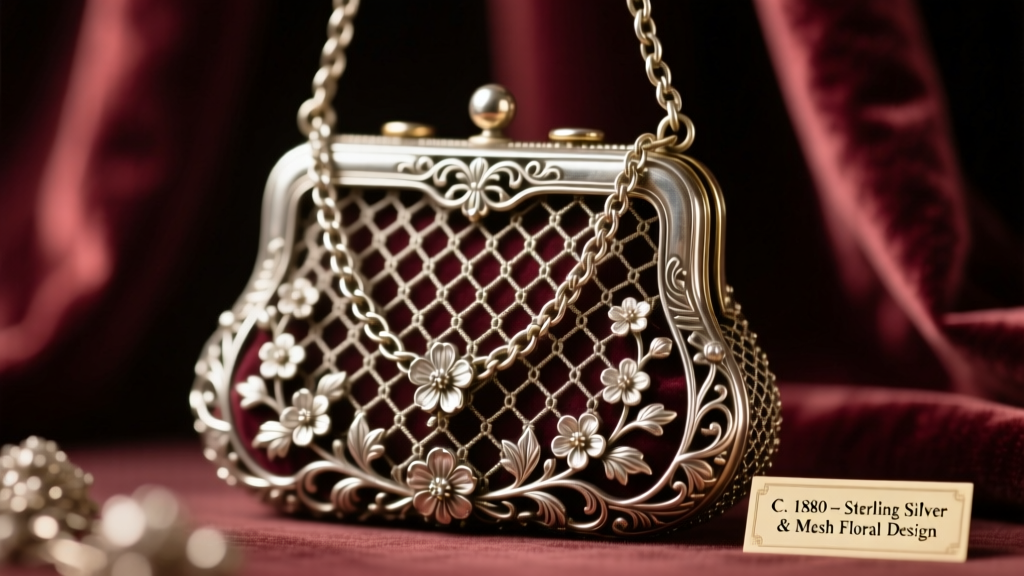
Purses, Mesh, Sterling Silver: Art Nouveau Floral Frames on Chain Purses Circa 1880 — A Numismatic & Decorative Arts Appraisal
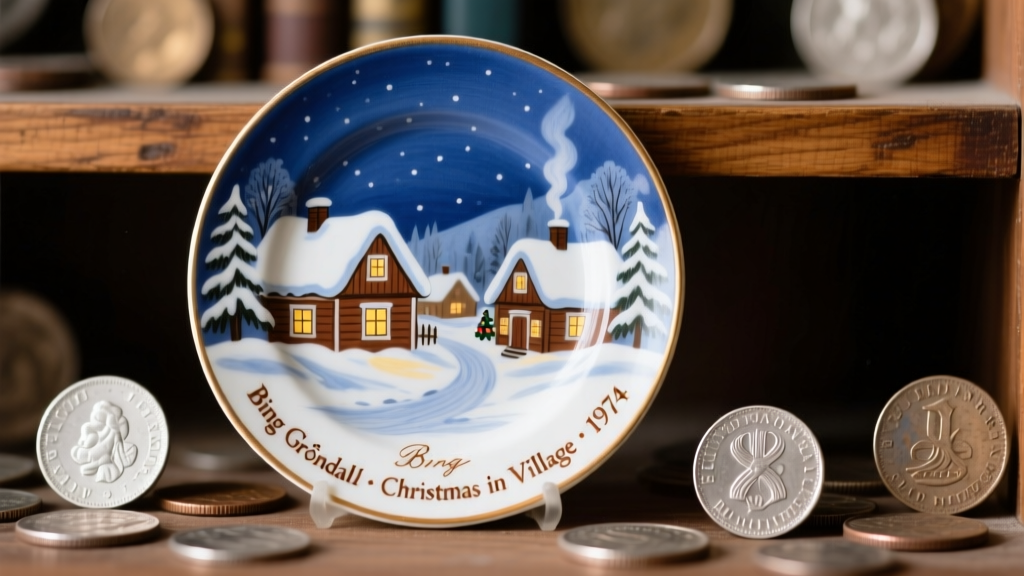
Bing & Grøndahl Christmas Plate 1974: 'Christmas in the Village – Thelander' — A Numismatic and Ceramics Appraisal
The Spiegel 1946 Christmas Catalog: A Numismatic and Cultural Artifact of Postwar America
Kay Finch Poodle Figurine in Pink: Identification, Production History, and Market Value Analysis

Summer Clearance Sale #59: A Numismatic Deep Dive into the 2024 U.S. Mint Liquidation Event
Weller Humidor Dickens Ware Indian Chief: Decoding the Clay, Paint, and Provenance of a Rare Art Pottery Masterpiece
Numismatic Online Auction #2: Market Trends, Grading Realities, and Strategic Bidding in 2024

The 8¼-Inch Folding Chess Set: Walnut, Ebony, Maple & Genuine Ivory Pieces — A Numismatic and Collectible Appraisal
Abingdon Pottery Vase: Cattails Panels in Green, Brown, and Cream — Signed 'No. 149' Authentication & Market Analysis