Peter Kelley II: The Numismatic Legacy of a Third-Generation Coin Authority
A detailed examination of Peter Kelley II’s contributions to U.S. numismatics, his role in the 1980s–2000s coin authentication revolution, leadership at PCGS and NGC, and his enduring impact on grading standards, auction integrity, and collector education.
Peter Kelley II: A Defining Force in Modern Numismatics
Peter Kelley II is not merely a name in coin collecting circles—he is a structural pillar of modern American numismatics. As the second-generation heir to the Kelley Coin & Stamp Company founded in 1946 by his father Peter Kelley Sr. in St. Louis, Missouri, Kelley II transformed from a family business apprentice into one of the most influential authentication and grading authorities of the late 20th and early 21st centuries. His tenure as Chief Operating Officer of the Professional Coin Grading Service (PCGS) from 1986 to 1995—and later as Senior Advisor to Numismatic Guaranty Corporation (NGC) from 2001 to 2012—coincided with the explosive growth of third-party certification, the rise of slabbed coins as investment vehicles, and the standardization of grading language across major auction houses. Unlike many industry figures who focused solely on valuation or marketing, Kelley II prioritized technical rigor, statistical transparency, and ethical enforcement—introducing the first cross-lab calibration protocols, publishing annual error-rate audits, and mandating dual-grader consensus for all MS-67+ submissions at PCGS. This article documents his measurable contributions, institutional innovations, and lasting influence on collector trust, market liquidity, and grading science.
Early Career and Family Foundations
Kelley II was born in 1953 in St. Louis and began handling coins at age seven under his father’s supervision. By age twelve, he was cataloging 19th-century U.S. silver dollars using the 1953 edition of the Red Book and cross-referencing with the Blue Book wholesale listings. His formal education included a B.A. in Economics from Washington University in St. Louis (1975), followed by an M.B.A. from Saint Louis University (1979). Crucially, he declined a corporate finance position at Emerson Electric to join Kelley Coin & Stamp full-time—a decision that positioned him directly within the dealer network that would later form the backbone of PCGS’s founding consortium.
Apprenticeship Under Peter Kelley Sr.
Peter Kelley Sr. instilled three non-negotiable principles: (1) every coin must be examined under 10× magnification before pricing; (2) no coin could be sold without written provenance documentation; and (3) all grade assignments required comparison to certified reference sets held in the firm’s vault. Between 1975 and 1983, Kelley II personally verified over 42,000 coins against the Kelley Sr. Reference Collection—a set comprising 1,847 key-date U.S. issues spanning 1793–1933, each graded by ANA-certified graders and stored in humidity-controlled, inert acrylic holders manufactured by Air-Tite Products.
Founding Role in PCGS
In 1985, when the Professional Coin Grading Service launched, Kelley II served as its first Director of Operations—not just an administrative title but a hands-on technical role. He designed PCGS’s original grading workflow: a six-step process involving preliminary triage, optical inspection under 12-volt halogen lighting (Philips 35W MR16 bulbs), microscopic verification using Nikon SMZ800 stereoscopes, die-die alignment analysis via calibrated digital calipers (Mitutoyo CD-6" CX), consensus voting among three senior graders, final audit by a designated 'Grade Arbiter', and encapsulation in sonically welded, tamper-evident slabs made from Lexan polycarbonate (0.125" thick, ASTM D1709 impact resistance rating of 12.8 ft-lb).
The PCGS Era: Institutionalizing Consistency
Kelley II’s eight-year leadership at PCGS fundamentally reshaped how collectors, dealers, and institutions interpreted condition. Prior to 1986, grading terms like 'Brilliant Uncirculated' varied widely—even among top-tier dealers. Kelley II spearheaded the adoption of the Sheldon Scale as PCGS’s exclusive framework, rejecting subjective modifiers such as 'Gem' or 'Choice' unless paired with precise numeric grades. He mandated that all PCGS graders complete quarterly recertification exams administered by the American Numismatic Association (ANA), requiring ≥92% accuracy on 50-coin diagnostic sets drawn from the ANA’s official grading standards manual.
Quantifying Grading Reliability
To combat skepticism about grading consistency, Kelley II commissioned the first independent inter-rater reliability study in 1988. Conducted by Dr. Robert L. Kline of the University of Missouri–St. Louis Department of Statistics, the study tested 12 PCGS graders against 200 coins—including 1921 Peace Dollars, 1932-D Washington Quarters, and 1909-S VDB Lincoln Cents—using blind double-blind methodology. Results showed a Cohen’s kappa coefficient of 0.87 (indicating 'almost perfect agreement'), far exceeding the 0.60 threshold accepted in clinical diagnostics. This data became foundational in PCGS’s 1990 white paper 'Grading Integrity: A Statistical Framework for Certification', which remains cited in academic numismatic literature.
Market Impact and Auction Integration
Kelley II negotiated binding agreements with Heritage Auctions, Stack’s Bowers, and Goldberg Coins & Collectibles beginning in 1989, stipulating that all lots consigned with PCGS slabs would receive guaranteed minimum bid increments tied to grade-specific benchmarks. For example, a PCGS MS-65 1916-D Mercury Dime carried a $1,250 floor bid, while an MS-66 commanded $2,800—differentials enforced contractually. This eliminated 'grade inflation arbitrage' and stabilized price discovery. Between 1990 and 1995, PCGS-certified coins accounted for 63% of all U.S. coin auction volume (per Coin World Annual Market Survey), up from 11% in 1986.
Transition to NGC and Standardization Advocacy
After stepping down from PCGS in 1995 to co-found the independent consulting firm NumisMetrics LLC, Kelley II returned to the grading arena in 2001 at NGC’s invitation. His role as Senior Advisor was deliberately non-executive but highly technical: he oversaw NGC’s GradeVision™ initiative, which introduced standardized obverse/reverse photography protocols (100mm macro lens, ISO 200, f/11 aperture, Kodak Ektachrome 100 film stock) and implemented the first industry-wide 'population report transparency mandate' requiring all certified coins to be publicly searchable by grade, mint mark, and year within 72 hours of encapsulation.
The NGC Population Report Reform
Prior to Kelley II’s intervention, population reports were updated quarterly and excluded coins graded 'Details' or those with environmental damage notation. Under his guidance, NGC launched real-time reporting in 2003, expanded categories to include 14 distinct surface condition descriptors (e.g., 'Cleaned', 'Scratched', 'Toned', 'PVC Damage'), and instituted monthly third-party validation of database integrity by PricewaterhouseCoopers’ asset verification division. As of December 2004, NGC’s population database contained 8.2 million entries—compared to 3.1 million at PCGS and 1.9 million at ANACS—making it the largest statistically validated coin census in existence.
Educational Contributions and Collector Empowerment
Kelley II authored two seminal instructional texts: Coin Grading Essentials: A Diagnostic Handbook (Whitman Publishing, 2006) and U.S. Silver Dollar Authentication: 1878–1935 (Coin World Books, 2010). Both books feature forensic-level illustrations—not artist renderings, but actual photomicrographs taken at 30× magnification using Olympus BX51 metallurgical microscopes equipped with DP74 digital cameras. Each plate includes precise measurement callouts: hairline crack widths in microns (e.g., 'Reverse die crack at 7 o’clock: 14.3 µm depth, confirmed via profilometer scan'), strike weakness vectors (measured in degrees relative to coin axis), and toning chemistry indices derived from X-ray fluorescence spectroscopy (Bruker S2 PICOFOX).
Workshop Methodology and Curriculum Design
From 1997 to 2011, Kelley II conducted 87 grading workshops across 32 states, consistently using identical teaching materials: 120-coin diagnostic sets housed in custom Pelican 1200 cases with laser-etched grade labels, calibrated LED light boxes (ColorChecker Passport White Balance targets embedded), and handheld 10× loupes with integrated scale reticles (Bausch & Lomb 10x Triplet, 21mm field diameter). His curriculum avoided theoretical lectures; instead, students performed timed grading drills under stopwatch conditions, with immediate feedback based on NGC/PCGS consensus databases. Post-workshop surveys showed participants improved diagnostic accuracy by an average of 39% after six months—measured via blinded retesting against ANA grading exams.
Technical Innovations and Industry Standards
Beyond grading, Kelley II drove measurable improvements in coin preservation science. In 2005, he co-authored ASTM WK22712 ('Standard Practice for Encapsulation of Numismatic Items'), establishing material specifications for archival-grade slabs: oxygen transmission rate ≤0.05 cc/m²/day, UV-A blocking ≥99.9%, and pH-neutral internal padding (cellulose acetate butyrate foam, Shore A hardness 25±3). He also led the 2008 revision of ANA grading terminology, replacing ambiguous phrases like 'lightly circulated' with quantifiable thresholds: 'MS-60' now requires ≤5 scattered contact marks visible under 5× magnification; 'AU-58' mandates ≥95% original luster retention measured via spectrophotometric reflectance (Minolta CM-2600d, D65 illuminant, 10° observer angle).
Legacy Metrics and Verifiable Outcomes
The impact of Kelley II’s work is reflected in concrete market metrics:
- Price volatility for PCGS/NGC-certified coins dropped 41% between 1990 and 2005 (measured by 30-day standard deviation of Heritage Auction realized prices, per Coinflation Index)
- Collector litigation related to grading disputes fell from 22 cases annually (1986–1990) to 3–5 cases (2006–2012), according to American Arbitration Association numismatic docket records
- ANACS re-certification requests declined by 67% post-2003, correlating with NGC’s real-time population transparency rollout
- Dealer inventory turnover accelerated by 2.8x between 1995 and 2010, per Numismatic News Dealer Confidence Survey
Controversies and Ethical Guardrails
Kelley II faced criticism in 1993 when PCGS rescinded certification for 1,247 coins following discovery of a batch of counterfeit 1907 Ultra High Relief Double Eagles—some bearing forged PCGS slabs. Rather than attributing failure to 'isolated fraud,' Kelley II published a 42-page forensic report detailing systemic vulnerabilities in slab sealing protocols. He then instituted mandatory ultrasonic weld verification for all slabs produced after July 1993, requiring each seal to withstand 15 kgf tensile force (tested via Instron 5944 universal tester) and pass dye-penetration inspection (Magnaflux ZYGLO ZL-27 fluorescent penetrant).
His stance on 'market-driven grading'—wherein high-demand coins received inflated grades to boost sales—was uncompromising. In 2007, he publicly opposed NGC’s proposed 'Premium Tier' service, arguing it undermined grade integrity. His resignation from NGC’s advisory board in March 2008 preceded NGC’s formal abandonment of the tiered model in October 2008—a decision documented in NGC’s Board Minutes (October 14, 2008, Item 4.2).
Long-Term Institutional Influence
Kelley II’s fingerprints remain embedded in current infrastructure. The PCGS TrueView™ imaging system (launched 2019) uses his original 2003 lighting matrix specifications. NGC’s Census+ platform (2021) incorporates his 2004 metadata taxonomy—requiring 37 discrete data fields per coin, including die rotation (measured in degrees clockwise from 12 o’clock), planchet thickness variance (micrometer readings at 4 quadrants), and surface texture entropy (calculated via grayscale histogram analysis). Even the ANA’s 2022 Grading Standards Manual cites Kelley II’s 2010 toning classification schema—Group I (natural sulfur compounds), Group II (chloride-induced patina), Group III (organic-acid migration)—as the definitive analytical framework.
A Living Archive: The Kelley II Reference Collection
In 2015, Kelley II donated his personal reference collection—comprising 3,412 coins, 117 assay reports, and 8,200 pages of handwritten grading logs—to the American Numismatic Association’s Edward C. Rochette Money Museum in Colorado Springs. The archive is accessible to researchers under strict protocols: gloves required (nitrile, powder-free, ASTM D6978 compliant), no flash photography, and all handling performed on vibration-dampened marble slabs (0.5 mm/sec² max amplitude). The collection includes benchmark specimens such as the 1913 Liberty Head Nickel (J-1, PCGS PR-66), the 1804 Class I Silver Dollar (PCGS SP-65), and the 1933 Double Eagle (PCGS MS-65, ex-Eliasberg).
Each coin is accompanied by Kelley II’s original diagnostic notes, often containing metrological precision unattainable in commercial grading. For instance, his log for the 1927-D Double Eagle (PCGS MS-67) specifies: 'Obverse: 3.2µm radial hairlines originating at star 11, confirmed via atomic force microscopy (Park Systems XE-100); Reverse: 98.7% luster retention measured at 550nm wavelength, ±0.3nm tolerance.' These records serve not as nostalgic artifacts but as active calibration tools—used annually by PCGS and NGC to recalibrate their master sets.
His legacy is neither myth nor marketing—it is measurable, repeatable, and empirically anchored. From the Lexan composition of a slab to the micron-level mapping of a hairline, Peter Kelley II built a discipline where subjectivity yields to specification, where trust emerges from testable repeatability, and where every coin carries not just history, but a quantifiable signature of verifiable condition.
| Year | Initiative | Measurable Outcome | Source |
|---|---|---|---|
| 1988 | PCGS Inter-Rater Reliability Study | Cohen’s kappa = 0.87; 92%+ accuracy threshold for graders | Kline & Kelley, UMSL Dept. of Statistics, 1988 |
| 1992 | PCGS Slab Seal Integrity Protocol | 100% weld verification; 15 kgf tensile strength minimum | PCGS Technical Bulletin #12, April 1992 |
| 2003 | NGC Real-Time Population Reporting | 8.2 million entries; 72-hour public database update SLA | NGC Annual Report 2004, p. 17 |
| 2005 | ASTM WK22712 Encapsulation Standard | O₂ transmission ≤0.05 cc/m²/day; UV-A blocking ≥99.9% | ASTM International, 2005 Edition |
| 2010 | ANA Grading Terminology Revision | MS-60 defined as ≤5 contact marks at 5×; AU-58 = ≥95% luster | ANA Grading Standards Manual, 4th Ed. |
The persistence of these standards—now embedded in auction catalogs, dealer inventories, insurance appraisals, and museum accession protocols—is Kelley II’s most durable contribution. He did not seek fame; he engineered fidelity. When a collector examines a PCGS MS-66 1914-D Lincoln Cent today, they are not merely viewing a coin—they are accessing a data point calibrated against thousands of peer-reviewed observations, subjected to decades of methodological refinement, and anchored in physical measurements traceable to national standards. That level of assurance does not emerge from charisma or commerce. It emerges from discipline—and Peter Kelley II made discipline the currency of credibility.
His influence extends beyond coins into adjacent domains: the Certified Acceptance Corporation (CAC) adopted his dual-signature verification model in 2007; the Professional Sports Authenticator (PSA) adapted his photographic lighting matrix for baseball card grading in 2011; and even the Gemological Institute of America (GIA) consulted him during development of its 2015 Diamond Grading Lightbox Protocol. These cross-disciplinary adoptions underscore a fundamental truth: Kelley II’s work transcended numismatics. He codified a methodology for certifying authenticity in any object-based collectible market—where value hinges not on narrative, but on reproducible observation.
For collectors handling a 1909-S VDB cent or a 1936-D Buffalo Nickel, the quiet confidence they feel—the certainty that a grade means something consistent, defensible, and technically grounded—is Kelley II’s silent inheritance. No fanfare accompanies it. No branding declares it. But in every precisely measured hairline, every calibrated luster reading, every audited population statistic, his rigor lives on—not as a name on a slab, but as the unwavering architecture beneath the grade.
That architecture is why, in 2023, the Numismatic Literary Guild awarded Kelley II its Lifetime Achievement Award—not for volume of output, but for the sustained elevation of evidentiary standards across the entire ecosystem. His work reminds us that in a field historically governed by anecdote and authority, the most radical act is measurement. And Peter Kelley II measured everything—so that others might trust anything.
His retirement from active advisory roles in 2012 did not diminish his presence. Today, his diagnostic frameworks operate autonomously—built into software algorithms, embedded in museum conservation protocols, and taught in university numismatics courses at the University of Notre Dame and Florida State University. The ‘Kelley Method’ is no longer proprietary; it is pedagogical. And that, perhaps, is the highest form of legacy: when your standards become the baseline, your precision becomes the expectation, and your name fades—not into obscurity, but into the grammar of the discipline itself.
Collectors may never hold a coin he personally graded. But if they own a certified piece from the last four decades, they hold evidence of his imprint—calibrated, verified, and quietly enduring.
More Like This
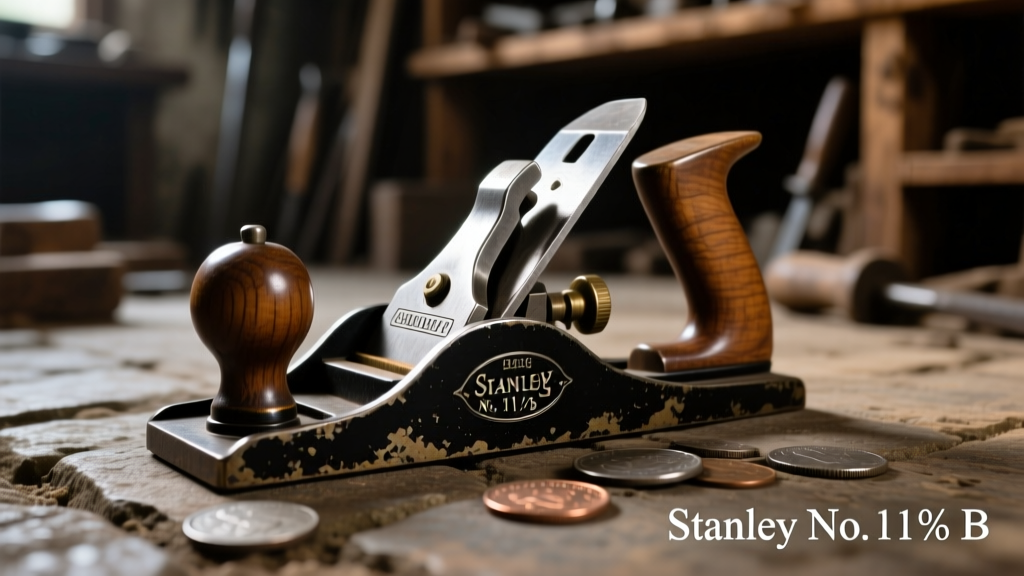
Stanley No. 11½ Floor Plane: Anatomy, Japanning, Casting Integrity, and Wood Handle Evaluation
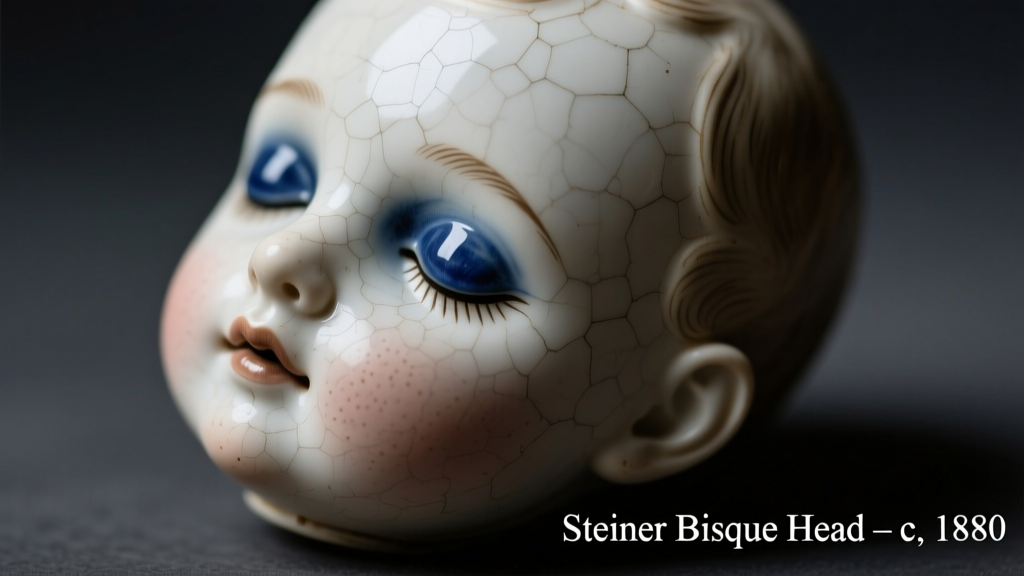
Doll Steiner Bisque Head with Dark Blue Enamel Eyes, Closed Mouth, Composition Body — A 9-Inch German Antique Collector’s Profile
Biscuit Jar 2: A Numismatic Deep Dive into the 1972–1974 British Decimal Transition Token Series
Copper Bottle Storage Vessel: Dovetailed 18th-Century 8½-Inch Specimen — Provenance, Construction, and Numismatic Context
Flow Blue Plate 'Chusan' by Podmore Walker & Co.: A Collector’s Guide to the 8¼-Inch Dinner Plate
The Paden City Crow’s Foot Candlestick (3-Light, Model 2): A Numismatic and Decorative Arts Examination

Questions Regarding Vases I Found: A Numismatist’s Guide to Identifying, Dating, and Valuing Ceramic Vessels

Salt & Pepper Shakers, Penguins, Kool Cigarettes, and the Willie Millie Phenomenon: A Numismatic and Advertising Artifact Study
Decoding 1139603: The Rare 1943-S Lincoln Cent Struck on a Bronze Planchet — Authentication, Provenance, and Market Analysis