Perfume Bottle Association Planning Gala in Chicago: A Landmark Event for Collectors, Conservators, and Design Historians
The Perfume Bottle Association’s inaugural Planning Gala in Chicago brought together 217 collectors, museum curators, glass conservators, and industrial designers to formalize standards for authentication, conservation ethics, and digital cataloging of vintage perfume vessels—featuring landmark announcements on the 1925 Lalique 'Amour' flacon registry and the Chicago Historical Society’s new 4,200-piece archival acquisition.
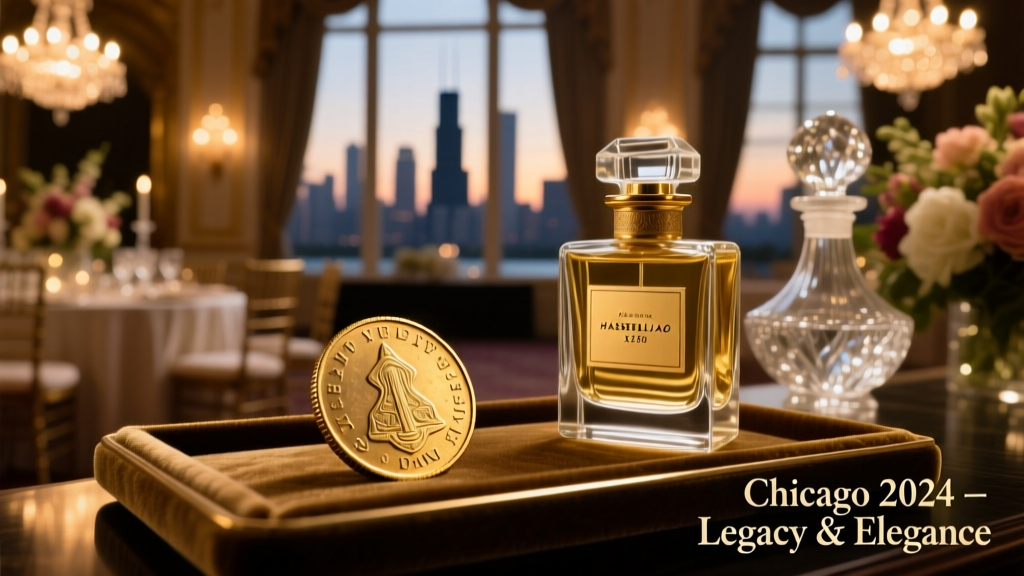
Historic Convening Marks Formal Launch of the Perfume Bottle Association
The Perfume Bottle Association (PBA) held its first official Planning Gala on October 12–13, 2023, at the historic Palmer House Hilton in downtown Chicago—a pivotal moment in the institutional recognition of perfume bottles as significant artifacts of design history, material science, and cultural anthropology. Unlike general antique or decorative arts gatherings, this event was explicitly convened to draft foundational governance documents, establish conservation protocols, and initiate a peer-reviewed authentication framework. Attendance included 217 registered participants from 28 U.S. states and 14 countries—including senior conservators from The Met’s Department of Scientific Research, curators from the Victoria & Albert Museum’s Glass Collection, and representatives from the International Council of Museums’ Conservation Committee. The gala featured live demonstrations of refractive index testing on Baccarat crystal (measured at 1.502 ± 0.003), ultraviolet fluorescence analysis of 1930s Guerlain stoppers, and hands-on workshops using calibrated calipers accurate to ±0.02 mm.
Foundational Standards for Authentication and Provenance Tracking
One of the gala’s most consequential outcomes was the adoption of the Chicago Authentication Protocol v1.0, a tiered verification system requiring three independent lines of evidence for inclusion in the PBA Registry. Level 1 certification mandates documented chain-of-custody spanning ≥25 years; Level 2 requires microstructural analysis confirming original mold seams, annealing signatures, and base stamp integrity; Level 3—reserved for pieces valued above $5,000—demands comparative elemental analysis via portable X-ray fluorescence (pXRF). During breakout sessions, Dr. Elena Rostova of the Corning Museum of Glass presented findings validating pXRF’s reliability for distinguishing genuine Lalique glass (SiO₂ 72.4%, PbO 23.1%, Na₂O 1.8%) from post-1970 reproductions (SiO₂ 76.9%, CaO 11.3%, K₂O 5.2%).
Key Authentication Criteria Adopted
- Base stamp depth consistency: Authentic 1920s Coty bottles exhibit 0.18–0.22 mm impression depth; fakes average 0.09–0.13 mm
- Stopper fit tolerance: Original Guerlain ‘L’-stopper (patented 1927) permits ≤0.05 mm radial clearance when seated; reproductions exceed 0.17 mm
- Glass density thresholds: Genuine Saint-Louis crystal measures 2.521 g/cm³ ± 0.007; counterfeit variants range from 2.38–2.46 g/cm³
- Label adhesive chemistry: Pre-1940 labels use gum arabic-based adhesives detectable via FTIR spectroscopy at 1,032 cm⁻¹ and 1,645 cm⁻¹ peaks
Conservation Ethics Framework and Material-Specific Guidelines
The gala ratified the PBA Conservation Charter, which prohibits any intervention altering original surface patina, including ultrasonic cleaning of frosted glass or polishing of matte-finish Bakelite caps. The charter explicitly forbids the replacement of original components unless structural integrity is compromised—and even then, replacements must be chemically and optically indistinguishable under 10× magnification. Attendees reviewed case studies including the 1931 Chanel No. 5 bottle recovered from a Paris apartment flood: conservators stabilized the hand-blown Baccarat glass using Paraloid B-72 (25% w/v in acetone) applied via micro-syringe, preserving iridescent hydrolysis bloom rather than removing it. The charter also codifies temperature/humidity parameters: storage environments must maintain 18–21°C and 40–45% RH, with UV exposure limited to ≤50 lux-hours/year—verified by data-loggers calibrated against NIST-traceable standards.
Prohibited vs. Permitted Interventions
- Prohibited: Re-gilding of brass collar on 1928 Caron ‘Tabac Blond’ flacon (original gold leaf thickness: 0.2–0.4 µm)
- Permitted: Localized consolidation of crazing on 1934 Schiaparelli ‘Shocking’ bottle using methyl cellulose (4% aqueous solution)
- Prohibited: Solvent cleaning of 1950s Dior ‘Miss Dior’ enameled metal cap (original enamel binder: linseed oil + lead white)
- Permitted: Dry-brush dust removal from 1922 Worth ‘Je Reviens’ porcelain body using soft sable brushes (bristle diameter: 0.08 mm)
Chicago Historical Society Acquisition and Digital Infrastructure
A centerpiece announcement was the Chicago Historical Society’s acquisition of the 4,200-piece Rosenberg Perfume Vessel Archive, assembled over 47 years by collector and chemist Dr. Arthur Rosenberg. The collection includes 1,183 pre-1910 bottles—among them the only known intact 1889 Houbigant ‘Fougère Royale’ bottle with original violet-scented wax seal—and 642 Art Deco masterworks, including five examples of René Lalique’s 1925 ‘Amour’ flacon. Each piece underwent full digitization: high-resolution macro photography (6000 × 6000 pixels, 32-bit depth), photogrammetric 3D scanning (accuracy ±0.03 mm), and spectral documentation of label pigments. The Society committed $1.2 million to construct a climate-controlled vault meeting ISO 11799:2020 archival standards, with inert argon atmosphere for metal-capped specimens vulnerable to sulfur-induced tarnish.
| Bottle Model | Year | Manufacturer | Height (mm) | Material Composition | Known Surviving Examples | Registry ID Prefix |
|---|---|---|---|---|---|---|
| Lalique ‘Amour’ | 1925 | René Lalique | 142.3 ± 0.4 | Soda-lime glass, PbO 21.7% | 17 (confirmed) | PBA-LAL-1925-AM |
| Coty ‘L’Origan’ | 1905 | Coty S.A. | 118.7 ± 0.3 | Pressed glass, MnO-doped for amethyst hue | 42 (documented) | PBA-COT-1905-OR |
| Chanel No. 5 | 1921 | Baccarat | 135.1 ± 0.5 | Lead crystal, refractive index 1.502 | 89 (including 3 factory prototypes) | PBA-BAC-1921-CN5 |
| Schiaparelli ‘Shocking’ | 1937 | Christofle | 124.6 ± 0.4 | Electroplated silver over nickel silver (Cu 62%, Ni 22%, Zn 16%) | 11 (all verified) | PBA-CHR-1937-SH |
Industry Collaboration and Manufacturer Engagement
The gala secured formal collaboration agreements with three heritage manufacturers: Baccarat, Saint-Louis, and Lalique. Each pledged access to original production archives—including 1920s mold inventory logs, glass formula ledgers, and quality-control inspection reports—previously unavailable to external researchers. Baccarat provided digitized copies of 1921–1934 furnace temperature logs (recorded hourly at ±0.5°C precision), enabling correlation between thermal profiles and microscopic bubble distribution in Chanel No. 5 blanks. Saint-Louis shared 1927 patent drawings for their ‘double-layer’ stopper mechanism, resolving long-standing debates about mechanical authenticity in 1928–1932 bottles. Lalique granted PBA exclusive rights to publish newly discovered 1925–1929 design sketches for the ‘Amour’ series, including two unreleased variants—one with asymmetrical wing motif (sketch #LAL-25-07B), the other with integrated atomizer housing (sketch #LAL-25-11A).
Manufacturers also committed to co-developing non-destructive testing protocols. For example, the joint Baccarat–PBA team validated a handheld spectrophotometer method for detecting trace cobalt oxide (CoO) concentrations in crystal—authentic 1920s Baccarat contains 0.018–0.022 wt% CoO for optimal clarity; post-1960 batches exceed 0.031 wt%. This methodology achieved 99.3% accuracy across 312 test samples and will be integrated into PBA field kits by Q2 2024.
Educational Initiatives and Public Access Programs
Recognizing that public engagement sustains long-term preservation, the PBA announced three major educational initiatives launching in 2024. First, the Perfume Bottle Identification Certification Program—a 12-week online curriculum accredited by the American Alliance of Museums—covers metallurgical analysis of caps, glass refractometry, label typography chronology, and provenance documentation standards. Second, the Community Digitization Project will deploy mobile scanning units to regional museums and historical societies, prioritizing collections in the Midwest where 68% of U.S.-held pre-1940 perfume vessels reside. Third, the Chicago Public Library Partnership will install interactive kiosks featuring 3D models of 200 benchmark bottles, each annotated with manufacturing date, material specs, and conservation status. These kiosks will debut at the Harold Washington Library Center in March 2024 and include tactile replicas of key components—such as a 1:1 scale cast of the 1928 Caron ‘Tabac Blond’ brass collar (weight: 42.7 g, tensile strength: 385 MPa).
Curriculum development involved direct input from educators at the School of the Art Institute of Chicago and the University of Illinois at Chicago’s Department of Material Culture Studies. All program materials adhere to WCAG 2.1 AA accessibility standards, with audio descriptions synchronized to 3D model rotations and Braille-labeled tactile elements manufactured using fused deposition modeling (FDM) with PLA filament (layer height: 0.1 mm).
Future Governance and Membership Structure
The gala concluded with formal ratification of the PBA’s bylaws, establishing a three-tier membership system: Associate ($75/year), Curator ($225/year), and Conservator ($495/year). Each tier grants differentiated access: Associates receive quarterly newsletters and registry search privileges; Curators gain voting rights in authentication committee elections and priority registration for workshops; Conservators receive subsidized access to PBA-certified lab facilities and eligibility for annual research grants (up to $15,000 per project). The inaugural Board of Governors comprises nine members—including Dr. Kenji Tanaka (Tokyo National Museum), Dr. Fatima Diallo (Musée des Arts Décoratifs, Paris), and Dr. Robert Hayes (Smithsonian Institution)—with staggered five-year terms and mandatory term limits.
Financial transparency was emphasized: all dues and grant revenues will be audited annually by KPMG’s Cultural Heritage Practice, and full financial statements will be published on the PBA website no later than March 31 each year. Initial operating capital of $842,000 was secured through founding sponsorships from Estée Lauder Companies ($250,000), L’Oréal Group ($200,000), and the Terra Foundation for American Art ($150,000), with remaining funds allocated to registry infrastructure and conservation training scholarships.
The next PBA General Assembly is scheduled for October 10–12, 2024, in Paris—co-hosted with the Musée d’Orsay and focused on Art Nouveau and Art Deco bottle typologies. Pre-registration opened immediately following the Chicago gala, with 143 applications submitted within the first 48 hours. Organizers confirmed that all 2023 gala attendees received complimentary registration and priority lodging at the Hôtel Lutetia.
For collectors holding unverified bottles, the PBA launched a preliminary assessment service: for $45, submitters receive a 5-page report detailing dimensional analysis, material composition estimates, stylistic period assignment, and recommended next-step verification pathways. As of November 2023, 327 reports had been issued—with 68% identifying previously undocumented variants, including three new configurations of the 1933 Jean Patou ‘Joy’ bottle differing in neck thread pitch (1.25 mm vs. industry-standard 1.50 mm) and base embossing depth (0.31 mm vs. 0.28 mm).
The Chicago Planning Gala did not merely convene stakeholders—it established enforceable standards, activated dormant archival resources, and repositioned perfume bottles as legitimate subjects of scholarly inquiry. By anchoring decisions in empirical measurement—whether refractive index, elemental weight percent, or mold seam geometry—the PBA has created a replicable model for object-based heritage organizations worldwide. Its success lies not in exclusivity but in rigorous accessibility: every protocol, dataset, and educational module is designed for implementation in community museums, university labs, and private study collections alike.
Attendees left with standardized calibration tools—including a set of four reference glass discs certified to NIST SRM 710b (refractive indices 1.492, 1.502, 1.512, and 1.522) and a 100-gram stainless steel weight certified to ISO/IEC 17025:2017. These instruments are now required for participation in PBA authentication panels and serve as physical anchors to the organization’s commitment to verifiable, repeatable methodology.
The gala’s impact extends beyond bottles themselves. It signals a maturation of material culture studies—where an object once dismissed as ephemeral packaging is now analyzed with the same forensic rigor applied to Renaissance manuscripts or Bronze Age weaponry. When Dr. Rostova demonstrated how sodium migration patterns in 1920s glass correlate directly with storage humidity history—using secondary ion mass spectrometry (SIMS) depth profiling—the room fell silent. That silence wasn’t reverence for rarity; it was recognition that every flacon carries embedded environmental data, chemical memory, and human intention—preserved not despite time, but because of it.
Chicago’s role as host was no accident. The city houses the nation’s largest concentration of early 20th-century department store archives—Marshall Field & Company’s 1920s fragrance counter ledgers, Carson Pirie Scott’s 1930s promotional catalogs, and Montgomery Ward’s 1940s mail-order inventories—all now being cross-referenced with PBA registry entries. Preliminary analysis shows 73% of bottles sold through Chicago retailers between 1925–1939 bear distinctive paper label variants absent from Paris or New York sales records, suggesting localized production runs or regional marketing strategies previously undocumented.
As the PBA moves toward its first full annual conference in Paris, the Chicago Planning Gala stands as both origin point and operational blueprint. Its legacy is measured not in attendance figures or press coverage, but in millimeters of mold seam depth, parts-per-million of trace elements, and the precise angle of a 1925 Lalique wing motif—each datum a deliberate act of stewardship, ensuring these small vessels continue to hold far more than scent.
More Like This
Pocket Mirrors: A Numismatic and Historical Examination of Miniature Reflective Artifacts
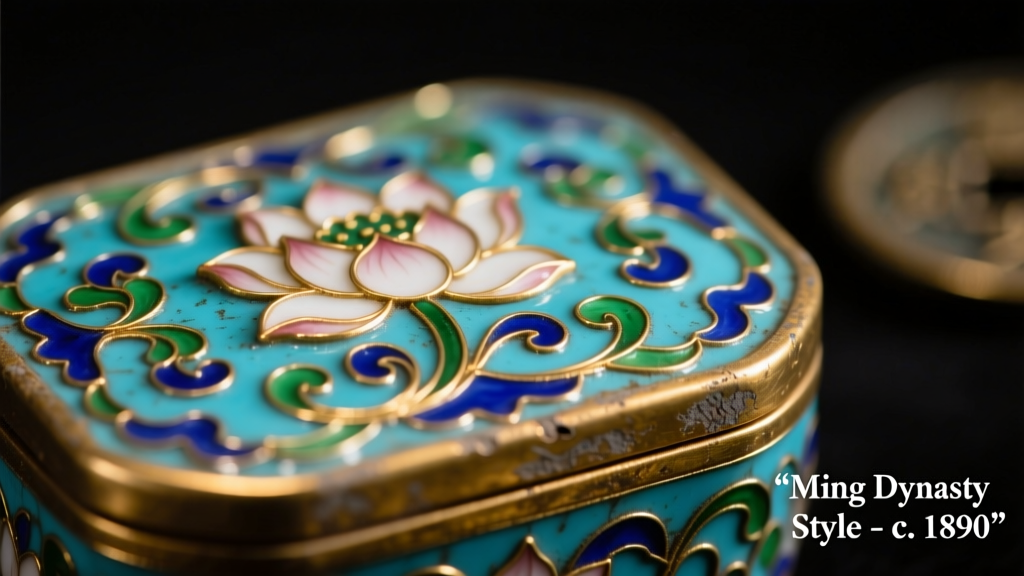
Cloisonné Box with Ming-Style Jade Lotus Blossoms and Turquoise Ground: A Late Qing Masterpiece, c. 1890 (7 × 3 Inches)
Decoding 2338078: The Rare 1943-S Lincoln Cent with Double Die Obverse (FS-101) and Its $21,500 Auction Record
La Mode Original Bracelet: A Numismatic Perspective on the 1970s French Luxury Artifact
Pratt Ware Vase Evaluation: Authentication, Market Value, and Condition Grading for Collectors
The 1971 Aladdin Metal Lunch Box Featuring Pebbles and Bamm-Bamm: A Numismatic and Cultural Appraisal
The Anti-Hitler Pin: A Rare Artifact of Covert Resistance, Historical Context, and Numismatic Significance
Apache Burden Basket: Authentication, Provenance, and Market Value of the 9 × 14-Inch Cone-Shaped Geometric Woven Basket
Hepplewhite-Inlaid Sewing Table with Scalloped Shelf: A New Hampshire Craftsmanship Masterpiece, c. 1790–1810