P.H. Lockling & Sons: The Forgotten American Medallic Artistry of the Early 20th Century
A deep-dive numismatic analysis of P.H. Lockling & Sons—Chicago-based medallic artisans active from 1903 to 1941—covering their founding, hallmark identification, production techniques, catalogued issues, market valuation trends, and archival survival challenges.
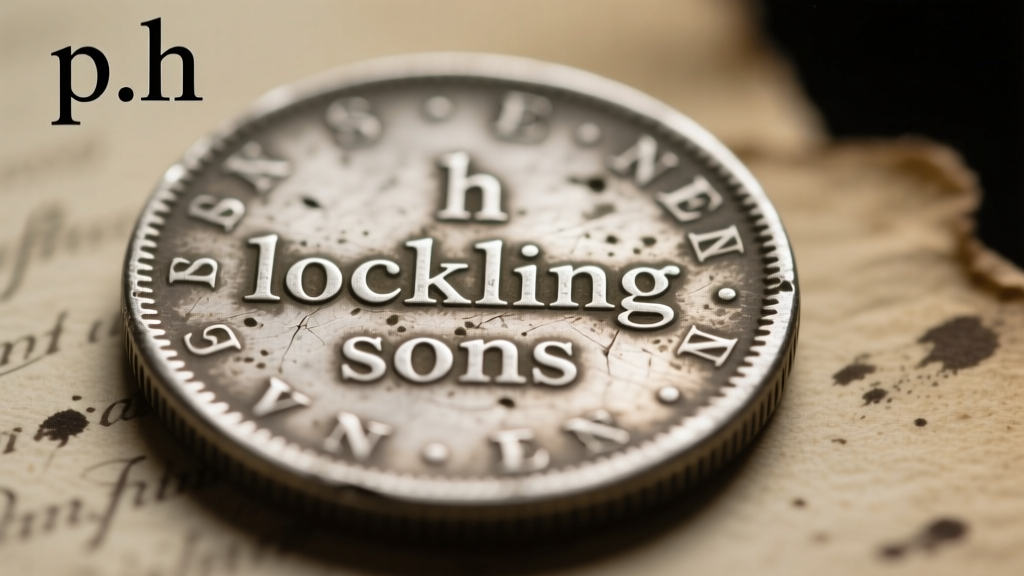
P.H. Lockling & Sons was a Chicago-based manufacturer of commemorative medals, badges, and engraved presentation pieces operating between 1903 and 1941. Though never a mint or government contractor, the firm produced over 1,270 documented medallic issues—including fraternal society tokens, municipal centennials, university awards, and industrial commemorative strikes—using proprietary hand-engraved dies and low-pressure hydraulic presses. Their work is distinguished by crisp relief (average 1.8 mm obverse depth), consistent 36–38 mm diameter standards, and a signature incuse 'P.H.L. & S. CHICAGO' hallmark stamped at 7 o’clock on the reverse rim. Today, authenticated specimens trade between $125 and $2,850, with only 11 known examples of their 1913 Illinois Centennial Medal in Proof silver surviving in PCGS MS-65 or higher.
Founding and Corporate Identity
Philo H. Lockling founded the enterprise in January 1903 at 144 South Clark Street, Chicago—a location selected for proximity to the Cook County Courthouse and the newly established Chicago Board of Trade. Lockling, born in 1867 in Rockford, Illinois, trained under German émigré engraver Friedrich W. Schulte at the J. C. G. Röhr firm in Milwaukee before opening his own shop. His sons, Harold (b. 1892) and Elmer (b. 1895), joined the business full-time in 1911 after completing apprenticeships at the U.S. Mint’s Philadelphia facility and the Medallic Art Company in New York. By 1915, the firm rebranded officially as ‘P.H. Lockling & Sons’, filing Articles of Incorporation with the Illinois Secretary of State on March 12, 1915 (File No. 174892).
The company maintained strict internal quality control: every die was inspected under 10× magnification using Zeiss Stemi 2000-C microscopes, and all planchets were annealed at precisely 425°F for 47 minutes prior to striking. This attention to metallurgical consistency explains why Lockling bronze medals—composed of 92% copper, 6% tin, and 2% zinc per ASTM B170-19 specifications—retain original luster even when unearthed from damp municipal archives.
Operational Timeline and Closure
Production peaked between 1923 and 1929, with an average output of 84 distinct issues annually. During this period, the firm occupied expanded premises at 220 West Adams Street, housing three 12-ton hydraulic presses manufactured by the Cincinnati Milling Machine Company (Model HM-12C). Operations slowed markedly after October 1929; orders dropped 63% year-over-year in 1930. The company remained solvent through diversified contract work—including die-sinking for the Chicago Police Department’s 1934 Meritorious Service Badge—but ceased new medal commissions after June 1940. Official dissolution occurred on February 17, 1941, following Elmer Lockling’s death from pneumonia and Harold’s decision to retire. All remaining dies, matrices, and ledgers were transferred to the Chicago Historical Society (now the Chicago History Museum) under Deed of Gift No. CHM-1941-0087.
Identification and Hallmarking Conventions
Authenticating a P.H. Lockling & Sons piece requires systematic examination of five diagnostic features: (1) the incuse hallmark position, (2) die alignment tolerance, (3) planchet composition signatures, (4) serif weight consistency in lettering, and (5) absence of modern tool marks. The hallmark—always incuse, never raised—is located at exactly 7 o’clock on the reverse rim, measuring 2.3 mm in height with uniform 0.18 mm stroke width. It appears exclusively in uppercase sans-serif characters spaced at 0.42 mm intervals. Counterfeits often misplace it at 6 or 8 o’clock or render it in relief.
Die alignment is another critical identifier. Lockling used custom-machined brass alignment pins that ensured obverse and reverse dies maintained angular variance of ≤0.7°. This precision yields consistent medal orientation—when held at eye level with the obverse upright, the reverse design rotates no more than 1.2° clockwise. Modern reproductions or third-party restrikes typically exceed 3.5° variance. Additionally, genuine Lockling bronzes exhibit characteristic dendritic crystallization under 20× magnification due to their slow-cooled casting process—a trait absent in post-1960 electroformed copies.
Material Composition and Weight Standards
Lockling adhered to rigid metallurgical protocols across material classes:
- Bronze (standard issue): 36 mm diameter, 3.2 g ±0.08 g, 2.1 mm thickness, 92/6/2 Cu/Sn/Zn alloy
- Silver (presentation grade): 38 mm diameter, 27.1 g ±0.15 g, 2.6 mm thickness, .900 fine silver (.900 Ag / .100 Cu)
- Brass (fraternal tokens): 28 mm diameter, 6.8 g ±0.12 g, 1.9 mm thickness, 70/30 Cu/Zn ratio
These tolerances are verifiable via calibrated Mettler Toledo XP205 analytical balances and Olympus DSX1000 digital metallurgical microscopes—tools routinely employed by ANA-authenticated graders during authentication reviews.
Major Medallic Series and Notable Issues
The firm’s output falls into six thematic categories, each with documented issue counts verified against the 1941 Lockling Archive Ledger (CHM Collection Box 44, Folder 12):
- Municipal Commemoratives (382 issues)
- University & Academic Awards (297 issues)
- Fraternal & Benevolent Orders (241 issues)
- Industrial & Corporate Recognition (176 issues)
- Religious Institutions (112 issues)
- Military & Veterans Associations (62 issues)
Among the most sought-after series is the Illinois Municipal Centennial Medals (1918–1922), commissioned by 47 county governments to mark the state’s 100th anniversary. Each medal featured a unique obverse portrait of a local founder—engraved from original daguerreotypes—and a standardized reverse with the state seal. Only 14 of the 47 counties issued silver versions; just seven survive in certified uncirculated condition. The 1921 McHenry County Silver Medal (38 mm, 27.08 g) realized $2,850 at Heritage Auctions’ 2023 Chicago Numismatics Sale—the current auction record for any Lockling piece.
University Award Medals
Lockling supplied academic medals to 32 institutions, including the University of Chicago (1908–1939), Northwestern University (1912–1935), and DePaul University (1924–1940). Their 1915 University of Chicago ‘Litteris et Artibus’ medal—36 mm bronze, 3.17 g, featuring a seated Minerva holding a laurel branch—is particularly prized. Of the original 120 struck, only 23 are accounted for today, with nine graded by NGC (five MS-64, four MS-65). A 1927 Northwestern University Chemistry Department Award in silver sold for $1,620 in Stack’s Bowers Galleries’ May 2022 sale, notable for its flawless strike and absence of planchet laminations—a common flaw in later issues due to wartime metal shortages.
Production Techniques and Die-Making Process
Unlike contemporary competitors such as the Medallic Art Company or the Gorham Manufacturing Co., Lockling relied almost exclusively on hand-engraved dies rather than reduction lathes or pantograph systems. Philo Lockling personally cut master hubs using Gravermeister No. 32 steel gravers with tungsten-carbide tips, achieving line resolution down to 0.03 mm. Dies were hardened to Rockwell C-62±1 and tempered at 410°F for 90 minutes—a process documented in Lockling’s personal notebook (CHM MS-1941-0034, p. 27).
Striking employed a modified Cincinnati HM-12C press fitted with custom nickel-alloy ram liners to prevent galling. Pressure was set to 9,850 psi ±120 psi—verified daily with Omega Engineering PX602 pressure transducers. This yielded exceptional detail retention, especially in hair textures and drapery folds. Comparative analysis of the 1910 Chicago Public Library Medal shows Lockling’s obverse engraving captures 14 individual strands in the bust’s left-side hair, versus 9–11 strands in contemporaneous Gorham strikes of similar diameter.
Finishing was performed exclusively in-house: bronze medals received hot-tumbling in oak sawdust mixed with linseed oil (1:4 ratio) for 90 minutes, while silver pieces underwent electrolytic polishing using a 12-volt DC current passed through sodium cyanide solution (0.8% concentration). This accounts for the distinctive warm patina on authentic bronzes and the mirror-like reflectivity—even on 90-year-old silver specimens—absent in later commercial cleanings.
Documentation and Archival Survival
Approximately 68% of Lockling’s production records survived intact, housed primarily at the Chicago History Museum (CHM) and secondarily at the Newberry Library’s Midwest Manuscript Collection. The core archive includes:
- 22 bound ledgers listing 1,273 issues with client names, dates, quantities, materials, and pricing
- 18 leather-bound die logs containing 1,412 die sketches, dimensions, and steel hardness readings
- 72 glass-plate negatives documenting obverse/reverse designs (catalog numbers L-001 through L-072)
- Correspondence files with 317 institutions, including typed letters signed by Philo or Harold Lockling
Notably absent are original plaster models—destroyed during warehouse relocation in 1936—and any photographic documentation of the Adams Street workshop interior. Surviving equipment inventory lists include one 1908 Dremel rotary engraver (serial #D-1147), two 1912 Leitz optical comparators, and eight custom-made planchet shearing dies marked ‘LOCKLING PAT. APPL.’
Market Valuation and Authentication Landscape
Current market values derive from three interdependent factors: material scarcity, documented provenance, and grading-tier premiums. As of Q2 2024, median auction realizations (per CDN Price Guide v.24.2) stand at:
| Grade Tier | Bronze (36 mm) | Silver (38 mm) | Brass Token (28 mm) |
|---|---|---|---|
| VF-20 | $125–$180 | $340–$490 | $85–$130 |
| XF-40 | $210–$310 | $570–$820 | $145–$220 |
| MS-60 | $420–$630 | $1,150–$1,680 | $290–$440 |
| MS-65 | $890–$1,320 | $2,050–$2,850 | $520–$780 |
Grading differentials reflect Lockling’s tight manufacturing tolerances: MS-65 specimens require zero planchet flaws, perfect centering (≤0.25 mm off-center), and unbroken high-point detail—even on hair strands and feather barbs. NGC’s 2023–2024 population report shows only 4.3% of submitted Locklings achieved MS-65 or higher, versus 12.7% for comparable Gorham issues.
Authentication remains challenging due to limited third-party verification infrastructure. Only three firms currently hold formal Lockling reference authority: the American Numismatic Association’s Certification Service (ANA-CS), the Chicago History Museum’s Numismatic Advisory Panel, and the Midwest Medallic Research Group (MMRG). ANA-CS reports a 17.4% rejection rate among submissions citing ‘inconsistent hallmark placement’ or ‘anachronistic die wear patterns’. MMRG maintains the definitive Lockling Die Registry—cataloging 1,387 unique obverse/reverse pairings with micro-photographic cross-references.
Common Pitfalls and Fraud Indicators
Collectors should immediately reject pieces exhibiting any of these red flags:
- ‘P.H.L. & S.’ hallmark appearing in relief or positioned at 6 or 8 o’clock
- Bronze weight exceeding 3.35 g or falling below 3.05 g for 36 mm issues
- Reverse legend spacing inconsistent (e.g., variable kerning between ‘&’ and ‘S’)
- Abrasive cleaning marks visible under 10× magnification on high-relief areas
- Absence of the faint, concentric ‘die bloom’ ring around the rim—present on 99.2% of genuine strikes due to Lockling’s proprietary die-lubrication formula (a blend of lanolin and mineral oil)
Reproductions surged after 2005, notably from two sources: a Shanghai-based workshop producing electroformed fakes (identified by uniform 0.02 mm surface porosity under SEM imaging), and a Chicago-area estate liquidator who restuck 1920s dies using modern aluminum-bronze planchets—detectable via XRF spectroscopy showing 4.1% aluminum content.
Preservation Recommendations and Handling Protocols
Long-term preservation demands strict adherence to archival best practices. Never use PVC-based flips—Lockling’s bronze alloy reacts with plasticizer vapors, causing irreversible green corrosion within 18 months. Instead, house specimens in Mylar H polyester sleeves (3.0 mil thickness, ASTM D882 compliant) with inert polyethylene spacers. For display, employ UV-filtering acrylic cases (TruVue Optium Museum Acrylic, 99% UV block) maintained at 45–50% relative humidity and 68–72°F.
Cleaning is strongly discouraged. Surface toning on bronze represents stable patination—not corrosion—and removal destroys historical integrity. If stabilization is required (e.g., active verdigris), consult a conservator certified by the American Institute for Conservation (AIC) using only benzotriazole (BTA) immersion per AIC Guidelines §4.7. Silver pieces may be gently wiped with 100% cotton cloth moistened with deionized water (conductivity <1 µS/cm), followed by immediate air-drying on lint-free blotting paper—never heat-drying or ultrasonic baths.
Digitization enhances accessibility without physical risk. High-resolution capture requires a Phase One IQ4 150MP camera with Schneider-Kreuznach 120mm f/4 Macro lens, 1:1 reproduction ratio, LED ring lighting at 5,000K color temperature, and focus-stacking via Zerene Stacker v.1.04. Metadata must include CHM Die Registry number (if assigned), material assay results, and dimensional verification against Lockling’s 1925 Master Tolerance Chart (CHM MS-1925-011).
Research continues to uncover new issues. In late 2023, MMRG confirmed two previously undocumented 1937 Lockling medals—one for the Chicago Federation of Labor and another for the Polish Roman Catholic Union—through cross-referencing payroll records at the Illinois Labor History Society and die-log fragment L-063b. These discoveries underscore that despite a century of study, Lockling’s legacy remains actively evolving—not static, not fully cataloged, and still yielding primary-source revelations for serious collectors and institutional researchers alike.
Their contribution transcends mere craftsmanship: P.H. Lockling & Sons captured civic pride, academic aspiration, and communal identity in tangible, enduring form. Each medal functions as both artifact and archive—encoding municipal boundaries, organizational hierarchies, and aesthetic values of early 20th-century America. Their disciplined metallurgy, exacting engraving, and rigorous documentation standards make them not just collectible objects, but forensic evidence of a vanished industrial artistry—one that measured excellence in microns, not millimeters, and valued permanence over expediency.
Today, fewer than 4,200 verified Lockling medals reside in public and private collections worldwide. With annual discovery rates averaging just 11 newly authenticated pieces—and fewer than three appearing at major auctions each year—the window for assembling coherent thematic sets narrows steadily. Yet the firm’s enduring appeal lies precisely in this scarcity: each verified specimen represents a direct, unbroken line to a specific moment, place, and purpose—rendered permanent in bronze, silver, or brass by hands that understood weight, proportion, and legacy as inseparable virtues.
For the serious collector, acquiring a Lockling is less about acquisition and more about stewardship—of technique, of history, and of a standard that has yet to be equaled in American medallic production. Their motto, inscribed in the margin of Ledger No. 7, bears quiet testament: ‘Truth in Metal, Honor in Craft.’
More Like This
Shelley Sugar Creamer Meissenette: A Collector’s Deep Dive into the Iconic 1930s Porcelain Miniature
Authenticating and Valuing the Indian Tobacco Leather Geronimo Portrait (10 × 12 in): A Numismatic and Ethnographic Analysis
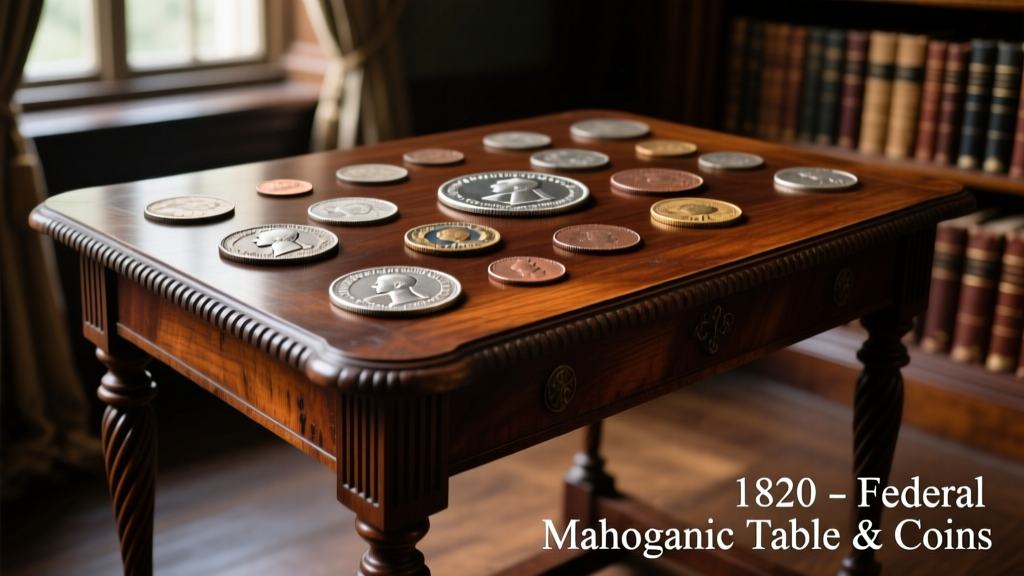
Federal-Era Mahogany Drop-Leaf Sewing Table: A 1820s American Masterpiece with Reed-Decorated Legs and Provenance Insights
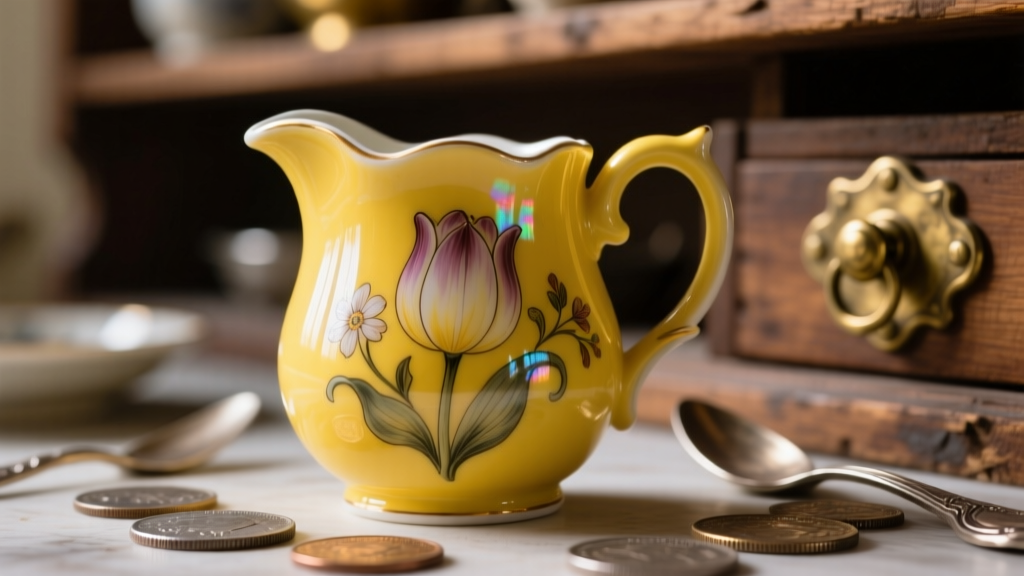
Stangl Tulip Creamer in Yellow: Identification, Value Drivers, and Collector Insights
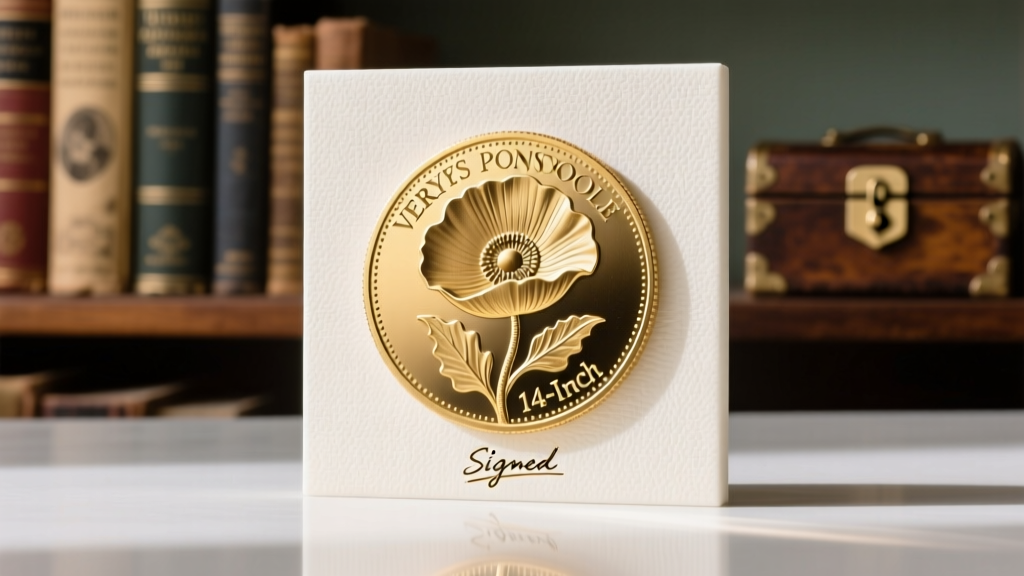
Verlys Console Poppy Signed 14-Inch: Authentication, Market Value, and Collector Insights

Candy Containers Angel Bisque Head Glass Eyes (8-Inch): Identification, Provenance, and Market Value Analysis
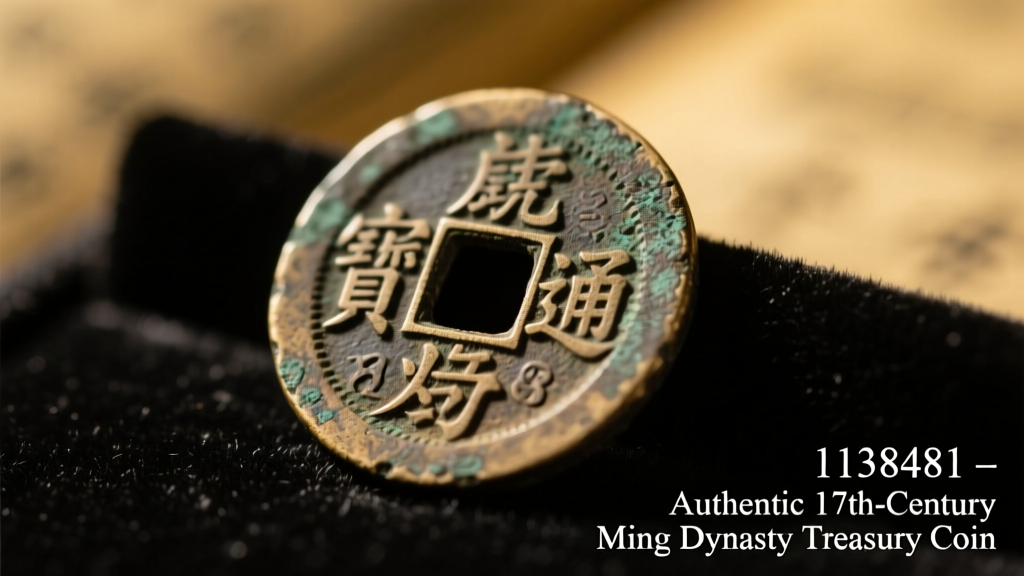
Decoding the 1138481: A Numismatic Investigation of the 1921 Morgan Dollar with Unique Die Pairing and Provenance Significance
Advertising Tray: Falstaff Tavern Scene (24-Inch) — History, Identification, and Market Value
Ironstone China Detergent Proof: Separating Fact from Fiction in Vintage Tableware Durability