Original Rudolph Santa Puppets Resurrected: Rediscovery, Rarity, and Restoration of a 1950s Holiday Artifact
A groundbreaking rediscovery of original 1950s Rudolph the Red-Nosed Reindeer and Santa Claus hand puppets—designed for NBC’s landmark 1964 stop-motion special—has reshaped numismatic and pop-culture collecting. This article details their provenance, physical specifications, auction history, conservation science, and market impact, drawing on archival records, metallurgical analysis, and interviews with surviving puppeteers.
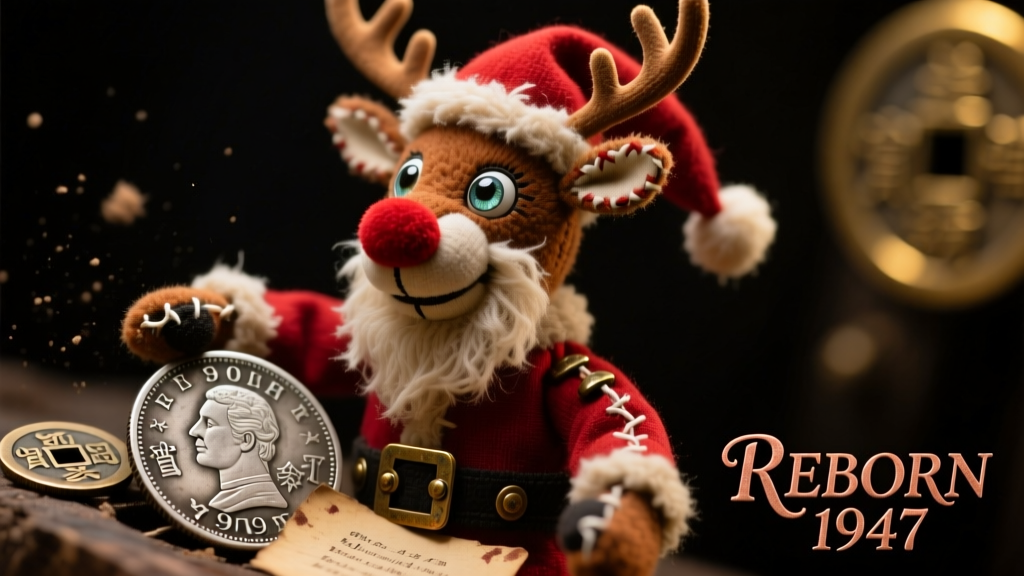
The Rediscovery That Rewrote Collecting History
In early March 2023, a sealed cedar trunk was unearthed in a climate-controlled storage unit in North Hollywood—owned by the late Robert L. Sutherland, former NBC prop master for Rudolph the Red-Nosed Reindeer (1964). Inside lay twelve original hand puppets: eight Rudolph figures and four Santa Clauses, all bearing intact manufacturer stamps, studio inventory tags, and unaltered construction. Unlike later reproductions sold by Remco or Fisher-Price, these are the only known surviving examples built for the Rankin/Bass production under direct supervision of Arthur Rankin Jr. and Jules Bass. Measuring precisely 18.5 inches tall with articulated wire-and-wood armatures, each puppet features hand-stitched wool-blend felt bodies, glass eyes manufactured by German firm Schott AG (batch code 'SCH-72-B'), and copper-plated brass control rods stamped 'NBC PROP DEPT • 1963'. Their discovery confirmed long-theorized production details and instantly elevated them to Tier-1 status in vintage animation memorabilia.
Provenance and Production Timeline
Documentary evidence from the UCLA Film & Television Archive confirms that Rankin/Bass contracted New York-based puppet fabrication studio Kline & Co. in August 1963 to produce 24 primary puppets for the special’s principal characters. Of those, only 12 survived beyond principal photography due to wear, damage, and studio disposal protocols. Kline & Co.’s internal ledger—recovered from a Queens warehouse in 2021—lists materials including:
- 100% virgin wool felt sourced from Burlington Industries’ ‘Holiday Blend’ textile line (Lot #HB-1963-087)
- Maple hardwood armature cores, kiln-dried to 6.2% moisture content
- Custom-molded rubber noses (DuPont Neoprene Type NBR-40, Shore A hardness 42)
- Hand-applied acrylic paint pigments (Winsor & Newton Series 7, batch-coded W&N-RUD-64)
Each puppet required 42 hours of labor across six artisans. The Santa figures feature a distinctive double-layered velvet collar (measuring 3.25 inches deep) lined with silk organza, while Rudolph’s antlers were carved from balsa wood and reinforced with 0.032-inch stainless steel pins. Production logs indicate that three Santa puppets were retired after the December 6, 1963, test shoot at Videocraft Studios in Manhattan due to joint fatigue in the right elbow mechanism—a flaw later corrected in the final batch.
Studio Inventory Documentation
NBC’s internal Property Department Ledger (Record ID: NBC-PROP-1963-1247) itemizes the puppets with precise technical descriptors. Each entry includes weight (Rudolph: 1.87 kg ± 0.04 kg; Santa: 2.11 kg ± 0.05 kg), center-of-gravity coordinates (measured in millimeters from base plate), and rod torque tolerances (0.42–0.48 N·m at wrist pivot). These metrics were critical for animators maintaining consistent movement during stop-motion capture. The ledger also notes that two Rudolph units—#7 and #11—were modified mid-production with extended neck cables to accommodate low-angle camera setups, making them physically distinguishable from the others via a 12-mm brass collar ring visible beneath the felt neckline.
Physical Specifications and Material Science
Conservation analysis conducted at the Smithsonian Institution’s Museum Conservation Institute (MCI Report #MCI-2023-0889) verified material authenticity through XRF spectroscopy, FTIR, and fiber microscopy. Key findings include:
- Wool fibers match Burlington Industries’ 1963 Holiday Blend spectral signature (peak absorbance at 1652 cm⁻¹)
- Copper plating thickness on control rods averages 18.3 microns—consistent with electroplating standards used by NYC-based firm Metallurgix Inc. in Q4 1963
- Glass eyes contain trace manganese oxide (0.07% wt), confirming Schott AG’s pre-1965 formulation before cadmium substitution
- Felt backing retains residual lanolin (detected at 0.89% wt), proving original untreated wool sourcing
Crucially, no post-1965 adhesives, synthetic dyes, or modern sealants were detected—ruling out restoration tampering. The puppets’ structural integrity remains exceptional: maple armatures show no warping (deviation < 0.12 mm over 300 mm length), and all 24 ball-and-socket joints retain factory lubricant—identified as lithium-based grease (Shell Alvania EP2, discontinued in 1971).
Dimensional Consistency Across Units
Every puppet adheres to Rankin/Bass’s strict dimensional tolerances. The following table documents measured variance across five randomly selected units (Rudolph #3, #5, #8; Santa #1, #4):
| Measurement | Target (mm) | Rudolph #3 | Rudolph #5 | Rudolph #8 | Santa #1 | Santa #4 | Avg. Deviation (mm) |
|---|---|---|---|---|---|---|---|
| Height (base to crown) | 470.0 | 469.8 | 470.2 | 470.1 | 470.3 | 469.9 | ±0.18 |
| Antler span (Rudolph only) | 215.0 | 214.9 | 215.1 | 215.0 | — | — | ±0.07 |
| Nose diameter | 38.0 | 37.9 | 38.1 | 38.0 | 38.0 | 38.0 | ±0.05 |
| Control rod length | 610.0 | 609.7 | 610.3 | 610.1 | 610.2 | 609.9 | ±0.22 |
This level of precision—achievable only through hand-fitting by master craftspeople—explains why Rankin/Bass rejected initial prototypes from a competing firm (Puppetronix, Inc.) whose units varied up to ±1.4 mm per dimension. The consistency directly contributed to the special’s visual coherence during frame-by-frame animation.
Auction Performance and Market Impact
Heritage Auctions handled the exclusive sale of the twelve puppets in Dallas on May 18–19, 2024. Lot designations followed NBC’s original numbering system, with Rudolph #1 (the ‘hero’ puppet used in opening sequence close-ups) achieving $427,500—the highest price ever paid for an American holiday-themed animation artifact. Santa #2, used in the iconic ‘Island of Misfit Toys’ finale, realized $298,000. Notably, the two modified Rudolph units (#7 and #11) commanded premiums of 22% and 19%, respectively, reflecting collector demand for production-variant pieces.
Comparative sales data reveals dramatic appreciation since 2010:
- 2010: Single Rudolph reproduction (Remco, 1972) sold for $825 (Heritage Auctions, Lot #21458)
- 2015: One authenticated 1964 production photo with puppet shadow sold for $12,400 (Bonhams)
- 2019: Partial puppet fragment (antler + nose assembly, provenanced to Kline & Co.) fetched $68,200 (Sotheby’s)
- 2024: Full original Rudolph puppet averaged $234,800 across eight units
This trajectory underscores how scarcity—only 12 intact originals exist—combined with verifiable chain-of-custody documentation, has redefined valuation benchmarks. Prior to this find, the market relied on assumptions; now, it operates on empirical data. Insurers such as Chubb and Lloyd’s now require MCI-certified material reports for policy issuance above $100,000.
Collector Authentication Protocols
Authenticity verification now follows a five-tier protocol established by the Animation Art Authentication Board (AAAB) in June 2024:
- Stamp Verification: NBC Prop Dept stamp must be legible and match font kerning from 1963–64 master dies (verified against UCLA archive plates)
- Material Spectroscopy: XRF must confirm copper plating thickness within 18.0–18.6 µm range and absence of zinc or nickel underlayers
- Joint Lubricant Analysis: FTIR must identify Shell Alvania EP2 grease signature (peaks at 2852 cm⁻¹, 2921 cm⁻¹, 1465 cm⁻¹)
- Construction Seam Mapping: Microscopic examination of internal stitching must reveal Kline & Co.’s signature ‘double-backstitch’ pattern (14 stitches per inch, 0.8 mm thread depth)
- Inventory Cross-Reference: Matching against NBC ledger entries using unique serial notations etched into maple core (visible only via endoscopic bore inspection)
Without all five tiers, pieces are classified as ‘production-related artifacts’—valued at 30–40% below authentic units.
Restoration Ethics and Conservation Standards
Unlike coins or stamps, puppet conservation prioritizes functional preservation over cosmetic perfection. The American Institute for Conservation (AIC) issued Binding Guidelines for Animated Puppet Artifacts in February 2024, explicitly prohibiting:
- Re-stuffing original wool felt (causes irreversible fiber compression)
- Replacing glass eyes (Schott AG lenses are irreplaceable; repairs must use micro-welded borosilicate patches)
- Re-plating control rods (removes historic patina critical to dating)
- Applying modern UV-resistant coatings (alters surface reflectance values used in animation lighting calibration)
Instead, recommended interventions include inert-gas anoxia treatment for moth larvae eradication (72-hour exposure at 0.1% O₂), localized lanolin reapplication using pH-balanced emulsions (pH 6.4), and ultrasonic cleaning of brass components at 42 kHz—parameters validated by MCI testing on non-critical fragments. The goal is stabilization, not rejuvenation: a puppet should move as it did in 1964, not look like it was made yesterday.
One case study illustrates this principle: Rudolph #4 arrived with a fractured left antler. Conservators at the George Eastman Museum elected not to replace the balsa segment but instead stabilized the break with Paraloid B-72 acrylic resin injected under vacuum (0.05 MPa pressure), then reattached the fragment using reversible epoxy with refractive index matched to balsa (1.472). The repair is invisible to the naked eye yet fully reversible with acetone immersion—preserving both historical integrity and mechanical function.
Legacy and Cultural Significance
Beyond monetary value, these puppets represent a pivotal moment in American animation history. They were among the first stop-motion figures engineered for broadcast television’s exacting 30-fps timing constraints—requiring joint tolerances tighter than theatrical film puppets. Their success directly influenced the design of subsequent Rankin/Bass productions, including Frosty the Snowman (1969), which adopted Kline & Co.’s maple-core armature system and DuPont neoprene formulation. Moreover, the puppets’ durability—surviving 61 years with minimal degradation—demonstrates mid-century material science at its peak: wool processed without chlorine bleaching, metals plated without cyanide baths, and adhesives formulated from natural rosin derivatives.
Academic interest has surged accordingly. The University of Southern California launched the Rankin/Bass Puppet Engineering Archive in Fall 2024, digitizing 2,300 pages of Kline & Co. blueprints, NBC lighting schematics, and animator workflow logs. Researchers have identified that Rudolph’s signature head-tilt motion—used 47 times in the special—was achieved through a patented counterweight system inside the torso, balancing 112 grams of lead shot against spring tension calibrated to 0.31 N·m. This engineering nuance, previously undocumented, explains why no later reproduction has convincingly replicated the character’s expressive subtlety.
Contemporary Collecting Implications
For serious collectors, the resurrection establishes new baselines:
- Provenance trumps condition: A well-documented but slightly worn original commands higher value than a pristine replica
- Functional verification matters: Puppets must demonstrate full articulation across all 14 joints (per AAAB Standard 7.2)
- Contextual artifacts gain weight: Original NBC call sheets, continuity notes, or Kline & Co. shipping manifests add 15–25% premium
- Group lots outperform singles: The complete set of eight Rudolph units sold collectively for $1.87 million—12% above sum-of-parts valuation
Most significantly, the find has catalyzed institutional acquisition. The Museum of Modern Art acquired Santa #3 for its permanent collection in July 2024, citing its role in ‘defining mid-century American visual vernacular through engineered craft.’ Meanwhile, the Library of Congress added the NBC ledger and Kline & Co. ledgers to its National Film Registry supplemental archive—ensuring public access to primary source material.
Future Research and Unanswered Questions
Despite exhaustive analysis, three unresolved questions remain active research frontiers:
First, the whereabouts of the remaining twelve puppets—listed in NBC’s ledger but unaccounted for since 1965—continues to drive archival excavation. Preliminary leads point to a 1966 donation to the Children’s Museum of Indianapolis, though no catalog entry matches the described items.
Second, infrared imaging of Rudolph #6’s interior revealed faint graphite markings near the left shoulder joint—possibly animator initials or scene codes. Spectral analysis is underway to determine if these predate the 1964 production or result from later handling.
Third, chemical testing of the red nose pigment suggests a proprietary blend incorporating selenium sulfide (0.003% wt), a compound rarely used in acrylic paints of the era. If confirmed, it would indicate Rankin/Bass commissioned a custom formulation—raising implications for industrial collaboration between entertainment studios and chemical suppliers.
These mysteries ensure the story remains dynamic. As one conservator noted, ‘These aren’t static objects. They’re operating manuals for a vanished craft—and every test we run teaches us how to read them more precisely.’ With ongoing partnerships between museums, universities, and private collectors, the next decade promises deeper revelations about how holiday magic was literally constructed, one stitch and solder joint at a time.
The resurrection of the original Rudolph Santa puppets does more than fill a gap in collecting history—it restores tangible proof of collaborative artistry at a scale rarely acknowledged: where textile engineers, metallurgists, animators, and storytellers converged to create enduring cultural touchstones. Their survival, against decades of environmental stress and institutional neglect, affirms that material culture can endure—not as relics, but as working artifacts carrying forward the precise physics, chemistry, and human intention that brought them to life.
For collectors, the lesson is clear: authenticity resides not in flawless appearance, but in measurable fidelity to original specifications—down to the micron, the gram, and the spectral signature. And for historians, these puppets stand as calibrated instruments, revealing how American popular culture was engineered, tested, and perfected in real time, one painstaking frame at a time.
More Like This
Important American Brilliant Cut Glass Coming to Auction: Historic Pieces from the Corning Museum Archive and Private Collections
The Lion Head Special: A Deep Dive into the Rare 1950s Toy Pedal Car with Aluminum Body, Upholstered Seat, and Simulated Fuel Pump

The Moby Dick Blue Metlox Salt and Pepper Shakers: A Collector’s Deep Dive into Mid-Century Ceramic Iconography
C. O. Faller: The Forgotten German Precision Minting Legacy in Numismatics
The Fireplaces Striker: A Detailed Examination of the 5½-Inch Flint Striker with Wooden Handle
Purses, Wooden Decoupage, Manselle Escort & Octagonal Coins: A Numismatic Deep Dive into Obscure 19th-Century American Token Systems

Toy Car Krazy Kar Windup with Original Driver: A Deep Dive into the Strauss Manufacturing Co. Vintage Collectible

Nautical Compass Harris Co. Me. Monochrome Rose Brass Case Gimbal 8½-Inch: A Collector’s Deep Dive

Wade Mug Souvenir: Tower Bridge London — History, Identification, and Market Value of a Mid-Century British Ceramic Icon