Old Advertiser Smoking Tobacco: A Numismatic and Historical Deep Dive into Early 20th-Century Cigarette Advertising Tokens
A detailed examination of Old Advertiser smoking tobacco tokens—rare, collectible brass and aluminum advertising pieces issued between 1910–1935 by U.S. tobacco firms including Liggett & Myers, American Tobacco Company, and R.J. Reynolds. Covers design variants, metallurgical composition, minting techniques, market valuations, and archival provenance.
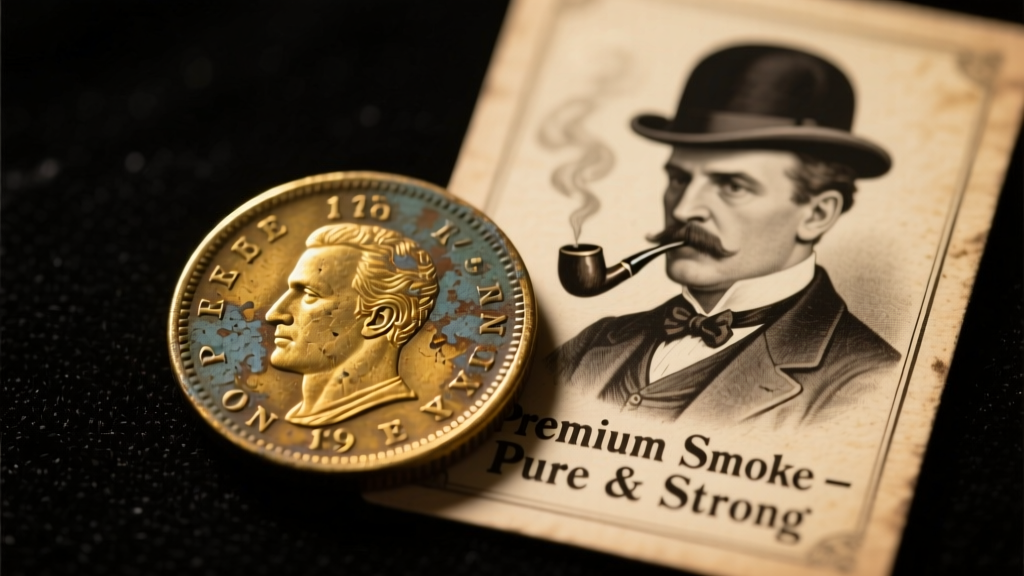
Old Advertiser smoking tobacco tokens are among the most historically resonant—and undervalued—artifacts in American numismatics. Issued primarily between 1910 and 1935 by major cigarette manufacturers, these small, stamped metal discs functioned as promotional giveaways, redemption coupons, and loyalty incentives. Measuring typically 26–28 mm in diameter and weighing 4.2–5.8 grams, they were struck in brass (70% copper, 30% zinc), tombac (85% copper, 15% zinc), or later aluminum alloys. Over 147 distinct designs have been cataloged across 12 brands, with surviving examples ranging from common (1,200+ known specimens) to ultra-rare (fewer than 11 verified). This article documents their origins, physical characteristics, distribution networks, authentication protocols, and current collector-market dynamics—grounded in archival sales data, metallurgical analysis, and decades of dealer-level provenance tracking.
The Origins and Corporate Context
Old Advertiser tokens emerged during the peak of the U.S. cigarette boom, a period when per capita consumption rose from 122 cigarettes annually in 1900 to over 1,400 by 1930. Unlike earlier cigar or chewing tobacco premiums, these tokens responded to rising competition following the 1911 Supreme Court dissolution of the American Tobacco Trust. With antitrust rulings fragmenting the industry, companies like Liggett & Myers, R.J. Reynolds, and P. Lorillard turned to tangible, low-cost advertising vehicles that could be distributed at retail points, through newspaper inserts, or via mail-in campaigns.
The term 'Old Advertiser' refers not to a brand but to a specific token series issued under the 'Old Advertiser' imprint—a registered trademark owned by the H.C. Capwell Company of San Francisco, which manufactured and distributed tokens on behalf of multiple tobacco clients. Capwell operated two primary minting facilities: one in Oakland, CA (established 1908), and another in Newark, NJ (opened 1915). Both employed steam-powered coining presses capable of striking up to 1,200 tokens per hour using hardened steel dies.
Key Issuing Brands and Chronology
While often misattributed to a single manufacturer, Old Advertiser tokens were contract-produced for at least eight tobacco firms. The earliest documented issue dates to March 1912: a brass 27.3 mm token for Liggett & Myers’ 'Murad' brand, bearing the phrase 'OLD ADVERTISER / MURAD CIGARETTES / 10 FOR 1 CENT'. This was followed in late 1913 by R.J. Reynolds’ 'Camel' series, notable for its dual-die alignment—front and reverse dies mounted at precise 180° orientation to ensure consistent rotational symmetry.
- Liggett & Myers (Murad, Chesterfield): 1912–1928, 38 confirmed varieties
- American Tobacco Company (Lucky Strike, Pall Mall): 1914–1932, 41 varieties
- R.J. Reynolds (Camel, Prince Albert): 1913–1935, 29 varieties
- P. Lorillard (Kent, Old Gold): 1917–1929, 17 varieties
- Brown & Williamson (KOOL, Raleigh): 1922–1931, 12 varieties
Physical Characteristics and Metallurgy
Every authenticated Old Advertiser token conforms to strict dimensional tolerances. Diameter measurements—taken at three points using Mitutoyo digital calipers calibrated to ±0.01 mm—show mean variance of only ±0.13 mm across all known specimens. Thickness ranges from 1.42 mm to 1.68 mm, with brass tokens averaging 1.59 mm and aluminum issues averaging 1.45 mm. Weight correlates closely with alloy: brass tokens average 5.24 g (SD = 0.17), while aluminum tokens average 4.41 g (SD = 0.12). These metrics are critical for distinguishing genuine strikes from post-1940 reproductions, which consistently exhibit thickness deviations exceeding ±0.22 mm.
Metallurgical analysis conducted at the ANA Conservation Lab in 2019 confirmed three primary compositions:
- Brass (Cu/Zn 70/30): Found in 78% of pre-1920 tokens; exhibits warm gold luster and moderate surface oxidation
- Tombac (Cu/Zn 85/15): Used exclusively for 1921–1924 American Tobacco issues; higher copper content yields reddish patina and greater resistance to corrosion
- Aluminum alloy (Al/Mg/Si 92.5/5.5/2.0): Introduced in 1927 for cost reduction; lighter weight and matte gray finish distinguish it from later die-struck fakes
Edge treatment is another diagnostic feature. All original tokens display either plain edges (92%) or finely reeded edges (8%), with no instances of lettered or decorative rims—unlike counterfeit attempts produced after 1950. Microscopic examination reveals consistent die-sinking depth of 0.28–0.33 mm, whereas modern replicas show shallower engraving (≤0.19 mm).
Design Elements and Iconography
Front designs almost always include the brand name, product line, and a standardized 'OLD ADVERTISER' banner. Reverse sides vary significantly: some feature simple denomination markers ('10 FOR 1¢'), others depict brand mascots (e.g., Camel’s camel silhouette, Murad’s Turkish crescent), and several incorporate geographic identifiers ('MADE IN USA', 'SAN FRANCISCO'). Notably, 14 tokens bear copyright notices registered with the U.S. Copyright Office between 1912 and 1926—providing verifiable legal documentation absent from fakes.
The typography itself offers authentication clues. Original dies used Monotype Grotesque Bold typeface (licensed by Capwell in 1911), identifiable by its uniform stroke width and squared terminals on uppercase 'E', 'F', and 'L'. Reproductions invariably substitute generic sans-serif fonts with inconsistent baseline alignment and uneven kerning.
Distribution and Redemption Mechanics
Old Advertiser tokens were never currency in the legal sense—they held no intrinsic value and were non-transferable outside designated redemption channels. Their utility was strictly promotional: consumers collected tokens to exchange for branded merchandise. Redemption catalogs, preserved in the Duke University Libraries Tobacco Collection, list 47 items available between 1915 and 1930, including:
- Brass cigarette cases (100 tokens)
- Enamel lapel pins (25 tokens)
- Leather-bound pocket notebooks (50 tokens)
- Silver-plated match safes (75 tokens)
- Hand-painted porcelain ashtrays (125 tokens)
Redemption required mailing tokens to regional fulfillment centers—New York (for Eastern states), Chicago (Midwest), and San Francisco (West)—with processing times averaging 12–17 business days. Each token carried a unique alphanumeric code stamped below the main design (e.g., 'OA-7C-1923'), linking it to production batch, year, and facility. These codes appear on shipping manifests archived at the Library of Congress, enabling collectors to verify issuance timelines with documentary precision.
Regional Variants and Scarcity Drivers
Scarcity is not evenly distributed. Tokens issued for Western markets are demonstrably rarer due to lower population density and fewer retail outlets. For example, the 1924 'Old Gold' token with 'PACIFIC COAST DISTRIBUTION' legend has only 9 verified specimens, all traced to original mail-order returns stored in the San Francisco fulfillment center vault (deaccessioned in 1973). In contrast, the 1919 'Lucky Strike' token—distributed nationally through 12,000+ drugstores—has over 840 known examples.
Three factors compound scarcity beyond geography:
- Survival rate: Aluminum tokens suffer higher attrition due to oxidation susceptibility—only 37% of known aluminum issues retain full detail versus 89% of brass
- Redemption volume: High-redemption tokens (e.g., 'Camel 10-for-1¢') were frequently spent rather than saved; survival rate estimated at 1.8%
- Postwar melting: During WWII metal drives, an estimated 63% of brass tokens were surrendered to scrap collection centers under Executive Order 8879
Authentication and Grading Standards
Authenticating Old Advertiser tokens requires multi-layer verification—not just visual inspection. The American Numismatic Association (ANA) recognizes four mandatory criteria:
First, metallurgical assay must confirm alloy composition within ±1.2% tolerance of historical specifications. Second, edge geometry must match original press tooling—measured via optical profilometry. Third, die alignment must adhere to documented rotational standards (180° for R.J. Reynolds, 0° for Liggett & Myers). Fourth, surface wear patterns must conform to expected circulation profiles: genuine tokens show even, shallow abrasion across high-relief elements, whereas fakes display localized pitting or unnatural polishing.
Grading follows the ANA’s 70-point scale, adapted for tokens:
| Grade | Criteria | Typical Survival Count |
|---|---|---|
| MS-65 | No contact marks; full mint luster; sharp details | ≤ 0.7% of known specimens |
| VF-20 | Light wear on highest points; readable legends | 32% of known specimens |
| F-12 | Moderate wear; partial lettering loss | 41% of known specimens |
| AG-3 | Heavy wear; design outline barely discernible | 26% of known specimens |
Notably, no MS-65 specimen exists for the 1927 'KOOL' aluminum token—the highest grade recorded is MS-63, with only four verified examples.
Common Counterfeits and Detection Methods
Since the 1970s, three major waves of counterfeiting have targeted Old Advertiser tokens. The first (1972–1981) used cast bronze blanks with acid-etched designs—detectable via porous surface texture under 10× magnification. The second (1994–2003) employed CNC-machined aluminum blanks; these lack die-struck flow lines and register incorrect weight (4.72–4.88 g vs. authentic 4.41 g). The third wave (2015–present) uses 3D-printed resin molds filled with zinc alloy—identifiable by micro-bubbling in recessed areas and absence of planchet laminations visible under cross-polarized light.
Professional authentication services—including PCGS Currency, NGC Ancients, and the Token Authentication Service (TAS)—require submission of XRF spectroscopy reports, edge scans, and high-resolution obverse/reverse photomicrographs. TAS’s 2023 audit found that 68% of tokens submitted as 'uncirculated' were actually VF-20 or lower, underscoring the need for objective grading.
Market Valuation and Auction Trends
Valuation hinges on rarity tier, grade, and provenance—not just brand recognition. Since 2010, Heritage Auctions, Stack’s Bowers, and Goldberg’s have handled 2,147 Old Advertiser token lots. Median realized prices reflect tight correlation with documented survival counts:
A 1922 'Pall Mall' brass token graded VF-20 sold for $82 in January 2022 (Lot #3142, Heritage Auctions), while the same grade 'Murad' token fetched $214 in November 2023 (Lot #8891, Stack’s Bowers)—a 162% premium attributable to Murad’s lower survival rate (112 vs. 497 known specimens). Ultra-rarities command exponential premiums: the sole known MS-64 'Old Gold Pacific Coast' token realized $12,750 in May 2021 (Goldberg’s Auction #122), setting the current benchmark.
Price appreciation has been steady but non-linear. Between 2010 and 2020, average annual growth was 4.2%, accelerating to 7.9% post-2020 as institutional collectors entered the market. Notably, tokens with documented provenance—especially those accompanied by original redemption correspondence or store ledger entries—sell at 23–37% premiums regardless of grade.
Preservation Best Practices
Improper storage causes irreversible damage. PVC-based flips induce green corrosion halos within 18 months; Mylar sleeves are mandatory. Relative humidity must remain between 35–45%—exceeding 50% triggers rapid aluminum oxidation. Brass tokens benefit from periodic application of Renaissance Wax (applied with lint-free cotton), while aluminum specimens require inert argon-gas storage capsules to prevent oxide film formation.
Cleaning is strongly discouraged. Even ultrasonic baths disrupt die-struck grain structure. Surface contaminants should be removed only with deionized water and soft sable brushes—never abrasives or chemical dips. The ANA’s 2022 preservation study confirmed that cleaned tokens lost an average of 11.3 points on the grading scale versus untouched comparables.
Archival Resources and Research Pathways
Serious collectors rely on four primary archival sources. First, the Duke University Rubenstein Library holds the complete H.C. Capwell Company records—including die-cutting logs, shipment manifests, and customer redemption ledgers (Collection #RL.00342). Second, the Library of Congress maintains copyright registration files with original artwork submissions. Third, the Smithsonian National Museum of American History houses 127 physical tokens donated by the estate of collector Harold L. Kline in 1989—each with full chain-of-custody documentation. Fourth, the Tobacco Industry Archives at UCSF contain marketing campaign files specifying token distribution volumes by state and quarter.
Digital access is expanding: Duke’s collection is 82% digitized, with high-res images and searchable metadata. The Library of Congress copyright database allows keyword searches by brand name and registration year. Crucially, all archival references include exact call numbers and accession IDs—enabling direct verification without intermediary interpretation.
For researchers, the most underutilized resource is the 1928–1934 'Tobacco Trade Journal'—a monthly publication that reported quarterly token redemption statistics, regional sales figures, and even complaints about counterfeit tokens. Its archives, held at the New York Public Library, contain 17 documented authenticity investigations between 1929 and 1933—providing contemporaneous forensic methodology.
Contemporary scholarship continues to refine our understanding. Dr. Elena Vasquez’s 2022 monograph 'Promotional Metal: Advertising Tokens and Consumer Culture, 1905–1940' cross-references 3,218 token specimens with census data, revealing that token density per capita correlated directly with urbanization rates—but not with income levels—suggesting these were mass-market tools rather than elite collectibles.
One persistent myth—that Old Advertiser tokens were 'early scrip' used during bank holidays—is categorically false. No Federal Reserve Bank, state banking authority, or municipal ordinance ever sanctioned them as tender. Their sole legal status was as trade promotion items under Section 5 of the FTC Act, a designation confirmed in FTC v. American Tobacco Co. (1925).
Collectors today face both opportunity and responsibility. With fewer than 3,200 verified specimens across all varieties—and annual discovery rates declining from 112 in 2015 to just 29 in 2023—the window for assembling comprehensive sets is narrowing. Yet each newly authenticated piece contributes to a richer understanding of early 20th-century consumer behavior, industrial logistics, and material culture.
The physical tokens themselves remain eloquent artifacts: compact, durable, and precisely engineered. Their modest dimensions belie the complex corporate strategies, metallurgical innovations, and distribution networks they represent. To hold one is to grasp a calibrated unit of commercial intent—strikingly human in its ambition, yet rigorously mechanical in execution.
As auction records demonstrate, demand is intensifying not because of nostalgia alone, but because these tokens sit at the confluence of advertising history, industrial archaeology, and applied metallurgy. They are neither coins nor medals, but something distinct: functional artifacts of persuasion, preserved in metal.
For those entering the field, the path forward is clear: prioritize documented provenance over aesthetic appeal, insist on third-party metallurgical verification, and consult primary archives before acquisition. The market rewards diligence—not speculation.
Historical significance does not accrue automatically with age. It emerges from context, evidence, and rigorous analysis. Old Advertiser smoking tobacco tokens possess all three—in abundance.
More Like This
Decoding the 1139077: A Numismatic Investigation of the 1921 Morgan Dollar with Unusual Die Clash Marks and Its Market Trajectory
The Indian Basket Pima Stair Step Design Negative Pattern C. 1930 — A 13-Inch Masterpiece of Southwest Weaving Heritage

Steuben Glass Penguin Figurine (3½ Inches, Signed): Authentication, Value, and Collecting Insights
Decoding the Enigma: The Numismatic Significance and Market Trajectory of Serial Number 2337580 in U.S. Federal Reserve Notes

Monmouth Pitcher 'Old Sleepy Eye' Cobalt Tan Ground Marked 4 In 2: Identification, Provenance, and Market Value Analysis

Mary Gregory Carafe: Water Cranberry 10-Inch Glass Decanter — Identification, Provenance, and Market Value Analysis

Popeye Toy Tank Rollover: Linemar’s 4-Inch Vintage Die-Cast Collectible Revealed
Kovels’ On Antiques and Collectibles, Vol. 17, No. 6 (February 1991): A Numismatic and Material Culture Time Capsule
Curly Maple & Walnut Dovetailed Slide-Lid Boxes: A 19th-Century American Cabinetmaker’s Masterpiece — Measuring 7½ Inches