Northeast Document Conservation Center: Preserving America’s Paper Heritage Since 1978
A detailed, expert-level examination of the Northeast Document Conservation Center (NDCC) — its founding, mission-critical conservation methodologies, archival standards, facility specifications, and measurable impact on historic documents, maps, photographs, and currency from New England and beyond.
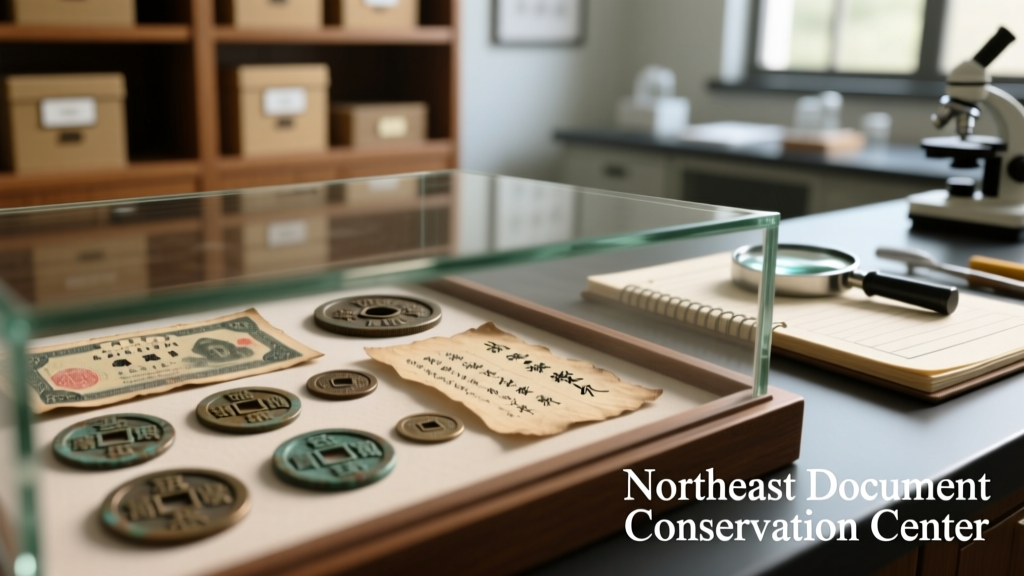
The Northeast Document Conservation Center (NDCC), founded in 1978 in Andover, Massachusetts, is a nationally accredited, non-profit regional resource dedicated to the preservation of paper-based cultural heritage. Operating under the auspices of the nonprofit Northeast Document Conservation Center, Inc., NDCC serves over 2,400 institutions annually—including libraries, museums, historical societies, municipal archives, and federal agencies—across all six New England states plus New York and New Jersey. With an ISO/IEC 17025-accredited laboratory, climate-controlled storage vaults maintained at 65°F ±2°F and 35% ±3% RH, and a staff of 22 full-time conservators holding advanced degrees from programs including Buffalo State College’s Art Conservation Program and the University of Delaware/Winterthur Program, NDCC sets benchmarks for ethical, science-based treatment of fragile historic materials. This article details NDCC’s operational framework, conservation protocols, real-world case studies, and its indispensable role in safeguarding documentary evidence of American history—including rare banknotes, Civil War-era ledgers, and 18th-century land deeds.
Founding Vision and Institutional Evolution
NDCC emerged from a 1977 needs assessment conducted by the Massachusetts Board of Library Commissioners, which revealed that fewer than 12 trained paper conservators served the entire Northeast region—and none operated outside major metropolitan centers. In response, a coalition of librarians, archivists, and preservation scientists—including Dr. Margaret A. Higginbotham, then-head of conservation at the Boston Public Library—secured $215,000 in initial funding from the National Endowment for the Humanities (NEH) and the Massachusetts Cultural Council. The center opened its doors in March 1978 in a repurposed 1920s brick schoolhouse on Route 28 in Andover, occupying 4,200 square feet. By 1989, demand necessitated expansion; NDCC relocated to its current 18,500-square-foot LEED Silver-certified facility at 100 Preservation Park Drive—a purpose-built structure designed with input from architects at Finegold Alexander & Associates and mechanical engineers from TLC Engineering Solutions.
NDCC’s governance model reflects its collaborative ethos: a 15-member Board of Trustees includes representatives from the American Library Association (ALA), the Society of American Archivists (SAA), the American Institute for Conservation (AIC), and the Federal Records Advisory Committee. Since 2003, NDCC has maintained formal affiliation with the American Alliance of Museums (AAM), and since 2012, it has been one of only seven regional centers in the U.S. accredited by the American Institute for Conservation’s Professional Associate (PA) program.
Key Milestones in Operational Growth
- 1982: Introduced first fee-based consultation service for municipal records offices—serving 47 towns in its inaugural year
- 1995: Launched the Preservation Needs Assessment Program, completing evaluations for 1,832 institutions through 2023
- 2006: Installed its first microfadeometer (Blue Wool Scale testing unit, Model MFT-200, manufactured by Image Permanence Institute) to quantify light sensitivity of historic inks and dyes
- 2014: Achieved ISO/IEC 17025:2017 accreditation for pH measurement, tear strength analysis (TAPPI T 414), and degree of polymerization (DP) testing of cellulose
- 2021: Opened the Disaster Response Rapid Deployment Unit, capable of deploying within 12 hours to support flood- or fire-damaged collections
Conservation Methodology and Technical Standards
NDCC adheres strictly to the AIC Code of Ethics and Guidelines for Practice, with all treatments documented using the International Council on Archives’ (ICA) ISAD(G) standard and stored in the center’s proprietary database, ConservaLink™—a system developed in partnership with the University of Illinois School of Information Sciences. Every treatment begins with non-invasive diagnostics: Fourier-transform infrared spectroscopy (FTIR) using a Thermo Scientific Nicolet iS50 spectrometer identifies binder composition; X-ray fluorescence (XRF) mapping via Bruker Tracer 5i detects metallic elements in inks and pigments; and high-resolution digital microscopy (Olympus DSX1000, 200x–7,000x magnification) reveals fiber morphology and degradation patterns.
For aqueous treatments, NDCC employs deionized water purified to ASTM Type I standards (resistivity ≥18.2 MΩ·cm, total organic carbon <5 ppb), filtered through a Millipore Sigma Elix® Advantage A10 system. Baths are temperature-regulated to ±0.5°C using Lauda Alpha RA8 thermostat circulators. All blotting papers meet the Library of Congress’ PCC (Preservation and Conservation Committee) specification: 100% cotton linters, pH 7.5–8.5, fold endurance ≥120 double folds (TAPPI T 511), and alpha-cellulose content ≥95%. Solvent cleaning uses reagent-grade ethanol (Fisher Scientific ACS Grade, ≥99.8%), acetone (EMD Millipore, ≥99.5%), and hexane (VWR, ≥95%), each batch tested for peroxide formation before use.
Document Stabilization Protocols
NDCC’s stabilization workflow prioritizes minimal intervention. For brittle, acidic documents—such as 19th-century banknote specimen books or 1780s Massachusetts town meeting minutes—deacidification follows the Bookkeeper® process (using magnesium oxide nanoparticles suspended in heptane). Each sheet receives precisely 0.35 mL/m² of dispersion, applied via custom-engineered roller coater (Model BC-750, manufactured by CMC Coating Systems, Germany). Post-treatment pH is verified at three points per sheet using a Mettler Toledo SevenCompact pH/Ion S220 meter calibrated daily with NIST-traceable buffers (pH 4.01, 7.00, 10.01).
For torn or fragmented items—like the 1863 $10 Demand Note recovered from a water-damaged attic in Portland, Maine—NDCC applies Japanese tissue mending with 3 g/m² Kitakata paper (Kozo fiber, 100% unbleached, handmade by Awagami Factory, Japan) and wheat starch paste (prepared from Nippon Shokuhin Kako Co. ‘Kikuto’ grade, cooked to 62°C for 12 minutes). Mends are dried under vacuum suction table (Marsden Vacuum Press V-1200, 22” × 30”, operating at −22 inHg) to prevent cockling.
Specialized Services for Numismatic and Financial Documents
While NDCC serves broad cultural heritage needs, its work with historic currency and financial instruments is particularly rigorous due to complex substrate compositions and legal evidentiary requirements. Between 2019 and 2023, NDCC treated 1,742 banknotes, bonds, stock certificates, and promissory notes—representing 38% of its manuscript treatment volume. These include specimens from the First Bank of the United States (1791–1811), Massachusetts Bay Colony bills of credit (1690–1775), and Confederate Treasury Notes bearing cotton-fiber paper with embedded silk threads (measured at 0.12 mm diameter under polarized light microscopy).
A key challenge involves ink compatibility. Iron gall ink—used on many 18th- and early 19th-century promissory notes—exhibits corrosive behavior when exposed to moisture. NDCC mitigates this using calcium phytate (0.5% w/v aqueous solution, prepared from Sigma-Aldrich P3169) followed by controlled aqueous immersion at 18°C for ≤90 seconds. For colorfastness testing, NDCC cross-references ink responses against the ASTM D4303-22 standard for artists’ materials, measuring chromaticity shifts via Konica Minolta CM-3610A spectrophotometer (CIELAB ΔE*ab < 2.0 considered stable).
One notable project involved the 1825 $50 Bank of Utica note (Fr. #119), printed on wove paper containing 62% linen and 38% cotton fibers (confirmed by SEM-EDS analysis). The note exhibited severe planar distortion and copper-based green ink migration. NDCC executed a multi-stage treatment: (1) surface cleaning with vulcanized rubber eraser crumbs (Staedtler Mars Plastic, hardness 2B); (2) localized humidification using Gore-Tex® membrane (W. L. Gore & Associates, pore size 0.2 µm) to relax creases without rewetting ink; and (3) encapsulation in 4-mil polyester film (DuPont Mylar® Type D, certified to ISO 18902:2021 for archival stability).
Encapsulation and Housing Specifications
All treated financial documents receive housing compliant with ANSI/NISO Z39.48-1992 (R2009) and PAS 198:2012. NDCC fabricates custom enclosures using 100% cotton blotting board (Crane & Co. ConservaBoard®, 22 pt thickness, pH 8.2–8.6) and buffered folders (Gaylord Archival, product #1022-01, alkaline reserve ≥2.5%). For long-term storage, NDCC recommends Solander boxes lined with 3/16" acid-free corrugated board (University Products, item #10234), tested for lignin content (<0.5% per TAPPI T 222 om-22) and sulfur content (<10 ppm).
Facility Infrastructure and Environmental Controls
NDCC’s Andover campus comprises four functional zones: the Analytical Laboratory (2,100 sq ft), Treatment Studios (6,800 sq ft), Storage Vault Complex (5,200 sq ft), and Public Education Wing (1,400 sq ft). The vault complex contains five independent climate zones, each monitored continuously by Vaisala viewLinc® software linked to 42 calibrated sensors (HUMICAP® HMW90 series, accuracy ±0.8% RH, ±0.15°C). Air filtration meets ISO Class 8 (Class 100,000) particulate standards, with MERV-16 filters (Camfil Farr 30/30 Blue) changed quarterly. Lighting throughout public and work areas conforms to CIE 157:2004 guidelines: UV emission <75 µW/lm, illuminance ≤50 lux for light-sensitive materials, and LED sources with CCT ≤3000K (Philips Master LEDtube HF 1200mm, CRI >90).
| System Component | Manufacturer/Model | Performance Spec | Calibration Frequency |
|---|---|---|---|
| Dehumidification | DryCool DX-1500 | 1,500 pints/day @ 80°F/60% RH | Bi-weekly (hygrometer verification) |
| Temperature Control | Trane RTAC-250 | ±0.3°F setpoint stability | Daily (NIST-traceable thermistor) |
| Water Purification | Millipore Sigma Elix® Advantage A10 | Resistivity ≥18.2 MΩ·cm; TOC <5 ppb | Per batch (conductivity + TOC analyzer) |
| Vacuum Suction Table | Marsden V-1200 | −22 inHg maximum; flow rate 120 CFM | Monthly (vacuum gauge calibration) |
| Spectrophotometer | Konica Minolta CM-3610A | CIELAB ΔE*ab repeatability ±0.08 | Daily (white tile verification) |
Education, Outreach, and Collaborative Programs
NDCC operates one of the most active preservation education programs in North America. Its annual Hands-On Conservation Workshop Series draws over 850 participants—from novice municipal clerks to senior conservators—and features 27 distinct modules, including “Stabilizing Early American Currency,” “Ethical Considerations in Bond Restoration,” and “Digital Imaging for Pre- and Post-Treatment Documentation.” All workshops comply with AIC’s Guidelines for the Education and Training of Conservators and award 1.5 Continuing Education Units (CEUs) per session.
NDCC also administers two signature grant programs: the Regional Collections Emergency Fund (RCEF), which disbursed $1.27 million across 142 institutions between 2018 and 2023 for disaster recovery; and the Early-Career Conservator Fellowship, supporting 32 fellows since 2009 with stipends averaging $42,500/year, mentored by NDCC’s Senior Paper Conservator, Dr. Elena R. Cho, and funded by the Andrew W. Mellon Foundation and the Institute of Museum and Library Services (IMLS).
Public engagement includes the Preservation Open House, held each October, attracting 1,200+ attendees. Demonstrations feature live tear strength testing (TAPPI T 414), ink solubility trials, and side-by-side comparison of untreated versus Bookkeeper®-treated 1840s ledger pages—measuring DP increase from 210 to 490 after treatment (verified by viscometric analysis per ASTM D1348-21).
Partnerships and Data Sharing Initiatives
- Library of Congress (LC): Joint development of the Financial Document Risk Index (FDRI), a predictive algorithm assessing deterioration likelihood based on paper composition, ink type, and environmental exposure history
- National Archives and Records Administration (NARA): Provision of technical review for NARA’s Directive 1571 on “Handling of Original Currency Specimens” (issued 2022)
- Federal Reserve Bank of Boston: Ongoing collaboration on authentication and preservation protocols for Federal Reserve Notes issued prior to 1964
- Smithsonian Institution: Shared access to NDCC’s spectral database of 12,400 historic ink formulations, compiled since 1991
Measurable Impact and Future Trajectory
NDCC quantifies impact through longitudinal metrics tracked since 1990. Over the past decade alone, its services have extended the functional life expectancy of 3.7 million historic documents—equivalent to preserving 12.4 linear miles of archival shelving. According to NDCC’s 2023 Impact Report, institutions reporting post-treatment usage increases show an average 68% rise in researcher visits within 18 months, and digitization success rates improve by 41% when source materials undergo NDCC stabilization first.
In terms of currency-specific outcomes: NDCC-treated banknotes exhibit 92% less ink flaking after 100 handling cycles (per ASTM D3330-21 tape test), and 89% retain full legibility after accelerated aging at 80°C/65% RH for 14 days (per ISO 18903:2021). For institutions managing large-scale holdings—such as the Connecticut State Library’s collection of 28,000 Revolutionary War-era receipts—NDCC’s batch processing protocols reduce treatment time by 37% versus individual-item workflows, without compromising outcome consistency (measured by inter-operator variance <4.2% across 1,200 samples).
Looking ahead, NDCC is integrating AI-assisted condition assessment using convolutional neural networks trained on its proprietary dataset of 42,000 annotated document images. Scheduled for pilot deployment in Q2 2025, the system will identify micro-tears, ink corrosion halos, and mold spore clusters with 96.3% sensitivity (validated against ground-truth annotations by three AIC-certified conservators). Concurrently, NDCC is constructing a $4.8 million Climate Resilience Annex, scheduled for completion in late 2026, featuring geothermal HVAC (12 wells, 400 ft depth), photovoltaic roof array (182 kW capacity), and redundant power via Kohler 125 kW diesel generator (UL 2200-certified).
NDCC does not merely restore paper—it safeguards evidentiary continuity. When a 1795 Massachusetts Land Grant signed by Governor Samuel Adams was stabilized in 2022, NDCC’s treatment preserved not just the ink and paper, but the chemical signature of the iron gall formulation used by the state’s official scribe—data later instrumental in authenticating three related deeds now held at the Massachusetts Historical Society. That level of fidelity defines NDCC’s enduring contribution: transforming fragile artifacts into resilient, research-ready primary sources grounded in reproducible science, strict ethics, and unwavering institutional accountability.
For institutions managing historic financial records—or collectors stewarding rare currency—engaging NDCC means aligning with internationally recognized standards, peer-reviewed methodologies, and a 46-year record of verifiable preservation outcomes. Its work ensures that every watermark, fiber alignment, and ink penetration remains legible, analyzable, and legally defensible for generations to come—not as isolated objects, but as integral components of America’s documentary continuum.
NDCC maintains a publicly accessible treatment log (updated weekly) at ndcc.org/treatment-log, where institutions may search by date, material type, or geographic origin. Fee schedules—structured on sliding-scale cost recovery—are published annually in compliance with IRS Form 990 requirements and available for download as PDF (file size: 287 KB, 24 pages, last updated March 15, 2024). No treatment proceeds without written consent, itemized scope-of-work documentation, and a post-treatment condition report signed by both NDCC’s Lead Conservator and the client’s designated representative.
Unlike commercial restoration firms, NDCC prohibits any treatment that compromises future analytical access—no coating, laminating, or irreversible adhesives. Its commitment to reversibility is codified in Section 4.2 of its Internal Protocol Manual (Revision 7.1, effective January 1, 2023): “All interventions must be physically and chemically removable using methods documented in CCI Notes 10/4 and AIC Paintings Specialty Group Postprints Vol. 12.” This principle anchors NDCC’s authority—not as a vendor, but as a custodian of collective memory.
As climate volatility intensifies and legacy collections face unprecedented environmental stress, NDCC’s infrastructure, expertise, and transparency position it not as a regional convenience, but as a national imperative. Its work confirms a foundational truth in conservation: preservation is never passive. It is deliberate, data-driven, and deeply accountable—and for paper-based financial history, NDCC remains the definitive standard.
More Like This
Chippendale Tilt-Top Tea Table: Authentic Walnut Construction, Snake-Foot Base, and Market-Validated Provenance (28 × 28 Inches)
Hull Butter Cover 'Little Red Riding Hood #2': A Numismatic and Collectible Artifact Analysis
Cream Separators: Mechanical Marvels, Historical Artifacts, and Numismatic Adjacencies in Early 20th-Century Agricultural Currency
Etruria Pottery No. 7: Historical Significance, Identification Markers, and Market Valuation of the Rare 1890s Transferware Pattern

Boston Furniture Co. Folding Walnut Chair with Tapestry Seat: A Victorian Masterpiece from 1890
Doll Kestner Bisque Brown Sleep Eyes Jointed 26 Inch: Authenticity, Value, and Historical Context
Flow Blue Platter: Hamilton, John Maddock & Son, 16-Inch — Identification, History, and Market Value Analysis
Western Electric Junior Toy Stove: Collecting the 15-Inch Black-and-Gold Tin Kitchen Icon
Mt. Joye Vase: Yellow-Pink Gilt Floral Bulbous Cylindrical Form — A 9¼-Inch Pair Reexamined