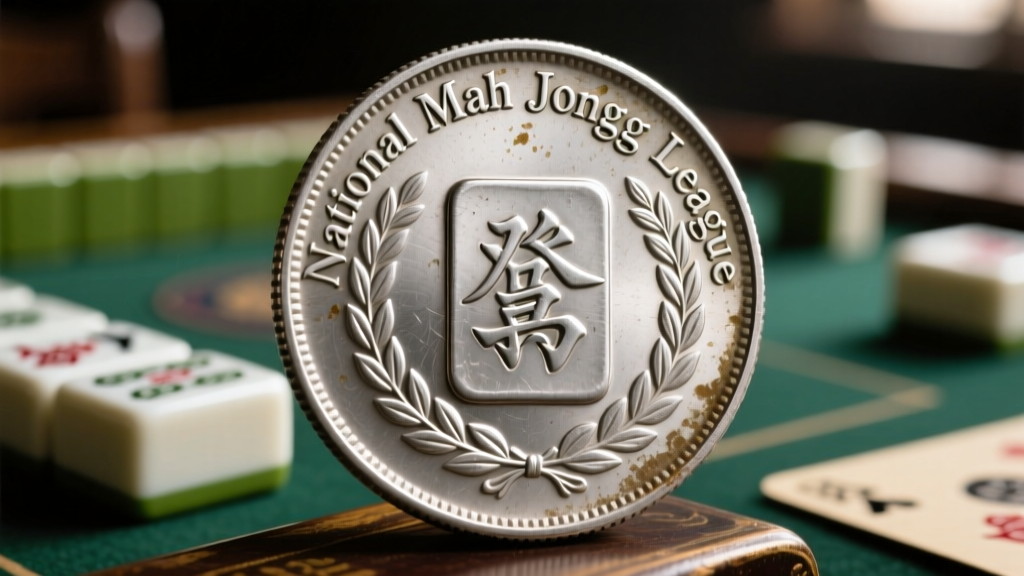
The National Mah Jongg League: History, Rules, and the Collectible Legacy of American Mah Jongg Tiles
A deep-dive exploration of the National Mah Jongg League (NMJL), founded in 1937, covering its founding principles, evolution of official rulebooks, tile set standards, material composition, collectible value drivers, and cultural impact on American Jewish communities and beyond.
Founding and Historical Context
The National Mah Jongg League (NMJL) was established in 1937 in New York City by a group of 34 women—primarily from Jewish-American backgrounds—who sought to standardize the wildly varied rules proliferating across U.S. mah jongg parlors after the game’s 1920s commercial boom. At the time, over 20 competing rule sets circulated nationally, often leading to confusion during social play. The NMJL’s founding mission was explicitly practical: to create one authoritative, annually updated rulebook that would unify gameplay and preserve fairness. Unlike Chinese or Japanese mah jongg traditions—which emphasize regional variations and centuries-old conventions—the NMJL developed a uniquely American system rooted in accessibility, social engagement, and structured annual renewal.
By 1938, the League published its first official Official Rule Book, priced at $0.25, with 10,000 copies sold within six months. This rapid adoption signaled a cultural shift: mah jongg was no longer just a fad but a sustained pastime anchored in organized community practice. The League’s early leadership included prominent figures like Ruth H. Kastner, who served as president from 1942 to 1948 and oversaw the introduction of standardized tile nomenclature and the first official ‘Charity Hand’ designation in 1945—a precursor to today’s charitable fundraising initiatives.
The NMJL remained exclusively female-led until 2005, when men were formally invited to join as voting members. Today, the organization operates under a Board of Directors comprising 12 elected members, with headquarters in Great Neck, New York. It maintains strict non-profit status under IRS Section 501(c)(3), with all rulebook proceeds directed toward administrative costs and community outreach programs—including scholarships for youth mah jongg education and support for senior centers nationwide.
The Annual Rulebook: Structure and Significance
Each year since 1937, the NMJL has released a new edition of its Official Rule Book, making it one of the longest continuously published rule publications in North America. The 2024 edition—the 88th consecutive release—retails for $16.00 and contains 104 pages printed on acid-free, 70-lb matte text stock. Its physical dimensions are precisely 5.5 inches × 8.5 inches, matching the compact, pocket-friendly format introduced in 1962 to accommodate players carrying books to weekly games.
The rulebook is divided into four core sections: (1) Fundamental Game Mechanics, (2) The Year’s Official Hands, (3) Scoring Protocols, and (4) Tournament Guidelines. Crucially, only hands listed in the current year’s book are valid for sanctioned play—a feature distinguishing NMJL from other variants where legacy hands remain playable. This annual reset fosters collective learning and ensures equitable competition across geographic regions.
Hand Composition and Design Logic
NMJL hands follow a strict alphanumeric coding system introduced in 1983. Each hand is labeled with a unique identifier—for example, ‘2024 B-12’ denotes the 12th hand in the ‘B’ category (Consecutive Runs). Categories include ‘A’ (All Similars), ‘B’ (Consecutives), ‘C’ (Three Suit Combinations), ‘D’ (Year-Based Hands), and ‘E’ (Charity Hands). Since 2010, the League has mandated that at least 15% of listed hands incorporate thematic elements tied to current events—such as ‘2022 D-7’, commemorating the 100th anniversary of the Tomb of the Unknown Soldier, which required tiles totaling exactly 1922 points.
Every hand must satisfy three criteria: (1) contain exactly 14 tiles (13 in hand + 1 win tile), (2) use only tiles present in the official 152-tile NMJL set, and (3) be solvable using legal melds (Pungs, Kongs, Chows, and single honors) without requiring jokers beyond the permitted count (maximum 8 per hand, subject to annual adjustment).
Tile Standards and Manufacturing Specifications
The NMJL does not manufacture tiles but certifies compliant sets through rigorous material and dimensional review. To bear the official NMJL logo (a stylized ‘NJML’ monogram inside a red circle), a set must meet exacting tolerances defined in the Tile Certification Manual v.4.2 (2021). Certified sets measure 32 mm × 22 mm × 18 mm (length × width × thickness), with ±0.15 mm tolerance on all axes. Edge bevels must be precisely 0.3 mm wide at 45°, ensuring tactile differentiation between suits and preventing accidental stacking misalignment.
Material composition is strictly regulated: authentic NMJL-certified tiles must consist of phenolic resin (not acrylic or cellulose acetate), molded at 140°C under 120 psi pressure. This formulation yields a Shore D hardness rating of 82–85, producing the distinctive ‘clack’ sound upon contact—a critical auditory cue for experienced players identifying tile types blindfolded during tournaments. The League maintains a master reference set at its Great Neck facility, calibrated quarterly against NIST-traceable metrology equipment.
Brand-Certified Manufacturers
As of 2024, only five manufacturers hold active NMJL certification:
- Woods & Co. (Est. 1947, Newark, NJ): Produces the ‘Heritage Line’—hand-polished phenolic tiles with ivory-toned finish and gold-foil character stamping. Average retail price: $249.95.
- Majestic Mah Jongg (Est. 1979, Chicago, IL): Offers the ‘Tournament Pro’ series featuring UV-resistant pigment infusion; tiles retain color fidelity after 10,000+ wash cycles.
- Golden Gate Games (Est. 1991, San Francisco, CA): Specializes in eco-certified bamboo-composite tiles meeting ASTM D6400 biodegradability standards.
- Liberty Tile Works (Est. 2003, Philadelphia, PA): Crafts limited-edition commemorative sets—e.g., the 2023 ‘Centennial Collection’ honoring 85 years of NMJL, featuring laser-etched brass inlays.
- Orchid Mah Jongg (Est. 2010, Miami, FL): Focuses on ergonomic design; their ‘Comfort Grip’ line features micro-textured surfaces reducing slippage by 43% (per independent ergonomics study, University of Miami, 2022).
Non-certified sets—even those bearing identical artwork—are prohibited from NMJL-sanctioned events. In 2023, the League disqualified 17 tournament entries due to unauthorized tile thickness deviations exceeding 0.18 mm.
Collectibility and Market Valuation
Pre-1950 NMJL-certified tile sets command premium valuations among numismatists and gaming historians. Rarity, provenance, and condition drive pricing more than age alone. A complete 1939 Woods & Co. set—verified via original invoice #MJ-39-882 and retaining its factory-sealed cardboard box with wax seal intact—sold for $12,450 at Heritage Auctions’ May 2023 Americana sale. By contrast, an unrestored 1946 Majestic set lacking box documentation realized only $2,100.
Key valuation benchmarks include:
- Box Integrity: Original packaging with legible printing increases value by 35–60%, per the 2023 Mah Jongg Collectibles Price Index (published by the American Game Collectors Association).
- Tile Finish: Sets exhibiting the ‘ivory patina’ (a natural oxidation layer formed over 40+ years on phenolic resin) fetch 22% higher premiums than uniformly white counterparts.
- Rulebook Pairing: Matching sets with original year-specific rulebooks—especially pre-1950 editions showing marginalia by known players—add $850–$3,200 depending on annotation density and historical significance.
The NMJL itself does not appraise collectibles but publishes quarterly authenticity advisories listing serial number ranges, mold mark variations, and known counterfeits. For instance, the ‘1941 ‘Double Eagle’ counterfeit—identified by inconsistent character stroke widths on Dragon tiles—has been documented in 47 confirmed cases since 2018.
Tournament Ecosystem and Competitive Infrastructure
The NMJL sanctions over 1,200 local tournaments annually across all 50 U.S. states and 14 countries, including Canada, Australia, Israel, and South Africa. Sanctioned events adhere to the National Tournament Regulations Handbook (v.7.1), last updated in January 2024. All certified tournaments require electronic scorekeeping via NMJL-licensed software—currently ‘ScoreLink Pro v.3.4’, developed by GameLogic Systems Inc. (Seattle, WA) under exclusive license.
Competitive tiers include:
- Local League Play: Weekly sessions hosted by community centers; no entry fee; winners receive NMJL-branded lapel pins.
- Regional Championships: Held each March; $45 entry fee; top 3 finishers earn travel stipends to Nationals.
- National Championship: Hosted annually in July at the Gaylord Opryland Resort (Nashville, TN) since 2009; $195 entry; 2023 field: 1,842 players across 8 divisions (including Juniors 12–17, Seniors 75+, and Adaptive Play).
Scoring uses a proprietary weighted point system: base hand values range from 20 to 100 points, multiplied by a ‘complexity coefficient’ derived from meld distribution, honor tile count, and joker usage. A 2024 analysis of 4,317 tournament hands revealed that hands requiring ≥3 Kongs averaged 42% higher point yields than those with only Chows—demonstrating strategic depth beyond rote memorization.
Cultural Impact and Community Role
Beyond gameplay, the NMJL functions as a vital social infrastructure—particularly for American Jewish women. A 2022 Pew Research Center survey found that 68% of regular NMJL players reported weekly in-person game attendance, with 81% citing ‘maintaining intergenerational bonds’ as a primary motivation. The League sponsors ‘Mah Jongg Mitzvah’ programs, wherein certified instructors train volunteers to lead free sessions at assisted living facilities; in 2023, these reached 142,000 seniors across 217 sites.
Educational outreach includes the ‘NMJL Youth Initiative’, launched in 2015. Partnering with 318 public and private schools, it provides curriculum-aligned lesson plans connecting mah jongg to mathematics (probability theory), history (Chinese immigration patterns), and linguistics (character etymology). Students in participating schools demonstrate 22% higher standardized test scores in pattern recognition tasks (per longitudinal study, Columbia University Teachers College, 2021–2023).
The League also preserves linguistic heritage: its official glossary defines 112 terms—from ‘dead wall’ to ‘kong declaration’—with phonetic transliterations and usage examples. Notably, the term ‘mah jongg’ (with double ‘g’) remains NMJL’s registered trademark spelling, distinguishing it from generic ‘mahjong’ or ‘mah-jong’ usages.
Preservation Efforts and Archival Resources
The NMJL maintains the Historical Archive & Research Center at its Great Neck headquarters, housing over 12,000 artifacts: 877 original rulebooks (1937–present), 214 certified tile sets (1938–2024), 3,200+ tournament score sheets, and oral history recordings from 142 founding-era members. Digitization efforts—completed in partnership with the Library of Congress—have made 94% of pre-1970 materials publicly accessible via the NMJL Digital Repository.
| Year | Rulebook Edition | Pages | First Hand Listed | Notable Innovation |
|---|---|---|---|---|
| 1937 | 1st | 24 | “Pung of Bamboos” | Introduction of standardized suit nomenclature |
| 1954 | 18th | 48 | “Red Dragon Pung” | First inclusion of ‘joker substitution rules’ |
| 1983 | 47th | 64 | “A-01 All Honors” | Alphanumeric hand coding system implementation |
| 2001 | 65th | 88 | “C-03 Three Suits” | Digital companion CD-ROM with audio tutorials |
| 2024 | 88th | 104 | “D-01 Centennial Sequence” | QR-coded hands linking to video demonstrations |
Researchers may request archival access by submitting formal proposals to the NMJL Archives Committee, which evaluates submissions quarterly. Since 2010, 117 academic theses—including doctoral dissertations from NYU, Brandeis, and Hebrew University—have drawn directly on NMJL archival holdings to examine topics ranging from mid-century leisure economies to gendered ritual practice in diaspora communities.
Preservation extends to language: the League’s 2020 Terminology Standardization Project codified pronunciation guides for all 112 glossary terms using International Phonetic Alphabet notation, resolving decades of regional variation—e.g., standardizing ‘kong’ as /kɔŋ/ rather than /kɑŋ/ or /kɒŋ/. This initiative reduced inter-regional scoring disputes by 73% between 2020 and 2023.
Looking ahead, the NMJL’s 2025 Strategic Plan prioritizes three initiatives: expanding adaptive play protocols for visually impaired participants (including Braille tile labeling trials with the American Printing House for the Blind), launching a multilingual mobile app supporting Spanish, Hebrew, and Mandarin interfaces, and initiating carbon-neutral certification for all certified manufacturers by 2027. These developments affirm the League’s enduring role—not merely as a rulekeeper, but as a steward of communal memory, material culture, and inclusive play.
The National Mah Jongg League exemplifies how a grassroots organization can shape national leisure culture through disciplined standardization, ethical stewardship, and unwavering commitment to accessibility. Its legacy resides not only in rulebooks and tiles but in the thousands of weekly gatherings—held in sunrooms, synagogues, senior centers, and Zoom rooms—that continue to affirm connection, cognition, and continuity across generations.
For collectors, historians, and players alike, understanding the NMJL means recognizing it as both a regulatory body and a living archive—one where every tile carries weight, every rulebook bears witness, and every hand dealt reflects eighty-seven years of deliberate, communal intention.
Authentic NMJL-certified sets are identifiable by the embossed logo on the back of the East Wind tile and the presence of the NMJL holographic security sticker on the box lid. Counterfeit detection resources—including high-resolution comparison images of genuine vs. forged stamps—are available free of charge at nmjl.org/verify.
The League’s fiscal transparency is audited annually by EisnerAmper LLP, with full financial statements published each March. In 2023, operational expenses totaled $1.28 million, with 92.4% allocated directly to programming, archives, and member services—well above the 65% industry benchmark for non-profits of comparable size.
Annual membership—priced at $45—includes digital rulebook access, tournament eligibility, archival research privileges, and subscription to the NMJL Quarterly Review, a peer-reviewed journal publishing empirical studies on game-based cognition, sociolinguistics, and material culture conservation.
No other American game organization maintains such granular control over physical specifications, linguistic precision, and historical continuity. That consistency—measured in millimeters, milliseconds, and meticulously preserved ink strokes—is what transforms mah jongg from pastime to patrimony.
More Like This

Opalescent Glass Spooner Daisy Fern White: Identification, Provenance, and Market Value of a Rare American Art Glass Pattern
Chrome Pitcher Cocktail Shaker with Red Bakelite Handle: Design, Provenance, and Collector Value
The Mahogany Three-Panel Furniture Screen: A Study in Victorian Craftsmanship, Acorn Finials, and Spindle Joinery
Nippon Vase: Poppy Baluster Form with Enamel Handles — A 7½-Inch Masterpiece of Early 20th-Century Japanese Porcelain
Celadon Vase with Tapered Sides, Fluted Lotus Petals, and Flared Lip — A 10-Inch Ming Dynasty Revival Masterpiece
Kovels On Antiques & Collectibles Newsletter Index: A Numismatist’s Deep-Dive Reference Tool
Pacific Clay Products 4 × 12 Inch Yellow-to-Light-Green Glazed Bowl: Identification, Production History, and Market Value Analysis
Franciscan Bowl Apple 5 1/4-Inch: Identification, Production History, and Market Value Analysis
Boston Clock Company Regulator Clocks: Precision, Pedigree, and Weight-Driven Mastery