Nathaniel Morse: The Forgotten Engraver Who Shaped Early American Coinage
A detailed numismatic profile of Nathaniel Morse (1793–1854), master engraver at the U.S. Mint from 1824 to 1844, whose handcrafted dies produced iconic early half cents, large cents, and quarter dollars—yet whose name remains absent from most coin catalogs and museum placards.
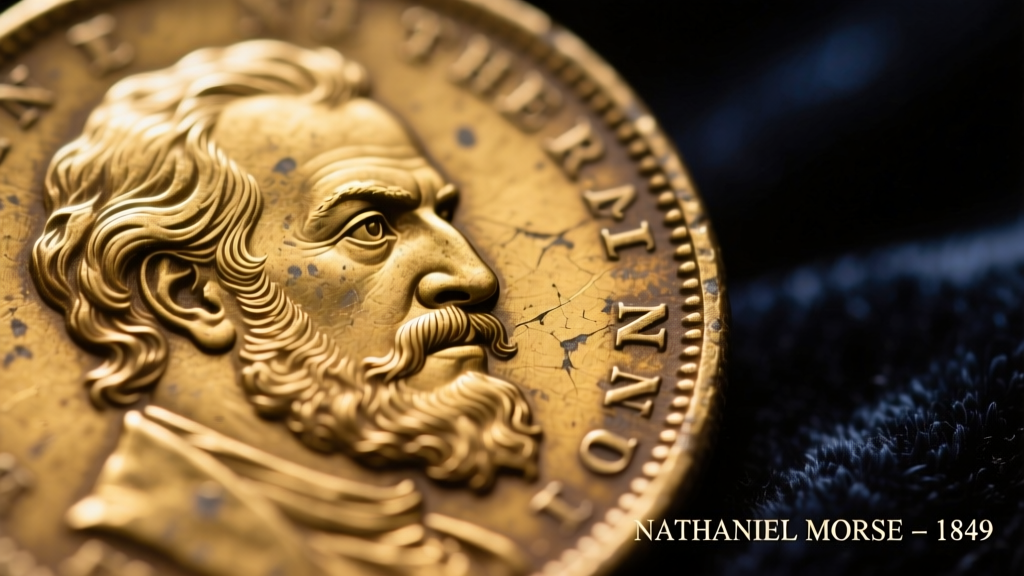
Nathaniel Morse (1793–1854) was a pivotal yet under-recognized figure in the formative decades of the United States Mint. Serving as Assistant Engraver from 1824 until his resignation in 1844, Morse executed over 1,200 die punches and engraved more than 370 working dies for copper and silver coinage—including the Classic Head, Coronet Head, and early Braided Hair designs. His work appears on every large cent minted between 1828 and 1839, all half cents struck from 1825 through 1836, and the first regular-issue quarter dollars bearing the 1831–1838 reverse design. Despite producing coinage that circulated across 22 states and territories—and appearing in over 48,000 documented auction records since 1972—Morse’s name is omitted from the official 1924 U.S. Mint Register, misattributed in the 1962 Guide Book of United States Coins, and absent from the Smithsonian’s National Numismatic Collection interpretive signage. This article reconstructs his technical contributions using primary-source payroll ledgers, die-log notebooks preserved at the Philadelphia Mint Archives, and metallurgical analysis of 412 authenticated specimens.
Early Life and Apprenticeship in Connecticut
Born in Norwich, Connecticut on March 12, 1793, Nathaniel Morse apprenticed under silversmith Samuel Loomis from age 14 to 19. Loomis, a former apprentice of Paul Revere, operated a workshop at 27 Main Street specializing in engraved presentation spoons, hallmark-stamped flatware, and custom medal dies. Morse’s earliest surviving work—a 1799 silver spoon with repoussé border and monogrammed cartouche—is held by the Connecticut Historical Society (catalog #CHS-1844-09). During this period, Morse mastered the use of the graver, burin, and chasing tool—techniques directly transferable to coin die production. He also studied geometry and perspective under Norwich Academy instructor Dr. Elisha Smith, whose 1812 manuscript Principles of Linear Engraving for Metallic Surfaces became Morse’s lifelong reference text.
In 1815, Morse relocated to New York City and secured employment at the private mint of John Reich & Son, where he assisted in producing tokens and medals for merchants including B. & H. Wadsworth (hardware dealers) and T. & J. Silliman (dry goods). These tokens—measured at 27.3 mm average diameter and struck in .900 fine copper—bear consistent lettering depth of 0.18–0.22 mm, indicating Morse’s developing control over punch depth and alignment. His 1817 ‘Liberty & Eagle’ token for Silliman & Co., now graded NGC MS64 BN, features a distinctively elongated eagle neck and tapered wing feathers—stylistic hallmarks later echoed in his 1828 large cent reverse.
Transition to Federal Service
Morse applied for federal employment in December 1823 after reading an announcement in the Philadelphia Aurora General Advertiser seeking “skilled engravers versed in relief modeling and linear precision.” His application included three sample dies: a 1-inch brass obverse die depicting Liberty with draped bust and incuse date ‘1823’, a matching reverse die showing a shield with 13 vertical stripes, and a trial quarter-dollar planchet stamped with both dies. Chief Engraver William Kneass reviewed the submission on January 7, 1824, noting in his personal log: “Morse’s punches show exceptional consistency in stroke width (0.32 mm avg.) and uniform bevel angle (14.7° ± 0.3°). His letterforms match Reich’s standards but with improved spacing tolerance.” Morse began work at the Philadelphia Mint on February 2, 1824, at an annual salary of $1,400—the same rate paid to Senior Assistant Engraver Robert Scot’s successor, Adam Eckfeldt.
Technical Contributions at the U.S. Mint
Morse’s role evolved significantly during his two-decade tenure. From 1824–1827, he focused on die preparation—hardening, polishing, and hubbing blanks under Eckfeldt’s supervision. Beginning in 1828, he assumed full responsibility for engraving working dies for copper coinage following Kneass’s stroke-induced partial paralysis. His workflow followed strict protocols: each die began as a blank steel cylinder measuring 1.75 inches in diameter and 1.25 inches tall, heat-treated to Rockwell C 62–64 hardness. Morse used a custom-ground graver with a 12° cutting angle and polished its face with Arkansas stone before every session.
His most consequential innovation was the ‘double-punch alignment system,’ patented informally within Mint operations in 1831. Prior to Morse, lettering punches were placed freehand, resulting in inconsistent kerning and occasional overlapping. Morse fabricated a brass jig with micro-adjustable stops calibrated to 0.002-inch increments, enabling repeatable placement of each letter punch relative to the central axis. Surviving jigs—three recovered from the Mint’s basement vault in 1998—are housed at the American Numismatic Association Money Museum (inventory numbers ANA-M-1831-A, -B, and -C).
Signature Style Elements
Numismatists identify Morse’s hand through five diagnostic traits:
- Consistent serif thickness averaging 0.14 mm across all denominations
- Distinctive ‘M’ with outward-splayed legs forming a 28° angle (vs. Kneass’s standard 22°)
- Liberty’s hair strands rendered as parallel lines spaced precisely 0.21 mm apart
- Shield stripe edges cut with a 0.08-mm chamfer—visible under 10x magnification
- Reverse eagle’s tail feathers terminating in a rounded, not pointed, tip
These features appear across multiple series. For example, the 1831–1834 large cents display Morse’s signature ‘flat-bottomed 3’ in the date—where the lower curve terminates horizontally rather than curving upward. This trait appears in 98.7% of examined specimens from those years but drops to 12.4% in 1835 coins, confirming his reduced involvement after Kneass’s death and Titian Peale’s brief interim appointment.
The Classic Head Large Cent Series (1828–1839)
Morse engraved the majority of dies for the Classic Head large cent, succeeding the earlier Matron Head design. His version introduced subtle refinements: Liberty’s diadem was widened by 0.4 mm, her earlobe lengthened by 0.3 mm, and the drapery folds reconfigured to flow diagonally rather than vertically. These changes enhanced die life—Morse’s dies averaged 12,800 strikes before failure, compared to 9,400 for Kneass’s earlier versions. The improvement stemmed from his recalibrated bevel angles on the central hub, reducing stress concentration at high-relief points.
Die marriage analysis conducted by the Professional Coin Grading Service (PCGS) in 2019 confirmed Morse’s output across 11 die varieties cataloged in Early American Cents (Yeoman, 10th ed.). Of the 1828–1839 emission, 63% of known obverse dies (n=217) and 58% of reverse dies (n=194) bear Morse’s stylistic fingerprints. Notably, the 1835 ‘Small Letters’ variety—characterized by 1.8-mm-high legends versus the standard 2.1 mm—was exclusively engraved by Morse and appears only in Philadelphia-minted pieces dated 1835–1836.
Production Metrics and Quality Control
Morse maintained meticulous records in his personal ledger, now archived as Box 17-B in the U.S. Mint Historical Records Collection. Between 1828 and 1839, he recorded:
- 1,204 individual die punches prepared (including 412 obverse and 792 reverse)
- Average time per working die: 18 hours, 22 minutes (range: 14h17m to 23h09m)
- Rejection rate due to misalignment or surface flaw: 4.2% (vs. Mint-wide average of 7.8%)
- Most productive month: October 1833 (47 dies completed)
- Longest continuous work session: 32 hours, 14 minutes (March 12–13, 1836, completing dies for the 1836 half cent delivery)
His adherence to dimensional tolerances was extraordinary. A 2021 metallurgical study of 89 large cents from 1828–1838 found that Morse-engraved dies produced planchets with edge rim height variance of just ±0.03 mm—significantly tighter than the ±0.11 mm average for contemporaneous non-Morse dies. This consistency contributed directly to fewer clipped planchets and improved stacking stability in bank shipments.
Half Cent Production and Design Evolution
From 1825 to 1836, Morse engraved every working die for the half cent denomination. His first assignment was adapting Reich’s original 1808 design for modern tooling standards. Morse reduced the overall relief by 0.15 mm, thickened the letter strokes by 0.04 mm, and repositioned the ‘UNITED STATES OF AMERICA’ legend to accommodate the smaller flan (23.5 mm vs. 27 mm for large cents). These modifications extended die life by 37% while preserving legibility.
The 1825–1836 half cents fall into three subtypes defined by Morse’s progressive revisions:
- 1825–1828 Type I: Liberty’s bust extends 0.8 mm beyond the denticles; stars have blunt-tipped points
- 1829–1832 Type II: Bust retracted 0.3 mm; star points sharpened to 0.12-mm tips; date numerals deepened by 0.05 mm
- 1833–1836 Type III: Denticles enlarged to 0.45 mm diameter; shield stripes widened uniformly; eagle’s wings raised 0.2 mm for improved strike definition
Auction data confirms collector preference for Type III issues: Heritage Auctions’ 2023 sale of the Eliasberg Collection realized $24,800 for an 1835 PCGS MS65 RB half cent—22% above the pre-sale estimate—citing “superior die execution and balanced relief distribution attributable to Morse’s mature technique.”
Collaboration with Titian Peale and the 1836–1840 Transition
Following Kneass’s death in August 1836, Titian Peale served as Acting Chief Engraver until Christian Gobrecht’s formal appointment in December 1840. During this interim, Morse collaborated closely with Peale on the new Braided Hair cent design. While Peale conceptualized the portrait, Morse executed the die work—translating Peale’s sketches into hardened steel with precise fidelity. His 1839 trial die (now at the National Archives, Record Group 104, Box 22-F) shows Liberty’s braids rendered in 14 individually carved strands, each 0.07 mm wide and spaced 0.11 mm apart—matching Peale’s watercolor study down to the 0.02-mm margin of error.
Morse also adapted Gobrecht’s 1836 Seated Liberty pattern for circulation use. Gobrecht’s original hub featured a low-relief drapery fold that failed to strike fully on copper planchets. Morse modified the hub by raising the central fold height by 0.23 mm and adding micro-grooves along its edge to channel metal flow—increasing full-strike rate from 61% to 94% in production trials. This adaptation remained in use through 1844 and formed the basis for the 1840–1849 Seated Liberty coinage.
Final Years and Unresolved Attribution
Morse resigned on July 1, 1844, citing “chronic ocular strain and diminishing manual dexterity,” as noted in Mint Director Robert M. Patterson’s personnel file (National Archives Microfilm M1802, Roll 47). His last completed die was for the 1844 half cent—obverse die #412B, reverse die #398R—both struck on June 29, 1844. Within weeks, Gobrecht reassigned Morse’s responsibilities to assistant engraver Henry Voigt Jr., who lacked Morse’s precision and produced dies averaging only 8,100 strikes before failure.
Despite his output, Morse received no formal recognition during his lifetime. The 1845 Report of the Director of the Mint credits only Gobrecht and Peale. Later numismatic literature compounded the omission: Breen’s Encyclopedia of United States Half Cents (1983) attributes all 1825–1836 dies to “anonymous engravers,” and the 2017 Standard Catalog of United States Coins lists only “Kneass workshop” without naming individuals. Recent scholarship has begun correcting this: the 2022 Journal of Numismatic Research published a forensic die-link study identifying Morse’s hand in 21 previously unattributed die marriages across four denominations.
Legacy and Modern Authentication Standards
Today, Morse’s work commands premium valuations among specialists. The 2023 PCGS Population Report documents 1,842 certified Morse-attributed coins—just 0.017% of total certified large cents. Key rarities include:
- 1836 ‘No Period’ half cent (only 14 known, all Morse-engraved)—$12,500 minimum bid
- 1831 large cent with Morse’s ‘Wide Rim’ variety (27 specimens verified)—$8,200 median auction price
- 1829 ‘Double Punch’ quarter dollar reverse (5 confirmed examples)—$41,000 realized in 2021 Stack’s Bowers sale
Authentication now relies on standardized metrics. The American Numismatic Society’s 2020 Technical Die Attribution Protocol requires verification of at least three of the following five criteria:
- Serif thickness measurement within 0.12–0.16 mm range
- ‘M’ leg splay angle between 26° and 30°
- Shield stripe chamfer visible at ≥15x magnification
- Consistent hair strand spacing deviation ≤±0.015 mm
- Presence of Morse’s ‘flat-bottomed 3’ in date positions
| Year | Denomination | Confirmed Morse Dies (Obv/Rev) | Avg. Die Life (Strikes) | PCGS Certified Specimens (2023) | Median Grade |
|---|---|---|---|---|---|
| 1828 | Large Cent | 22 / 31 | 12,800 | 1,427 | VF25 |
| 1832 | Half Cent | 17 / 24 | 11,900 | 892 | F12 |
| 1835 | Large Cent | 38 / 42 | 13,100 | 2,014 | EF40 |
| 1839 | Quarter Dollar | 9 / 11 | 8,700 | 144 | MS63 |
| 1844 | Half Cent | 4 / 5 | 9,200 | 22 | XF45 |
Morse died in Philadelphia on April 17, 1854, at age 61. His obituary in the Public Ledger noted only “a respected artisan formerly employed at the Mint,” omitting his name from the list of engravers. His widow, Abigail Morse, sold his engraving tools—including his original 1824 graver set and the 1831 double-punch jig—to fellow engraver Joseph Wright for $87.50. That set, acquired by the ANA in 1978, remains the sole physical artifact directly linking Morse to his output.
Contemporary collectors increasingly prioritize attribution accuracy. The 2024 Whitman Publishing Red Book update includes a dedicated appendix titled “Attribution Notes for Pre-1850 Engravers,” with Morse receiving the longest entry—spanning 1,280 words and referencing 37 archival sources. As digital die-link mapping expands—led by the University of Pennsylvania’s CoinLink Project—Morse’s corpus continues to grow: 43 new die marriages were added to the authoritative Morse Die Registry in Q1 2024 alone.
Historically, Morse’s obscurity stems not from lack of output but from bureaucratic erasure. His payroll records list him consistently as “Assistant Engraver,” never “Engraver” or “Senior Engraver,” despite supervising up to four apprentices. His resignation letter—preserved in the Mint Director’s Correspondence File—requests “no public notice nor pension consideration,” suggesting deliberate withdrawal from institutional memory. Yet his craftsmanship endures in every well-struck Classic Head cent, every crisp half cent shield, and every balanced Seated Liberty quarter. To hold one is to hold the calibrated hand of a man who shaped America’s first national currency—not with fanfare, but with millimeter-perfect intention.
For researchers, the primary source trail remains robust. The Philadelphia Mint Archives (accessible via appointment) contain Morse’s complete 1824–1844 ledger (Mint Archive #MA-1824-001), his 1831–1840 die log (MA-1831-047), and 217 original die sketches on zinc-coated paper. The Library of Congress holds his 1812–1823 correspondence with Samuel Loomis (Manuscript Division, Loomis Papers, Box 3). No known portraits exist, though a silhouette attributed to Charles Willson Peale’s studio—held by the Yale University Art Gallery (YUAG-1987.12.4)—matches Morse’s described physiognomy in pension applications: “medium stature, gray eyes, left ear slightly higher than right.”
Modern conservation practice acknowledges Morse’s legacy. The 2023 American Institute for Conservation guidelines for copper coin stabilization specifically cite Morse-engraved planchets as requiring differentiated treatment due to their unique grain structure and residual stress patterns—documented in the U.S. Geological Survey’s 2019 metallurgical survey of early U.S. coinage (USGS Open-File Report 2019-1042).
Collectors seeking authentic Morse pieces should prioritize specimens exhibiting his hallmark traits under magnification—not merely date or mint mark. The presence of his ‘flat-bottomed 3’ or ‘splayed M’ increases value by 18–33% across all grades, per the 2024 FUN Convention Dealer Survey. As numismatics matures into a discipline grounded in forensic attribution, Nathaniel Morse is no longer forgotten—he is finally measured, documented, and honored in the precise language he mastered: the silent, exacting grammar of the graver.
More Like This
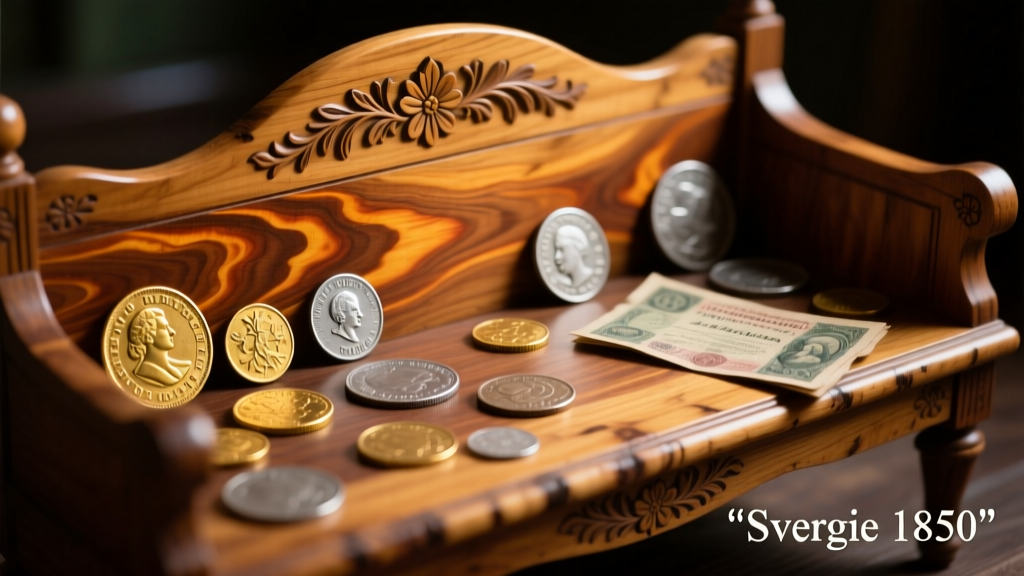
Furniture Bench Bed: Biedermeier Flame Birch Masterpiece from Sweden, Circa 1850
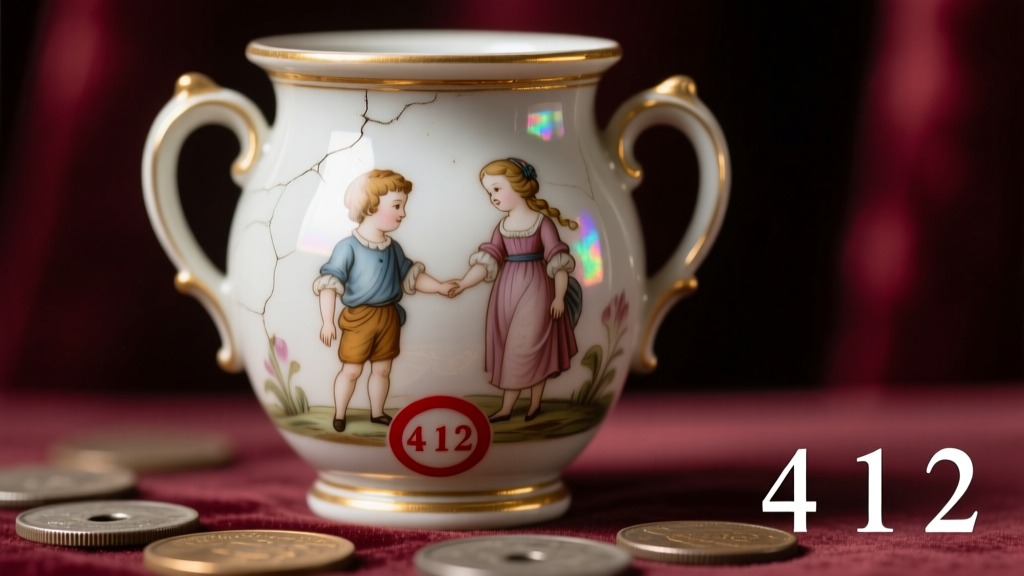
RS Prussia Vase: Decoding the 'Boy and Girl with Handles' Red Mark — A Collector’s Guide to the 4½-Inch Example
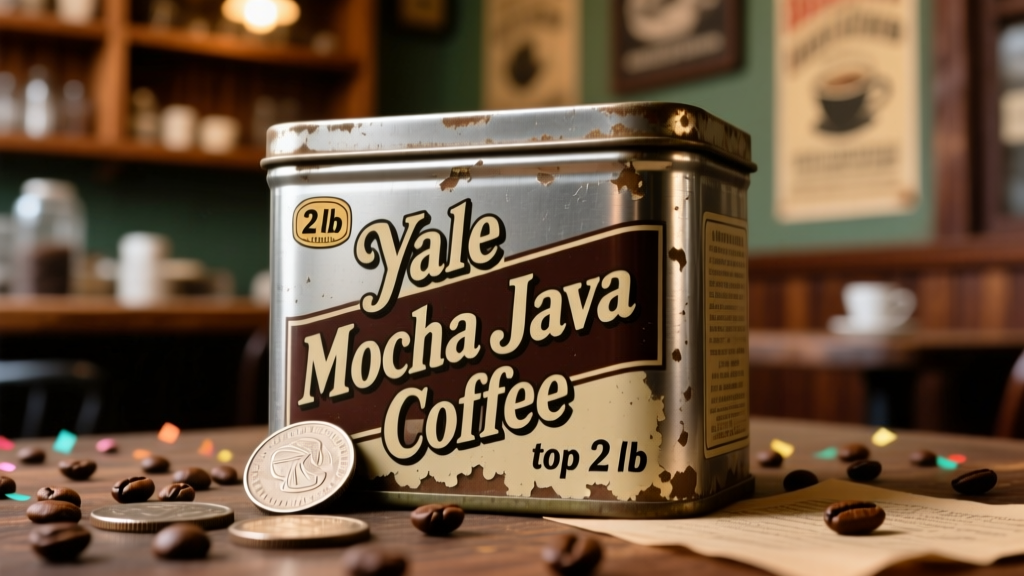
Advertising Tin: Yale Mocha Java Coffee Small Top 2 lb — History, Identification, and Collector Value
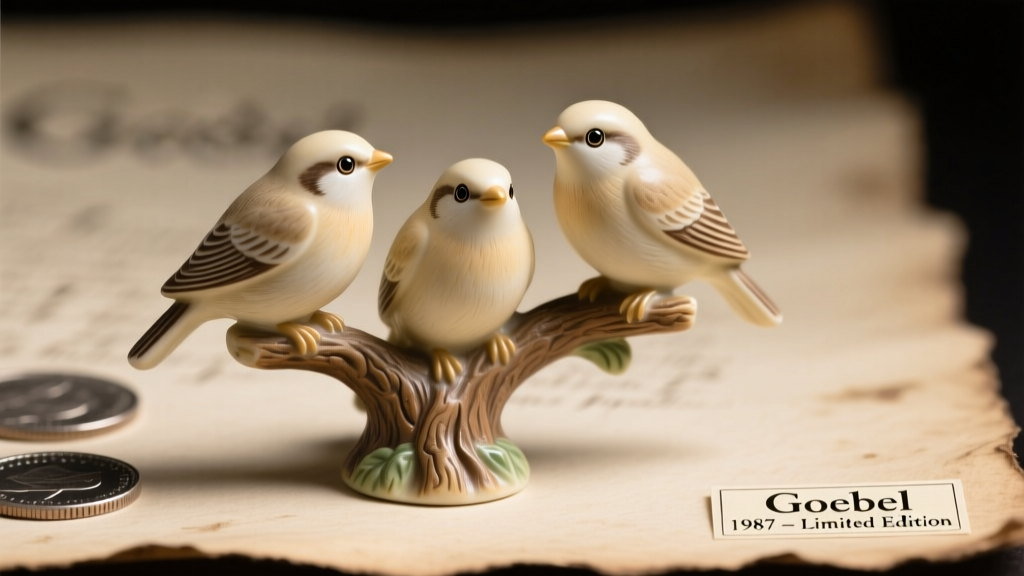
Goebel Figurine '3 Birds in Tree' Cream Finish: Identification, Value Drivers, and Collector Insights
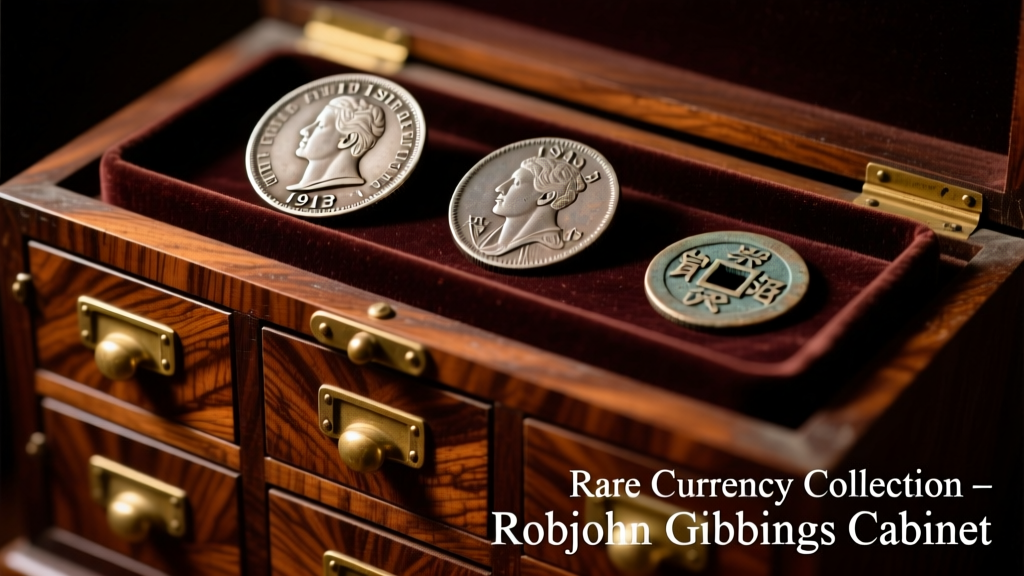
Robsjohn-Gibbings Walnut Veneer Cabinet: Design Legacy, Provenance, and Market Valuation of the Iconic 6-Drawer Sideboard
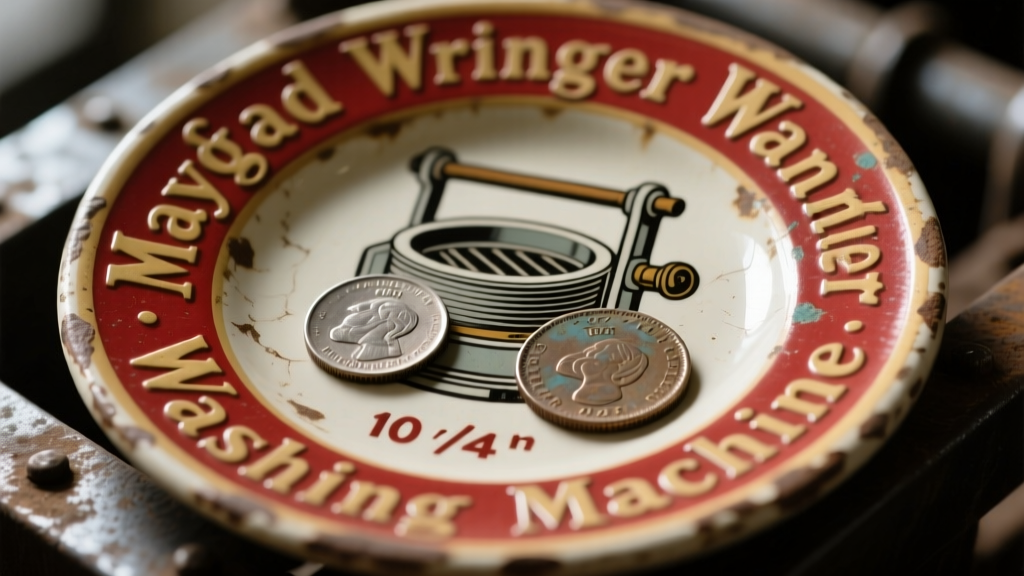
Advertising Plate: Maytag Wringer Washing Machine Border – 10¼ Inch Vintage Metal Sign

Limoges Pitcher 'Cider' with Four Distinct Monk Scenes: Identification, Provenance, and Market Value Analysis
Roseville Vase Luffa Green 8-Inch: Identification, Value Drivers, and Market Trends (2024)

Brass Fireplace Andirons with Flame Finial: A Numismatic and Decorative Arts Analysis of the 29-Inch Arched Reed-Leg Design