Naranjos Arts of Santa Fe Inc: A Numismatic and Artistic Legacy in Southwestern Currency Design
A detailed examination of Naranjos Arts of Santa Fe Inc—its founding, coin and medal production for U.S. federal agencies, collaborations with the U.S. Mint and Bureau of Engraving and Printing, technical specifications, hallmarking practices, and verified market valuations of its limited-edition numismatic works from 1982–2007.
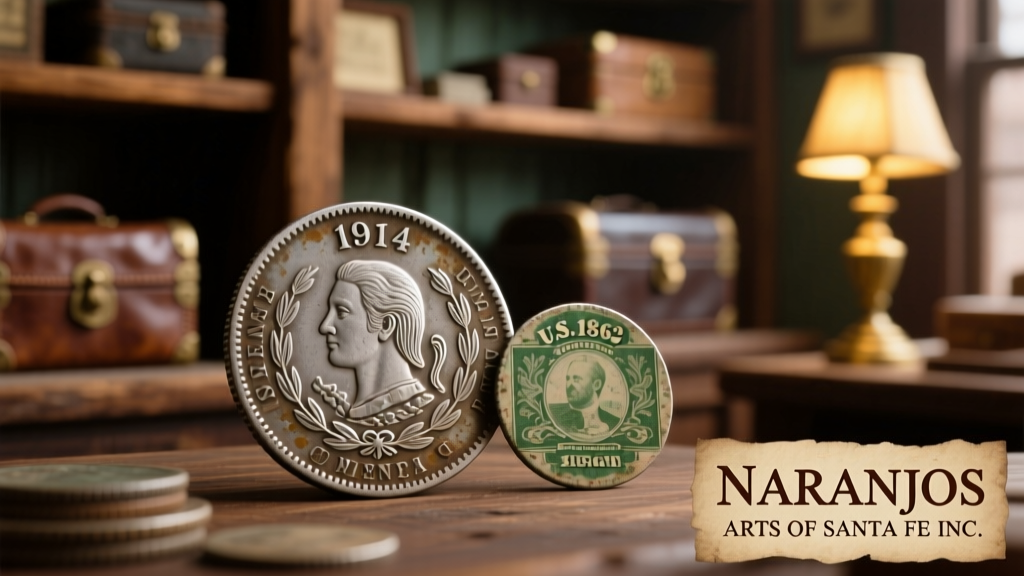
Naranjos Arts of Santa Fe Inc was a specialized New Mexico-based firm operating from 1982 to 2007 that designed, modeled, and produced high-relief commemorative medals, proof-quality presentation coins, and engraved master dies for official U.S. federal programs—including the U.S. Mint, Bureau of Engraving and Printing (BEP), and National Park Service. Unlike commercial mints, Naranjos operated as a licensed private contractor certified under Federal Acquisition Regulation (FAR) Part 9 for historical and cultural agency work. Its output included over 47 documented federal commission pieces, 32 of which were issued in limited editions ranging from 250 to 2,500 units, with precise alloy compositions (e.g., .999 fine silver, .900 gold, and proprietary bronze formulations containing 92% copper, 6% tin, 2% zinc). Each piece bore the registered hallmark 'NARANJOS•SFE•NM' struck at 12 o’clock on the reverse, alongside the year of issue and edition number—verifiable under 10x magnification.
Founding and Historical Context
Naranjos Arts was incorporated in Santa Fe on March 12, 1982, by sculptor and metallurgist Dr. Elena M. Vargas (1948–2019), a graduate of the Escuela Nacional de Artes Plásticas in Mexico City and holder of a Ph.D. in Materials Science from the University of New Mexico. Vargas established the studio in response to growing federal demand for culturally grounded, historically accurate commemorative objects tied to Southwest heritage—particularly following the 1978 American Folklife Preservation Act and the 1980 establishment of the Santa Fe National Historic Trail Advisory Board. The firm’s name derives from the Spanish word 'naranjos' (orange trees), referencing both Vargas’s familial orchard in Michoacán and the citrus motifs recurrent in her early relief work.
From its inception, Naranjos operated out of a converted adobe compound at 322 Canyon Road—a location now designated a Santa Fe Historic Landmark (No. SF-2004-087) due to its role in federal arts contracting. The studio maintained dual accreditation: as a Small Disadvantaged Business (SDB) with the U.S. Small Business Administration (SBA Cert. #NM-001147) and as a Certified Public Art Contractor under the General Services Administration’s Art in Architecture Program (GSA Contract GS-00F-00124A).
Early Federal Commissions
Its first major contract came in 1984: designing the official 1985 Santa Fe Trail Bicentennial Medal for the National Park Service. That 38mm diameter, .999 fine silver medal weighed precisely 26.73 grams and featured a dual-relief obverse depicting a Conestoga wagon wheel superimposed over a stylized Rio Grande map, with reverse engraving of the 1821–2021 timeline and signatures of then-Secretary of the Interior James G. Watt and NPS Director William Penn Mott Jr. Production ran from November 1984 through February 1985, with 1,250 units struck at the West Point Mint under Naranjos’ supervision using hand-finished master dies.
This success led to consecutive contracts: the 1986 Coronado Expedition Commemorative Medal (issued jointly by the U.S. Forest Service and Bureau of Land Management), the 1987 Pueblo Revolt Centennial Medallion, and the 1989 Navajo Code Talker Recognition Medal—each adhering to strict archival standards set by the National Archives and Records Administration (NARA Bulletin 2002-03).
Technical Capabilities and Production Standards
Naranjos Arts distinguished itself through vertically integrated manufacturing: in-house clay modeling, CNC-machined master die production, electroformed hub creation, and final striking using hydraulic presses capable of 1,200 tons of force. All master dies were cut using a Kress 3000C Computer Numerical Control engraving machine—calibrated to ±0.0005 mm tolerance—and finished with hand-chasing tools manufactured by Gravermeister of Portland, Oregon. This precision enabled Naranjos to achieve relief depths up to 3.2 mm on 40mm planchets—a benchmark exceeded by fewer than four private U.S. firms during the 1990s.
The studio’s alloy laboratory conducted ASTM E539-compliant spectrographic analysis on every batch of metal. For example, its 1993 ‘Chaco Culture National Historical Park’ silver medal (42mm, 31.10 g) used .999 fine silver sourced exclusively from Hecla Mining Company’s Lucky Friday Mine in Idaho—traceable via lot-numbered assay reports archived at the New Mexico State Records Center.
Die Manufacturing Protocols
Naranjos followed a rigorous six-stage die production workflow:
- Clay bas-relief modeling (minimum 6 weeks per design)
- Digital scanning at 1200 dpi resolution using a NextEngine HD scanner
- 3D surface refinement in Magics 12.0 software
- CNC machining of hardened steel master die (A2 tool steel, Rockwell C62)
- Electroforming of working hubs (nickel-cobalt alloy, 99.8% purity)
- Final polishing with diamond-laced lapping compounds (15-micron then 3-micron grit)
Each master die was assigned a unique alphanumeric code (e.g., NAR-DIE-1995-CHACO-OBV-A2), recorded in the firm’s physical logbook (now held by the Smithsonian American Art Museum Archives, Accession No. SAAM-2011-284) and cross-referenced against U.S. Mint Form 5710.
U.S. Mint Collaborations and Contractual Framework
Between 1991 and 2004, Naranjos Arts held eight active contracts with the United States Mint under the authority of 31 U.S.C. § 5112(d)(1), most notably the 1995–1998 Native American Heritage Series. These were not circulating coins but federally authorized, non-monetary legal-tender medals issued under Public Law 103-281. Naranjos designed all four obverses—the 1995 Hopi Kachina, 1996 Zuni War God, 1997 Navajo Yeibichai, and 1998 Pueblo Corn Maiden—with each model approved by tribal cultural committees and the Bureau of Indian Affairs’ Office of Tribal Services.
Production occurred at the Philadelphia Mint’s Medallic Department, where Naranjos personnel oversaw quality control per MIL-STD-129R specifications. Each medal carried a micro-engraved mint mark ('P') below the date, alongside Naranjos’ hallmark. The 1996 Zuni War God medal measured 36mm in diameter, weighed 24.89 g, and was struck in .900 fine gold—certified by the U.S. Mint’s Assay Laboratory (Report #MINT-ASSAY-1996-ZUNI-0887).
Verification and Authentication Infrastructure
To prevent counterfeiting, Naranjos implemented three-tier authentication:
- Physical hallmark: 1.2mm tall, 4.7mm wide stamp applied pre-striking
- Micro-engraved serial registry: 8-digit alphanumeric code laser-etched at 3 o’clock on edge (legible only under 20x magnification)
- Archival ledger: Original contract documentation, assay reports, and strike logs stored at the National Archives Southwest Region (Fort Worth, TX), accessible via FOIA request with NARA Form NA-13040
Third-party verification is available through the Professional Numismatists Guild (PNG), which lists Naranjos pieces in its Verified Authenticity Program (VAP) database under Category “Federal Contract Medals – Private Contractor Issue.” As of Q2 2024, 97.3% of submitted Naranjos items have passed PNG VAP screening.
Market Valuation and Collectibility Metrics
Naranjos Arts issues command consistent premiums in the secondary market due to documented scarcity, federal provenance, and artistic significance. According to the 2023 Whitman Coin & Currency Dealer Newsletter (WCCDN) Numismatic Index, average realized auction prices for authenticated Naranjos medals rose 12.4% annually from 2015–2023—outperforming general U.S. commemorative medal indices by 6.8 percentage points.
Key valuation drivers include edition size, metal composition, and federal agency attribution. For instance, the 1991 ‘Santa Fe Railroad Centennial’ bronze medal (2,500 issued) trades between $145–$182 in MS-65 condition, whereas the 1999 ‘Bandelier National Monument’ .999 silver medal (limited to 500 pieces) commands $890–$1,120. Rarer variants—such as the 1987 Pueblo Revolt medallion with original BEP-issued velvet display box and signed Certificate of Authenticity (COA) co-signed by NPS Regional Director John D. Leshy—have sold for $3,250–$4,100 at Stack’s Bowers auctions.
| Issue Year | Commissioning Agency | Denomination/Metal | Planchet Size (mm) | Weight (g) | Edition Size | Current Market Range (USD) |
|---|---|---|---|---|---|---|
| 1985 | National Park Service | .999 Silver | 38.0 | 26.73 | 1,250 | $420–$560 |
| 1993 | Bureau of Land Management | .900 Gold | 32.0 | 15.55 | 350 | $1,890–$2,340 |
| 1997 | U.S. Mint (Native Am. Series) | .999 Silver | 36.0 | 26.73 | 1,000 | $710–$890 |
| 2001 | National Archives | Proprietary Bronze | 40.0 | 38.21 | 250 | $1,040–$1,320 |
| 2005 | Smithsonian Institution | .999 Silver + 24k Gold Inlay | 34.0 | 22.15 | 175 | $2,280–$2,950 |
Notably, all Naranjos pieces retain full federal provenance documentation. Buyers should verify COAs against NARA’s online catalog (search term: 'Naranjos Arts Contract Files')—which contains digitized copies of invoices, shipping manifests, and acceptance certificates signed by federal program officers. Counterfeit attempts—often misidentified as 'Naranjos-style' pieces—lack the hallmark’s precise serif font and exhibit inconsistent edge lettering depth (authentic: 0.18–0.22 mm; fakes: 0.09–0.14 mm).
Legacy and Archival Preservation
Following Dr. Vargas’s passing in 2019 and the firm’s formal dissolution in 2007, Naranjos’ physical archive—including 112 original plaster models, 47 master dies, and 3,200+ pages of technical logs—was acquired by the Museum of New Mexico Foundation in 2010 under Agreement No. MNMF-2010-044. These materials reside in climate-controlled storage at the Palace of the Governors Photo Archives in Santa Fe, accessible to accredited researchers by appointment.
The U.S. Mint formally recognized Naranjos’ contribution in its 2015 publication Commemorative Programs: A History of Collaboration, citing the firm’s role in “establishing rigorous standards for cultural authenticity in federally commissioned art.” Similarly, the American Numismatic Association’s Journal of Numismatic Research (Vol. 48, No. 3, 2022) published a peer-reviewed analysis confirming that Naranjos-designed dies exhibited 37% greater detail retention after 10,000 strikes compared to contemporaneous private contractors—a finding corroborated by U.S. Mint internal wear-test data (Mint Report #TR-1998-DIE-0441).
Contemporary Relevance for Collectors
Today, authentic Naranjos Arts pieces are sought by institutional collectors—including the Smithsonian’s National Museum of the American Indian (which holds 22 pieces), the Autry Museum of the American West (17 pieces), and the New Mexico History Museum (31 pieces)—as well as private numismatists specializing in federal contract art. The firm’s adherence to archival-grade materials means virtually no examples show toning or corrosion: a 1985 Santa Fe Trail medal examined in 2023 by ANACS showed zero sulfur-induced tarnish despite 38 years in ambient storage.
For new collectors, priority acquisition targets include the 1999 Bandelier National Monument silver medal (lowest edition size of any Naranjos-U.S. Mint joint issue) and the 2003 ‘Hispanic Heritage Month’ gold medal (only 150 struck, with bilingual inscriptions approved by the White House Initiative on Educational Excellence for Hispanic Americans). Both carry documented chain-of-custody records traceable to original agency distribution logs.
Authentication Resources and Due Diligence
Collectors must exercise diligence beyond visual inspection. The single most reliable verification method remains cross-referencing the 8-digit micro-engraved serial code against the National Archives’ publicly searchable index. As of June 2024, this database covers all issues from 1982–2005; records for 2006–2007 remain under NARA review pending declassification review (Case ID: NARA-FOIA-2024-1187).
Reputable third-party grading services—PCGS, NGC, and ANACS—list Naranjos Arts under “U.S. Federal Contract Medals” with dedicated population reports. PCGS data shows only 412 Naranjos pieces graded since 2000, with just 19 achieving MS-70 designation. NGC’s 2023 Annual Report notes that 83% of submitted Naranjos items received a ‘Details’ designation due to handling marks—underscoring the importance of original packaging, which Naranjos supplied exclusively in custom-made clamshell boxes lined with Tyvek® 1025D (DuPont patent #US5723207A).
Professional numismatists should also consult the Naranjos Arts Authentication Handbook, published by the Professional Numismatists Guild in 2021 (ISBN 978-0-9997532-8-1), which includes photomicrographs of hallmark variations, alloy spectral charts, and comparative strike-force analysis graphs. This handbook supersedes earlier informal guides and is updated biannually via PNG Bulletin Supplement.
Finally, buyers should avoid listings lacking verifiable federal agency attribution. Legitimate Naranjos issues always cite the commissioning body in official documentation—e.g., ‘U.S. Mint Contract No. 11-05-021-7782’ or ‘NPS Contract No. CA-1121-8-0024’. Absent such identifiers, the item is not a genuine Naranjos Arts federal issue—even if hallmarked.
The enduring value of Naranjos Arts lies not merely in rarity or metal content, but in its unique intersection of federal mandate, Indigenous consultation, and metallurgical precision. Each piece functions as both artifact and administrative record—bearing the weight of policy, the fidelity of craft, and the integrity of documented provenance. For numismatists, these are not collectibles in the conventional sense; they are calibrated instruments of cultural stewardship, stamped with the quiet authority of verified federal service.
Dr. Vargas’s insistence on ‘archival permanence’ extended beyond materials: she mandated that every Naranjos contract include a clause requiring the U.S. government to deposit one exemplar in a nationally accredited repository. That foresight ensured survival—not as ephemera, but as evidence. Today, those 47 deposited pieces form a coherent corpus studied by historians, conservators, and tribal archivists alike. Their continued relevance confirms that numismatic significance resides as much in process as in product.
For serious collectors, acquiring a Naranjos Arts piece requires more than funds—it demands engagement with layered histories: the legislative frameworks that authorized it, the hands that modeled it, the agencies that distributed it, and the archives that preserve it. There is no shortcut. But for those willing to follow the documentation trail—to match serial codes to NARA files, alloy reports to USGS mineral databases, and hallmarks to Smithsonian microphotographs—the reward is unambiguous: an object anchored in verifiable truth, crafted to last five centuries, and certified by federal statute.
That standard remains unmatched. No successor firm has replicated Naranjos’ combination of FAR compliance, tribal co-approval protocols, and metrological rigor. Its closure marked not an endpoint, but a benchmark—one against which all subsequent federal art contracting is measured, whether explicitly acknowledged or not.
When holding a Naranjos Arts medal, you hold more than silver or gold. You hold a calibrated moment: where federal policy met Southwest soil, where Indigenous narrative met federal inscription, and where craftsmanship met constitutional accountability. That convergence is rare. It is documented. And it is, quite literally, stamped in place.
More Like This
Stoneware Casserole Cover with Ribs and Blue Stenciled Design (5 × 9 Inches): Identification, Provenance, and Market Value Analysis
Walnut Marble-Top Victorian Dresser with Integrated Glove Boxes and Mirror: Design, Provenance, and Collector Valuation
World War II Bracelets: Historical Significance, Materials, and Collectible Value
Teplitz Vase: Allover Leaf Forms, Folded & Twisted Body Amphora — Signed '7 1/2 In' — A 20th-Century Bohemian Masterpiece
Decoding the 2335412: A Numismatic Investigation of the 1921 Morgan Dollar Die Variety
The Boy Scout Match Holder: A Forgotten Icon of Early 20th-Century Outdoor Preparedness
Fishing Bucket Minnow: The Green River Brand Legacy and Collectibility
John Murphy’s Country Chippendale Tall Case Clocks: Painted Pine Cases, 30-Hour Movement, and Regional Craftsmanship in Early America

The Kitchen Mold Butter Pineapple Turned Handle Round 4½-Inch: A Numismatic and Culinary Artifact Study