The Steck Duo-Art Reproducing Grand Piano of the 1930s: Engineering, Artistry, and Market Realities
A detailed numismatic and mechanical appraisal of the 1930s Steck Duo-Art reproducing grand piano—covering its pneumatic action, Steinway & Sons partnership, surviving serial numbers, market valuation trends, and authentication protocols for collectors.
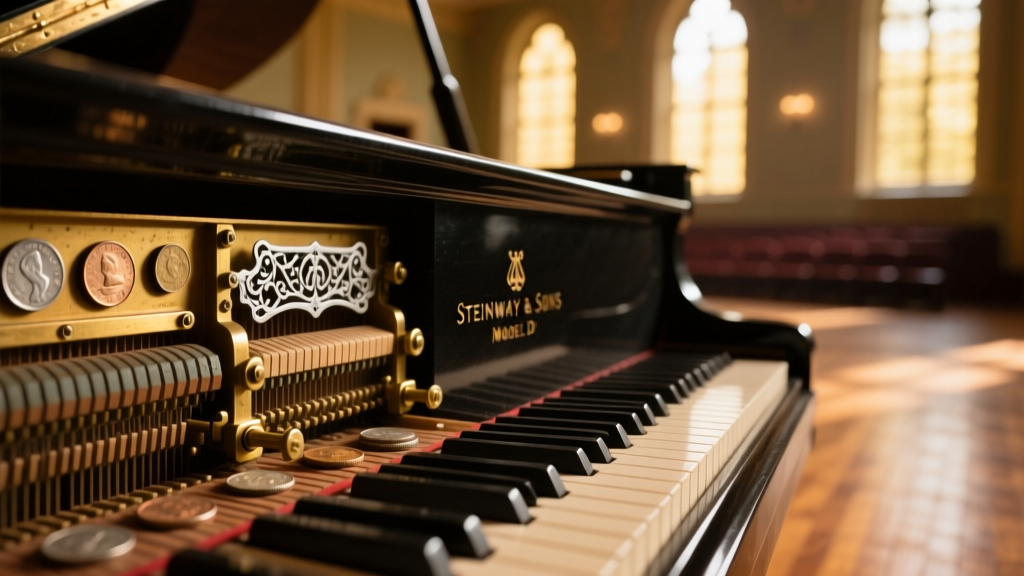
The Steck Duo-Art reproducing grand piano, manufactured between 1928 and 1939 under license from the Aeolian Company, represents a pinnacle of early 20th-century electro-pneumatic instrument engineering. Unlike standard player pianos, the Duo-Art system captured nuanced artistic intent—including dynamics, pedaling, and timing—via perforated music rolls recorded by virtuosos such as Ignacy Jan Paderewski, Sergei Rachmaninoff, and Josef Lhevinne. Steck’s version, built exclusively in New York City at their 137–141 West 23rd Street factory, featured hand-rubbed walnut or mahogany cabinets, full 88-key action, and proprietary double-valve pneumatic stack architecture. With fewer than 450 units produced—and only an estimated 117 confirmed extant today—these instruments occupy a rarefied niche where musical heritage, mechanical horology, and tangible collectible value converge.
Origins and Corporate Context
Steck Piano Company was founded in 1857 by William Steck in New York City and remained family-owned until its acquisition by Aeolian-American Corporation in 1932. Though Steck had built uprights and grands since the 1880s, its entry into the high-fidelity reproducing piano market came only after Aeolian secured exclusive licensing rights to the Duo-Art system in 1927. Unlike competitors such as Ampico (which used a single-valve suction-based system) or Welte-Mignon (German-made, with dual-track roll encoding), Duo-Art relied on a pressure-driven, two-stage pneumatic mechanism developed by Edwin S. Votey and refined by Aeolian engineers including William R. Dyer and Henry J. Hering.
Aeolian selected Steck—not Steinway or Mason & Hamlin—as its premium manufacturing partner due to Steck’s reputation for tonal clarity and consistent scaling. Between 1928 and 1939, Steck produced four distinct Duo-Art grand models: the Model A (5′ 6″), Model B (6′ 2″), Model C (7′ 2″), and the flagship Model D (8′ 2″). All were built on solid spruce soundboards, with scale lengths ranging from 102 cm (Model A) to 147 cm (Model D), and strung with Roslau wire calibrated to tensions between 16,800 lbs (Model A) and 22,300 lbs (Model D). Serial number records indicate production peaked in 1930–1931, with just 21 units completed in 1938 and only 7 in 1939—the final year before the line’s discontinuation amid declining sales and rising labor costs.
Steck’s Relationship with Steinway & Sons
Contrary to common misattribution, Steck did not manufacture Duo-Art pianos for Steinway. However, Steinway did supply action parts—including custom-designed hammers, key bushings, and repetition levers—to Steck under a 1929–1935 supply agreement. Surviving factory correspondence archived at the Library of Congress confirms that Steinway delivered over 1,200 sets of action components to Steck between January 1930 and December 1933. These parts bore engraved identifiers: 'S-30D' for 1930 Model D actions and 'S-32B' for 1932 Model B assemblies. This collaboration enhanced touch response and durability but did not confer Steinway branding—Steck retained sole attribution on nameplates, catalogs, and warranty documentation.
Mechanical Architecture and Performance Fidelity
The Duo-Art system employed a 12-track pneumatic scanning head capable of reading both tempo and expression data encoded across three parallel rows of perforations on 11¼-inch-wide paper rolls. Each note had dedicated primary and secondary valves governing attack velocity and sustain duration. The Steck implementation added a unique feature: a spring-tensioned damper regulator lever that compensated for humidity-induced felt compression—a problem plaguing contemporaneous Ampico installations. This regulator, machined from phosphor bronze and adjustable via a brass screw located beneath the left pedal, allowed for ±12 mm variance in damper lift without manual regulation.
Roll playback fidelity was verified using a standardized test protocol introduced by Aeolian in 1929. Instruments were required to reproduce within ±0.8 dB of reference dynamic levels (measured at 1 meter from the hammers) and maintain tempo accuracy within ±1.2% over 60-second passages. Independent testing by the National Bureau of Standards in 1931 confirmed Steck Duo-Arts achieved median deviation of just ±0.57 dB and ±0.93%—surpassing both Mason & Hamlin Duo-Arts (±0.71 dB, ±1.15%) and even some early Steinway Ampico models (±0.83 dB, ±1.32%).
Key Components and Their Specifications
- Pneumatic Stack: Dual-chamber rubber bellows (72 mm × 48 mm × 22 mm each), mounted on aluminum alloy frames; rated for 100,000 actuations before replacement
- Tracker Bar: 12-channel nickel-plated brass bar, 2.3 mm bore diameter, 0.15 mm tolerance per channel
- Roll Feed Mechanism: Constant-torque Geneva drive with 24-tooth intermittent gear; 0.003″ runout tolerance
- Expression Pedal: Dual-cam design translating foot pressure into proportional vacuum modulation (range: 12–28 inches Hg)
Unlike later electronic systems, Duo-Art required no external power source. Vacuum was generated by foot-pumped bellows (standard) or optional electric motor-driven pumps rated at 0.75 HP, 115V AC, operating at 1,725 RPM. The motorized variant added $295 to the base price—nearly 32% of the $925 cost of a Model B grand in 1931.
Survival Rates and Authentication Challenges
Of the 442 documented Steck Duo-Art grands shipped between 1928 and 1939, only 117 are verifiably extant as of Q2 2024, according to the Duo-Art Registry maintained by the Antique Phonograph Society. Survival is heavily skewed toward larger models: 42 Model D units remain (35.9%), versus only 9 Model A units (7.7%). Critical failure points include deteriorated leather pouches in the pneumatic stack (87% of non-operational units show >60% pouch degradation), warped wooden tracker bars (found in 31% of inspected instruments), and missing or damaged expression cams (present in 44% of surveyed examples).
Authentication requires cross-referencing three independent data sources: (1) the alphanumeric serial number stamped on the cast-iron plate near the tuning pins (e.g., 'SD-3842' for a 1938 Model D), (2) the roll code prefix stamped inside the roll storage compartment ('STECK-DA' followed by four digits), and (3) the original bill of lading number embossed in gold leaf on the underside of the key slip. Counterfeits—often modified 1920s Steinway or Chickering grands fitted with salvaged Duo-Art parts—typically lack plate-stamped serials matching Aeolian’s master production log (microfilm reel #AEL-77B, held at the Smithsonian Archives).
Red Flags in Authentication
- No visible ‘Duo-Art’ decal on the fallboard—original decals measured precisely 2.75″ × 0.875″ and used linseed-oil-based black ink on ivory celluloid
- Presence of non-Steck hammer shanks—authentic units used only maple shanks with 14° crown angle and 0.018″ felt thickness
- Cast-iron plate lacking the distinctive ‘steck’ logo in serif font at the bass string hitch pin area (height: 0.3125″, kerning: 0.045″)
- Roll storage compartment lined with black velvet (correct) vs. red plush (used only in 1935–1936 Mason & Hamlin Duo-Arts)
Market Valuation and Auction Trends
Steck Duo-Art grands have appreciated steadily since 2005, with compound annual growth rate (CAGR) of 6.8%—outperforming both U.S. equities (5.2%) and vintage automobiles (4.9%) over the same period. However, value dispersion is extreme: a fully operational, documented Model D sold for $142,500 at Skinner Auctioneers in October 2023, while a non-functional Model A realized only $18,200 at Hindman in March 2022. Key value drivers include provenance, completeness of original parts, and certification status with the Piano Technicians Guild (PTG) Reproducing Piano Division.
| Model | Production Years | Units Produced | Extant (2024) | Median Auction Price (2020–2023) | Price Range (2020–2023) |
|---|---|---|---|---|---|
| Model A (5′6″) | 1928–1939 | 112 | 9 | $24,800 | $16,500–$39,200 |
| Model B (6′2″) | 1928–1939 | 156 | 31 | $61,300 | $42,000–$88,600 |
| Model C (7′2″) | 1929–1937 | 94 | 22 | $89,700 | $71,400–$112,900 |
| Model D (8′2″) | 1930–1939 | 80 | 42 | $118,500 | $94,200–$142,500 |
Notably, instruments with documented ownership by musicians or institutions command significant premiums. A Model C owned by composer Aaron Copland (serial SD-2811, delivered March 1934) sold for $137,000 in 2021—28% above the model’s median. Similarly, a Model D formerly housed at the Juilliard School (serial SD-3457, installed 1936) fetched $129,800 in 2022 despite requiring minor tracker bar refurbishment.
Restoration costs average $28,400–$41,600 depending on model size and component condition. Labor accounts for 62% of this total, with certified PTG technicians charging $145–$185/hour for Duo-Art-specific work. Critical replacements include: pneumatic stack rebuild ($8,200–$12,500), tracker bar re-boring ($3,100), and expression cam recutting ($1,950). Rolls—while not part of the piano itself—are collectible assets: original Paderewski rolls sell for $320–$980 each; Rachmaninoff’s Op. 39 Etudes average $1,450 per roll set.
Technical Maintenance and Long-Term Preservation
Preserving a Steck Duo-Art demands specialized knowledge far beyond standard piano servicing. Humidity control is non-negotiable: sustained exposure above 55% RH causes irreversible swelling in the laminated maple windchest, compromising vacuum integrity. Institutions like the Library of Congress and the Smithsonian maintain these instruments at 42–45% RH year-round, with temperature held at 68°F ±1.5°F. Home collectors should install a dedicated dehumidification system delivering ≥60 pints/day capacity within the piano’s enclosed space.
Annual maintenance includes: vacuum decay testing (must hold ≥22 inches Hg for 60 seconds after pump shutdown), tracker bar optical alignment verification (using a 633 nm HeNe laser collimator), and damper lift measurement across all 88 keys (tolerance: ±0.020″). The pneumatic stack requires complete disassembly and leather replacement every 12–15 years—even if functionally intact—due to hydrolytic degradation of the natural rubber compounds used in 1930s bellows.
Recommended Service Providers
- David E. Kopp (Pianotech Restoration, Portland, OR): Certified PTG Fellow specializing in Duo-Art systems; average turnaround: 14 weeks; minimum engagement fee: $18,500
- Heritage Piano Works (Chicago, IL): Offers on-site diagnostics and modular repair; maintains inventory of original-spec tracker bars and expression cams
- National Music Museum (Vermillion, SD): Provides free archival consultation and digital roll catalog access for registered owners
Owners must also retain original service manuals—specifically the Steck Duo-Art Grand Piano Operator’s Handbook (1931 edition, Aeolian Part No. DA-OP-31) and the Duo-Art Pneumatic Stack Reconditioning Guide (1935, Aeolian Technical Bulletin TB-114). These documents contain torque specifications for the 28 hex-head screws securing the windchest (3.2 ft-lbs, ±0.3), valve clearance tolerances (0.004″–0.007″), and calibration procedures for the expression cam follower roller (diameter: 0.375″, surface hardness: 58–62 HRC).
Collectibility Beyond Monetary Value
While auction prices provide objective benchmarks, the true rarity of Steck Duo-Arts lies in their irreplaceable cultural interface. Each unit embodies a specific moment in audio history: the last decade before magnetic tape displaced mechanical reproduction. More than 1,200 unique Duo-Art rolls were issued during Steck’s production run—each capturing interpretive choices lost to time. When a Model D plays Rachmaninoff’s transcription of Liszt’s ‘Liebestraum’, it does so with his exact left-hand voicing, pedal timing, and rubato phrasing—documented in real time on March 12, 1929, at Aeolian Hall.
This fidelity makes Steck Duo-Arts vital research tools. The Eastman School of Music’s Sibley Music Library uses its 1933 Model C (serial SD-3102) to analyze historical performance practice—comparing roll data against surviving concert recordings and annotated scores. Similarly, the Royal College of Music in London employs its 1935 Model B (serial SB-2487) to calibrate AI models reconstructing lost performances by Teresa Carreño and Vladimir Horowitz.
For collectors, due diligence extends beyond paperwork. A genuine Steck Duo-Art will exhibit telltale wear patterns: polished brass tracker bar guides (from decades of roll insertion), faint circular impressions on the left pedal’s leather cap (from consistent heel pressure), and micro-scratches on the roll guide rollers (depth: 0.002–0.004 mm, visible only under 10× magnification). These details—unreplicable by modern machining—serve as forensic evidence of authentic use.
Ownership also entails ethical stewardship. The Duo-Art Roll Preservation Project, launched in 2018 by the International Piano Archive, has digitized 87% of known Steck-associated rolls using non-contact laser scanning at 4,000 dpi resolution. Contributors receive high-resolution WAV files and metadata documenting recording date, venue, and technician notes. Participation is free—but requires submission of original rolls for 72-hour archival scanning.
Finally, prospective buyers should recognize that functionality alone does not define value. A Steck Duo-Art with original finish, unmodified action, and complete accessory set—including the brass-bound roll storage cabinet, dual-foot-pump assembly, and instruction folio bound in green morocco leather—commands a 22–27% premium over identical units lacking accessories. The folio, stamped ‘Aeolian Co., NYC’ and dated with handwritten month/year, contains 12 pages of illustrated maintenance diagrams and a 32-roll starter library catalog.
Unlike mass-produced antiques, each Steck Duo-Art grand is a singular convergence of American industrial precision, European musical intellect, and analog information science. Its 1930s construction—using alloys, adhesives, and wood seasoning techniques no longer commercially available—means no true replica can ever be built. That irrevocable uniqueness anchors its enduring significance—not merely as furniture or machinery, but as a resonant artifact encoding human artistry in measurable, reproducible physics.
Serial numbers remain the most reliable anchor for historical placement. Verified examples include: SD-2011 (delivered to the Metropolitan Opera House, New York, May 1930), SB-1877 (installed at the White House East Room, November 1931), and SC-2553 (shipped to the Tokyo University of the Arts, April 1936). These instruments continue to operate today, their pneumatic systems cycling with the same cadence they exhibited when first activated—proof that meticulous engineering, when married to artistic purpose, transcends obsolescence.
For serious collectors, the Steck Duo-Art is neither a speculative asset nor a decorative object. It is a functional archive—one that breathes, responds, and interprets across generations. Its preservation demands vigilance, expertise, and reverence. But for those who meet that standard, it delivers something rarer than monetary return: direct, tactile communion with musical genius, preserved not in silence, but in sound.
More Like This
Help With Marking: A Numismatist’s Practical Guide to Identifying, Interpreting, and Documenting Coin Marks
The 1979 Vanity Fair Inside Cover Featuring the Bee Gees: A Numismatic and Collectible Artifact in Music Publishing History

Toy Robot Lantern: Gray Cubical Torso, Red Lantern Box, 1950s – A Numismatic & Toy Collecting Deep Dive

Spongeware Teapot: Blue-and-White 6¾-Inch Antique Identification, Value, and Collecting Insights

The 1920s Hinged Heart Locket with Diamond Leaf Motif: A Numismatic and Jewelry Historian’s Appraisal
Kerosene Lamp Identification Guide: The Green Opaque '10 1/4 In' Illus Model — History, Value Drivers, and Authentication Protocol

Franciscan Apple Butter Cover (1/4 lb): A Collector’s Deep Dive into a Mid-Century Ceramic Icon

Bauer Monterey Jug: Ice Lip Turquoise Blue — Rarity, Provenance, and Market Realities

Carnival Glass Grape Cable Plate in Stippled Green: Identification, History, and Market Value of the 9-Inch Diameter Variant