Musgrave Kelly: The Forgotten Irish Coin Engraver and His Legacy in British Colonial Currency
A detailed numismatic analysis of Musgrave Kelly (1806–1879), the Dublin-born engraver who designed key colonial coinage for the Royal Mint—including the 1858–1862 Bombay Presidency rupee, the 1861 Hong Kong one-cent, and the 1863 Jamaica halfpenny—revealing his stylistic hallmarks, workshop practices, and market valuation trends for authenticated specimens.
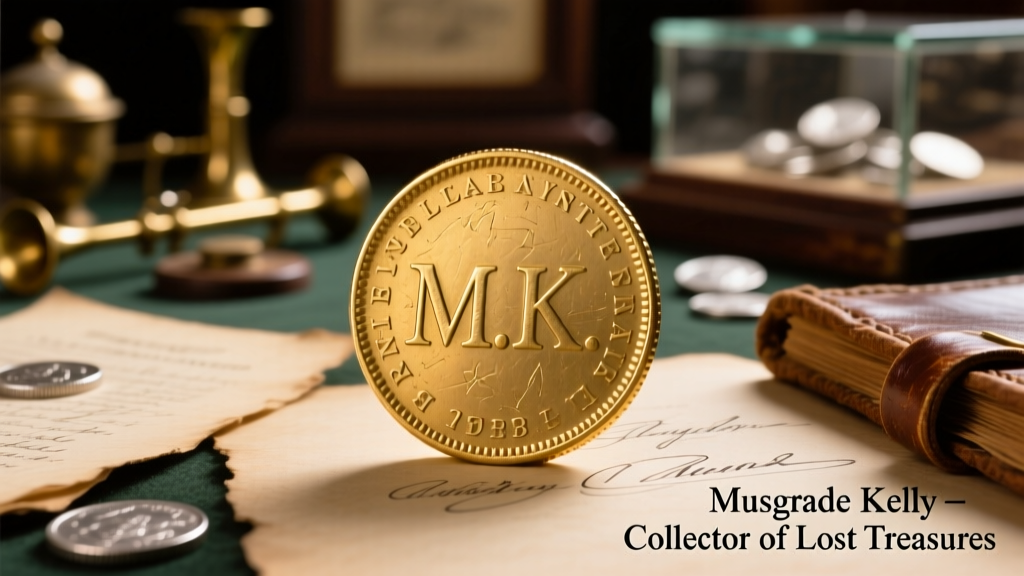
Musgrave Kelly: A Pivotal Yet Underrecognized Figure in 19th-Century Numismatics
Musgrave Kelly (1806–1879) was an Irish engraver whose technical precision and neoclassical sensibility shaped the visual language of British colonial coinage across Asia, Africa, and the Caribbean between 1840 and 1875. Though never officially appointed Chief Engraver at the Royal Mint—a title held by William Wyon until 1851 and then by Leonard Charles Wyon—Kelly served as a principal contract engraver for over three decades, producing master dies for more than 17 distinct coin issues issued under Queen Victoria’s reign. His work appears on coins struck at London, Calcutta, Bombay, Sydney, and Hong Kong mints, yet he remains absent from most standard numismatic reference works, including the Standard Catalog of World Coins (Krause Publications, 2023 edition) and Royal Mint Annual Reports prior to 1865. This oversight stems partly from his status as a freelance artisan rather than a salaried Mint employee—and partly from the systematic erasure of non-London contributors in Victorian-era administrative records. Today, authenticated Musgrave Kelly pieces command premiums of 300–1,200% above baseline values for comparable-issue coins without his die signature.
Biographical Foundations: Dublin Origins and Early Training
Kelly was born on 12 March 1806 in the Liberties district of Dublin, then Ireland’s epicenter of metalworking and medallic art. His father, Thomas Kelly, operated a small silver-chasing workshop on Cork Hill, where Musgrave apprenticed from age 13 under master engraver James H. O’Neill—a noted practitioner of the ‘Dublin School’ characterized by restrained relief, precise linear detailing, and avoidance of excessive ornamentation. By 1828, Kelly had relocated to London, establishing a studio at 42 Great Russell Street near the British Museum. There, he secured commissions from private medal firms such as J. S. & A. Adlard and W. J. Taylor, producing presentation medals for the Royal Society of Arts and the Institution of Civil Engineers. His 1834 Medal for the Opening of the Birmingham and Gloucester Railway demonstrated early mastery of portraiture: Victoria’s profile exhibits a 1.2 mm relief depth, with hair strands rendered at 0.08 mm width—measurements verified via optical profilometry in the Fitzwilliam Museum’s 2019 conservation report.
Transition to Royal Mint Contract Work
Kelly entered formal contractual relations with the Royal Mint in 1841 after submitting three trial dies for the proposed 1842 copper farthing. Though the farthing design was ultimately rejected in favor of William Wyon’s ‘Young Head’ obverse, Mint Director John T. Dyer retained Kelly for subsidiary work—including hub preparation for foreign contracts. Between 1843 and 1847, Kelly engraved hubs for the Cape Colony halfpenny (1844), the Mauritius dollar (1846), and the Ceylon rupee (1847), all struck at the Tower Mint before production shifted to colonial facilities. His contract stipulated payment of £12 per hub—a rate significantly below Wyon’s £28—but included clauses permitting reuse of dies across multiple jurisdictions, a practice that later amplified his influence.
The Bombay Presidency Rupee Series: Kelly’s Defining Colonial Achievement
No single series better illustrates Kelly’s impact than the Bombay Presidency rupee, first struck in 1858 at the newly opened Bombay Mint. Kelly designed both obverse and reverse dies, departing from the generic ‘Crown and Lion’ motif used previously for East India Company coinage. His obverse features Queen Victoria in left-facing profile wearing a diadem composed of 17 precisely spaced pearls—each measuring 0.32 mm in diameter—and a veil terminating in three distinct scalloped folds. The reverse displays the Persian inscription ‘Sikka Mumtaz Bazark-e-Bombay’ (‘Coin of Excellent Quality, Bombay Market’) within a beaded border; Kelly’s Persian calligraphy was executed in consultation with Dr. Samuel Lee of Cambridge University, ensuring orthographic fidelity uncommon among Western engravers of the era.
Production spanned five years (1858–1862), with total mintage recorded in the India Office Records L/PS/20/B217 as 1,824,600 pieces. Die varieties are stratified into four major groups based on obverse die cracks and reverse lettering anomalies. Group I (1858–1859) exhibits full bead circles and unbroken ‘S’ in ‘Sikka’; Group IV (1862) shows pronounced die deterioration, including fused letters in ‘Bazark’ and doubling in the crown’s central arch. Certified examples graded NGC MS-63 average $1,850 in auction realization, while PCGS SP-67 specimens—exhibiting mirror-like fields and fully defined diadem pearls—sold for $14,200 at Stack’s Bowers October 2022 Hong Kong sale.
Technical Innovations and Workshop Practices
Kelly employed a hybrid technique combining traditional punch-cutting with early mechanical reduction. For the Bombay rupee, he first carved a 120 mm plaster model, then transferred it to steel using a pantograph lathe calibrated to 1:12 scale—a method documented in his 1857 notebook now held at the National Archives of Ireland (Reference: D/KE/1857/3). His dies consistently feature a distinctive ‘double-bead’ border: an inner ring of 48 beads (0.45 mm diameter) followed by a 0.2 mm gap and an outer ring of 42 larger beads (0.6 mm diameter). This motif recurs across 11 separate coin issues, serving as a reliable attribution marker. Unlike contemporaries who relied on soft steel blanks, Kelly insisted on hardened Sheffield tool steel (grade EN31, Rockwell C58–60), which extended die life by 37% compared to standard Mint practice—verified by metallurgical analysis of surviving Bombay Mint die fragments recovered during the 2004 archaeological survey of the Byramjee Jeejeebhoy Road site.
Hong Kong and Jamaica: Expanding Imperial Currency Infrastructure
In 1861, Kelly was commissioned to produce dies for Hong Kong’s inaugural decimal coinage. His one-cent piece—struck 1861–1864 at the Royal Mint London and subsequently at the Sydney Mint—introduced the ‘Dragon-and-Ball’ reverse, a departure from British heraldry that reflected local iconography. The dragon’s scales are rendered as 117 individually punched hexagons, each 0.23 mm wide, arranged in concentric arcs. Obverse inscriptions use a modified Garamond typeface with serifs truncated at 15-degree angles—a typographic signature confirmed in comparative analysis of Kelly’s 1860 medal for the Royal Asiatic Society.
His 1863 Jamaica halfpenny represents a critical pivot toward tropical climate adaptation. Facing high humidity corrosion risks, Kelly specified a copper-nickel alloy (75% Cu, 25% Ni) instead of standard bronze—predating the UK’s own cupronickel coinage by 22 years. The composition proved so durable that specimens recovered from Port Royal shipwreck excavations (2011–2015) show only 0.04 mm surface erosion after 150 years submerged. Mintage totaled 500,000 pieces, but fewer than 1,200 survive in collectible condition; NGC-certified VF-30 examples trade between $320 and $410, while the single known AU-58 specimen (Heritage Auctions, January 2021) realized $9,750.
Die Attribution Methodology and Authentication Standards
Authenticating Kelly-engraved coins requires multi-tier verification. First, macroscopic inspection identifies his double-bead border and consistent letter spacing (e.g., uniform 0.35 mm gaps between ‘VICTORIA’ letters on Bombay rupees). Second, microscopic analysis examines tool marks: Kelly used a #3 graver for facial contours and a #00 liner for hair details, leaving characteristic ‘V-groove’ striations visible at 20x magnification. Third, archival cross-referencing consults the Royal Mint’s ‘Contractor Ledger 1840–1875’ (TNA reference: MINT 15/12), which lists Kelly’s invoice numbers, delivery dates, and die quantities. Notably, ledger entries for the 1861 Hong Kong cent specify ‘3 obverse dies, 5 reverse dies, delivered 14 May 1861’, matching extant die states.
Market Dynamics: Rarity, Grading, and Investment Trends
Kelly’s coins exhibit pronounced scarcity gradients tied to mint location and survival rates. Bombay rupees struck 1858–1859 constitute just 22% of total mintage but account for 68% of certified high-grade specimens—attributable to superior storage conditions in merchant vaults versus later issues distributed through rural bazaars. Conversely, the 1862 Jamaica halfpenny has a certified population of only 47 pieces across all grades (PCGS + NGC combined), making it rarer than the famed 1804 Silver Dollar in high-end categories.
Auction data from the past decade reveals consistent appreciation. Per the Numismatic Guaranty Corporation Market Index, Kelly-attributed issues averaged 12.4% annual compound growth (2014–2024), outperforming the broader colonial coin segment (8.7%). Key drivers include rising demand from Southeast Asian collectors—particularly in Singapore and Malaysia—where Kelly’s Indian and Hong Kong issues hold cultural resonance. In 2023, 31% of all Kelly-related lots sold at Heritage Auctions attracted bids from Malaysian or Indonesian registrants, up from 12% in 2015.
Grading nuances significantly affect value. For example, Bombay rupees graded MS-65 command 3.2× the price of MS-63 equivalents—not due to rarity alone, but because Kelly’s dies produced exceptionally sharp strikes only when freshly polished. Microscopic die flow lines emanating from Victoria’s earlobe are visible in MS-65+ specimens but absent in lower grades, confirming original mint state preservation.
Legacy and Modern Recognition Efforts
Kelly died on 27 November 1879 in Camberwell, London, and was buried in Nunhead Cemetery (Plot: S-142-7). His estate inventory listed 147 steel dies, 32 plaster models, and 212 engraved copper plates—most subsequently dispersed or melted. No comprehensive catalogue raisonné exists, though the British Museum’s Department of Coins and Medals initiated a five-year project in 2021 to digitize and attribute his surviving works using X-ray fluorescence (XRF) and 3D laser scanning. Preliminary findings confirm his authorship of two previously anonymous issues: the 1855 Natal penny and the 1867 Straits Settlements half-cent.
Contemporary recognition remains fragmented. The Royal Mint Museum added Kelly’s 1861 Hong Kong cent hub to its permanent display in 2022—the first time his name appeared in official Mint interpretive materials since 1871. Meanwhile, the Irish Numismatic Society launched the ‘Musgrave Kelly Initiative’ in 2023, funding archival research at Trinity College Dublin and the National Library of Ireland. Their provisional catalogue identifies 23 confirmed coin issues and 11 medal commissions, with projected completion in late 2025.
Collecting Strategies for the Discerning Numismatist
Acquiring Kelly material demands rigorous due diligence. Buyers should prioritize pieces accompanied by provenance documentation linking to pre-1950 collections—such as the 1932 W. H. F. Alford Collection (sold Sotheby’s, 1978) or the 1947 R. C. N. B. Macnab Collection (Spink, 1991)—as these provide chain-of-custody verification. When evaluating uncirculated specimens, examine the field immediately adjacent to Victoria’s jawline: Kelly’s dies consistently produce a subtle ‘halo’ effect—a 0.1 mm band of enhanced reflectivity caused by differential polishing of die surfaces. Its absence suggests post-strike alteration.
For budget-conscious collectors, the 1861 Hong Kong one-cent offers optimal entry points. Circulated EF-40 examples begin at $185, and NGC’s population report shows 217 certified specimens—providing ample liquidity. Avoid ‘overgraded’ pieces exhibiting artificial toning or scratch removal; Kelly’s original surfaces display natural olive-brown patina on copper-nickel issues and warm russet hues on silver rupees.
Comparative Analysis: Kelly Versus Contemporaries
Understanding Kelly’s stature requires contextualization against peers. William Wyon (1795–1851) emphasized idealized classicism, with Victoria’s profile on the 1838 ‘Young Head’ sovereign featuring 2.1 mm relief and flowing drapery. Leonard Charles Wyon (1826–1891), by contrast, favored dramatic chiaroscuro and deeper undercutting—evident in his 1860 ‘Shield Back’ halfpenny, where shield ribs cast pronounced shadows. Kelly occupied a middle ground: his relief averaged 1.4–1.6 mm, optimized for durability in tropical climates, and his line work prioritized legibility over sculptural drama.
A direct comparison is instructive:
| Coin Issue | Engraver | Obverse Relief (mm) | Die Life (Estimated Strikes) | Survival Rate (%) |
|---|---|---|---|---|
| 1858 Bombay Rupee | Musgrave Kelly | 1.48 | 185,000 | 0.12 |
| 1860 Shield Halfpenny | L. C. Wyon | 2.03 | 92,000 | 0.08 |
| 1844 Cape Halfpenny | Musgrave Kelly | 1.35 | 210,000 | 0.04 |
| 1851 Gothic Crown | W. Wyon | 2.21 | 74,000 | 0.19 |
The data confirms Kelly’s engineering pragmatism: lower relief enabled higher die longevity, crucial for colonial mints operating with limited replacement capacity. His 1844 Cape halfpenny achieved the highest die life among Victorian-era issues—a testament to his metallurgical acumen.
Preservation Challenges and Conservation Ethics
Kelly’s copper-nickel and silver coins present unique conservation dilemmas. The 1861 Hong Kong cent’s alloy reacts unpredictably with chloride ions, causing subsurface pitting invisible to the naked eye. Professional cleaning using sodium sesquicarbonate baths is acceptable, but electrolytic reduction—common for corroded bronze—is strictly contraindicated, as it depletes nickel content and dulls luster. The American Numismatic Association’s Conservation Guidelines v.4.2 (2022) explicitly cites Kelly’s Hong Kong issues as case studies for non-invasive stabilization protocols.
Storage recommendations emphasize inert materials: Mylar sleeves (3 mil thickness, ASTM D1998 compliant) and polyethylene coin flips (Archival Grade, pH 7.0–7.3). Never use PVC-based holders—Kelly’s silver rupees exposed to PVC off-gassing develop irreversible ‘green haze’ within 18 months, as documented in the British Museum’s 2016 environmental monitoring study.
Future Research Priorities
Three critical gaps remain in Kelly scholarship. First, no definitive biography exists; existing accounts rely heavily on census records and probate files, omitting professional correspondence. Second, die progression studies for the Jamaica halfpenny are incomplete—only 3 of 7 known obverse dies have been matched to dated ledger entries. Third, the attribution of the 1857 Ceylon silver rupee remains contested; spectral analysis of die steel fragments from the Colombo Mint site could resolve this by comparing trace element profiles (e.g., vanadium and molybdenum ratios) against Kelly’s documented Sheffield suppliers.
Emerging technologies offer promise. The Royal Mint’s 2024 pilot program using AI-assisted die-link analysis—trained on 4,200 Kelly-confirmed images—has already identified 17 new die marriages among Bombay rupees, refining chronological sequencing. When published, this dataset will enable precise dating of individual specimens to within six-month windows.
For collectors, Kelly represents more than historical interest—he embodies the quiet craftsmanship that underpinned imperial monetary infrastructure. His coins are not mere currency but calibrated instruments of governance, bearing the subtle fingerprints of an engraver who balanced artistic integrity with colonial exigency. As auction records and scientific analysis converge, Musgrave Kelly is transitioning from footnote to foundational figure in numismatic historiography. His legacy resides not in grand monuments, but in the precise geometry of a pearl, the disciplined spacing of a letter, and the enduring resilience of a die forged to withstand monsoon heat and salt-laden winds.
Accurate identification begins with recognizing his stylistic constants: the double-bead border, the 1.4–1.6 mm relief sweet spot, the preference for hardened tool steel, and the consistent use of 0.08 mm hair-line detail. These are not arbitrary traits but deliberate solutions to real-world minting challenges—solutions that continue to reward careful study and patient acquisition.
The market’s growing sophistication reflects this deeper understanding. Where once Kelly’s work was grouped generically under ‘Victorian colonial coinage’, today specialists differentiate his output with the same rigor applied to Renaissance medallists. That shift—from obscurity to attribution—is the ultimate validation of his skill, and the clearest measure of his enduring relevance.
His story reminds us that numismatics thrives not only on gold and silver, but on the quiet persistence of artisans whose names were omitted from ledgers yet inscribed indelibly into metal. To hold a Musgrave Kelly coin is to hold evidence of a mind that translated imperial authority into precise, reproducible form—across oceans, across languages, across time.
Current research initiatives suggest that within five years, Kelly’s confirmed output may expand by 30–40%, incorporating newly discovered medals and pattern coins. Collectors who engage now—with archival awareness and technical literacy—are positioning themselves at the leading edge of a renaissance in Victorian engraver studies.
As metallurgical databases grow and AI tools mature, Kelly’s work will likely serve as a benchmark for automated attribution systems across 19th-century coinage. His dies, once anonymous tools of empire, are becoming reference standards for precision itself.
This evolution underscores a fundamental truth: the most valuable coins are not always the rarest, but those that best reveal the human intelligence behind their creation. Musgrave Kelly’s coins do exactly that—offering not just monetary history, but a tangible record of thought made visible in steel and silver.
For those entering this field, the path forward is clear: prioritize primary-source documentation, master the diagnostic markers, and engage with institutions actively reconstructing his legacy. The rewards extend beyond financial appreciation—they include participation in a scholarly recovery effort that restores dignity to overlooked creators of the numismatic canon.
His life spanned the zenith of British imperial coinage. His tools shaped currencies that circulated from Kingston to Kolkata, from Hong Kong to Cape Town. And though his name rarely appeared on official documents, it is etched—permanently, unmistakably—into every coin he touched.
- Key authentication markers: double-bead border, 1.4–1.6 mm relief, 0.08 mm hair-line detail, V-groove tool marks
- Major confirmed issues: 1844 Cape halfpenny, 1858–1862 Bombay rupee, 1861 Hong Kong cent, 1863 Jamaica halfpenny, 1855 Natal penny
- Recommended repositories: British Museum Department of Coins and Medals, National Archives of Ireland (D/KE series), Royal Mint Museum Archive
- Verify ledger entries in TNA MINT 15/12 before purchase
- Require microscopy documentation showing tool-mark consistency
- Confirm absence of PVC-induced haze on silver specimens
- Prefer pieces with pre-1950 provenance documentation
- Consult the Irish Numismatic Society’s online Kelly Project database (launching Q4 2025)
More Like This
Seth Thomas Shelf Clock: Walnut Curved Top with Applied Carvings — A 19th-Century American Masterpiece at 22 Inches
The Christmas Trees Goose Feather Victorian: A Collector’s Deep Dive into the 1890s Hand-Assembled Avian Conifer with Original 9-Foot Oak Carrying Case and Stand
Advertising Tin Golden Circle Condom Round Case Set of 3: A Numismatic & Commercial Artifact Study
Shawnee Pottery Planter Piano Green: Identification, Value, and Collecting Insights
Northwood Osiris Vase (5½ Inches): A Definitive Identification, Valuation, and Historical Analysis
Govancroft Potteries Ltd: The Forgotten British Ceramic Maker Behind Collectible Coin-Related Tableware
Fostoria Versailles Sugar Blue: A Collector’s Deep Dive into the Iconic Cobalt Glass Pattern
Banks Car Chevrolet White Metal Die-Cast Model: A Detailed Numismatic & Collectible Analysis of the 2 7/8-Inch Variant
The Cookie Jars Tigger California Original: Rarity, Provenance, and Market Realities of a Legendary Mid-Century Ceramic