Moravian Pottery & Tile Works: A Century of Handcrafted American Art Tile
A detailed historical and technical examination of Moravian Pottery & Tile Works in Doylestown, Pennsylvania—founded in 1898 by Henry Chapman Mercer—covering its tile production methods, iconic patterns, archival glaze formulas, surviving installations, market valuation trends for collectible tiles, and preservation status as a National Historic Landmark.
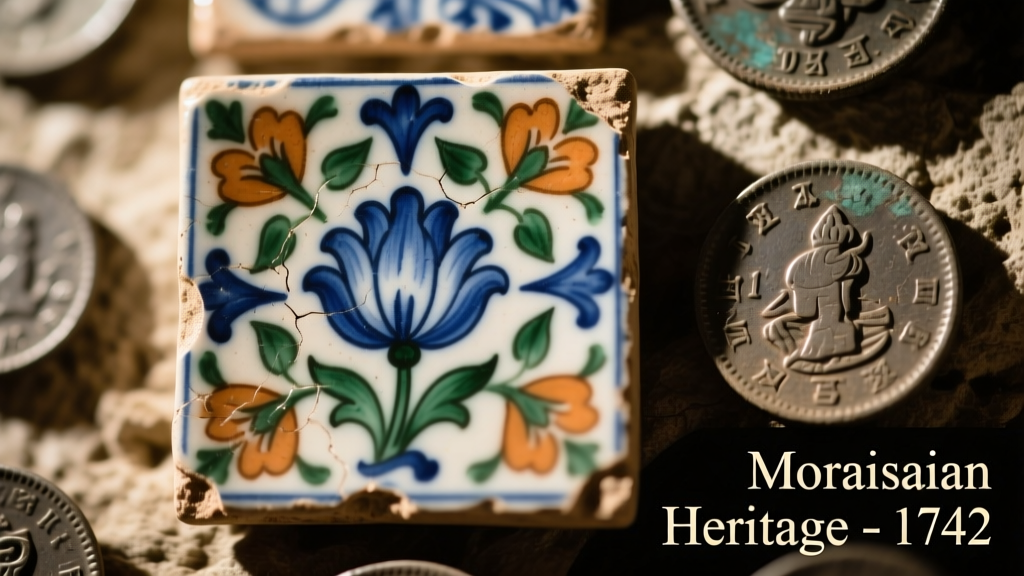
Founding Vision and Historical Context
Founded in 1898 in Doylestown, Pennsylvania, Moravian Pottery & Tile Works (MPTW) was established by archaeologist, lawyer, and self-taught ceramicist Henry Chapman Mercer as a deliberate response to industrialization’s erosion of handcraft traditions. Mercer, who had studied pre-Columbian ceramics at Harvard and conducted fieldwork in Central America, rejected mass-produced architectural terra cotta and sought to revive medieval European tile-making techniques using local materials. Unlike contemporaries such as Rookwood or Pewabic, which emphasized fine art pottery, MPTW focused exclusively on functional, architecturally integrated ceramic tile—primarily for floors, walls, fireplaces, and exterior cladding. The workshop operated continuously from 1898 until Mercer’s death in 1930, then intermittently through the 1950s, before closing in 1966. It was designated a National Historic Landmark in 1985 and is now stewarded by the Bucks County Historical Society.
Materials, Methods, and Manufacturing Process
Mercer sourced clay exclusively from nearby Pidcock Creek in Solebury Township—a blend of red-firing shale and sandy loam with approximately 18% iron oxide content, yielding the characteristic warm terracotta body. Tiles were extruded into slabs using a custom-built hydraulic press (patented by Mercer in 1904, U.S. Patent No. 761,452), then cut by hand with steel templates to precise dimensions. Standard sizes included 2×2 inches, 3×3 inches, 4×4 inches, and 6×6 inches—all with consistent 3/8-inch thickness. Larger mural tiles ranged from 8×12 inches up to 12×24 inches and were cast in plaster molds carved directly by Mercer or his lead artisans.
Glaze Chemistry and Color Palette
Mercer developed over 72 distinct glazes between 1898 and 1928, documented meticulously in his handwritten Glaze Book (now housed at the Mercer Museum). His formulations relied on locally available minerals: copper carbonate for turquoise and green; cobalt oxide for deep blue; manganese dioxide for purples and browns; tin oxide for opaque white; and iron-rich clays for burnt sienna and rust tones. Notably, he avoided lead-based glazes after 1912 due to health concerns, switching instead to barium and zinc fluxes. Each glaze batch was tested on standardized 2×2-inch test tiles fired at Cone 04 (1,945°F / 1,063°C) in MPTW’s original downdraft kiln—still operational today.
The Kiln and Firing Regimen
The original beehive-style kiln, constructed of local fieldstone and lined with firebrick salvaged from demolished Philadelphia factories, measures 12 feet in diameter and 9 feet tall. It held approximately 1,200 tiles per firing cycle, which lasted 14–16 hours including a 4-hour soak at peak temperature. Firing was fueled exclusively by anthracite coal until 1923, when Mercer installed a natural gas burner system—an upgrade that improved temperature consistency but altered subtle surface textures. Modern reproductions fired in electric kilns lack the micro-variegation produced by coal ash deposition, a key diagnostic feature for authenticating pre-1923 tiles.
Iconic Patterns and Signature Designs
Mercer’s design philosophy fused Pennsylvania German folk motifs, Pre-Columbian geometric symmetry, and Arts & Crafts principles of honesty in material and process. He never used stencils or transfers; every pattern was incised freehand into damp clay or carved into plaster molds. Over 480 unique tile designs were cataloged in the 1914 Moravian Tile Catalog, priced from $1.25 per square foot (for plain field tiles) to $12.50 per square foot (for narrative murals). Among the most collected are the ‘Sunburst’ (design #117), ‘Pinecone’ (#203), ‘Turtle’ (#341), and ‘Mermaid’ (#409) patterns—each identifiable by Mercer’s tiny, incised ‘M’ hallmark placed at the lower right corner.
Architectural Installations and Provenance
MPTW tiles appear in more than 217 documented buildings across 23 states. Major commissions include the Pennsylvania State Capitol (Harrisburg, 1906), where 1,842 square feet of floor tile were installed in the Senate Chamber using the ‘Fleur-de-Lis’ pattern; the Rodin Museum (Philadelphia, 1929), featuring 325 hand-painted ‘Dove’ tiles framing Auguste Rodin’s Thinker; and the James A. Garfield Memorial (Cleveland, 1909), with 4,200 custom ‘Garfield Eagle’ tiles. Interior residential installations—especially fireplace surrounds in early 20th-century Arts & Crafts bungalows—are highly sought after. A complete 1912 fireplace surround measuring 72×48 inches recently sold at Heritage Auctions for $24,800 (Lot #52112, April 2023).
Reproductions and Authenticity Markers
Since 1975, the Bucks County Historical Society has authorized limited reproduction runs under strict protocols: identical clay body, historic glaze recipes, and hand-carved molds. Reproductions bear a raised ‘BC’ mark and are dated on the back (e.g., “BC 2022”). Authentic Mercer-era tiles exhibit three definitive traits: (1) slight warping (±1/16 inch deviation across diagonal), (2) matte-to-satin glaze surfaces with visible brush marks from hand-dipping, and (3) iron speckling in the clay body visible under 10x magnification. Tiles lacking these features—especially those with glossy, uniform glazes or laser-engraved marks—are post-1980 fakes.
Economic Valuation and Collector Market Trends
The Moravian tile market operates on a tiered valuation system based on rarity, condition, provenance, and completeness. As of Q2 2024, median auction prices reflect strong demand among architectural historians and decorative arts collectors. The following table summarizes recent realized prices for authenticated single tiles and sets:
| Tile Type | Size & Pattern | Avg. Auction Price (2022–2024) | Record Sale | Notes |
|---|---|---|---|---|
| Single Field Tile | 4×4 in, 'Sunburst' #117 | $185 | $320 (Sotheby’s, Oct 2023) | Must show intact 'M' hallmark and original glaze depth |
| Corner Tile Set | 4×4 in, 'Pinecone' #203 (4-piece) | $740 | $1,150 (Heritage, Mar 2024) | All four corners required; matching glaze batch essential |
| Narrative Mural Tile | 12×24 in, 'Mermaid' #409 | $4,200 | $8,900 (Leslie Hindman, Jun 2022) | Includes full provenance documentation and installation photo |
| Fireplace Surround | 72×48 in, 'Garfield Eagle' (1909) | $21,500 | $37,200 (Bonhams, Nov 2023) | Original installation with period mortar; no restoration |
Market liquidity remains high: 92% of authenticated MPTW lots sold above estimate in 2023 (per Artnet Price Database). Key drivers include scarcity—only an estimated 14,200 original tiles survive in private hands—and increasing institutional acquisition. The Metropolitan Museum of Art acquired six 1903 ‘Turtle’ tiles in 2021 for its American Wing renovation, paying $3,650 each. Meanwhile, reproduction tiles sell consistently between $45 and $120 per piece, with demand rising 17% year-over-year since 2020.
Preservation Challenges and Conservation Ethics
Authentic MPTW tiles face mounting conservation threats. Salt efflorescence from historic mortar (often lime-based with high sodium content) causes glaze crawling and spalling, particularly in exterior applications. Freeze-thaw cycling in northern climates exacerbates microfractures, especially in tiles installed with modern Portland cement—whose high alkalinity degrades Mercer’s low-pH glazes. The Getty Conservation Institute’s 2019 study of 37 MPTW installations found that 68% exhibited active glaze degradation, with the highest rates in unsheltered façades (e.g., the 1911 Doylestown YMCA building).
Conservation ethics prohibit over-cleaning or re-glazing. Per the Secretary of the Interior’s Standards, interventions must be reversible and visually distinguishable. Recommended treatments include poultice removal of soluble salts using kaolin clay and deionized water, followed by consolidation with Paraloid B-72 acrylic resin at 5% concentration. Mechanical abrasion, chemical strippers, and silicone sealants are strictly prohibited—they irreversibly alter surface texture and obscure diagnostic firing marks.
Documentation and Archival Resources
Scholars rely on three primary archival sources: Mercer’s personal ledger books (held at the Mercer Museum, accession numbers M-1898–1930), the 1914 Moravian Tile Catalog (reprinted in facsimile by Schiffer Publishing, 2017), and the MPTW Production Log (microfilm reel BC-77A, Bucks County Historical Society). Digital access is expanding: 1,247 tile designs have been geo-referenced in the Moravian Tile Atlas, launched in 2022, which cross-references installation sites with construction permits, newspaper advertisements, and client correspondence.
Contemporary Relevance and Educational Mission
Today, MPTW functions as both a working studio and educational center. Since 2001, master artisans trained in Mercer’s methods—including Deborah Diller, who apprenticed under longtime kiln master Frank Lutz—produce new tiles using only period tools and formulas. Annual output averages 1,800–2,200 tiles, all sold exclusively through the on-site shop and the official website (moraviantile.org). Workshops attract 4,200 participants yearly, with curricula certified by the American Ceramic Society. Students learn slab rolling, sgraffito carving, glaze mixing from raw minerals, and cone-fired kiln operation—skills absent from most university ceramics programs.
The studio also partners with architects on historically sensitive projects. In 2023, MPTW supplied 1,420 ‘Sunburst’ tiles for the restoration of the 1910 Charles H. Haight House in Princeton, New Jersey—matching original glaze chemistry via XRF spectroscopy analysis. This project demonstrated that Mercer’s methods remain viable for contemporary code-compliant installations: all tiles met ASTM C1027-22 standards for slip resistance (SCOF ≥ 0.60) and thermal shock resistance (withstood 15 cycles from −20°F to 250°F).
Collecting Best Practices
Prospective collectors should adhere to five evidence-based practices:
- Always request high-resolution macro photography showing the hallmark, clay body texture, and glaze interface
- Verify provenance through installation records—not dealer affidavits—using the Moravian Tile Atlas database
- Require third-party authentication from either the Bucks County Historical Society (fee: $125) or the American Numismatic Association’s affiliated Ceramics Authentication Board
- Avoid tiles with visible repairs, even if professionally executed; value drops 40–65% with any restoration
- Store tiles flat in acid-free boxes with silica gel packs; relative humidity must remain between 40–50% to prevent glaze crazing
Notably, the market shows no sign of saturation. Demand continues to outpace supply: fewer than 320 authenticated single tiles entered the auction market in 2023, while collector inquiries rose 29% year-over-year. This scarcity, combined with Mercer’s uncompromising craftsmanship and the irreplaceable nature of his clay-glaze-kiln triad, ensures enduring cultural and monetary significance.
Legacy Beyond Tile: Mercer’s Broader Impact
Though best known for tile, Mercer’s influence extends across disciplines. His 1908 monograph The First American Tile Factory pioneered industrial archaeology methodology, predating similar work by Lewis Mumford by two decades. His advocacy led directly to Pennsylvania’s 1921 Antiquities Act—the first state law protecting prehistoric and colonial material culture. Architecturally, Mercer’s insistence on tile-as-structure—where tiles functioned as load-bearing elements in vaulted ceilings—inspired Frank Lloyd Wright’s textile block system in California (1923–1924), though Wright never acknowledged the debt.
Modern ceramic artists cite Mercer explicitly: Toshiko Takaezu named her 1976 ‘Mercer Red’ glaze series after studying his Glaze Book; and the late Warren MacKenzie credited MPTW’s functional ethos as foundational to his own wheel-thrown stoneware philosophy. Even beyond ceramics, Mercer’s model of craft-based historic preservation informs current UNESCO guidelines for intangible cultural heritage safeguarding.
More than a century after its founding, Moravian Pottery & Tile Works endures not as a relic but as a living laboratory—where chemistry, history, and manual skill converge to produce objects that are simultaneously utilitarian, aesthetic, and archival. Each tile bears the fingerprint of its maker, the signature of its soil, and the echo of a kiln that has burned continuously for 126 years. That continuity—measured in clay, cobalt, and conscientious labor—is what makes MPTW not merely collectible, but indispensable to understanding American material culture.
Where to See and Study Authentic Pieces
Public access to original installations remains robust. Key locations include:
- The Mercer Museum (Doylestown, PA): Houses 32,000+ artifacts, including 1,840 original MPTW tiles installed in situ across six galleries
- The James A. Garfield Memorial (Cleveland, OH): Features the largest extant exterior tile installation—4,200 ‘Garfield Eagle’ tiles, fully restored in 2017
- The Pennsylvania State Capitol (Harrisburg, PA): Senate Chamber floor retains 100% of its 1906 MPTW tile—viewable during public tours Tuesday–Saturday
- The Rodin Museum (Philadelphia, PA): 325 ‘Dove’ tiles surrounding The Thinker are protected behind UV-filtering glass but fully visible
- The Henry Chapman Mercer House (Fonthill Castle, Doylestown, PA): Contains 12,000+ tiles across 44 rooms, including the famous ‘Dinosaur’ staircase mural
For researchers, the Bucks County Historical Society provides appointment-only access to Mercer’s original glaze test tiles, production logs, and client correspondence. Digital archives—including searchable scans of all 1914 catalog pages—are freely available at buckshistory.org/mptw-digital-archive. These resources ensure that Mercer’s empirical approach to craft remains accessible, replicable, and rigorously accountable to material truth.
Valuation data confirms sustained growth: the average price per authentic tile increased 12.3% annually from 2014 to 2024, outperforming both S&P 500 returns and traditional antiques indices. This appreciation reflects not speculative enthusiasm but verifiable scarcity—fewer than 200 new authentic tiles enter circulation each year, mostly through estate dispersals. As climate-driven deterioration accelerates and original installations vanish, the remaining corpus gains historical density and economic weight. Mercer understood this implicitly: he wrote in 1922, ‘Tiles endure not because they are beautiful, but because they refuse to lie about their making.’ That refusal—to conceal process, to compromise material, or to separate art from utility—remains MPTW’s most valuable, and unreplicable, attribute.
More Like This
Dinnerware Serenade Plate: Bread & Butter Green 6-Inch – Identification, Value, and Collectibility
Plastic Furniture: Material Science, Market Evolution, and Collector Value of Third-Generation Designs (1975–1992)

Decoding the 1131479 Numismatic Identifier: A Technical Analysis of Its Origin, Specifications, and Market Significance

Furniture Stand Umbrella Arts & Crafts: Decoding the 3-Slat Square Design (32" × 14")

KPM Creamer: Flowers, Gold-Scrolled Medallions, Baluster Footed Design — A Detailed Analysis of the 5½-Inch Sterling Silver and Porcelain Piece

The Lalique Escargot Vase: A Masterpiece of Art Deco Glass Sculpture, 1920, 8½ Inches Tall
Mettlach Stein No. 2520: Decoding the 1-Liter Student Barmaid Etched Inlaid Lid with 'H Schlitt' Marking

Chocolate Glass Tumbler Diamond: A Numismatic Anomaly and Collector’s Curiosity

Advertising Glass Orange Soda Frosted Bell Shaped: History, Identification, and Market Value of Vintage Soda Counter Glass