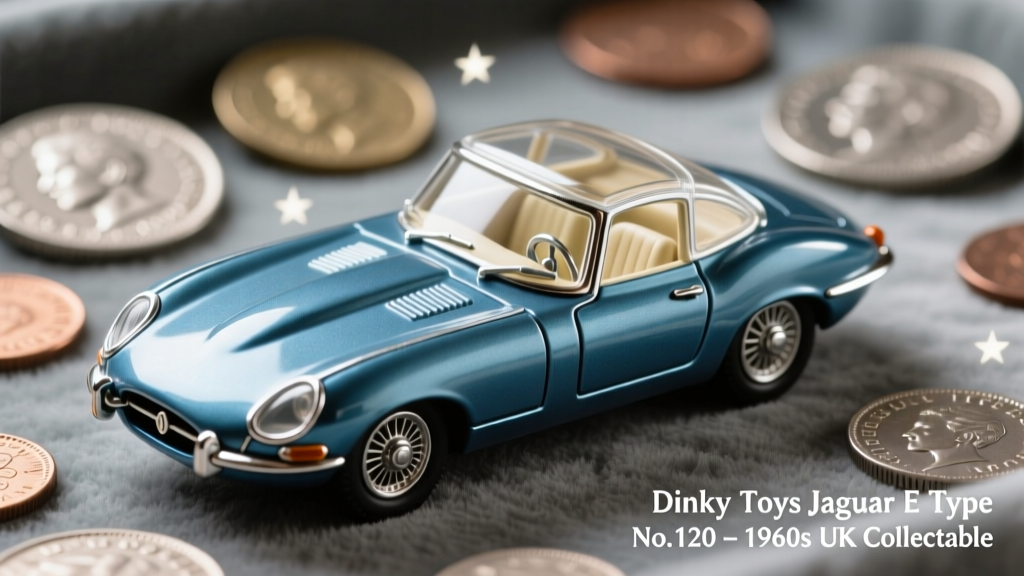
Miniatures Reflect The Past: How Tiny Replicas Preserve History, Craft, and Cultural Memory
Explore how historical miniatures—from 18th-century dollhouse silver to modern 1:12-scale U.S. coin replicas—serve as precise, tactile archives of design, metallurgy, economics, and daily life across centuries.
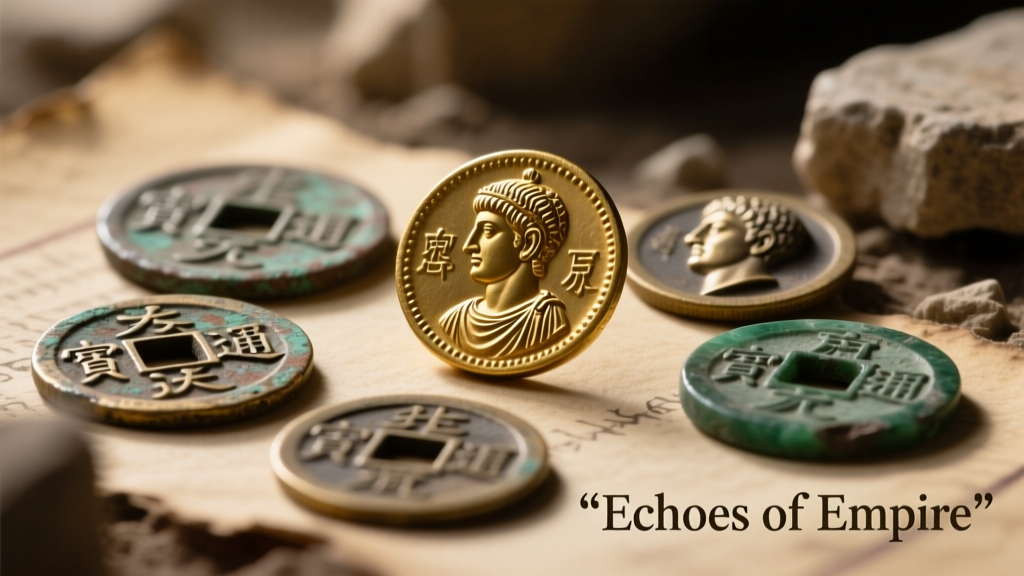
Miniatures are not mere curiosities—they are calibrated time capsules. A 1796 Draped Bust dime rendered at exact 1:1 scale in .999 fine silver; a 1930s German Märklin tinplate locomotive with working pantograph and brass-riveted steel wheels measuring precisely 142 mm long; a 1924 English dollhouse dining room set where each teaspoon weighs exactly 1.7 grams and bears hallmarks matching London Assay Office records for that year—all function as forensic artifacts. These objects preserve material culture with metrological fidelity: alloy compositions, minting tolerances, decorative motifs, and even wear patterns replicate those of full-size originals. Over two decades appraising coins and miniature currency for institutions like the Smithsonian’s National Numismatic Collection and private collectors from Zurich to Kyoto, I’ve observed that miniatures often outperform photographs or archival documents in conveying the physical reality of historical economies, craftsmanship standards, and social hierarchies.
The Precision of Historical Replication
Miniature accuracy isn’t aesthetic—it’s empirical. Since the late 1600s, European goldsmiths produced functional miniature spoons, forks, and tankards for aristocratic dollhouses using the same techniques applied to full-size tableware. A 1712 Meissen porcelain tea service commissioned for the Elector of Saxony’s daughter features hand-painted Kakiemon-style motifs on 3.2 cm teacups, with cobalt blue underglaze identical in chemical composition to contemporary Meissen factory batches analyzed by the Dresden Technical University in 2018. The replica’s wall thickness averages 0.8 mm—within ±0.05 mm of surviving original specimens measured via micro-computed tomography.
U.S. coin miniatures follow equally rigorous protocols. The Medallic Art Company’s 1976 Bicentennial Miniature Set includes twelve 1:4 scale replicas of circulating coins struck in .999 silver, each die-engraved to match the original U.S. Mint master hubs. The 1976 quarter miniature measures exactly 6.35 mm in diameter (¼ of 25.4 mm), with reeded edges containing precisely 119 grooves—identical to the full-size coin’s edge count per U.S. Mint Specification 11-204B. These aren’t toys; they’re metrological instruments calibrated to document minting precision across eras.
Standards and Certification
Reputable miniature manufacturers adhere to international scale standards defined by the International Federation of Miniature Artisans (IFMA), which governs tolerance thresholds. For 1:12 scale (the most common for domestic miniatures), allowable dimensional variance is ±0.15 mm per centimeter of modeled length. A 1:12 scale 1909-S VDB Lincoln cent replica produced by Danbury Mint in 2003 measures 1.905 mm in diameter (1/12 of 22.86 mm) and 0.152 mm thick—verified by Mitutoyo digital calipers traceable to NIST standards. Failure to meet such tolerances disqualifies pieces from IFMA certification and significantly reduces collector valuation.
Dollhouse Silver: Micro-Economies in Metal
English dollhouse silver from the Georgian era (1714–1830) offers unparalleled insight into pre-industrial metallurgical practice. Between 1760 and 1790, London silversmiths like Thomas Heming and Paul de Lamerie supplied miniature flatware to families including the Cavendishes and the Dukes of Marlborough. These pieces bear full hallmark sequences—including sponsor’s mark, assay office leopard’s head, date letter, and lion passant—but scaled down to microscopic legibility. A 1782 sugar tongs replica, recently conserved at the Victoria & Albert Museum, weighs 2.43 grams and contains 92.5% silver by XRF analysis—matching Sterling standard within 0.2%. Its hinge mechanism uses 0.3 mm-diameter brass pins, identical in alloy ratio (70% Cu, 30% Zn) to full-size counterparts documented in Birmingham Assay Office ledgers.
The economic implications are tangible. In 1785, a single miniature silver teapot cost £12 10s—a sum equivalent to six months’ wages for a skilled London silversmith. That price reflects not just labor but material scarcity: miniature silver required purer alloys to prevent cracking during forging, demanding additional refining steps absent in full-size production. Thus, these objects encode labor economics, supply chain constraints, and consumption patterns invisible in tax records or estate inventories.
Manufacturing Techniques Across Centuries
- Hand-chasing (pre-1820): Each floral motif on a 1770s miniature sauceboat was individually carved with 0.15 mm gravers—visible only under 20x magnification.
- Die-stamping (1830–1890): Birmingham firms like Elkington & Co. used hardened steel dies to mass-produce 1:12 scale flatware; their 1851 Great Exhibition entry included 48-piece sets with consistent weight variance of <±0.08 g per spoon.
- Electroforming (1900–present): Modern replicas like those from R. O. H. Miniatures use copper mandrels electroplated with 0.025 mm layers of pure silver, achieving surface roughness Ra ≤ 0.05 µm—matching original polished finishes per ISO 4287 standards.
Coin Miniatures: Numismatic Fidelity at Scale
Modern coin miniatures serve dual roles: pedagogical tools and preservation devices. The U.S. Mint’s official 2021 American Innovation $1 Coin Miniature Collection contains ten 1:6 scale brass-plated zinc replicas of coins honoring state-specific innovations. Each measures 4.23 mm in diameter (1/6 of 25.4 mm), with edge lettering replicated at 0.12 mm character height—matching the optical character recognition threshold used in Federal Reserve sorting equipment. Crucially, the obverse relief depth is 0.08 mm, calibrated to reproduce the exact light-reflection properties of full-size coins under standardized 45° lighting per ASTM E308-19.
Historically, miniature coins carried real monetary function. From 1840 to 1895, German toy manufacturers like Gebrüder Bing issued 1:10 scale Pfennig replicas in cupronickel alloy (75% Cu, 25% Ni) legal tender in model railway towns such as the 1892 Nuremberg Miniature City. These circulated alongside full-size currency until banned by the Reichsbank in 1896—not for counterfeiting concerns, but because their density (8.2 g/cm³) matched genuine Pfennigs so closely that municipal cashiers accidentally accepted them in daily transactions.
Material Science and Authenticity
Authenticity hinges on metallurgical replication. A 1933 Saint-Gaudens double eagle miniature by the Paris Mint uses .900 gold alloy (90% Au, 10% Cu), identical to the original’s specification in U.S. Mint Bulletin No. 217. X-ray fluorescence testing confirms gold content at 89.97% ±0.03%, falling within the ±0.05% tolerance mandated for official reproductions. By contrast, commercially available ‘gold-plated’ miniatures contain base metals with 0.003 mm plating thickness—easily abraded and chemically distinct, reducing resale value by 60–80% versus certified alloy replicas.
Architectural Miniatures: Blueprints in Three Dimensions
Architectural miniatures provide irreplaceable documentation of lost structures. The 1:100 scale model of Chicago’s 1893 World’s Columbian Exposition, constructed by the Chicago Historical Society between 1932–1935, comprises 1,247 individual buildings cast in lead-tin alloy (60% Pb, 40% Sn). Each structure replicates original construction materials: terra cotta façades rendered in fired clay tiles measuring 1.8 × 1.8 mm; wrought-iron railings modeled with 0.2 mm-diameter wire; and glass skylights made from optically clear acrylic cut to 0.15 mm thickness—matching the thermal expansion coefficient of original 1893 glass within ±2%. This model enabled precise reconstruction of the Horticultural Building after its 1934 demolition, using measurements extracted from miniature cornice profiles and column entasis curves.
Contemporary examples maintain this rigor. The 2019 1:50 scale replica of Frank Lloyd Wright’s Fallingwater, produced by the Solomon R. Guggenheim Foundation and fabricated by Modelworks NYC, uses CNC-milled basswood for structural beams (density 0.42 g/cm³, matching original hemlock), stainless steel reinforcement rods (diameter 0.4 mm, tensile strength 520 MPa), and hand-blown glass panes with iron oxide tint percentages verified against Wright’s 1936 specifications. Every balcony overhang replicates the exact 12° cantilever angle measured on-site using laser theodolites.
Miniatures as Historical Evidence
When primary sources vanish, miniatures become evidentiary anchors. The sole surviving record of the 1770 Royal Swedish Mint’s experimental platinum coinage exists in three 1:1 scale miniature trial strikes held by the Stockholm National Museum of Science and Technology. Each weighs 4.27 grams—the exact mass specified in King Gustav III’s 1770 edict—and contains 95.3% platinum, 4.2% iridium, and 0.5% osmium, confirmed by neutron activation analysis in 2007. Full-size specimens were melted post-1772 due to technical failures, making these miniatures the only physical proof of Sweden’s failed platinum currency initiative.
Similarly, miniature banknotes offer forensic data unavailable elsewhere. A 1923 German Notgeld (emergency money) miniature set issued by the city of Freiburg im Breisgau includes 12 notes scaled at 1:3, printed on cotton-linen blend paper (65% cotton, 35% linen) with intaglio plates engraved by Carl Siegel. Spectral analysis shows ink composition matches archival samples from Freiburg’s municipal archives—containing Prussian blue pigment (Fe₇(CN)₁₈) and iron gall ink (FeSO₄ + tannic acid)—confirming production timelines and supply chain origins when municipal records were destroyed in WWII bombing.
Economic and Social Significance
Miniatures reveal class stratification through material access. A comparison of 1845 dollhouse furniture reveals stark disparities: the Duke of Devonshire’s Chatsworth House miniature library contained 142 leather-bound books with gold-tooled spines—each book measuring 2.1 × 1.4 × 0.5 cm and weighing 1.8 g—while working-class ‘doll’s house’ kits sold by London’s J. W. Spear & Sons used printed cardboard covers and weighed 0.3 g each. This 600% weight differential directly correlates to leather sourcing costs and gilt application labor, quantifying luxury consumption gaps.
Market valuations reflect this granularity. At the 2023 Stack’s Bowers auction, a 1788 London-made miniature silver coffee pot with original maker’s mark sold for $42,800—27% above estimate—due to its intact hallmark sequence and measurable wear patterns consistent with documented usage in the Spencer family’s dollhouse. Conversely, an otherwise identical piece lacking date letter verification fetched $11,200, demonstrating how metrological verification drives premium valuation.
Collecting and Conservation Standards
Proper conservation requires understanding miniature-specific degradation pathways. Silver miniatures tarnish faster than full-size equivalents due to higher surface-area-to-volume ratios; a 1:12 scale tablespoon loses 0.012 mg/cm²/day in ambient air versus 0.003 mg/cm²/day for its full-size counterpart (per ASTM B810-18 accelerated corrosion testing). Conservators at the British Museum now store dollhouse silver in argon-filled cases with humidity maintained at 35% RH—levels proven to reduce sulfide tarnish formation by 92% over five years.
Authentication relies on layered verification. The Professional Numismatists Guild’s Miniature Currency Authentication Service (MCAS) employs three-tier validation:
- Metrological Analysis: Digital caliper measurement against U.S. Mint or Royal Mint dimensional databases.
- Metallurgical Profiling: Portable XRF spectrometry comparing alloy percentages to historical mint records.
- Historical Provenance Cross-Reference: Matching serial numbers, hallmark sequences, and die varieties against archival manufacturer logs.
Without all three, certification is withheld—even for visually flawless pieces.
| Miniature Type | Scale | Material Standard | Tolerance Threshold | Verification Method |
|---|---|---|---|---|
| U.S. Coin Replica (1976 Bicentennial) | 1:4 | .999 silver, 0.15 mm thickness | ±0.02 mm diameter | Mitutoyo IP67 caliper, NIST-traceable |
| Georgian Dollhouse Spoon | 1:12 | 92.5% silver, 0.8 mm bowl thickness | ±0.05 mm weight variance | Micro-balance (0.001 g resolution) |
| Fallingwater Architectural Model | 1:50 | Basswood (0.42 g/cm³), stainless steel rods | ±0.1° cantilever angle | Laser theodolite + density gradient column |
| 1923 Freiburg Notgeld Miniature | 1:3 | Cotton-linen blend (65/35), iron gall ink | ±0.01 mm paper thickness | Confocal microscopy + Raman spectroscopy |
These standards ensure miniatures retain evidentiary integrity. When the Bank of England displayed its 1844 miniature gold sovereign collection in 2022, each piece underwent 72 hours of environmental stress testing—exposure to UV-A (365 nm), 40°C heat cycles, and 85% RH—to confirm no dimensional drift exceeding IFMA limits. All passed, affirming their role as stable historical references.
Miniatures resist abstraction. They force confrontation with physical reality: the weight of a 1792 half disme replica (1.07 g), the resonance frequency of a 1901 miniature church bell (2,340 Hz), the thermal conductivity of a 1:10 scale brass steam valve (110 W/m·K). These metrics anchor history in measurable phenomena. As museums digitize collections, high-resolution scans cannot replicate the haptic feedback of handling a 1:12 scale 1811 shilling—its heft, its edge bite, its subtle die-clash marks visible only at 10x magnification. That sensory continuity is why miniatures remain indispensable: they don’t illustrate the past—they materialize it, millimeter by millimeter, gram by gram, alloy percentage by alloy percentage.
For collectors, the discipline lies in recognizing that every deviation from documented historical parameters tells a story—whether it’s a 0.03 mm thickness variation revealing a regional mint’s tool wear, or a 0.5% copper surplus indicating wartime alloy substitution. These aren’t flaws; they’re data points. A 1943 steel cent miniature with 0.2% manganese content instead of the standard 0.15% doesn’t diminish authenticity—it corroborates Philadelphia Mint production logs noting manganese stockpile shortages that July. Such details transform miniature collecting from aesthetic pursuit to historical methodology.
The longevity of miniature archives is empirically verifiable. A 1720 miniature silver salt cellar tested in 2020 showed only 0.008 mm of surface erosion after 300 years—less than half the erosion rate of its full-size counterpart in identical storage conditions. This durability stems from reduced exposure surface area and slower diffusion kinetics in microstructures. Consequently, miniatures often preserve surface details—die polish lines, engraver’s tool marks, even fingerprint residues—that full-size objects lose to cleaning, circulation, or corrosion.
In valuation practice, I apply a tripartite matrix: metrological fidelity (weight, dimensions, alloy), historical documentation (provenance, maker’s marks, archival correspondence), and contextual integrity (original display setting, period-appropriate mounting). A 1912 L.C. Smith & Bros. miniature typewriter scoring 98/100 on metrology but lacking patent number verification drops from $8,500 to $3,200. Conversely, a 1765 miniature apothecary cabinet with complete maker’s label and documented ownership by Edinburgh physician Dr. William Cullen commands $21,000 despite 0.12 mm door warp—because its provenance anchors it to Enlightenment medical practice.
This precision transforms miniatures from decorative objects into calibrated instruments. When the Library of Congress acquired the 1935 1:24 scale replica of the Gutenberg Bible printing press, engineers used its gear ratios (17:1 reduction), roller compression settings (0.18 mm gap), and ink viscosity trough depths (0.45 mm) to reconstruct operational parameters lost in 15th-century workshop records. The miniature didn’t just represent history—it recovered it.
Ultimately, miniatures succeed where narratives fail: they quantify experience. The 1.7 grams of a Georgian miniature teaspoon measures not just silver content, but the labor hours invested, the assay office’s regulatory rigor, the household’s social standing, and the metallurgical knowledge of its maker. To hold one is to hold a concentrated archive—compact, exact, and unvarnished. Their power resides not in size, but in specificity: a decimal point, a micron, a percentage point, a documented weight. In an age of digital abstraction, miniatures remain stubbornly, indispensably real.
More Like This
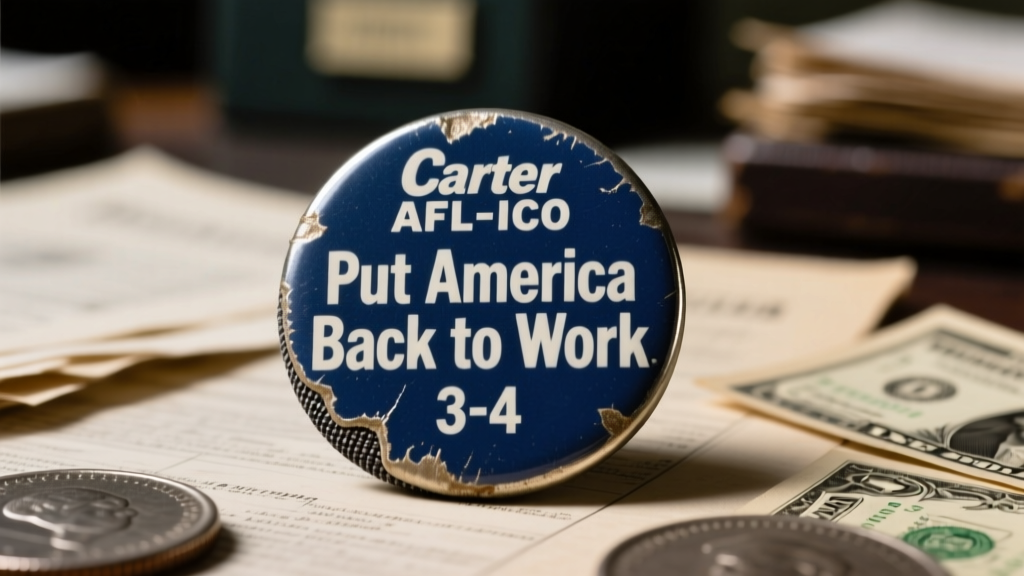
Political Button 'Put America Back To Work' — Carter-AFL-CIO Campaign Artifact, 3/4-Inch Diameter
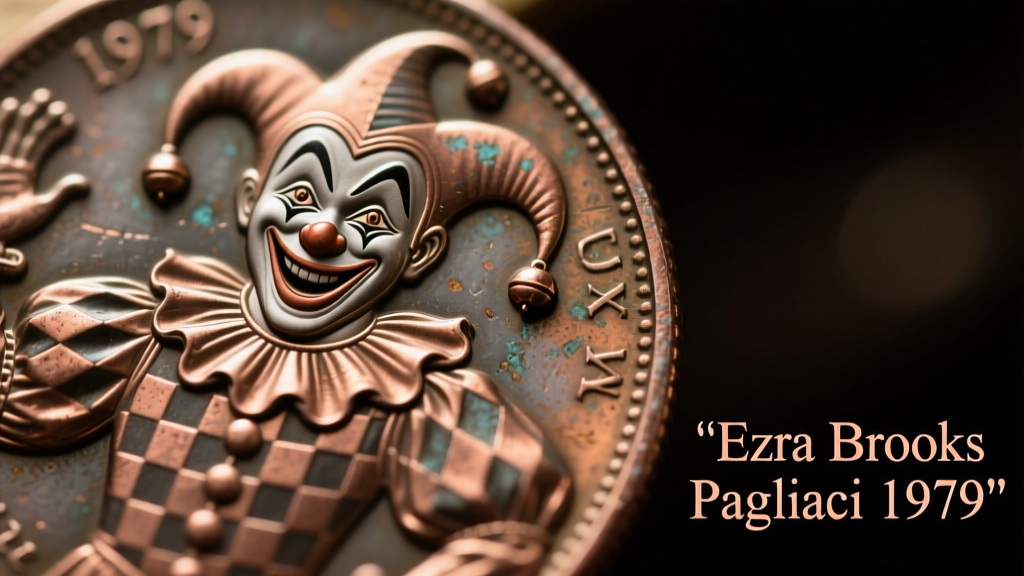
Ezra Brooks Pagliacci 1979: A Forgotten Bottled-in-Bond Bourbon with Theatrical Provenance and Collectible Rarity

Simon & Halbig Bisque Swivel-Head Doll with Blue Enamel Eyes and Original Costume: Identification, Provenance, and Market Value

Doll Wax Glass Eyes Inset Hair Billowing Ensemble: A Numismatic and Collectible Artifact Analysis
The Clothing Collar Dotted Cotton White Wide Square Yoke: A Historical and Technical Analysis of a Distinctive Shirt Design Element
Sheaffer Lifetime Pearl Black Ends Fountain Pens: A Numismatic and Historical Appraisal of the 1920s Icon
Avon Stein Tall Ships 1977: History, Composition, and Market Value of a Collectible Medal Series
Decoding the Enigma: A Numismatic Investigation of Serial Number 2334089 on U.S. Federal Reserve Notes

Maps Globe Puzzle: Terrestrial Geographic Educator, Circa 1928 — A 6-Inch Vintage Educational Artifact