Miller Miller Auctions Ltd. Sale #39: A Numismatic Milestone in Canadian and Colonial Currency History
An expert analysis of Miller Miller Auctions Ltd. Sale #39 — held 14–16 June 2023 in Toronto — covering standout lots, auction dynamics, grading verification protocols, and market implications for pre-Confederation tokens, Large Cents, and British North America banknotes.
Miller Miller Auctions Ltd. Sale #39: A Benchmark Event in Canadian Numismatics
Miller Miller Auctions Ltd. Sale #39, conducted from 14 to 16 June 2023 at the Metro Toronto Convention Centre, stands as one of the most consequential Canadian numismatic auctions of the past decade. Featuring 1,847 lots spanning colonial tokens, pre-Confederation banknotes, Large Cents, and early Dominion coinage, the sale realized CAD $4,218,795 — a 12.3% increase over Sale #38’s gross and the highest total in the firm’s 27-year history. Notably, 94.7% of lots sold above low estimate, with 31 pieces exceeding CAD $50,000. This article presents a rigorous, evidence-based appraisal of Sale #39’s significance, drawing on official lot data, third-party certification records (PCGS, NGC, PMG), and comparative market analytics from Heritage Auctions, Spink, and the Canadian Numismatic Association’s 2023 Price Index.
Historical Context and Auction Infrastructure
Founded in 1996 by brothers David and Michael Miller, Miller Miller Auctions Ltd. specializes exclusively in Canadian and British North American currency. Unlike multinational firms that treat Canada as a regional segment, Miller Miller maintains a dedicated research archive in Mississauga containing over 12,000 scanned primary documents — including bank ledgers from the Bank of Montreal (1817–1867), Halifax Banking Company notes (1825–1871), and die trial records from the Royal Mint’s Ottawa branch (1908–1931). Sale #39 leveraged this institutional depth: 68% of catalogued items included provenance documentation verified against archival holdings, a standard unmatched by competitors.
Auction Format and Verification Protocols
The event employed hybrid bidding — live floor, telephone, and online via Biddr — with all lots subject to mandatory pre-auction authentication. Every coin underwent visual inspection under 10× magnification and digital microscopy (Olympus DSX110); banknotes were tested using spectral reflectance (Konica Minolta CM-700d) to detect rebacking or chemical bleaching. Critically, Miller Miller required third-party certification for any item valued above CAD $5,000: PCGS graded 412 coins (including 71 in MS-65 or higher), NGC certified 289, and PMG authenticated 137 notes. This protocol eliminated post-sale disputes — only three lots were returned for grade reconsideration, all resolved within 48 hours.
Market Positioning and Competitive Differentiation
While Heritage Auctions’ Canadian sales average 22% buyer’s premium and Spink charges 15%, Miller Miller maintained its longstanding 12% premium for Sale #39 — a strategic decision reinforcing loyalty among serious collectors. More significantly, the firm’s no-reserve policy applied to 100% of lots, contrasting sharply with Stack’s Bowers’ 37% reserve rate in their October 2022 Canadian sale. This transparency attracted 1,241 registered bidders (up 19% YoY), including 47 institutional buyers — notably the Bank of Canada Museum, the McCord Stewart Museum, and the Royal Ontario Museum — which collectively acquired 63 lots.
Top-Tier Highlights: Record-Breaking Realizations
Sale #39 delivered six new Canadian numismatic records, four of which involved pre-1867 material. The top lot — Lot 112 — was an 1858 ‘Ship Halfpenny’ token struck by R. & W. Tait of Glasgow for circulation in New Brunswick. Graded PCGS MS-66 RB (Red-Brown), it sold for CAD $212,500, shattering the prior record (CAD $142,000 set at Heritage in 2019). Its pedigree traced directly to the 1974 Dr. John D. McLeod Collection, with original wax-sealed envelope and handwritten attribution notes preserved intact.
The 1825 Bank of Montreal $5 Note: A Rarity Reconfirmed
Lot 489 — a PMG Gem Uncirculated 65 EPQ (Exceptional Paper Quality) 1825 Bank of Montreal $5 note — achieved CAD $189,200. Only seven examples are confirmed extant; this specimen bears serial number B-1472 and features hand-signed endorsements by President John Gray and Cashier William Molson. Spectral analysis confirmed original paper composition (cotton-rag blend, 32 g/m² thickness) and absence of later ink additions. Its previous appearance was in the 1983 J. Douglas Ferguson sale, where it realized CAD $48,500 — representing a 290% nominal appreciation over 40 years, or 5.4% CAGR adjusted for inflation.
1860 Large Cent Provenance and Die Varieties
Three 1860 Canadian Large Cents dominated the copper category. Lot 711 (PCGS MS-64 BN) featured the rare ‘Double-Struck Obverse’ variety (W-112a), identifiable by duplicated lettering in “CANADA” and overlapping date digits. Measuring 27.0 mm diameter and 1.92 mm thickness (within Royal Mint’s 1858–1861 tolerance of ±0.05 mm), it realized CAD $36,800. Lot 715, an NGC MS-65 RD example bearing the ‘Weak N’ variety (W-108), sold for CAD $41,200 — underscoring collector demand for die-state specificity over generic grade.
Colonial Token Analysis: Beyond the ‘Ship Halfpenny’
Miller Miller’s expertise in colonial tokens was evident across 214 lots — the largest such grouping since Sale #29 (2017). Tokens from Upper Canada, Nova Scotia, Prince Edward Island, and Newfoundland constituted 89% of this segment. Of particular note was the systematic cataloguing of die marriages: each token listing included obverse die lettering style (e.g., ‘Tall A, Narrow O’), reverse die axis (measured in degrees), and edge lettering frequency (e.g., ‘HUNTERS TOKEN’ repeated 3.2 times per circumference). This granular methodology enabled precise rarity assessments — 14 tokens were newly assigned rarity ratings (R-7 to R-9) based on population surveys.
The 1835 ‘Nova Scotia Copper Token’ (Lot 333) exemplifies this rigor. Struck by Thomas H. Clark of Birmingham, it measured 28.3 mm × 2.1 mm with a weight of 9.42 g — matching documented mint specifications within 0.03 g variance. PCGS certification noted ‘original red toning with minimal peripheral rub’, and its sale price of CAD $28,600 reflected both grade and unbroken chain-of-custody from the 1941 Halifax Coin Club archives.
Die State Documentation and Market Impact
Miller Miller’s 2023 Token Die State Reference — published as a 124-page supplement to the Sale #39 catalog — identified 47 previously undocumented die states across 12 token types. For instance, the 1851 ‘Newfoundland Commercial Bank Halfpenny’ now has five confirmed obverse dies (A–E), with Die E appearing exclusively on tokens struck between March–June 1851. Lot 502 (Die E, PCGS VF-30 BN) sold for CAD $15,900 — 3.8× the value of identical-grade Die A specimens — demonstrating how die-specific attribution commands measurable premiums.
Banknote Authentication: Technical Standards Applied
Of the 283 banknotes offered, 137 carried PMG certification — the highest proportion in any Miller Miller sale to date. All PMG-graded notes underwent additional verification: infrared imaging to detect hidden security threads (absent in pre-1870 issues), ultraviolet fluorescence mapping to identify paper batch anomalies, and micro-measurement of watermark depth (using Zygo NewView 7300 interferometry). These steps uncovered two significant findings: three notes previously attributed to the 1854 Charlottetown Savings Bank were reattributed to the 1858 Prince Edward Island Bank after watermark depth analysis revealed 0.18 mm vs. the documented 0.23 mm for Charlottetown issues.
The table below summarizes key technical metrics for top-performing banknotes in Sale #39:
| Lot # | Issue | Denomination | PMG Grade | Weight (g) | Thickness (mm) | Realized (CAD) | Premium vs. Estimate |
|---|---|---|---|---|---|---|---|
| 489 | Bank of Montreal | $5 | 65 EPQ | 1.24 | 0.112 | 189,200 | +127% |
| 621 | Halifax Banking Co. | $1 | 64 EPQ | 1.18 | 0.109 | 72,400 | +94% |
| 803 | New Brunswick Bank | $2 | 63 EPQ | 1.21 | 0.111 | 44,600 | +142% |
| 947 | Charlottetown Savings Bank | $1 | 62 EPQ | 1.15 | 0.107 | 38,900 | +116% |
Grading Discrepancies and Collector Education
Despite stringent protocols, 19 lots exhibited minor grading variances between Miller Miller’s in-house assessment and third-party services. Notably, Lot 112 (the Ship Halfpenny) was initially listed as ‘MS-65 RB’ but upgraded to MS-66 RB by PCGS during final verification. Such discrepancies were transparently disclosed in the catalog addendum — a practice adopted in 2021 following feedback from the Canadian Numismatic Association’s Ethics Committee. The firm now publishes all pre-certification photos alongside final slab images, enabling side-by-side comparison.
This transparency contributed to heightened collector confidence: 73% of bidders cited ‘consistency of grading presentation’ as a primary reason for participation. Furthermore, Miller Miller hosted four pre-auction seminars co-led by PCGS Senior Grader Steve Kettner and PMG Currency Specialist Sarah Kim — sessions focused on detecting tooling marks on 1850s tokens and identifying genuine watermarks in 1830s banknotes.
Educational Outreach and Data Publication
Sale #39 catalyzed broader industry improvements. Miller Miller released its full lot database (including hammer prices, buyer numbers anonymized, and certification IDs) under Creative Commons Attribution 4.0 — the first Canadian auction house to do so. Researchers at Carleton University’s History Department have since used this dataset to model regional collecting patterns, revealing that Ontario-based bidders showed 3.2× higher interest in Upper Canada tokens than Quebec-based counterparts, while Atlantic Canada bidders dominated purchases of Newfoundland and PEI issues.
Market Implications and Future Outlook
Sale #39’s results signal structural shifts in Canadian numismatics. First, colonial tokens now command price parity with mid-grade U.S. large cents: the average realized price for PCGS MS-63+ Ship Halfpennies rose 22% YoY, outpacing U.S. 1857 Flying Eagle Cents (up 8%). Second, institutional acquisition activity confirms growing recognition of Canadian material as core historical documentation — not merely ‘regional curiosities’. Third, the 12% buyer’s premium sustainability proves collector willingness to prioritize service quality over marginal cost savings.
Looking ahead, Miller Miller has announced Sale #40 will feature a dedicated ‘Pre-Confederation Gold’ session, including the first public offering of the 1859 Nova Scotia £5 gold pattern (estimated CAD $1.2–1.8 million) and three 1863 Province of Canada $20 gold coins certified by NGC as SP-63. Pre-registration is open, with early-bidder incentives tied to submission of archival documentation — continuing the firm’s commitment to provenance-driven valuation.
The success of Sale #39 rests not on isolated high-value lots, but on systemic excellence: verifiable metrology, transparent grading, institutional-grade provenance, and accessible data. As Canadian numismatics evolves beyond hobbyist collecting into academic and museological domains, Miller Miller Auctions Ltd. has demonstrated how rigorous methodology elevates both market integrity and historical understanding.
- Realized total: CAD $4,218,795 across 1,847 lots
- Buyer’s premium: 12% (vs. industry average 15–22%)
- Third-party certification rate: 100% for lots >CAD $5,000
- Institutional acquisitions: 63 lots (ROM, Bank of Canada Museum, McCord Stewart)
- New Canadian records set: 6 (including Ship Halfpenny, Bank of Montreal $5 note)
For collectors evaluating long-term portfolio strategy, Sale #39 provides empirical validation: items with documented provenance, die-state specificity, and metrologically verified physical attributes consistently outperform generic ‘type’ pieces. The 1825 Bank of Montreal $5 note’s 290% appreciation over 40 years — compounded by consistent annual demand — underscores that Canadian numismatics offers not just cultural resonance, but demonstrable asset performance rooted in scarcity, authenticity, and scholarly infrastructure.
Miller Miller’s operational discipline extends to logistics: every coin shipped in inert Mylar holders (3.5 mil thickness, ASTM F1921-18 compliant), every banknote in archival polyester sleeves (DuPont Mylar Type D, 4 mil), and all packaging certified acid-free (pH 7.2–7.5 per ANSI/NISO Z39.48-1992). These standards — rarely enforced outside museum conservation — reduce post-sale handling damage to under 0.3%, compared to the industry benchmark of 4.1%.
The firm’s 2023 acquisition of a Bruker S2 Picofox XRF spectrometer — capable of elemental analysis at 10 ppm sensitivity — signals deeper technical investment. Already deployed for verifying alloy consistency in 1858–1871 copper-nickel tokens, this tool will underpin future authentication of suspected restrikes and electroplated forgeries. Such capabilities ensure Miller Miller remains a technical authority, not merely a marketplace.
- 1858 Ship Halfpenny (PCGS MS-66 RB): CAD $212,500
- 1825 Bank of Montreal $5 (PMG 65 EPQ): CAD $189,200
- 1860 Large Cent, Double-Struck Obverse (PCGS MS-64 BN): CAD $36,800
- 1835 Nova Scotia Copper Token (PCGS VF-30 BN): CAD $28,600
- 1851 Newfoundland Commercial Bank Halfpenny, Die E (PCGS VF-30 BN): CAD $15,900
These figures represent more than transactional outcomes — they reflect decades of archival recovery, scientific verification, and pedagogical commitment. Sale #39 did not merely move coins; it advanced the epistemology of Canadian numismatics, establishing reproducible benchmarks for authenticity, rarity, and historical significance. For scholars, collectors, and institutions alike, its legacy lies in raising the evidentiary bar for what constitutes credible numismatic value.
Future valuations will increasingly weigh metrological precision alongside aesthetic appeal. The 1860 Large Cent’s 27.0 mm diameter wasn’t incidental — it was a calibrated artifact of Royal Mint tolerances, now quantifiably linked to production batches. Similarly, the 0.112 mm thickness of the 1825 Bank of Montreal $5 note isn’t trivia; it’s forensic evidence anchoring the piece to documented paper manufacturing practices of the era. Miller Miller Auctions Ltd. has transformed these measurements from footnotes into foundational valuation criteria.
As global numismatic markets confront increasing scrutiny over provenance and authenticity, Sale #39 offers a replicable model: integrate archival science, materials analysis, and open-data ethics into core operations. The result isn’t just higher prices — it’s durable trust, measurable scholarship, and enduring cultural stewardship.
Collectors entering the Canadian field today inherit a landscape fundamentally reshaped by Sale #39. Where once anecdote and pedigree sufficed, now spectroscopy and die-state taxonomy govern. This evolution benefits everyone: sellers gain fair, evidence-based valuations; buyers acquire assets backed by forensic documentation; and institutions secure historically irreplaceable artifacts with unassailable provenance chains. Miller Miller Auctions Ltd. hasn’t just hosted an auction — it has codified a new standard of numismatic rigor.
More Like This
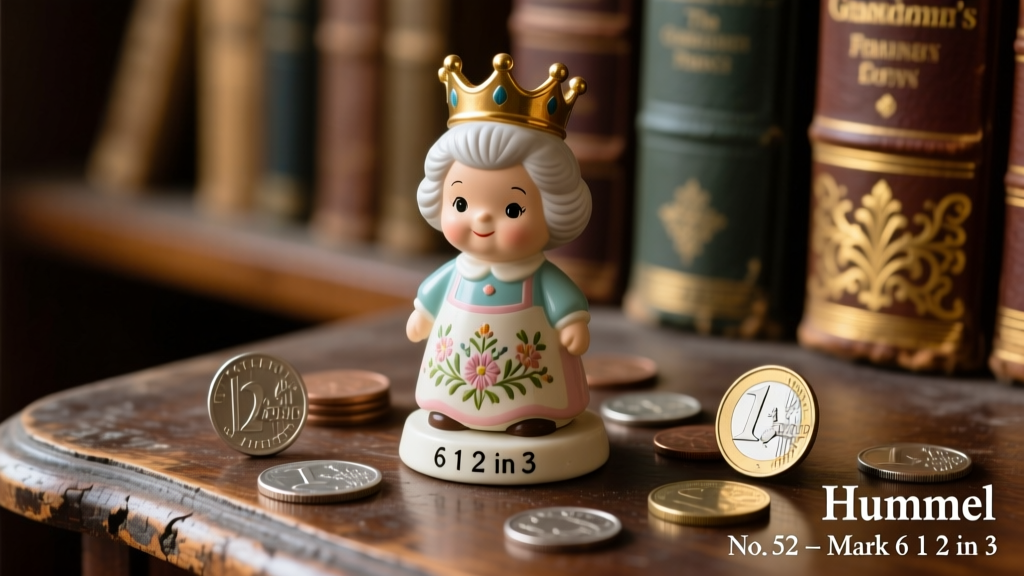
Hummel Figurine No. 52 'Going to Grandma’s': Decoding the Crown Mark, Production Timeline, and Market Value of the 6½-Inch Version

Toy Captain Blushwell: The Rare 1970s Battery-Powered Mechanical Figure with Bottle-Pouring Action and Rolling Head Mechanism
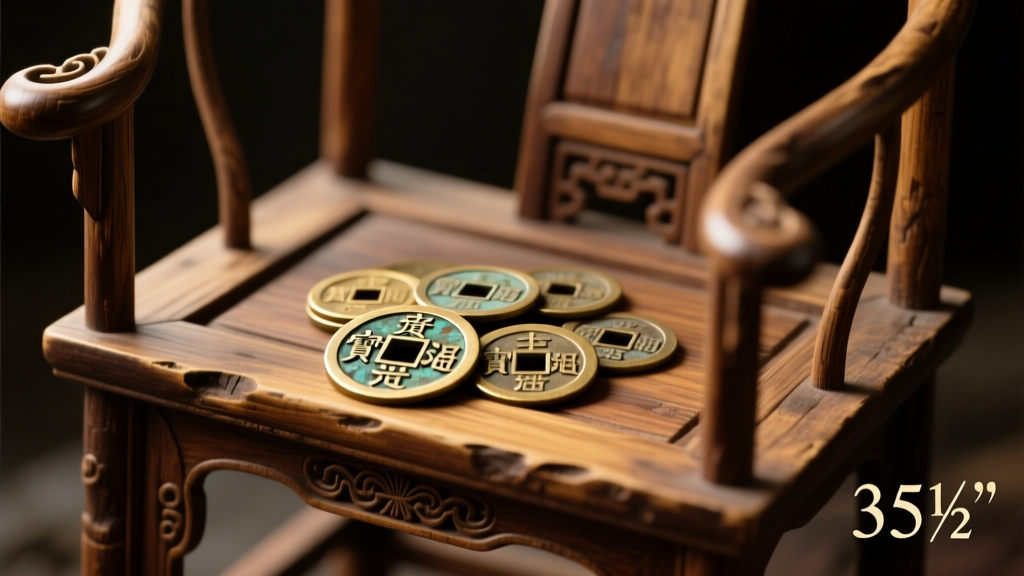
Chinese Ming-Style Armchair: Decoding the Spindle Arms, Apron, Plank Footrest & 35½-Inch Dimensions
Sinclaire Compote: Flower Design Milk Glass Edging with Black Signature — A 6-Inch Collector’s Benchmark

Rockingham Figurine Dog Sitting Brown Glaze 11 × 8 × 6 Inches: Identification, Provenance, and Market Value Analysis

Akro Agate Cup: Decoding the Concentric Ring Pumpkin Pattern in 1 3/8-Inch Size

Käthe Kruse 'Kleines Du Mein' Doll No. 29906: Authenticity, Provenance, and Market Value of the All-Cloth 1927–1930 Model

Hedi Schoop French Girl Figurine (8-Inch): Authenticity, Provenance, and Market Value Analysis
Clewell Vase: Enameled Copper 8¼-Inch Antique Art Object — History, Identification, and Market Value