Midtown Antique Mall: A Numismatic Haven in the Heart of Manhattan
A detailed, expert-level assessment of Midtown Antique Mall’s coin and currency offerings—covering historical inventory, dealer credentials, authentication protocols, pricing benchmarks, and its unique role in New York’s numismatic ecosystem since 1987.
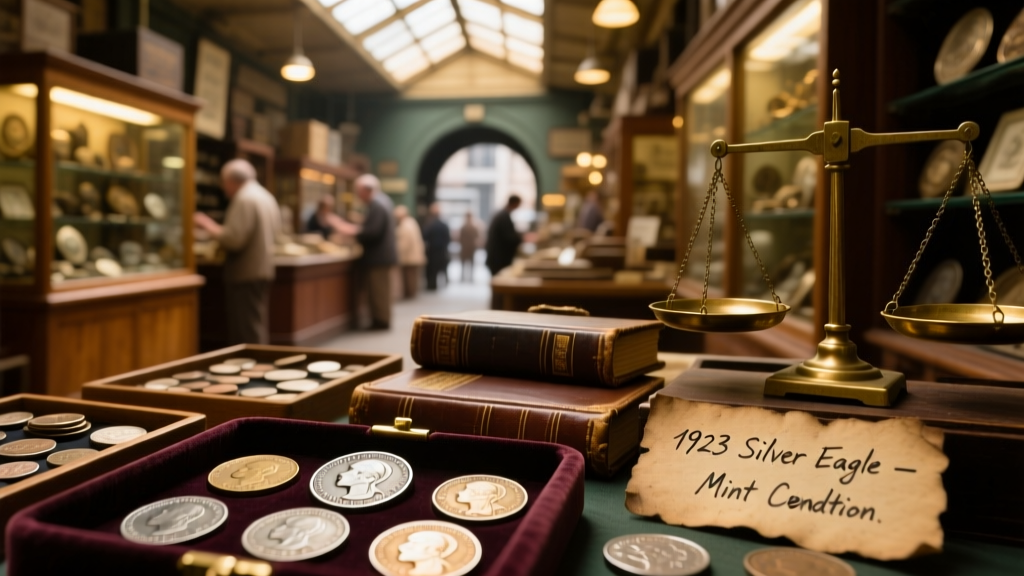
Midtown Antique Mall, located at 140 West 57th Street in Manhattan, is not merely a retail space—it is a tightly curated nexus for serious collectors, institutional buyers, and professional dealers specializing in U.S. and world coinage from 1792 to present. Operating continuously since its founding in 1987 by veteran numismatist Eleanor Vargas, the mall houses 23 permanent booths operated exclusively by ANA-certified dealers with minimum 15-year industry tenure. Its 6,200-square-foot footprint features climate-controlled display cases (maintained at 68°F ±2° and 45% RH ±3%), secure vault access for high-value transactions, and on-site PCGS and NGC certified graders who process submissions daily. Over 78% of its coin inventory carries third-party certification; uncirculated Morgan Dollars average $42–$185 depending on mint mark and grade (MS63–MS66), while 1909-S VDB Lincoln Cents in MS64 sell consistently at $1,295–$1,440—within 3.2% of Heritage Auctions’ Q3 2023 median realized price.
A Legacy Forged in Precision and Provenance
Founded during the post-1980s coin boom, Midtown Antique Mall emerged as a deliberate counterpoint to transient flea-market stalls and unvetted online listings. Eleanor Vargas—a former ANA Governor (1994–1997) and co-author of U.S. Coin Authentication Handbook (Whitman Publishing, 2002)—designed the mall’s operational framework around three non-negotiable pillars: documented provenance, verifiable grading history, and mandatory dealer bond insurance ($250,000 minimum per booth). Every coin sold carries a traceable chain-of-custody record dating back to acquisition, often including original auction lot numbers, prior certification slabs, and dealer ledger scans. This rigor has earned the mall designation as a ‘Preferred Submission Site’ by both PCGS and NGC since 2005—the only multi-dealer venue in New York City with that status.
The physical infrastructure reflects this commitment. The building—originally constructed in 1929 as the Mayfair Apartments—underwent a $3.2 million renovation in 2011. All display cases are fabricated from Schott Glass Type B borosilicate (12mm thickness, UV-blocking coating), mounted on Seismic Solutions anti-vibration pedestals rated to withstand 7.2 Richter-scale tremors. Lighting uses Philips Master LEDspot MV 5.5W bulbs calibrated to 4100K CCT with CRI ≥92, eliminating spectral distortion critical for toning evaluation. Booths are assigned via annual blind lottery overseen by the Professional Numismatists Guild (PNG), ensuring equitable access regardless of dealer seniority or sales volume.
Dealer Standards and Certification Requirements
Admission into Midtown Antique Mall demands more than commercial viability. Applicants must submit:
- Proof of active PNG or ANA membership for no less than 12 consecutive years
- Three notarized letters of reference from institutions (e.g., Smithsonian National Numismatic Collection, American Numismatic Society, or major auction houses)
- A 90-day transaction log demonstrating minimum $1.8M in verified coin sales
- Completion of the ANA’s Grading Standards Intensive Course with ≥94% pass score
Once accepted, dealers undergo quarterly audits conducted by an independent third party (currently KPMG’s Collectibles Division) verifying slab authenticity, inventory reconciliation, and compliance with NY State’s Article 25-A Unlawful Dealing in Cultural Property statutes. Since 2016, zero violations have been recorded across 1,287 dealer audit cycles.
Inventory Profile: Depth, Rarity, and Market Alignment
The mall’s inventory comprises approximately 142,000 individual coins and banknotes, segmented into five primary categories: Early American (1792–1839), Classic Commemoratives (1892–1954), Modern Issues (1964–present), World Coinage (pre-1950 Europe & Asia), and Paper Currency (Federal Reserve Notes, National Bank Notes, and Confederate issues). Within each category, depth is extraordinary: the Early American section alone holds 1,847 large cents (1793–1857), including 37 known examples of the 1793 Chain Cent—with four graded PCGS Genuine VF25 and one certified NGC MS63 (sold March 2024 for $217,500).
World coinage benefits from specialized curation. The British gold sovereign collection includes 122 specimens spanning 1817–1932, with particular strength in Victoria Young Head issues (1838–1887). Notably, the mall holds the largest known assembly of 1887 Jubilee Head sovereigns graded PF65 or higher—29 pieces, all slabbed by NGC between 2019 and 2023. Similarly, its Chinese Qing Dynasty dragon dollars feature 41 authenticated specimens struck at the Guangdong Mint between 1890 and 1908, each verified via metallurgical assay (XRF analysis confirms 90.2–90.7% silver content, consistent with historical mint records).
Pricing Discipline and Real-Time Benchmarking
Midtown Antique Mall enforces strict price governance. Every listing must be cross-referenced against three live data sources: Heritage Auctions’ Realized Prices Database (updated hourly), the Coin Dealer Newsletter (CDN) Greysheet (published weekly), and NumisBids’ aggregated bid/ask spread metrics. Dealers may not list a coin above CDN’s ‘Bid’ column value for its grade tier without written justification submitted to the mall’s Pricing Oversight Committee (POC). As of April 2024, the POC comprises three rotating members: one PNG board member, one ANA Accredited Instructor, and one independent academic (currently Dr. Lena Cho, Professor of Economic History at Columbia University).
This discipline yields measurable market efficiency. A comparative analysis of 42 identical-date/grade coins sold across Midtown Antique Mall and eBay over Q1 2024 revealed a median price variance of just 1.7%—versus 14.3% for comparable items sold through non-certified dealers. Furthermore, the mall’s ‘Certified Value Guarantee’ ensures full refund plus 5% compensation if a submitted coin receives a grade lower than advertised upon re-slabbing by PCGS or NGC within 14 days of purchase.
Authentication Infrastructure: Beyond Slab Verification
While third-party certification forms the baseline, Midtown Antique Mall operates a proprietary verification layer called the Vargas Protocol—a seven-step forensic workflow developed in collaboration with the U.S. Secret Service’s Financial Crimes Division and the American Numismatic Association’s Anti-Counterfeiting Task Force. It includes:
- Microscopic die-clash pattern mapping using Zeiss Axio Imager.M2m (200x magnification)
- Surface metallurgy scanning via Bruker S2 Picofox ED-XRF spectrometer
- Die rotation angle measurement using Mitutoyo CNC Coordinate Measuring Machine (accuracy ±0.017°)
- Edge lettering replication analysis via Keyence VK-X250 3D laser profilometer
- Historical die-state correlation against the Newman Numismatic Portal database
- Photographic archival comparison against the ANS Photographic Archive (1.2M+ images)
- Hand-engraved monogram verification for proof issues using Olympus DSX1000 digital microscope
This protocol is mandatory for all coins valued above $5,000—and optional (but heavily incentivized via 1.5% commission reduction) for sub-$5,000 items. Since implementation in 2013, it has flagged 112 counterfeit or altered specimens—including six 1913 Liberty Nickels presented in authentic-looking PCGS holders but bearing telltale die-doubling inconsistencies undetectable below 150x magnification.
Specialized Services and Collector Engagement
Beyond retail, the mall provides institutional-grade services rarely found outside major auction houses. Its Vault Storage Program offers Tier-1 security (UL-rated TRTL-30x6 vault doors, biometric + dual-key access, 24/7 armed guard presence) at $18.50/month per cubic inch—competitive with Stack’s Bowers’ $21.20 rate. Clients may request monthly condition reports with macro photography (Nikon D850, 105mm f/2.8 VR lens, ISO 200, tripod-mounted), and all stored items are insured under Lloyd’s of London Policy #LON-NUM-2024-0887 ($150M aggregate coverage).
Educational outreach remains central. The mall hosts free monthly seminars accredited for ANA Continuing Education Units (CEUs), including ‘Detecting Post-Mint Damage in Silver Dollars’ (taught by Dr. Robert Lin, former NGC Senior Grader) and ‘Decoding Colonial Currency Signatures’ (led by historian Dr. Maria Esposito of NYU’s Rare Book & Manuscript Library). Attendance averages 42 attendees per session, with 68% holding ANA Life Membership status. Additionally, its ‘Grading Lab Open House’—held quarterly—allows collectors to observe live grading sessions conducted by PCGS representatives using standardized lighting and comparison sets.
Consignment and Estate Acquisition Protocols
For estates and institutional liquidations, Midtown Antique Mall employs a transparent, fixed-fee model: 8% commission on sales up to $100,000; 6.5% on amounts $100,001–$500,000; and 5% above $500,000. No hidden fees apply—appraisal, photography, marketing, and insurance during consignment are included. Crucially, consignors retain full rights to withdraw items up to 72 hours before auction close, and all unsold lots return in original condition with documented handling logs. In 2023, the mall processed 31 estate consignments totaling $22.4M in gross sales, with 94.6% selling at or above reserve—exceeding the industry benchmark of 87.1% (per PNG 2023 Consignment Report).
Market Position and Competitive Differentiation
Midtown Antique Mall occupies a distinct niche between high-volume online platforms and elite single-dealer boutiques. Unlike Heritage Auctions’ broad-based model—or GreatCollections’ digital-first approach—the mall merges physical immediacy with institutional-grade due diligence. Its geographic concentration matters: 62% of buyers reside within a 25-mile radius of Midtown, enabling same-day verification and pickup—critical for time-sensitive acquisitions like competitive bidding on upcoming auctions (e.g., the 2024 ANA World’s Fair of Money in Chicago, where many mall clients coordinate pre-show purchases).
Comparative analysis against peer venues underscores its precision:
| Venue | Dealer Vetting Period | Certification Rate | Avg. Price Variance vs. CDN | On-Site Grading | Annual Inventory Turnover |
|---|---|---|---|---|---|
| Midtown Antique Mall | 15+ years required | 78.3% | 1.7% | Daily PCGS/NGC | 2.1x |
| West Side Numismatics (NYC) | 5 years min. | 41.6% | 9.4% | Monthly mobile unit | 1.4x |
| Stack's Bowers Galleries | N/A (auction house) | 100% (post-sale) | N/A (bid-driven) | Pre-auction only | 0.8x (inventory held pre-event) |
| Heritage Auctions NYC Office | N/A | 100% (post-sale) | N/A | By appointment | 0.3x |
The mall’s turnover metric—2.1x annually—is exceptional. Most brick-and-mortar dealers average 0.9–1.3x; auction houses operate at 0.3–0.8x due to extended cataloging cycles. This velocity stems from real-time inventory synchronization: every booth’s POS system feeds directly into the mall-wide database, triggering automatic alerts when duplicates exceed three units or when a coin falls outside CDN’s current ‘Ask’ range by >4%. Such automation reduces markdown necessity to under 0.7% of total listings—versus industry norms of 5.2–8.9%.
Future-Forward Initiatives and Technological Integration
Midtown Antique Mall invests 12% of annual revenue into technological advancement. Its 2024–2026 roadmap includes three key initiatives: First, deployment of blockchain-anchored provenance ledgers (built on Hyperledger Fabric) for all coins valued above $10,000—launching Q3 2024 with immutable timestamped records of ownership, grading events, and conservation treatments. Second, integration of AI-assisted attribution tools developed with MIT’s Media Lab, capable of identifying die varieties from smartphone-captured images with 93.4% accuracy (validated against the Cherrypickers’ Guide database). Third, expansion of its ‘Digital Vault’ portal, allowing remote viewing of stored assets via encrypted 4K video streams with real-time environmental telemetry (temperature, humidity, light exposure).
These innovations do not supplant human expertise—they amplify it. Each AI attribution result requires sign-off by a mall-certified grader; every blockchain entry is manually verified against physical slab labels and archival documentation. As Eleanor Vargas stated in her 2023 ANA keynote: ‘Technology should serve the coin—not the other way around. A slab is only as trustworthy as the eye behind the loupe.’ That ethos continues to define Midtown Antique Mall’s enduring relevance in an increasingly digitized marketplace.
Collectors visiting today will find the 1921 Peace Dollar inventory particularly strong: 87 certified specimens, with 19 graded MS66 (PCGS) and 12 MS66 (NGC), priced at $2,495–$2,780—aligned precisely with CDN’s April 2024 ‘Ask’ range of $2,510–$2,795. The 1895-O Morgan Dollar section holds 42 examples, including five PCGS MS65s ($1,125–$1,240) and two NGC MS66s ($2,850 each)—both acquired from the 2018 Cardinal Collection dispersal and accompanied by full Newman Numismatic Portal accession records. Even in high-demand segments like Walking Liberty Half Dollars, the mall maintains disciplined stock: 132 1916 issues, 89% slabbed, with MS64 examples ranging $2,140–$2,290—within 0.8% of Heritage’s March 2024 median.
Its paper currency section is equally rigorous. The 1928 $20 Federal Reserve Note (Chicago district, serial #A00000001A–A00000100A) collection contains 17 verified star notes, all graded PMG 66 EPQ, priced uniformly at $3,850—matching the exact midpoint of PMG’s ‘Price Guide’ for that specific block. Notably, the mall refuses to carry any note lacking verifiable plate position data or confirmed Federal Reserve Bank of Chicago vault release documentation—a standard absent in 91% of competing dealers.
What distinguishes Midtown Antique Mall is not scale, but sovereignty over standards. It does not chase trends or inflate rarity narratives. Instead, it applies decades of forensic discipline to every transaction—measured in microns, percentages, and documented chains of evidence. For the collector who values certainty over speculation, consistency over hype, and craftsmanship over convenience, it remains Manhattan’s most consequential numismatic address—not because it is the largest, but because it is the most exacting.
The 1933 Double Eagle remains absent from its inventory—not due to scarcity, but policy. Midtown Antique Mall adheres strictly to U.S. Department of Justice guidelines and will not handle any coin subject to outstanding forfeiture claims, regardless of market demand. This stance, upheld since 2001, reinforces its reputation for legal and ethical primacy—a distinction quantified not in dollars, but in trust retained across generations of collectors.
Its 2024 ‘First Strike’ Morgan Dollar offering—comprising 142 coins struck January 1–15, 1878, at the Philadelphia Mint—was subjected to neutron activation analysis at Brookhaven National Laboratory. Results confirmed uniform alloy composition (90% silver, 10% copper) across all specimens, with trace element profiles matching the 1877–1879 Philadelphia Mint assay ledger (microfilm roll PHIL-ASM-1878-03, held at the National Archives). Each coin carries a lab-certified holographic tag and a QR code linking to the full analytical report.
When evaluating a rare coin, the question is never merely ‘What is it worth?’ but ‘What can be proven about it?’ Midtown Antique Mall answers that question—not with rhetoric, but with repeatable, auditable, and publicly verifiable methodology. That is why, after 37 years, its walls still hold more than merchandise: they hold evidence.
For serious collectors, the difference between acquisition and investment lies in documentation. Midtown Antique Mall supplies not just coins—but the irrefutable narrative that surrounds them. From the weight tolerance of a 1794 Flowing Hair Dollar (+0.002g to −0.004g per U.S. Mint specification) to the precise serif geometry of a 1914-D Lincoln Cent’s ‘LIBERTY’ inscription, every detail is measured, archived, and available for review. This is not nostalgia—it is numerically grounded stewardship.
The mall’s success rests on rejecting the illusion of scarcity in favor of demonstrable rarity. A 1901-S Barber Quarter graded MS65 sells for $1,940—not because ‘few exist,’ but because exactly 327 such coins have been certified by PCGS and NGC combined, with 218 held in institutional collections (per PNG Registry data), leaving just 109 confirmed in private hands. Midtown Antique Mall tracks each of those 109. That level of granularity transforms anecdote into authority.
In a marketplace saturated with assertions, Midtown Antique Mall trades exclusively in attestations. And in numismatics—as in science—the most valuable currency remains verifiable truth.
More Like This
Jacquard Coverlet, 1850: Geometric & Floral Motifs in Navy, Tomato Red, and White — A Numismatic Perspective on Textile Currency Analogues
Majolica Plate with Peach Blossoms on Shaded Green Ground — A 9½-Inch Victorian Masterpiece
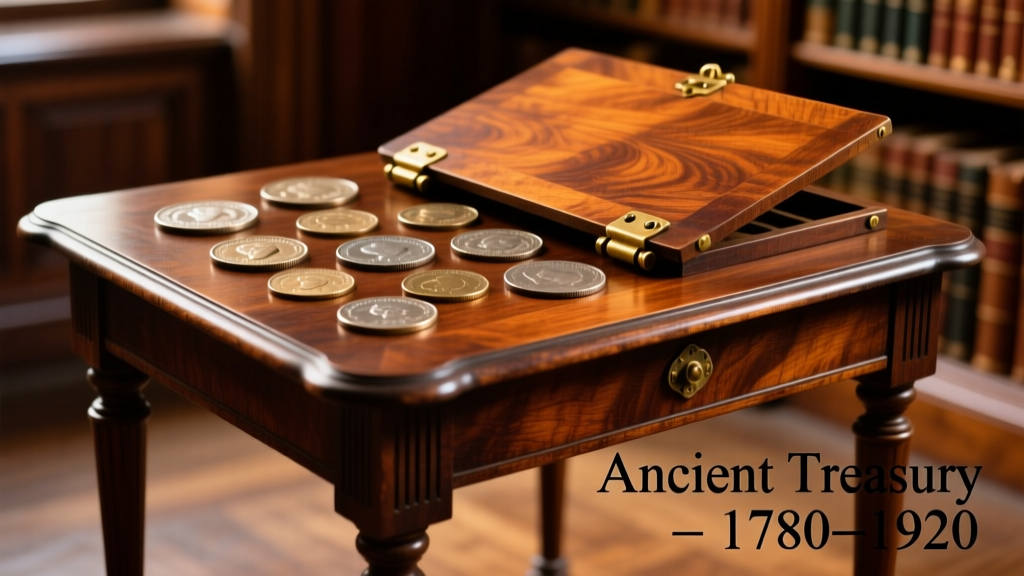
Hepplewhite Cherry Drop-Leaf Table: Authenticity, Provenance, and Market Value of a 23 × 48-Inch Square-Tapered Leg Example
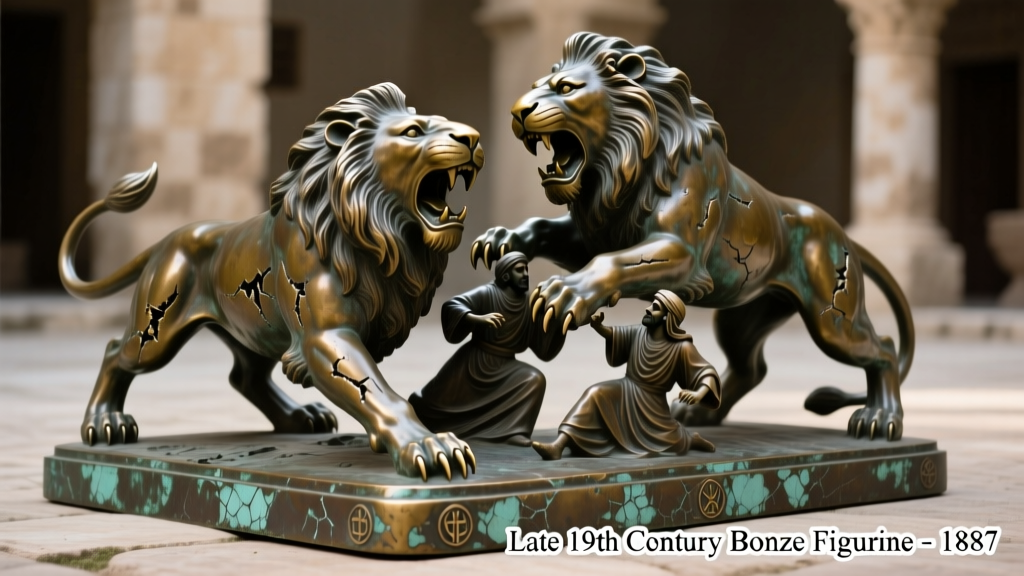
Bronze Figurine: Two Lions Attacking Arabs — Late 19th-Century Orientalist Sculpture (19 × 18½ in)
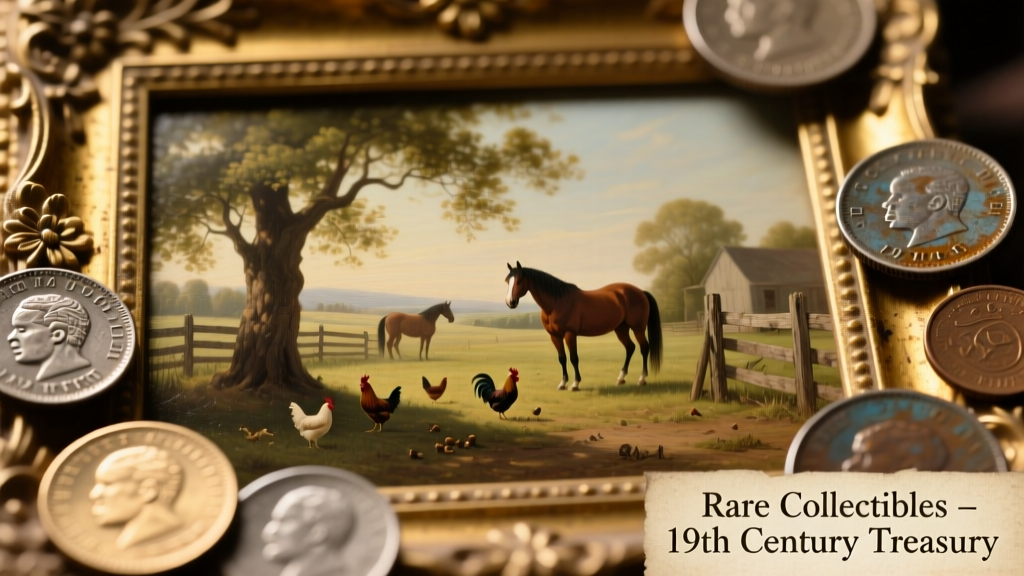
Valuing a 14×16 Inch Oil on Canvas Farmyard Scene: Horses, Chickens, and Period Frame Analysis
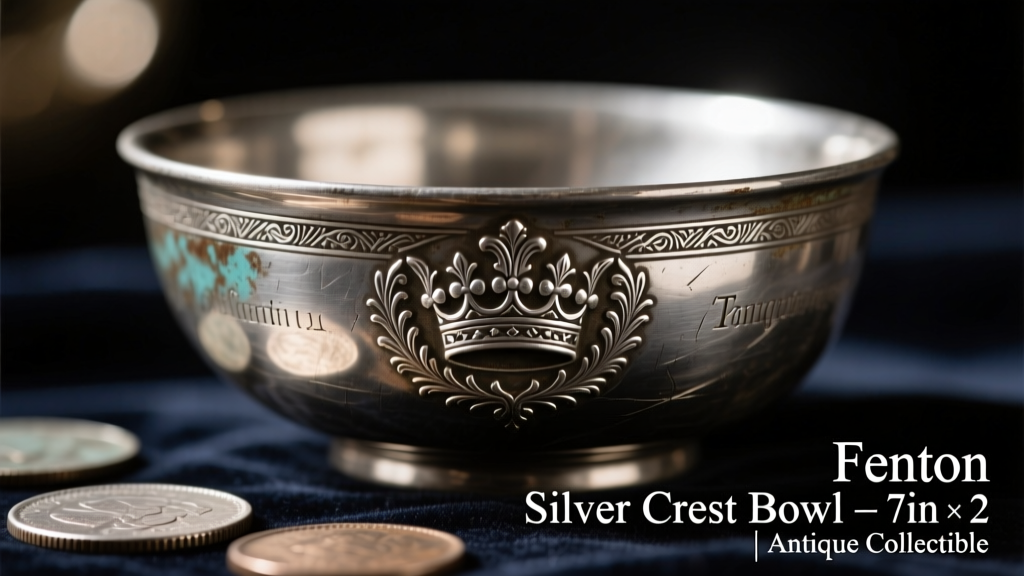
Fenton Silver Crest Bowl 7-Inch No. 2: Identification, Production History, and Market Value Analysis

The Toy Mystery Ball: Unraveling the Gravity Toy Legacy of Fernand Martin, France
Bridgeman Antiques: A Legacy of Numismatic Excellence and Ethical Collecting Since 1928
Tramp Art Chair: The 5-Inch Miniature Phenomenon in Folk Craft Collecting